China Launches Production of Chip Printing Machines: Why Experts Aren't Quick to Applaud

cryptonews.ruPublicado a 2026-07-28Actualizado a 2026-07-28

Resumen

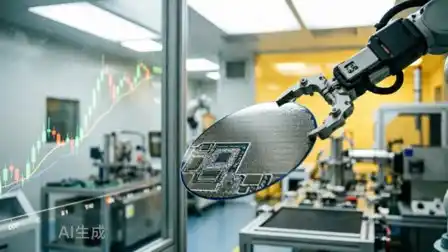
China has reportedly begun production of immersion DUV lithography machines, critical for manufacturing modern semiconductors. According to reports citing anonymous sources, the state-owned Shanghai Aishengna Electronic Technology Group plans to produce a limited number of these machines in 2026 and 2027, with initial deliveries intended for major Chinese chipmakers. However, industry experts and analysts express significant skepticism. They note the new equipment is far from matching the performance, reliability, and commercial viability of systems from the global leader, ASML. Key challenges identified include the difficulty of transitioning from limited production to high-volume manufacturing with consistent precision and yield over thousands of cycles. Analysts also caution that previous announcements of Chinese progress in this field have often failed to meet expectations. While the development is notable, experts suggest a more immediate risk to ASML could come from potential U.S. export restrictions rather than Chinese competition. The market consensus is that ASML's dominance in the lithography equipment segment remains secure for the foreseeable future. The true test for the Chinese machine will be whether it can achieve meaningful, scaled production by 2027 as claimed.

A state-owned company from Shanghai has begun production of immersion DUV lithography machines—equipment critical for the manufacture of modern semiconductors. This was reported on July 27, 2026, by the publication The Information, citing two anonymous sources familiar with the program. According to them, the company plans to produce about five such machines in 2026 and approximately 20 in 2027, with the first shipments intended for Semiconductor Manufacturing International Corp (SMIC), Hua Hong Semiconductor, and ChangXin Memory Technologies (CXMT).

The following day, July 28, Reuters revealed the manufacturer's name: it turned out to be a little-known state-owned entity, Shanghai Aishengna Electronic Technology Group, registered in August 2023 with a capital of 7 billion yuan. Reportedly, the company united development teams from several Chinese firms, including the startup Shanghai Yuliangsheng Technology, which tested a DUV machine prototype back in 2025, as well as specialists from Shanghai Micro Electronics Equipment (SMEE).

Far from ASML's Level

A source familiar with the matter emphasized in a conversation with Reuters: Aishengna's machine will require additional testing and is still far from matching models by the Dutch company ASML—the world leader in lithography equipment manufacturing. Similar skepticism was expressed by JPMorgan Chase analysts, noting that producing a small number of deep ultraviolet (DUV) lithography machines is significantly different from manufacturing equipment suitable for large-scale production. According to them, mass production depends much more heavily on yield rates, alignment accuracy, throughput, and reliability over thousands of wafer processing cycles.

Experts interviewed by the South China Morning Post took a similar position: the publication cited the opinion of Paul Triolo, a partner at DGA-Albright Stonebridge Group, who pointed out that producing machines of such complexity that are commercially viable and can operate 24/7 year-round is an extremely difficult task. William Bavington, an analyst at Jefferies, recalled that previous reports of China's progress in immersion DUV lithography later turned out to be unreliable and suggested waiting for confirmation of the current claims by independent sources. In the opinion of the analysts interviewed, ASML's dominance in the lithography equipment market is not yet under threat.

A More Realistic Risk for ASML—Not China

Experts interviewed by the South China Morning Post added that a more serious threat to ASML might come not from the progress of Chinese developers, but from the possible passage of the MATCH Act in the United States, which could restrict the company's sales and servicing of its equipment abroad.

The fate of the new equipment will depend on whether Aishengna's ability to establish truly mass production of machines, not just single prototypes, is confirmed. For now, market participants agree that ASML's position in this segment remains strong.

AI Opinion

From the perspective of macroeconomic connections, the course of events looks less dramatic than the headlines: in the second quarter, China accounted for only 14% of ASML's net sales, about €6.6 billion, while the company's shares reacted to the news with a decline. The region remains a notable but not decisive source of revenue for the Dutch giant.

A historical pattern suggests caution in assessing timelines. A prototype of a Chinese EUV machine in Shenzhen was already generating ultraviolet radiation back in 2025 but never moved to producing working chips, and the path from a laboratory sample to a mass-produced product in Chinese practice has traditionally stretched over years. Whether Aishengna's machine will be an exception to this rule or another long-term project will only be shown by the actual delivery volume in 2027.


Criptos en tendencia

Preguntas relacionadas

QWhat specific type of equipment did the Chinese company begin producing, and what is its primary use?

AThe Chinese company began producing immersion DUV (Deep Ultraviolet) lithography machines, which are equipment critically important for manufacturing modern semiconductors.

QWhich Chinese companies are slated to receive the first batch of these domestically produced machines?

AThe first batch of machines is planned to be supplied to Semiconductor Manufacturing International Corp (SMIC), Hua Hong Semiconductor, and ChangXin Memory Technologies (CXMT).

QAccording to analysts and experts cited in the article, what are the main reasons for skepticism regarding China's new lithography machines?

AExperts are skeptical because the machines still require extensive testing, are far from matching the standards of market leader ASML, and face significant challenges in achieving the reliability, precision, and high-volume production throughput necessary for commercial viability.

QWhat potential threat to ASML, mentioned by experts, is considered more serious than the progress of Chinese developers?

AA more serious potential threat to ASML is the possible enactment of the MATCH Act in the United States, which could restrict the company's sales and servicing of its equipment overseas.

QWhat historical precedent does the article mention to caution against over-optimism about China's rapid progress in lithography?

AThe article mentions that a prototype of a Chinese EUV machine in Shenzhen generated ultraviolet light in 2025 but never progressed to producing working chips. It highlights that the path from a lab prototype to a mass-market product has traditionally taken years in China's experience.

Lecturas Relacionadas

The Semiconductor Industry's Most Obscure Chokepoint Material: It Has Multiplied in Price Unnoticed, and China Just Banned Its Export

"Helium: The Silent Choke Point in Semiconductors" Helium, despite being the universe's second most abundant element, is critically scarce on Earth. It cannot be synthesized artificially and escapes Earth's gravity once released, making it a non-renewable resource. Yet, it is indispensable for advanced semiconductor manufacturing, requiring ultra-high purity (99.9999%) for processes like wafer etching, leak detection, and thermal management in lithography tools, with no viable substitutes. This low-profile resource, whose price has doubled unnoticed, suddenly gained attention when China imposed an export ban on July 10th. The ban is a response to a severe global shortage triggered months earlier. In March, missile attacks damaged the world's largest helium production hub in Qatar's Ras Laffan, halting a third of global supply with repairs expected to take 3-5 years. Concurrently, Russia tightened export controls, and the US sold off its federal helium reserve. Approximately 200 specialized transport containers, each worth ~$1 million, were stranded with perishable cargo. Global spot prices skyrocketed, and chipmakers like TSMC warned of potential impacts. China, which imports over 84% of its helium (primarily from Qatar and Russia), faces a severe squeeze. Despite being helium-poor, China has developed domestic extraction technology over five years, processing byproduct gases from LNG plants to produce ultra-pure helium. Domestic output, while still only covering less than 20% of demand, enabled the recent export ban aimed at securing domestic supply for its own expanding chip industry. The industry now faces "Helium Shortage 5.0." With key global sources constrained for years, this invisible gas—once wasted on party balloons—has become a critical, geopolitically charged bottleneck for chips, healthcare (MRI machines), and beyond, forcing the world to finally treat it as the finite strategic resource it is.

marsbitHace 22 min(s)

The Semiconductor Industry's Most Obscure Chokepoint Material: It Has Multiplied in Price Unnoticed, and China Just Banned Its Export

marsbitHace 22 min(s)

Early Investor of Unitree Bets on a Brain-Computer Interface Company

"Wabo Technologies, a brain-computer interface (BCI) startup, has secured new funding from Vertex Ventures (under Temasek), Hongtai Fund, Chengdu Future Industry Fund, and Huifengda Capital. Vertex Ventures is known for its early bet on Unitree Robotics. Inspired by the sci-fi film "Avatar," founder Zhang Xingzhi has pursued human-machine interaction for over a decade. He established Wabo in late 2025, coinciding with China's push for BCI as a future industry. Unlike companies focused solely on medical hardware, Wabo positions itself as a model company. Its core mission is to develop a "Human Neural Intent Model" that decodes EEG, EMG, and behavioral signals to understand a user's goals, confirmations, corrections, and stop intentions before physical action, translating them into standardized control signals for machines, robots, or smart devices. The young, full-stack team, backed by academic collaborators from Tianjin University and Fudan University, quickly attracted investors. The company had previously raised a seed round from Ceyuan Capital. Investors were impressed by Wabo's systematic capabilities in data collection, signal processing, and engineering, seeing potential beyond a single hardware product toward a reusable layer of human intent interpretation. Applications span medical rehabilitation, smart homes, embodied AI, and even space exploration, with Wabo partnering with Tianjin University on pioneering "space BCI" research. Wabo plans a dual-headquarters strategy, with Shanghai focusing on high-end R&D and model development, and Chengdu handling hardware, product development, and supply chain. The BCI sector in China is heating up, with over 30 financing deals in early 2026. Zhang believes future competition will center on who can build a sustainable data-model-scenario loop. He predicts industry consolidation within three years, with only companies that master this闭环 surviving. The vision from "Avatar" is inching closer to reality."

marsbitHace 36 min(s)

Early Investor of Unitree Bets on a Brain-Computer Interface Company

marsbitHace 36 min(s)

ChangXin Technology: A Cyclical Stock Standing Atop the Cycle Peak

Changxin Technology: A Cyclical Stock at the Peak On July 27, 2026, Changxin Technology topped the A-share market with a market capitalization of 3.28 trillion yuan, surging 465% on its first trading day. The company, which lost 16.3 billion yuan in 2023, reported an estimated net profit of 50-57 billion yuan for the first half of 2026. Its dramatic reversal mirrors the volatile DRAM (Dynamic Random Access Memory) cycle. The DRAM industry is inherently cyclical, with booms and busts every 3-4 years. This is due to product standardization and a significant time lag in supply adjustment. When prices rise, manufacturers expand capacity, but new production takes 2-3 years to come online, often leading to oversupply and price crashes when demand cools. Changxin's performance perfectly tracks this cycle. It recorded deep losses in 2023-2024 during the industry downturn, turned its first annual profit in 2025, and saw profits skyrocket in Q1 2026. This surge is primarily price-driven. The AI boom has led major players like Samsung and SK Hynix to shift 70-80% of new capacity to high-margin HBM (High Bandwidth Memory), creating a severe shortage and price explosion in general-purpose DRAM markets where Changxin competes. However, a massive global capacity expansion is underway. The top three manufacturers have announced nearly $70 billion in capital expenditure for 2026. Changxin itself plans to expand from three to seven 12-inch wafer fabs. This investment will translate into significant new supply in 2-3 years. While DRAM prices are expected to remain high through 2026-2027, price growth is already slowing, and a potential downturn is forecast for around 2028 as new capacity ramps up. A key challenge for Changxin is catching up in the critical HBM segment. While it has delivered HBM3 samples, leaders are already mass-producing more advanced HBM3E. Success in HBM is crucial for gaining true cyclical resilience. In conclusion, Changxin is a commendable company that has broken foreign monopolies in DRAM. Its long-term growth narrative—driven by import substitution and AI—is valid. Yet, its current valuation of 5-6x forward P/E, typical for a cyclical stock at its peak, suggests much future growth is already priced in. AI may extend the current cycle but cannot eliminate the industry's inherent volatility. For investors, the critical question is preparedness for the inevitable downturn when the cycle turns.

marsbitHace 41 min(s)

ChangXin Technology: A Cyclical Stock Standing Atop the Cycle Peak

marsbitHace 41 min(s)

Trading

Spot

Artículos destacados

Cómo comprar CHIP

¡Bienvenido a HTX.com! Hemos hecho que comprar USD.AI (CHIP) sea simple y conveniente. Sigue nuestra guía paso a paso para iniciar tu viaje de criptos.Paso 1: crea tu cuenta HTXUtiliza tu correo electrónico o número de teléfono para registrarte y obtener una cuenta gratuita en HTX. Experimenta un proceso de registro sin complicaciones y desbloquea todas las funciones.Obtener mi cuentaPaso 2: ve a Comprar cripto y elige tu método de pagoTarjeta de crédito/débito: usa tu Visa o Mastercard para comprar USD.AI (CHIP) al instante.Saldo: utiliza fondos del saldo de tu cuenta HTX para tradear sin problemas.Terceros: hemos agregado métodos de pago populares como Google Pay y Apple Pay para mejorar la comodidad.P2P: tradear directamente con otros usuarios en HTX.Over-the-Counter (OTC): ofrecemos servicios personalizados y tipos de cambio competitivos para los traders.Paso 3: guarda tu USD.AI (CHIP)Después de comprar tu USD.AI (CHIP), guárdalo en tu cuenta HTX. Alternativamente, puedes enviarlo a otro lugar mediante transferencia blockchain o utilizarlo para tradear otras criptomonedas.Paso 4: tradear USD.AI (CHIP)Tradear fácilmente con USD.AI (CHIP) en HTX's mercado spot. Simplemente accede a tu cuenta, selecciona tu par de trading, ejecuta tus trades y monitorea en tiempo real. Ofrecemos una experiencia fácil de usar tanto para principiantes como para traders experimentados.

485 Vistas totalesPublicado en 2026.04.21Actualizado en 2026.06.02

Cómo comprar CHIP

Discusiones

Bienvenido a la comunidad de HTX. Aquí puedes mantenerte informado sobre los últimos desarrollos de la plataforma y acceder a análisis profesionales del mercado. A continuación se presentan las opiniones de los usuarios sobre el precio de CHIP (CHIP).

活动图片