

kaloysterrrrr
2022/08/24 16:46
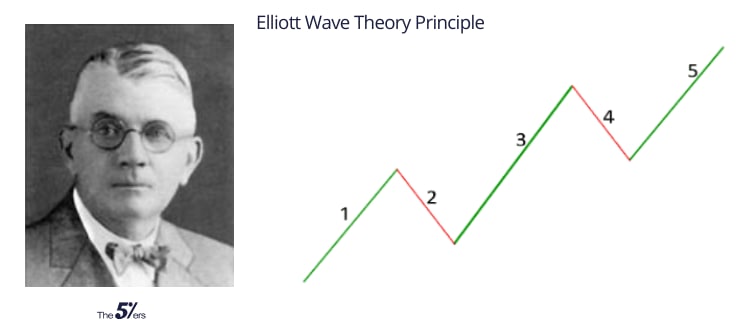
Elliot Wave Theory Rules
An impulse consists of 5 internal waves.
Wave 1 and 5 always have to be an impulse, or a diagonal (Leading for wave 1 – Ending for wave 5)
Wave 3 always has to be an impulse.
Wave 3 can never be the shortest wave
It can be shorter than wave 1 or 5, but never the shortest
Wave 2 cannot retrace more than 100% of wave 1
Wave 2 can be any corrective pattern
Except a triangle
Wave 4 can be any corrective pattern
Wave 4 can never move beyond the end of wave 1 (Otherwise it is a diagonal)
Guidelines:
Wave 1 is the least common wave to extend
Wave 5 should end with momentum divergence (RSI is the simplest oscillator to spot this)
Wave 5 can fail to go beyond the end of wave 3
This is called truncation, but it is not very common
Truncation gives warning of underlying weakness or strength in the market
Wave 3 usually has the greatest extension
Occasionally two waves will extend
Never will all three waves extend
When wave 3 extends, wave 5 tends to equal wave 1 in length
Waves 2 and 4 tend to create alternation between each other
See last page for more details on alternation
Wave 2 typically retraces to deeper levels of wave 1, than wave 4 does relative to wave 3
Wave 2 usually forms as a zigzag or double/triple zigzag
Wave 4 usually forms as a triangle, double/triple threes, or flat
Extended waves can contain exaggerated subdivisions within them
Usually two of waves 1, 3 & 5 exhibit a Fibonacci ratio
Channel lines and Fibonacci targets are inferior to the wave count
In most cases, wave 3 has the highest volume
If volume during the 5th wave is as high as the 3rd, an extended 5th wave is expected.
Here is another sample article from our icaris cronos camp where you need to invest knowledve before going against the market and be profitable. Credits to the telegram group on their non stop help to people who are starting their journey.
#How to make money in the bear market?
LikeShare
All Comments0LatestHot
No records