Bank of Korea Hits Pause on Digital Currency Pilot Plans

TheCryptoTimesPublished on 2025-06-30Last updated on 2025-06-30

The Bank of Korea (BOK) has announced a temporary pause to its central bank digital currency (CBDC) pilot program, halting ongoing discussions with local banks. The government is reevaluating its approach to the digital currency landscape, which the BOK has been testing in partnership with private companies like Kakao.

As per the reports, the central bank has suspended preparations for the second phase of its digital currency testing initiative, which was originally slated to begin in the fourth quarter of this year.

The move comes as South Korea’s newly elected president, Lee Jae Myung, places a growing emphasis on stablecoins as a central focus of national financial policy. President Lee, who assumed office earlier this month, is pushing for broader corporate participation in stablecoin issuance.

Lee has worked to enable a wide variety of businesses to participate in stablecoins. The ruling party has proposed a bill that would permit companies with equity as little as 500 million won ($370,000) to create stablecoins based on won.

Last week, BOK Senior Deputy Governor Ryoo Sangdai stated that any stablecoin introduction should be carried out gradually, under the supervision of registered institutions, and with measures in place to protect customers and avoid market disruption.

With more than a third of its population actively participating in digital asset exchanges, South Korea is a prominent center for cryptocurrency activity. Local cryptocurrency exchanges frequently see higher trading volumes than Kospi and Kosdaq, the nation’s primary stock indexes. 

Recently, South Korea’s top bank moved towards a stablecoin consortium. In an effort to create a national stablecoin consortium supported by the top financial institutions in the nation, KB Kookmin Bank, the biggest bank in South Korea, has submitted 17 trademark applications pertaining to stablecoins.

Also Read: Stablecoin Market Cap Hits $250B as GENIUS Act Nears Final Approval


Related Reads

Farewell to Buying Houses and Stocks: The Younger Generation Embraces Cryptocurrency as the Main Battlefield for Wealth

For decades, the traditional American wealth-building playbook—securing a good job, buying a home, and investing in stocks—has remained largely unchanged. However, a new report reveals that younger generations are increasingly skeptical of this path and are shifting their investment strategies accordingly. A survey of U.S. adults shows that younger investors, particularly Gen Z and millennials, are more proactive, open to non-traditional assets, and more likely to view cryptocurrency as a core component of their financial future. Nearly three-quarters (73%) believe it is harder to build wealth through conventional means compared to their parents' generation. This sentiment is reflected in their portfolios: younger investors allocate 25% of their investments to non-traditional assets like cryptocurrency, derivatives, and NFTs—three times the allocation of older investors. Almost half (45%) of young investors already hold crypto, compared to only 18% of older investors. Younger investors see crypto not as a speculative side investment but as a vital tool for wealth accumulation. Eighty percent believe it offers financial opportunities outside the traditional system and that it will play a significantly larger role in the future of finance. They are also more eager to explore emerging crypto-related products like derivatives, prediction markets, and DeFi. This generational shift is driving demand for more dynamic, internet-native financial platforms that operate around the clock and support a wider range of assets.

marsbit8m ago

Farewell to Buying Houses and Stocks: The Younger Generation Embraces Cryptocurrency as the Main Battlefield for Wealth

marsbit8m ago

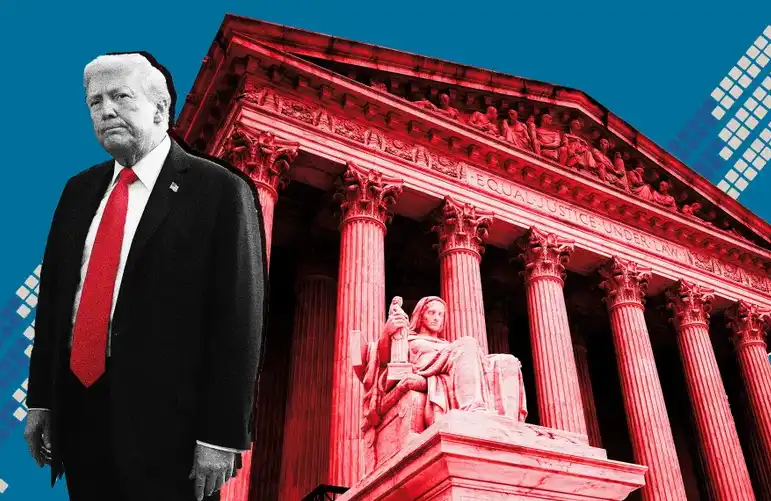
U.S. Supreme Court Tariff Ruling Imminent, Trump Repeatedly Voices Warnings, Might He Lose?

A pivotal U.S. Supreme Court ruling expected in January 2025 threatens to overturn the Trump administration’s signature tariff policy, implemented under the International Emergency Economic Powers Act (IEEPA). President Trump has publicly expressed alarm, warning of a "devastating blow" to the nation if the tariffs are struck down, while his cabinet officials project confidence in having alternative legal tools. Market analysts, including Goldman Sachs, predict the Court is likely to rule the tariffs illegal. Two key cases challenge whether the President overstepped constitutional boundaries by using IEEPA to impose Congress’s exclusive taxing authority. If overturned, the administration may attempt to replace the tariffs using other statutes, such as Section 122 of the Trade Act of 1974 (capping tariffs at 15% for 150 days) or Section 338 of the Tariff Act of 1930 (allowing up to 50% tariffs). However, both face significant legal and political hurdles, likely triggering further litigation. A ruling against the government could lead to lower effective tariff rates and trigger massive refunds—estimated at $1.3 trillion and growing. It would also undermine the credibility of administration officials who claimed revocation would cause chaos and weaken the U.S. negotiating position with trade partners. The political fallout would also put Republican lawmakers in a difficult position ahead of the 2026 midterms.

marsbit31m ago

U.S. Supreme Court Tariff Ruling Imminent, Trump Repeatedly Voices Warnings, Might He Lose?

marsbit31m ago

Trading

Spot
Futures

Hot Articles

Discussions

Welcome to the HTX Community. Here, you can stay informed about the latest platform developments and gain access to professional market insights. Users' opinions on the price of BANK (BANK) are presented below.

活动图片