Who Is Shaping Ethereum's Future: The Takeover by Token-Holding Companies Could Be the Best Thing for ETH in Years

marsbitPublicado a 2026-07-17Actualizado a 2026-07-17

Resumen

**Title: Who is Building Ethereum's Future? Corporate ETH Holders Take Over Funding, Possibly the Best Thing for ETH in Years.** **Summary:** The Ethereum Foundation is scaling back due to fiscal concerns, but publicly traded companies holding large amounts of ETH, like Bitmine and SharpLink, are stepping in to fund protocol development. These firms collectively hold nearly 5% of ETH's circulating supply and are using their staking yields to pay for R&D. Unlike MicroStrategy, which merely accumulates Bitcoin, these ETH treasury companies are reinvesting profits directly into the protocol's development—potentially allowing all ETH holders to benefit from this free "spillover." Key drivers for this shift include these companies' stalled business model. Their "flywheel" of issuing stock to buy more ETH broke as their stock prices fell below the net value of their crypto holdings (mNAV < 1). With their ETH holdings also deeply underwater, simply waiting for price appreciation failed. By funding Ethereum's roadmap—through new non-profits like ETH Labs and Ethereum Institutional—they aim to increase the utility and value of the underlying asset that dominates their balance sheets. This creates a new alignment of interests: these companies are highly incentivized to see Ethereum succeed and are less likely to sell en masse. However, risks remain. The exact funding amounts are undisclosed, and these treasury firms themselves are vulnerable if ETH prices fall further, which could h...

Authors: Edgy, Yayya

Compiled by: TechFlow

TechFlow Guide: The Ethereum Foundation is contracting due to treasury issues, but token-holding companies like Bitmine and SharpLink are taking over development funding. These companies hold nearly 5% of circulating ETH and are now using staking yields to pay for protocol R&D. Unlike MicroStrategy, which just hoards Bitcoin, ETH-holding companies are returning yields to protocol development—potentially allowing all ETH holders to enjoy a free ride.

Key Takeaways

  • 80% of JTX platform fees go to the DAO; all proceeds received by the DAO will be used for open market buybacks and JTO burns, at least until Q4 2027, after which token holders will vote on whether to continue.
  • The real difference between Jito and Venice is the 'plumbing': where the revenue lands, who can shut off the burn mechanism, whether governance can replace the executor, and if the project has genuinely redirected company revenue to the token in the past.
  • When DAT companies' mNAV dropped below 1 and their holdings were underwater, the old flywheel of issuing stock to buy coins stalled. Companies like Bitmine and SharpLink then began directly funding protocol R&D; this improves incentive alignment but also exposes development funding to token price and company fragility.

The Crypto World Has Come Full Circle Back to TradFi

Crypto traders spent years urging everyone to escape the traditional financial system.

Hyperliquid's HIP-3 markets—stocks, commodities, and indices—reached $3 billion in volume over the last 7 days; the platform's native crypto perpetuals volume was $3.1 billion, almost equal.

We fled TradFi, only to trade TradFi with 20x leverage, lol.

In This Issue:

  • Jito's latest proposal, and why JTO holders should be pleased.
  • The new direction of ETH development funding: Are treasury companies taking over funding actually a good thing?
  • Network-wide updates: Polymarket launches combo bets, Plasma One releases Android version, Jito's JTX goes live, and more.

JIP-38: Making Jito a 'Token-Centric' Network

"We have equity, but we will direct value to the token."

When Venice said this two weeks ago, it was slammed by Crypto Twitter (CT); when Jito said the same thing this week, CT cheered.

Here are the real differences between the two projects. (We discussed Venice on July 2nd, so we won't repeat the background.)

What Happened?

On July 13th, Jito DAO released JIP-38, officially defining Jito as a "token-centric network": all major project revenue flows to the DAO and is governed by the token; the token has hard economic rights over how this revenue is used.

The specific commitment: 100% of the revenue share JTX brings to the DAO will be used to buy and burn JTO on the open market. JTX is Jito's new self-custody trading app for professional traders, opened to waitlist users the day after the proposal. This arrangement will run for at least a year and continue until Q4 2027.

What JTO Holders Get:

  • 80% of JTX platform fees go to the DAO; the remaining 20% is retained but can only be reinvested into the platform generating that revenue.
  • 100% of the DAO's share is used to buy and burn JTO. The result is a reduced supply, not money sitting in a treasury for accounting games.
  • Execution is handled by a "Revenue Splitter": it collects fees and performs the buybacks, with fee, buy, and burn records for each epoch disclosed on-chain.
  • In Q4 2027, token holders will vote again on the entire arrangement, using at least a year of real data.

Sounds familiar, right? This is almost exactly Erik Voorhees's defense for Venice. Venice sold $65 million in equity and promised increased burns; Jito raised $50 million from a16z last October, reportedly with "well over $100 million" in cash on hand. Both are companies with an equity layer, also claiming to direct revenue to the token.

Why do I view them differently? Three reasons.

1. Revenue Lands in Different Pockets

Venice's revenue belongs to the Venice team. Apart from a small automatic burn—about $166k in April—other burn amounts are decided monthly by the board, which owes fiduciary duty to shareholders, not token holders.

Jito's fees go on-chain to the DAO treasury. JIP-38 explicitly states the token has "hard economic rights" over fund deployment. When money enters an address governed by token holders, burning is no longer a project's goodwill; it's institutionalized.

2. Token Holders Can Replace the Treasury Executor

I checked who exactly controls Jito's buyback machine. The honest answer: it's still managed by people for now.

The Revenue Splitter is actively managed by a Dev Council, a small committee authorized by the DAO; the proposal only promises gradual automation and decentralization in the future, with no concrete plan yet.

But the "leash" is real. The council's mandate is bound by JIP-36's revocable authority structure: a single governance vote, plus a 12-hour timelock, can revoke its permissions.

If Venice's board reduces burns to zero, VVV holders can only tweet complaints; if Jito's council misbehaves, JTO holders can remove them within 12 hours.

3. Money Has Already Flowed From Company to Token Twice

Before August 2025, Jito's 6% Block Engine fees were split 50/50 between Jito Labs and the DAO, each getting 3%. JIP-24 then directed the full 6% "permanently" to the DAO, with Labs actively giving up its revenue source.

JIP-38 extends the same model to JTX from day one of the new product's launch. Venice's Series A added an equity claim on top of token holders; Jito's equity layer is continuously reducing its own claim.

This history makes Jito more credible. If Venice wants similar credibility, it should also set up automatic buybacks for recurring revenue from subscription services.

But Questions Remain

JTX just opened to 1,000 users, so its cash flow rounds to roughly zero. For now, it's just a signal about "where future value will flow," not existing value. The proposal also doesn't specify who ultimately gets the 20% development share; clearly, it will likely go to Jito Labs, responsible for developing JTX.

One year isn't long. Forum members have already requested extending the deadline to five years. Labs, the Foundation, and its investors also hold substantial JTO, so part of "token holders decide" actually means "insiders decide."

To be fair, revenue from existing products like JitoSOL and BAM already flows to the DAO, which is a strong positive signal.

Why This Isn't Just About Jito?

Because most crypto projects have both an equity layer and a token layer. Everyone says "value will accrue to the token," but you can't just trust it.

Don't grade the pitch, grade the plumbing. Just ask three questions:

  1. Where does the revenue legally end up: a company account, or an address governed by the token?
  2. Who can turn off the burn mechanism? Can token holders replace this person?
  3. Has money ever actually flowed from the company's pocket to the token before?

Venice fails the first two, and CT noticed. Jito passes all three but gets an asterisk on "human-controlled."

Sponsored Content | stBTC: Bitcoin Now Has Liquid Staking Too
Liquid staking is one of the most validated sectors in crypto. Lido alone has over $17 billion TVL; for years, ETH holders could earn staking yields without giving up liquidity.

Bitcoin holders have lacked a counterpart because Bitcoin previously had no reliable, native staking mechanism that could be wrapped.

Now that's changing. Stacks is about to launch Bitcoin Staking, and StackingDAO's stBTC is a liquid token built on top: BTC can earn staking yields while remaining freely movable within the Stacks ecosystem.

The expected base yield at launch is about 2.6%. That's not huge, but it's better than Bitcoin's native 0% yield since 2009.

This also isn't a new team risking your BTC. StackingDAO has operated STX stacking infrastructure for over two years, managing peak staked capital over $150 million, serving more than 40,000 stakers, with zero security incidents.

stBTC isn't live yet; it will launch shortly before Stacks releases Bitcoin Staking, meaning very soon.

ETH Has a New 'Management Team'

The Ethereum Foundation is stepping back due to treasury sustainability concerns.

Meanwhile, new players are stepping up. Treasury companies are beginning to fund Ethereum's next phase, and this could be the best thing to happen to ETH in years.

What Happened?

First, the timeline:

  • June 22: ETH Labs is founded. It's a nonprofit R&D institute formed by five former Ethereum Foundation researchers; they worked on finality, scaling, and protocol economics.
  • June 23: The Ethereum Foundation lays off 20%, cuts its 2026 budget by 40%, and restructures into five work clusters.
  • July 1: Ethereum Institutional is founded as a nonprofit "front door" for banks and asset managers into Ethereum; its focus also includes ecosystem marketing and ETH asset marketing. Yes, direct marketing of the asset.
  • July 14: EthSystems is founded. It's a for-profit company building confidential transaction systems for banks, operated by the original team from the Foundation's "Institutional Privacy Working Group."

Three entities in a month, and each press release has the same three names behind it: Bitmine (NYSE:BMNR), SharpLink (Nasdaq:SBET), and Joe Lubin.

Who Are These Funders?

Bitmine is Tom Lee's Digital Asset Treasury (DAT) company, holding 5.77 million ETH, about 4.8% of the total circulating supply. That means roughly one in every 21 ETH in the world is on this company's balance sheet, and its public goal is to hold 5% of the total supply.

SharpLink holds about 876,000 ETH, the second-largest corporate holder. The company's Chairman, Joe Lubin, also founded Consensys (MetaMask, Linea) and is an Ethereum co-founder.

The question isn't whether these companies matter, but why they suddenly started writing checks for protocol research.

Why Are DATs Becoming Ethereum's Venture Arm?

Frankly: because their old playbook isn't enough anymore.

The lifeblood of treasury companies is one number—mNAV, the multiple of the stock price relative to the net value of its crypto assets. When the market cap is higher than the value of its ETH holdings, the company can issue more stock, buy more ETH, increasing the assets per share. This was the flywheel Bitmine used to build its massive position.

Now the flywheel is frozen. The entire ETH treasury sector's mNAV is below 1, meaning the market values these companies at less than their holdings themselves. Issuing below NAV dilutes and hurts existing shareholders, so no new stock, no new ETH, no flywheel.

And the existing holdings are deeply underwater. Bitmine's average cost basis is around $3,883; the ETH price mentioned in the article is less than half that. SharpLink's average cost is around $3,609, with unrealized losses exceeding $1 billion during the last dip.

Waiting for the Ethereum Foundation to pump ETH back up didn't work, so these companies are taking matters into their own hands.

This isn't blind donations; they're building a system that can re-inflate the value of their own balance sheets.

The Bull Case: Finally Someone Pays for the Roadmap

From this perspective, ETH holders get to enjoy the spillover benefits of all this investment for free.

The Foundation is proactively contracting. Vitalik described the cuts as an intentional shift toward an "endowment model": the Foundation's annual spending ratio will drop from ~15% to 5% by 2030 to survive any winter. Noble, but it leaves a funding gap just as Wall Street is preparing to enter.

Treasury companies fill this gap with self-replenishing money. Projected annual staking yields of $284 million for Bitmine equate to an R&D budget that replenishes automatically without selling a single token. Tom Lee's argument: corporate stakers will provide guaranteed funding for Ethereum's future development.

If it works, the flywheel spins the right way: institutional roadmap delivery, banks bringing real cash flow, ETH demand gets repriced, and developers get multi-year funding.

MicroStrategy holds Bitcoin but funds zero Bitcoin development; ETH treasury companies are reinvesting staking yields into the protocol. This is a clear net positive for ETH.

The Bear Case

But the other side must be seen too.

No specific amounts are disclosed anywhere. As of writing, we don't know how much money is actually earmarked for ETH development. Maybe the market overestimates these funds' impact; actual contributions could be very limited.

DAT companies themselves are fragile. Pantera warns of a possible "brutal shakeout" for crypto treasury companies in 2026. If ETH keeps falling, the dollar value of staking yields shrinks, mNAV compresses further, and these companies stop funding ETH.

My takeaway: The Ethereum Foundation stepping back doesn't mean Ethereum development dies; it's a handover.

The new funders hold more ETH than almost anyone else on Earth. They can't dump without hurting themselves. It's not perfect governance, but it creates real incentive alignment.

DeFi Catalysts

Polymarket: Brings "parlays" to prediction markets with Combos: users can combine multiple sports outcomes into a single all-or-nothing position, priced by market makers via RFQ auctions.

Aave: Launches Stable Vaults, converting floating lending rates into fixed-rate stablecoin yields any business can embed; Aave's mobile savings feature already uses it.

Plasma One: Its new banking app is live on Android. Download before July 18 for six months free Core tier access.

Ethena: Minting users can now mint and redeem USDe with USDC for free. Expected instant liquidity should reduce value leakage in secondary markets.

Jito: Trading platform JTX is open to some waitlist users, offering Solana meme coins, tokenized stocks, and major asset spot markets.

Lido: wstETH launches on Robinhood Chain, bringing Ethereum staking yields to a new ecosystem.

Maple: syrupUSDG's launch on Robinhood Chain pushes assets under management past $200 million; Steakhouse has approved it as collateral for Robinhood Earn vaults.

Jupiter: New product Gacha brings graded Pokemon and One Piece collectible cards on-chain; draw value can be multiples of the payment, with top prizes up to $100k.

Tempo: Receive Policies let accounts reject unwanted tokens and restrict senders; rules are enforced at the protocol layer, not the application layer.

RHEA Finance: Launches Perp Confidential Deposit on July 15, allowing users to keep trading with existing accounts and Hyperliquid liquidity while hiding deposit information.

Jito JIP-38: Commits to using 100% of the DAO's share of JTX revenue for programmatic buybacks and JTO burns until at least Q4 2027; the DAO's share is 80% of platform fees.

Hyperliquid: HIP-3 markets' share of platform perpetual volume rose from ~2% in January to nearly 50%; on-chain stock perps are approaching crypto asset trading volume.

Securitize: While listing on the NYSE, tokenized $295 million of its own SECZ stock, becoming the first U.S. public company to do so at listing.

Galaxy: Launches Galaxy Onchain Financing Rate (GOFR), providing DeFi credit to institutions via a single, continuously rebalancing rate, without managing wallets or private keys; minimum loan $1 million, with native BTC as collateral.

Airdrop Alpha

Lighter: Airdrops $11 million worth of LIT to Robinhood Chain traders. Perpetuals trading earns points convertible to LIT, with a 2x multiplier via Robinhood Wallet.

Kamino: Launches a $300k rewards campaign around three-month USDG deposits, with partners Steakhouse and Global Dollar Network.

GRVT: Airdrop registration closes July 17, TGE scheduled for July 21. Users can claim at TGE or delay for up to a 4x multiplier; choice is irrevocable.

Jupiter: Stakers can claim 50 million JUP from Q2 Active Staking Rewards. Eligibility is a quarterly average stake of 50 JUP; claim window closes October 8.

Industry News

Transatlantic Taskforce: U.S. Treasury and UK Treasury release a joint ten-point roadmap to advance tokenized asset and cross-border stablecoin rule coordination.

Swift: Announces its blockchain ledger is ready for initial use; 17 banks from six continents are preparing for pilot transactions with tokenized deposits.

Kaito: Kaito Pro launches stock data, tracking sentiment, price, investment theses, and more for over 3,000 global stocks in one interface.

SBI Holdings: Partners with Solana Foundation to build Japan's first on-chain financial market, including JPY stablecoin JPYSC, tokenized RWAs from corporate bonds to real estate, and cross-border settlement infrastructure.

Bonzo Lend: Hedera's largest lending protocol attacked due to Supra oracle verifier vulnerability, losing ~$9.05 million; protocol paused, TVL down 77%.

Circle: Receives final OCC approval to establish First National Digital Currency Bank, N.A.; USDC custody and future reserve management will fall under direct federal supervision.

Meme

Text in image: Top – "I sold"; Bottom – "I increased my USD reserves."

Until next time,

Edgy

Criptos en tendencia

Preguntas relacionadas

QAccording to the article, why are crypto treasury companies like Bitmine and SharpLink starting to fund Ethereum protocol development?

ABecause their traditional flywheel of issuing stock to buy more ETH has stalled. Their stock's market value has fallen below the value of their ETH holdings (mNAV

QWhat is the key difference between Jito's JIP-38 proposal and Venice's approach regarding value accrual to their tokens?

AThe key differences are in the 'pipeline': 1. Jito's platform fees go directly to the DAO treasury (a token-governed address), while Venice's revenue goes to the company. 2. JTO holders can vote to revoke the committee managing the buyback, whereas VVV holders cannot change Venice's board decisions. 3. Jito has a history of redirecting company revenue (from its block engine) to the DAO, proving its commitment.

QWhat is the bullish argument presented for ETH treasury companies funding protocol development?

AIt allows all ETH holders to 'free ride.' As Ethereum Foundation scales back spending, these companies fill the funding gap. Their massive ETH staking yields (e.g., Bitmine's ~$284M annually) create a self-replenishing R&D budget without selling ETH. If successful, this could lead to protocol progress, institutional adoption, increased ETH demand, and stable funding for developers, creating a positive flywheel.

QWhat are the potential risks or bearish arguments against relying on DAT companies for Ethereum development funding?

A1. The specific funding amounts are undisclosed and could be limited. 2. The DAT companies themselves are fragile; if ETH price falls further, their staking yields shrink in USD terms and their mNAV worsens, which could lead them to stop funding development. 3. The entire crypto treasury sector faces a potential 'brutal shakeout,' making this funding source unreliable.

QWhat major change is the Ethereum Foundation undergoing, and what new entities have emerged to take a role in Ethereum's development?

AThe Ethereum Foundation is undergoing a significant contraction, laying off 20% of staff, cutting its 2026 budget by 40%, and restructuring into five clusters, aiming for a slower 'endowment model.' New entities that have emerged include ETH Labs (a non-profit R&D institute), Ethereum Institutional (a non-profit on-ramp for institutions), and EthSystems (a for-profit company building confidential transaction systems), all backed by companies like Bitmine and SharpLink.

Lecturas Relacionadas

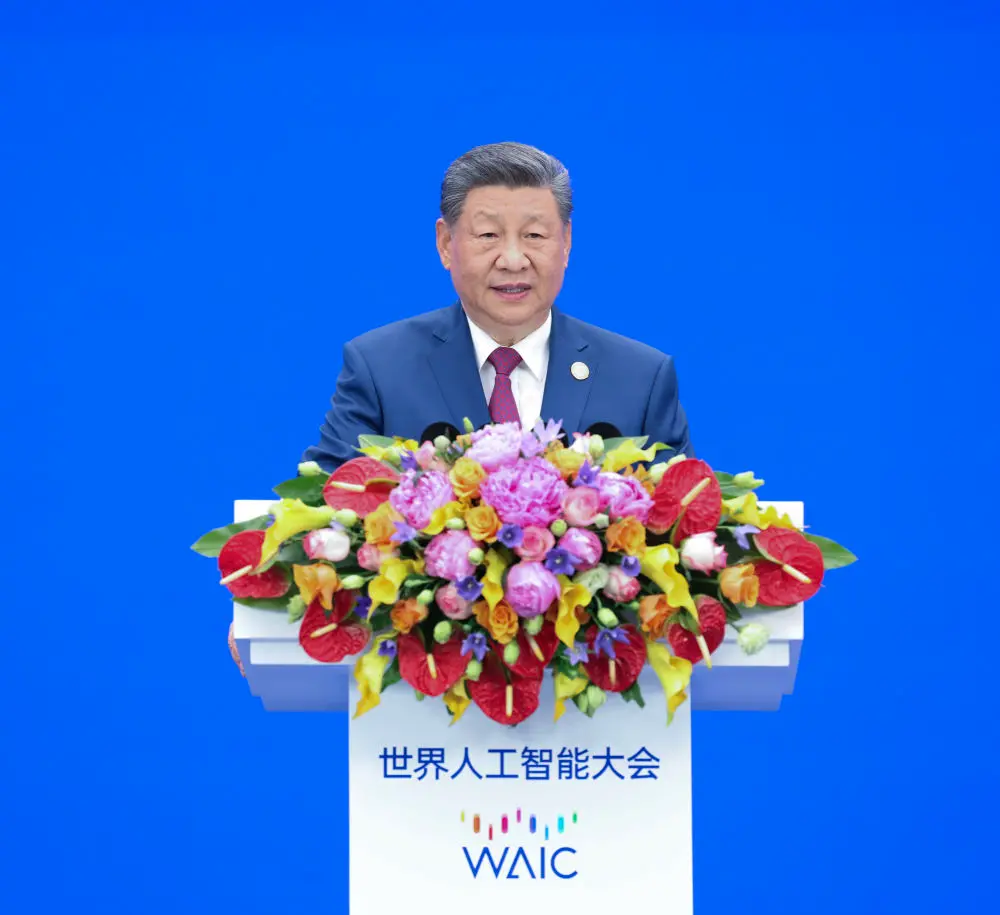
Xi Jinping Attends Opening Ceremony of World Artificial Intelligence Conference 2026 and High-Level Meeting on Global AI Governance, Delivers Keynote Speech

On July 17, 2026, Chinese President Xi Jinping delivered a keynote speech titled "Working Together to Build a Fair and Equitable Global Governance System on Artificial Intelligence" at the opening ceremony of the 2026 World Artificial Intelligence Conference and High-level Conference on Global AI Governance in Shanghai. President Xi pointed out that the rapid development of AI, alongside the accelerated global changes, presents both significant opportunities and governance challenges. He raised critical questions for humanity regarding human-machine coexistence, safety, ethics, and bridging divides. China advocates for a people-oriented, benevolent approach to AI, making it a force for common prosperity and security, and jointly building a fair and reasonable global AI governance system. Xi Jinping put forward a four-point proposal: 1. **Uphold Openness for Win-Win Cooperation and Drive Innovation:** Seize the historic opportunity by encouraging open-source collaboration and sharing to foster AI innovation, industry growth, and application, empowering all sectors. 2. **Enhance Risk Awareness and Ensure Security and Controllability:** Attach great importance to AI's inherent and derivative risks. Build systems for laws, technical monitoring, risk warning, and emergency response to safeguard security, prevent misuse, and ensure human control. Oppose the practice of politicizing national security in AI. 3. **Encourage Inclusiveness and Promote Cultural Exchange:** Shape AI's values with humanity's common values. Use AI to enhance understanding and tolerance between civilizations, fostering a garden of diverse cultures. 4. **Advocate Solidarity and Improve Global Governance:** Practice true multilateralism, leverage the UN's role, and strengthen coordination on AI development strategies, governance rules, and technical standards to form a widely accepted global governance framework. Assist Global South countries in capacity building to bridge the digital divide and avoid new historical inequities. Xi highlighted that as a responsible major country, China, in its 15th Five-Year Plan period, is committed to being a provider of international public goods in AI, contributing Chinese solutions. China has promoted an "AI Plus" initiative, with its core intelligent economy exceeding RMB 10 trillion. To support global AI development, China will provide 5,000 AI training opportunities for developing countries, establish international AI application cooperation centers with regional organizations, and deploy its "Mazu" meteorological AI warning system in 30 countries. The establishment of the World Artificial Intelligence Cooperation Organization in Shanghai marks a significant milestone. Leaders from Kazakhstan, Cambodia, Thailand, and the UN Secretary-General delivered speeches, commending China's contributions to global AI governance and echoing President Xi's proposals. They agreed that AI's opportunities and challenges are borderless, requiring cooperative, inclusive, and equitable international efforts to ensure a secure, prosperous future that leaves no country behind. The conference issued a Chair's Statement. President Xi and his wife hosted a welcome banquet for international dignitaries on July 16. Senior Chinese officials attended the events.

链捕手Hace 1 min(s)

Xi Jinping Attends Opening Ceremony of World Artificial Intelligence Conference 2026 and High-Level Meeting on Global AI Governance, Delivers Keynote Speech

链捕手Hace 1 min(s)

Visa Takes Another Step Upstream in the Stablecoin Industry

Visa has launched the Visa Stablecoin Platform (VSP), a comprehensive enterprise platform enabling banks and fintechs to handle stablecoins directly within Visa's existing payments and treasury workflows, covering approximately 15,000 financial institutions and over 200 million merchants. The platform launches with the new OUSD stablecoin and also supports USDC and USDG, providing integrated wallet infrastructure, controls, and workflows for various institutional use cases. This move marks Visa's strategic progression within the stablecoin ecosystem. It began as a user, piloting USDC for settlement in 2021, later evolving into a distributor through cards like Bridge and empowering banks with its VTAP platform. VSP consolidates these capabilities into a unified hub, positioning Visa as the central entry point for its stablecoin services rather than an issuer. Crucially, Visa is opting not to issue its own stablecoin, a move that would create conflicts with partners like Circle and Paxos and entail significant regulatory burdens. Instead, Visa leverages its neutral network role. The choice of OUSD—a zero-fee, alliance-managed stablecoin—allows Visa to benefit from the issuance layer economically without becoming a direct competitor. This strategy aims to make Visa's network the default infrastructure layer in the stablecoin era, avoiding the need to mint its own coin.

Foresight NewsHace 1 hora(s)

Visa Takes Another Step Upstream in the Stablecoin Industry

Foresight NewsHace 1 hora(s)

Trading

Spot

Artículos destacados

Qué es ETH 2.0

ETH 2.0: Una Nueva Era para Ethereum Introducción ETH 2.0, conocido ampliamente como Ethereum 2.0, marca una actualización monumental para la blockchain de Ethereum. Esta transición no es solo una mejora superficial; busca mejorar fundamentalmente la escalabilidad, seguridad y sostenibilidad de la red. Con un cambio del mecanismo de consenso intensivo en energía Prueba de Trabajo (PoW) a una Prueba de Participación (PoS) más eficiente, ETH 2.0 promete un enfoque transformador para el ecosistema blockchain. ¿Qué es ETH 2.0? ETH 2.0 es un conjunto de actualizaciones interconectadas y distintivas centradas en optimizar las capacidades y el rendimiento de Ethereum. La reestructuración está diseñada para abordar desafíos críticos que el mecanismo actual de Ethereum ha enfrentado, particularmente en lo que respecta a la velocidad de transacción y la congestión de la red. Objetivos de ETH 2.0 Los objetivos principales de ETH 2.0 giran en torno a mejorar tres aspectos clave: Escalabilidad: Con el objetivo de aumentar significativamente el número de transacciones que la red puede manejar por segundo, ETH 2.0 busca superar la limitación actual de aproximadamente 15 transacciones por segundo, potencialmente alcanzando miles. Seguridad: Las medidas de seguridad mejoradas son fundamentales para ETH 2.0, particularmente a través de una mejor resistencia contra ciberataques y la preservación del ethos descentralizado de Ethereum. Sostenibilidad: El nuevo mecanismo PoS está diseñado no solo para mejorar la eficiencia, sino también para reducir drásticamente el consumo de energía, alineando el marco operativo de Ethereum con consideraciones ambientales. ¿Quién es el Creador de ETH 2.0? La creación de ETH 2.0 se puede atribuir a la Fundación Ethereum. Esta organización sin fines de lucro, que desempeña un papel crucial en el apoyo al desarrollo de Ethereum, es liderada por el notable cofundador Vitalik Buterin. Su visión de un Ethereum más escalable y sostenible ha sido la fuerza motriz detrás de esta actualización, involucrando contribuciones de una comunidad global de desarrolladores y entusiastas dedicados a mejorar el protocolo. ¿Quiénes son los Inversores de ETH 2.0? Si bien los detalles sobre los inversores de ETH 2.0 no se han hecho públicos, se sabe que la Fundación Ethereum recibe apoyo de varias organizaciones e individuos en el ámbito de blockchain y tecnología. Estos socios incluyen firmas de capital de riesgo, compañías tecnológicas y organizaciones filantrópicas que comparten un interés mutuo en apoyar el desarrollo de tecnologías descentralizadas e infraestructura blockchain. ¿Cómo Funciona ETH 2.0? ETH 2.0 se distingue por introducir una serie de características clave que lo diferencian de su predecesor. Prueba de Participación (PoS) La transición a un mecanismo de consenso PoS es uno de los cambios más destacados de ETH 2.0. A diferencia de PoW, que se basa en la minería intensiva en energía para la verificación de transacciones, PoS permite a los usuarios validar transacciones y crear nuevos bloques de acuerdo con la cantidad de ETH que apuestan en la red. Esto conduce a una mayor eficiencia energética, reduciendo el consumo en aproximadamente un 99.95%, convirtiendo a Ethereum 2.0 en una alternativa considerablemente más verde. Cadenas Shard Las cadenas shard son otra innovación crítica de ETH 2.0. Estas cadenas más pequeñas operan en paralelo con la cadena principal de Ethereum, lo que permite que múltiples transacciones sean procesadas simultáneamente. Este enfoque mejora la capacidad general de la red, abordando las preocupaciones de escalabilidad que han afectado a Ethereum. Cadena Beacon En el núcleo de ETH 2.0 se encuentra la Cadena Beacon, que coordina la red y gestiona el protocolo PoS. Funciona como un organizador de cierta manera: supervisa a los validadores, asegura que los shards permanezcan conectados a la red y monitorea la salud general del ecosistema blockchain. Cronología de ETH 2.0 El viaje de ETH 2.0 ha estado marcado por varios hitos clave que trazan la evolución de esta importante actualización: Diciembre 2020: El lanzamiento de la Cadena Beacon marcó la introducción de PoS, preparándose para la migración hacia ETH 2.0. Septiembre 2022: La finalización de “La Fusión” representa un momento crucial en el que la red Ethereum se trasladó exitosamente de un marco PoW a uno PoS, anunciando una nueva era para Ethereum. 2023: El lanzamiento esperado de cadenas shard tiene como objetivo mejorar aún más la escalabilidad de la red Ethereum, consolidando a ETH 2.0 como una plataforma robusta para aplicaciones y servicios descentralizados. Características Clave y Beneficios Escalabilidad Mejorada Una de las ventajas más significativas de ETH 2.0 es su escalabilidad mejorada. La combinación de PoS y cadenas shard permite que la red expanda su capacidad, permitiendo acomodar un volumen mucho mayor de transacciones en comparación con el sistema heredado. Eficiencia Energética La implementación de PoS representa un gran paso hacia la eficiencia energética en la tecnología blockchain. Al reducir drásticamente el consumo de energía, ETH 2.0 no solo disminuye los costos operativos, sino que también se alinea más estrechamente con los objetivos de sostenibilidad global. Seguridad Mejorada Los mecanismos actualizados de ETH 2.0 contribuyen a mejorar la seguridad en toda la red. El despliegue de PoS, junto con las medidas de control innovadoras establecidas a través de cadenas shard y la Cadena Beacon, asegura un mayor grado de protección contra posibles amenazas. Costos Más Bajos para los Usuarios A medida que la escalabilidad mejora, los efectos sobre los costos de transacción también serán evidentes. Se espera que una mayor capacidad y una menor congestión se traduzcan en tarifas más bajas para los usuarios, haciendo que Ethereum sea más accesible para transacciones cotidianas. Conclusión ETH 2.0 marca una evolución significativa en el ecosistema blockchain de Ethereum. A medida que aborda problemas fundamentales como la escalabilidad, el consumo de energía, la eficiencia en las transacciones y la seguridad general, la importancia de esta actualización no puede ser subestimada. La transición a la Prueba de Participación, la introducción de cadenas shard y el trabajo fundamental de la Cadena Beacon son indicativos de un futuro donde Ethereum puede satisfacer las crecientes demandas del mercado descentralizado. En una industria impulsada por la innovación y el progreso, ETH 2.0 se erige como un testimonio de las capacidades de la tecnología blockchain para allanar el camino hacia una economía digital más sostenible y eficiente.

202 Vistas totalesPublicado en 2024.04.04Actualizado en 2024.12.03

Qué es ETH 2.0

Qué es ETH 3.0

ETH3.0 y $eth 3.0: Un Examen Profundo del Futuro de Ethereum Introducción En el paisaje en rápida evolución de las criptomonedas y la tecnología blockchain, ETH3.0, a menudo denotado como $eth 3.0, ha surgido como un tema de considerable interés y especulación. El término abarca dos conceptos principales que merecen aclaración: Ethereum 3.0: Esto representa una posible actualización futura destinada a aumentar las capacidades de la blockchain existente de Ethereum, enfocándose particularmente en mejorar la escalabilidad y el rendimiento. ETH3.0 Meme Token: Este proyecto de criptomoneda distinto busca aprovechar la blockchain de Ethereum para crear un ecosistema centrado en memes, promoviendo la participación dentro de la comunidad de criptomonedas. Comprender estos aspectos de ETH3.0 es esencial no solo para los entusiastas de las criptomonedas, sino también para aquellos que observan tendencias tecnológicas más amplias en el espacio digital. ¿Qué es ETH3.0? Ethereum 3.0 Ethereum 3.0 se presenta como una actualización propuesta para la red de Ethereum ya establecida, que ha sido la columna vertebral de muchas aplicaciones descentralizadas (dApps) y contratos inteligentes desde su inicio. Las mejoras previstas se concentran principalmente en la escalabilidad, integrando tecnologías avanzadas como sharding y pruebas de conocimiento cero (zk-proofs). Estas innovaciones tecnológicas tienen como objetivo facilitar un número sin precedentes de transacciones por segundo (TPS), potencialmente alcanzando millones, abordando así una de las limitaciones más significativas que enfrenta la tecnología blockchain actual. La mejora no es meramente técnica, sino también estratégica; está destinada a preparar la red de Ethereum para su adopción generalizada y utilidad en un futuro marcado por una mayor demanda de soluciones descentralizadas. ETH3.0 Meme Token En contraste con Ethereum 3.0, el ETH3.0 Meme Token se aventura en un ámbito más ligero y juguetón al combinar la cultura de memes de internet con la dinámica de las criptomonedas. Este proyecto permite a los usuarios comprar, vender e intercambiar memes en la blockchain de Ethereum, proporcionando una plataforma que fomenta la participación comunitaria a través de la creatividad y los intereses compartidos. El ETH3.0 Meme Token tiene como objetivo demostrar cómo la tecnología blockchain puede intersectarse con la cultura digital, creando casos de uso que son tanto entretenidos como financieramente viables. ¿Quién es el Creador de ETH3.0? Ethereum 3.0 La iniciativa hacia Ethereum 3.0 es impulsada principalmente por un consorcio de desarrolladores e investigadores dentro de la comunidad de Ethereum, incluyendo notablemente a Justin Drake. Conocido por sus ideas y contribuciones a la evolución de Ethereum, Drake ha sido una figura prominente en las discusiones sobre la transición de Ethereum a una nueva capa de consenso, denominada “Beam Chain.” Este enfoque colaborativo para el desarrollo significa que Ethereum 3.0 no es el producto de un creador singular, sino más bien una manifestación de ingenio colectivo centrado en avanzar la tecnología blockchain. ETH3.0 Meme Token Los detalles sobre el creador del ETH3.0 Meme Token son actualmente inidentificables. La naturaleza de los tokens de memes a menudo conduce a una estructura más descentralizada y dirigida por la comunidad, lo que podría explicar la falta de atribución específica. Esto se alinea con la ética de la comunidad cripto más amplia, donde la innovación a menudo surge de esfuerzos colaborativos en lugar de individuales. ¿Quiénes son los Inversores de ETH3.0? Ethereum 3.0 El apoyo a Ethereum 3.0 proviene principalmente de la Fundación Ethereum junto con una entusiasta comunidad de desarrolladores e inversores. Esta asociación fundamental proporciona un grado significativo de legitimidad y mejora la perspectiva de una implementación exitosa, ya que aprovecha la confianza y credibilidad construidas a lo largo de años de operaciones en la red. En el clima cambiando rápidamente de las criptomonedas, el apoyo de la comunidad juega un papel crucial en impulsar el desarrollo y la adopción, posicionando a Ethereum 3.0 como un contendiente serio para futuros avances en blockchain. ETH3.0 Meme Token Si bien las fuentes actualmente disponibles no proporcionan información explícita sobre las fundaciones o organizaciones de inversión que respaldan el ETH3.0 Meme Token, es indicativo del modelo de financiamiento típico para tokens de memes, que a menudo depende del apoyo de base y la participación comunitaria. Los inversores en tales proyectos suelen consistir en individuos motivados por el potencial de innovación impulsada por la comunidad y el espíritu de cooperación que se encuentra dentro de la comunidad cripto. ¿Cómo Funciona ETH3.0? Ethereum 3.0 Las características distintivas de Ethereum 3.0 radican en su implementación propuesta de sharding y tecnología zk-proof. Sharding es un método de particionamiento de la blockchain en piezas más pequeñas y manejables o “shards,” que pueden procesar transacciones de manera concurrente en lugar de secuencial. Esta descentralización del procesamiento ayuda a prevenir la congestión y asegura que la red permanezca receptiva incluso bajo una carga pesada. La tecnología de prueba de conocimiento cero (zk-proof) contribuye con otra capa de sofisticación al permitir la validación de transacciones sin revelar los datos subyacentes involucrados. Este aspecto no solo mejora la privacidad, sino que también aumenta la eficiencia general de la red. También se habla de incorporar una Máquina Virtual de Ethereum de conocimiento cero (zkEVM) en esta actualización, amplificando aún más las capacidades y utilidad de la red. ETH3.0 Meme Token El ETH3.0 Meme Token se distingue al capitalizar la popularidad de la cultura de memes. Establece un mercado para que los usuarios participen en el comercio de memes, no solo por entretenimiento sino también por el posible beneficio económico. Al integrar características como staking, provisión de liquidez y mecanismos de gobernanza, el proyecto fomenta un entorno que incentiva la interacción y participación de la comunidad. Al ofrecer una mezcla única de entretenimiento y oportunidad económica, el ETH3.0 Meme Token tiene como objetivo atraer a una audiencia diversa, que abarca desde entusiastas de las criptomonedas hasta conocedores casuales de memes. Línea de Tiempo de ETH3.0 Ethereum 3.0 11 de noviembre de 2024: Justin Drake insinúa la próxima actualización de ETH 3.0, centrada en mejoras de escalabilidad. Este anuncio significa el comienzo de las discusiones formales sobre la futura arquitectura de Ethereum. 12 de noviembre de 2024: Se espera que la propuesta anticipada para Ethereum 3.0 se desvele en Devcon en Bangkok, preparando el escenario para una mayor retroalimentación de la comunidad y posibles próximos pasos en el desarrollo. ETH3.0 Meme Token 21 de marzo de 2024: El ETH3.0 Meme Token se lista oficialmente en CoinMarketCap, marcando su incursión en el dominio público de las criptomonedas y mejorando la visibilidad de su ecosistema basado en memes. Puntos Clave En conclusión, Ethereum 3.0 representa una evolución significativa dentro de la red de Ethereum, enfocándose en superar las limitaciones en términos de escalabilidad y rendimiento a través de tecnologías avanzadas. Sus actualizaciones propuestas reflejan un enfoque proactivo hacia las demandas y la usabilidad futura. Por otro lado, el ETH3.0 Meme Token encapsula la esencia de la cultura impulsada por la comunidad en el espacio de las criptomonedas, aprovechando la cultura de memes para crear plataformas atractivas que fomentan la creatividad y participación del usuario. Comprender los distintos propósitos y funcionalidades de ETH3.0 y $eth 3.0 es fundamental para cualquiera interesado en los desarrollos en curso dentro del espacio cripto. Con ambas iniciativas abriendo caminos únicos, subrayan colectivamente la naturaleza dinámica y multifacética de la innovación en blockchain.

224 Vistas totalesPublicado en 2024.04.04Actualizado en 2024.12.03

Qué es ETH 3.0

Cómo comprar ETH

¡Bienvenido a HTX.com! Hemos hecho que comprar Ethereum (ETH) sea simple y conveniente. Sigue nuestra guía paso a paso para iniciar tu viaje de criptos.Paso 1: crea tu cuenta HTXUtiliza tu correo electrónico o número de teléfono para registrarte y obtener una cuenta gratuita en HTX. Experimenta un proceso de registro sin complicaciones y desbloquea todas las funciones.Obtener mi cuentaPaso 2: ve a Comprar cripto y elige tu método de pagoTarjeta de crédito/débito: usa tu Visa o Mastercard para comprar Ethereum (ETH) al instante.Saldo: utiliza fondos del saldo de tu cuenta HTX para tradear sin problemas.Terceros: hemos agregado métodos de pago populares como Google Pay y Apple Pay para mejorar la comodidad.P2P: tradear directamente con otros usuarios en HTX.Over-the-Counter (OTC): ofrecemos servicios personalizados y tipos de cambio competitivos para los traders.Paso 3: guarda tu Ethereum (ETH)Después de comprar tu Ethereum (ETH), guárdalo en tu cuenta HTX. Alternativamente, puedes enviarlo a otro lugar mediante transferencia blockchain o utilizarlo para tradear otras criptomonedas.Paso 4: tradear Ethereum (ETH)Tradear fácilmente con Ethereum (ETH) en HTX's mercado spot. Simplemente accede a tu cuenta, selecciona tu par de trading, ejecuta tus trades y monitorea en tiempo real. Ofrecemos una experiencia fácil de usar tanto para principiantes como para traders experimentados.

4.3k Vistas totalesPublicado en 2024.12.10Actualizado en 2026.06.02

Cómo comprar ETH

Discusiones

Bienvenido a la comunidad de HTX. Aquí puedes mantenerte informado sobre los últimos desarrollos de la plataforma y acceder a análisis profesionales del mercado. A continuación se presentan las opiniones de los usuarios sobre el precio de ETH (ETH).

活动图片