If you have friends who have been involved in Crypto trading for a long time, you can take a look at their watchlists.
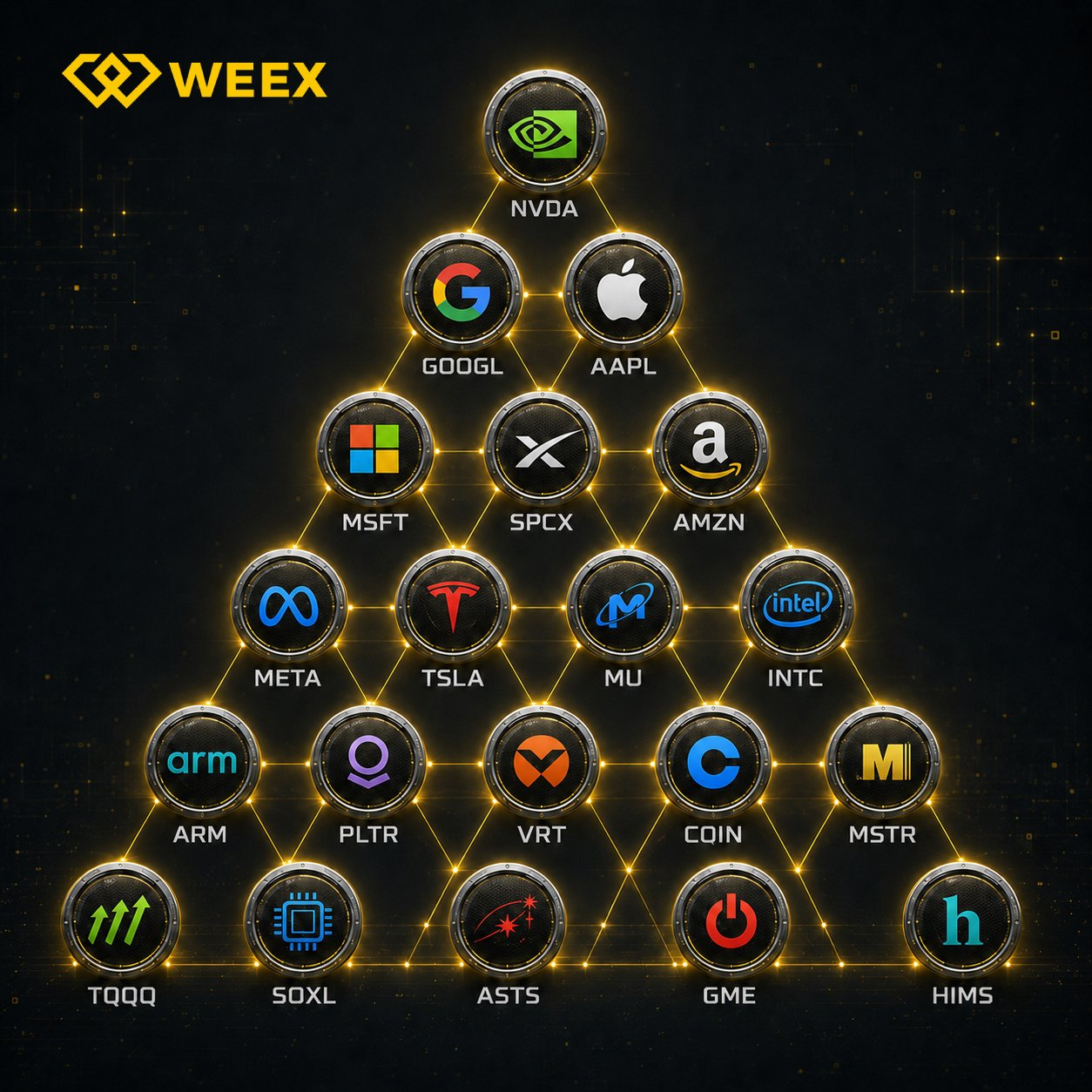
In the past, it was most likely BTC, ETH, SOL, plus a few popular tokens they followed. Now it's different: NVIDIA (NVDA), Microsoft (MSFT), Apple (AAPL), Tesla (TSLA), Micron (MU), SanDisk (SNDK), gold, silver, even forex assets, are starting to appear alongside crypto assets in the same trader's field of view.
This change is actually quite interesting. People aren't suddenly switching from "crypto trading" to traditional investments. Instead, they are starting to realize that many of the things that truly impact market trends don't have clear market boundaries. When the Fed changes its interest rate expectations, it can simultaneously affect Bitcoin, US stocks, and gold; increased AI investment benefits NVIDIA and Micron, and also changes overall market risk appetite; when geopolitical tensions rise, gold, crude oil, and risk assets can react in completely different ways.
In other words, traders are no longer just focusing on "which market will go up," but on how the same pool of capital moves between different markets.
This also explains why traditional financial assets are appearing more and more frequently on Crypto trading platforms. For traders already accustomed to USDT, perpetual contracts, and 24/7 markets, reopening another account and switching to a different fund system isn't necessarily the answer they want. What they might truly be interested in is a simpler question: since BTC, NVIDIA, and gold are all influenced by the same set of macro factors, why can't we look at them together?
What's truly changing is not the assets, but how traders view the market
In the past, there was a clear dividing line between stock investors and Crypto traders. The former looked at earnings reports, valuations, and macroeconomic data, while the latter researched on-chain capital flows, market sentiment, and industry narratives. But today, the trading logic from both sides is increasingly overlapping.
AI is a typical example.
When NVIDIA rises, many Crypto traders don't treat it as unrelated news. AI computing demand, data center capital expenditures, and changes in tech stock valuations directly impact overall market risk appetite, and this same risk appetite can also be reflected in digital assets like BTC. Conversely, changes in dollar liquidity and interest rate expectations are hard to confine to just one market.
Thus, a trader might study BTC in the morning, watch NVDA's price action in the afternoon, and then look at gold in the evening. It might seem like they are trading three completely different markets, but in reality, they are focusing on the same question: where is the money flowing right now?
This might be the most significant change worth observing after TradFi enters crypto trading platforms.
Previously, what assets a platform offered largely determined what users could see; now, users first form their own market judgments and then look for platforms that can cover those assets. The boundaries between assets still exist, but traders' own perspectives are becoming increasingly difficult to confine by such boundaries.
Why are gold, silver, and US stocks appearing together in the same trading account?
The first time many people see gold, silver, US stocks, and Crypto appearing in the same trading environment, they might find it somewhat incongruous. But think carefully—they are fundamentally several important markets that global capital observes simultaneously every day.
Gold corresponds to safe-haven sentiment, interest rates, and the US dollar; silver, besides its financial attributes, has obvious industrial demand; US stocks more reflect corporate earnings and economic growth expectations. Each has its own pricing logic, yet they become interconnected during major macroeconomic events.
Recently, market interest in "digitizing traditional assets" has also increased noticeably. The US market is discussing enabling extended stock trading hours through blockchain infrastructure, and financial institutions and trading platforms are also exploring products like Tokenized Stocks. In other words, some of the asset trading functions previously carried by stock exchanges, brokerages, and banks separately are finding new digital entry points.
This doesn't mean traditional financial markets will be replaced by Crypto. A more realistic change is that the two market systems are gradually finding ways to connect, and traders happen to be the group that feels this change the earliest.
For WEEX, TradFi is more like an extension of trading boundaries
WEEX's launch of TradFi isn't simply placing a few stock tickers next to the original Crypto products.
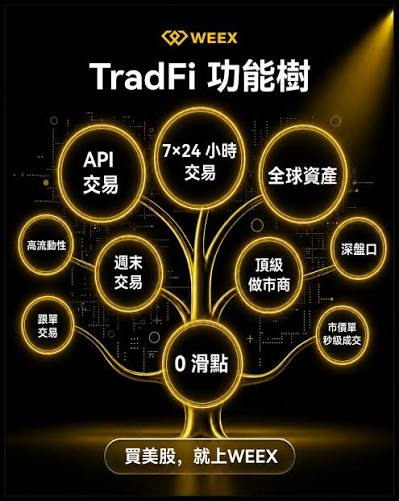
Currently, WEEX TradFi covers various types of traditional financial assets including stocks, gold, silver, crude oil, commodities, and global stock indices. It uses USDT as margin and does not require opening a separate TradFi account. Users can directly participate in related trades using USDT from their spot or contract accounts. The official page also provides a 7×24-hour TradFi trading mechanism, with clear prompts that liquidity might be lower during traditional market closure periods.
This design is quite easy to understand: WEEX is facing a user base already accustomed to digital asset trading. For them, USDT is not just an asset in their wallet, but also a familiar trading medium. Now, when they start paying attention to NVIDIA, Apple, Tesla, gold, or crude oil, the platform is naturally expected to provide broader market access.
Of course, this doesn't mean one account makes all markets completely identical. Stocks, precious metals, and Crypto each have different price formation mechanisms, trading hours, and risk characteristics. TradFi products themselves represent price exposure trades, not traditional ownership of the underlying assets.
But from a trader's perspective, the change is already evident.
A trader's perspective can extend from BTC to NVDA, from NVDA to QQQ, and from QQQ to gold and silver. The market observation that previously required opening several platforms is now gradually being integrated into a single trading environment.
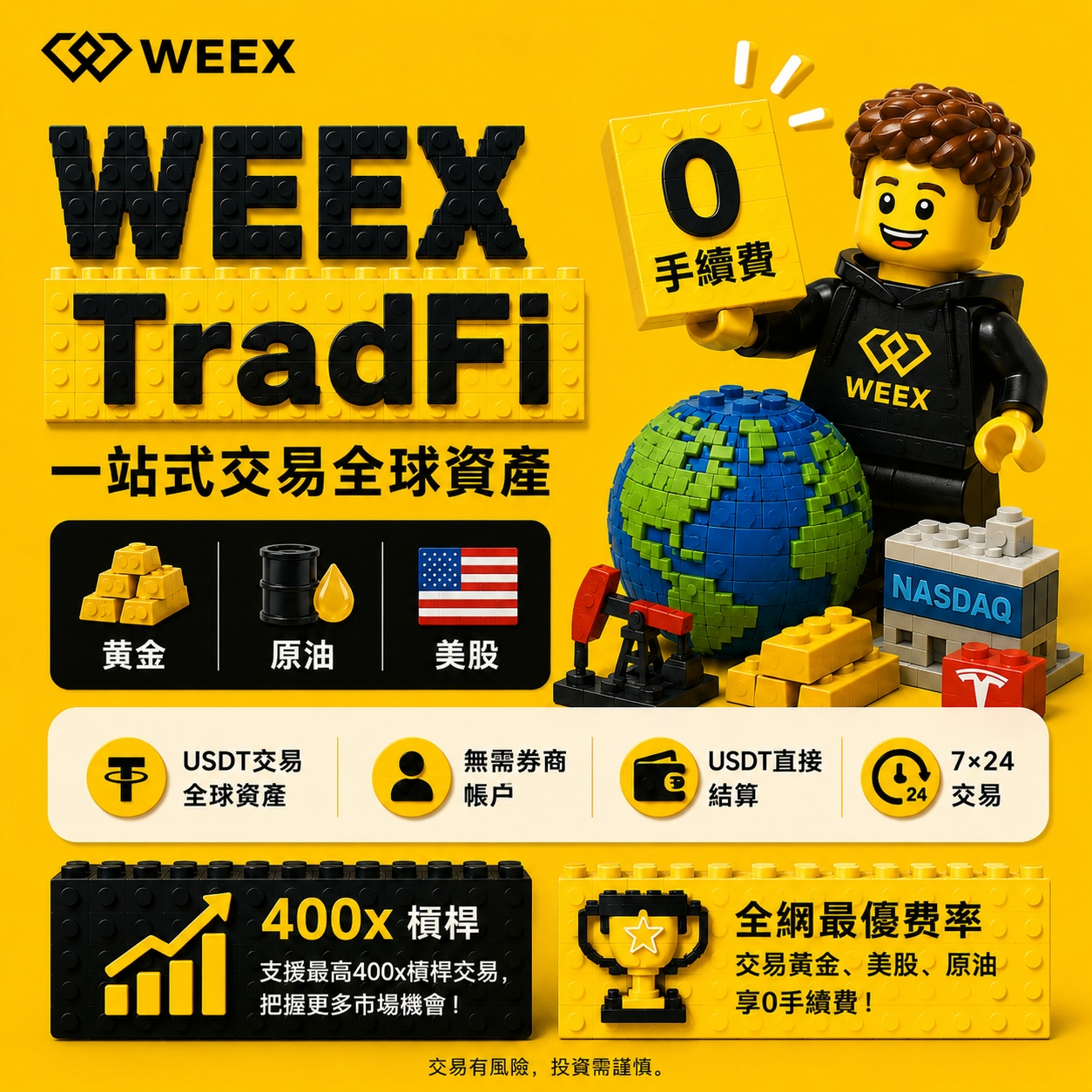
Therefore, what's truly worth paying attention to might not be "why Crypto trading platforms are starting to do TradFi," but another more specific question: When traders no longer see themselves as participants in just one single market, how can trading platforms continue to serve only one type of asset?
Perhaps this is what TradFi is truly changing.