Original|Odaily Planet Daily(@OdailyChina)
Author|CryptoLeo(@LeoAndCrypto)
Professional League of Legends players are entering the stock market in batches.
MLXG and yagao are two of the more prominent examples among LOL players who openly trade stocks, with one suffering heavy losses and the other raking in profits:
Former LPL professional jungler and current streamer MLXG (real name Liu Shiyu) has recently drawn attention due to legal issues and debts. When he first got into stocks, he mentioned in his stream that his gains in the A-share market were substantial, "earning a month's salary in a single day, streaming is the side job, stock trading is the main job." However, after some time, his tone shifted during streams: "Oh man, how would an amateur like me get into this stuff, I've lost my pants."
yagao (real name Zeng Qi), a professional player mainly active in the LPL, was revealed to have heavily invested in NVIDIA in 2021-2022, then quit the scene to "live a normal life," when in reality, he had "made a killing" on NVIDIA. Data shows that if one had bought NVIDIA from 2021-2022 and held until now, the return on investment would be about 500%-1400%.
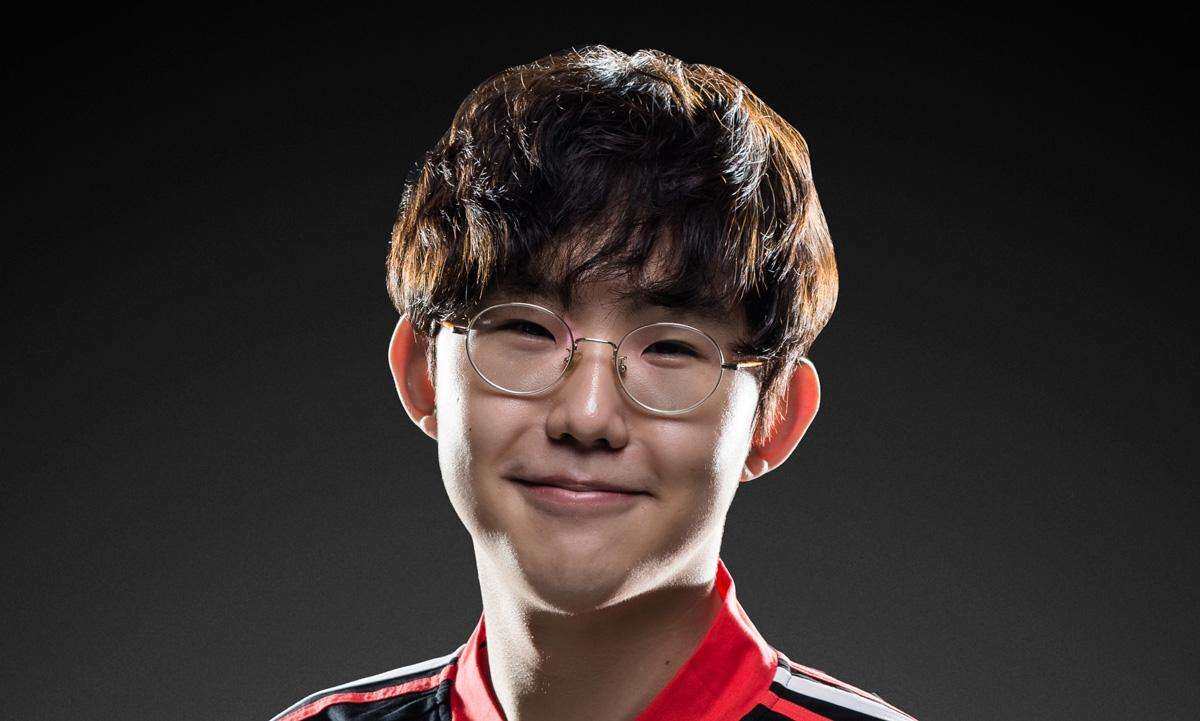
But compared to yagao, the LOL champion exposed yesterday truly deserves the title of "silently amassing a fortune." He retired relatively early, doesn't usually seek the limelight, but quietly staged a comeback on another battlefield. He is the S4 World Champion once hailed as the "Rat King" for his pentakills in Summoner's Rift—imp.
imp, who was still often yelling loudly on stream last year, hasn't streamed for nearly 3 months, not even appearing on his birthday, June 7th. In the past, imp would usually stream to interact with fans and celebrate his birthday.
Former pro player Doinb joked during a stream: "imp has achieved financial freedom by trading Korean and US stocks, he doesn't even stream on his birthday anymore." Doinb said this information came from Samsung Blue coach BanBazi, Choi Myung-won.
Whether he's truly free, imp hasn't personally responded. Just looking back at imp's career from debut to now, it's a life story that has repeatedly switched between a triumphant arc and a tragic one.
Peak at Debut: A 19-Year-Old World Champion
imp, real name Gu Seung-bin, born in 1995, along with player Faker born in 1996, helped forge the golden age of Korean esports.
In 2012, 17-year-old imp debuted in the MVP Ozone team under the ID "4seasons," playing the ADC position.
In 2013, MVP Ozone was acquired by Samsung Electronics and split into Samsung White and Samsung Blue. These two teams, ten players, were known as the "Samsung Ten," the top ten Korean LOL players around 2014. The two teams perfected the combination of Korean macro strategy and individual skill, winning almost all major Korean tournaments, often staging "Samsung Civil Wars," and are considered by many veteran fans to be the strongest batch of players in LOL history.
By the S4 World Championship, both Samsung White and Samsung Blue represented Korea. Although Samsung White hadn't won a domestic LCK championship, they were nearly unbeatable internationally. During the S4 World Championship, Samsung White crushed their way through, losing only 2 matches the entire tournament, ultimately defeating Royal Club 3-1 to win the championship. The ADC for Royal Club at the time was the well-known player Uzi.
imp performed exceptionally well in the S4 finals. During the matches, imp made key plays using the champion "Twitch" (including pentakills or crucial teamfights), which is the origin of his "Rat King" nickname. The imp and Mata bot lane duo was considered one of the strongest in the world at the time.
The 19-year-old imp won the League of Legends S4 World Championship, while Faker at the time hadn't even reached Worlds yet.
From LPL to Retirement: A Genius's Helplessness and a Wife's Betrayal
Soon after S4 in 2014, the LPL entered its era of Korean imports. Many teams spent money to buy Korean esports players. imp also left Samsung White and joined the LGD team, becoming one of the most successful early Korean ADC imports, beginning a 5-year LPL career.
However, for a player who peaked soon after debut by winning an S championship, imp's record in the LPL wasn't dazzling. During his time in China, he only won LPL league championships and runner-ups, with his best achievement being reaching the S5 World Finals during his time with LGD.
That year's LGD was considered by Chinese fans to be the team with the highest hopes of winning a World Championship, the LPL's first seed. But for various reasons, LGD failed to advance past the group stage at S5 Worlds, stopping at 16th place. Afterwards, imp transferred to WE and JDG, finally announcing his official retirement from JDG on November 19, 2019, ending his 8-year professional career. This ADC genius who peaked at debut did not secure a second career championship.
While failing in his career, he found success in love. Part of the reason for his retirement decision was progress in his personal relationship, looking forward to marriage and a stable life.
imp, who moved into streaming, had a decent annual salary and entrusted all his savings and streaming income to his wife. Unfortunately, the marriage lasted only a year. Both sides accused each other of infidelity and inappropriate relationships with others, leading to divorce. Ultimately, all of imp's savings remained in his ex-wife's hands. imp, who retired yearning for marital life, ended up losing both love and money.
Prolonged emotional and financial disputes led imp to start drinking heavily and developing mental health issues. At its most severe, in 2022, he was diagnosed with severe depression and was exempted from mandatory Korean military service due to a grade 4 mental disorder.
The Hidden Arrow: Imp's Second Grand Final is in the Stock Market
After the divorce, imp continued streaming on the Douyu platform. His somewhat erratic streaming style resulted in lukewarm popularity.
It was at this time that imp began turning to studying stocks. Coming from Samsung, he naturally felt a connection to semiconductors. However, his usually eccentric personality meant fans didn't take his "leaked tips" seriously.
imp has repeatedly shared his investment insights during streams, stating that he invests in both Korean and US stocks, focusing on semiconductor and tech stocks; and mentioned he bought NVIDIA shares before the AI explosion.
"Damn, if I were normal yesterday, I could have easily made a million or two. If I made a lot yesterday, I'd share it with you guys, but I didn't make anything."
"Now when I stream, I don't care about the streaming salary anymore. The streamer is going to get rich again tomorrow. Tomorrow, I can earn over a year's salary in one day, why would I stream?"
The most interesting line: "My assets have multiplied tenfold from March to October this year...... There are wins and losses in stocks, you have to accept that reality first." Some have mentioned that imp said in his fan group that he used 5 million RMB with 10x leverage to go long on SK Hynix. Data bragged about in group chats is often exaggerated, but he has indeed reviewed his "heavy positions in semiconductor stocks" multiple times on stream. In 2026, SK Hynix once surpassed Samsung to become Korea's top company by market cap. imp probably did make a hefty profit.
The player who came from Samsung, after experiencing highs and lows, heavily invested in Samsung, SK Hynix, and other semiconductor stocks. "He left Samsung in 2014, but in 2026, he returned to Samsung in another way." The plot of a triumphant protagonist's story has come full circle.
imp, still not directly responding to the speculation today, is perhaps at home, watching the K-line charts of SK Hynix and NVIDIA on his screen, holding a glass of alcohol, reminiscing about his performances on the League of Legends stage and the stock market battlefield.
"The arrow has been fired, a new battlefield, Carry!"