What happened in crypto today – Surging ETF inflows, XRP’s morning dumps, & more

ambcryptoPublicado a 2026-03-16Actualizado a 2026-03-16

Resumen

BlockFills filed for Chapter 11 bankruptcy, revealing liabilities of up to $500 million against assets of only $50–100 million, highlighting severe liquidity stress in crypto lending. The firm absorbed $75 million in bad debt after Bitcoin's sharp decline triggered margin call failures. Meanwhile, institutional capital is shifting toward regulated crypto ETFs, with Bitcoin ETFs seeing $767.3 million in net inflows—dominated by BlackRock’s IBIT—and Ethereum ETFs adding $160.8 million. In XRP markets, a recurring "10 AM dump" pattern faded over the weekend, suggesting a potential reduction in algorithmic selling pressure. These trends point to structural vulnerabilities in crypto credit and growing institutional preference for ETF exposure.

BlockFills filed for Chapter 11 on the 15th of March, revealing liabilities between $100 million and $500 million against assets of only $50–$100 million.

This imbalance exposed severe liquidity stress. Pressure intensified earlier when Bitcoin [BTC] plunged from $97,000 to below $64,000 during February’s “Black Storm.”

As prices collapsed, institutional borrowers failed to meet margin calls. BlockFills then absorbed roughly $75 million in bad debt from these defaults.

Meanwhile, the firm had halted withdrawals on the 11th of February, signaling depleted liquidity buffers. Legal pressure soon compounded the crisis as Dominion Capital alleged misuse of customer assets.

These events reveal structural weaknesses in centralized crypto lending. When collateral values fall faster than liquidations execute, balance sheets quickly unravel.

As liquidity providers disappear, market depth thins, slippage rises, and institutional trust across crypto credit markets weakens further.

Institutional capital shifts toward crypto ETFs

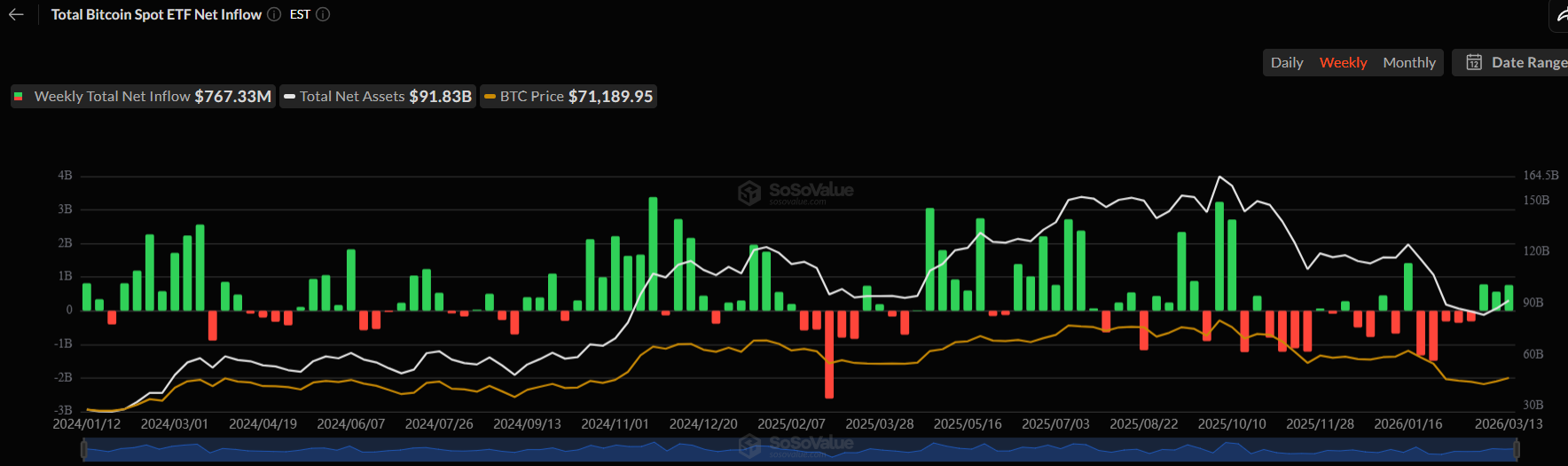
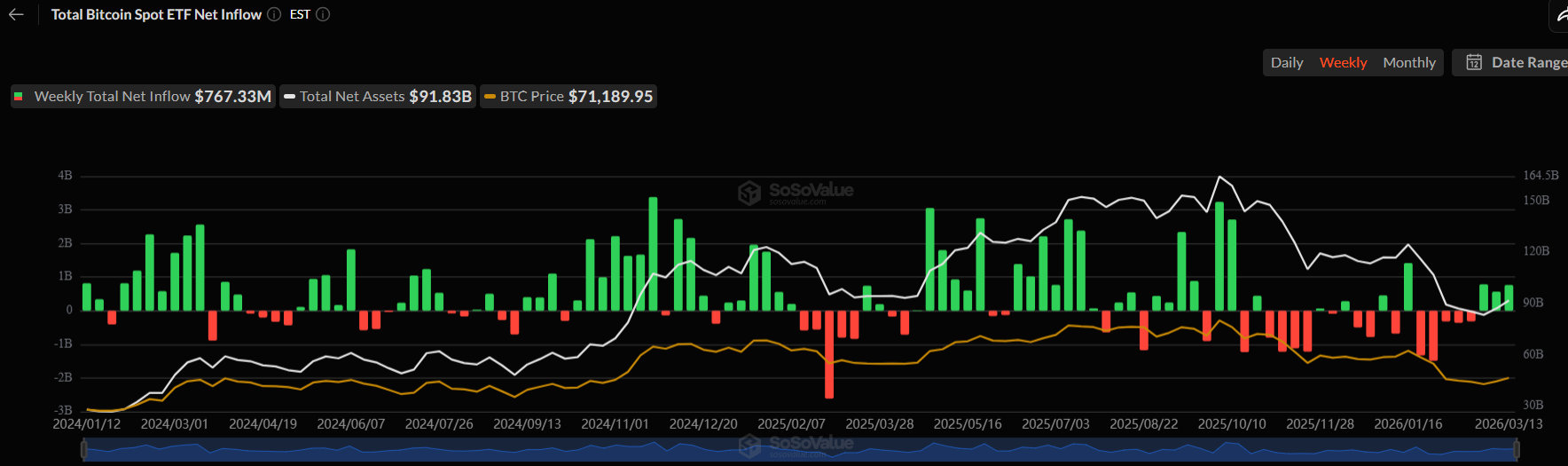
Institutional capital continues flowing through regulated crypto ETFs even as credit markets face strain. Over the past week, Bitcoin ETFs recorded $767.3 million in net inflows.

Approximately over $600 million of that capital was drawn to BlackRock’s IBIT, which dominated activity.
Source: SoSoValue

In contrast, Grayscale’s GBTC saw a $25.9 million exit, highlighting continued capital rotation. As Bitcoin [BTC] demand strengthens through ETFs, Ethereum funds also record steady accumulation.

Ethereum ETFs added $160.8 million in net inflows, reflecting steady institutional demand as investors continued reallocating exposure across different Ethereum investment products.

Beyond ETF flows, the Ethereum Foundation moved $10 million in ETH after initiating its first staking activity weeks earlier.

These developments signal that big investors prefer safer options, as ETFs are becoming more popular than riskier lending methods to access the crypto market.

Jane Street’s playbook echoes in XRP markets

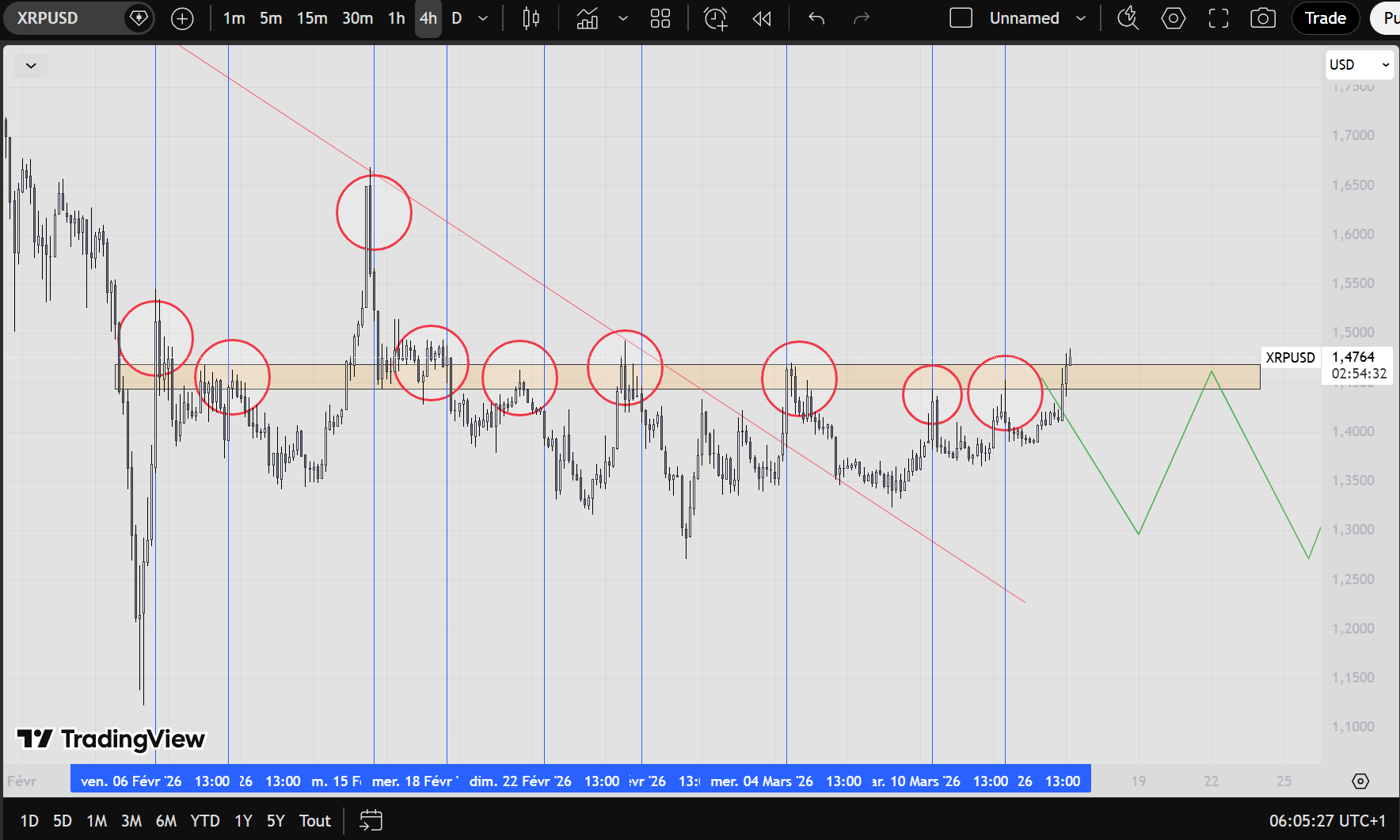
Over the weekend, Ripple [XRP] climbed from $1.41 to nearly $1.48 without a familiar rejection. This shift stood out because analyst ArthurXRP had earlier identified a recurring pattern.

In prior sessions, XRP repeatedly rallied toward the $1.48 resistance during off-hours trading.

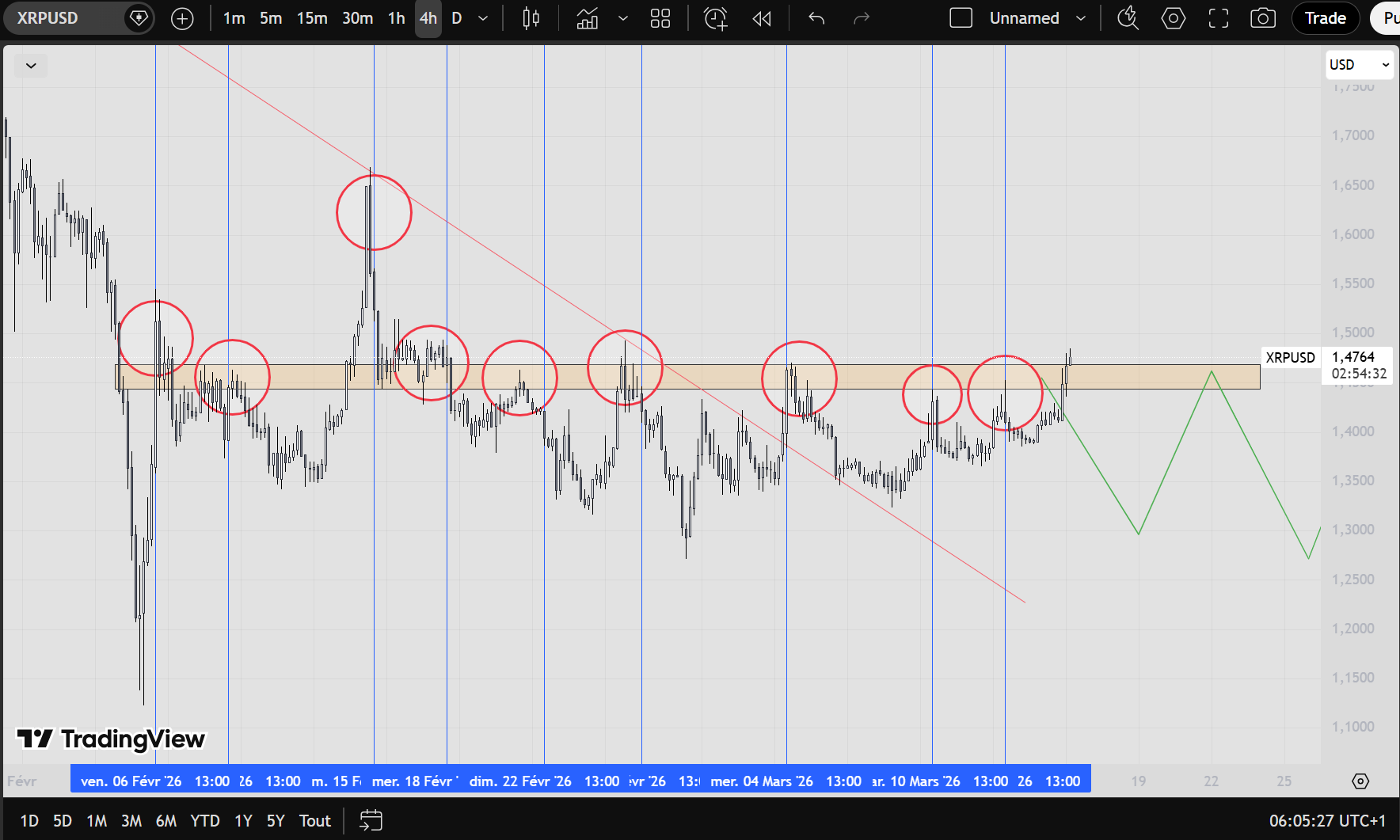
Soon after, sharp selling pressure often appeared near the 10 AM EST U.S. market opening. Each rejection pushed the price back toward the $1.40–$1.42 range, reinforcing the ceiling.
Source: ArthurXRP/X

This behavior closely mirrors the “vanishing volatility” episode tied to the Jane Street controversy in early 2026. For months, crypto markets experienced a clockwork “10 AM dump,” widely attributed to institutional algorithmic flows.

Investigations alleged a “morning pump, afternoon dump” strategy used to profit from derivatives positioning. Yet as regulatory scrutiny intensified, the pattern abruptly faded.

Such dynamic hedge algorithms often create structured flows. When these systems pause, the selling pressure disappears. XRP’s weekend breakout therefore hints that institutional liquidity mechanisms may have temporarily stepped back.


Final Summary

  • Bitcoin’s market stress exposed structural fragility in centralized crypto lending after BlockFills’ collapse revealed liquidity mismatches and rising counterparty risk.
  • Ethereum reflects shifting institutional behavior as ETF inflows grow, while XRP’s disrupted sell pattern hints at fading algorithmic pressure.


Preguntas relacionadas

QWhat were the main reasons behind BlockFills filing for Chapter 11 bankruptcy?

ABlockFills filed for Chapter 11 due to severe liquidity stress, with liabilities between $100 million and $500 million against assets of only $50–$100 million. This imbalance was exacerbated by Bitcoin's price plunge from $97,000 to below $64,000, causing institutional borrowers to default on margin calls and resulting in approximately $75 million in bad debt. The firm had also halted withdrawals, signaling depleted liquidity, and faced legal pressure over alleged misuse of customer assets.

QHow did Bitcoin and Ethereum ETFs perform in terms of institutional inflows recently?

ABitcoin ETFs recorded $767.3 million in net inflows over the past week, with over $600 million drawn to BlackRock's IBIT. In contrast, Grayscale's GBTC saw a $25.9 million outflow. Ethereum ETFs added $160.8 million in net inflows, reflecting steady institutional demand and a shift toward safer investment products like ETFs rather than riskier lending methods.

QWhat pattern did analyst ArthurXRP identify in XRP's price movement, and how did it relate to Jane Street's controversy?

AArthurXRP identified a recurring pattern where XRP rallied toward $1.48 during off-hours trading but faced sharp selling pressure near 10 AM EST, pushing the price back to the $1.40–$1.42 range. This behavior mirrored the '10 AM dump' pattern from the Jane Street controversy in early 2026, which was attributed to institutional algorithmic flows. The weekend breakout suggested a temporary step back from these liquidity mechanisms.

QWhat structural weaknesses in centralized crypto lending were revealed by BlockFills' collapse?

AThe collapse revealed that when collateral values fall faster than liquidations can execute, balance sheets quickly unravel. This leads to liquidity providers disappearing, market depth thinning, slippage rising, and institutional trust in crypto credit markets weakening further, highlighting the fragility of centralized lending models under stress.

QHow did the Ethereum Foundation's activity reflect broader institutional trends in the crypto space?

AThe Ethereum Foundation moved $10 million in ETH after initiating its first staking activity, signaling alignment with institutional trends favoring safer, regulated options like ETFs. This, combined with steady ETF inflows, indicates a shift away from riskier lending methods toward more secure and transparent investment vehicles.

Lecturas Relacionadas

The More Lifelike the Robot, the More Terrifying? Unveiling the 'Uncanny Valley Effect' in the Era of Humanoid Robots

As humanoid robots become increasingly lifelike, they confront a significant psychological barrier known as the "Uncanny Valley Effect," a concept proposed by Japanese roboticist Masahiro Mori in 1970. This phenomenon describes a dip in human comfort and acceptance when robots appear almost, but not perfectly, human. Minor imperfections in facial expressions, eye movements, or skin texture trigger a subconscious sense of unease, as the brain detects something trying, yet failing, to mimic a person. Examples range from the controversial human-like robot Sophia to animated characters in films like *The Polar Express*. The effect poses a key design challenge for robotics companies. Some, like Boston Dynamics, avoid it entirely by creating highly capable but visibly mechanical robots. Others, like Hanson Robotics, push for greater human likeness despite the risk. For consumer robots, especially in homes, most manufacturers opt for stylized or clearly mechanical designs to ensure broader acceptance. While the Uncanny Valley remains a powerful force, its impact may diminish over time through technological advancements that achieve near-perfect realism or through generational familiarity as people grow accustomed to interacting with humanoid machines. Ultimately, navigating this psychological frontier requires as much understanding of human perception as of robotics technology itself.

marsbitHace 2 min(s)

The More Lifelike the Robot, the More Terrifying? Unveiling the 'Uncanny Valley Effect' in the Era of Humanoid Robots

marsbitHace 2 min(s)

WeChat Agent Issues a 'Heroic Summons,' Half of the Internet Responds

WeChat AI Agent is on the horizon. The WeChat Open Platform has issued a guide for developers, offering them ways to integrate into the WeChat AI ecosystem. This will enable mini-programs to be discovered and invoked by the AI. Meituan has already announced its integration, allowing users to access services like food delivery through WeChat AI. Other platforms like Ctrip and Tongcheng have followed suit. Furthermore, WeChat is collaborating with major smartphone manufacturers to enable their native AI assistants to perform actions within WeChat, such as initiating calls or sending messages, through a controlled protocol called Agent-to-Agent (A2A). Reports indicate the WeChat AI Agent will be accessible by swiping right on the main interface. It aims to understand user intent within the rich context of chats, groups, and past interactions, then automatically call upon relevant mini-programs to complete tasks like ordering coffee or booking restaurants. This positions it as a potential "super app" with direct access to WeChat's vast ecosystem of services, social connections, and payment systems. Technically, this is a complex endeavor. It requires advanced natural language understanding, a "world model" to predict interactions within mini-programs (UI-Oceanus), multi-model orchestration for cost efficiency, and careful coordination with millions of third-party service providers. Tencent's development follows a "Co-Design" approach, where product teams and the Hunyuan model team collaborate closely, allowing capabilities honed in other AI products (like Yuanbao for chat, ima for search, WorkBuddy for office tasks) to be transferred to the WeChat Agent. Tencent is strategically opting for the A2A protocol over GUI-based automation (which it has blocked in the past), maintaining control over its ecosystem. To manage the immense scale and cost of serving 1.4 billion monthly active users, Tencent is deepening its ties with DeepSeek, known for its cost-effective training, to secure a low-cost inference backbone. The ultimate goal is to solve practical, everyday problems for users within the WeChat ecosystem, moving beyond technical benchmarks to deliver real utility, which Tencent sees as the key to winning in the long-term AI game.

marsbitHace 1 hora(s)

WeChat Agent Issues a 'Heroic Summons,' Half of the Internet Responds

marsbitHace 1 hora(s)

Trading

Spot
Futuros

Artículos destacados

Qué es XRP 2.0

XRP 2.0: Una Nueva Frontera en el Panorama de las Criptomonedas Introducción a XRP 2.0 En el siempre cambiante ámbito de las criptomonedas, nuevos proyectos surgen continuamente, compitiendo por atención y adopción. Una de estas iniciativas prometedoras es XRP 2.0, un nuevo proyecto de criptomoneda diseñado para aprovechar la tecnología blockchain avanzada y metodologías de encriptación robustas. Aunque el nombre establece paralelismos con el XRP de Ripple, es crucial señalar que XRP 2.0 opera de manera independiente, enfocándose en mejorar la seguridad de las transacciones, la privacidad y la escalabilidad. A medida que el panorama financiero digital abraza cada vez más soluciones descentralizadas, XRP 2.0 busca contribuir de manera significativa a web3 y a la expansión general de los proyectos de criptomonedas. ¿Qué es XRP 2.0? En esencia, XRP 2.0 es un proyecto de criptomoneda que busca crear un ecosistema de moneda digital seguro y descentralizado. Su tecnología fundamental integra principios avanzados de blockchain con técnicas de encriptación de vanguardia. El objetivo principal de XRP 2.0 es establecerse como una plataforma confiable y eficiente que permita la ejecución rápida de transacciones mientras prioriza la protección de la privacidad de sus usuarios. El proyecto se promociona como una solución a muchas limitaciones enfrentadas por las criptomonedas existentes, proponiendo un sistema que puede manejar un mayor volumen de transacciones con mejor velocidad y privacidad. Esta versatilidad posiciona a XRP 2.0 como un competidor significativo en un mercado plagado de diversas monedas digitales. ¿Quién es el Creador de XRP 2.0? La identidad del creador detrás de XRP 2.0 ha sido señalada como 'Wilbur.' Sin embargo, los detalles completos sobre Wilbur o su entidad asociada siguen siendo elusivos. La anonimidad de muchos creadores de criptomonedas no es un fenómeno poco común en la industria, a menudo diseñado para mantener un grado de privacidad y seguridad. ¿Quiénes son los Inversores de XRP 2.0? Hasta ahora, la información específica relacionada con las fundaciones o organizaciones de inversión que apoyan a XRP 2.0 no está disponible públicamente. En el sector de las criptomonedas, el respaldo de inversores respetables puede influir significativamente en la credibilidad y el éxito de un proyecto, sin embargo, la transparencia sobre los patrocinadores financieros de XRP 2.0 no se ha establecido. ¿Cómo Funciona XRP 2.0? XRP 2.0 se destaca al emplear una combinación de tecnología blockchain y algoritmos de encriptación avanzados que aseguran transacciones seguras y descentralizadas. Su estructura innovadora incluye características únicas diseñadas para fomentar el compromiso del usuario y ampliar las funcionalidades más allá de las transacciones convencionales de criptomonedas. Entre estas características, XRP 2.0 incorpora capacidades impulsadas por IA, como funcionalidades de texto a imagen y de texto a voz. Estas adiciones están diseñadas para mejorar la experiencia interactiva de los usuarios, promoviendo una mayor aplicabilidad en diversos sectores. Al unir avances tecnológicos con un diseño centrado en el usuario, XRP 2.0 busca captar la atención de una amplia gama de individuos y empresas que buscan integrar soluciones de criptomonedas en sus marcos operativos. Cronología de XRP 2.0 Entender XRP 2.0 requiere examinar los hitos que han definido su viaje hasta ahora: 23 de julio de 2023: Se presenta XRP 2.0 como un nuevo proyecto de criptomonedas, con el objetivo de revolucionar las capacidades de transacciones seguras y descentralizadas en el ámbito de blockchain. 8 de septiembre de 2023: Se lanza otro proyecto, XRP20, marcando la aparición de un token ERC-20 en la blockchain de Ethereum que no guarda relación con XRP 2.0. 13 de noviembre de 2023: El Libro Mayor de XRP experimenta una actualización significativa con el lanzamiento de la versión 2.0.0 del software del servidor rippled. Es esencial señalar que este desarrollo está desconectado del proyecto de criptomonedas XRP 2.0. Puntos Clave sobre XRP 2.0 Para destilar la esencia de XRP 2.0, surgen varios factores críticos: Características Únicas: La inclusión de características como texto a imagen y texto a voz impulsadas por IA diversifica aún más las aplicaciones potenciales de XRP 2.0. Tecnología Blockchain: El marco utiliza mecanismos avanzados de blockchain y protocolos de encriptación, asegurando un entorno seguro y descentralizado para las transacciones. Escalabilidad y Privacidad: XRP 2.0 prioriza la protección mejorada de la privacidad en los procesos de transacción y la escalabilidad necesaria para acomodar una base de usuarios creciente. No Afiliación con Ripple: Es importante destacar que, a pesar de su nombre, XRP 2.0 no tiene ninguna lealtad ni colaboración con el XRP de Ripple, diferenciando su marco operativo y objetivos dentro del ecosistema de criptomonedas. Conclusión XRP 2.0 representa una ambiciosa aventura en la esfera de las criptomonedas, buscando ofrecer una combinación de seguridad, privacidad y eficiencia en las transacciones digitales. Al integrar tecnologías sofisticadas y características amigables para el usuario, el proyecto se propone ampliar los horizontes de lo que la criptomoneda puede lograr en la economía digital de hoy. Si bien la anonimidad de su creador y la falta de inversores revelados pueden generar cuestionamientos para algunos, el enfoque de XRP 2.0 en funcionalidades avanzadas y descentralización realza su atractivo en un mercado de criptomonedas cada vez más abarrotado. A medida que el paisaje de las criptomonedas sigue evolucionando, XRP 2.0 podría emerger como un jugador crucial en la expansión de soluciones blockchain seguras y escalables.

174 Vistas totalesPublicado en 2024.04.05Actualizado en 2024.12.03

Qué es XRP 2.0

Cómo comprar XRP

¡Bienvenido a HTX.com! Hemos hecho que comprar XRP (XRP) sea simple y conveniente. Sigue nuestra guía paso a paso para iniciar tu viaje de criptos.Paso 1: crea tu cuenta HTXUtiliza tu correo electrónico o número de teléfono para registrarte y obtener una cuenta gratuita en HTX. Experimenta un proceso de registro sin complicaciones y desbloquea todas las funciones.Obtener mi cuentaPaso 2: ve a Comprar cripto y elige tu método de pagoTarjeta de crédito/débito: usa tu Visa o Mastercard para comprar XRP (XRP) al instante.Saldo: utiliza fondos del saldo de tu cuenta HTX para tradear sin problemas.Terceros: hemos agregado métodos de pago populares como Google Pay y Apple Pay para mejorar la comodidad.P2P: tradear directamente con otros usuarios en HTX.Over-the-Counter (OTC): ofrecemos servicios personalizados y tipos de cambio competitivos para los traders.Paso 3: guarda tu XRP (XRP)Después de comprar tu XRP (XRP), guárdalo en tu cuenta HTX. Alternativamente, puedes enviarlo a otro lugar mediante transferencia blockchain o utilizarlo para tradear otras criptomonedas.Paso 4: tradear XRP (XRP)Tradear fácilmente con XRP (XRP) en HTX's mercado spot. Simplemente accede a tu cuenta, selecciona tu par de trading, ejecuta tus trades y monitorea en tiempo real. Ofrecemos una experiencia fácil de usar tanto para principiantes como para traders experimentados.

1.4k Vistas totalesPublicado en 2024.12.10Actualizado en 2026.06.02

Cómo comprar XRP

Discusiones

Bienvenido a la comunidad de HTX. Aquí puedes mantenerte informado sobre los últimos desarrollos de la plataforma y acceder a análisis profesionales del mercado. A continuación se presentan las opiniones de los usuarios sobre el precio de XRP (XRP).

活动图片














