What Brought GPT and Claude Together? Opposing the Pentagon?

marsbitPublicado a 2026-02-28Actualizado a 2026-02-28

Resumen

The article discusses the unexpected alignment between rival AI companies OpenAI and Anthropic, driven by their shared ethical stance against the U.S. Department of Defense's demands. Anthropic, the maker of Claude, had signed a $200 million contract with the Pentagon but insisted on two red lines: no mass surveillance of U.S. citizens and no autonomous weapons without human oversight. When the Pentagon demanded unrestricted use, Anthropic refused, citing ethical concerns. In a show of solidarity, over 400 employees from OpenAI and Google signed an open letter supporting Anthropic’s position. OpenAI’s CEO also internally affirmed similar principles. However, this unity was short-lived. After Anthropic held its ground and rejected the Pentagon’s ultimatum, it was labeled a "supply chain security risk," effectively barring it from all federal contracts. Meanwhile, OpenAI secured the Pentagon contract by accepting less stringent terms, agreeing not to engage in mass surveillance or autonomous weapons but without pushing for additional legal safeguards. The piece highlights the political and ideological dimensions of the conflict, noting that Anthropic’s stance was perceived as "woke" and ideologically driven, while OpenAI’s more pragmatic approach was rewarded. The outcome signals the high cost of resisting government pressure in the AI industry and raises questions about the real-world value of ethical principles when faced with political and economic consequences.

Author: Kuli, Deep Tide TechFlow

A few days ago, a photo went viral online.

India held an AI summit, with Prime Minister Modi on stage, flanked by a row of Silicon Valley bigwigs. During the group photo, Modi raised the hand of the person next to him overhead, and others followed suit, holding hands, presenting a scene of unity.

But, only two people did not hold hands.
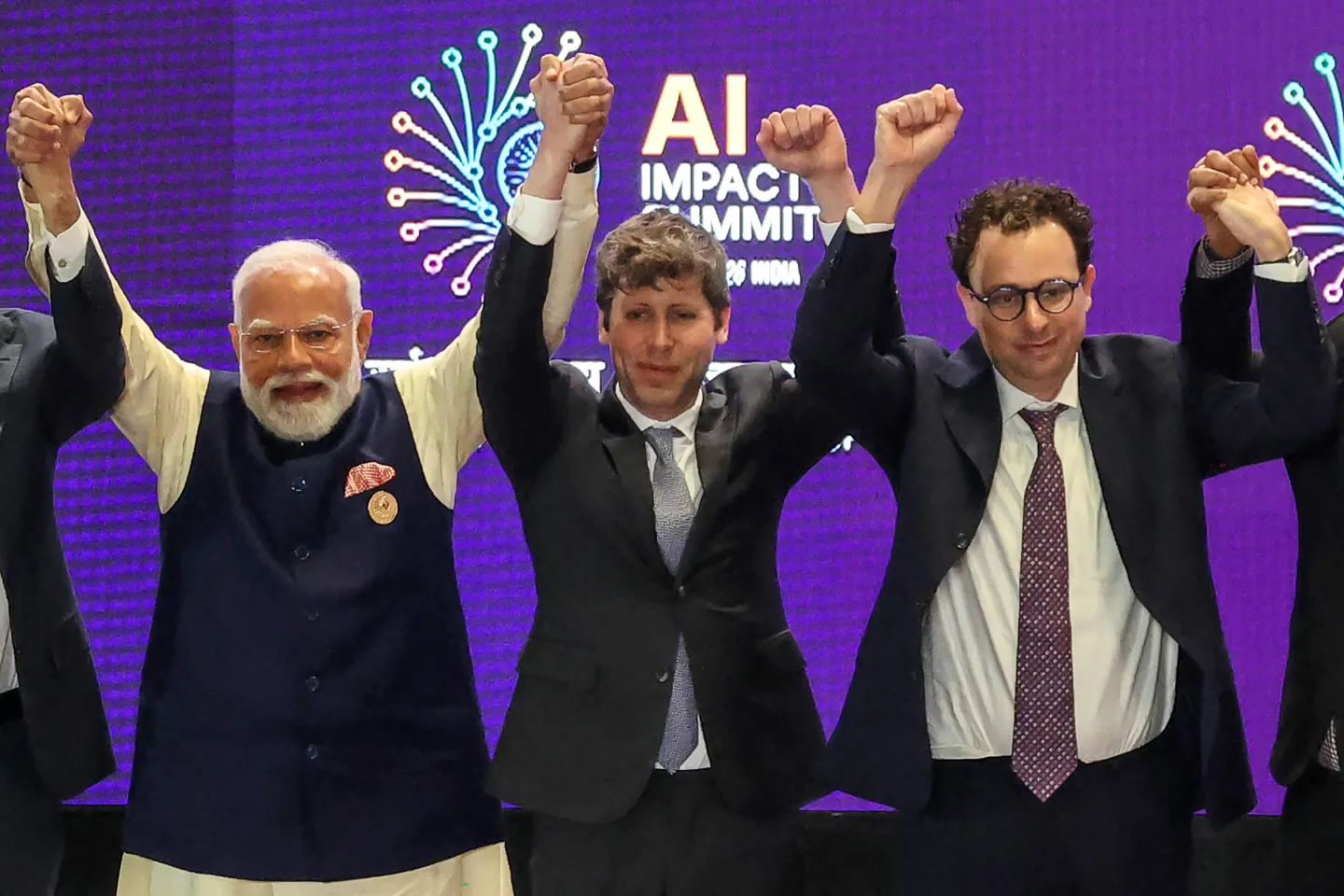
The CEOs of OpenAI and Anthropic, the bosses behind ChatGPT and Claude respectively, stood next to each other, each raising a fist.

No hand-holding, no eye contact, like two rivals forced to share a desk by the teacher.

These two companies have been fiercely competing in recent years. Claude was created by a team that split from OpenAI. They fight for users, enterprise clients, funding, and during this year's Super Bowl, Anthropic even paid for ads mocking ChatGPT for planning to introduce advertisements.

So, not holding hands? Normal.

However, today they joined hands. Because of the Pentagon.

Here's what happened.

Anthropic, the company behind Claude, signed a contract with the U.S. Department of Defense last year worth up to $200 million. Claude became the first AI model deployed on the U.S. military's classified networks, assisting with tasks like intelligence analysis and mission planning.

But Anthropic drew two red lines in the contract:

Claude cannot be used for mass surveillance of U.S. citizens, nor for autonomous weapons without human involvement. (Reference reading: Anthropic's 72-Hour Identity Crisis)

However, the Pentagon did not accept this.

Their demand was four words: without restrictions. They bought the tool, so they should be able to use it freely. Why should a tech company dictate what the U.S. military can or cannot do?

Last Tuesday, Defense Secretary Hegseth gave Anthropic's CEO an ultimatum in person: agree by 5:01 PM Friday, or face the consequences.

Anthropic did not agree.

Their CEO issued a public statement,大意是: We deeply understand the importance of AI for U.S. defense, but in a few cases, AI can harm rather than defend democratic values. We cannot in good conscience accept this demand.
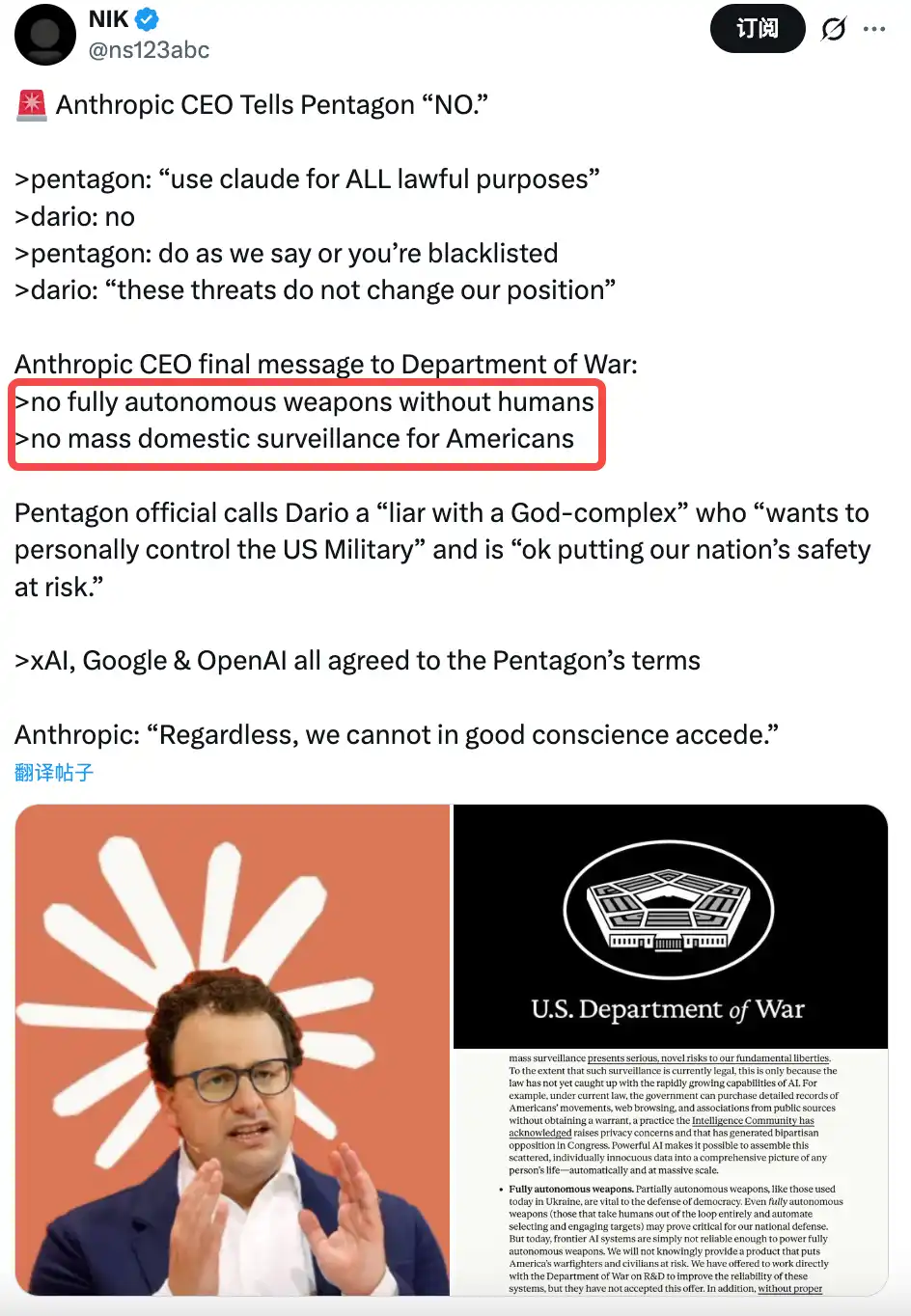
The Pentagon's negotiator, Deputy Secretary of Defense Emil Michael, subsequently called him a liar on social media, saying he had a God complex and was playing games with national security.

A Brief Alliance

Then, something unexpected happened.

Employees from OpenAI and Google, over 400 people in total, signed a joint open letter titled "We Will Not Be Divided".

The letter stated that the Pentagon was negotiating with AI companies one by one, trying to get others to agree to the conditions Anthropic refused, using fear to divide each company.

OpenAI's CEO also sent an internal letter to all employees, saying OpenAI has the same red lines as Anthropic:

No mass surveillance, no autonomous lethal weapons.
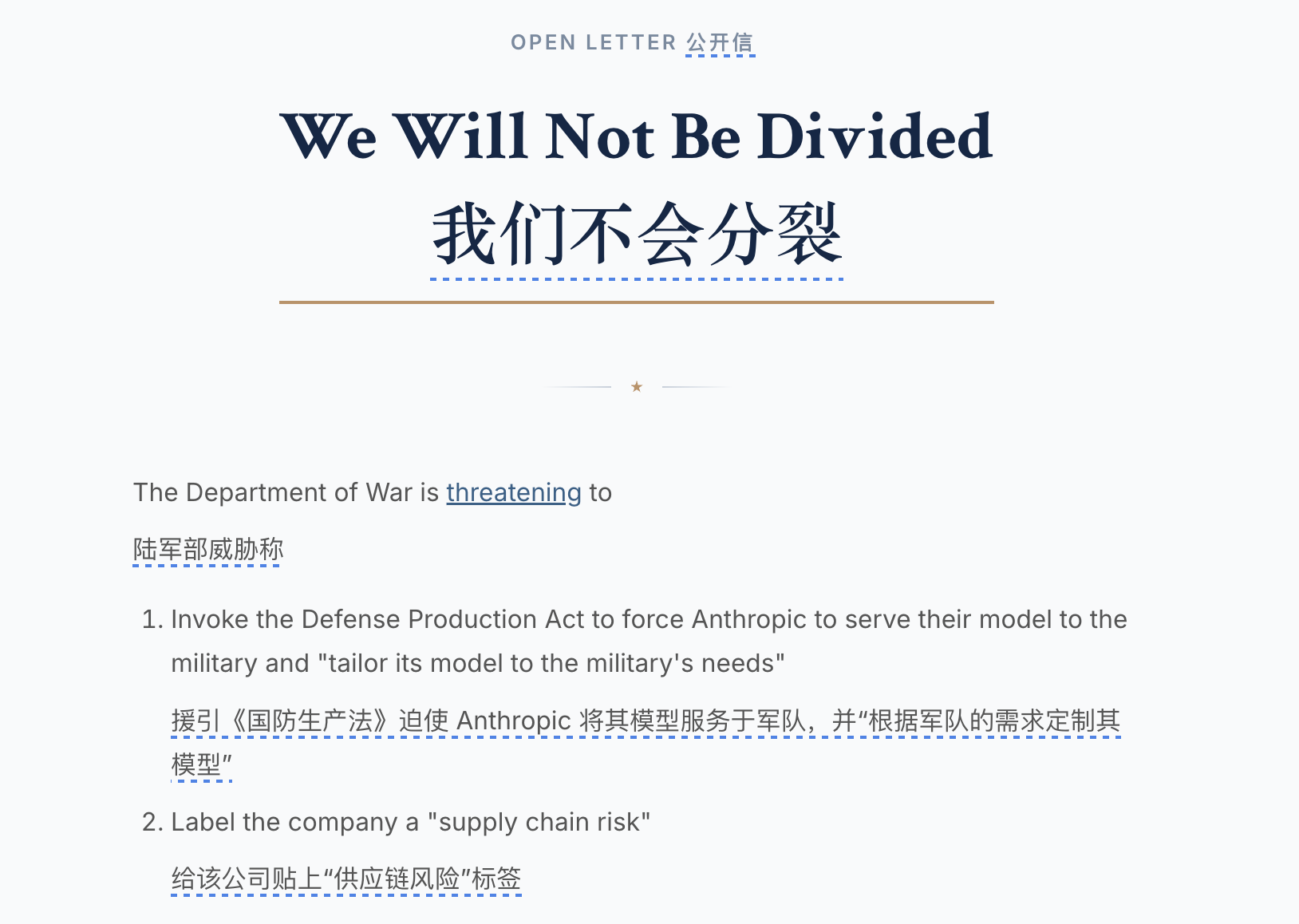
The two companies that refused to hold hands just days ago suddenly found themselves on the same side because of the Pentagon.

However, this unity probably only lasted a few hours.

At 5:01 PM Friday, the Pentagon's ultimatum expired. Anthropic did not sign.

A U.S. tech company valued at $380 billion risked voiding a $200 million contract and refused the U.S. Department of Defense. In the past, this would have at most resulted in a contract termination and finding a new supplier. But this time, Washington's reaction was far from just commercial.

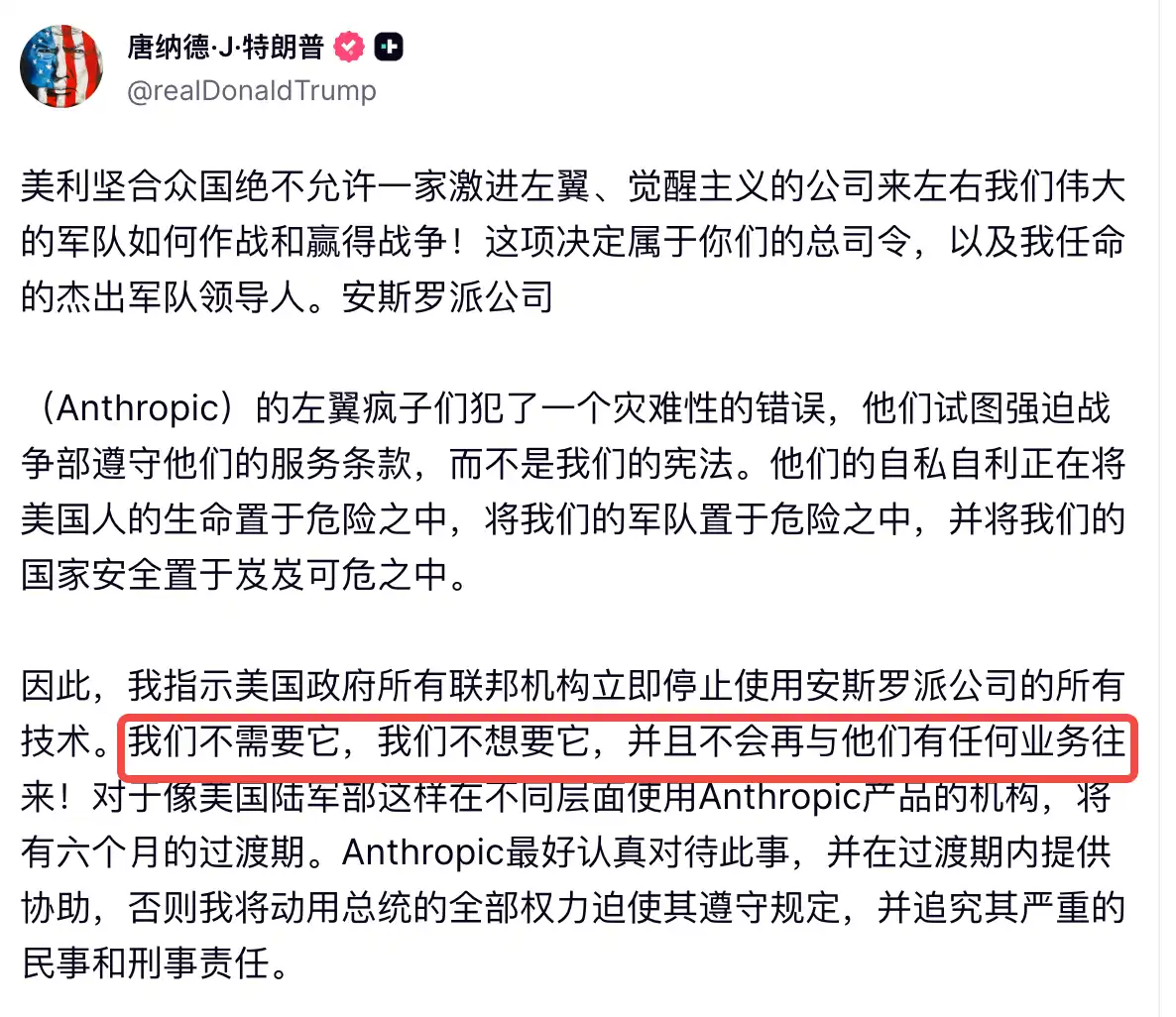
Trump posted on Truth Social about an hour later, calling Anthropic "left-wing lunatics," saying they were trying to place themselves above the Constitution and gamble with American soldiers' lives.

He demanded all federal agencies immediately stop using Anthropic's technology.

Shortly after, U.S. Defense Secretary Hegseth announced labeling Anthropic as a "supply chain security risk." This label is usually reserved for companies like Huawei. The message was clear: any contractor doing business with the U.S. military could no longer use Anthropic's products.
Anthropic said they would take legal action.

And that same evening, OpenAI, which had previously maintained a united front, signed an agreement with the Pentagon.

An Ideological Problem

What did OpenAI get?

The position left vacant by Claude's removal: the AI supplier for the U.S. military's classified networks. However, OpenAI presented three conditions to the Pentagon: no mass surveillance, no autonomous weapons, and human involvement required for high-risk decisions.

The Pentagon said, okay.

You read that right. Conditions that Anthropic argued over for weeks and couldn't get accepted were agreed upon with another company in a matter of days?

Of course, the proposals weren't exactly the same.

Anthropic wanted an extra layer: they argued that current laws can't keep up with AI capabilities. For example, AI can legally purchase, aggregate your location data, browsing history, social media information—effectively achieving surveillance—with each step being legal.

Anthropic said just writing "no surveillance" is useless; this loophole needs to be closed. OpenAI did not insist on this point; they accepted the Pentagon's argument that existing laws are sufficient.

But if you think this was just a disagreement over terms, you'd be naive. This negotiation was never just about the terms from the start.

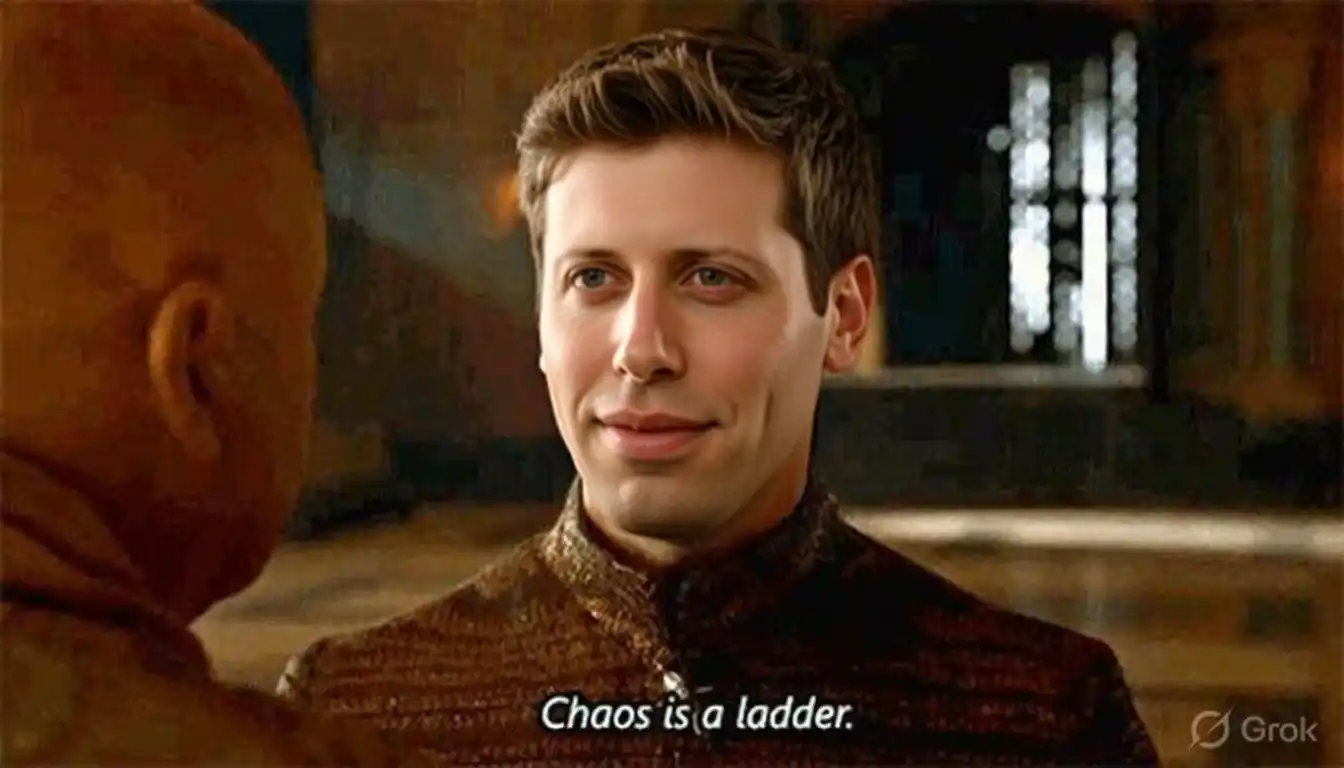
White House AI czar David Sacks had already publicly criticized Anthropic for promoting "woke AI" (ideology first, political correctness); senior Pentagon officials told the media that Dario's (Anthropic CEO Dario Amodei) problem was ideologically driven, "we know who we are dealing with."

Elon Musk's xAI, a direct competitor to Anthropic, repeatedly attacked Anthropic on X this week, saying the company "hates Western civilization."

And Anthropic's CEO did not attend Trump's inauguration last year. OpenAI's CEO did.
Making an Example

So let's summarize what happened.

The same principles, the same red lines. Anthropic, for asking for an extra layer of protection, being on the wrong side, striking the wrong posture, was labeled a U.S. national security threat on the same level as Huawei.

OpenAI asked for one less layer, had better relations, and got the contract. Is this a triumph of principles, or a price tag on principles?

This isn't the first time a Pentagon contract has faced抵制 (dǐzhì - resistance/boycott).

In 2018, over 4000 Google employees signed a petition, with more than a dozen resigning, protesting the company's involvement in a Pentagon project called Project Maven. That project used AI to analyze drone footage, helping the military identify targets faster.

Google eventually withdrew. They didn't renew and left. The employees won.

8 years have passed, and a similar controversy has arisen again. But this time the rules have completely changed. A U.S. company said it could do business with the military, but there were two things it wouldn't do. The U.S. government's response was to kick it out of the entire federal system.

And the杀伤力 (shāshānglì - lethality/damaging effect) of the "supply chain security risk" label far exceeds losing a $200 million contract.

Anthropic's revenue this year is estimated to be around $14 billion; the $200 million contract isn't even a fraction. But this label means any company doing business with the U.S. military cannot use Claude.

These companies don't need to agree with the Pentagon's stance; they just need to do a risk assessment: continue using Claude and potentially lose government contracts; switch to another model, and face no issues.

The choice is easy. This is the real signal of this event.

Whether Anthropic can withstand this is不重要 (bù zhòngyào - not important). What matters is whether the next company will dare to resist. It will look at this outcome, see the cost of sticking to principles, and then make a very rational decision.

Looking back at that photo from India, everyone holding hands raised overhead, only those two with their own fists clenched.

Perhaps this is the norm.

AI companies can share the same principles, but their hands won't necessarily join.

Preguntas relacionadas

QWhat was the reason behind the temporary alliance between OpenAI and Anthropic as described in the article?

AThey temporarily aligned because both companies opposed the Pentagon's demand for unrestricted use of AI, specifically refusing to allow their AI models to be used for mass surveillance of U.S. citizens or autonomous weapons without human involvement.

QWhat specific conditions did Anthropic set in its contract with the Pentagon, and why did the deal fall apart?

AAnthropic set two red lines: their AI Claude must not be used for mass surveillance of U.S. citizens or for autonomous weapons without human control. The deal fell apart because the Pentagon demanded unrestricted use and rejected these conditions, leading Anthropic to refuse the contract on principle.

QHow did the U.S. government retaliate against Anthropic after it refused the Pentagon's terms?

AThe U.S. government, through the Defense Secretary, labeled Anthropic a 'supply chain security risk,' effectively barring any contractors working with the U.S. military from using Anthropic's products. Former President Trump also called for all federal agencies to stop using Anthropic's technology.

QWhat differentiated OpenAI's agreement with the Pentagon from Anthropic's failed negotiation?

AOpenAI accepted the Pentagon's terms with similar red lines (no mass surveillance, no autonomous weapons, human oversight for high-risk decisions) but did not insist on additional legal safeguards against potential loopholes, which Anthropic had demanded. OpenAI's better political alignment and relationship with the administration also played a role.

QWhat broader implication does the article suggest about the future of AI companies working with the U.S. government?

AThe article suggests that the U.S. government will strongly enforce compliance with its demands, and companies refusing on ethical grounds may face severe repercussions, such as being blacklisted. This could deter other AI firms from resisting government contracts, prioritizing business survival over ethical principles.

Lecturas Relacionadas

Three Months, 35 Billion Yuan: Investors Rush to Grab the OpenAI of the Physical World

Investors flock to a physical AI startup as the race for the "OpenAI of the physical world" heats up. Ji Jia Shi Jie (GigaWorld), a company dedicated to developing Artificial General Intelligence (AGI) for the physical world, has raised 3.5 billion RMB (approximately $490 million) in just three months, according to a report from investment media outlet Touzijie. The latest B2 funding round of 1 billion RMB attracted a wide range of top-tier investors, including sovereign wealth funds, industrial capital, and financial institutions. This brings the total funding for the young company, now valued over 10 billion RMB, to 3.5 billion RMB across three recent rounds. The company is led by Huang Guan, a post-90s Tsinghua University PhD with extensive experience in AI, autonomous driving, and entrepreneurship. Its core innovation is a "dual-pyramid" system comprising a five-layer data pyramid (from internet videos to real-world robot data) and a three-layer algorithm pyramid focused on world simulation, action alignment, and reinforcement learning. This system underpins its key models: the "World Action Model" (e.g., GigaBrain series for robot control) and the "World Generation Model" (e.g., GigaWorld series for simulating and understanding the physical world). Its models have reportedly achieved top rankings in global robotics benchmarks. Ji Jia Shi Jie argues that while current digital AGI excels in information processing, the next frontier is physical AGI—systems that can understand and interact with the real world. The company believes the field is approaching its "GPT-3 moment," a key inflection point in capability scaling. To achieve this, the company is pursuing a dual-market strategy. For the consumer (C) market, it launched the "SeeLight" brand and its S1 general-purpose humanoid robot, which has secured initial orders for deployment in real homes. For the business (B) market, it focuses on industrial automation with its Maker series robots, having signed agreements for large-scale deployment in factories, and its DriveDreamer world model for autonomous driving, which is already in use with over 30 automakers and tech companies. The report concludes that by bridging the gap between digital intelligence and physical action, Ji Jia Shi Jie aims to unlock a new wave of productivity, ultimately bringing physical AGI into everyday life.

marsbitHace 27 min(s)

Three Months, 35 Billion Yuan: Investors Rush to Grab the OpenAI of the Physical World

marsbitHace 27 min(s)

What's the Connection Between Pinduoduo's Huang Zheng and Blockchain?

This text explores the unexpected connection between Pinduoduo founder Colin Huang and blockchain, as suggested in his article *Turning Capitalism Upside Down*. Huang argues Pinduoduo's core business is about managing "uncertainty." He posits that wealth flows to the rich because they absorb life's uncertainties (e.g., illness, job loss) that devastate the poor, who pay a premium for certainty through insurance or stable prices. Pinduoduo's model attempts a "reverse insurance": by aggregating consumer demand via group-buying and flash sales, it creates a large, predictable order for manufacturers. This certainty allows factories to remove risk premiums, passing savings back as lower prices, thus partially reversing the wealth flow. The key obstacle, Huang notes, is that an individual's buying intent is an unreliable promise. He then asks if blockchain is the natural solution for this "reverse insurance." The text elaborates that blockchain, through smart contracts with binding deposits, could transform casual intent into a costly-to-break, enforceable commitment. This replaces interpersonal trust with coded rules, making promises credible, pricable, and resistant to fraud. Finally, the author draws a parallel to Bitcoin, framing two paths to creating certainty: the "Pinduoduo path" of aggregating decentralized will into scale, and the "Bitcoin path" of locking rules into immutable code. Both sacrifice something—personal freedom or system flexibility—to manufacture trust and predictability.

链捕手Hace 1 hora(s)

What's the Connection Between Pinduoduo's Huang Zheng and Blockchain?

链捕手Hace 1 hora(s)

The Storage Magnate Who Conquered a Trillion-Dollar Kingdom, Yet Ultimately Could Not Become the Richest

**Summary:** "The Memory Magnate Who Built a Trillion-Dollar Empire, Yet Never Became the Richest" explores the journey of Zhu Yiming, founder of GigaDevice (603986) and co-founder of the soon-to-IPO ChangXin Memory Technologies (CXMT). The article positions GigaDevice, a fabless chip designer now valued at ~¥340 billion, as a prequel to the massive IDM (Integrated Device Manufacturer) venture, CXMT. Starting in 2005 with minimal capital, Zhu strategically "picked up the pieces" by focusing on niche markets like NOR Flash and microcontrollers (MCUs), areas major players were exiting. This allowed GigaDevice to grow into a diversified semiconductor company, maintaining robust profitability even during industry downturns by controlling costs. However, the piece argues that in the highly cyclical and capital-intensive memory chip industry, the fabless model has limits. True resilience and scale require the ability for "counter-cyclical expansion" – investing heavily during downturns – a tactic only possible for IDMs like Samsung or SK Hynix. This insight led Zhu to partner with the Hefei city government in 2016 to establish CXMT, an IDM focused on DRAM. Zhu's symbolic moves, like forfeiting salary and diluting his equity, were crucial in securing the massive state and bank funding needed. CXMT's equipment base is now valued even higher than that of BYD's vast auto manufacturing empire. Despite the potential for CXMT to reach a market cap of ¥1-2 trillion upon its IPO, Zhu's indirect stake in both companies is estimated below 3%, placing his personal wealth far below that of China's top billionaires. The article concludes that his strategic vision built a trillion-yuan memory landscape, but the capital structure necessary to achieve it precluded a personal fortune of similar scale.

marsbitHace 1 hora(s)

The Storage Magnate Who Conquered a Trillion-Dollar Kingdom, Yet Ultimately Could Not Become the Richest

marsbitHace 1 hora(s)

XRP Ledger Daily Fees Drop Below $400 As Network Activity Question Returns

The XRP Ledger is drawing attention as daily network fees have fallen below $400. While low fees align with XRPL's design for affordable transactions and are often seen as a strength, the metric can also serve as an indicator of network demand and paid transaction volume. This data point of around $3,100 in weekly fee burn highlights the stark contrast with higher-fee chains like Ethereum and Bitcoin. The development fuels an ongoing debate. Proponents view low fees as a sign of efficiency and accessibility, while critics may question if the network is generating sufficient high-value activity relative to its market cap and payments-focused narrative. The article cautions against overstating the finding, noting a single low-fee day does not signify network failure. It instead adds context to discussions about XRPL's usage, especially alongside Ripple's broader initiatives in stablecoins (RLUSD), AI payments, and enterprise infrastructure. The report recommends monitoring for a fee rebound, checking transaction counts for a fuller picture, and confirming the trend via native explorers like Bithomp. It frames the story within a larger market shift where on-chain data, protocol updates, and infrastructure developments are becoming crucial alongside price action. The editorial stance is to present the verified data, explain its significance for assessing network activity, and avoid hype, positioning it as part of the daily crypto conversation.

bitcoinistHace 6 hora(s)

XRP Ledger Daily Fees Drop Below $400 As Network Activity Question Returns

bitcoinistHace 6 hora(s)

Trading

Spot
Futuros
活动图片





