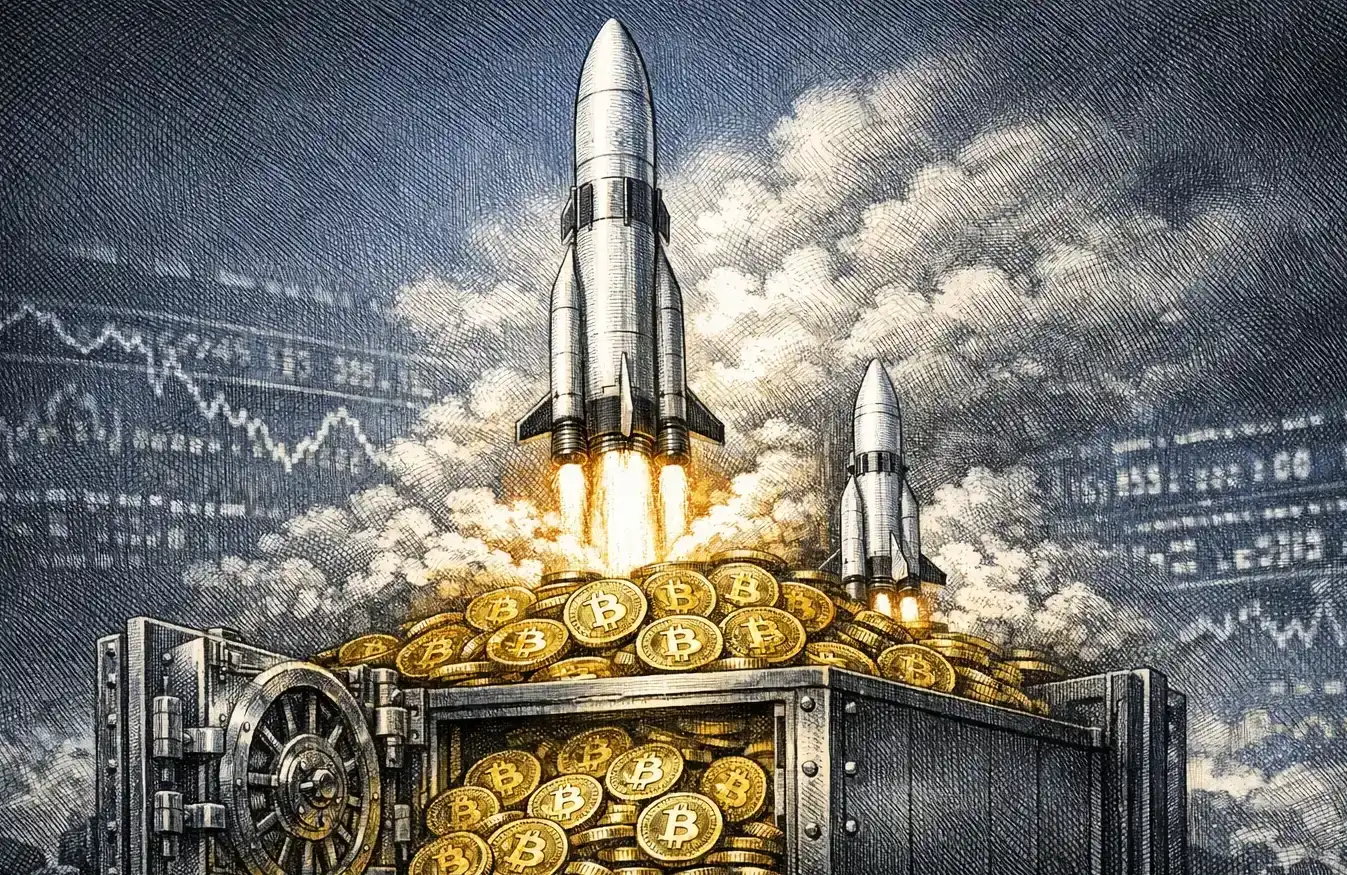
Weekly Editor's Picks (0509-0515)

marsbitPublicado a 2026-05-16Actualizado a 2026-05-16

Resumen

Weekly Editor's Picks (0509-0515): A Weekly Digest to Filter Noise This weekly digest curates deep analysis often lost in fast information flows. Key highlights: * **Macro:** A new "NACHO" (Not A Chance Hormuz Opens) trade emerges on Wall Street, betting on a prolonged closure of the Strait of Hormuz, shifting focus from political rhetoric to fundamental oil market data. * **Investment & Startups:** * Justin Sun discusses his long-term investment theses, highlighting future opportunities in embodied AI, drones, spatial computing, and space exploration. * Anthropic and OpenAI's crackdown on unauthorized stock transfers disrupts the pre-IPO token market, prompting a re-evaluation of its boundaries. * Bitwise analyzes massive capital inflows into new, compliant blockchains like Arc, Canton, and Tempo, tailored for stablecoins and asset tokenization. * A skeptical view questions HYPE's potential for further price appreciation, citing high fully diluted valuation, unlocking token supply, and unclear new buyer demographics. * **AI:** The "Semiconductor Century" report outlines the 2026 AI investment landscape, identifying key players (Nvidia, TSMC, ASML) and catalysts across the semiconductor supply chain, from design to manufacturing. * **Policy & Stablecoins:** The potential CLARITY Act is analyzed for its impact on DeFi. It could trigger massive institutional capital inflows and redirect stablecoin yields, benefiting structured, compliant DeFi p...

The information flow is too fast, and in-depth analysis articles are easily drowned out by trending topics. The "Weekly Editor's Picks" column sifts through the sea of information to retrieve content of discernible value, filtering out the noise for you, leaving behind insights, and bringing inspiration.
Macro

'TACO' Is Outdated, 'NACHO' Trading Rises on Wall Street

NACHO, short for "Not A Chance Hormuz Opens," meaning there's no chance the Strait of Hormuz will reopen.

It is the opposite version of TACO (Trump Always Chickens Out). TACO bets on "people chickening out"—that Trump will back down at critical moments. NACHO bets on "things getting stuck"—this time, the Strait of Hormuz cannot be reopened with just one Truth Social post.

NACHO is not empty talk; it's the same bet placed with real money across three independent derivative markets: insurance, oil prices, and interest rate cuts.

The market is no longer trading on Trump's next Truth Social post; it's now trading on the Strait of Hormuz's early June inventory data.

Investment & Entrepreneurship

After 50x Storage, Justin Sun Always Looks to the Next Decade

"Shortage of chips in the short term, shortage of energy in the long term, and perpetual shortage of storage."

At the beginning of 2026, Justin Sun's prediction was: Embodied AI, Drones, Spatial Computing, Space Exploration.

Anthropic and OpenAI Personally Sever the Logic of Pre-market Crypto-Equities

Anthropic and OpenAI have taken stances one after another, clearly stating they "do not recognize unauthorized stock transfers." The risk of "layering" due to over-financialization of SPVs has begun to surface. Reflecting on the market level, pre-market stock tokens plummeted, while futures contracts remained relatively stable.

The public "crackdown" by Anthropic and OpenAI is, to some extent, also redefining the boundaries for this wildly growing new market. For speculators, this is a risk education; but for the industry's long-term development, the market might need such a "de-bubbling" moment.

Bitwise: Why Are Top-Tier Capital Firms Frantically Betting on New Public Blockchains?

The three public blockchains—Arc, Canton, and Tempo—are all tailor-made for stablecoin and asset tokenization scenarios.

A key takeaway from this wave of concentrated financing fervor is: Capital always follows regulatory legislation; Privacy protection may become a phenomenal core application.

Niche View: Why It's Hard for HYPE to Double Again

75% of the token supply remains unlocked, implying sustained selling pressure in the future; The current FDV is already approaching or even exceeding the valuation ranges of some traditional exchanges; And at this price point, it's still unclear whether new marginal buyers will come from retail investors, traditional institutions, or crypto funds.

More importantly, HYPE faces not only valuation issues but also risks such as regulation, hacker attacks, key-person dependency, and trader liquidity migration.

For an asset that has already gained significant market attention and is heavily promoted by KOLs, the real question is no longer "Does it have a narrative?" but rather "At this price, who will continue to buy?" When a crypto asset transitions from alpha to consensus, investors need to re-evaluate not just how excellent the project itself is, but whether the current price has already priced in the future.

AI

The Semiconductor Century: An Investment Roadmap Amid the 2026 AI Frenzy

High-value AI chips contribute to about half of the industry's revenue but account for less than 0.2% of total shipments. Semiconductors have evolved from consumer electronics components into strategic assets for companies with market caps exceeding $10 trillion.

The four key roles in the supply chain are: Designers (Architects), Foundries (Manufacturers), Equipment Suppliers (Toolmakers), and Memory Makers (Storage Layer).

Companies worth studying include: NVIDIA, TSMC, ASML, AMD, Broadcom (AVGO), SK Hynix.

Semiconductor ETFs include: SMH — VanEck Semiconductor ETF, SOXX — iShares Semiconductor ETF, SOXQ — Invesco PHLX Semiconductor ETF.

Key catalysts to watch: The Trillion Dollar Milestone, TSMC Arizona Fab Capacity Ramp-up, NVIDIA Vera Rubin Platform Deployment, AMD Market Share Progress, Memory Pricing & HBM4 Supply.

Policy & Stablecoins

When Stablecoins No Longer Earn Interest: 7 DeFi Protocols Benefiting from the CLARITY Act

Once the CLARITY Act is officially enacted, it will immediately trigger two major shifts: Institutional funds will have barriers to entry cleared. BlackRock, Apollo, Deutsche Bank, pension funds, corporate treasury funds, etc., which have been on the sidelines, could not previously get compliance teams to assess whether related assets were securities and dared not allocate large-scale. Now, with the CFTC clearly asserting jurisdiction and DeFi safe harbors established, institutions can finally enter in a big way. Profit-seeking funds will withdraw from idle stablecoin yield farming. The model where simply holding USDC on exchanges yielded around 5% annual interest will no longer exist. Hundreds of billions in funds seeking stable returns must find new allocation outlets.

Therefore, two massive waves of funds (institutional investors finally entering + retail investors seeking yield) will surge towards the same type of targets: compliant, yield-generating products with real business scenarios and structured frameworks.

Protocols tailor-made for this new regulatory landscape include: Underlying yield infrastructure layer Pendle, On-chain Prime Broker Morpho, Sky (USDS / sUSDS), On-chain credit trading desk Maple Finance, RWA asset native issuance layer Centrifuge, Related protocols leveraging STRC assets (a pathway in the fixed income track).

Also recommended: "Earnings, Legislation, the Fed... Circle Faces Three Major Tests This Week," "CLARITY Act Released: Is Ethereum the Biggest Winner?", "The New Order for XRP and Crypto Markets Under the CLARITY Act."

CeFi & DeFi

Has the Hook Summer Really Arrived? Sato, Lo0p, FLOOD Ignite the New Uniswap v4 Narrative

Since ASTEROID, ecosystem tokens backed by Uniswap v4 Hook protocols like sato, sat1, Lo0p, and FLOOD have gradually become the focus of market attention, with market caps ranging from millions to tens of millions of dollars, bringing much-needed concentrated liquidity to the narrative-dry crypto market.

Hook mechanism tokens drive Uniswap ecosystem development: UNI is bullish long-term but has limited short-term upside.

$3 Billion DeFi Fund Migration: LayerZero Stumbles, Chainlink Feasts

Rescue efforts for the Kelp DAO attack incident have also seen substantive progress recently. However, compared to financial recovery, the harder repair is restoring market trust.

At the center of this vortex, the cross-chain leader LayerZero is facing accelerated withdrawals by many protocols and was forced to make an abrupt shift in stance within just a few weeks—from initially shifting blame to now publicly apologizing and initiating reforms. Meanwhile, Chainlink has unexpectedly become a beneficiary of this crisis, with its CCIP protocol absorbing a large amount of migrated liquidity and showing significant growth in on-chain data.

Airdrop Opportunities & Interaction Guides

Hot Interactions Compilation | The Beacon Season 1 Pre-registration; GenLayer Latest Testnet Interaction (May 15th)

Circle Releases Arc Whitepaper, What Are the Early Interaction Opportunities?

Meme

From A9 Myth to Millions in Debt: A Meme Player's 5-Year Journey

Ethereum & Scaling

Grayscale: Ethereum's Staking Model Needs an Overhaul

Ethereum's current staking reward model faces two structural issues: L2s diverting activity lead to reduced token burns and increased net issuance; Staking barriers approaching zero may eventually lock nearly all ETH in staking.

The community is discussing implementing a staking reward cap curve, which Grayscale believes would be beneficial for ETH's price long-term. The Ethereum community is considering modifying the network's staking reward model, with the core idea being to incentivize staking only up to a certain ratio, with no additional rewards beyond that.

If implemented, stakers' nominal returns would decrease. But Grayscale believes this is good for ETH's price long-term for two reasons: controlling ETH inflation and strengthening ETH's narrative as a store-of-value asset.

Weekly Hot Topics Recap

Policy & Macro Markets

Trump conducts a state visit to China, accompanying entrepreneurs draw attention;

Trump's Q1 "stock trading operations" revealed, sparking heated discussion;

U.S. Senate votes to approve Kevin Warsh as Federal Reserve Chair;

U.S. Senate Banking Committee passes CLARITY Act (Analysis);

Some senators submit "anti-DeFi" amendments that could weaken protective clauses related to the CLARITY Act;

Opinions & Statements

Arthur Hayes: U.S.-China AI arms race combined with war inflation makes a return of BTC to $126K inevitable, the AI bubble is the biggest opportunity;

Wintermute: This round of BTC rise is clearly driven by leverage, open interest surges while spot trading volume remains sluggish;

New CZ Interview: Still dedicates 80% of his energy to blockchain, believes $10 million is enough for financial freedom;

Institutions, Major Companies & Leading Projects

Cerebras lists on Nasdaq, triggers strong upside circuit breaker on first day;

Solana Foundation partners with Google to launch Pay.sh (Analysis);

Data

ZEC up 15x year-to-date (Analysis); TON continues to rise (Analysis); L1 tokens gain strength (Analysis);

Circle Q1 revenue reaches $694 million, USDC on-chain transaction volume up 263% YoY (Earnings report details);

Gemini Q1 revenue grows 42%, after-hours stock price surges up to 30%;

Bitcoin long-term holders are accumulating heavily, institutional buying pushes price back above $80,000...

Attached are portals to the "Weekly Editor's Picks" series. See you next time~

Preguntas relacionadas

QWhat does the trading term 'NACHO' stand for in the context of the article, and what does it signify compared to 'TACO'?

ANACHO stands for 'Not A Chance Hormuz Opens,' signifying a market bet that the Strait of Hormuz will remain closed, and a resolution will not be quickly reached via platforms like Truth Social. It is the opposite of 'TACO' (Trump Always Chickens Out), which bet on Trump backing down. NACHO reflects a shift in focus from political rhetoric to fundamental data like early June inventory figures.

QAccording to the article, what was the impact of Anthropic and OpenAI's public stance on unauthorized stock transfers?

AAnthropic and OpenAI publicly stated that they do not recognize unauthorized stock transfers. This action helped re-establish boundaries in a rapidly growing, unregulated market, leading to a sharp decline in pre-market stock tokens while contracts remained relatively stable. It served as a risk education for speculators and a potential 'de-bubbling' moment for the industry's long-term health.

QWhat are the four key roles identified in the AI-driven semiconductor supply chain, according to the '2026 AI狂飙下的投资路线图' section?

AThe four key roles in the AI-driven semiconductor supply chain are: Designers (the architects), Foundries (the manufacturers), Equipment Suppliers (the toolmakers), and Memory Makers (the storage layer).

QWhat are the two major shifts expected if the CLARITY Act is passed, as mentioned in the '政策和稳定币' section?

AIf the CLARITY Act is passed, two major shifts are expected: 1) Institutional capital (from firms like BlackRock, Apollo, pension funds) will have cleared regulatory hurdles to enter the DeFi market. 2) Yield-seeking capital will be forced to move away from idle stablecoin accounts (like those earning ~5% on USDC) and into structured, yield-generating products, creating a massive influx of funds into compliant DeFi protocols.

QWhat structural issue with Ethereum's staking model does Grayscale highlight, and what is the proposed solution?

AGrayscale highlights two structural issues with Ethereum's staking model: 1) L2 solutions divert transaction fees, reducing token burns and increasing net issuance. 2) The barrier to staking is nearing zero, potentially locking almost all ETH into staking. The proposed solution being discussed is implementing a staking reward cap curve, where rewards are only incentivized up to a certain staking ratio, which Grayscale argues would benefit ETH's long-term price by controlling inflation and strengthening its store-of-value narrative.

Lecturas Relacionadas

Will the Next Crypto Bull Run Start with On-Chain Trading of SpaceX?

This article presents a scenario-based forecast for the crypto industry from 2026 to 2029, arguing that the next major cycle will be driven not by technological narratives but by legal access to real-world assets. The author predicts that by mid-2026, pre-IPO perpetual contracts for top private companies like SpaceX, OpenAI, and Anthropic on platforms like Hyperliquid will become the primary gateway for accessing quality assets, as most crypto-native tokens fail to capture real value. The much-hyped AI x Crypto intersection largely fails except for prediction markets, which thrive on betting on AI model supremacy. By 2027, public blockchain foundations are forced to choose between catering to retail speculation or building compliant infrastructure for institutions, with many opting for the latter. Growth in stablecoins and tokenized private credit/equity hits a "triple ceiling" due to regulatory and political uncertainty rather than market demand. The pivotal shift is forecast for 2028. A major liquidation event in pre-IPO perpetuals exposes the structural flaw of synthetic markets lacking a real underlying asset anchor. In response, regulatory changes finally allow the public solicitation of private securities resales to verified accredited investors. This creates a legitimate secondary market for real company equity, which then becomes the core asset class of the new bull market, relegating synthetic perps to a niche role. By 2029, the industry becomes "boring" but foundational. Tokens without claims on real cash flows or assets cease trading. Stablecoin growth is steady but politically capped. Crypto infrastructure fades from view as it gets absorbed into traditional finance backends. The article's central thesis is that the key bottleneck for crypto's next phase is legal and regulatory channels for real asset ownership, not technology.

marsbitHace 15 min(s)

Will the Next Crypto Bull Run Start with On-Chain Trading of SpaceX?

marsbitHace 15 min(s)

The Value Distribution of Stablecoins

**Summary: The Value Distribution of Stablecoins** The article argues that stablecoins are evolving from mere trading tools into broader channels for dollar access. It divides the stablecoin ecosystem into four layers to analyze how value is distributed: 1. **Issuance Layer:** Mints stablecoins, holds reserve assets, and captures the spread between reserve yield and user costs (e.g., Tether, Circle). This layer currently earns the largest profit margin. 2. **Infrastructure Layer:** Connects stablecoins to the traditional financial system, handling fiat on/off-ramps, banking integration, compliance (KYC/AML), and asset management (e.g., Bridge, BVNK). This is the "unglamorous" but critical work, building the essential bridges between crypto and real-world finance. 3. **Acquiring/Distribution Layer:** Integrates stablecoins into merchant systems, manages payment flows, and provides enterprise financial software (e.g., Stripe, Coinbase). They act as the access point for businesses. 4. **Application Layer:** The end-users and businesses that ultimately use stablecoins for payments, settlements, or as a store of value. They benefit from convenience but have little pricing power. The core thesis is that while the issuance layer currently dominates profits, the often-overlooked **infrastructure layer holds significant long-term potential**. The real challenge and barrier to mass adoption is not the on-chain transfer of stablecoins (which is simple), but the complex "last mile" integration into existing business workflows, banking systems, and regulatory frameworks across different countries. Companies in this layer are currently in a "land grab" phase, investing heavily to build networks, secure bank partnerships, and establish compliance pathways. While their position is currently pressured by the profitable issuers above and distribution platforms below, the article suggests that if stablecoins become a default financial rail for businesses, the infrastructure providers who have done the hard work of integration will ultimately gain strong pricing power and become entrenched, essential players.

marsbitHace 6 hora(s)

The Value Distribution of Stablecoins

marsbitHace 6 hora(s)

The Value Distribution of Stablecoins

The Value Distribution of Stablecoins The article argues that stablecoins are evolving from a mere trading tool into a broad "dollar channel." It analyzes the industry's value chain through four layers: 1. **Issuance Layer (e.g., Tether, Circle):** The top layer that mints stablecoins, holds reserve assets, and captures the thickest interest rate spread. 2. **Infrastructure Layer (e.g., Bridge, BVNK):** Connects stablecoins to the traditional financial system, handling critical but complex "dirty work" like fiat on/off-ramps, banking integration, compliance (KYC/AML), and cross-border settlement. 3. **Acquiring/Distribution Layer (e.g., Stripe, Coinbase):** Embeds stablecoins into merchant systems, manages payment flows, and integrates with enterprise software. 4. **Application Layer:** End-users and businesses that ultimately use stablecoins for payments, settlement, or storing value. The author posits that while the issuance layer currently captures the most profit, the most overlooked and potentially critical layer is infrastructure. The core challenge for stablecoin adoption isn't the on-chain transfer (which is simple), but bridging the gap between blockchain and the real-world financial system. This involves solving practical problems for businesses: fiat conversion, reconciliation, tax handling, and user onboarding. Infrastructure companies are currently in a difficult "land-grab" phase—building networks, securing banking relationships, and achieving compliance country-by-country. They face pressure from both the profitable issuance layer above and distribution platforms below. However, the author suggests this layer is building a crucial moat. Once stablecoins become a default business rail, the infrastructure players who have done the hard work of integration may gain significant, durable value and pricing power.

链捕手Hace 7 hora(s)

The Value Distribution of Stablecoins

链捕手Hace 7 hora(s)

Trading

Spot
Futuros

Artículos destacados

Qué es $S$

Entendiendo SPERO: Una Visión General Completa Introducción a SPERO A medida que el panorama de la innovación continúa evolucionando, la aparición de tecnologías web3 y proyectos de criptomonedas juega un papel fundamental en la configuración del futuro digital. Un proyecto que ha atraído la atención en este campo dinámico es SPERO, denotado como SPERO,$$s$. Este artículo tiene como objetivo reunir y presentar información detallada sobre SPERO, para ayudar a entusiastas e inversores a comprender sus fundamentos, objetivos e innovaciones dentro de los dominios web3 y cripto. ¿Qué es SPERO,$$s$? SPERO,$$s$ es un proyecto único dentro del espacio cripto que busca aprovechar los principios de descentralización y tecnología blockchain para crear un ecosistema que promueva la participación, la utilidad y la inclusión financiera. El proyecto está diseñado para facilitar interacciones de igual a igual de nuevas maneras, proporcionando a los usuarios soluciones y servicios financieros innovadores. En su esencia, SPERO,$$s$ tiene como objetivo empoderar a los individuos al proporcionar herramientas y plataformas que mejoren la experiencia del usuario en el espacio de las criptomonedas. Esto incluye habilitar métodos de transacción más flexibles, fomentar iniciativas impulsadas por la comunidad y crear caminos para oportunidades financieras a través de aplicaciones descentralizadas (dApps). La visión subyacente de SPERO,$$s$ gira en torno a la inclusividad, buscando cerrar brechas dentro de las finanzas tradicionales mientras aprovecha los beneficios de la tecnología blockchain. ¿Quién es el Creador de SPERO,$$s$? La identidad del creador de SPERO,$$s$ sigue siendo algo oscura, ya que hay recursos públicos limitados que proporcionan información de fondo detallada sobre su(s) fundador(es). Esta falta de transparencia puede derivarse del compromiso del proyecto con la descentralización, una ética que muchos proyectos web3 comparten, priorizando las contribuciones colectivas sobre el reconocimiento individual. Al centrar las discusiones en torno a la comunidad y sus objetivos colectivos, SPERO,$$s$ encarna la esencia del empoderamiento sin señalar a individuos específicos. Como tal, comprender la ética y la misión de SPERO sigue siendo más importante que identificar a un creador singular. ¿Quiénes son los Inversores de SPERO,$$s$? SPERO,$$s$ cuenta con el apoyo de una diversa gama de inversores que van desde capitalistas de riesgo hasta inversores ángeles dedicados a fomentar la innovación en el sector cripto. El enfoque de estos inversores generalmente se alinea con la misión de SPERO, priorizando proyectos que prometen avances tecnológicos sociales, inclusión financiera y gobernanza descentralizada. Estas fundaciones de inversores suelen estar interesadas en proyectos que no solo ofrecen productos innovadores, sino que también contribuyen positivamente a la comunidad blockchain y sus ecosistemas. El respaldo de estos inversores refuerza a SPERO,$$s$ como un contendiente notable en el dominio de proyectos cripto que evoluciona rápidamente. ¿Cómo Funciona SPERO,$$s$? SPERO,$$s$ emplea un marco multifacético que lo distingue de los proyectos de criptomonedas convencionales. Aquí hay algunas de las características clave que subrayan su singularidad e innovación: Gobernanza Descentralizada: SPERO,$$s$ integra modelos de gobernanza descentralizada, empoderando a los usuarios para participar activamente en los procesos de toma de decisiones sobre el futuro del proyecto. Este enfoque fomenta un sentido de propiedad y responsabilidad entre los miembros de la comunidad. Utilidad del Token: SPERO,$$s$ utiliza su propio token de criptomoneda, diseñado para servir diversas funciones dentro del ecosistema. Estos tokens permiten transacciones, recompensas y la facilitación de servicios ofrecidos en la plataforma, mejorando la participación y la utilidad general. Arquitectura en Capas: La arquitectura técnica de SPERO,$$s$ apoya la modularidad y escalabilidad, permitiendo la integración fluida de características y aplicaciones adicionales a medida que el proyecto evoluciona. Esta adaptabilidad es fundamental para mantener la relevancia en el cambiante paisaje cripto. Participación de la Comunidad: El proyecto enfatiza iniciativas impulsadas por la comunidad, empleando mecanismos que incentivan la colaboración y la retroalimentación. Al nutrir una comunidad sólida, SPERO,$$s$ puede abordar mejor las necesidades de los usuarios y adaptarse a las tendencias del mercado. Enfoque en la Inclusión: Al ofrecer tarifas de transacción bajas e interfaces amigables para el usuario, SPERO,$$s$ busca atraer a una base de usuarios diversa, incluyendo a individuos que anteriormente pueden no haber participado en el espacio cripto. Este compromiso con la inclusión se alinea con su misión general de empoderamiento a través de la accesibilidad. Cronología de SPERO,$$s$ Entender la historia de un proyecto proporciona información crucial sobre su trayectoria de desarrollo y hitos. A continuación se presenta una cronología sugerida que mapea eventos significativos en la evolución de SPERO,$$s$: Fase de Conceptualización e Ideación: Las ideas iniciales que forman la base de SPERO,$$s$ fueron concebidas, alineándose estrechamente con los principios de descentralización y enfoque comunitario dentro de la industria blockchain. Lanzamiento del Whitepaper del Proyecto: Tras la fase conceptual, se lanzó un whitepaper completo que detalla la visión, los objetivos y la infraestructura tecnológica de SPERO,$$s$ para generar interés y retroalimentación de la comunidad. Construcción de Comunidad y Primeras Interacciones: Se realizaron esfuerzos de divulgación activa para construir una comunidad de primeros adoptantes y posibles inversores, facilitando discusiones en torno a los objetivos del proyecto y obteniendo apoyo. Evento de Generación de Tokens: SPERO,$$s$ llevó a cabo un evento de generación de tokens (TGE) para distribuir sus tokens nativos a los primeros seguidores y establecer liquidez inicial dentro del ecosistema. Lanzamiento de la dApp Inicial: La primera aplicación descentralizada (dApp) asociada con SPERO,$$s$ se puso en marcha, permitiendo a los usuarios interactuar con las funcionalidades centrales de la plataforma. Desarrollo Continuo y Alianzas: Actualizaciones y mejoras continuas a las ofertas del proyecto, incluyendo alianzas estratégicas con otros actores en el espacio blockchain, han moldeado a SPERO,$$s$ en un jugador competitivo y en evolución en el mercado cripto. Conclusión SPERO,$$s$ se erige como un testimonio del potencial de web3 y las criptomonedas para revolucionar los sistemas financieros y empoderar a los individuos. Con un compromiso con la gobernanza descentralizada, la participación comunitaria y funcionalidades diseñadas de manera innovadora, allana el camino hacia un paisaje financiero más inclusivo. Como con cualquier inversión en el espacio cripto que evoluciona rápidamente, se anima a los posibles inversores y usuarios a investigar a fondo y participar de manera reflexiva con los desarrollos en curso dentro de SPERO,$$s$. El proyecto muestra el espíritu innovador de la industria cripto, invitando a una mayor exploración de sus innumerables posibilidades. Mientras el viaje de SPERO,$$s$ aún se desarrolla, sus principios fundamentales pueden, de hecho, influir en el futuro de cómo interactuamos con la tecnología, las finanzas y entre nosotros en ecosistemas digitales interconectados.

72 Vistas totalesPublicado en 2024.12.17Actualizado en 2024.12.17

Qué es $S$

Qué es AGENT S

Agent S: El Futuro de la Interacción Autónoma en Web3 Introducción En el paisaje en constante evolución de Web3 y las criptomonedas, las innovaciones están redefiniendo constantemente cómo los individuos interactúan con las plataformas digitales. Uno de estos proyectos pioneros, Agent S, promete revolucionar la interacción humano-computadora a través de su marco agente abierto. Al allanar el camino para interacciones autónomas, Agent S busca simplificar tareas complejas, ofreciendo aplicaciones transformadoras en inteligencia artificial (IA). Esta exploración detallada profundizará en las complejidades del proyecto, sus características únicas y las implicaciones para el dominio de las criptomonedas. ¿Qué es Agent S? Agent S se presenta como un marco agente abierto innovador, diseñado específicamente para abordar tres desafíos fundamentales en la automatización de tareas informáticas: Adquisición de Conocimiento Específico del Dominio: El marco aprende inteligentemente de diversas fuentes de conocimiento externas y experiencias internas. Este enfoque dual le permite construir un rico repositorio de conocimiento específico del dominio, mejorando su rendimiento en la ejecución de tareas. Planificación a Largo Plazo de Tareas: Agent S emplea planificación jerárquica aumentada por la experiencia, un enfoque estratégico que facilita la descomposición y ejecución eficiente de tareas complejas. Esta característica mejora significativamente su capacidad para gestionar múltiples subtareas de manera eficiente y efectiva. Manejo de Interfaces Dinámicas y No Uniformes: El proyecto introduce la Interfaz Agente-Computadora (ACI), una solución innovadora que mejora la interacción entre agentes y usuarios. Utilizando Modelos de Lenguaje Multimodal de Gran Escala (MLLMs), Agent S puede navegar y manipular diversas interfaces gráficas de usuario sin problemas. A través de estas características pioneras, Agent S proporciona un marco robusto que aborda las complejidades involucradas en la automatización de la interacción humana con las máquinas, preparando el terreno para una multitud de aplicaciones en IA y más allá. ¿Quién es el Creador de Agent S? Si bien el concepto de Agent S es fundamentalmente innovador, la información específica sobre su creador sigue siendo elusiva. El creador es actualmente desconocido, lo que resalta ya sea la etapa incipiente del proyecto o la elección estratégica de mantener a los miembros fundadores en el anonimato. Independientemente de la anonimidad, el enfoque sigue siendo en las capacidades y el potencial del marco. ¿Quiénes son los Inversores de Agent S? Dado que Agent S es relativamente nuevo en el ecosistema criptográfico, la información detallada sobre sus inversores y patrocinadores financieros no está documentada explícitamente. La falta de información disponible públicamente sobre las bases de inversión u organizaciones que apoyan el proyecto plantea preguntas sobre su estructura de financiamiento y hoja de ruta de desarrollo. Comprender el respaldo es crucial para evaluar la sostenibilidad del proyecto y su posible impacto en el mercado. ¿Cómo Funciona Agent S? En el núcleo de Agent S se encuentra una tecnología de vanguardia que le permite funcionar de manera efectiva en diversos entornos. Su modelo operativo se basa en varias características clave: Interacción Humano-Computadora Similar a la Humana: El marco ofrece planificación avanzada de IA, esforzándose por hacer que las interacciones con las computadoras sean más intuitivas. Al imitar el comportamiento humano en la ejecución de tareas, promete elevar las experiencias de los usuarios. Memoria Narrativa: Empleada para aprovechar experiencias de alto nivel, Agent S utiliza memoria narrativa para hacer un seguimiento de las historias de tareas, mejorando así sus procesos de toma de decisiones. Memoria Episódica: Esta característica proporciona a los usuarios una guía paso a paso, permitiendo que el marco ofrezca apoyo contextual a medida que se desarrollan las tareas. Soporte para OpenACI: Con la capacidad de ejecutarse localmente, Agent S permite a los usuarios mantener el control sobre sus interacciones y flujos de trabajo, alineándose con la ética descentralizada de Web3. Fácil Integración con APIs Externas: Su versatilidad y compatibilidad con varias plataformas de IA aseguran que Agent S pueda encajar sin problemas en ecosistemas tecnológicos existentes, convirtiéndolo en una opción atractiva para desarrolladores y organizaciones. Estas funcionalidades contribuyen colectivamente a la posición única de Agent S dentro del espacio cripto, ya que automatiza tareas complejas y de múltiples pasos con una intervención humana mínima. A medida que el proyecto evoluciona, sus posibles aplicaciones en Web3 podrían redefinir cómo se desarrollan las interacciones digitales. Cronología de Agent S El desarrollo y los hitos de Agent S pueden encapsularse en una cronología que resalta sus eventos significativos: 27 de septiembre de 2024: El concepto de Agent S fue lanzado en un documento de investigación integral titulado “Un Marco Agente Abierto que Usa Computadoras Como un Humano”, mostrando las bases del proyecto. 10 de octubre de 2024: El documento de investigación fue puesto a disposición del público en arXiv, ofreciendo una exploración profunda del marco y su evaluación de rendimiento basada en el benchmark OSWorld. 12 de octubre de 2024: Se lanzó una presentación en video, proporcionando una visión visual de las capacidades y características de Agent S, involucrando aún más a posibles usuarios e inversores. Estos marcadores en la cronología no solo ilustran el progreso de Agent S, sino que también indican su compromiso con la transparencia y la participación comunitaria. Puntos Clave Sobre Agent S A medida que el marco Agent S continúa evolucionando, varios atributos clave destacan, subrayando su naturaleza innovadora y potencial: Marco Innovador: Diseñado para proporcionar un uso intuitivo de las computadoras similar a la interacción humana, Agent S aporta un enfoque novedoso a la automatización de tareas. Interacción Autónoma: La capacidad de interactuar de manera autónoma con las computadoras a través de GUI significa un salto hacia soluciones informáticas más inteligentes y eficientes. Automatización de Tareas Complejas: Con su metodología robusta, puede automatizar tareas complejas y de múltiples pasos, haciendo que los procesos sean más rápidos y menos propensos a errores. Mejora Continua: Los mecanismos de aprendizaje permiten a Agent S mejorar a partir de experiencias pasadas, mejorando continuamente su rendimiento y eficacia. Versatilidad: Su adaptabilidad en diferentes entornos operativos como OSWorld y WindowsAgentArena asegura que pueda servir a una amplia gama de aplicaciones. A medida que Agent S se posiciona en el paisaje de Web3 y criptomonedas, su potencial para mejorar las capacidades de interacción y automatizar procesos significa un avance significativo en las tecnologías de IA. A través de su marco innovador, Agent S ejemplifica el futuro de las interacciones digitales, prometiendo una experiencia más fluida y eficiente para los usuarios en diversas industrias. Conclusión Agent S representa un audaz avance en la unión de la IA y Web3, con la capacidad de redefinir cómo interactuamos con la tecnología. Aunque aún se encuentra en sus primeras etapas, las posibilidades para su aplicación son vastas y atractivas. A través de su marco integral que aborda desafíos críticos, Agent S busca llevar las interacciones autónomas al primer plano de la experiencia digital. A medida que nos adentramos más en los reinos de las criptomonedas y la descentralización, proyectos como Agent S sin duda desempeñarán un papel crucial en la configuración del futuro de la tecnología y la colaboración humano-computadora.

486 Vistas totalesPublicado en 2025.01.14Actualizado en 2025.01.14

Qué es AGENT S

Cómo comprar S

¡Bienvenido a HTX.com! Hemos hecho que comprar Sonic (S) sea simple y conveniente. Sigue nuestra guía paso a paso para iniciar tu viaje de criptos.Paso 1: crea tu cuenta HTXUtiliza tu correo electrónico o número de teléfono para registrarte y obtener una cuenta gratuita en HTX. Experimenta un proceso de registro sin complicaciones y desbloquea todas las funciones.Obtener mi cuentaPaso 2: ve a Comprar cripto y elige tu método de pagoTarjeta de crédito/débito: usa tu Visa o Mastercard para comprar Sonic (S) al instante.Saldo: utiliza fondos del saldo de tu cuenta HTX para tradear sin problemas.Terceros: hemos agregado métodos de pago populares como Google Pay y Apple Pay para mejorar la comodidad.P2P: tradear directamente con otros usuarios en HTX.Over-the-Counter (OTC): ofrecemos servicios personalizados y tipos de cambio competitivos para los traders.Paso 3: guarda tu Sonic (S)Después de comprar tu Sonic (S), guárdalo en tu cuenta HTX. Alternativamente, puedes enviarlo a otro lugar mediante transferencia blockchain o utilizarlo para tradear otras criptomonedas.Paso 4: tradear Sonic (S)Tradear fácilmente con Sonic (S) en HTX's mercado spot. Simplemente accede a tu cuenta, selecciona tu par de trading, ejecuta tus trades y monitorea en tiempo real. Ofrecemos una experiencia fácil de usar tanto para principiantes como para traders experimentados.

1.0k Vistas totalesPublicado en 2025.01.15Actualizado en 2026.06.02

Cómo comprar S

Discusiones

Bienvenido a la comunidad de HTX. Aquí puedes mantenerte informado sobre los últimos desarrollos de la plataforma y acceder a análisis profesionales del mercado. A continuación se presentan las opiniones de los usuarios sobre el precio de S (S).

活动图片