Weekly Editor's Picks (0321-0327)

marsbitPublicado a 2026-03-28Actualizado a 2026-03-28

Resumen

Weekly Editor's Picks (0321-0327) by Odaily Planet Daily features in-depth analyses from the past week. Key topics include: **Macro & Geopolitics:** The article analyzes why oil prices remain above $100/barrel despite a 400-million-barrel strategic reserve release, citing Iran-related supply disruptions in the Strait of Hormuz. It discusses the economic impact of the Iran conflict, parallels with Ukraine, and how bond market volatility—not just oil—is reshaping monetary policy expectations. **Investment & Startups:** Balancer proposes major tokenomics reforms and operational restructuring after a $120M exploit, shifting from token emission-driven growth to a revenue-focused model. **Web3 & AI:** ERC-8183 is highlighted as a key protocol for decentralized AI agent economies, structuring task-based commerce on-chain. Another piece argues that AI agents won’t kill SaaS; instead, proprietary data and entrenched workflows will remain crucial moats. **Prediction Markets:** Polymarket’s liquidity incentives and fee structure are examined, noting that only 2% of users generate 90% of volume. Profitable strategies include sports betting, crypto market-making, and high-conviction trading. **Policy & Stablecoins:** The proposed U.S. CLARITY Act may redefine stablecoins as payment tools (not savings products), potentially negatively impacting DeFi tokens like UNI while benefiting compliant entities like Circle. Also included are airdrop guides, Ethereum L2 developments, a...

"Weekly Editor's Picks" is a functional column by Odaily Planet Daily. While Planet Daily covers a vast amount of real-time information weekly, it also publishes many high-quality in-depth analysis pieces that might get lost in the information flow and hot news, passing you by.

Therefore, our editorial team will select some quality articles worth spending time to read and collect from the content published in the past 7 days every Saturday. From perspectives like data analysis, industry judgment, and opinion sharing, we aim to bring new inspiration to you in the crypto world.

Now, let's read together:
Macro Situation

400 Million Barrels Released, Why is Oil Still Above $100?

After the joint US-Israel strike on Iran, Iran threatened to attack oil tankers passing through the Strait of Hormuz, paralyzing the world's most critical oil shipping chokepoint. Current actual traffic through the Strait is less than 10% of pre-war levels. Oil prices have been soaring.

On March 11, the International Energy Agency (IEA) announced the release of strategic petroleum reserves, the largest one-time release by its 32 member states in its 50-year history. However, with a daily release of 400 million barrels covering only 17% of the shortfall, the effect was not ideal. If all 400 million barrels were dumped into the market at once, it would only last less than 4 days.

What determines the oil price reaction is not how many barrels are released, but whether the source of the supply disruption is eliminated. Reserve releases are essentially not "replenishing oil" but "buying time," using limited ammunition to buy negotiation windows and time to arrange alternative routes. If time is bought but the disruption source isn't resolved, oil prices will still rise. The mathematical reality is that the replenishment speed clearly cannot keep up with the depletion speed.

Jiang Xueqin: A Viral Beijing High School Teacher Who Predicted America's Defeat in Advance (Paired with "Jiang Xueqin's Latest Interview")

The US military is essentially a "muscle display" system from the Cold War era, expensive and追求 technical deterrence rather than resilience for a war of attrition. This mismatch manifests as an absurd asymmetry in reality.

The modern global economy is built on the premise that energy is cheap and readily available. Now this premise is collapsing.

Jiang Xueqin believes the Iran war will be highly similar to the Ukraine war: it will drag on, becoming a war of attrition. The US cannot withdraw because once it does, the only regional power that can fill the security vacuum is Iran. And with about one-fifth of the world's oil passing through the Strait of Hormuz daily, if the Gulf states tilt towards Iran, the petrodollar system will collapse.

The current US economy is essentially a Ponzi scheme, relying on foreigners continuously buying dollars to keep it afloat.

Three Weeks into the US-Iran War, Who's Making Money, Who's Paying the Bill?

The Iran war changed the Urals crude discount. The economic wall built by the West through three years of sanctions has been partly dismantled by three weeks of war with Iran.

Supply-side losses and beneficiary gains will eventually be passed on to the consumer end. US consumers are the most direct bearers. This round of oil price increases恰好吞掉了美国家庭刚到手的税收退税 (just swallowed up the tax refunds US families just received).

Three weeks into the Iran war, the world loses 11 million barrels of oil per day, Russia made nearly $800 million more in 15 days, US consumers' gas money increased by one-third, and this transmission chain will continue to lengthen after the sanction waivers expire on April 11.

Stop Staring at Oil Prices, the Bond Market is the Real Bellwether

As the war enters a stalemate, a more systemic variable is emerging: financial conditions themselves are tightening. What truly dominates the current market is no longer the war itself, but the disorder in the bond market.

Over the past month, the US 10-year Treasury yield has risen rapidly, directly reshaping interest rate expectations from a "rate cut path" to a "re-discussion of rate hikes," and putting pressure on stocks, commodities, and even policy space. In this process, the持续走弱 (持续走弱 - persistently weakening) labor market and renewed rise in inflation expectations have amplified the Fed's dilemma.

The bond market is not only reflecting risk but also determining the boundaries of risk.

War Won or Lost? Trump: Profited

Trump's market manipulation tactics and the underlying purpose—making stock market prosperity the best "substitute" for economic prosperity to consolidate his voter base.

Investment & Entrepreneurship

Abandoning Additional Issuance, Abolishing veBAL, Can Balancer's "All-In" Bet Bring New Life?

On November 3, 2025, a security incident causing over $120 million in losses largely shattered the growth illusion of the veteran DeFi protocol Balancer.

The entire system看似一台持续运转的 「印钞机」 (looks like a continuously running "money printing machine"), but actually leaks from both sides: on one hand, handling fees are split and lost layer by layer; on the other hand, the BAL token has an annual inflationary release of about 3.78 million tokens, creating持续抛压 (continuous selling pressure) of about $580,000 at current prices.

On March 23, the Balancer core team simultaneously released two important governance proposals: a comprehensive reform of BAL tokenomics and an operational structure reorganization. The core logic of the two documents combined can be summarized in one sentence: abandon the token release-driven growth model and转向收入驱动的可持续运营 (turn to revenue-driven sustainable operation).

Also recommended: 《Odaily Interview with Bitwise: BTC Could Reach $95,000 Range by Year-End》《SIREN, A Carefully Designed Leverage Harvest》《Bittensor (TAO) Short Logic: Income Desert Under the Computing Power Myth》.

Web3 & AI

The Underlying Business Protocol for the Trillion-Dollar Agent Economy: Understanding ERC-8183, Not Just Payment, But the Future

The ERC-8183 protocol is an on-chain standard for the decentralized AI agent economy. Its essence is not a traditional payment protocol but a商业基础设施规范 (business infrastructure specification) surrounding the full lifecycle of "task-delivery-settlement".

ERC-8183 takes "Job" as its core primitive, defining a tripartite collaboration model consisting of the Client, Provider, and Evaluator. It implements a complete state machine process (Open, Funded, Submitted, Completed/Rejected/Expired) for task publishing, fund escrow, result submission, and outcome arbitration through smart contracts.

Under this framework, payment is no longer a single action but a programmed process strongly bound to task conditions, delivery verification, and evaluation mechanisms, thus achieving trustless on-chain business execution. Application scenarios include automated supply chains, marketing automation, decentralized computing power markets, fully automated AI software outsourcing centers, etc.

CertiK Live Test: How the Vulnerable OpenClaw Skill Bypassed Review, Gaining Unauthorized Access to Take Over Computers

Skill scanning is almost useless against hacker attacks. Because static detection rules are极易被绕过 (extremely easy to bypass), AI review has inherent detection blind spots, and the review process has underlying design flaws.

AI Agent Can't Kill SaaS

Since AI can already write code, find vulnerabilities, and even dynamically generate tools itself, the cost of writing code approaches zero infinitely. Once Agents can随时随地为企业搓出各种定制化工具 (craft various customized tools for enterprises anytime, anywhere), the moats painstakingly built by those software companies charging monthly fees自然就荡然无存了 (naturally vanish). Thus, from CrowdStrike to IBM, from Salesforce to ServiceNow, no matter how bright their earnings reports are, they are experiencing惨烈的抛售 (brutal selling).

At the same time, countless AI entrepreneurs are拿着 BP (holding business plans), telling VCs they want to "be the middle layer in the Agent era" or "start a business For Agent".

They are all betting on one thing: building tools is the sexiest business of this era. But actually, software never sold just code.

The most critical things are actually these three: solidified business processes, customer data accumulated over years, and the extremely high switching costs resulting from them.

Scarcity has shifted from "the ability to build tools" to "possessing irreplaceable business context data." AI is the engine, and exclusive data is the fuel, as well as the沉淀 (precipitation) of time and unreplicable history. Code goes to zero, data starts collecting rent. The real winners are those holding the data assets that Agents cannot bypass.

Don't stare at the Agent's hands, go for the Agent's neck.

Also recommended: 《Token Naming War: Who is Fighting for the "Minting Right" in the AI Era?》.

Prediction Markets

The 4 Truths and Fee Trap Behind Polymarket LP Market Making Incentives

The original author analyzed Polymarket's new taker fee mechanism, market maker incentive program, liquidity incentives, and sponsored LP incentives.

Polymarket doesn't need volume-bot robots; it needs LPs that truly provide value. Systematically earning market making incentives requires capital, risk management, and continuous presence, which greatly削弱了撸毛党的优势 (weakens the advantage of airdrop farmers), instead favoring genuine market participants.

However, arbitrage trader and Polymarket/Kalshi bot player securezer0 believes being an LP is another form of "paying to lose money." Rather than drinking poison to quench thirst, it's better to make fundamental changes: target the vampires, not harvest users. Specific measures include: charging only a 1% fixed fee on profits; building native liquidity pools with the POLY token; charging on extended products, not core products.

Dismantling 40 Addresses from the Polymarket Leaderboard, Only Three Ways to Make Money

First: Sports markets, directional, buy right and wait till the end;

Second: Crypto板块 (sector), structural, not making money from prediction, but from market making;

Third: Cognitive type, small bets but each one has judgment.

Figuring out which game you are playing is more important than optimizing any parameters.

2% of Users Contribute 90% of Trading Volume: The True Portrait of Polymarket

The vast majority of Polymarket's trading volume is contributed by a small group of algorithmic and high-frequency traders; the large number of low-frequency retail users have almost no intersection with these professional traders. Recognizing the difference between these two groups directly determines platform fee design, product priority planning, and market category strategy layout.

Mastering Polymarket, These 7 Tools Are Enough (With Full Tutorial)
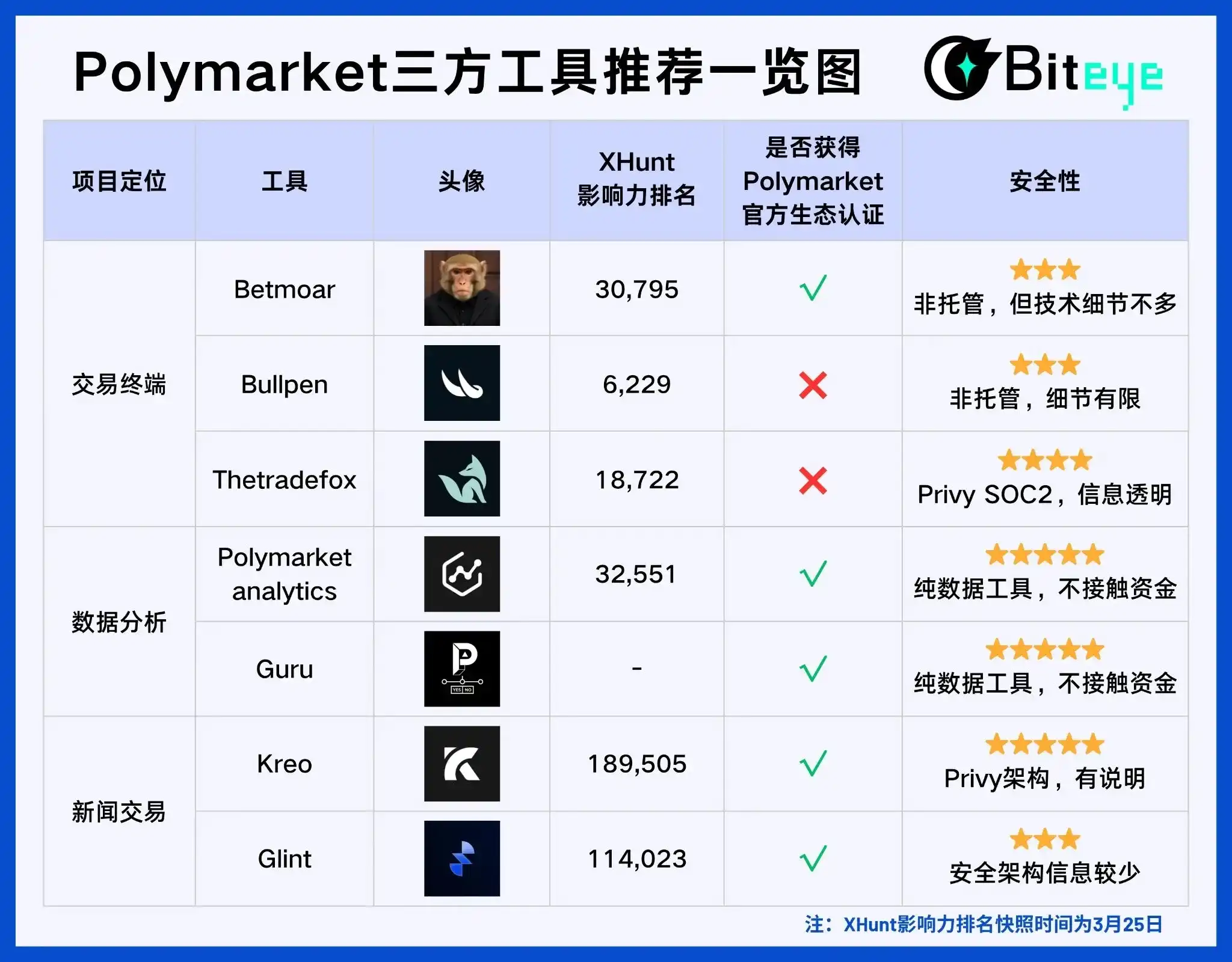
Also recommended: 《Interpreting Polymarket's Major Update Last Night: Fee Expansion, Self-Regulation, New Incentives》《Kalshi and Polymarket Jointly Capitalize New Fund, A Big Step Towards Prediction Market "Ecologization"》.

Policy & Stablecoins

CLARITY Act Rewrites DeFi's Life-and-Death Book: Circle Eats Meat, DeFi Tokens Bleed

The latest CLARITY proposal essentially ends the narrative of stablecoins as savings products. Stablecoins are strictly defined as payment tools rather than interest-bearing assets, which will be unfavorable for most DeFi. The assets most easily affected are DeFi tokens and governance tokens tied to fee income, such as UNI, SUSHI, DYDX, 1INCH, and CAKE等 DEX 代币 (and other DEX tokens).

Maker's structure already allows it to benefit from this shift. Other beneficiaries include compliant infrastructure providers like Circle, exchanges, and custodians (BitGo).

10x estimates a base target price of $120 for the next 12 months. If USDC growth accelerates again and profit margins improve significantly, it could rise to $150; but if growth stagnates and the current economic situation persists, there is a risk of falling to $80.

Also recommended: 《Tether Signs Big Four Auditor, Circle's Compliance Moat Collapses, Stock Price Plummets 20%》.

Airdrop Opportunities & Interaction Guides

Popular Interaction Collection | xStocks Points Activity Launched; Tempo Mainnet Launch (March 25)

Interaction Tutorial | Startale Group, Which Raised $63 Million, Launches Points Activity

Ethereum & Scaling

Ethereum Foundation Article: L1 and L2, From Division of Labor to Symbiosis

Weekly Hotspot Recap

In the past week, Iran presented the US with 5 ceasefire demands; Israel worries Trump might compromise to declare victory; Iran stated it will not allow Trump to decide the war's end time;

Additionally, regarding policy and macro markets: US lawmakers to propose bipartisan bill banning sports板块 (sectors) on prediction markets; UK plans to suspend crypto political donations, Prime Minister cites preventing illegal fund risks;

Views and voices: Analysis: Bitcoin under pressure alongside S&P and Nasdaq, Iran war加剧市场避险 (加剧市场避险 -加剧市场避险 - exacerbating market risk aversion); BIT: Bitcoin options market turns defensive, significant升温 (升温 - heating up) in downside protection demand; Bloomberg: Tether pauses $20 billion financing plan; Bernstein: Circle stock price correction may be excessive, market misreads stablecoin regulatory impact;

Institutions, large companies & top projects: NYSE partners with Securitize to develop tokenized securities platform, supporting 7x24 hour trading; Tether partners with a Big Four accounting firm to advance first full audit; Strategy launches total $42 billion equity issuance plan; Interactive Brokers launches crypto portfolio transfer function, supports inbound transfers from external wallets; Binance issues crypto market maker risk warning and project & user guide (interpretation); Backpack launches token claim and staking interface; Balancer co-founder announces closure of Balancer Labs, protocol to continue operations转向 DAO 和基金会架构 (turning to DAO and foundation structure); Odaily Skills launches free,主打省 Token 的精选信息结构化输出 (focusing on token-saving structured output of selected information);

Data-wise: March 23, spot gold's year-to-date gains归零 (returned to zero), intraday drop over 4%; March 25, Circle stock price fell up to 18%, US Clarity Act draft proposes to limit stablecoin rewards;

Security: Resolv Labs confirms vulnerability attack, suspends all protocol functions......Well, another rollercoaster week.

Attached: Portal to the 《Weekly Editor's Picks》 series.

See you next issue~

Preguntas relacionadas

QWhat is the main purpose of the 'Weekly Editor's Picks' column by Odaily Planet Daily?

AIt is a functional column that selects high-quality, in-depth analysis articles from the past week that might be missed in the information flow and hot news, aiming to provide readers with valuable insights from data analysis, industry judgment, and perspectives.

QAccording to the article, why did the release of 400 million barrels of strategic oil reserves by the IEA fail to lower oil prices effectively?

AThe release was ineffective because the daily投放 (release) of 400 million barrels only covered 17% of the supply gap. The price of oil is determined not by the amount released but by whether the source of the supply disruption is resolved. The reserve release is essentially 'buying time' for negotiations and alternative route adjustments, not replenishing oil.

QWhat core change did Balancer's governance proposals on March 23rd aim to achieve?

AThe core change proposed was to abandon the token release-driven growth model and shift towards a revenue-driven sustainable operational model. This involved a comprehensive reform of BAL token economics and an operational structure reorganization.

QWhat is the fundamental nature of the ERC-8183 protocol as described in the article?

AERC-8183 is an on-chain standard for the decentralized AI agent economy. It is not a traditional payment protocol but a commercial infrastructure specification that defines a tripartite collaboration model (Client, Provider, Evaluator) for the full lifecycle of 'Job-Delivery-Settlement' through smart contracts.

QHow does the article characterize the current state of the Polymarket user base and its transaction volume?

AThe article states that 2% of users contribute 90% of the transaction volume on Polymarket. This volume is primarily driven by a small group of algorithmic and high-frequency traders, while the vast number of low-frequency retail users have almost no interaction with these professional traders.

Lecturas Relacionadas

First Batch of Keynote Speakers and Partners Announced! Web2+3 Summit: Defining the Next Generation of Digital Economy

Web2+3 Summit: Defining the Next Generation of Digital Economy The 6th BEYOND International Technology Innovation Expo (BEYOND Expo 2026), Asia's largest tech and ecosystem exhibition, is launching a dedicated Web2+3 stage for the first time. Co-hosted by BEYOND Expo and ChainNeXT Group, the Web3 Summit will take place from May 28–30, 2026. Against the backdrop of accelerating global tech integration, the boundaries between Web2 and Web3 are rapidly blurring. With clearer global regulations for blockchain-driven internet (Web3) and the special issuance of a Hong Kong dollar stable币 license by the Hong Kong SAR government on April 10, 2026, Web3's decentralized principles are quickly merging with traditional industries (Web2) such as e-commerce, finance, and artificial intelligence. Focused on blockchain-driven digital economy elements, the summit will center on three core principles—implementability, commercial viability, and compliance. It will bring together top Web3 experts to discuss key integration areas like stablecoin payment finance (PayFi), real-world asset tokenization (RWA), and decentralized AI (DeAI), unveiling new opportunities for industrial innovation. The first wave of confirmed speakers includes Jack Kong (Director of Hong Kong Cyberport, Chairman of Nano Labs), Yat Siu (Chairman of Animoca Brands), Michael Wu (Co-founder & CEO of Amber Group), Michael Heinrich (Co-founder & CEO of 0G), and Art Abal (Co-founder of Vana). More Web3 ecosystem pioneers, AI, and fintech experts will be announced soon. Core forum topics include: - Web2+DeAI: New AI Paradigms Driven by Decentralized Infrastructure - Web2+RWA: Real-World Asset Tokenization and Global Liquidity - Web2+PayFi: Cross-Border Payments and Financial Innovation Powered by Crypto Infrastructure - Web2+3 AI: Autonomous Agents and the Crypto Economy - Web2+3 Wealth: On-Chain and Off-Chain Integrated Investment Ecosystems - Web2+3 Commerce: A New Landscape for Global Trade Driven by Stablecoins Additional agenda details will be released in the near future.

marsbitHace 3 hora(s)

First Batch of Keynote Speakers and Partners Announced! Web2+3 Summit: Defining the Next Generation of Digital Economy

marsbitHace 3 hora(s)

Trading

Spot
Futuros

Artículos destacados

Qué es $S$

Entendiendo SPERO: Una Visión General Completa Introducción a SPERO A medida que el panorama de la innovación continúa evolucionando, la aparición de tecnologías web3 y proyectos de criptomonedas juega un papel fundamental en la configuración del futuro digital. Un proyecto que ha atraído la atención en este campo dinámico es SPERO, denotado como SPERO,$$s$. Este artículo tiene como objetivo reunir y presentar información detallada sobre SPERO, para ayudar a entusiastas e inversores a comprender sus fundamentos, objetivos e innovaciones dentro de los dominios web3 y cripto. ¿Qué es SPERO,$$s$? SPERO,$$s$ es un proyecto único dentro del espacio cripto que busca aprovechar los principios de descentralización y tecnología blockchain para crear un ecosistema que promueva la participación, la utilidad y la inclusión financiera. El proyecto está diseñado para facilitar interacciones de igual a igual de nuevas maneras, proporcionando a los usuarios soluciones y servicios financieros innovadores. En su esencia, SPERO,$$s$ tiene como objetivo empoderar a los individuos al proporcionar herramientas y plataformas que mejoren la experiencia del usuario en el espacio de las criptomonedas. Esto incluye habilitar métodos de transacción más flexibles, fomentar iniciativas impulsadas por la comunidad y crear caminos para oportunidades financieras a través de aplicaciones descentralizadas (dApps). La visión subyacente de SPERO,$$s$ gira en torno a la inclusividad, buscando cerrar brechas dentro de las finanzas tradicionales mientras aprovecha los beneficios de la tecnología blockchain. ¿Quién es el Creador de SPERO,$$s$? La identidad del creador de SPERO,$$s$ sigue siendo algo oscura, ya que hay recursos públicos limitados que proporcionan información de fondo detallada sobre su(s) fundador(es). Esta falta de transparencia puede derivarse del compromiso del proyecto con la descentralización, una ética que muchos proyectos web3 comparten, priorizando las contribuciones colectivas sobre el reconocimiento individual. Al centrar las discusiones en torno a la comunidad y sus objetivos colectivos, SPERO,$$s$ encarna la esencia del empoderamiento sin señalar a individuos específicos. Como tal, comprender la ética y la misión de SPERO sigue siendo más importante que identificar a un creador singular. ¿Quiénes son los Inversores de SPERO,$$s$? SPERO,$$s$ cuenta con el apoyo de una diversa gama de inversores que van desde capitalistas de riesgo hasta inversores ángeles dedicados a fomentar la innovación en el sector cripto. El enfoque de estos inversores generalmente se alinea con la misión de SPERO, priorizando proyectos que prometen avances tecnológicos sociales, inclusión financiera y gobernanza descentralizada. Estas fundaciones de inversores suelen estar interesadas en proyectos que no solo ofrecen productos innovadores, sino que también contribuyen positivamente a la comunidad blockchain y sus ecosistemas. El respaldo de estos inversores refuerza a SPERO,$$s$ como un contendiente notable en el dominio de proyectos cripto que evoluciona rápidamente. ¿Cómo Funciona SPERO,$$s$? SPERO,$$s$ emplea un marco multifacético que lo distingue de los proyectos de criptomonedas convencionales. Aquí hay algunas de las características clave que subrayan su singularidad e innovación: Gobernanza Descentralizada: SPERO,$$s$ integra modelos de gobernanza descentralizada, empoderando a los usuarios para participar activamente en los procesos de toma de decisiones sobre el futuro del proyecto. Este enfoque fomenta un sentido de propiedad y responsabilidad entre los miembros de la comunidad. Utilidad del Token: SPERO,$$s$ utiliza su propio token de criptomoneda, diseñado para servir diversas funciones dentro del ecosistema. Estos tokens permiten transacciones, recompensas y la facilitación de servicios ofrecidos en la plataforma, mejorando la participación y la utilidad general. Arquitectura en Capas: La arquitectura técnica de SPERO,$$s$ apoya la modularidad y escalabilidad, permitiendo la integración fluida de características y aplicaciones adicionales a medida que el proyecto evoluciona. Esta adaptabilidad es fundamental para mantener la relevancia en el cambiante paisaje cripto. Participación de la Comunidad: El proyecto enfatiza iniciativas impulsadas por la comunidad, empleando mecanismos que incentivan la colaboración y la retroalimentación. Al nutrir una comunidad sólida, SPERO,$$s$ puede abordar mejor las necesidades de los usuarios y adaptarse a las tendencias del mercado. Enfoque en la Inclusión: Al ofrecer tarifas de transacción bajas e interfaces amigables para el usuario, SPERO,$$s$ busca atraer a una base de usuarios diversa, incluyendo a individuos que anteriormente pueden no haber participado en el espacio cripto. Este compromiso con la inclusión se alinea con su misión general de empoderamiento a través de la accesibilidad. Cronología de SPERO,$$s$ Entender la historia de un proyecto proporciona información crucial sobre su trayectoria de desarrollo y hitos. A continuación se presenta una cronología sugerida que mapea eventos significativos en la evolución de SPERO,$$s$: Fase de Conceptualización e Ideación: Las ideas iniciales que forman la base de SPERO,$$s$ fueron concebidas, alineándose estrechamente con los principios de descentralización y enfoque comunitario dentro de la industria blockchain. Lanzamiento del Whitepaper del Proyecto: Tras la fase conceptual, se lanzó un whitepaper completo que detalla la visión, los objetivos y la infraestructura tecnológica de SPERO,$$s$ para generar interés y retroalimentación de la comunidad. Construcción de Comunidad y Primeras Interacciones: Se realizaron esfuerzos de divulgación activa para construir una comunidad de primeros adoptantes y posibles inversores, facilitando discusiones en torno a los objetivos del proyecto y obteniendo apoyo. Evento de Generación de Tokens: SPERO,$$s$ llevó a cabo un evento de generación de tokens (TGE) para distribuir sus tokens nativos a los primeros seguidores y establecer liquidez inicial dentro del ecosistema. Lanzamiento de la dApp Inicial: La primera aplicación descentralizada (dApp) asociada con SPERO,$$s$ se puso en marcha, permitiendo a los usuarios interactuar con las funcionalidades centrales de la plataforma. Desarrollo Continuo y Alianzas: Actualizaciones y mejoras continuas a las ofertas del proyecto, incluyendo alianzas estratégicas con otros actores en el espacio blockchain, han moldeado a SPERO,$$s$ en un jugador competitivo y en evolución en el mercado cripto. Conclusión SPERO,$$s$ se erige como un testimonio del potencial de web3 y las criptomonedas para revolucionar los sistemas financieros y empoderar a los individuos. Con un compromiso con la gobernanza descentralizada, la participación comunitaria y funcionalidades diseñadas de manera innovadora, allana el camino hacia un paisaje financiero más inclusivo. Como con cualquier inversión en el espacio cripto que evoluciona rápidamente, se anima a los posibles inversores y usuarios a investigar a fondo y participar de manera reflexiva con los desarrollos en curso dentro de SPERO,$$s$. El proyecto muestra el espíritu innovador de la industria cripto, invitando a una mayor exploración de sus innumerables posibilidades. Mientras el viaje de SPERO,$$s$ aún se desarrolla, sus principios fundamentales pueden, de hecho, influir en el futuro de cómo interactuamos con la tecnología, las finanzas y entre nosotros en ecosistemas digitales interconectados.

72 Vistas totalesPublicado en 2024.12.17Actualizado en 2024.12.17

Qué es $S$

Qué es AGENT S

Agent S: El Futuro de la Interacción Autónoma en Web3 Introducción En el paisaje en constante evolución de Web3 y las criptomonedas, las innovaciones están redefiniendo constantemente cómo los individuos interactúan con las plataformas digitales. Uno de estos proyectos pioneros, Agent S, promete revolucionar la interacción humano-computadora a través de su marco agente abierto. Al allanar el camino para interacciones autónomas, Agent S busca simplificar tareas complejas, ofreciendo aplicaciones transformadoras en inteligencia artificial (IA). Esta exploración detallada profundizará en las complejidades del proyecto, sus características únicas y las implicaciones para el dominio de las criptomonedas. ¿Qué es Agent S? Agent S se presenta como un marco agente abierto innovador, diseñado específicamente para abordar tres desafíos fundamentales en la automatización de tareas informáticas: Adquisición de Conocimiento Específico del Dominio: El marco aprende inteligentemente de diversas fuentes de conocimiento externas y experiencias internas. Este enfoque dual le permite construir un rico repositorio de conocimiento específico del dominio, mejorando su rendimiento en la ejecución de tareas. Planificación a Largo Plazo de Tareas: Agent S emplea planificación jerárquica aumentada por la experiencia, un enfoque estratégico que facilita la descomposición y ejecución eficiente de tareas complejas. Esta característica mejora significativamente su capacidad para gestionar múltiples subtareas de manera eficiente y efectiva. Manejo de Interfaces Dinámicas y No Uniformes: El proyecto introduce la Interfaz Agente-Computadora (ACI), una solución innovadora que mejora la interacción entre agentes y usuarios. Utilizando Modelos de Lenguaje Multimodal de Gran Escala (MLLMs), Agent S puede navegar y manipular diversas interfaces gráficas de usuario sin problemas. A través de estas características pioneras, Agent S proporciona un marco robusto que aborda las complejidades involucradas en la automatización de la interacción humana con las máquinas, preparando el terreno para una multitud de aplicaciones en IA y más allá. ¿Quién es el Creador de Agent S? Si bien el concepto de Agent S es fundamentalmente innovador, la información específica sobre su creador sigue siendo elusiva. El creador es actualmente desconocido, lo que resalta ya sea la etapa incipiente del proyecto o la elección estratégica de mantener a los miembros fundadores en el anonimato. Independientemente de la anonimidad, el enfoque sigue siendo en las capacidades y el potencial del marco. ¿Quiénes son los Inversores de Agent S? Dado que Agent S es relativamente nuevo en el ecosistema criptográfico, la información detallada sobre sus inversores y patrocinadores financieros no está documentada explícitamente. La falta de información disponible públicamente sobre las bases de inversión u organizaciones que apoyan el proyecto plantea preguntas sobre su estructura de financiamiento y hoja de ruta de desarrollo. Comprender el respaldo es crucial para evaluar la sostenibilidad del proyecto y su posible impacto en el mercado. ¿Cómo Funciona Agent S? En el núcleo de Agent S se encuentra una tecnología de vanguardia que le permite funcionar de manera efectiva en diversos entornos. Su modelo operativo se basa en varias características clave: Interacción Humano-Computadora Similar a la Humana: El marco ofrece planificación avanzada de IA, esforzándose por hacer que las interacciones con las computadoras sean más intuitivas. Al imitar el comportamiento humano en la ejecución de tareas, promete elevar las experiencias de los usuarios. Memoria Narrativa: Empleada para aprovechar experiencias de alto nivel, Agent S utiliza memoria narrativa para hacer un seguimiento de las historias de tareas, mejorando así sus procesos de toma de decisiones. Memoria Episódica: Esta característica proporciona a los usuarios una guía paso a paso, permitiendo que el marco ofrezca apoyo contextual a medida que se desarrollan las tareas. Soporte para OpenACI: Con la capacidad de ejecutarse localmente, Agent S permite a los usuarios mantener el control sobre sus interacciones y flujos de trabajo, alineándose con la ética descentralizada de Web3. Fácil Integración con APIs Externas: Su versatilidad y compatibilidad con varias plataformas de IA aseguran que Agent S pueda encajar sin problemas en ecosistemas tecnológicos existentes, convirtiéndolo en una opción atractiva para desarrolladores y organizaciones. Estas funcionalidades contribuyen colectivamente a la posición única de Agent S dentro del espacio cripto, ya que automatiza tareas complejas y de múltiples pasos con una intervención humana mínima. A medida que el proyecto evoluciona, sus posibles aplicaciones en Web3 podrían redefinir cómo se desarrollan las interacciones digitales. Cronología de Agent S El desarrollo y los hitos de Agent S pueden encapsularse en una cronología que resalta sus eventos significativos: 27 de septiembre de 2024: El concepto de Agent S fue lanzado en un documento de investigación integral titulado “Un Marco Agente Abierto que Usa Computadoras Como un Humano”, mostrando las bases del proyecto. 10 de octubre de 2024: El documento de investigación fue puesto a disposición del público en arXiv, ofreciendo una exploración profunda del marco y su evaluación de rendimiento basada en el benchmark OSWorld. 12 de octubre de 2024: Se lanzó una presentación en video, proporcionando una visión visual de las capacidades y características de Agent S, involucrando aún más a posibles usuarios e inversores. Estos marcadores en la cronología no solo ilustran el progreso de Agent S, sino que también indican su compromiso con la transparencia y la participación comunitaria. Puntos Clave Sobre Agent S A medida que el marco Agent S continúa evolucionando, varios atributos clave destacan, subrayando su naturaleza innovadora y potencial: Marco Innovador: Diseñado para proporcionar un uso intuitivo de las computadoras similar a la interacción humana, Agent S aporta un enfoque novedoso a la automatización de tareas. Interacción Autónoma: La capacidad de interactuar de manera autónoma con las computadoras a través de GUI significa un salto hacia soluciones informáticas más inteligentes y eficientes. Automatización de Tareas Complejas: Con su metodología robusta, puede automatizar tareas complejas y de múltiples pasos, haciendo que los procesos sean más rápidos y menos propensos a errores. Mejora Continua: Los mecanismos de aprendizaje permiten a Agent S mejorar a partir de experiencias pasadas, mejorando continuamente su rendimiento y eficacia. Versatilidad: Su adaptabilidad en diferentes entornos operativos como OSWorld y WindowsAgentArena asegura que pueda servir a una amplia gama de aplicaciones. A medida que Agent S se posiciona en el paisaje de Web3 y criptomonedas, su potencial para mejorar las capacidades de interacción y automatizar procesos significa un avance significativo en las tecnologías de IA. A través de su marco innovador, Agent S ejemplifica el futuro de las interacciones digitales, prometiendo una experiencia más fluida y eficiente para los usuarios en diversas industrias. Conclusión Agent S representa un audaz avance en la unión de la IA y Web3, con la capacidad de redefinir cómo interactuamos con la tecnología. Aunque aún se encuentra en sus primeras etapas, las posibilidades para su aplicación son vastas y atractivas. A través de su marco integral que aborda desafíos críticos, Agent S busca llevar las interacciones autónomas al primer plano de la experiencia digital. A medida que nos adentramos más en los reinos de las criptomonedas y la descentralización, proyectos como Agent S sin duda desempeñarán un papel crucial en la configuración del futuro de la tecnología y la colaboración humano-computadora.

328 Vistas totalesPublicado en 2025.01.14Actualizado en 2025.01.14

Qué es AGENT S

Cómo comprar S

¡Bienvenido a HTX.com! Hemos hecho que comprar Sonic (S) sea simple y conveniente. Sigue nuestra guía paso a paso para iniciar tu viaje de criptos.Paso 1: crea tu cuenta HTXUtiliza tu correo electrónico o número de teléfono para registrarte y obtener una cuenta gratuita en HTX. Experimenta un proceso de registro sin complicaciones y desbloquea todas las funciones.Obtener mi cuentaPaso 2: ve a Comprar cripto y elige tu método de pagoTarjeta de crédito/débito: usa tu Visa o Mastercard para comprar Sonic (S) al instante.Saldo: utiliza fondos del saldo de tu cuenta HTX para tradear sin problemas.Terceros: hemos agregado métodos de pago populares como Google Pay y Apple Pay para mejorar la comodidad.P2P: tradear directamente con otros usuarios en HTX.Over-the-Counter (OTC): ofrecemos servicios personalizados y tipos de cambio competitivos para los traders.Paso 3: guarda tu Sonic (S)Después de comprar tu Sonic (S), guárdalo en tu cuenta HTX. Alternativamente, puedes enviarlo a otro lugar mediante transferencia blockchain o utilizarlo para tradear otras criptomonedas.Paso 4: tradear Sonic (S)Tradear fácilmente con Sonic (S) en HTX's mercado spot. Simplemente accede a tu cuenta, selecciona tu par de trading, ejecuta tus trades y monitorea en tiempo real. Ofrecemos una experiencia fácil de usar tanto para principiantes como para traders experimentados.

676 Vistas totalesPublicado en 2025.01.15Actualizado en 2025.03.21

Cómo comprar S

Discusiones

Bienvenido a la comunidad de HTX. Aquí puedes mantenerte informado sobre los últimos desarrollos de la plataforma y acceder a análisis profesionales del mercado. A continuación se presentan las opiniones de los usuarios sobre el precio de S (S).

活动图片