Understanding Theory ≠ Gaining Profit: 5 Common Math Mistakes Made by Highly Intelligent People

marsbitPublicado a 2026-03-14Actualizado a 2026-03-14

Resumen

In the article "Knowing Theory ≠ Earning Returns: 5 Common Math Mistakes Made by Highly Intelligent People," crypto KOL darkzodchi explores why many highly educated individuals struggle financially despite their intellectual prowess, while less academically trained traders often succeed. The author identifies five key cognitive errors: 1. **Pursuing Precision Over Action**: Smart people often delay decisions to seek perfect accuracy, underestimating the cost of delay. The solution is to set deadlines and prioritize timely action over exhaustive research. 2. **Finding Patterns in Noise**: Intelligent individuals tend to overfit models by detecting false patterns in random data. The remedy is to apply statistical corrections (e.g., Bonferroni) and avoid complex strategies prone to noise. 3. **Misapplying Diversification**: Diversification is useful without an edge but harmful when one has a genuine advantage. The Kelly Criterion suggests concentrating bets based on the strength of the edge. 4. **Anchoring to Irrelevant Numbers**: People often fixate on past prices or values, impairing rational decision-making. Asking "Would I buy this today?" helps ignore sunk costs. 5. **Confusing Understanding with Action**: Knowledge alone doesn’t yield results; action and consistency are crucial. Small, real-world bets bridge the gap between theory and practice. The author emphasizes that markets reward simplicity, speed, and execution over complexity and perfection. Intelligent indiv...

Author: darkzodchi, Crypto KOL

Compiled by: Felix, PANews

There are many highly educated and intelligent people in the financial markets, but only a minority make money, and a significant portion of them are not highly educated. They have learned a lot of theory but cannot make money. What causes this "anomaly"? Based on personal experience and research, crypto KOL darkzodchi analyzed this phenomenon and proposed five common cognitive mistakes made by smart people. Details below.

I know someone who can mentally solve differential equations. He graduated with top honors and works at a top tech company you've definitely heard of, earning $180,000 a year. But his net worth is essentially zero. If you factor in his car loan, it might even be negative.

In stark contrast, most of my friends dropped out of school before they were 20, fully devoting themselves to entrepreneurship or trading, and now earn more than those with finance degrees. Half of them don't even understand basic economic terms; they just know when to act.

What's going on here?

I've seen this countless times: strategists almost never act. Have you ever wondered why university professors don't drive Ferraris? Because they know *how* to act in theory, but don't know *what* to do in practice.

Let's talk about 5 math mistakes that specifically plague smart people, and a "foolproof" solution for each.

Mistake 1: Pursuing Precision While Ignoring the Importance of Action

Smart people love pursuing absolutely correct answers. This pursuit is rewarded in school: on a math test, 97% accuracy is far worse than 100%.

But in the world of money? 97% accuracy achieved next month is far less valuable than 70% accuracy right now.

I watched a friend spend two years building a "perfect" liquidity provision project; he even raised funds for it. He used custom metrics and ran backtests spanning 15 years, covering three different volatility environments. Honestly, it was a remarkable piece of work.

But by the time he launched, the market environment had changed. His model was tailored for a market that no longer existed. Meanwhile, some unknown person on CT forums made $80,000 with three simple lines of heuristic code—"buy when funding rate is negative, sell when positive"—while my friend was still struggling.

There's actually a formula for this called the Value of Information (VoI), which tells you when more research is worth it:

VoI = EV(Decision with more info) - EV(Decision now) - Cost of Delay

If VoI < 0, stop researching and act immediately.

The cost of delay is something smart people consistently underestimate. They think it's zero because doing research "feels productive." It's not. Markets move, opportunities vanish, capital sits idle.

I've personally fallen for this. In August 2025, I spent a month thinking about how to structure a Polymarket project, trying to devise an extremely complex scheme, until I completely forgot about it.

By October, I switched my mindset and started coding daily. By November, the project was live.

I wasted more time "thinking about the idea" than actually creating it. Classic self-sabotage.

The Fix: Set a deadline *before* you start researching. "No matter how much information I have, I will decide by Friday." This single habit is more valuable than any formula.

Mistake 2: Finding Patterns in Noise (And Betting on Them)

This is a big one, and it's unique to smart people.

If you're smart, your brain is like a pattern recognition machine. This ability got you great grades and a dream job. You see structure where others see chaos.

The problem: Financial markets are mostly chaos. Your amazing pattern-matching brain will find patterns that aren't there. Then it will convince you they are real, you'll bet, and you'll lose.

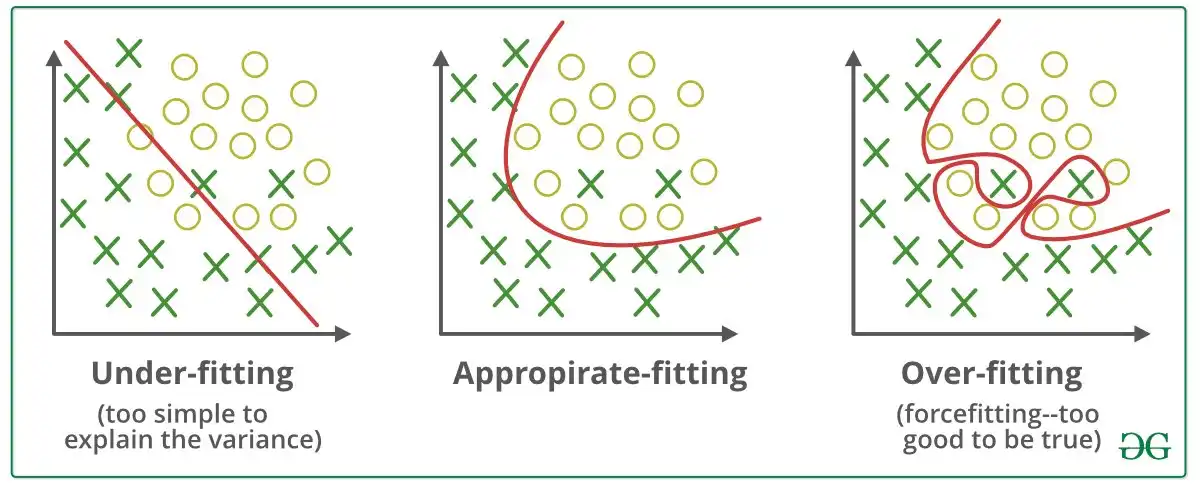
This is called "overfitting." Here's an example of how it works.

Take any random dataset: stock prices, temperature readings, anything. Run enough combinations of indicators, and you *will* find a formula that "predicts" the past with 95% accuracy. It looks amazing in backtests. But it's garbage; it found a pattern in the noise.

Overfitting Test:

  • If your model has N parameters and you tested K combinations:
  • Expected number of false discoveries = K × Significance level
  • Testing 100 indicators at p < 0.05 yields 5 "significant" results that are pure noise.

I fell for this hard. In 2022, I found a "pattern" in ETH that held for 3 months of data. Something about the Binance/Coinbase volume ratio. The backtest looked bulletproof, I got excited, and immediately put $2,000 into it.

Lost $400 the first week. The pattern was noise. I wasn't smart enough to realize that *being able to find it* was the problem.

The data from Polymarket confirms this powerfully. When I analyzed 112,000 wallets, those running the most complex strategies (10+ signals, fancy ML models) actually performed *worse* than those using just 2-3 simple rules. More complexity = more overfitting = more losses.

The Fix: Before believing any pattern, ask: "If I tested 100 random strategies, how many would look this good by pure luck?" If the answer is more than 1 or 2, your "discovery" is likely noise. The Bonferroni correction helps: divide your significance threshold by the number of strategies you tested.
Mistake 3: Diversifying When You Should Concentrate (And Vice Versa)

This one hits close to home, as I was running five different projects simultaneously a few years ago, and they all failed.

Every smart person knows "don't put all your eggs in one basket." It's like the first rule of finance: diversify. Modern Portfolio Theory, Markowitz, Nobel Prize.

Yet... the actual math reveals something more nuanced that most people miss.

Diversification protects you *when you have no edge*. If you're picking stocks randomly, sure, diversify. You don't actually know what will happen.

But when you actually have an edge (a genuinely mispriced opportunity), diversification *harms* your returns. You dilute your best idea with mediocre ones.

  • Kelly Criterion for Concentration: f* = Edge / Odds
  • If your edge is 15%, odds are 1:1: f* = 0.15 / 1.0 = 15% of bankroll
  • If your edge is 3%: f* = 0.03 / 1.0 = 3% of bankroll

This formula literally says: bigger edge, bigger bet; smaller edge, smaller bet. It does NOT say "spread your capital equally across 47 positions."

Warren Buffett (who is quite good at this) has said repeatedly that diversification is protection against ignorance. If you know what you're doing, it makes no sense.

I used to hold 5-10 different tokens during the SOL and BSC booms. The best performer went up 120%, but it was only 4% of my portfolio, netting me about $80 total. Meanwhile, my largest holding dropped 40%.

And the top Polymarket wallets I studied? They only have 3-5 positions open at any time, max, but each position is sized according to its edge.

The Fix: Ask yourself honestly: Do I have an edge in this trade? If yes, size up (within Kelly limits). If no, either skip it entirely or index. The "a little bit of everything" compromise is the graveyard of returns.

Mistake 4: Anchoring to Irrelevant Numbers

Smart people are especially susceptible to anchoring because they remember numbers, and remembered numbers become subconscious reference points for all future decisions.

"I bought ETH at $4800."

So what? The market doesn't care. That number is completely, utterly, 100% irrelevant to whether ETH is a good buy today. But your brain has welded $4800 to your self-esteem. Now, every price below feels like a "loss," every price above feels like "breaking even."

This isn't just a feeling. It measurably changes your behavior:

  • You hold losing positions too long (waiting to "break even")
  • You sell winning positions too early (fear of giving back profits).
  • You evaluate new opportunities based on past prices, not future value.

There's a very simple test for this. Daniel Kahneman calls it "Would I buy it today?"

  • You hold an asset, current price P.
  • You bought it at price P_0.
  • Ignore P_0 completely; it's a sunk cost.

Question: If you had cash right now, would you buy this asset at price P?

  • If yes → Hold
  • If no → Sell
  • If unsure → Your position is too large

I had to write this on a sticky note on my monitor: "Would I buy it today?" Because even knowing the bias, I'd still think, "But I'm only down 20%, let's wait for a bounce." Anchoring is that powerful.

This applies beyond trading. Salary negotiation? If you make $90k now, you anchor on that and ask for $100k. But the market rate for your role might be $130k. You're literally negotiating against yourself using an irrelevant anchor. Changing jobs? "I've been here 4 years." So what? The question is whether the next four years are better spent here or elsewhere. The past four are sunk regardless.

The Fix: Before any financial decision, write down the numbers influencing you. Then ask: "Is this number actually relevant to future outcomes, or am I just anchored to the past?" If it's the past, cross it out (literally, with a pen).

Mistake 5: Mistaking Understanding for Action

This is the cruelest one. Honestly, it's my biggest weakness too.

Smart people read about compound interest and nod along. They understand the Kelly Criterion, they can explain loss aversion at dinner parties, they've read *Thinking, Fast and Slow* (or at least the summary).

Then they think understanding equals action. It doesn't. Not even close.

Understanding compounding doesn't mean you're investing. Understanding Kelly doesn't mean you're sizing correctly. Understanding loss aversion doesn't mean you're immune to it.

There's research on this. It's called the "knowledge-action gap," and it's huge. One study found almost no correlation between financial literacy scores and actual financial outcomes. People scoring 95 on a financial literacy test were just as likely to carry credit card debt as those scoring 50.

Financial Outcome = Knowledge × Action × Consistency

No matter how vast the knowledge, if action is zero, the result is zero.

The formula is obvious, but smart people get stuck on the first term. They keep accumulating knowledge: one more book, one more course, one more podcast. Because learning feels safe and secure. Action feels risky and uncomfortable.

I know because I lived it. I read three books on investing before making my first trade. I could explain the Efficient Market Hypothesis, factor investing, options pricing—all of it. My first live trade? I panicked and lost 12% in three days. All that knowledge, and emotion still ruled everything.

You know what finally helped me? I was literally on the basketball court, pulled out my phone, and put $50 on a Polymarket bet, purely to try it. Not $5000, just $50. The stakes were low, real money was on the line, almost no chance to win—but I just wanted to feel what it was like to have skin in the game.

Suddenly, those probability formulas weren't abstract. They were tied to my money. That $50 bet taught me more about my biases than 11 books combined.

The Fix: After reading this, do *one* thing. Not five things. One thing. Place a small bet, calculate an expected value, test a hypothesis. The gap between knowing and doing is bridged by tiny acts of doing.

Why This Matters More Than You Think

What bothers me most about all this: These 5 mistakes aren't from being "stupid," but from being "smart in the wrong way." School trains us to be meticulous, precise, knowledgeable. The market rewards being fast, roughly right, and taking action.

The rules of the game changed, and nobody told us.

The good news is, once you see these traps, you can't unsee them. Every time you find yourself spending 3 hours researching a $200 decision—that's Mistake #1. Every time you find an exciting "pattern" in a crypto chart—that's Mistake #2. Every time you spread your capital across 20 positions because "diversification"—that's Mistake #3.

The smartest thing a smart person can do is get a little "dumber." Simpler strategies, fewer positions, faster decisions. Less research, more action.

The math supports it, the 112,000 wallets I studied prove it, the books prove it, my own expensive mistakes prove it.

Now stop reading and go do something.

Related reading: Must-Read for Beginners: Senior Trader Shares Five Trading "Secrets"

Preguntas relacionadas

QWhat is the first common mathematical mistake that intelligent people make in financial markets, and what is the suggested solution?

AThe first mistake is pursuing precision over action. The solution is to set a deadline before starting research and make a decision by that time, regardless of how much information has been gathered.

QWhat is overfitting, and how does it particularly affect smart individuals in trading?

AOverfitting is finding patterns in noise that don't actually exist. It affects smart individuals because their pattern-matching brains are prone to seeing structures in random market chaos, leading them to place bets based on these false patterns and lose money.

QAccording to the Kelly Criterion, when should an investor concentrate their bets instead of diversifying?

AAn investor should concentrate their bets when they have a genuine advantage (a truly undervalued opportunity). The Kelly Criterion formula, f* = edge / odds, indicates that a larger edge warrants a larger bet, while a smaller edge warrants a smaller bet or no bet at all.

QWhat is the 'anchoring effect' and how can it negatively impact financial decisions?

AThe anchoring effect is the cognitive bias where an individual relies too heavily on an initial piece of information (an 'anchor') when making decisions. It negatively impacts finances by causing people to hold losing positions too long (waiting to 'break even'), sell winning positions too early, and evaluate new opportunities based on past prices instead of future value.

QWhat is the 'knowledge-action gap' and why is it a significant problem for intelligent people?

AThe 'knowledge-action gap' is the disconnect between understanding a concept theoretically and actually putting it into practice. It's a significant problem for intelligent people because they often mistake understanding for action, continually accumulating knowledge instead of taking the risky and uncomfortable steps required to achieve real financial results.

Lecturas Relacionadas

Agents Take Over Traffic Distribution Power: What Are Tencent, ByteDance, and Alibaba Competing For?

In the race to dominate the AI era's entry point, China's tech giants—Tencent, ByteDance, and Alibaba—are aggressively deploying AI Agents to control the future of traffic distribution. Alibaba is pursuing a dual-track "closed loop + openness" strategy. Its Qianwen app is evolving into a super-Agent integrated across its ecosystem (Taobao, Alipay, etc.) to handle complex tasks like travel planning. Concurrently, it is opening its platform to external brands (Luckin Coffee, KFC) and has launched a B2B Agent platform, "Wukong," targeting enterprise automation. Its other flagship, Quark, aims to be an "AI super search box" for information and tasks. ByteDance is executing an omnipresent "sprawl strategy." Its Doubao app boasts over 300 million monthly active users and is evolving into a default AI entry point for daily life, with plans for paid versions and e-commerce integration. Its core weapon is the Kouzi platform, a visual "AI assembly factory" for developers to build custom Agents. ByteDance is also pushing hardware integration, collaborating on AI phones and developing smart glasses to embed Doubao everywhere. Tencent is playing its long-held "ultimate card" by quietly embedding an AI Agent directly into WeChat. This Agent, accessible via a swipe, can understand user commands and automatically execute tasks by calling upon WeChat's millions of mini-programs (e.g., finding and ordering coffee). This leverages WeChat's unparalleled 1.4-billion-user ecosystem to position the app as an AI-powered "service operating system," a move that could dramatically reshape the competitive landscape. The core battleground is shifting from competing for "user screen time" to competing to be the "default execution layer" for user intent. The business model is evolving from an "attention economy" to an "intent economy," where the Agent that can most efficiently fulfill a user's need gains control over service access and token flow. This represents a fundamental change in how users connect with digital services, making the fight for the Agent入口 (entry point) a pivotal moment for redefining industry leadership in the AI age.

marsbitHace 1 min(s)

Agents Take Over Traffic Distribution Power: What Are Tencent, ByteDance, and Alibaba Competing For?

marsbitHace 1 min(s)

From Banning Doubao to Embracing Honor: Why Did WeChat Suddenly 'Change Its Face'?

The article explores the sudden shift in WeChat's strategy towards AI assistants from mobile phone manufacturers, transitioning from strict opposition to active collaboration. For over a year, WeChat fiercely resisted attempts by phone AI assistants (like ByteDance's Doubao in late 2025) to control its features via GUI automation ("simulated clicking"), citing security and data control concerns. This stance created a significant barrier for system-level AI integration. Now, Tencent has initiated A2A (Agent-to-Agent) partnerships with major phone brands like Honor, Xiaomi, OPPO, and vivo. This model allows a phone's system AI (e.g., Honor's YOYO) to parse a user's voice command and send a structured request directly to WeChat's own internal AI agent via secure APIs. WeChat then executes the action (e.g., sending a message) and returns the result. The article attributes Tencent's "change of face" to strategic pressure. While leading in social app usage, Tencent trails rivals like ByteDance and Alibaba in standalone AI app popularity. WeChat, with its vast mini-program ecosystem, is Tencent's key asset for an AI comeback. The upcoming WeChat AI agent aims to handle tasks like booking and payments within the app. However, phone system assistants remain the primary AI entry point for most users. The A2A collaboration allows Tencent to extend WeChat's AI reach to this crucial system layer while maintaining control over its core functions and data. For phone manufacturers, embracing A2A is a pragmatic move. The GUI route proved unviable due to WeChat's blocks. A2A offers a compliant path to integrate a vital service, enhancing their AI assistants' usefulness. It allows them to focus on developing their own AI ecosystems for other services while cooperating on WeChat access. The collaboration is framed as a mutual, strategic necessity: Tencent gains a distribution channel, and manufacturers gain a key functionality. The partnership relies on a "dual authorization" mechanism for security, requiring both user and app consent for each action. While questions about long-term data privacy practices remain, experts note A2A is more secure and compliant than GUI automation. Ultimately, this cooperation is seen as a tentative, calculated truce. Tencent's long-term goal is to make WeChat an AI-powered "service OS." Phone manufacturers aim to make their system AI the central user interface. Their paths may converge or clash in the future, but for now, the A2A deal represents the opening chapter in the battle for the AI-era user入口, driven by necessity and strategic calculus on both sides.

marsbitHace 1 hora(s)

From Banning Doubao to Embracing Honor: Why Did WeChat Suddenly 'Change Its Face'?

marsbitHace 1 hora(s)

On-Chain Figures on the Eve of Kickoff: 1.6 Billion Traded Before the World Cup Even Begins

"On-Chain Numbers on the Eve of the World Cup: $1.6 Billion Traded Before Kick-off" Analysis of on-chain markets before the 2026 FIFA World Cup reveals significant crypto integration into football. The most striking figure is the approximately **$1.6 billion** in total trading volume on the single "World Cup Winner" contract on the Polymarket prediction market platform, accumulated before a single match was played. This represents explosive growth for a sector whose annual volume surged from ~$16B in 2024 to ~$64B in 2025. The ecosystem is maturing beyond speculation. Key developments include: 1) **Infrastructure upgrades** like Polymarket's migration to native, regulated USDC stablecoin for settlements; 2) **Reliable data oracles**, such as Chainlink, being used to resolve real-world match outcomes on-chain; and 3) **Official recognition**, with FIFA appointing its first-ever "Prediction Markets" partner. Over 100 contracts now cover everything from the outright winner to individual match results and even non-sporting risks like venue relocation. This evolution marks a fundamental shift. While crypto firms are absent from FIFA's top-tier sponsor list, the technology has deeply penetrated the tournament's financial and predictive infrastructure through regulated stablecoin settlements, decentralized oracles, and new official partnership categories. The regulatory landscape remains complex and varies by jurisdiction, but on-chain markets for the World Cup are already a multi-billion-dollar reality.

marsbitHace 2 hora(s)

On-Chain Figures on the Eve of Kickoff: 1.6 Billion Traded Before the World Cup Even Begins

marsbitHace 2 hora(s)

Trading

Spot
Futuros

Artículos destacados

Cómo comprar PEOPLE

¡Bienvenido a HTX.com! Hemos hecho que comprar ConstitutionDAO (PEOPLE) sea simple y conveniente. Sigue nuestra guía paso a paso para iniciar tu viaje de criptos.Paso 1: crea tu cuenta HTXUtiliza tu correo electrónico o número de teléfono para registrarte y obtener una cuenta gratuita en HTX. Experimenta un proceso de registro sin complicaciones y desbloquea todas las funciones.Obtener mi cuentaPaso 2: ve a Comprar cripto y elige tu método de pagoTarjeta de crédito/débito: usa tu Visa o Mastercard para comprar ConstitutionDAO (PEOPLE) al instante.Saldo: utiliza fondos del saldo de tu cuenta HTX para tradear sin problemas.Terceros: hemos agregado métodos de pago populares como Google Pay y Apple Pay para mejorar la comodidad.P2P: tradear directamente con otros usuarios en HTX.Over-the-Counter (OTC): ofrecemos servicios personalizados y tipos de cambio competitivos para los traders.Paso 3: guarda tu ConstitutionDAO (PEOPLE)Después de comprar tu ConstitutionDAO (PEOPLE), guárdalo en tu cuenta HTX. Alternativamente, puedes enviarlo a otro lugar mediante transferencia blockchain o utilizarlo para tradear otras criptomonedas.Paso 4: tradear ConstitutionDAO (PEOPLE)Tradear fácilmente con ConstitutionDAO (PEOPLE) en HTX's mercado spot. Simplemente accede a tu cuenta, selecciona tu par de trading, ejecuta tus trades y monitorea en tiempo real. Ofrecemos una experiencia fácil de usar tanto para principiantes como para traders experimentados.

444 Vistas totalesPublicado en 2024.12.12Actualizado en 2026.06.02

Cómo comprar PEOPLE

Discusiones

Bienvenido a la comunidad de HTX. Aquí puedes mantenerte informado sobre los últimos desarrollos de la plataforma y acceder a análisis profesionales del mercado. A continuación se presentan las opiniones de los usuarios sobre el precio de PEOPLE (PEOPLE).

活动图片