Token Doesn't Need a Chinese Name, But the Business Behind It Does

marsbitPublicado a 2026-03-23Actualizado a 2026-03-23

Resumen

Recent discussions in China have intensified around finding an appropriate Chinese translation for the technical term "Token," driven by its growing economic and industrial significance. Previously an obscure technical term within AI circles, Token has now entered mainstream discourse due to its role as a billing unit in cloud services, a revenue metric for AI companies, and a key indicator in national AI industry statistics. Proposed translations include "智元" (suggested by AI media, implying "intelligence unit"), "模元" (proposed by academics, leaning toward "model unit"), and "符元" (a more neutral, technical term meaning "symbol unit"). The debate is not merely linguistic but reflects broader commercial and narrative control over the AI industry. Different translations align with different stakeholders’ interests: "智元" benefits those emphasizing intelligent computation, while "模元" reinforces the role of model developers. The term already had an academic translation—“词元” (ciyuan)—since 2021, but it gained little attention until Tokens became a valuable economic unit. As Token consumption in China surges—reaching 180 trillion per day—the naming contest underscores deeper issues of market influence, branding, and “coinage” rights in the emerging AI-driven economy. Ultimately, those who produce Tokens may hold the power to define them, regardless of the chosen name.

Author: Kuli, Shenchao TechFlow

Recently, you may have noticed something: people have started discussing what Token should be called.

Professor Yang Bin from Tsinghua University published an article titled "It's Urgent to Determine the Chinese Translation for Token"; a related translation question on Zhihu garnered 250,000 views, with comment sections flooded with suggestions.

Over the past two to three years, the domestic AI circle directly used the term "Token" without any issue. Why the sudden need for a Chinese name?

The immediate reason might be that, after this year's Spring Festival, ordinary people learned for the first time that Tokens cost money.

OpenClaw transformed AI from chatting to working, with a single task burning through hundreds of thousands of Tokens, sending bills skyrocketing; various cloud providers have also announced price increases, with the billing unit being Token.

At the same time, Token started appearing in places it hadn't before.

At the GTC conference, NVIDIA CEO Jensen Huang mentioned that in Silicon Valley, people are now asking in job interviews, "How many Tokens does this job offer?" He suggested incorporating Tokens into engineers' compensation;

OpenAI founder Sam Altman took it even further, suggesting that Tokens would replace universal basic income, with everyone receiving computing power instead of money.

Data from the National Data Bureau shows that China's daily Token consumption surged from 100 billion in early 2024 to over 40 trillion by September 2025, reaching 180 trillion this February. At the beginning of the year, People's Daily published an article titled "A Casual Talk on Ciyuan (词元)" to explain the term to readers.
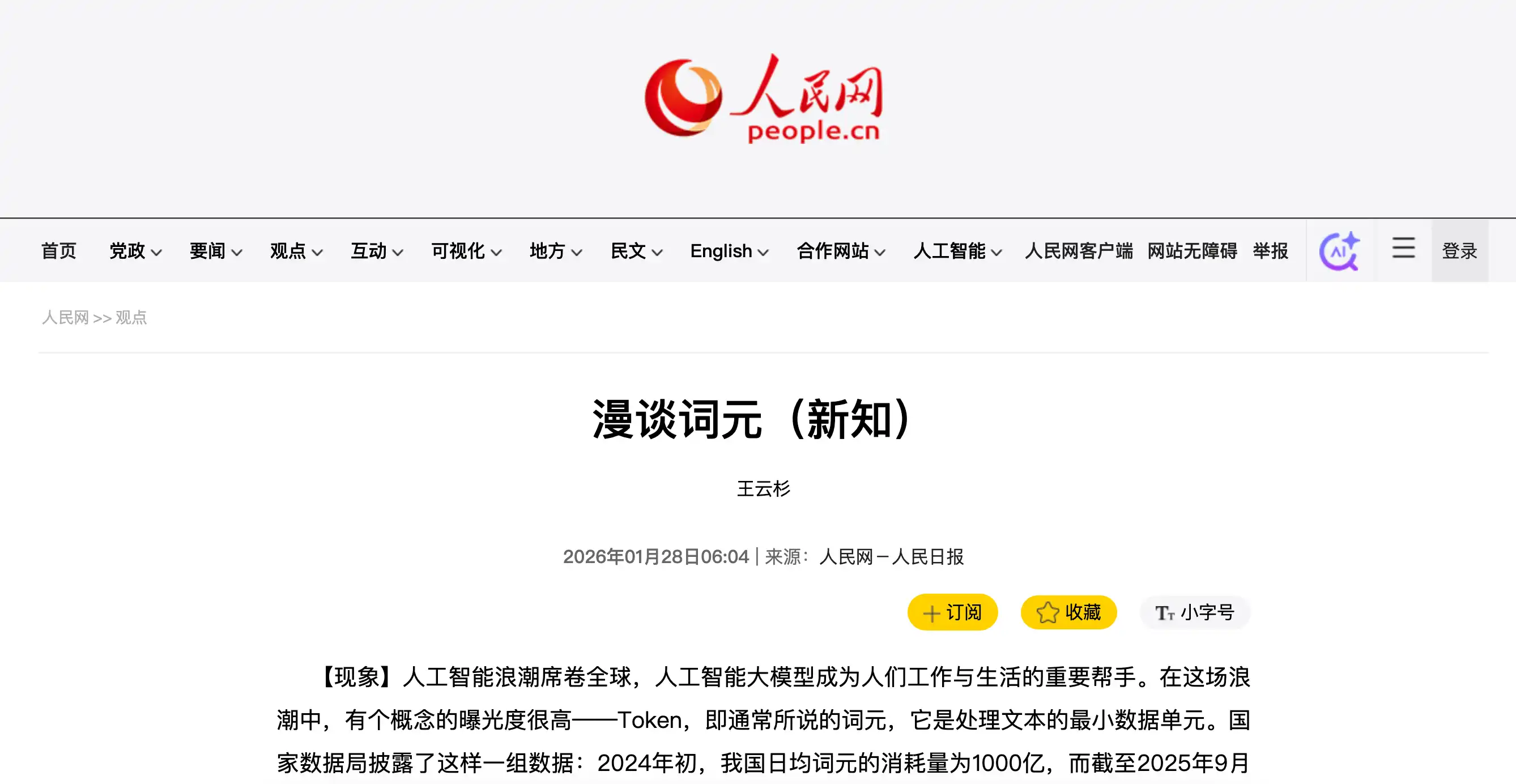
Once a technical term enters cloud service bills, recruitment compensation packages, and official statistical metrics, it can no longer remain in English.

The question is, what to call it?

If this were merely a translation issue, there would already be an answer. In 2021, the domestic academic community settled on a name for Token: 词元 (Ciyuan).

But no one cared back then because Token was still an internal term within technical circles.

Now, it's different.

The word "Token" itself is a versatile container; previously, people in the crypto sphere called it 代币 (Daibi, meaning token/coin), those in security called it 令牌 (Lingpai, meaning token/pass), and those in AI called it 词元 (Ciyuan, meaning lexical unit). The same English word, depending on which direction the Chinese translation leans, determines whose territory it belongs to.

Thus, a battle over naming Token began.

Business Needs Discourse Power

How a word is translated is usually a matter for linguists. But this time, almost no linguists are involved in the naming.

The currently most prominent name is "智元" (Zhiyuan).

It is being pushed most vigorously by an AI media outlet called "新智元" (Xin Zhiyuan). If the Chinese name for Token is set as "智元", this company's brand name would coincide with a fundamental industry term, effectively getting free advertising in every article discussing Token.

Their own promotional article ends quite frankly: "We suggest translating Token as the industry's new consensus: 智元 (Zhiyuan), leaving the '新' (Xin, meaning new) for us."

According to the same article, Baichuan Intelligent founder Wang Xiaochuan commented: "Calling it Zhiyuan is quite good."

As a maker of large models, it's certainly good for him if Token is called Zhiyuan. Each operation of the model would then produce not just a billing unit, but a "basic unit of intelligence."

Selling Token is selling traffic; selling Zhiyuan is selling intelligence—the valuation story is entirely different.

Professor Yang Bin from Tsinghua University proposed "模元" (Moyuan), with "模" (Mo) corresponding to model. Whoever owns the large model holds the production rights to "模元". Leaning the name towards models shifts pricing power to the model companies.

Some advocate for "符元" (Fuyuan), returning to the most fundamental definition in computer science—Token is simply a unit of symbolic processing, unrelated to intelligence or models.

It's the cleanest technically, but the proposer is an independent technical writer, without corporate backing or capital push, and thus has almost no voice in this discussion.

Whichever direction the name leans, the industry narrative moves that way, and money flows accordingly.

A distant example: the day Facebook renamed itself Meta, "metaverse" transformed from a sci-fi concept into a valuation story for a company. A recent example: China consumes 180 trillion Tokens daily, ranking first globally, but what to call it, how to define it, and who defines it remain undecided...

The world's largest consumer of Tokens hasn't even decided what to call what it consumes.

However, this term actually already had a Chinese name.

In 2021, Professor Qiu Xipeng from the School of Computer Science at Fudan University translated Token as "词元" (Ciyuan). The academic community accepted it and wrote it into textbooks. Nobody discussed it then because Token wasn't valuable back then.

Now Token is valuable.

It is the billing unit for cloud services, the revenue source for large model companies, and a core metric for national statistics on the AI industry's scale. So the media arrived, the big shots arrived, the professors arrived, each bringing their preferred name and the rationale behind it.

Translation was never the problem. The problem is when this term started becoming valuable.
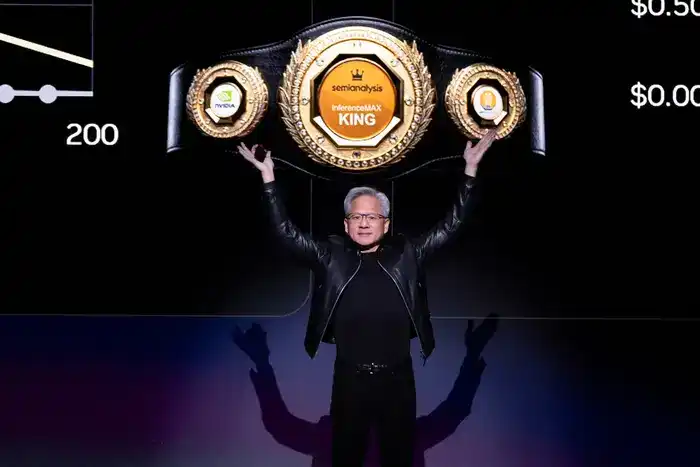
Jensen Huang did not participate in the Chinese naming discussion at GTC. He did something simpler: held up a championship belt printed with "Token King" and declared that data centers are Token factories.

Whoever produces Tokens, defines Tokens. What the name is, he doesn't care.

Token, Land Grabbing, and Coin Minting

Therefore, the part truly deserving serious thought in this matter is not which translation is better.

After the term "calorie" was established, the entire food industry's pricing, labeling, and regulatory systems were built around it. After the definition of "流量" (Liuliang, data traffic) was established in China's telecommunications industry, operators billed, competed, and designed packages based on it—the entire business model revolved around these two words for over a decade.

Token is now on the same path.

It is already the billing unit for cloud services, the revenue metric for large model companies, and a core indicator for measuring the AI industry's scale at the national level. The VC circle is even starting to talk about whether investment disbursements can be made directly in Tokens.

Once a word becomes a measure of money, naming it is no longer translation; it's minting currency.

Call it "智元" (Zhiyuan), and the minting right belongs to the AI narrative; whoever tells the story of intelligence benefits. Call it "模元" (Moyuan), and the minting right goes to the model companies; whoever has the large model prints money. Call it "符元" (Fuyuan), and the minting right returns to the technology itself, but technology itself doesn't speak for itself.

The academic community's 2021 term "词元" (Ciyuan) was ignored not because the translation was poor, but because this "coin" wasn't valuable back then.

Now it's valuable, and everyone wants to carve their name on it.

Preguntas relacionadas

QWhy has there been a recent push to give Token a Chinese name, according to the article?

ABecause Token has become a valuable economic unit, appearing in cloud service bills, recruitment packages, and official statistics, making an English term no longer suitable for widespread use in China.

QWhat are some of the proposed Chinese translations for Token mentioned in the article, and who supports them?

A"智元" (Zhi Yuan) is promoted by the AI media '新智元' and supported by Baichuan AI's founder Wang Xiaochuan; "模元" (Mo Yuan) was proposed by Professor Yang Bin of Tsinghua University; "符元" (Fu Yuan) was suggested by an independent technical writer.

QWhat does the article suggest is the real issue behind the naming debate, beyond just translation?

AThe real issue is about 'minting rights' or economic control. The chosen name will shape the industry narrative and determine where the economic benefits and pricing power flow, whether to AI storytellers, model companies, or the technical field.

QWhat was the earlier academic translation for Token from 2021, and why was it largely ignored at the time?

AThe academic translation from 2021 was "词元" (Ci Yuan), proposed by Professor Qiu Xipeng of Fudan University. It was ignored because Token was not yet a valuable economic unit at that time and was only an internal technical term.

QHow does the article use the examples of 'calories' and 'data traffic' to explain the significance of naming Token?

AThe article uses these examples to show that once a term becomes a unit of measurement for money (like calories for food pricing or data traffic for telecom billing), naming it is not just about translation but about establishing an entire economic and regulatory system around it, effectively 'minting a new currency'.

Lecturas Relacionadas

Huawei Cloud Rejects Token Price War, Zhou Yuefeng Seeks a New Winning Formula for AI Cloud

At the 2026 Huawei Cloud INSPIRE Creator Conference, CEO Zhou Yuefeng outlined Huawei Cloud's distinct strategy in the competitive AI cloud market. Instead of engaging in price wars based on token volume or Maas revenue—a common focus for rivals like Alibaba Cloud and ByteDance's Volcano Engine—Huawei Cloud is shifting the competition towards real-world productivity gains. Zhou highlighted three core differentiators: a fully domestic computing stack (Ascend, Kunpeng), a focus on government and enterprise clients rather than consumer internet, and a deep commitment to open-source ecosystems. To this end, Huawei Cloud launched a suite of new products under the "Agentic Infra" paradigm, including the AICS Lingqu computing cluster, AMS memory storage, and the ModelArts Next platform. These aim to solve enterprise challenges in deploying AI agents, such as latency, memory, scheduling, and security. The strategy further involves creating specialized industry zones ("AI Dream Factories") for sectors like healthcare and embodied intelligence. For example, a smart medical zone developed with Shanghai Ruijin Hospital aims to democratize expert-level diagnostic capabilities. In essence, Huawei Cloud is positioning itself not as a commodity token provider, but as the foundational infrastructure for industrial AI, leveraging its domestic supply chain and hybrid cloud solutions to serve sectors where productivity, not just scale, is the ultimate measure of value.

marsbitHace 14 min(s)

Huawei Cloud Rejects Token Price War, Zhou Yuefeng Seeks a New Winning Formula for AI Cloud

marsbitHace 14 min(s)

70% of the Public Opposes AI, Americans Hope the U.S. Loses the AI War

70% of Americans believe AI development is moving too fast, with growing public resistance evolving from online criticism to real-world protests and violence. This widespread anti-AI sentiment stems from fears of job losses, rising utility costs, environmental damage, threats to democracy, and financial instability. Key incidents illustrate the backlash: Google's former CEO Eric Schmidt was loudly booed at a graduation for promoting AI; AI company ads are vandalized; protests and even violent attacks target AI firms and data centers. Polls show deep public pessimism and strong local opposition to data center construction, often surpassing resistance to nuclear power plants. The core grievances are economic and practical: AI is seen as automating jobs, concentrating wealth, and increasing household electricity and water bills due to massive data center resource demands. Environmentalists also oppose AI's high energy use and carbon emissions. This opposition has turned AI into a major political issue in the US. While the Trump administration prioritizes AI innovation for global competition, bipartisan pushback is growing. Democrats and factions within the MAGA movement are forming temporary alliances to support stricter regulations and local bans on new data centers, pressuring the administration to choose between its tech industry backers and its voter base. The situation highlights a profound national divide over AI's future.

marsbitHace 47 min(s)

70% of the Public Opposes AI, Americans Hope the U.S. Loses the AI War

marsbitHace 47 min(s)

Agents Take Over Traffic Distribution Power: What Are Tencent, ByteDance, and Alibaba Competing For?

In the race to dominate the AI era's entry point, China's tech giants—Tencent, ByteDance, and Alibaba—are aggressively deploying AI Agents to control the future of traffic distribution. Alibaba is pursuing a dual-track "closed loop + openness" strategy. Its Qianwen app is evolving into a super-Agent integrated across its ecosystem (Taobao, Alipay, etc.) to handle complex tasks like travel planning. Concurrently, it is opening its platform to external brands (Luckin Coffee, KFC) and has launched a B2B Agent platform, "Wukong," targeting enterprise automation. Its other flagship, Quark, aims to be an "AI super search box" for information and tasks. ByteDance is executing an omnipresent "sprawl strategy." Its Doubao app boasts over 300 million monthly active users and is evolving into a default AI entry point for daily life, with plans for paid versions and e-commerce integration. Its core weapon is the Kouzi platform, a visual "AI assembly factory" for developers to build custom Agents. ByteDance is also pushing hardware integration, collaborating on AI phones and developing smart glasses to embed Doubao everywhere. Tencent is playing its long-held "ultimate card" by quietly embedding an AI Agent directly into WeChat. This Agent, accessible via a swipe, can understand user commands and automatically execute tasks by calling upon WeChat's millions of mini-programs (e.g., finding and ordering coffee). This leverages WeChat's unparalleled 1.4-billion-user ecosystem to position the app as an AI-powered "service operating system," a move that could dramatically reshape the competitive landscape. The core battleground is shifting from competing for "user screen time" to competing to be the "default execution layer" for user intent. The business model is evolving from an "attention economy" to an "intent economy," where the Agent that can most efficiently fulfill a user's need gains control over service access and token flow. This represents a fundamental change in how users connect with digital services, making the fight for the Agent入口 (entry point) a pivotal moment for redefining industry leadership in the AI age.

marsbitHace 2 hora(s)

Agents Take Over Traffic Distribution Power: What Are Tencent, ByteDance, and Alibaba Competing For?

marsbitHace 2 hora(s)

Trading

Spot
Futuros

Artículos destacados

Cómo comprar PEOPLE

¡Bienvenido a HTX.com! Hemos hecho que comprar ConstitutionDAO (PEOPLE) sea simple y conveniente. Sigue nuestra guía paso a paso para iniciar tu viaje de criptos.Paso 1: crea tu cuenta HTXUtiliza tu correo electrónico o número de teléfono para registrarte y obtener una cuenta gratuita en HTX. Experimenta un proceso de registro sin complicaciones y desbloquea todas las funciones.Obtener mi cuentaPaso 2: ve a Comprar cripto y elige tu método de pagoTarjeta de crédito/débito: usa tu Visa o Mastercard para comprar ConstitutionDAO (PEOPLE) al instante.Saldo: utiliza fondos del saldo de tu cuenta HTX para tradear sin problemas.Terceros: hemos agregado métodos de pago populares como Google Pay y Apple Pay para mejorar la comodidad.P2P: tradear directamente con otros usuarios en HTX.Over-the-Counter (OTC): ofrecemos servicios personalizados y tipos de cambio competitivos para los traders.Paso 3: guarda tu ConstitutionDAO (PEOPLE)Después de comprar tu ConstitutionDAO (PEOPLE), guárdalo en tu cuenta HTX. Alternativamente, puedes enviarlo a otro lugar mediante transferencia blockchain o utilizarlo para tradear otras criptomonedas.Paso 4: tradear ConstitutionDAO (PEOPLE)Tradear fácilmente con ConstitutionDAO (PEOPLE) en HTX's mercado spot. Simplemente accede a tu cuenta, selecciona tu par de trading, ejecuta tus trades y monitorea en tiempo real. Ofrecemos una experiencia fácil de usar tanto para principiantes como para traders experimentados.

444 Vistas totalesPublicado en 2024.12.12Actualizado en 2026.06.02

Cómo comprar PEOPLE

Discusiones

Bienvenido a la comunidad de HTX. Aquí puedes mantenerte informado sobre los últimos desarrollos de la plataforma y acceder a análisis profesionales del mercado. A continuación se presentan las opiniones de los usuarios sobre el precio de PEOPLE (PEOPLE).

活动图片













