Author:Connor Dempsey
Compiled by: Deep Tide TechFlow
Deep Tide Introduction: This article reviews the extreme optimism following Trump's victory in early 2025, the subsequent epic crash triggered by the "First Family" issuing tokens, tariff policies, Binance's unexpected downtime, and the stock market stampede. From the perspective of an 8-year industry insider, the author provides a profound analysis of how the crypto market shifted from "independent trends" to a "double-edged sword" scenario deeply intertwined with Wall Street. Despite the current devastation, the author believes that, given the macroeconomic expectations of interest rate cuts and a weak dollar, along with the trend of financial infrastructure moving on-chain, we are still at the "chaotic beginning" of this internet financial revolution.
Full Text Below:
I've been navigating the crypto market for 8 years, and every so often, I encounter days that feel like these past few.

February 5th was one of those days. But this didn't happen overnight. Here's our journey.
Looking Back
Entering 2025, expectations for cryptocurrency were incredibly high. The moment Trump's victory was confirmed in late 2024, Bitcoin (BTC) began breaking new highs. We were transitioning from a Biden administration that actively tried to stifle the U.S. crypto industry to a Trump administration that vowed to make America the "crypto capital of the world." Clear regulations were imminent, Bitcoin had a new institutional narrative, and ETFs were ready, allowing big money easy access.
The Screeching Halt
The world's largest economy was finally embracing the technology we had all been building for 16 years. The vibes were sky-high. Then, the dumbest thing I've seen in my 8 years in crypto happened. The President of the United States—Donald J. Trump—launched his own shitcoin. Then, his wife launched one too.

Public opinion overnight shifted from "cryptocurrency will modernize financial markets" to "the President is running a pump and dump." A massive wave of retail investors rushed into $TRUMP. Most got rekt. Just like that, those who had always hated the industry had another reason to call the whole thing a scam.
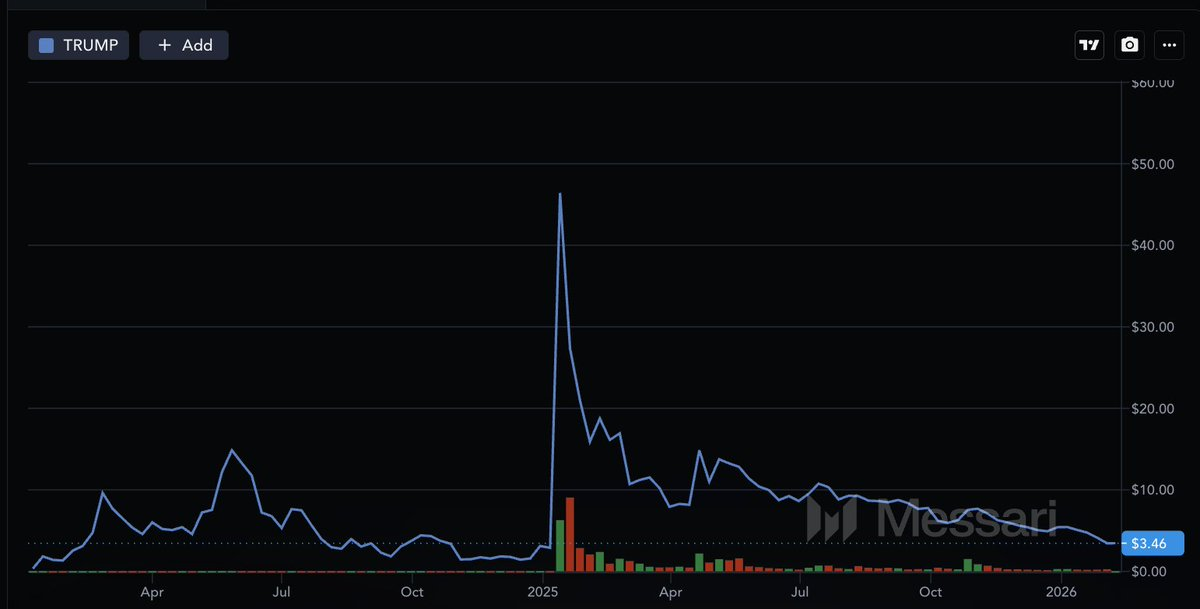
Source:@messaricrypto
Staying Positive
Crypto had shaken off awkward situations before, and there was still plenty to be optimistic about. Billions were flowing into Blackrock's Bitcoin ETF. Stripe, Visa, even century-old companies like MoneyGram were going all-in on stablecoins. The Trump administration enacted federal stablecoin regulations, with a market structure bill (Clarity) aimed at providing clear rules for the entire industry close behind. The game was still on.
October 10th (10/10)
Most market participants (including myself) expected the year to end at all-time highs (ATHs). The Fed was cutting rates, Bitcoin was rechallenging its $125k ATH, experts predicted Bitcoin would hit $250k, Ethereum (ETH) would hit $12k, while stocks and gold would also hit new highs.
Then on October 10th, Trump announced 100% tariffs on China, and MSCI proposed excluding companies with high crypto exposure from indices tracked by pension funds and ETFs. The latter threatened to cut off one of Bitcoin's biggest sources of demand.
The market started selling off, and then the real crypto carnage began. Crypto investors were over-leveraged (as always), and then the world's largest exchange—Binance—experienced a technical glitch, triggering the single largest liquidation event in crypto history. $30-40 billion in forced selling occurred, some altcoins dropped 70% in a day.
The consensus was that this event broke the crypto market, at least temporarily, and we've been decoupled from the rallying stock and commodity markets ever since.
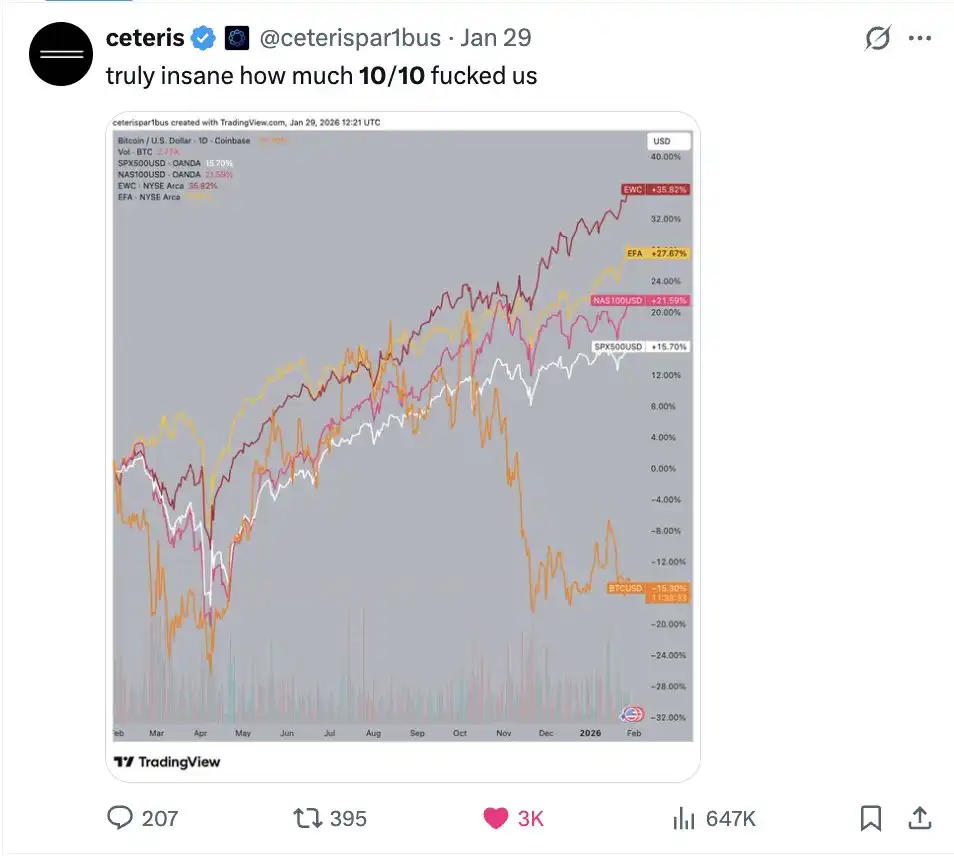
Caption: Thanks to @ceterispar1bus for the great chart
The Grind Lower
Then came the real pain. While other assets were ripping, crypto was grinding lower. The ATH setup predicted by Fundstrat to take us to "Valhalla" was all there: rate cuts, a weak dollar, global risk-on. The S&P 500 closed the year at new all-time highs. Gold and silver embarked on an epic run. Peter Schiff was dancing on our graves. And crypto just sat there bleeding out.
Re-Coupling
By 2026, the rest of the market started selling off too, and crypto went with it. The S&P began giving back trillions in gains, gold and silver experienced their worst selloff in 40+ years. On February 4th, hedge funds got crushed. Many blamed it on a tech selloff due to fears AI would make software companies obsolete. Regardless, risk managers had to step in and cut positions, including the ones they now held heavily in Bitcoin via ETFs, options, etc. The selling pushed Bitcoin lower, which triggered more mechanical selling, which then spread to crypto-native funds. Trend Research reportedly got liquidated on a $2B Ethereum position on Aave, adding fuel to the fire.
Trad-fi selling triggered crypto selling. Not the other way around. The institutional adoption everyone fought for ultimately became a double-edged sword. Which brings us to now.
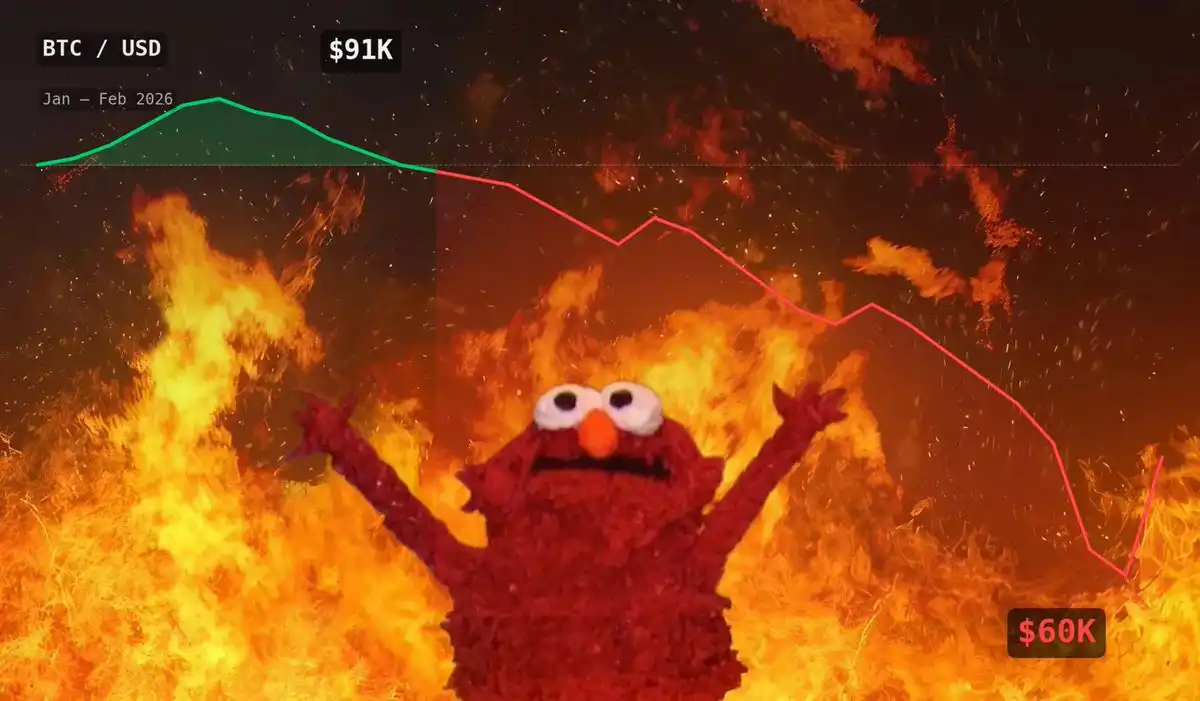
Crypto Is Dead
As expected. Those who have been wrong about crypto for over a decade are crawling out of their holes again, dancing on our graves.
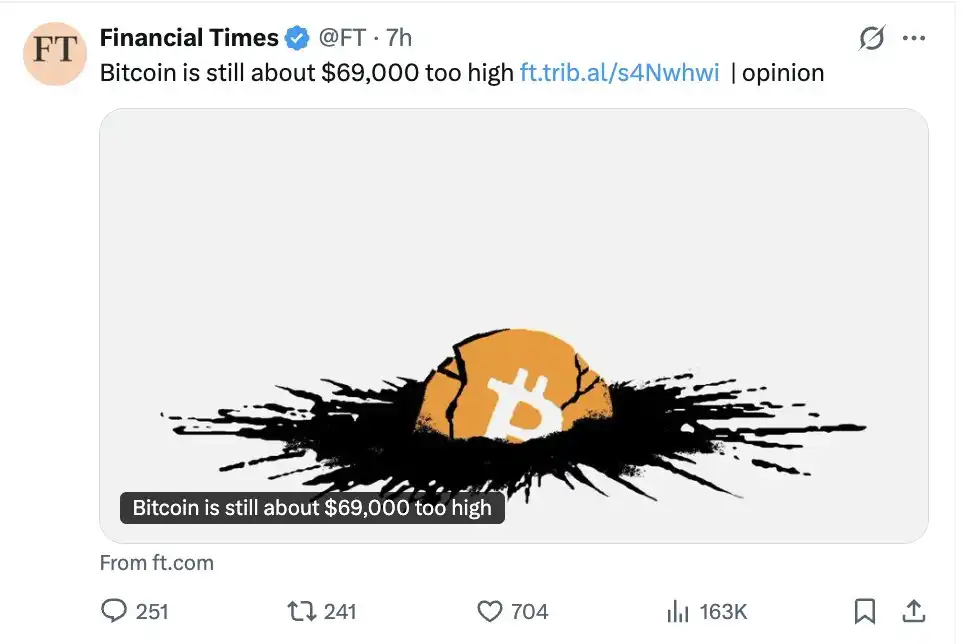
"The digital gold thesis is broken. Crypto is not a hedge against currency debasement. Worse, a miner death spiral is coming and it's going to zero. It was a scam all along." Elizabeth Warren's tweet about how Bitcoin causes cancer is probably coming any day now.
Long Live Crypto
The critics are right, Bitcoin and the rest of the market were a disappointment in 2025. The reality is this is still an immature market, just 17 years old. It largely still trades like a tech stock, and last week showed it's more intertwined with Wall Street than ever. The bright side? The same Wall Street that dragged crypto down last week can ultimately pull it back up.
And the setup is there. The Trump administration and incoming Fed Chair have signaled they plan to run the economy hot with low rates and a weak dollar to address the debt crisis. That's the macro cocktail for pushing risk assets higher, crypto included.
Furthermore, don't forget the bigger narrative. Even our longest critics no longer deny what we've built is real. Stablecoins are upgrading how global money moves. The market structure bill will pass, paving the way for all financial business to be blockchain-backed. The entire financial system is being upgraded, we're just working out the details right now.
Are we out of the woods forever? No. Macro risks could still drag us down. Quantum computing is a real threat to Bitcoin. Trump's antics give Democrats a reason to crack down on the industry again if they regain power.
But a hundred years from now, this will all be noise, and an internet-based financial system will look inevitable. This period will be seen as the chaotic beginning. And there's a real wildcard: the merging of crypto and AI is inevitable. We just don't know what it looks like yet. In short, we are still actually early.
AI-slop free guarantee This article is guaranteed to be free of AI-slop. That is to say, every word was typed by a human. That said, I did use Claude Opus 4.6 as an editing and research partner, which was fed content written by people much smarter than me.