Tiger Research: Ten Major Shifts in the Cryptocurrency Market by 2026

marsbitPublicado a 2025-12-29Actualizado a 2025-12-29

Resumen

Tiger Research outlines ten major shifts expected in the cryptocurrency market by 2026. As the industry matures, institutional capital will remain concentrated in Bitcoin and Ethereum, avoiding unproven assets. Projects without real revenue generation will face淘汰, while unsustainable tokenomics will give way to models emphasizing buybacks and burns. Increased M&A activity will drive market consolidation. Emerging trends include the fusion of robotics and crypto-enabled gig economies for decentralized data collection, and media companies adopting prediction markets to boost engagement. Traditional finance will dominate real-world assets (RWA) via private chains, while ETH staking ETFs will accelerate growth in Bitcoin-based financial products (BTCFi). Fintech apps will surpass exchanges as primary entry points for new users. Finally, privacy technology will become essential institutional infrastructure to protect large-scale trading strategies.

This report is authored by Tiger Research. The cryptocurrency industry is entering the mainstream. Institutions have become key players in the market. Capital is flowing to projects that generate real yield. Short-term price fluctuations are no longer important. Sustainable business models have become crucial. Tiger Research predicts ten major shifts in the cryptocurrency market by 2026.

1. Institutional Capital Continues to Stay in Bitcoin
Source: Tiger Research

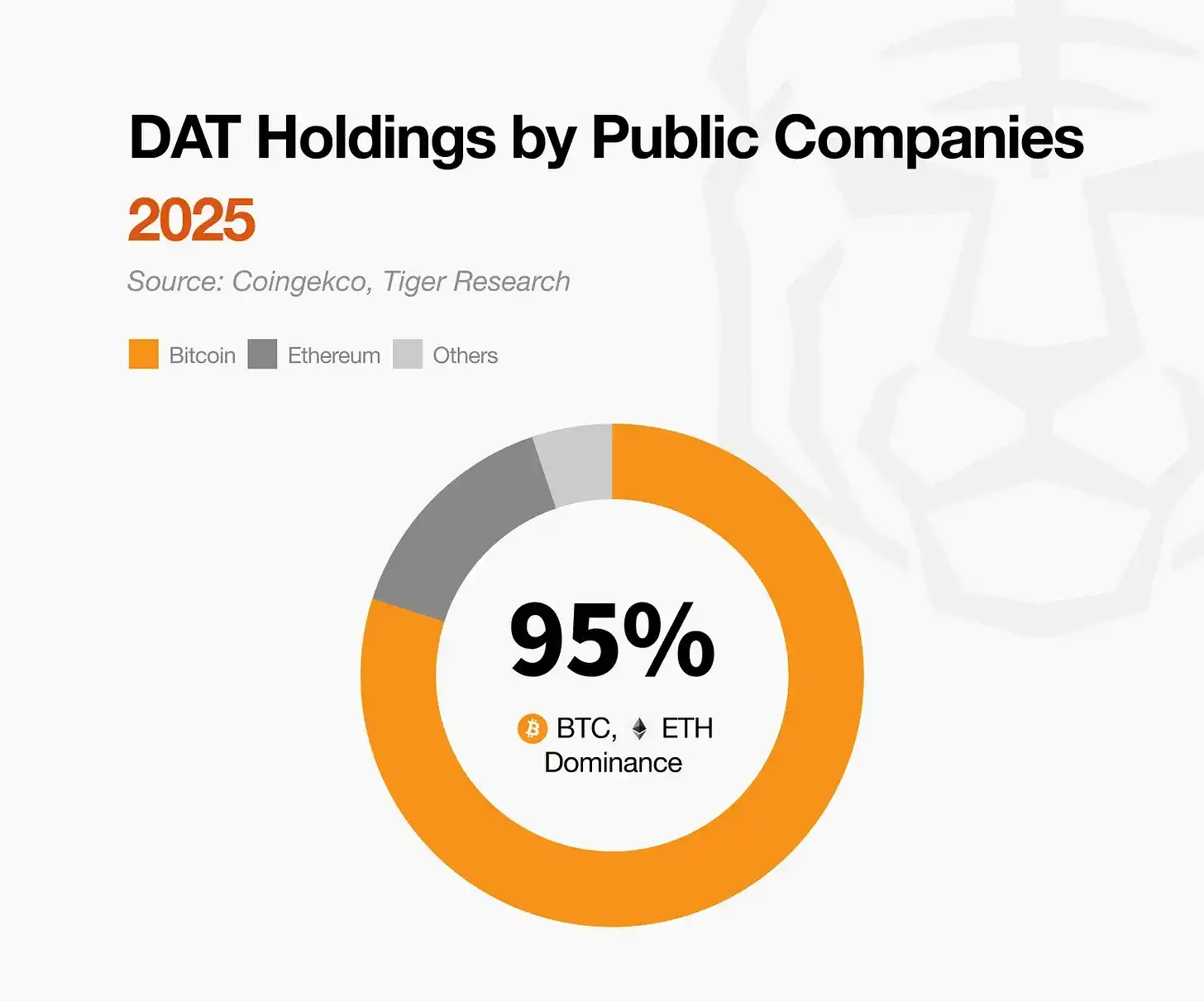
As institutions dominate the market, capital flows have become more cautious. These investors avoid unverified assets, limiting their scope to Bitcoin and Ethereum. This trend is likely to continue. Market growth will be concentrated only on assets that meet institutional standards.

2. Profitless Projects Face Market Elimination
Source: Tiger Research

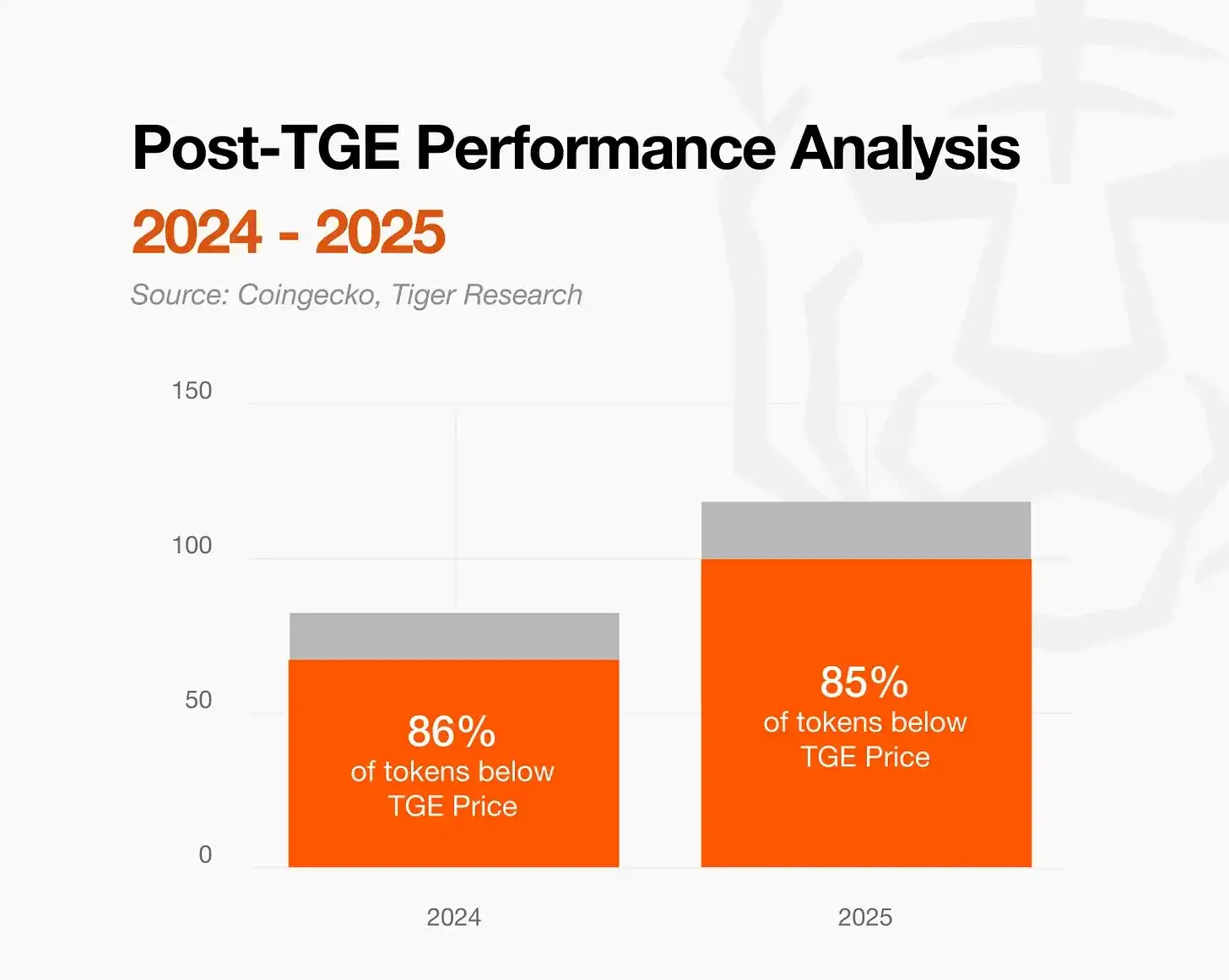
85% of new tokens decline in price after TGE, exposing the limitations of narrative-driven growth. Hype-based projects will be replaced by new trends at an increasingly rapid pace. The market will shift towards projects that generate real yield and demonstrate robust fundamentals.

3. Utility Has Failed, Buybacks Are the Only Answer
Source: Tiger Research

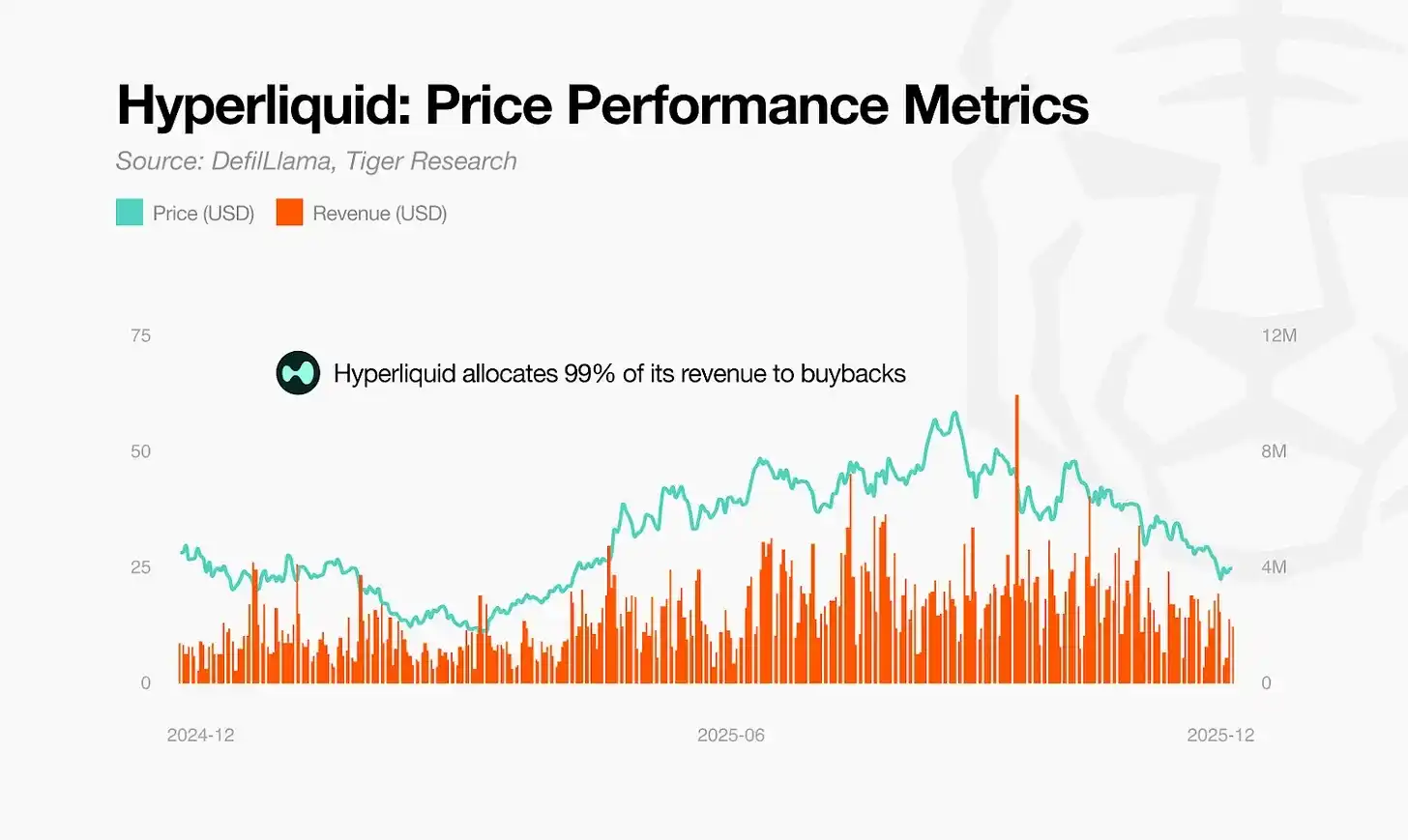
Tokenomics focused on utility have failed. Governance voting rights have failed to attract investors. Complex structures are unsustainable. The market now demands clear value returns. Models that provide direct returns through buybacks and burns will survive. Structures where protocol growth directly impacts token price will also survive. New innovative models will emerge from this shift.

4. Increased M&A Opportunities Between Projects
Source: Tiger Research

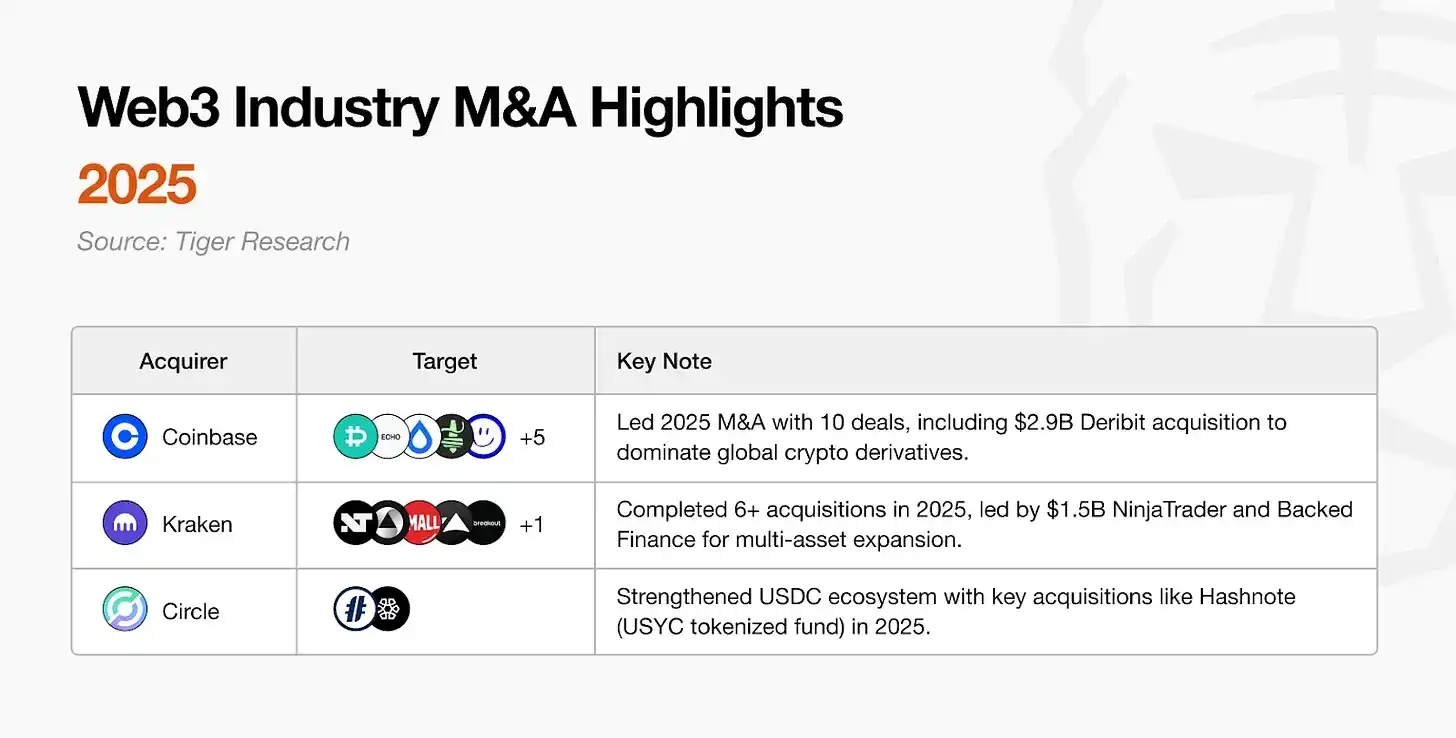
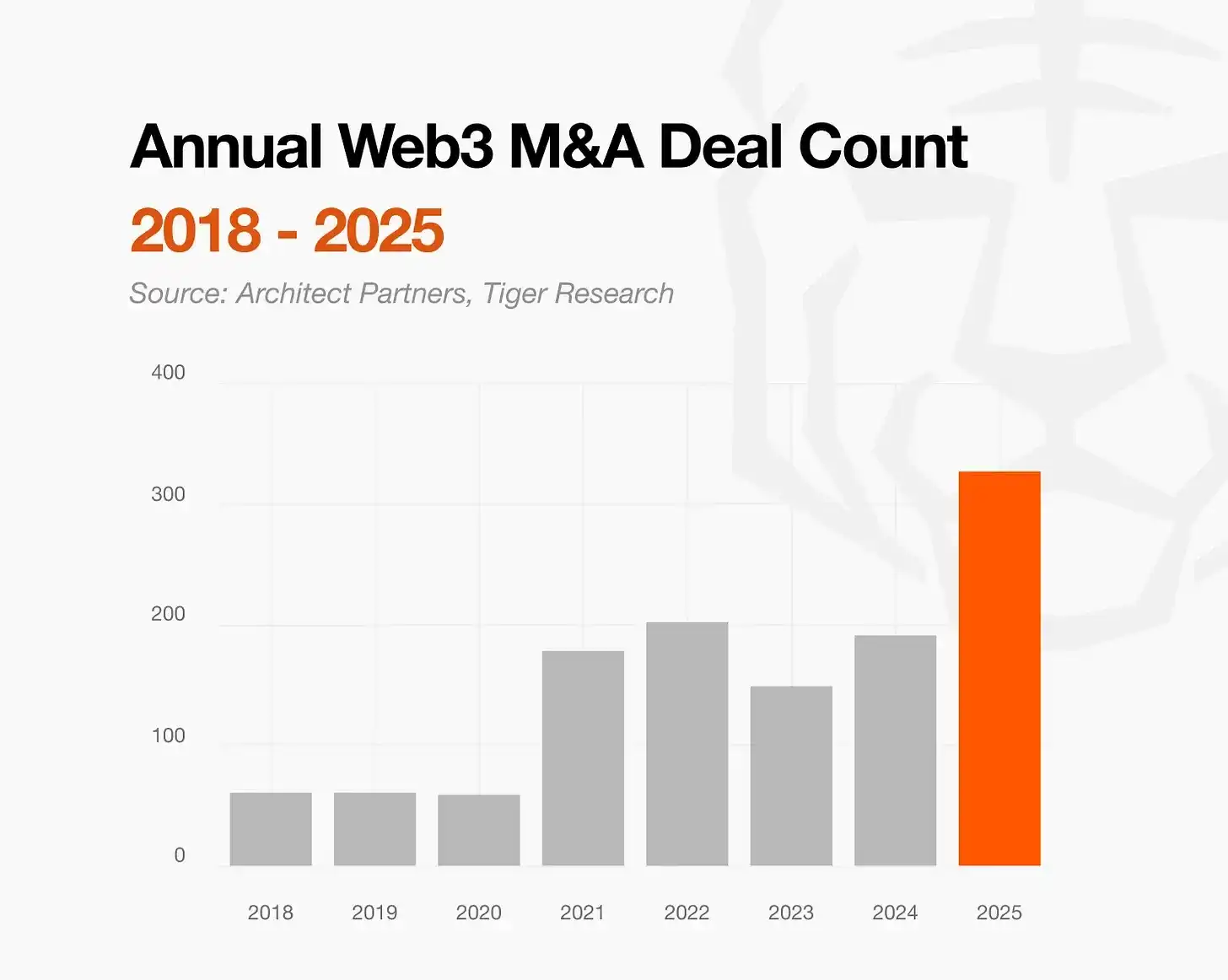
Web3 is maturing. Competition for market dominance is intensifying. Mergers and acquisitions (M&A) are now the fastest way for companies to scale and enhance competitiveness. The winners will drive aggressive M&A activity. The market will be reshaped by businesspeople who create real profits.

5. Robotics and Cryptocurrency Will Usher in a New Era of the Gig Economy
Source: figure.ai

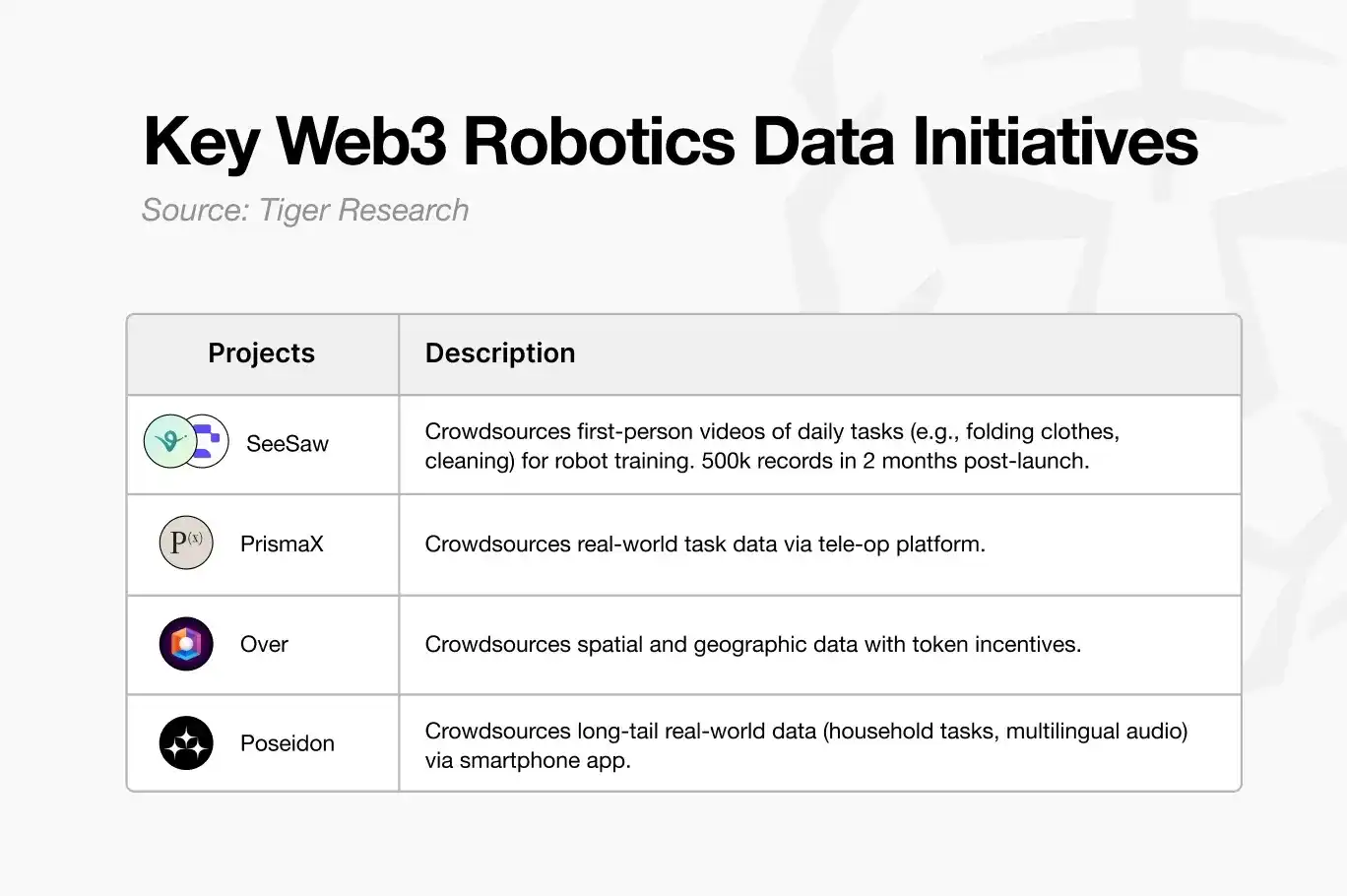
The robotics industry is growing. Real-world data for robot training has become crucial. Traditional centralized methods cannot efficiently collect massive amounts of data. Blockchain-based decentralized crowdsourcing solves this problem. It collects vast amounts of data from individuals globally and provides transparent, instant rewards. A new gig economy centered around robotics will emerge.

6. Media Companies Adopt Prediction Markets
Source: Tiger Research

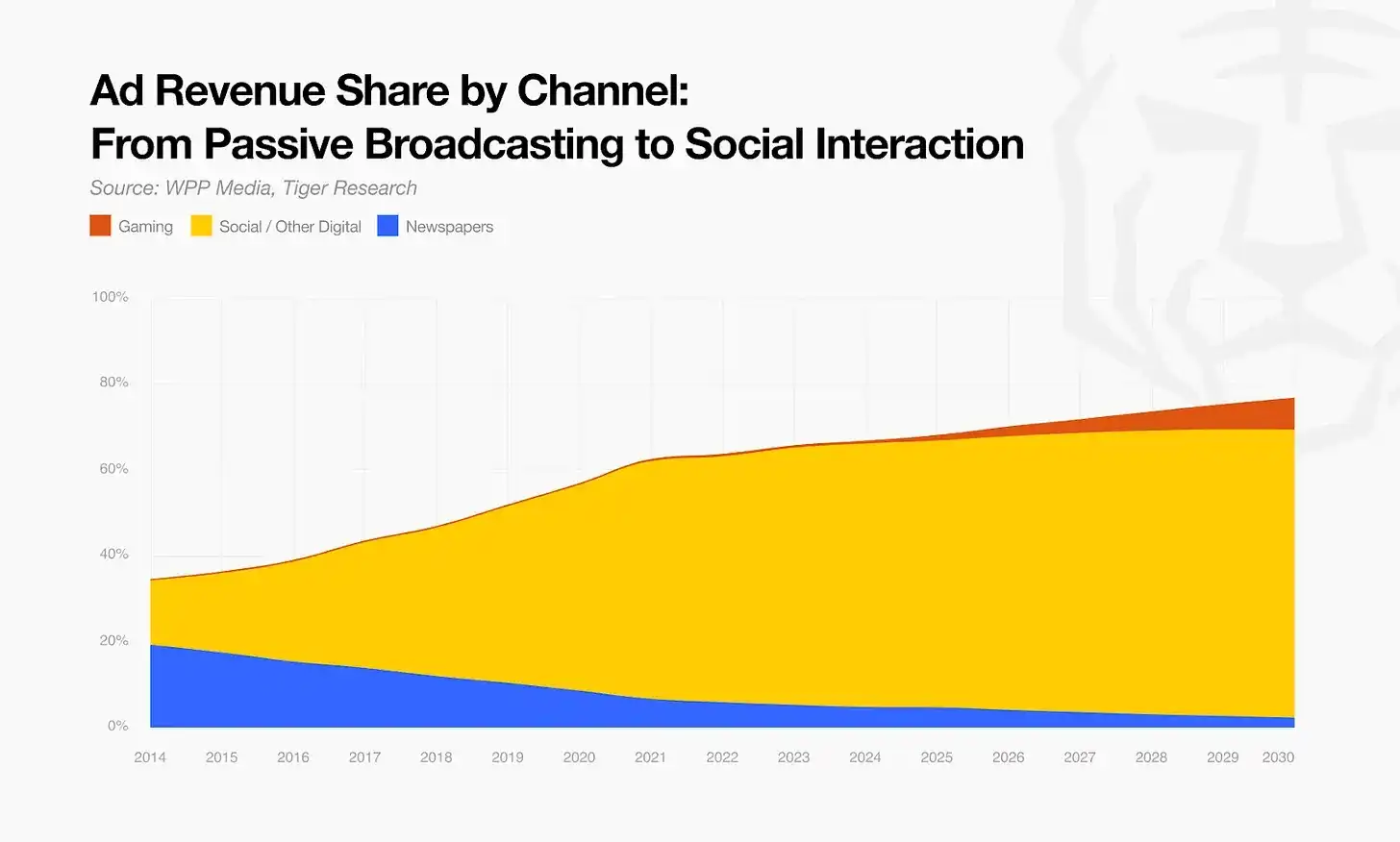
As traditional revenue models reach their limits, media companies will adopt prediction markets as a survival strategy. Readers will shift from passive consumption to active participation, placing capital bets on news outcomes. This shift will optimize revenue structures while driving deeper audience engagement.

7. Traditional Finance Dominates RWA Through Self-Built Chains
Source: Tiger Research

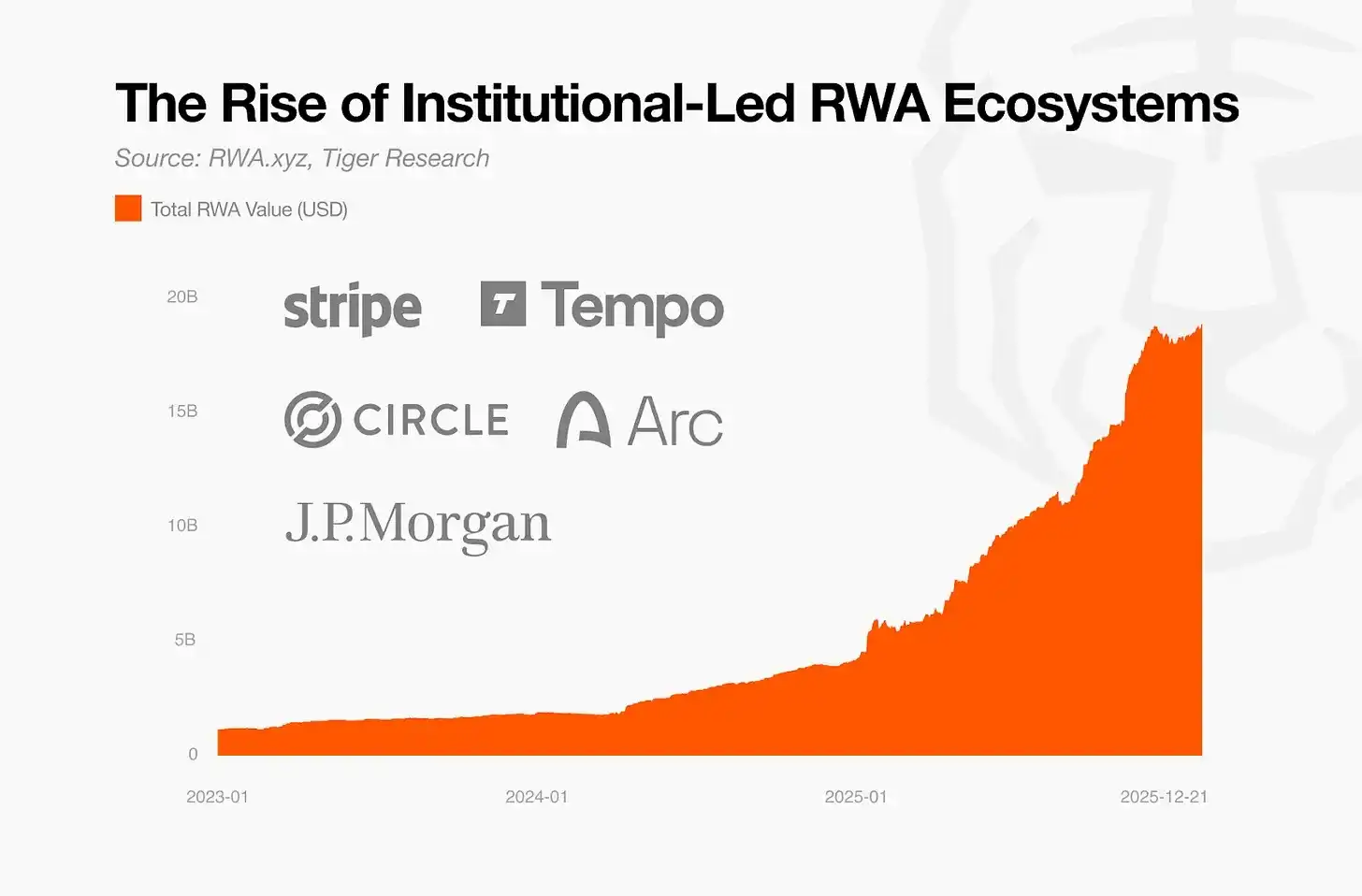
Traditional financial institutions are the main suppliers in the RWA market. Given the need for asset control and security, the benefits of using third-party platforms are minimal. These companies are likely to build their own chains to maintain market leadership. RWA projects lacking independent asset supplies will lose their competitive advantage and face elimination.

8. ETH Staking ETFs Will Drive BTCFi Growth
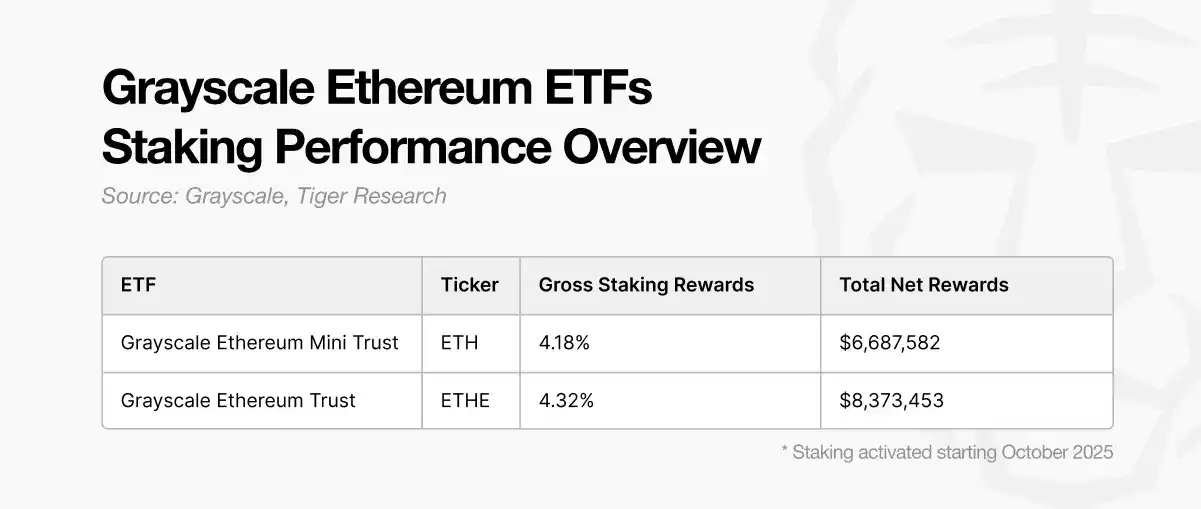
Source: Tiger Research

The launch of Ethereum staking ETFs will prompt Bitcoin ETF holders to seek yield. BTCFi fills this gap. As large amounts of capital enter Bitcoin, the demand for asset utility will rise. This pursuit of yield will drive the next wave of BTCFi growth.

9. Fintech Will Surpass Exchanges as the Primary On-Ramp
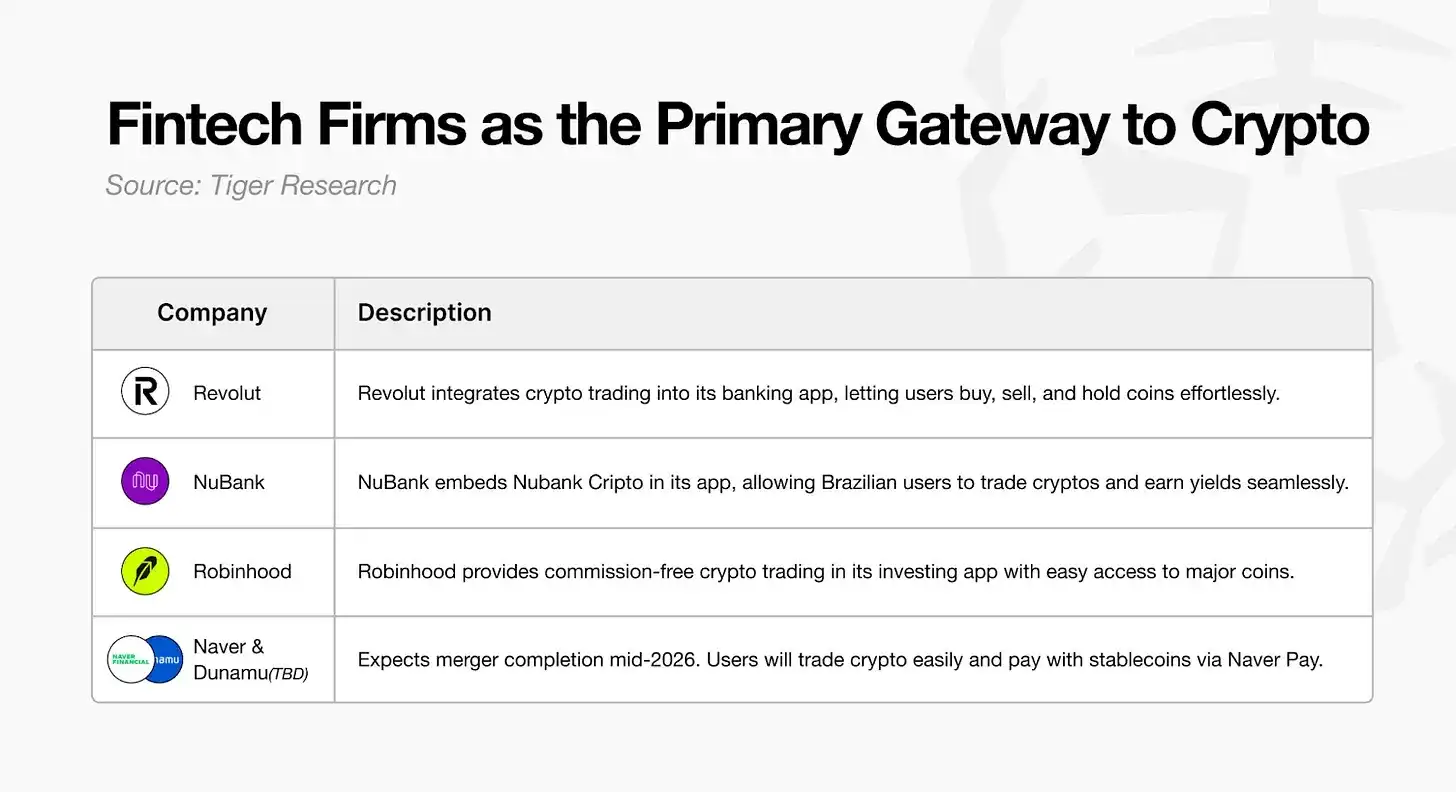
Source: Tiger Research

As rules become clearer, fintech applications have become the preferred choice for cryptocurrency trading. New users no longer need to use cryptocurrency exchanges. They can buy and sell directly within the applications they use daily. The next wave of growth will be led by these fintech tools.

10. Privacy Technology Becomes Core Institutional Infrastructure
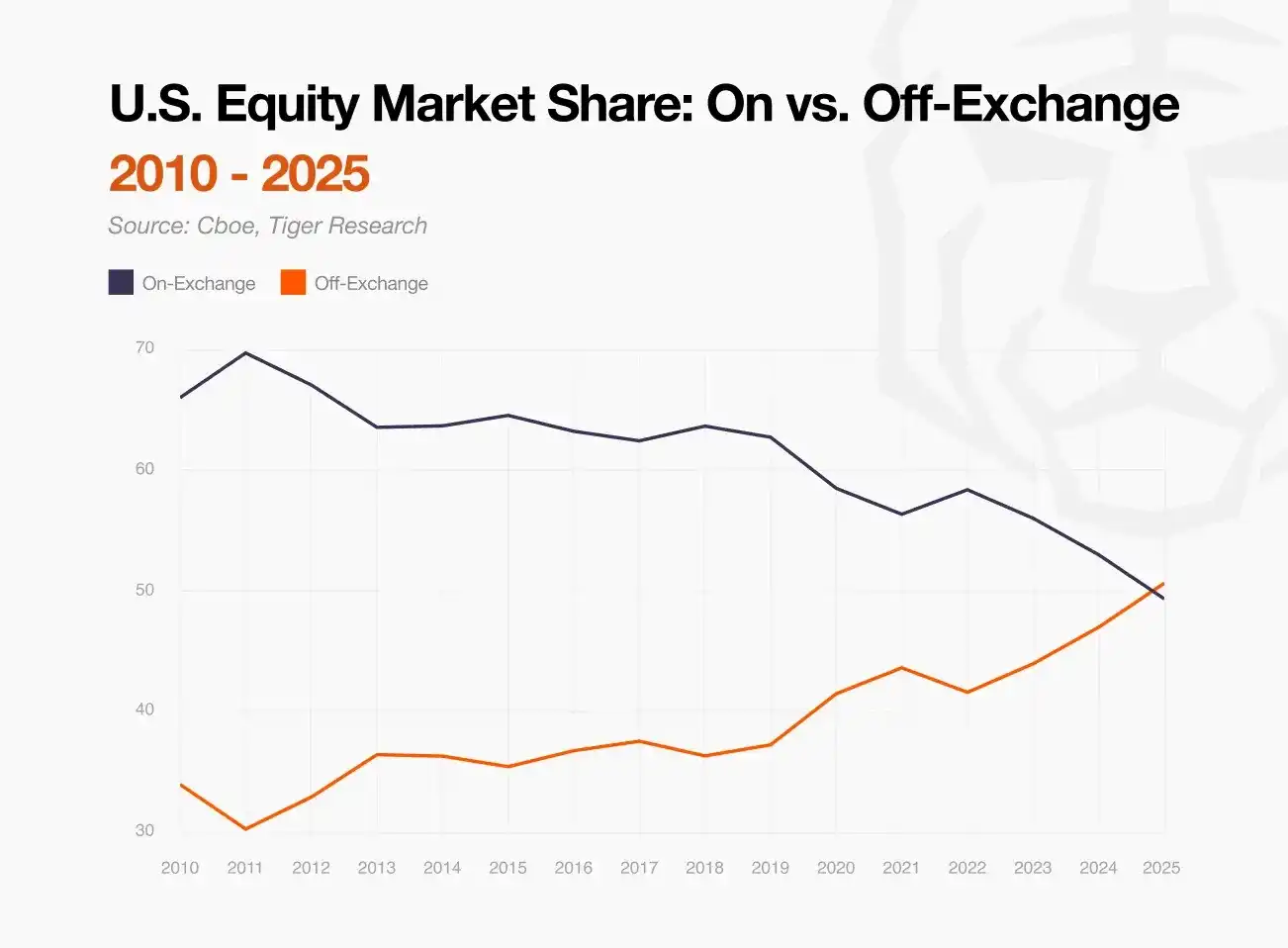
Source: Tiger Research

On-chain transparency exposes trading plans. This is a weakness for large institutions. High-net-worth participants must hide their movements to ensure security. Privacy technology is a key tool for these institutions to enter the market. Large-scale capital will only flow in if transaction data is secure.


Preguntas relacionadas

QWhat are the two main cryptocurrencies that institutional investors are predicted to continue focusing on by 2026, according to Tiger Research?

AInstitutional investors are predicted to continue focusing primarily on Bitcoin and Ethereum, as they are considered established and meet institutional standards.

QWhy does Tiger Research claim that utility-focused tokenomics has failed, and what model is expected to survive?

AUtility-focused tokenomics has failed because governance voting rights failed to attract investors and complex structures proved unsustainable. The model expected to survive is one that provides direct returns through buybacks and burns, or structures where protocol growth directly impacts the token price.

QHow is the convergence of robotics and cryptocurrency predicted to create a new gig economy era?

AThe convergence is predicted to create a new gig economy era by using blockchain-based decentralized crowdsourcing to efficiently collect the massive amounts of real-world data needed for robot training from individuals globally, offering transparent and instant rewards.

QWhat role are financial technology (fintech) applications expected to play in the future of cryptocurrency onboarding?

AFintech applications are expected to become the primary onboarding channel for new users, surpassing exchanges. Users will be able to buy and sell cryptocurrency directly within the everyday applications they already use.

QWhy is privacy technology considered crucial for large institutional adoption of cryptocurrency?

APrivacy technology is considered crucial because on-chain transparency exposes the trading plans of large institutions, which is a significant weakness. High-net-worth participants must hide their movements for security, making privacy tech a key tool for their market entry. Large-scale capital will only flow in if transaction data is secure.

Lecturas Relacionadas

MY Group Completes Web4.0 First Stock Listing Layout, SEC Officially Discloses Form 8-K Announcement

MY Group has completed the listing layout for the "Web4.0 First Share," with the U.S. Securities and Exchange Commission (SEC) formally disclosing a Form 8-K report. According to the filing, the company's board has officially appointed Mr. Zhang Dingwen as Chief Executive Officer (CEO) and Executive Director, marking a significant upgrade in management and the entry into a new phase of its global capital market strategy. The disclosure of Form 8-K, used for reporting major corporate events, coincides with market information indicating the company is advancing several key capital market initiatives. These include a global brand system upgrade, corporate strategic restructuring, and a change of its stock ticker symbol. These moves are viewed by industry experts as signals of accelerated internationalization and enhanced global market presence. Concurrently, MY Group's proposed "Web4.0 Ecosystem" is garnering market attention. The company is integrating core capabilities across social traffic portals, global payment systems, public blockchain infrastructure, digital asset trading, and AI-powered financial systems. Analysts suggest that by closing this ecosystem loop, MY Group has the potential to become a next-generation platform merging Web2 user scale with Web3 asset frameworks and AI financial capabilities. With the management upgrade finalized, the global brand strategy launched, and the stock ticker change pending, MY Group is positioning itself as a focal point in the global technology capital market as a potential leading Web4.0 platform enterprise.

marsbitHace 1 hora(s)

MY Group Completes Web4.0 First Stock Listing Layout, SEC Officially Discloses Form 8-K Announcement

marsbitHace 1 hora(s)

3 People with 100 AI Programmers, Burning Through $1.3 Million a Month! OpenAI: I'll Foot the Bill

In a striking demonstration of AI-powered development, Peter Steinberger (creator of OpenClaw) shared that his three-person team spent $1.3 million in one month to run approximately 100 AI agents (primarily Codex instances). OpenAI covered the cost. The expenditure consumed 6.03 trillion tokens across 7.6 million requests. Steinberger argues that, with "fast mode" disabled, the cost falls below that of a single engineer while providing significantly greater output. This "cloud programmer army" handles core but tedious software engineering tasks: reviewing pull requests, finding security vulnerabilities, deduplicating issues, fixing bugs, monitoring benchmarks, and even generating PRs after meetings. This shifts AI's role from merely writing code to maintaining the entire collaborative fabric of a project. Steinberger's tool, CodexBar (a macOS menu bar app), tracks usage and costs across various AI coding services, highlighting how token consumption is becoming a key metric—a new "means of production." The experiment poses a profound question: if token cost ceases to be a barrier, how will software development transform? As model prices fall, the capability for small teams to leverage large numbers of AI agents could become commonplace, fundamentally altering the scale and speed of development. The future, Steinberger suggests, is arriving rapidly.

marsbitHace 2 hora(s)

3 People with 100 AI Programmers, Burning Through $1.3 Million a Month! OpenAI: I'll Foot the Bill

marsbitHace 2 hora(s)

In the AI Era, How to Onboard Without Starting from Scratch

In the AI era, onboarding new employees often resembles a botched relay race baton handoff, where the organization maintains speed while the newcomer starts from zero. The author, after joining Ramp, argues the core problem is a lack of accessible, shared organizational "context"—the collective knowledge from meetings, documents, Slack discussions, and decisions. Instead of relying on slow, manual onboarding or isolated AI tools, the solution is building a continuously updated "company brain." This system acts as a central, AI-native knowledge base that absorbs all company signals. The author describes building a prototype using an Obsidian vault powered by Claude, fed by automated meeting transcripts and notes, and topped with reusable agent "skills." The current enterprise AI approach, deploying specific workflow agents, is likened to the "chatbot era"—useful but disconnected. The real gap is the absence of a shared brain that all agents and employees can access from day one. The future lies in making context layer infrastructure the priority: write context first, then install tools; record every meeting; build the wiki before the dashboard. When new hires, AI agents, and even customers can immediately access this living company brain, the costly "ramp-up" period becomes obsolete. True organizational speed is achieved when maximum velocity and seamless context transfer happen simultaneously.

marsbitHace 3 hora(s)

In the AI Era, How to Onboard Without Starting from Scratch

marsbitHace 3 hora(s)

Trading

Spot
Futuros
活动图片