Tiger Research: Ten Major Shifts in the Cryptocurrency Market by 2026

marsbitPublicado a 2025-12-29Actualizado a 2025-12-29

Resumen

Tiger Research outlines ten major shifts expected in the cryptocurrency market by 2026. As the industry matures, institutional capital will remain concentrated in Bitcoin and Ethereum, avoiding unproven assets. Projects without real revenue generation will face淘汰, while unsustainable tokenomics will give way to models emphasizing buybacks and burns. Increased M&A activity will drive market consolidation. Emerging trends include the fusion of robotics and crypto-enabled gig economies for decentralized data collection, and media companies adopting prediction markets to boost engagement. Traditional finance will dominate real-world assets (RWA) via private chains, while ETH staking ETFs will accelerate growth in Bitcoin-based financial products (BTCFi). Fintech apps will surpass exchanges as primary entry points for new users. Finally, privacy technology will become essential institutional infrastructure to protect large-scale trading strategies.

This report is authored by Tiger Research. The cryptocurrency industry is entering the mainstream. Institutions have become key players in the market. Capital is flowing to projects that generate real yield. Short-term price fluctuations are no longer important. Sustainable business models have become crucial. Tiger Research predicts ten major shifts in the cryptocurrency market by 2026.

1. Institutional Capital Continues to Stay in Bitcoin
Source: Tiger Research

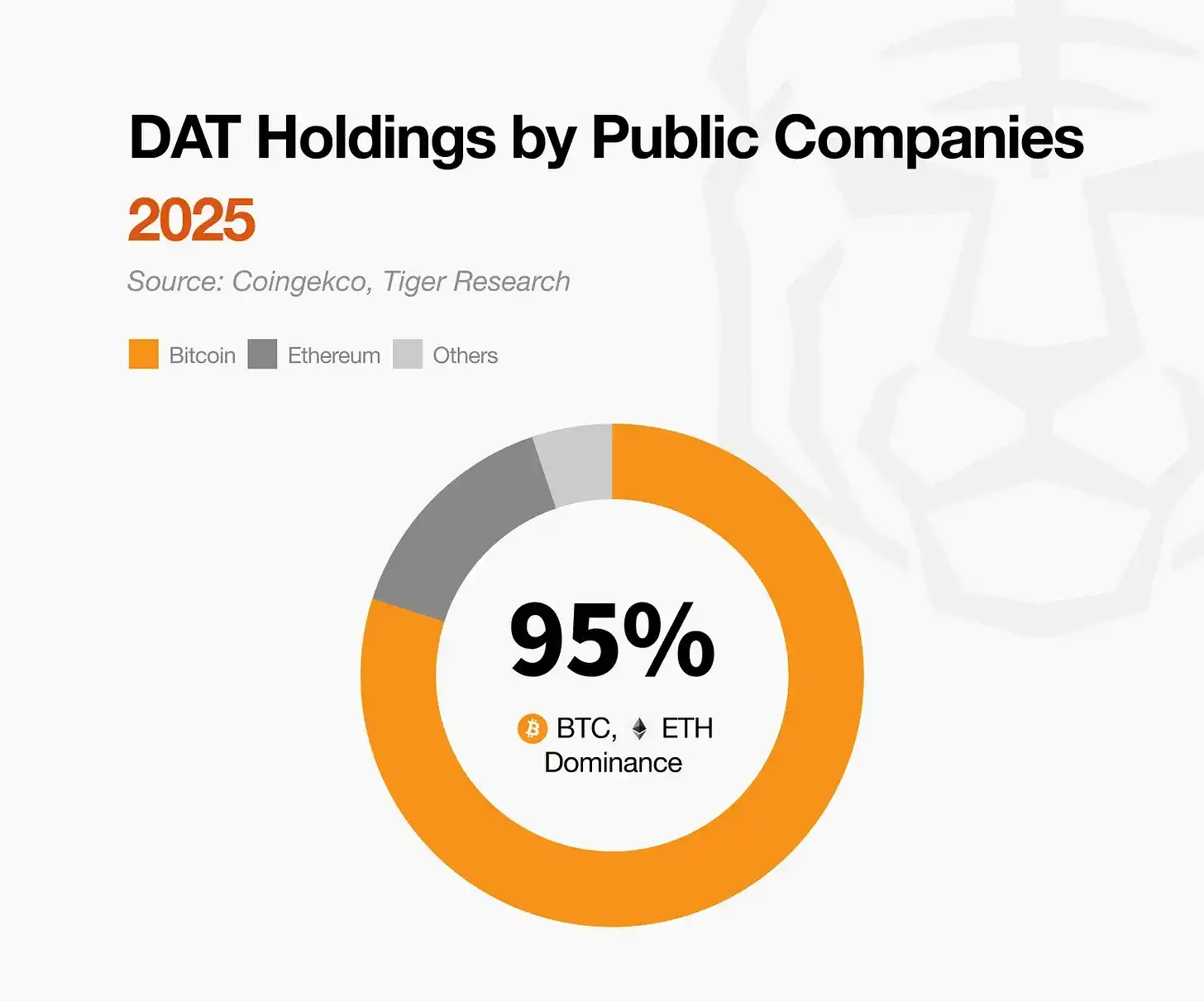
As institutions dominate the market, capital flows have become more cautious. These investors avoid unverified assets, limiting their scope to Bitcoin and Ethereum. This trend is likely to continue. Market growth will be concentrated only on assets that meet institutional standards.

2. Profitless Projects Face Market Elimination
Source: Tiger Research

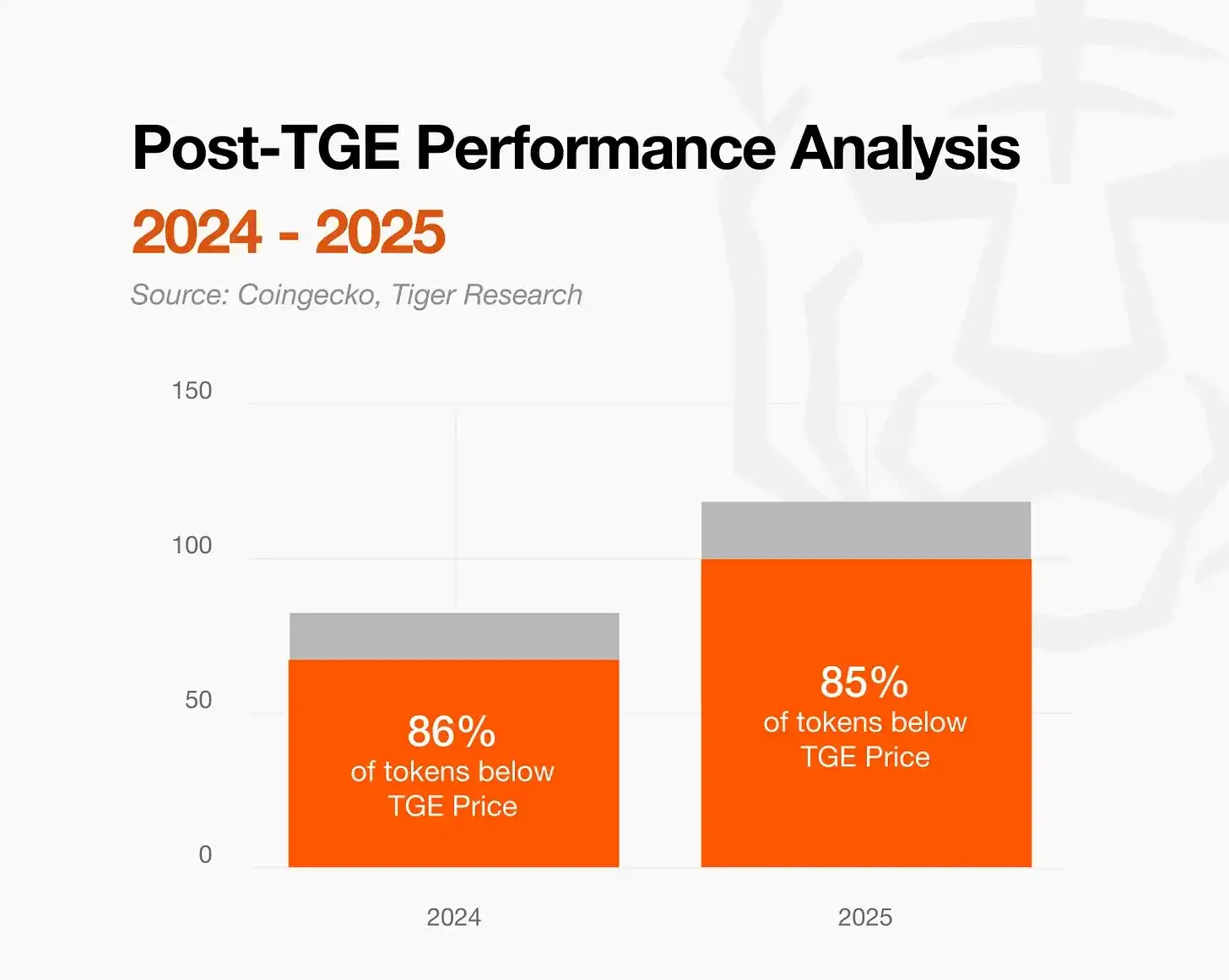
85% of new tokens decline in price after TGE, exposing the limitations of narrative-driven growth. Hype-based projects will be replaced by new trends at an increasingly rapid pace. The market will shift towards projects that generate real yield and demonstrate robust fundamentals.

3. Utility Has Failed, Buybacks Are the Only Answer

Source: Tiger Research

Tokenomics focused on utility have failed. Governance voting rights have failed to attract investors. Complex structures are unsustainable. The market now demands clear value returns. Models that provide direct returns through buybacks and burns will survive. Structures where protocol growth directly impacts token price will also survive. New innovative models will emerge from this shift.

4. Increased M&A Opportunities Between Projects

Source: Tiger Research

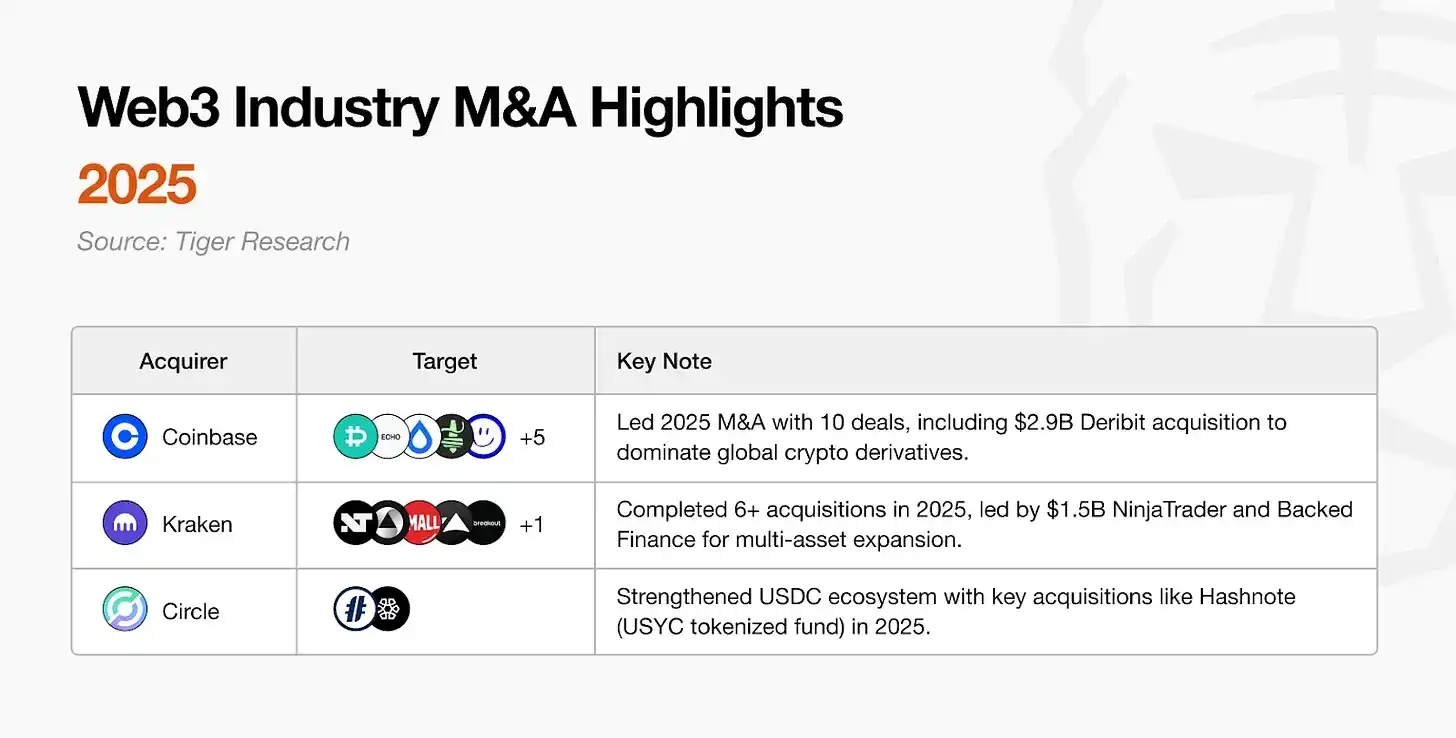
Web3 is maturing. Competition for market dominance is intensifying. Mergers and acquisitions (M&A) are now the fastest way for companies to scale and enhance competitiveness. The winners will drive aggressive M&A activity. The market will be reshaped by businesspeople who create real profits.

5. Robotics and Cryptocurrency Will Usher in a New Era of the Gig Economy
Source: figure.ai

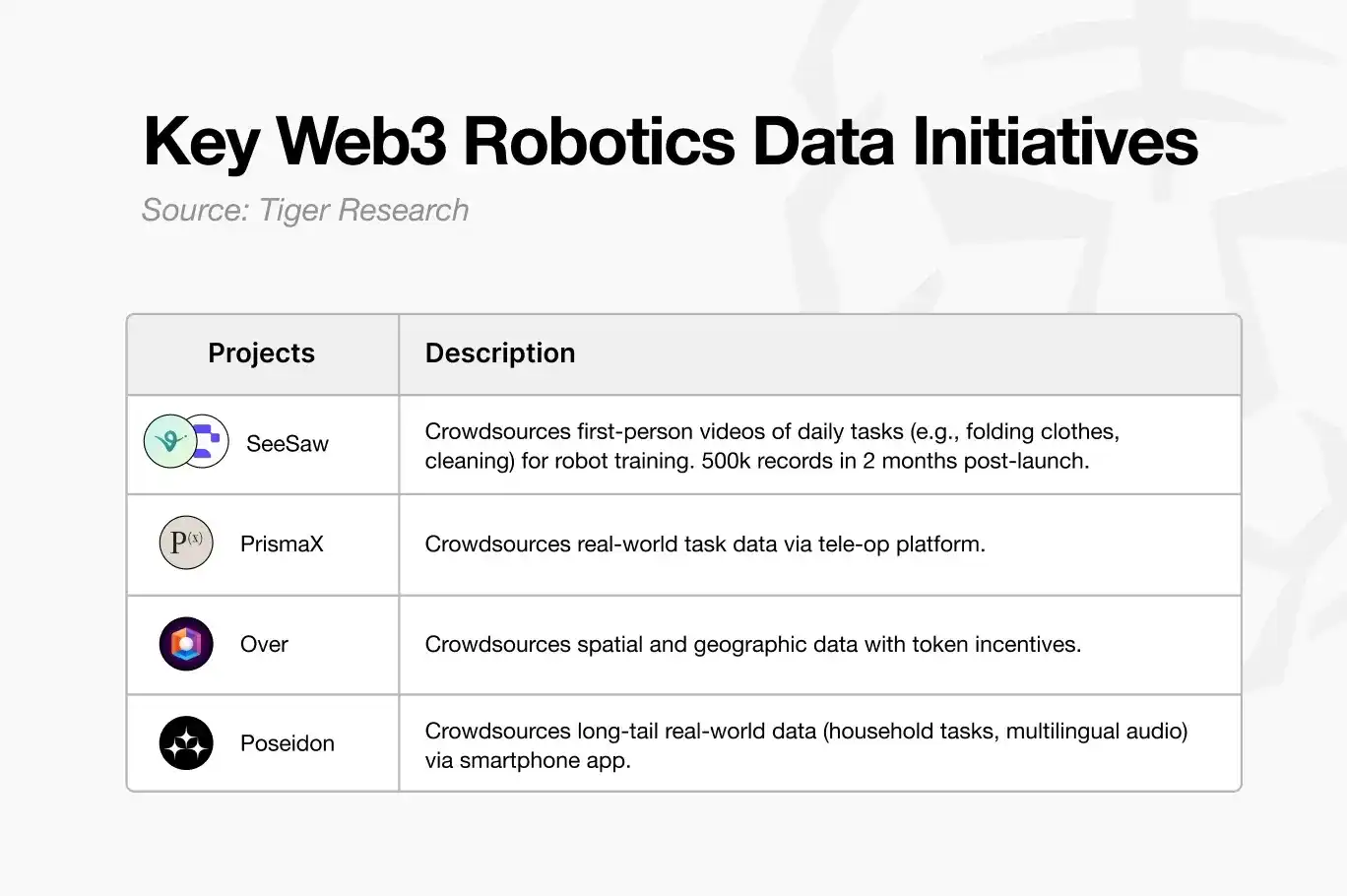
The robotics industry is growing. Real-world data for robot training has become crucial. Traditional centralized methods cannot efficiently collect massive amounts of data. Blockchain-based decentralized crowdsourcing solves this problem. It collects vast amounts of data from individuals globally and provides transparent, instant rewards. A new gig economy centered around robotics will emerge.

6. Media Companies Adopt Prediction Markets

Source: Tiger Research

As traditional revenue models reach their limits, media companies will adopt prediction markets as a survival strategy. Readers will shift from passive consumption to active participation, placing capital bets on news outcomes. This shift will optimize revenue structures while driving deeper audience engagement.

7. Traditional Finance Dominates RWA Through Self-Built Chains
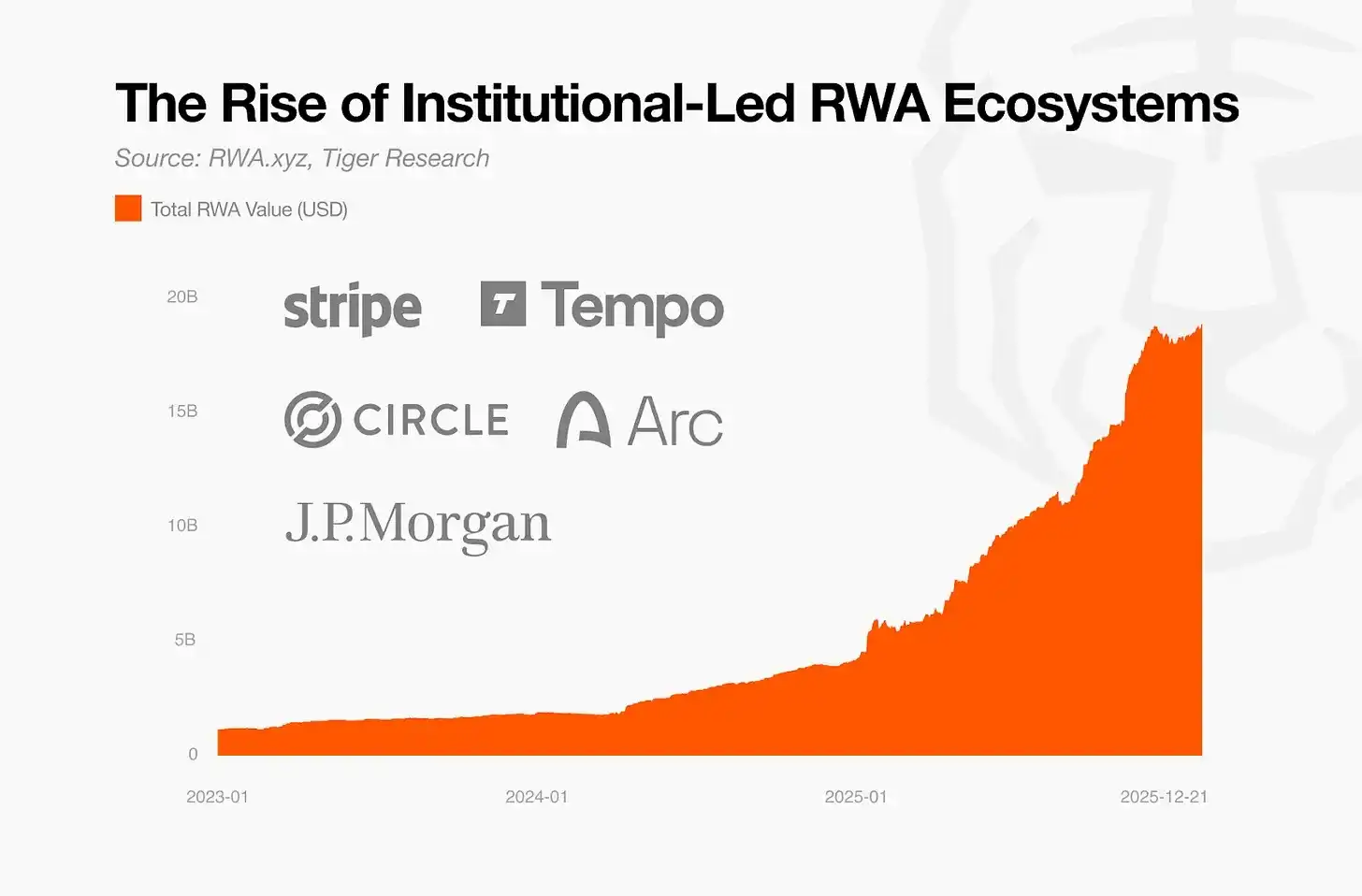
Source: Tiger Research

Traditional financial institutions are the main suppliers in the RWA market. Given the need for asset control and security, the benefits of using third-party platforms are minimal. These companies are likely to build their own chains to maintain market leadership. RWA projects lacking independent asset supplies will lose their competitive advantage and face elimination.

8. ETH Staking ETFs Will Drive BTCFi Growth
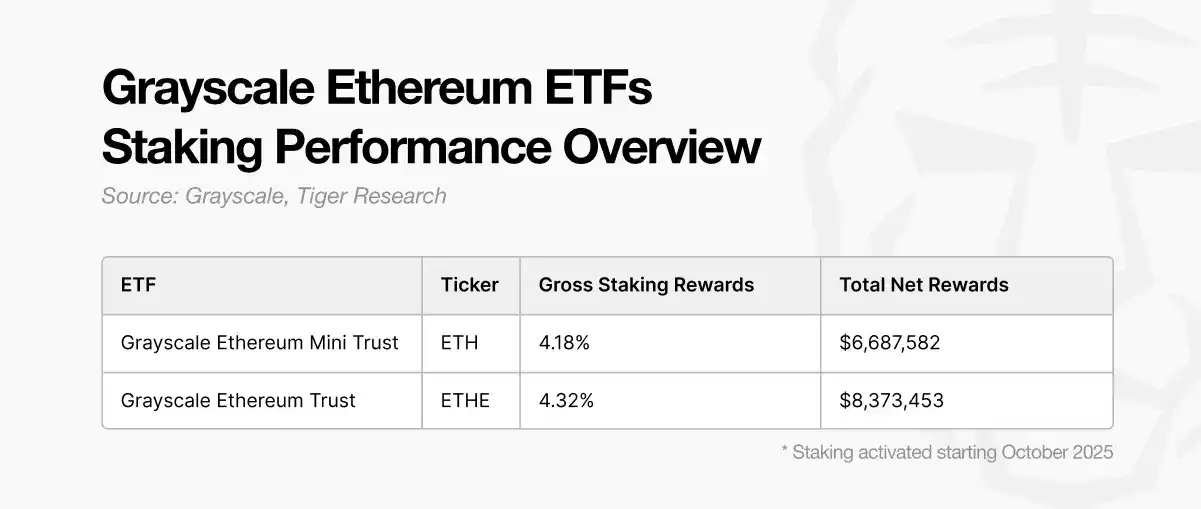
Source: Tiger Research

The launch of Ethereum staking ETFs will prompt Bitcoin ETF holders to seek yield. BTCFi fills this gap. As large amounts of capital enter Bitcoin, the demand for asset utility will rise. This pursuit of yield will drive the next wave of BTCFi growth.

9. Fintech Will Surpass Exchanges as the Primary On-Ramp
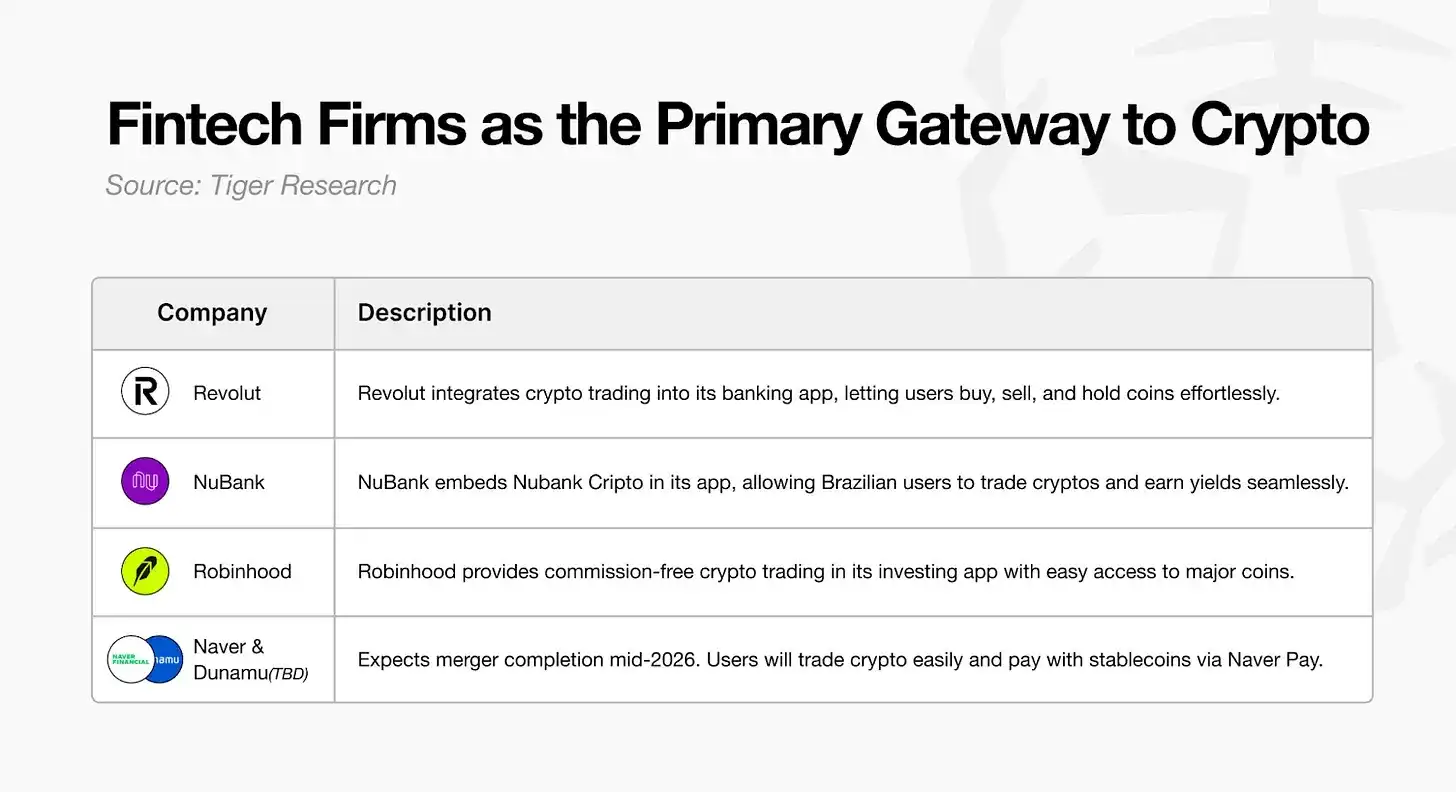
Source: Tiger Research

As rules become clearer, fintech applications have become the preferred choice for cryptocurrency trading. New users no longer need to use cryptocurrency exchanges. They can buy and sell directly within the applications they use daily. The next wave of growth will be led by these fintech tools.

10. Privacy Technology Becomes Core Institutional Infrastructure
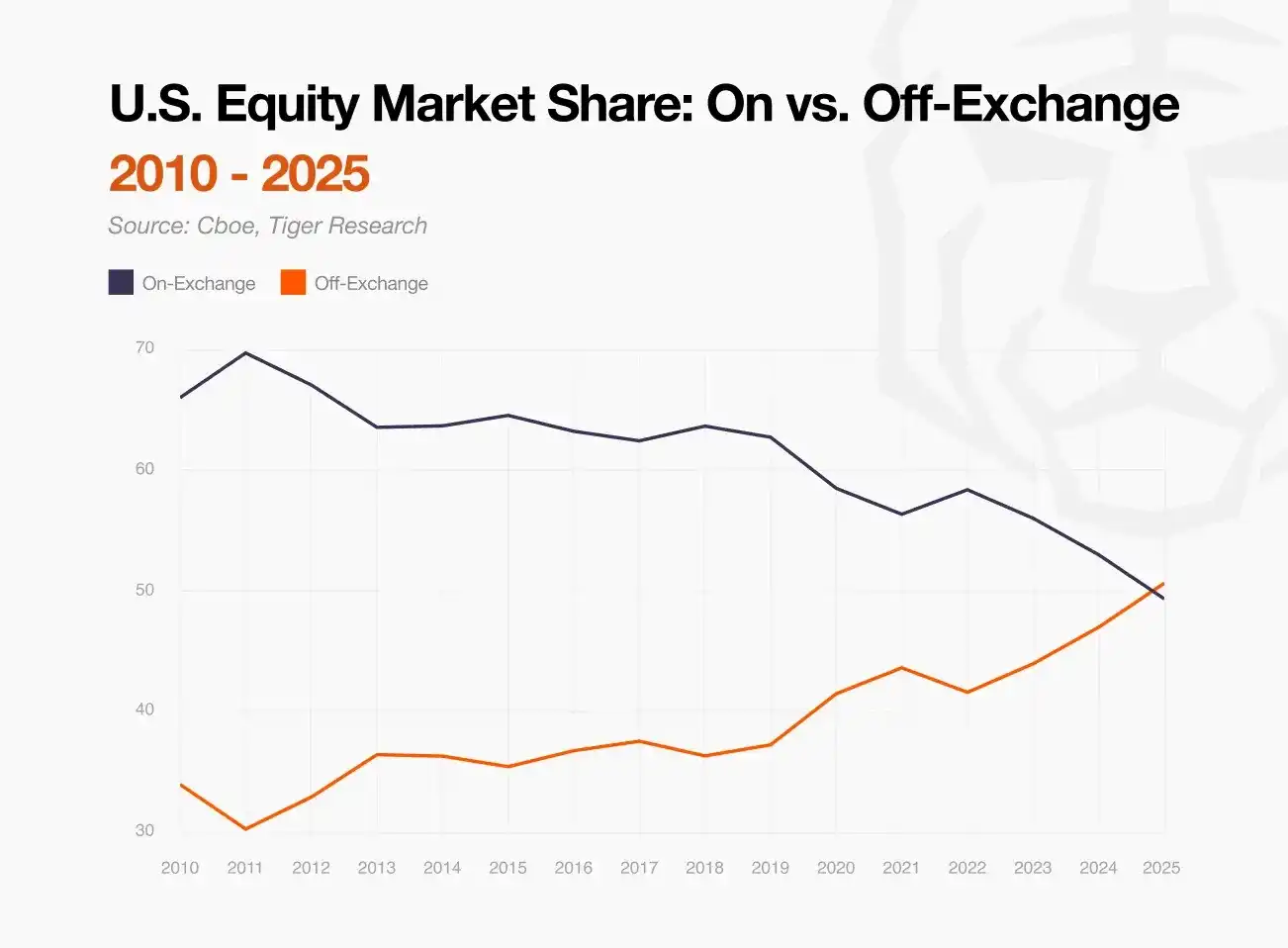
Source: Tiger Research

On-chain transparency exposes trading plans. This is a weakness for large institutions. High-net-worth participants must hide their movements to ensure security. Privacy technology is a key tool for these institutions to enter the market. Large-scale capital will only flow in if transaction data is secure.


Preguntas relacionadas

QWhat are the two main cryptocurrencies that institutional investors are predicted to continue focusing on by 2026, according to Tiger Research?

AInstitutional investors are predicted to continue focusing primarily on Bitcoin and Ethereum, as they are considered established and meet institutional standards.

QWhy does Tiger Research claim that utility-focused tokenomics has failed, and what model is expected to survive?

AUtility-focused tokenomics has failed because governance voting rights failed to attract investors and complex structures proved unsustainable. The model expected to survive is one that provides direct returns through buybacks and burns, or structures where protocol growth directly impacts the token price.

QHow is the convergence of robotics and cryptocurrency predicted to create a new gig economy era?

AThe convergence is predicted to create a new gig economy era by using blockchain-based decentralized crowdsourcing to efficiently collect the massive amounts of real-world data needed for robot training from individuals globally, offering transparent and instant rewards.

QWhat role are financial technology (fintech) applications expected to play in the future of cryptocurrency onboarding?

AFintech applications are expected to become the primary onboarding channel for new users, surpassing exchanges. Users will be able to buy and sell cryptocurrency directly within the everyday applications they already use.

QWhy is privacy technology considered crucial for large institutional adoption of cryptocurrency?

APrivacy technology is considered crucial because on-chain transparency exposes the trading plans of large institutions, which is a significant weakness. High-net-worth participants must hide their movements for security, making privacy tech a key tool for their market entry. Large-scale capital will only flow in if transaction data is secure.

Lecturas Relacionadas

The Verdict in Choi Tae-won's Divorce Case: Revealing the Inheritance Undercurrent Behind SK Hynix's Trillion-Won Empire

SK Group Chairman Chey Tae-won's high-profile divorce case, involving a record 1.38 trillion won settlement, has drawn attention to the succession plans for Korea's second-largest conglomerate, especially its crown jewel, SK hynix. Unlike traditional chaebol scripts centered on the eldest son, Chey's three children from his marriage to former President Roh Tae-woo's daughter, Roh Soh-yeong, are carving distinct, non-traditional paths. Eldest daughter Chey Yun-jung (b. 1989) is seen as the most evident successor. With a scientific and consulting background, she holds executive roles at SK bioscience and SK Inc.'s growth support department, focusing on future strategy and biopharma. Her marriage is to an AI infrastructure entrepreneur, not a traditional business alliance. Second daughter Chey Min-jung (b. 1991) took a unique route, voluntarily serving as a South Korean naval officer, including an anti-piracy deployment. She later worked on policy and strategy for SK hynix in Washington D.C. before co-founding an AI-driven healthcare startup. She married a former U.S. Marine Corps officer, connecting her to U.S. defense and policy circles—networks crucial for a global semiconductor giant. The only son, Chey In-geun (b. 1995), who studied physics like his father, worked briefly at SK E&S before joining McKinsey. Despite fitting the traditional "heir" profile as the eldest son, he remains silent and holds no public position or shares in SK, suggesting the old succession playbook is obsolete. As SK hynix's valuation soars, becoming a geopolitical asset in the AI era, the heirs' legitimacy is no longer automatic. They must prove themselves in fields like AI biotech, global policy, and strategic consulting. Their marriages also reflect new elite networks in tech and defense, not old political alliances. Their inheritance is the complex challenge of navigating a globalized, tech-driven world, not just a corporate throne.

marsbitHace 19 hora(s)

The Verdict in Choi Tae-won's Divorce Case: Revealing the Inheritance Undercurrent Behind SK Hynix's Trillion-Won Empire

marsbitHace 19 hora(s)

From OpenSea to OpenRouter: Is Alex Atallah Repeating His 'Exit at the Peak' Playbook?

From OpenSea to OpenRouter: Is Alex Atallah Repeating His "Exit at the Peak" Playbook? According to the Wall Street Journal, payments giant Stripe is in talks to acquire the AI model aggregation platform OpenRouter in a potential deal valuing the company near $100 billion. This would mark founder Alex Atallah's second creation of a company reaching a $100 billion valuation, following his co-founding of NFT marketplace OpenSea. OpenRouter, founded just over three years ago, has grown rapidly by acting as a unified gateway for developers to access over 400 AI models. It currently has about 10 million users and processes over 200 trillion tokens monthly. While the platform's annualized revenue is around $50 million, its valuation has skyrocketed from $1.3 billion in March 2026. The potential acquisition by Stripe, a company OpenRouter's founder once likened it to, represents a major expansion into AI infrastructure for the payments leader. This move echoes Atallah's previous timing with OpenSea, where he departed before the NFT market's significant downturn. For OpenRouter, selling now may be strategic. Despite its scale, its business model—charging a 5-5.5% fee on AI inference calls—faces pressure from competition, open-source models, and potential price wars among model providers, limiting its profitability narrative for an IPO. A key asset for potential acquirers like Stripe is OpenRouter's vast repository of real-world AI usage data, which offers unique insights into model performance and developer preferences that are difficult to replicate. Whether this potential deal signifies a new valuation benchmark for AI infrastructure or another market peak signal remains to be seen.

链捕手Hace 20 hora(s)

From OpenSea to OpenRouter: Is Alex Atallah Repeating His 'Exit at the Peak' Playbook?

链捕手Hace 20 hora(s)

Trading

Spot
活动图片