The U.S. Can No Longer Control Latin America, So They Took Maduro

marsbitPublicado a 2026-01-05Actualizado a 2026-01-05

Resumen

US influence over Latin America is waning, as evidenced by the recent US military operation to extract Venezuelan President Maduro. For decades, the US maintained control through three key financial tools: debt, dollarization, and sanctions. In the 1980s, Latin America’s foreign debt reached 50% of GDP, but today it stands at just 20%, partly due to China’s rise as a major lender and trading partner since the 2000s. Countries like Brazil and Argentina used commodity-driven revenue to pay off IMF debts and reduce dependency. Dollarization, once a means of control, has evolved into “de-Americanized dollarization”—people use the dollar for stability but reject US political influence. Meanwhile, extreme sanctions, such as those imposed on Venezuela, backfired. Instead of crushing resistance, they spurred the growth of a parallel financial ecosystem. This new system includes: - Stablecoins like USDT, used for 80% of Venezuela’s oil revenue - Local fintech platforms (e.g., Brazil’s Pix and Nubank) serving millions - Non-dollar trade channels, such as currency swaps with China - A thriving underground economy and crypto markets US policies—like proposed taxes on remittances and Wall Street’s “de-risking”—have unintentionally accelerated this shift. As the US tightens control, dollar usage becomes more decentralized, echoing the historical decline of the British pound. The very tools meant to enforce dominance are now fueling its erosion.

In the 1980s, Latin America's total external debt accounted for nearly 50% of its GDP. This metric was once a scale used by Washington to measure loyalty and control over this backyard.

Today, that number has dropped to 20%.

However, this 22-percentage-point difference does not mean that the people of Latin America are becoming wealthier day by day. To no longer be subject to others' currencies and rules, they are still struggling within the old order and paying a heavy price for it.

This is a contest about "control" versus "loss of control." The United States has attempted to grasp the economic lifeline of this continent through debt, currency, and sanctions. Yet, when this control is pushed to its limit, the system inevitably ignites an endogenous force of resistance.

Three Weapons of U.S. Financial Control Over Latin America

For over half a century, the financial empire of the United States has ruled Latin America primarily with three highly effective weapons.

The first weapon is debt. This is the empire's oldest colonial tool and its most effective instrument of financial governance.

On August 12, 1982, a plea for help from Mexico's Finance Minister was the trigger for the Latin American debt crisis. As Mexico declared its inability to repay $80 billion in external debt, the first domino fell. Brazil, Argentina, and Venezuela subsequently tumbled into the quagmire of default.

Then, a "creditors' alliance" composed of the U.S. Treasury, the Federal Reserve, and the IMF stepped in. The救命钱 they offered was exorbitantly expensive; each aid package came with extremely苛刻的附加条件 attached.

This was the later infamous Washington Consensus, which forced these countries to slash government spending, sell off state-owned assets, and completely open their domestic markets and capital controls.

It was an era when the U.S. could decide a nation's destiny for the next decade with a single check. Debt became a rope tightened around the necks of Latin American countries, with the other end always held by the Americans. Behind every aid package, the price of power was already clearly marked.

The second weapon is dollarization.

When debt control wasn't彻底 enough, a more extreme solution was pushed forward: simply abolish your national currency and directly use the U.S. dollar.

First, the U.S., through prior debt harvesting, induced foreign exchange depletion and hyperinflation in these countries, creating a physiological fear of the local currency among the populace. Then, Washington's think tanks began a large-scale舆论 campaign promoting "monetary stability," packaging the dollar as the only safe haven from turmoil.

And when providing emergency loans, the U.S. would often暗示 or even明示 that only by adopting the dollar could they obtain long-term financial credit endorsement. In 2000, on the brink of social unrest, Ecuador was forced to abandon its currency; shortly after, El Salvador, Panama, and others followed suit.

This is a very霸道 logic: if a country doesn't even have its own currency, its economic sovereignty is essentially in a state of trusteeship. Abandoning the national currency is equivalent to handing over the keys to your house. From then on, your inflation rate, your interest rates, can only be decided by others.

The third weapon is sanctions. This is the final, and most destructive, heavy weapon,专门 used against those who attempt to脱离轨道 and challenge the existing order.

Taking Venezuela as an example, the U.S. has imposed over 900 sanctions against it, involving 209 key individuals,几乎封死了 this country's every生存空间.

Venezuela is actually incredibly rich, literally "rolling in oil." Its oil reserves are as high as 303 billion barrels, even more than Saudi Arabia's. But the problem is, much of this oil is extra-heavy, like asphalt, with extremely high extraction difficulty. It requires external capital, technology, and diluents to turn it into money.

U.S. sanctions精准地切断 these lifelines, leaving Venezuela sitting on the "world's largest oil vault" unable to monetize it. The result is that Venezuela's oil production plummeted from 3 million barrels per day to a low of less than 500,000 barrels within just seven years.

It wasn't until early 2026, when U.S. forces, citing "narcoterrorism" and related criminal charges, conducted a military operation in Venezuela to take away Maduro, and Trump announced that major oil companies would take over and invest tens of billions of dollars to repair infrastructure, that the sanctions blade finally completed its closed loop.

First, use sanctions to completely paralyze a country's liquidity, then, under the banner of "management and repair," enter the ruins with tens of billions of dollars in hand, completing the re-harvesting of the global energy landscape.

Debt, dollarization, and sanctions—these three shackles constituted the U.S.'s half-century-long financial blockade of Latin America. This net was once impermeable, stretching from Mexico City to Buenos Aires.

Three Variables

Now, a series of variables are eroding the foundation of imperial hegemony. The three once-infallible weapons are failing amidst the changing logic of global博弈.

The loosening of the debt shackle began in the first decade of the 21st century. The biggest variable behind it is China.

In 2001, China joined the WTO, initiating a decade-long supercycle for commodities. Latin America, as a major global supplier of raw materials, became the biggest beneficiary of this feast.

Brazil's iron ore, Chile's copper, Argentina's soybeans—all flowed continuously to the East, exchanged for unprecedented foreign exchange accumulation. This accumulation gave Latin American countries breathing room and the底气 to break free from the IMF's束缚.

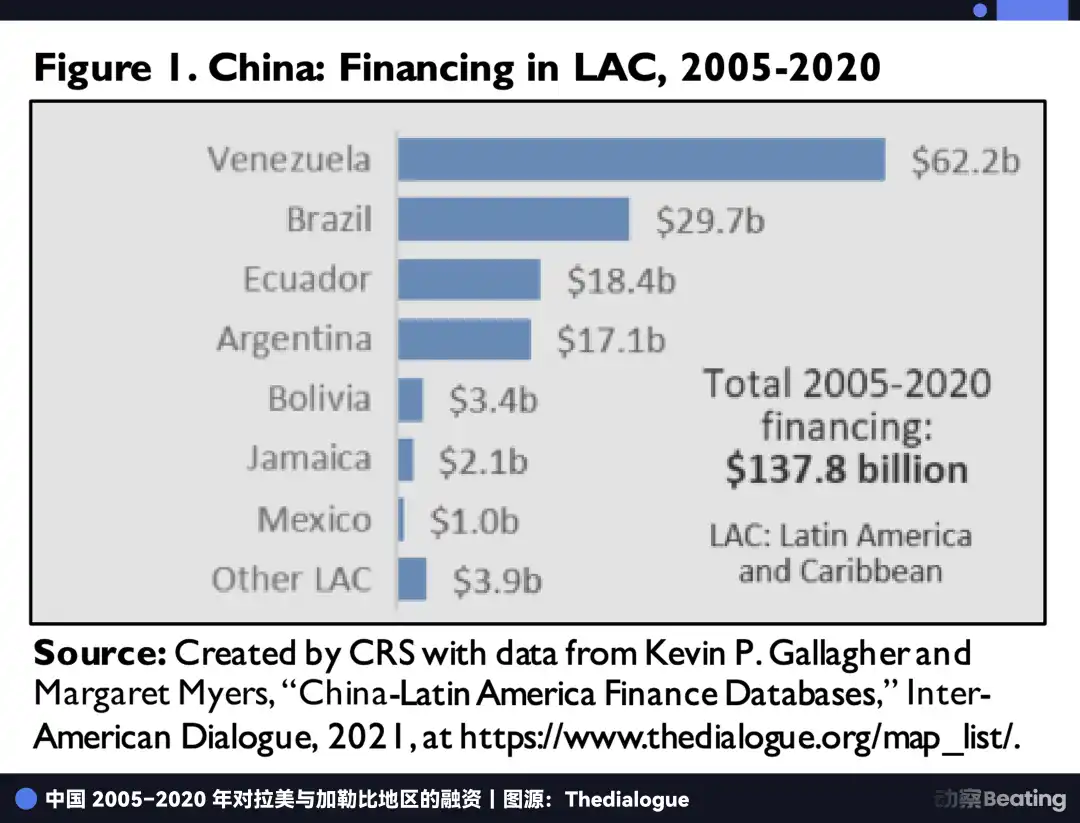
In 2005, Brazil and Argentina successively announced the early repayment of all debts owed to the IMF. From 2005 to 2020, China provided Latin America with over $137 billion in loans without political conditions attached.

Venezuela received $62 billion of this, with other major recipients including Brazil, Ecuador, and Argentina. These "oil-for-loans" agreements helped build much-needed infrastructure and gave these countries more bargaining chips when negotiating with Western creditors.
At the same time, Washington soon discovered it could not control these countries' economic policies through dollarization. The Latin American people hold U.S. dollars en masse to hedge against the collapse of their national currencies, not out of admiration for the "American Dream." In the streets and alleys of Latin America, the dollar is彻底剥离 of its political color, reduced to a purely financial tool—a reliable hard currency that won't turn into worthless paper tomorrow.

This is the so-called "de-Americanized dollarization."

People need the stability of the dollar but reject Washington's rules. The dollar is becoming a global, neutral measure of value, much like gold. It belongs to the world, no longer solely to the U.S. government.

When large volumes of dollar transactions spontaneously operate outside the official monitoring system, Washington finds that while it can still print money, it is increasingly difficult to manipulate the economic lifelines of other countries through monetary leverage.

As both debt and dollarization gradually lost their effectiveness, the U.S. opted for more激进 sanctions.

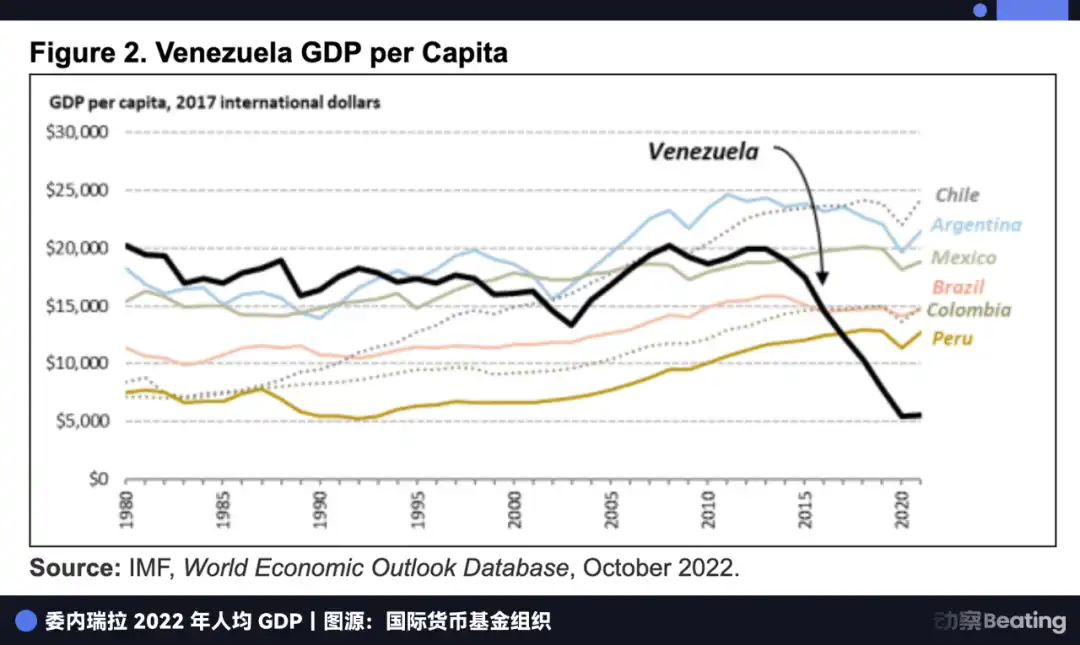
On one hand, internal governance failures and corruption in Venezuela led to the collapse of its economic pillar, with the national currency becoming worthless due to hyperinflation. On the other hand, external sanctions directly caused its GDP to shrink by about 75%. It was precisely this sense of suffocation from internal and external troubles that催生 a parallel financial ecosystem完全独立于 the dollar闭环之外.
Meanwhile, to avoid the risk of sky-high U.S. fines, global major banks initiated a so-called "de-risking" movement,主动切断 business dealings with Latin America. According to a report by the Atlantic Council, over 21 banks in the Caribbean lost correspondent banking relationships, with some countries even losing the ability to handle basic dollar trade and remittances from emigrants.

This defensive financial exclusion did not reinforce the existing hegemony; instead, it pushed more innocent individuals and businesses into the emerging parallel financial ecosystem.

The Parallel Financial Ecosystem Outside the Iron Curtain

In this博弈 over financial sovereignty and survival instinct, Latin America's parallel financial ecosystem is being woven from four forces—stablecoins, local Fintech, non-U.S. trade channels, and the underground economy—into a network不受 Washington's will左右.

In Latin America, stablecoins are no longer just investment or speculation chips.

Taking Venezuela as an example, to evade sanctions, the official government established a shadow financial network. By December 2025, about 80% of this country's oil revenue was collected in the form of the stablecoin USDT.

Furthermore, according to intelligence, through a channel spanning Turkey and the UAE for gold refining and over-the-counter transactions, Venezuela may have secretly amassed Bitcoin reserves worth up to $60 billion, a holding size comparable to MicroStrategy's.

However, this channel bypassing the SWIFT system, crossing Turkey and the UAE for gold and cryptocurrency, while technically evading sanctions, also became a key point of entry for Washington's accusations of involvement in illegal fund flows and support for drug trafficking due to its极高的隐蔽性.

For ordinary Latin Americans, when traditional bank accounts were frozen due to sanctions, they stopped paying attention to the繁冗 and politically charged instructions of the settlement systems, instead directly moving funds across borders via blockchain.

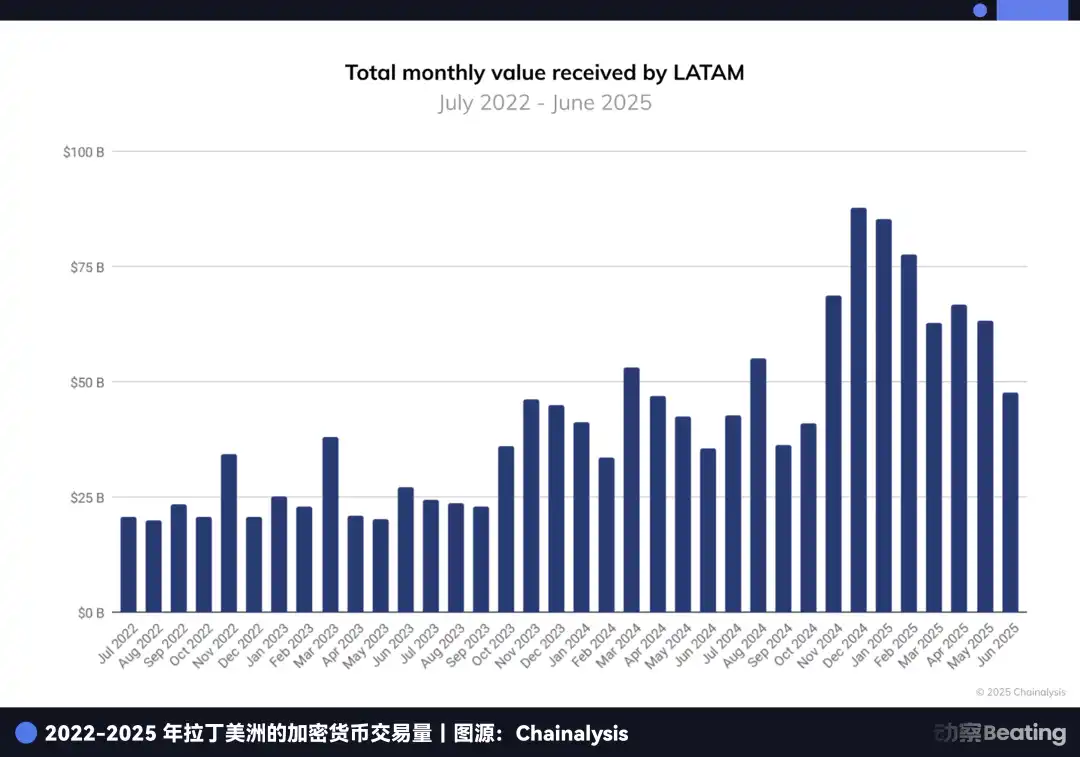
According to Chainalysis data, between 2022 and 2025, cryptocurrency transaction volume in Latin America approached $1.5 trillion. In Brazil, over 90% of transactions were related to stablecoins.
Compared to Manhattan bankers accustomed to俯瞰 from on high, local Fintech companies care more about the soil under their feet and具体的生计. In Brazil, for instance, even though only 60 million people have credit cards, the user base of the central bank-led Pix payment system surged to 170 million.

In 2024, Pix's total transaction volume reached $3.8 trillion, 1.7 times Brazil's GDP. Behind this data lies资金周转效率 pushed to the extreme.

Meanwhile, digital banking giant Nubank grew its user base from 1.3 million to 114 million in just eight years, capturing over 60% of Brazil's adult population, and recorded nearly $2 billion in net profit in 2024.

Payment giant Mercado Pago swept across Latin America with $142 billion in payment volume, while remittance market newcomer Bitso硬生生 tore a 4% share of the U.S.-Mexico remittance market from traditional giants like Western Union.

Additionally, non-dollar channels and the underground economy have converged. The $5 billion currency swap between Argentina and China, and the ongoing推进 of local currency settlement between China and Brazil, are becoming a symmetrical choice against the backdrop of great power博弈. This脱钩 from the top down is granting Latin American trade a form of breathing room independent of the dollar.

On the streets of Argentina, a black market exchange rate known as the "Dólar Blue" has become the全民的经济晴雨表. Its huge gap with the official rate赤裸裸地揭示了 the bankruptcy of official credit and has催生 countless street currency exchange vendors called "arbolitos" (little trees) and "cuevas cripto" (crypto caves)专门 trading USDT.

The穿透力 of stablecoins, the渗透率 of local Fintech, the strategic choices of non-U.S. channels, and the野蛮生长 of the underground economy共同编织 this financial network that摆脱 centralized control.

Who is Handing Over the Knife?

Any species' breakthrough requires not only an internal will to survive but also often a剧烈催化 from the external environment. The driving force behind the rise of Latin America's parallel financial system恰恰 comes from the U.S., which is trying to defend the old order.

A series of operations by Washington not only failed to stifle the sprouts of the new order but instead provided the most ample nourishment for its expansion.

The first push came from politicians'强行征用 of financial channels.

The Trump administration once proposed a 1% tax on remittances sent from the U.S. This might seem like a minor抽成, but against the backdrop of Latin America's annual remittances exceeding $150 billion, it was enough to shake the lifelines of tens of millions of low-income families.

Remember, in traditional financial channels, sending $200 to Latin America would incur fees of $6~8 just from giants like Western Union.

This additional 1% tax became the last straw that broke the camel's back. This tax slip sent an extremely dangerous signal to every laborer: traditional remittance channels are not only expensive but can also become pawns in political games at any time.

Trump might have thought he was building a financial wall, but客观上 he驱赶 tens of millions of users to flee the old system and collectively rush into the embrace of stablecoins and local Fintech. When the cost of survival is pushed to the limit by politics, users will migrate at an unprecedented speed.

The second push stems from a severe撕裂 among Wall Street elites regarding利益分配.

As mentioned earlier, to comply with increasingly strict anti-money laundering regulations, Wall Street giants initiated a "de-risking" movement,主动切断 business ties with "high-risk areas" like Latin America. JPMorgan Chase, as early as 2014, closed tens of thousands of Latin American client accounts citing "excessive risk."

By the end of 2025, JPMorgan Chase, on one hand, froze the bank accounts of two stablecoin companies operating in Venezuela, BlindPay and Kontigo, playing the role of the dollar system's most loyal "gatekeeper." On the other hand, it was疯狂囤积 physical precious metals to hedge against dollar risk.

Public data shows that JPMorgan Chase has become the world's largest holder of physical silver. More intriguingly, JPMorgan moved large amounts of silver from a deliverable state to a non-deliverable state.

This means this silver, while sitting in warehouses, is no longer allowed to be used to fulfill futures contract deliveries. In other words, JPMorgan is taking these "chips" off the gambling table and locking them away in its own rarely seen backyard.

While the dollar hegemony is still effective, these Wall Street elites use the rules to maximize their financial control; but at the same time, they are also preparing for the eventual collapse of this system. JPMorgan is both the number one maintainer of the existing dollar system and its biggest "internal short."

Thus, the more the U.S. tries to tighten the dollar's reins, the more the dollar leaps over the wall in a wild manner, seeking safer pastures. When core players within a system start preparing escape routes for the post-dollar era, this control inevitably moves towards its opposite.

The Curse of Hegemony

This dilemma of "control" versus "loss of control" is not unique to this era. If we look back to the foggy 19th century, in the long river of financial history, we can hear a distant and similar echo—the decline of the British pound.

In that long century, the pound sterling was the undisputed world currency. But when a currency truly belongs to the whole world, it no longer完全 belongs to its home country.

To output pounds to the world, Britain was forced to maintain a chronic trade deficit. This cost directly led to the hollowing out of its manufacturing industry and the慢性衰落 of its national power. In 1931, after experiencing three severe runs on the pound, Britain was forced to abandon the gold standard, and pound hegemony fell from grace.

The British Empire learned a lesson with a century of tuition: the more you try to use currency status to harvest the world, the more you accelerate the透支 of its vitality.

Today, the U.S. dollar is stepping into the same dilemma.

The more Washington tries to use the dollar as a weapon, employing sanctions, taxes, and harsh regulations to encircle and suppress, the more likely the dollar is to加速离家出走. You are明修栈道 (feigning movement in one direction), while the populace is暗渡陈仓 (advancing secretly another way).

Stablecoins, local Fintech, non-U.S. trade channels, the野蛮生长 underground economy... all these various choices are essentially隐秘路径 for the dollar to escape Washington's control.

From the近乎执念囤积 of physical gold by central banks in recent years to the关门落锁 of top financial capital on physical assets, this collective choice is shifting the global financial center of gravity back towards the era of hard assets.

This transformation is not happening amidst the total collapse of the old empire, but is being spontaneously deconstructed by hundreds of millions of tiny individuals and enterprises in the apparent prosperity of the present-day U.S.

The echo of history is already circling over Washington, its sound clearly audible.

Preguntas relacionadas

QWhat are the three main financial weapons the United States has historically used to exert control over Latin America, according to the article?

AThe three main financial weapons are debt, dollarization, and sanctions.

QHow did China's entry into the WTO in 2001 impact Latin America's ability to manage its debt, as described in the text?

AIt triggered a decade-long supercycle in commodities, making Latin America, as a major supplier of raw materials, a huge beneficiary. This influx of foreign exchange allowed countries like Brazil and Argentina to pay off their IMF debts early and gain leverage in negotiations with Western creditors.

QWhat is the term used in the article to describe the phenomenon where the Latin American populace uses the U.S. dollar for its stability but rejects Washington's political rules?

ADe-Americanized dollarization.

QWhat specific action by the Trump administration in 2026 is cited as the culmination of the U.S. sanctions strategy against Venezuela?

AA military operation to 'take away' (capture) President Maduro on charges related to 'drug terrorism' and criminal indictments, followed by an announcement that major oil companies would take over and invest billions to repair infrastructure.

QThe article draws a historical parallel between the current situation of the U.S. dollar and the decline of a previous global currency. Which currency is it?

AThe British Pound Sterling.

Lecturas Relacionadas

Trading

Spot
Futuros

Artículos destacados

Qué es $S$

Entendiendo SPERO: Una Visión General Completa Introducción a SPERO A medida que el panorama de la innovación continúa evolucionando, la aparición de tecnologías web3 y proyectos de criptomonedas juega un papel fundamental en la configuración del futuro digital. Un proyecto que ha atraído la atención en este campo dinámico es SPERO, denotado como SPERO,$$s$. Este artículo tiene como objetivo reunir y presentar información detallada sobre SPERO, para ayudar a entusiastas e inversores a comprender sus fundamentos, objetivos e innovaciones dentro de los dominios web3 y cripto. ¿Qué es SPERO,$$s$? SPERO,$$s$ es un proyecto único dentro del espacio cripto que busca aprovechar los principios de descentralización y tecnología blockchain para crear un ecosistema que promueva la participación, la utilidad y la inclusión financiera. El proyecto está diseñado para facilitar interacciones de igual a igual de nuevas maneras, proporcionando a los usuarios soluciones y servicios financieros innovadores. En su esencia, SPERO,$$s$ tiene como objetivo empoderar a los individuos al proporcionar herramientas y plataformas que mejoren la experiencia del usuario en el espacio de las criptomonedas. Esto incluye habilitar métodos de transacción más flexibles, fomentar iniciativas impulsadas por la comunidad y crear caminos para oportunidades financieras a través de aplicaciones descentralizadas (dApps). La visión subyacente de SPERO,$$s$ gira en torno a la inclusividad, buscando cerrar brechas dentro de las finanzas tradicionales mientras aprovecha los beneficios de la tecnología blockchain. ¿Quién es el Creador de SPERO,$$s$? La identidad del creador de SPERO,$$s$ sigue siendo algo oscura, ya que hay recursos públicos limitados que proporcionan información de fondo detallada sobre su(s) fundador(es). Esta falta de transparencia puede derivarse del compromiso del proyecto con la descentralización, una ética que muchos proyectos web3 comparten, priorizando las contribuciones colectivas sobre el reconocimiento individual. Al centrar las discusiones en torno a la comunidad y sus objetivos colectivos, SPERO,$$s$ encarna la esencia del empoderamiento sin señalar a individuos específicos. Como tal, comprender la ética y la misión de SPERO sigue siendo más importante que identificar a un creador singular. ¿Quiénes son los Inversores de SPERO,$$s$? SPERO,$$s$ cuenta con el apoyo de una diversa gama de inversores que van desde capitalistas de riesgo hasta inversores ángeles dedicados a fomentar la innovación en el sector cripto. El enfoque de estos inversores generalmente se alinea con la misión de SPERO, priorizando proyectos que prometen avances tecnológicos sociales, inclusión financiera y gobernanza descentralizada. Estas fundaciones de inversores suelen estar interesadas en proyectos que no solo ofrecen productos innovadores, sino que también contribuyen positivamente a la comunidad blockchain y sus ecosistemas. El respaldo de estos inversores refuerza a SPERO,$$s$ como un contendiente notable en el dominio de proyectos cripto que evoluciona rápidamente. ¿Cómo Funciona SPERO,$$s$? SPERO,$$s$ emplea un marco multifacético que lo distingue de los proyectos de criptomonedas convencionales. Aquí hay algunas de las características clave que subrayan su singularidad e innovación: Gobernanza Descentralizada: SPERO,$$s$ integra modelos de gobernanza descentralizada, empoderando a los usuarios para participar activamente en los procesos de toma de decisiones sobre el futuro del proyecto. Este enfoque fomenta un sentido de propiedad y responsabilidad entre los miembros de la comunidad. Utilidad del Token: SPERO,$$s$ utiliza su propio token de criptomoneda, diseñado para servir diversas funciones dentro del ecosistema. Estos tokens permiten transacciones, recompensas y la facilitación de servicios ofrecidos en la plataforma, mejorando la participación y la utilidad general. Arquitectura en Capas: La arquitectura técnica de SPERO,$$s$ apoya la modularidad y escalabilidad, permitiendo la integración fluida de características y aplicaciones adicionales a medida que el proyecto evoluciona. Esta adaptabilidad es fundamental para mantener la relevancia en el cambiante paisaje cripto. Participación de la Comunidad: El proyecto enfatiza iniciativas impulsadas por la comunidad, empleando mecanismos que incentivan la colaboración y la retroalimentación. Al nutrir una comunidad sólida, SPERO,$$s$ puede abordar mejor las necesidades de los usuarios y adaptarse a las tendencias del mercado. Enfoque en la Inclusión: Al ofrecer tarifas de transacción bajas e interfaces amigables para el usuario, SPERO,$$s$ busca atraer a una base de usuarios diversa, incluyendo a individuos que anteriormente pueden no haber participado en el espacio cripto. Este compromiso con la inclusión se alinea con su misión general de empoderamiento a través de la accesibilidad. Cronología de SPERO,$$s$ Entender la historia de un proyecto proporciona información crucial sobre su trayectoria de desarrollo y hitos. A continuación se presenta una cronología sugerida que mapea eventos significativos en la evolución de SPERO,$$s$: Fase de Conceptualización e Ideación: Las ideas iniciales que forman la base de SPERO,$$s$ fueron concebidas, alineándose estrechamente con los principios de descentralización y enfoque comunitario dentro de la industria blockchain. Lanzamiento del Whitepaper del Proyecto: Tras la fase conceptual, se lanzó un whitepaper completo que detalla la visión, los objetivos y la infraestructura tecnológica de SPERO,$$s$ para generar interés y retroalimentación de la comunidad. Construcción de Comunidad y Primeras Interacciones: Se realizaron esfuerzos de divulgación activa para construir una comunidad de primeros adoptantes y posibles inversores, facilitando discusiones en torno a los objetivos del proyecto y obteniendo apoyo. Evento de Generación de Tokens: SPERO,$$s$ llevó a cabo un evento de generación de tokens (TGE) para distribuir sus tokens nativos a los primeros seguidores y establecer liquidez inicial dentro del ecosistema. Lanzamiento de la dApp Inicial: La primera aplicación descentralizada (dApp) asociada con SPERO,$$s$ se puso en marcha, permitiendo a los usuarios interactuar con las funcionalidades centrales de la plataforma. Desarrollo Continuo y Alianzas: Actualizaciones y mejoras continuas a las ofertas del proyecto, incluyendo alianzas estratégicas con otros actores en el espacio blockchain, han moldeado a SPERO,$$s$ en un jugador competitivo y en evolución en el mercado cripto. Conclusión SPERO,$$s$ se erige como un testimonio del potencial de web3 y las criptomonedas para revolucionar los sistemas financieros y empoderar a los individuos. Con un compromiso con la gobernanza descentralizada, la participación comunitaria y funcionalidades diseñadas de manera innovadora, allana el camino hacia un paisaje financiero más inclusivo. Como con cualquier inversión en el espacio cripto que evoluciona rápidamente, se anima a los posibles inversores y usuarios a investigar a fondo y participar de manera reflexiva con los desarrollos en curso dentro de SPERO,$$s$. El proyecto muestra el espíritu innovador de la industria cripto, invitando a una mayor exploración de sus innumerables posibilidades. Mientras el viaje de SPERO,$$s$ aún se desarrolla, sus principios fundamentales pueden, de hecho, influir en el futuro de cómo interactuamos con la tecnología, las finanzas y entre nosotros en ecosistemas digitales interconectados.

72 Vistas totalesPublicado en 2024.12.17Actualizado en 2024.12.17

Qué es $S$

Qué es AGENT S

Agent S: El Futuro de la Interacción Autónoma en Web3 Introducción En el paisaje en constante evolución de Web3 y las criptomonedas, las innovaciones están redefiniendo constantemente cómo los individuos interactúan con las plataformas digitales. Uno de estos proyectos pioneros, Agent S, promete revolucionar la interacción humano-computadora a través de su marco agente abierto. Al allanar el camino para interacciones autónomas, Agent S busca simplificar tareas complejas, ofreciendo aplicaciones transformadoras en inteligencia artificial (IA). Esta exploración detallada profundizará en las complejidades del proyecto, sus características únicas y las implicaciones para el dominio de las criptomonedas. ¿Qué es Agent S? Agent S se presenta como un marco agente abierto innovador, diseñado específicamente para abordar tres desafíos fundamentales en la automatización de tareas informáticas: Adquisición de Conocimiento Específico del Dominio: El marco aprende inteligentemente de diversas fuentes de conocimiento externas y experiencias internas. Este enfoque dual le permite construir un rico repositorio de conocimiento específico del dominio, mejorando su rendimiento en la ejecución de tareas. Planificación a Largo Plazo de Tareas: Agent S emplea planificación jerárquica aumentada por la experiencia, un enfoque estratégico que facilita la descomposición y ejecución eficiente de tareas complejas. Esta característica mejora significativamente su capacidad para gestionar múltiples subtareas de manera eficiente y efectiva. Manejo de Interfaces Dinámicas y No Uniformes: El proyecto introduce la Interfaz Agente-Computadora (ACI), una solución innovadora que mejora la interacción entre agentes y usuarios. Utilizando Modelos de Lenguaje Multimodal de Gran Escala (MLLMs), Agent S puede navegar y manipular diversas interfaces gráficas de usuario sin problemas. A través de estas características pioneras, Agent S proporciona un marco robusto que aborda las complejidades involucradas en la automatización de la interacción humana con las máquinas, preparando el terreno para una multitud de aplicaciones en IA y más allá. ¿Quién es el Creador de Agent S? Si bien el concepto de Agent S es fundamentalmente innovador, la información específica sobre su creador sigue siendo elusiva. El creador es actualmente desconocido, lo que resalta ya sea la etapa incipiente del proyecto o la elección estratégica de mantener a los miembros fundadores en el anonimato. Independientemente de la anonimidad, el enfoque sigue siendo en las capacidades y el potencial del marco. ¿Quiénes son los Inversores de Agent S? Dado que Agent S es relativamente nuevo en el ecosistema criptográfico, la información detallada sobre sus inversores y patrocinadores financieros no está documentada explícitamente. La falta de información disponible públicamente sobre las bases de inversión u organizaciones que apoyan el proyecto plantea preguntas sobre su estructura de financiamiento y hoja de ruta de desarrollo. Comprender el respaldo es crucial para evaluar la sostenibilidad del proyecto y su posible impacto en el mercado. ¿Cómo Funciona Agent S? En el núcleo de Agent S se encuentra una tecnología de vanguardia que le permite funcionar de manera efectiva en diversos entornos. Su modelo operativo se basa en varias características clave: Interacción Humano-Computadora Similar a la Humana: El marco ofrece planificación avanzada de IA, esforzándose por hacer que las interacciones con las computadoras sean más intuitivas. Al imitar el comportamiento humano en la ejecución de tareas, promete elevar las experiencias de los usuarios. Memoria Narrativa: Empleada para aprovechar experiencias de alto nivel, Agent S utiliza memoria narrativa para hacer un seguimiento de las historias de tareas, mejorando así sus procesos de toma de decisiones. Memoria Episódica: Esta característica proporciona a los usuarios una guía paso a paso, permitiendo que el marco ofrezca apoyo contextual a medida que se desarrollan las tareas. Soporte para OpenACI: Con la capacidad de ejecutarse localmente, Agent S permite a los usuarios mantener el control sobre sus interacciones y flujos de trabajo, alineándose con la ética descentralizada de Web3. Fácil Integración con APIs Externas: Su versatilidad y compatibilidad con varias plataformas de IA aseguran que Agent S pueda encajar sin problemas en ecosistemas tecnológicos existentes, convirtiéndolo en una opción atractiva para desarrolladores y organizaciones. Estas funcionalidades contribuyen colectivamente a la posición única de Agent S dentro del espacio cripto, ya que automatiza tareas complejas y de múltiples pasos con una intervención humana mínima. A medida que el proyecto evoluciona, sus posibles aplicaciones en Web3 podrían redefinir cómo se desarrollan las interacciones digitales. Cronología de Agent S El desarrollo y los hitos de Agent S pueden encapsularse en una cronología que resalta sus eventos significativos: 27 de septiembre de 2024: El concepto de Agent S fue lanzado en un documento de investigación integral titulado “Un Marco Agente Abierto que Usa Computadoras Como un Humano”, mostrando las bases del proyecto. 10 de octubre de 2024: El documento de investigación fue puesto a disposición del público en arXiv, ofreciendo una exploración profunda del marco y su evaluación de rendimiento basada en el benchmark OSWorld. 12 de octubre de 2024: Se lanzó una presentación en video, proporcionando una visión visual de las capacidades y características de Agent S, involucrando aún más a posibles usuarios e inversores. Estos marcadores en la cronología no solo ilustran el progreso de Agent S, sino que también indican su compromiso con la transparencia y la participación comunitaria. Puntos Clave Sobre Agent S A medida que el marco Agent S continúa evolucionando, varios atributos clave destacan, subrayando su naturaleza innovadora y potencial: Marco Innovador: Diseñado para proporcionar un uso intuitivo de las computadoras similar a la interacción humana, Agent S aporta un enfoque novedoso a la automatización de tareas. Interacción Autónoma: La capacidad de interactuar de manera autónoma con las computadoras a través de GUI significa un salto hacia soluciones informáticas más inteligentes y eficientes. Automatización de Tareas Complejas: Con su metodología robusta, puede automatizar tareas complejas y de múltiples pasos, haciendo que los procesos sean más rápidos y menos propensos a errores. Mejora Continua: Los mecanismos de aprendizaje permiten a Agent S mejorar a partir de experiencias pasadas, mejorando continuamente su rendimiento y eficacia. Versatilidad: Su adaptabilidad en diferentes entornos operativos como OSWorld y WindowsAgentArena asegura que pueda servir a una amplia gama de aplicaciones. A medida que Agent S se posiciona en el paisaje de Web3 y criptomonedas, su potencial para mejorar las capacidades de interacción y automatizar procesos significa un avance significativo en las tecnologías de IA. A través de su marco innovador, Agent S ejemplifica el futuro de las interacciones digitales, prometiendo una experiencia más fluida y eficiente para los usuarios en diversas industrias. Conclusión Agent S representa un audaz avance en la unión de la IA y Web3, con la capacidad de redefinir cómo interactuamos con la tecnología. Aunque aún se encuentra en sus primeras etapas, las posibilidades para su aplicación son vastas y atractivas. A través de su marco integral que aborda desafíos críticos, Agent S busca llevar las interacciones autónomas al primer plano de la experiencia digital. A medida que nos adentramos más en los reinos de las criptomonedas y la descentralización, proyectos como Agent S sin duda desempeñarán un papel crucial en la configuración del futuro de la tecnología y la colaboración humano-computadora.

367 Vistas totalesPublicado en 2025.01.14Actualizado en 2025.01.14

Qué es AGENT S

Cómo comprar S

¡Bienvenido a HTX.com! Hemos hecho que comprar Sonic (S) sea simple y conveniente. Sigue nuestra guía paso a paso para iniciar tu viaje de criptos.Paso 1: crea tu cuenta HTXUtiliza tu correo electrónico o número de teléfono para registrarte y obtener una cuenta gratuita en HTX. Experimenta un proceso de registro sin complicaciones y desbloquea todas las funciones.Obtener mi cuentaPaso 2: ve a Comprar cripto y elige tu método de pagoTarjeta de crédito/débito: usa tu Visa o Mastercard para comprar Sonic (S) al instante.Saldo: utiliza fondos del saldo de tu cuenta HTX para tradear sin problemas.Terceros: hemos agregado métodos de pago populares como Google Pay y Apple Pay para mejorar la comodidad.P2P: tradear directamente con otros usuarios en HTX.Over-the-Counter (OTC): ofrecemos servicios personalizados y tipos de cambio competitivos para los traders.Paso 3: guarda tu Sonic (S)Después de comprar tu Sonic (S), guárdalo en tu cuenta HTX. Alternativamente, puedes enviarlo a otro lugar mediante transferencia blockchain o utilizarlo para tradear otras criptomonedas.Paso 4: tradear Sonic (S)Tradear fácilmente con Sonic (S) en HTX's mercado spot. Simplemente accede a tu cuenta, selecciona tu par de trading, ejecuta tus trades y monitorea en tiempo real. Ofrecemos una experiencia fácil de usar tanto para principiantes como para traders experimentados.

783 Vistas totalesPublicado en 2025.01.15Actualizado en 2025.03.21

Cómo comprar S

Discusiones

Bienvenido a la comunidad de HTX. Aquí puedes mantenerte informado sobre los últimos desarrollos de la plataforma y acceder a análisis profesionales del mercado. A continuación se presentan las opiniones de los usuarios sobre el precio de S (S).

活动图片














