The Person Who Made $69 Million from NFTs Four Years Ago Is Still Making Money

深潮Publicado a 2025-12-10Actualizado a 2025-12-10

Resumen

Four years after making $69 million from an NFT sale, Beeple continues to innovate and profit in the digital art space. Despite the decline in the NFT market, he recently launched "Regular Animals" at Art Basel—a collection of 256 eerie robotic dogs with human faces resembling figures like Musk, Warhol, and Picasso. These AI-driven sculptures use cameras and visual algorithms to create art based on their surroundings. The NFTs, initially given away for free, now trade for over 10 ETH (around $35,000) on OpenSea, valuing the giveaway near $9 million. A physical series of 1,024 pieces is also available, with listings reaching $6,500 on eBay—though the digital versions remain more valuable. Beeple, who once struggled to sell art for over $100, now operates a large studio with a team of artists and engineers, including a former Boeing engineer and a renowned art curator. His work continues to bridge crypto and traditional art, gaining attention from outlets like WSJ.

Written by: Cookie, Lüdong

beeple, the man who sold one NFT for a staggering $69 million, has long been seen as a symbol of the golden age of NFTs that once was.
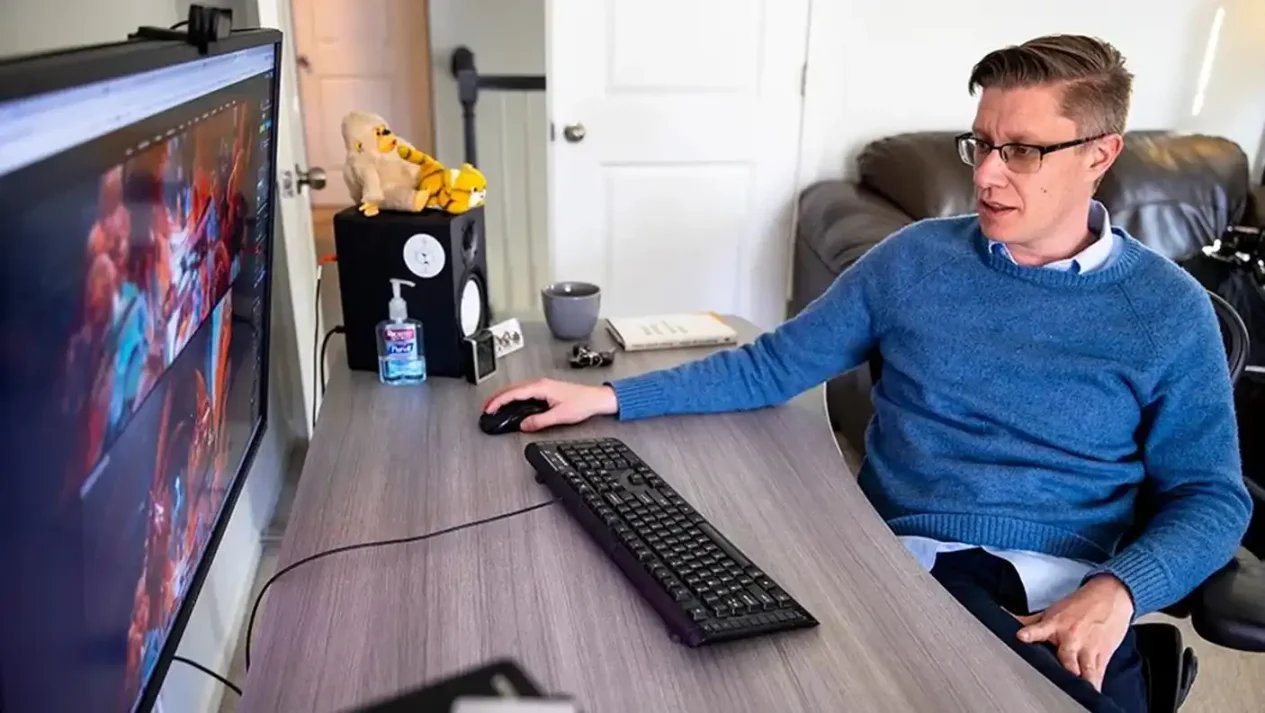
Although the glory of NFTs has faded, beeple and his team have remained active in the NFT space. At this year's Art Basel, he brought another "golden dog" to the currently quiet NFT market—Regular Animals.

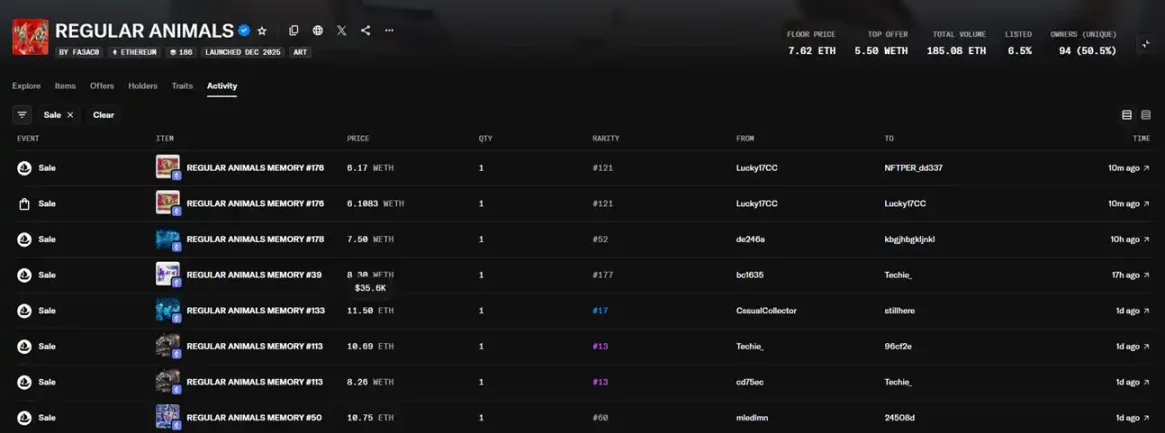
Yesterday, multiple Regular Animals were sold on OpenSea for over 10 ETH (approximately $35,000) each. These artworks were given away for free at Art Basel, with a total of 256 pieces. At this price, beeple essentially gave away nearly ten million dollars worth of NFTs at Art Basel.
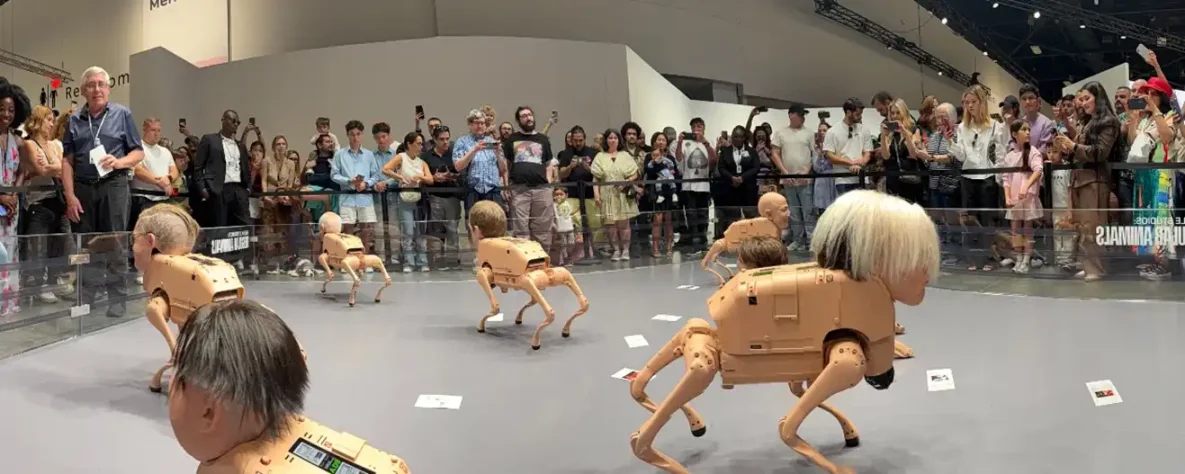
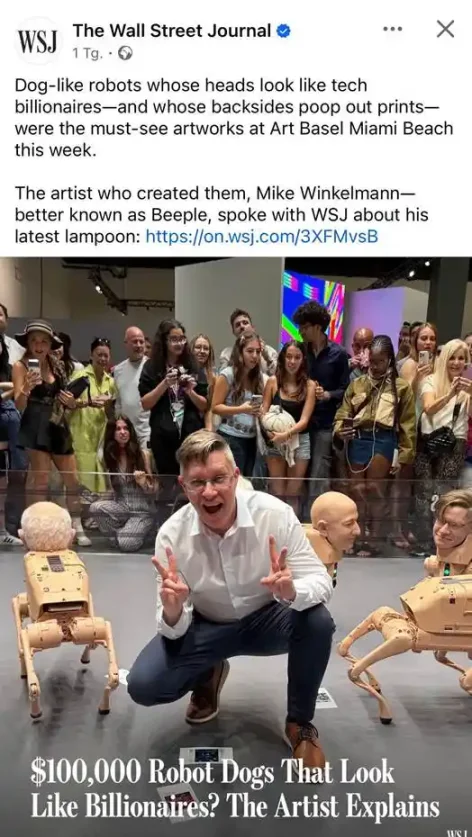
The project that beeple and his team brought to Art Basel is Regular Animals. These are robotic dogs, as shown in the image below. They look somewhat eerie because these robotic dogs have human faces, and they are faces of well-known figures such as Musk, Andy Warhol, Zuckerberg, Picasso, and even beeple himself.
Of course, it's not just about the eerie visual effect. These robotic dogs use the cameras on their heads to observe their surroundings and employ an evolving visual algorithm to create artworks.
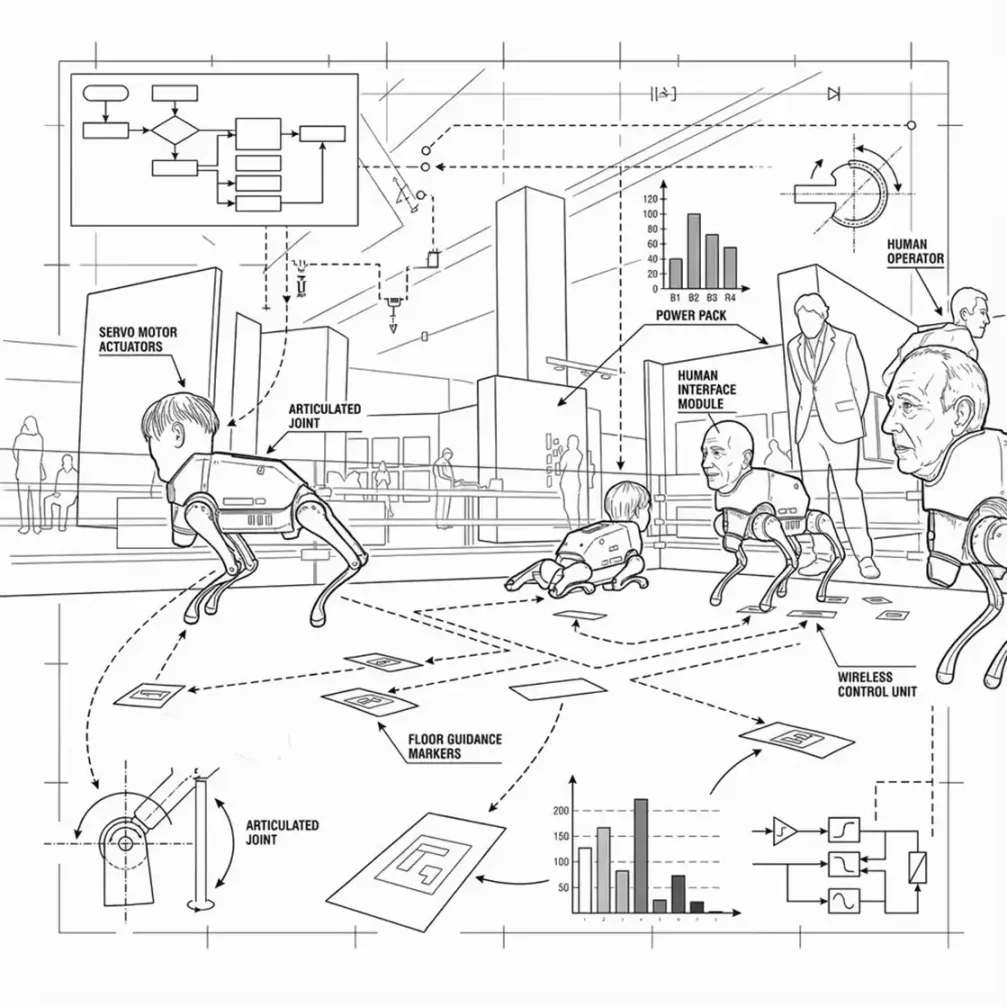
The selection of these famous figures is not arbitrary. The reason for choosing the aforementioned celebrities is that they have influenced how we view the world, whether through algorithms, art, or politics. As humans, we observe the world through these perspectives, and so do these robotic dogs. At Art Basel, these robotic dogs and humans observed each other, and each moment of observation became an artwork created by the robotic dogs. These artworks are also like autobiographies of these robotic dogs.
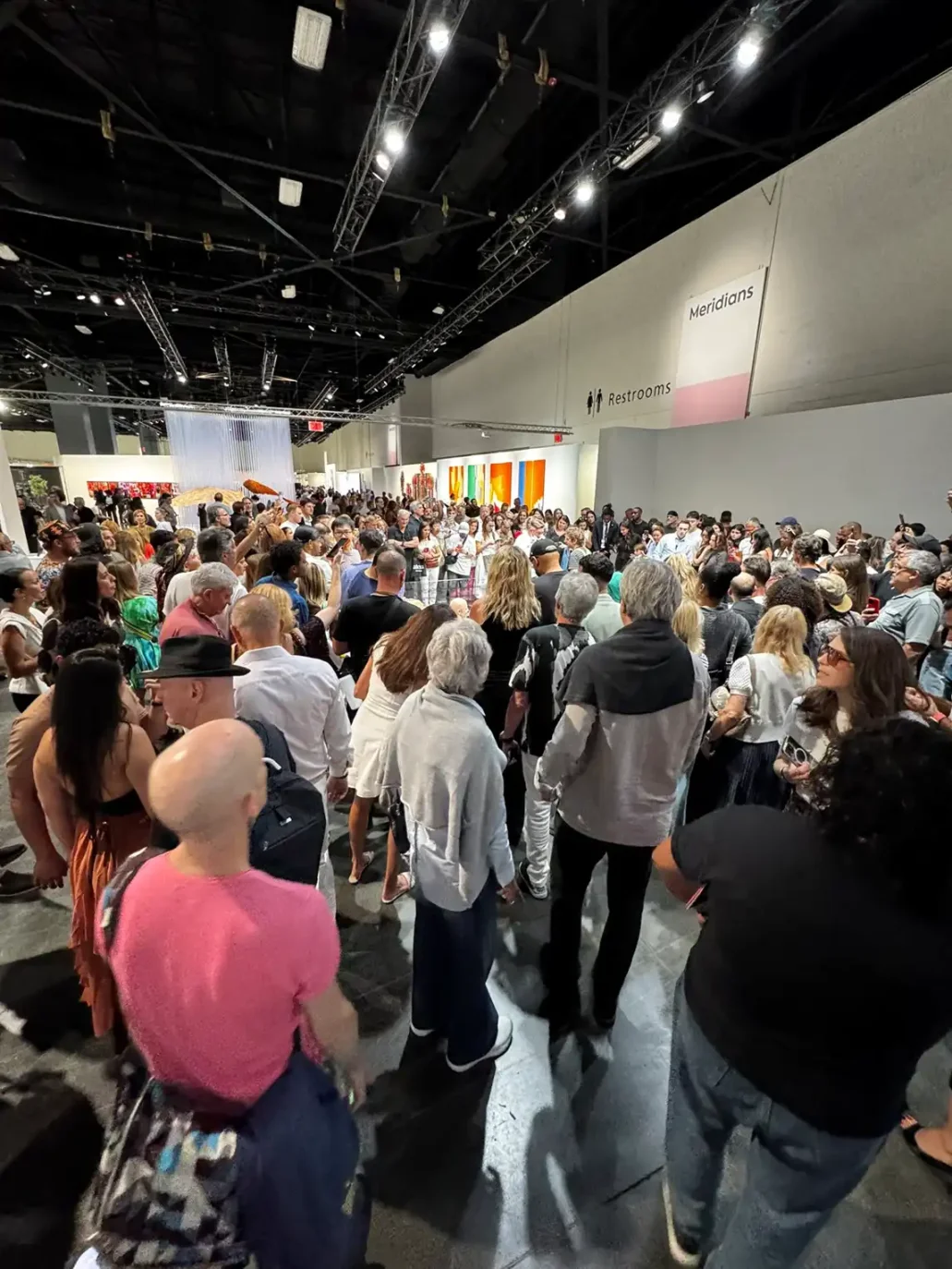
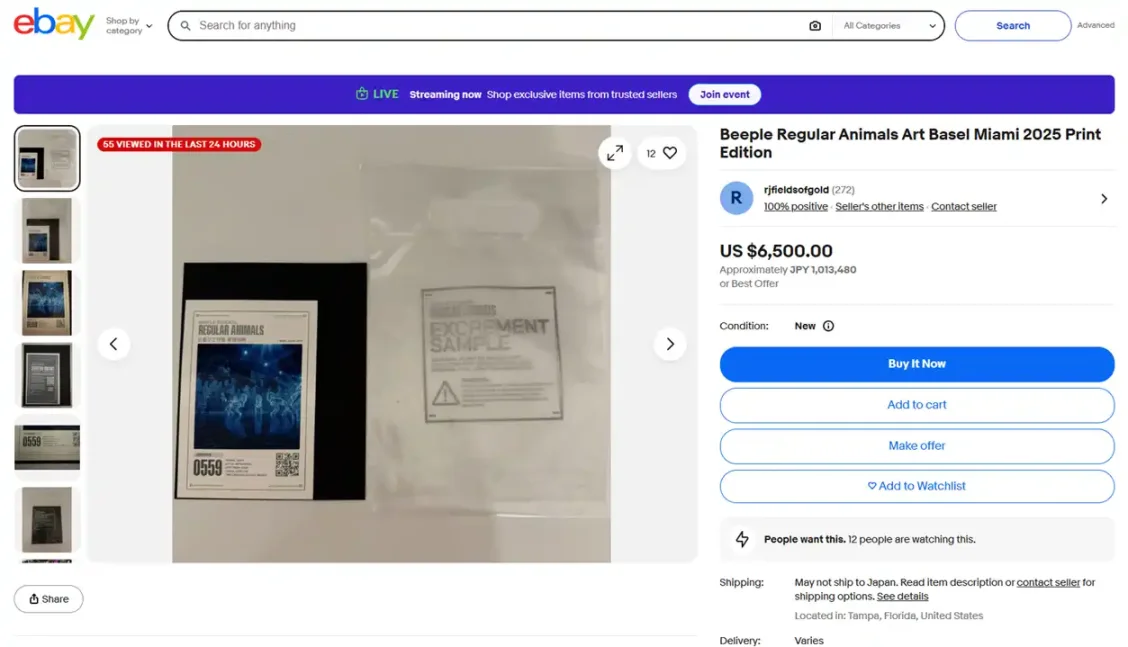
Interestingly, Regular Animals also has a physical series, with a total of 1,024 pieces. On eBay, someone has already listed one for a fixed price of $6,500. The market's valuation is that NFTs are far more valuable than physical paintings, reminiscent of Damien Hirst's "The Currency" series years ago, which forced owners to choose between physical and NFT versions.
Before achieving great success in the NFT field, beeple had been creating art every day since 2007 but had never sold anything for more than $100. After gaining fame and fortune, beeple did not squander it like some artists or crypto project teams. Instead, he acquired a studio/gallery of about 460 square meters, built a team of dozens of 3D artists, engineers, and researchers (even including a former Boeing engineer), invited Carolyn Christov-Bakargiev, the former director of the Castello di Rivoli Museum of Contemporary Art, as an advisor, and continuously exhibited at art shows around the world while creating new artworks.

This exhibition of beeple's robotic dogs has not only gained attention in the crypto circle due to its price but has also been covered by traditional media outlets like WSJ.
Preguntas relacionadas

QWho is Beeple and what is he known for in the NFT world?

ABeeple is an artist who gained fame for selling an NFT for $69 million, symbolizing the golden era of NFTs.

QWhat is the name of Beeple's latest NFT project featured at the Basel Art Show?

ABeeple's latest project is called 'Regular Animals,' which features robotic dogs with human faces of famous personalities.

QHow many Regular Animals NFTs were distributed for free at the Basel Art Show, and what was their estimated total value?

A256 Regular Animals NFTs were distributed for free at the Basel Art Show, with an estimated total value of nearly $9 million based on secondary market sales.

QWhat unique ability do the Regular Animals robotic dogs have?

AThe Regular Animals robotic dogs use cameras to observe their surroundings and employ an evolving visual algorithm to create artworks, which serve as their autobiographies.

QHow has Beeple's approach to his career evolved since his NFT success?

ABeeple has established a large studio, assembled a team of artists and engineers, and continues to create and exhibit artworks globally, focusing on innovation rather than extravagance.

Lecturas Relacionadas

In Conversation with Ray Dalio: We Are Currently in an AI Bubble, with 1% of My Portfolio in Bitcoin

Ray Dalio, founder of Bridgewater Associates, warns in an interview that the current AI boom shows classic bubble characteristics, which could lead to significant economic downturns as seen in past cycles like 1929 or 2000. He explains that speculative enthusiasm, fueled by debt and overvaluation, often precedes a crash when rising rates or taxation force asset sales, causing widespread losses and recession. Dalio also outlines his "Big Cycle" theory, describing an approximate 80-year pattern where widening wealth gaps, massive government deficits, and shifting geopolitical power (like China's rise) create internal conflict and global instability. He emphasizes that we are in a late-cycle, transitional phase where traditional powers like the US and UK face decline. For personal wealth protection, Dalio advises diversification beyond cash into assets like stocks, bonds, real estate, and particularly gold, which he prefers over Bitcoin. While he holds about 1% of his portfolio in Bitcoin as a non-printable hard asset, he views gold as more secure from technological or governmental threats. Regarding AI's impact, Dalio believes it will disproportionately benefit capital owners, worsening inequality by replacing both physical and cognitive labor. He suggests that human intuition and emotional intelligence, combined with AI, will be key for future workers. On taxation, Dalio argues that wealth taxes are impractical and risk triggering asset sell-offs, reducing productive investment. He points to the UK as a cautionary example of debt, low productivity, and political strife. Geopolitically, Dalio foresees a more regionalized world, with the US showing weakness in prolonged conflicts like with Iran, akin to past imperial declines. The ideal outcome, he suggests, is coexisting powerful blocs (e.g., Americas, China-Asia Pacific) without major war.

marsbitHace 1 hora(s)

In Conversation with Ray Dalio: We Are Currently in an AI Bubble, with 1% of My Portfolio in Bitcoin

marsbitHace 1 hora(s)

Daily 7.2 Trillion KRW: Foreign Capital's Record Net Buying on Friday! Wall Street Says Headwinds for Korean Stock Fund Flows Have Subsided

South Korean stock market sees a dramatic shift in fund flows. On July 31, foreign investors made a record net purchase of approximately KRW 7.2 trillion in KOSPI stocks, marking a fundamental reversal from the persistent large-scale net outflows seen in previous months. This contributed to a significant narrowing of foreign net selling in July to KRW 9.8 trillion, down sharply from KRW 48.4 trillion in June and KRW 44.5 trillion in May. Simultaneously, domestic institutional pressure eased. South Korean pension funds and asset managers turned to a net buying position in July, purchasing KRW 1.0 trillion worth of KOSPI shares, contrasting with net sales in May and June. Market volatility is expected to be dampened by new financial regulations. Effective July 31, the Financial Services Commission tightened access for retail investors to single-stock leveraged ETFs by raising the minimum cash deposit requirement. Trading volumes for these products subsequently dropped to about 50% of their monthly average. Citigroup Research maintains its year-end KOSPI target of 10,000 points. The firm cites several supportive factors: the substantial easing of headwinds from capital outflows, a robust fundamental outlook for the semiconductor sector, historically low market valuations, strong economic fundamentals, and the potential for policy support from financial authorities if needed.

marsbitHace 1 hora(s)

Daily 7.2 Trillion KRW: Foreign Capital's Record Net Buying on Friday! Wall Street Says Headwinds for Korean Stock Fund Flows Have Subsided

marsbitHace 1 hora(s)

Thanks to Dice Rolls, Bitcoin Keys Are Stored Offline, But Not Everyone Will Do It

The article discusses using dice rolls to generate secure Bitcoin wallet seeds, providing entropy independent of potentially flawed hardware random number generators. It explains that each fair dice roll offers about 2.585 bits of entropy, with around 50 rolls needed for a standard 12-word seed phrase and 99+ recommended for higher security. This method gained attention after a vulnerability was revealed in some Coldcard hardware wallets, where a faulty firmware RNG (dating back to 2021) compromised generated keys. The analysis notes that while a dice-generated main seed was safe from this specific flaw, other Coldcard functions (like creating paper wallets, backup keys, or passwords) could still be vulnerable if they used the defective RNG. The piece argues that while dice-based entropy is technically robust, the manual process is error-prone, tedious, and unrealistic for most new users, who might make mistakes in recording or inputting rolls. It concludes that while manual entropy generation should remain an option for advanced users, the long-term goal is to develop reliable, user-friendly hardware and software that securely generates randomness without requiring specialized knowledge. Coldcard users are advised to check their firmware version and replace any secondary secrets (like paper wallet keys) created with vulnerable devices, while also considering multi-signature setups with devices from different manufacturers for added security.

cryptonews.ruHace 6 hora(s)

Thanks to Dice Rolls, Bitcoin Keys Are Stored Offline, But Not Everyone Will Do It

cryptonews.ruHace 6 hora(s)

Trading

Spot
活动图片





