The Game Between Tokens and Equity: Revealing the Fundamental Conflict Behind Token Economics

比推Publicado a 2025-12-11Actualizado a 2025-12-11

Resumen

The article "The Dark Side of Altcoins" by Crypto Dan explores the fundamental conflict between company equity and token holders in crypto projects. It argues that most projects are essentially companies with tokens, creating a structural conflict where equity (backed by VCs and boards) inevitably captures value at the expense of token holders. This leads to tokens trending toward zero despite project success. Hyperliquid is highlighted as an exception because it avoided VC equity financing, directing all economic value to the protocol instead of a corporate entity. The piece explains that tokens cannot legally function like stocks without being classified as securities, triggering regulatory issues. The ideal structure involves no company revenue capture, value accrual to token holders via mechanisms like buybacks, and DAO-controlled economic decisions. However, true alignment requires no corporate structure at all, akin to Bitcoin or Ethereum. The core issue is structural: tokens fail due to design flaws like VC funding, private sales, unlock schedules, or company revenue retention. Solutions require investors to stop funding flawed models and support projects like Hyperliquid that prioritize tokenholder alignment through thoughtful design.

Author: Crypto Dan

Compiled by: Saoirse, Foresight News

Original title: The Dark Side of Altcoins


People always ask why almost all tokens go to zero, with only a few exceptions like Hyperliquid.

It all boils down to one thing that no one talks about openly: the structural game between company equity and token holders.

Let me explain it in simple terms.

Most cryptocurrency projects are essentially just companies with an attached token

They have the following characteristics:

  • An entity company

  • Founders holding equity

  • VC investors with board seats

  • CEO, CTO, CFO

  • Profit goals

  • Future exit (cashing out) expectations

Then, they casually issue a token.

What's the problem?

Only one of these two can capture value, and equity almost always wins.

Why Dual Financing (Equity + Token) Doesn't Work

If a project raises funds through both equity and a token sale, it immediately creates conflicting interests:

Equity side's demands:

  • Revenue → Flows to the company

  • Profit → Flows to the company

  • Value → Belongs to shareholders

  • Control → Belongs to the board

Token side's demands:

  • Revenue → Flows to the protocol

  • Token buyback / burn mechanisms

  • Governance rights

  • Value appreciation

These two systems will forever be in a game against each other.

Most founders ultimately choose the path that satisfies the VCs, and the token's value continuously erodes.

This is why, even if many projects are "superficially successful," their tokens still inevitably go to zero.

Why Hyperliquid Stands Out in a Field Where 99.9% of Projects Fail

Besides being the protocol with the highest fee revenue in the crypto industry, the project also avoided the biggest "killer" of tokens — VC equity financing rounds.

Hyperliquid never sold its equity, has no VC-dominated board, and thus no pressure to direct value to the company.

This allows the project to do what most cannot: direct all economic value to the protocol, not to the corporate entity.

This is the fundamental reason its token can be an "exception" in the market.

Why Tokens Legally Cannot Function Like Stocks

People always ask: "Why can't we make tokens directly equivalent to company stock?"

Because if a token has any of the following characteristics, it will be deemed an "unregistered security":

  • Dividend payments

  • Ownership

  • Corporate voting rights

  • Legal claim to profits

Then, US regulators would crack down on the project overnight: exchanges couldn't list the token, holders would need KYC, and its global distribution would be illegal.

Therefore, the crypto industry has chosen a different development path.

(The Optimal Legal Structure Used by Successful Protocols)

Today, the "ideal" model is as follows:

  1. The company does not capture any revenue; all fees belong to the protocol;

  2. Token holders capture value through protocol mechanisms (e.g., buybacks, burns, staking rewards, etc.);

  3. Founders capture value through tokens, not dividends;

  4. There is no VC equity;

  5. Economic decision-making power is held by a DAO, not the company;

  6. Smart contracts automatically distribute value on-chain;

  7. Equity becomes a "cost center," not a "profit center."

This structure allows the token to function economically similarly to a stock while avoiding securities laws. Hyperliquid is the most typical successful case study currently.

But Even the Most Ideal Structure Cannot Fully Eliminate Contradictions

As long as a project still has a corporate entity, potential conflicts of interest will always exist.

The only path to achieving a truly "conflict-free" state is to reach the ultimate form like Bitcoin/Ethereum:

  • No corporate entity

  • No equity

  • Protocol runs autonomously

  • Development work funded by a DAO

  • Possesses neutral infrastructure properties

  • No legal entity that can be attacked

Achieving this is extremely difficult, but the most competitive projects are moving in this direction.

The Core Reality

Most tokens fail not because of "poor marketing" or "bear market conditions," but because of flaws in their structural design.

If a project has any of the following characteristics, it is mathematically impossible for the token to achieve long-term sustainable appreciation. Such designs are doomed from the start:

  • Has conducted VC equity financing

  • Has conducted private token sales

  • Has token unlock schedules for investors

  • Allows the company to capture revenue

  • Uses the token as a marketing coupon

Conversely, projects with the following characteristics can achieve completely different end results:

  • Direct value to the protocol

  • Avoid VC equity financing

  • Have no investor token unlock schedules

  • Align founder interests with token holders

  • Make the company economically insignificant

Hyperliquid's success is not "luck"; it stems from thoughtful design, a sound token economic model, and a high degree of interest alignment.

So, the next time you think you've "found the next 100x potential token," maybe you have, but unless the project adopts a token economic design like Hyperliquid pioneered, its ultimate fate will still be a slow grind to zero.

The Solution

Project teams will only optimize token economics when investors stop providing capital for projects with flawed designs. They won't change because you complain; they will only adjust when you stop giving them money.

This is why projects like MetaDAO and Street are so important to the industry — they are pioneering new standards for token structures and holding project teams accountable.

The future direction of the industry is in your hands, so allocate your capital wisely.


Twitter:https://twitter.com/BitpushNewsCN

Bitpush TG Group:https://t.me/BitPushCommunity

Bitpush TG Subscription: https://t.me/bitpush

Original link:https://www.bitpush.news/articles/7595034

Preguntas relacionadas

QWhat is the fundamental conflict between tokens and equity in crypto projects according to the article?

AThe fundamental conflict arises from the structural tension between company equity and token holders. Equity holders (founders, VCs) benefit from company profits, revenue, and control, while token holders seek value accrual to the protocol through mechanisms like buybacks, burns, and governance. These interests are inherently opposed, and equity almost always wins, leading to token value drainage.

QWhy does the article claim that dual financing (equity + token) doesn't work?

ADual financing creates conflicting interests: equity side demands revenue, profits, and value to flow to the company and shareholders, while token side expects value to accrue to the protocol via mechanisms like revenue sharing or token burns. This conflict forces founders to prioritize VC interests, causing token value to decline over time.

QHow does Hyperliquid avoid the typical pitfalls that cause most tokens to fail?

AHyperliquid avoids VC equity financing rounds, has no VC-dominated board, and directs all economic value to the protocol instead of a corporate entity. This alignment ensures token holders capture value through protocol fees and avoids the pressure to divert value to shareholders, making it an exception in the market.

QWhat legal constraints prevent tokens from functioning like traditional stocks?

ATokens cannot function like stocks because features such as dividend payments, ownership rights, corporate voting, or profit claims would classify them as unregistered securities. This would attract severe regulatory scrutiny, including delisting from exchanges, KYC requirements for holders, and legal violations for global distribution.

QWhat are the key characteristics of an ideal token protocol structure to minimize conflicts?

AThe ideal structure includes: no company revenue (all fees go to the protocol), value accrual to token holders via mechanisms like burns or staking rewards, founders benefiting from tokens rather than dividends, no VC equity, DAO-controlled economic decisions, on-chain value distribution via smart contracts, and making equity a cost center rather than a profit center. This mimics stock-like economics without triggering securities laws.

Lecturas Relacionadas

U.S. Aims at Iran's Crypto Sector Due to Oil Payments Exceeding $100 Billion

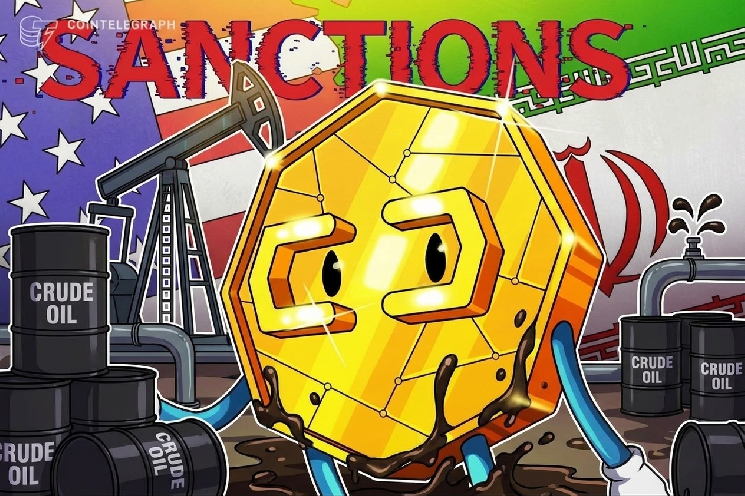
The U.S. Treasury Department has expanded sanctions on Iran to target its digital asset sector, citing over $100 million in cryptocurrency payments allegedly used to facilitate Iranian oil sales. The Treasury’s Office of Foreign Assets Control (OFAC) announced new sectoral sanctions covering digital assets, technology, gold, aviation, and shipping, alongside sanctions against nearly 60 entities, individuals, and vessels linked to nuclear, missile, cyber, and oil networks. The move allows OFAC to sanction foreign persons and firms operating in or supporting Iran’s crypto sector, which the Treasury stated is increasingly used as a "tool of choice" to circumvent sanctions, including by the Islamic Revolutionary Guard Corps (IRGC). Specific targets include Ukrainian broker Ivan Obukhov and his UAE-registered firm Foscom FZE, accused of processing over $100 million in crypto payments to facilitate oil sales for the IRGC’s Quds Force. This follows recent U.S. actions against Iran-linked crypto exchanges, including sanctions against UK-based Zedcex and Zedxion in January, four Iranian exchanges including Nobitex in June, and exchanges Shelbit and Aban Tether in August. Unlike previous targeted sanctions, the new measures establish a framework to penalize broader involvement in Iran’s crypto sector, significantly expanding OFAC’s authority under Executive Order 13902. Designated persons’ U.S.-linked property will be blocked, and foreign banks facilitating significant transactions for them may face U.S. account restrictions.

cryptonews.ruHace 21 min(s)

U.S. Aims at Iran's Crypto Sector Due to Oil Payments Exceeding $100 Billion

cryptonews.ruHace 21 min(s)

Conversation with Charles Zhang: Amidst the AI Frenzy, Why Pursue 'Anti-Efficiency' Content?

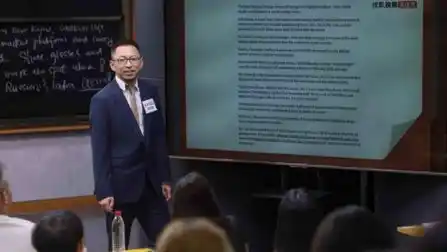
Dialogue with Charles Zhang: In the Era of AI's Sprint, Why Create "Anti-Efficiency" Content Standing out among China's early internet pioneers, Charles Zhang, founder and CEO of Sohu, maintains a distinct personal identity. He keeps a consistent public presence and embodies traits of high-energy individuals: sleeping only 4-5 hours daily, running 5km or marathons, and hosting frequent offline tech forums and dialogues with Nobel laureates. He has shifted focus from external business expansion to internal self-reconstruction, adhering to his own pace. "People aren't afraid of being busy; the busier you are, the better your health. Having nothing to do can lead to emotional issues and poor health." Marking the 10th anniversary of his live-streamed "Charles Zhang's English Class," he recently took it offline for a real-world classroom session. Following this, he discussed the course's decade-long journey, Sohu Video's content ecosystem, and the value of content in the AI era. **Pen and Mouth Diligence: A Class Against Instant Mastery** His English class began in August 2016 on "Qianfan Live." He spends about 40 minutes daily preparing, reviewing dozens of news headlines, reading five in detail, and selecting three for the lesson. Over ten years, he has completed over 2000 live sessions totaling more than 110,000 minutes, with over 52 million views. Initially, the stream was a way to "talk more" and combat emotional struggles. He started by repeating after TV news anchors, then moved to live-streaming with the launch of Qianfan Live. It was 40% for personal emotional regulation ("like a monk chanting sutras"), 30% to deliver authentic news, and 30% to promote the new platform. This daily "ritual" helped him overcome depression, leading to what he calls his "peak life state." From a product perspective, it was counter-intuitive—launched without prior market research or growth strategies, based on the founder's personal need that resonated with users. Yet, his content creation follows a strict routine. The decade of covering geopolitics, economics, tech, health, and society has built a vast "knowledge compound interest" system. In an age of AI summaries and algorithmic content, Zhang insists on "hard work": meticulous reading, handwritten notes, and manually created teaching materials, refusing AI-generated content. The English class is now a fixed daily rhythm; preparing for his weekly physics class requires a full day of solitary deduction on a blackboard. In his live streams, Zhang positions himself as a "content creator," not a CEO or teacher. He sees physics as extreme brain training and English as a "sensor" to understand the world. This explains why a top entrepreneur persists for a decade in seemingly "unprofessional" pursuits—it's the information input and psychological healing method he found during a low point. It's fundamentally an "anti-efficiency" commitment. He believes the meaning of reading lies in finding community and spiritual support, not just fleeting conversation points. For today's media, he states: "Reading news isn't the goal. As humans with many confusions, we need reference points, to find a group, find kindred spirits, or seek support and spiritual nourishment. Large language models can't satisfy these starting points; they only give you information." This offers solace and a value defense for media professionals impacted by AI summaries. **"Don't Think Earth Stops Turning Because AI Arrived"** A content creator expressed anxiety: after feeding their article to AI, it produced a more comprehensive, profound version, making their work feel valueless. Zhang responded with an analogy: "Carrots from the market, with a bit of soil, not glossy, taste delicious and flavorful. Tomatoes forced by chemical fertilizer have no taste at all." He sees AI giving world content a "plastic feel," but acknowledges its significant role in improving information access efficiency, especially in physics and social science research where he often queries AI for quick professional answers. The key, Zhang stresses, is that the outside world still needs to guide our perspective. LLMs provide "information," while the outside world offers "viewpoints." He cares deeply about *what* that external viewpoint is and *how* someone thinks about an issue. "Don't think the Earth stops turning because AI arrived," he analyzes. AI currently replaces rule-based work, noting significant impact on the software industry with many programmers laid off as even less experienced people can now write decent code. However, AI cannot yet replace arts, social sciences, emotions, and creative content. "Hollywood remains thriving, producing great works. Oscars will continue, Nobel Literature Prizes will still be awarded—all by real people, with works conceived by real people." While wary of AI, Zhang isn't anti-technology and is open to its applications. Sohu itself has launched AI assistants. In Sohu's AI practice, Zhang defines his role as a "large language model corpus provider." He believes LLM training is inseparable from human-original content as its data foundation, so original content retains irreplaceable value. "The era of self-media indeed offers everyone new ways to discover their strengths and achieve growth." He suggests every young person should consider self-media. Most importantly, the bottom line of content creation should be "authenticity." If using AI avatars, they must be clearly labeled; not doing so and misleading viewers wastes their time, especially when people still prefer real human content. Behind AI's sprint lie unavoidable realities. As AI quickly provides seemingly perfect answers, people grow accustomed to accepting "summarized" results, omitting processes of questioning, deduction, and trial-and-error, leading to a decline in deep thinking. Zhang's "anti-efficiency" practice with his two live-streamed classes is his answer to AI's狂奔: In an algorithm-driven era chasing ultimate efficiency, don't expect AI to fill inner voids. Read books, speak in front of a camera, sweat on a running track, and build connections with real people.

marsbitHace 31 min(s)

Conversation with Charles Zhang: Amidst the AI Frenzy, Why Pursue 'Anti-Efficiency' Content?

marsbitHace 31 min(s)

Zcash's ETF Gilding: How a Privacy Coin Was Packaged by Wall Street into a Compliant Asset

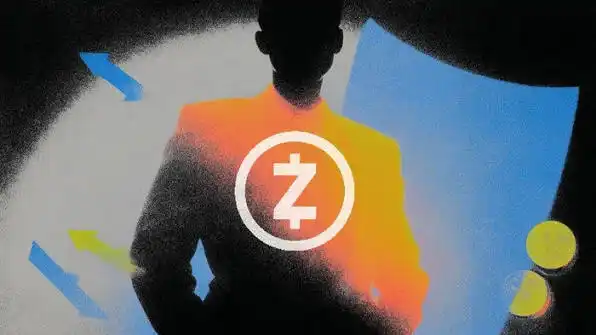
The article traces the decade-long path of Zcash (ZEC), a privacy-focused cryptocurrency, to its potential launch as the first privacy coin spot ETF, with Grayscale's ZCSH filing in August 2026. It argues ZEC's suitability stemmed not from regulatory acceptance of its privacy technology, but from its centralized, institutional structure from inception—a commercial company (ECC) with venture capital backing and a Founder's Reward—making it easier to package than decentralized alternatives. Three key institutions, intertwined in a network, drove the process: Grayscale (owned by DCG, an early ZEC investor), which had held ZEC in a trust since 2017; Coinbase, providing custody, prime brokerage, derivatives, and venture investment; and ZODL, a new for-profit entity formed in 2026 when ECC's core development team split from the non-profit foundation. The major regulatory hurdle was SEC scrutiny (2023-2026) over ZEC's historical structure, which resembled an unregistered investment contract due to automatic block rewards to ECC and the Foundation. This was resolved through governance changes (NU6 upgrade in 2024) that ended direct funding and shifted control to community voting, coinciding with a broader shift in SEC enforcement policy. Notably, the law firm Davis Polk represented both the Zcash Foundation in its SEC defense and Grayscale in the ETF filing. The push is also driven by DCG's dire financial needs amid Genesis bankruptcy lawsuits, seeking high-fee products (the ZEC ETF charges 2.5%). Concurrently, major mining operations by entities like Cypherpunk Technologies (backed by Winklevoss Capital) and DCG's Fortitude Mining expanded, motivated by profitability and aiming to influence the network. The article concludes with irony: to become a compliant ETF asset, ZEC must shed its core privacy feature for the fund's holdings, which will be held in transparent, auditable addresses. Wall Street is not adopting privacy technology but packaging the *concept* of privacy into a tradable, fee-generating financial product. The transformation was not a single master plan but the result of a network of aligned interests capitalizing on regulatory, governance, and market shifts over ten years.

marsbitHace 41 min(s)

Zcash's ETF Gilding: How a Privacy Coin Was Packaged by Wall Street into a Compliant Asset

marsbitHace 41 min(s)

Trading

Spot
活动图片