The Bond Market Deals a Blow to the AI Bull Market

marsbitPublicado a 2026-05-19Actualizado a 2026-05-19

Resumen

The article "Bond Market Deals a Blow to the AI Bull Market" discusses how a recent global bond sell-off is threatening to end the AI-driven stock market rally that had been ongoing for about a month and a half. A sharp sell-off in global equity markets began last Friday, with significant declines in indices like South Korea's KOSPI and Japan's Nikkei 225. The primary suspect, according to Morgan Stanley, is the bond market. Key long-term bond yields, such as the U.S. 30-year Treasury and Japan's 10-year government bond, have surged to multi-decade highs. This breach of critical yield levels (like 5% for the 30-year U.S. Treasury) is seen as a dangerous signal that historically precedes risk asset corrections. The root cause is identified as resurgent inflation, fueled by rising oil prices due to renewed Middle East geopolitical tensions, specifically the breakdown of U.S.-Iran talks and the blockade of the Strait of Hormuz. This has led markets to drastically revise expectations for U.S. Federal Reserve policy, now pricing in a significant chance of future rate hikes instead of cuts. Higher bond yields negatively impact stocks, especially high-growth tech/AI stocks, through two main channels: 1. **Valuation Pressure:** Higher yields increase the discount rate used to value future earnings, making the present value of distant AI-related cash flows less attractive. 2. **Relative Attraction:** Safer government bonds offering ~5% yields reduce the appeal of riskier equity i...

Author: Ba Xiao Ling, Wu Xiaobo Channel

The AI bull market, which had been rebounding for a month and a half, appears to be nearing its end.

From last Friday to yesterday, global capital markets were hit by a wave of selling.

Last Friday was the most brutal. Global stock markets saw widespread declines. South Korea's KOSPI plummeted 6.12%, triggering a trading halt at one point. Japan's Nikkei 225 index plunged 6.22%. The three major US stock indices performed poorly, with the Nasdaq Composite falling 1.54%. China's Shanghai Composite Index lost 2.5% over two days, with two consecutive negative sessions shaking market confidence.

This Monday, the A-share and Hong Kong markets continued to show weakness. The Nikkei 225 fell 0.97%. In the evening, the three major US indices also opened and trended weaker.

Who pulled the market's bull back?

According to Morgan Stanley, the main suspect is the bond market.

On Monday (May 18th), during the Tokyo morning session, the Japanese bond market saw a significant adjustment. The yield on the 10-year government bond briefly touched 2.797%, setting a new market record in nearly three decades, reaching its highest point since October 1996. Previously, the US 30-year Treasury yield had also breached the 5% level, touching 5.12% in actual trading, a new high since 2007.

The trouble isn't limited to the US and Japan.

The yield on French 30-year government bonds is as high as 4.675%; Germany's 30-year yield is at 3.704%; and the UK's 30-year yield is even higher at 5.86%.

By Monday, although bond market volatility had eased compared to the sell-off that swept through markets on Friday, yields remained near multi-year highs.

This wave of selling in global bond markets is now threatening global stock markets. Morgan Stanley warns that if bond market volatility intensifies further, US stocks could see their first meaningful correction, which could lead to the end of the entire AI bull market.
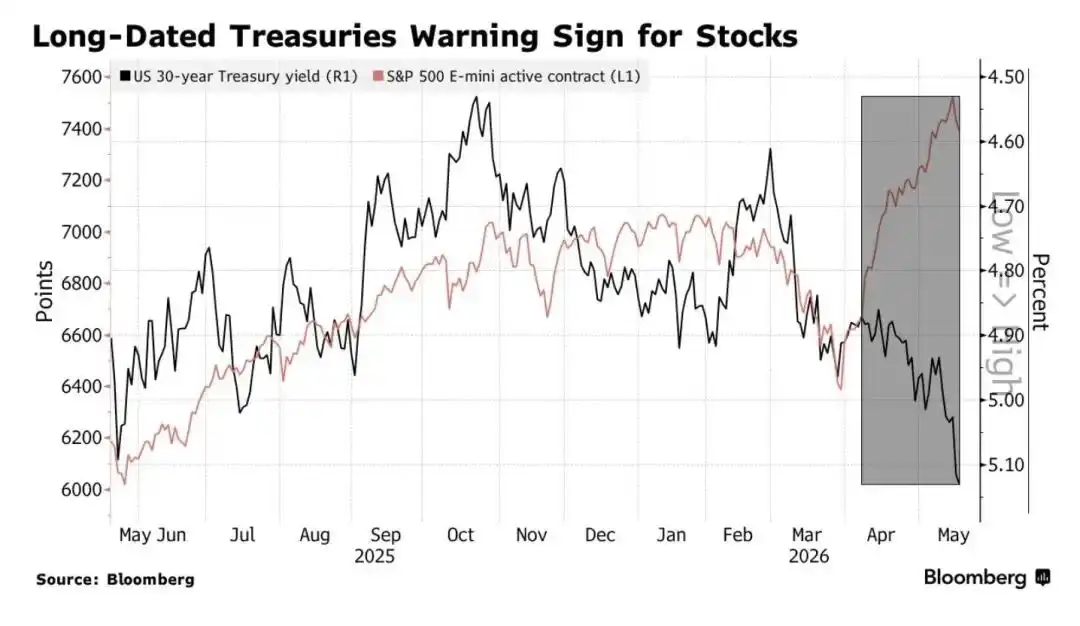
High Bond Yields Weigh on Stocks

The Bond Market's "Maginot Line" Breached

In the bond market, bond yields and prices are inversely correlated. The more bonds investors sell, the higher the bond yields rise.

Michael Hartnett, chief strategist at Bank of America, believes that when the 30-year US Treasury yield crosses 5% and the 10-year yield breaks through 4.5%, it is a dangerous signal. Citing historical experience from the past century, he argues that once inflation crosses this threshold, capital markets may trigger large-scale deleveraging shocks, and risk assets often enter a correction phase. The S&P 500 index tends to fall by an average of 4% in the following three months and 7% within six months.

Thus, these two levels became the "Maginot Line" for the bond market.

Now, this line has been breached.
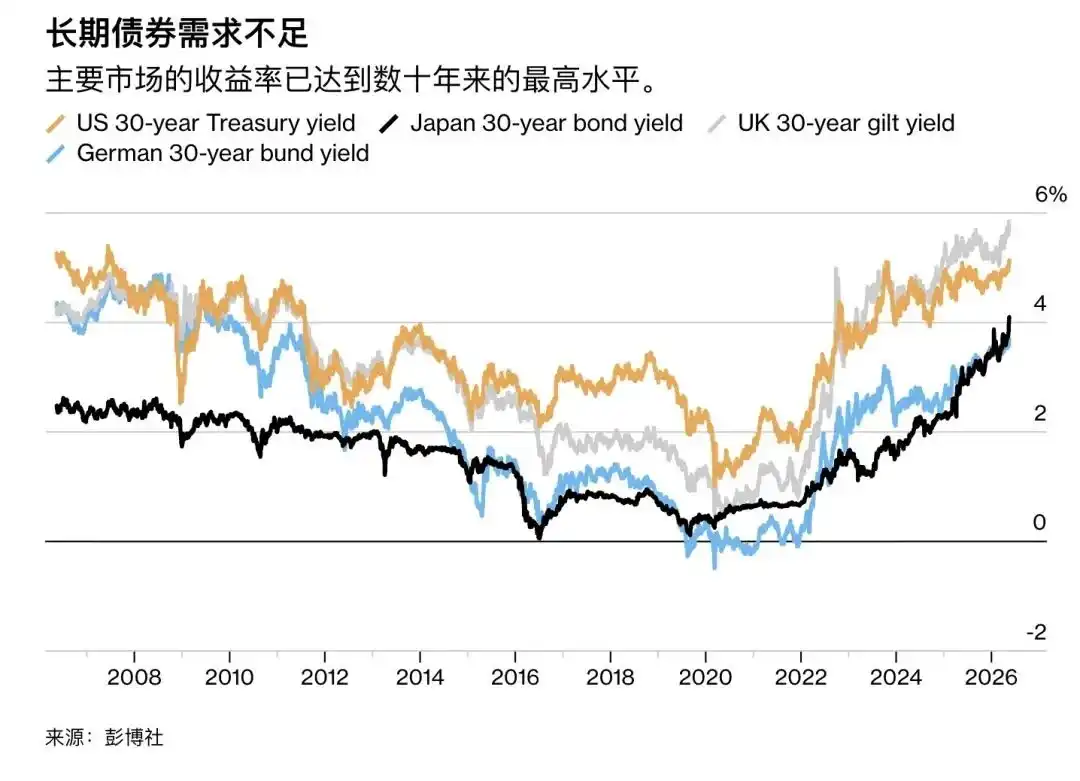
So, who is the culprit that broke through the bond market's defense line?

The answer is not difficult: it's the energy prices that the market has gradually become desensitized to over the past month or more.

Due to the substantive breakdown of US-Iran negotiations and the continued blockade of the Strait of Hormuz, international oil prices have risen sharply. As of the early hours of May 19th, Brent crude oil had returned above $110.
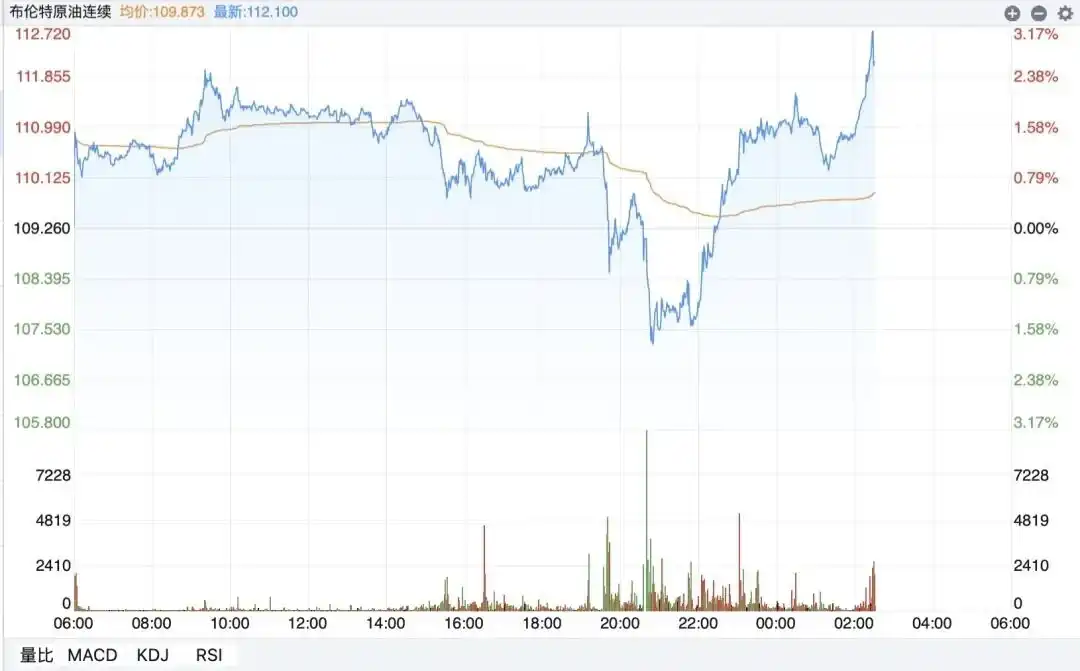
Brent Crude Breaks $110 Again

This has initiated a familiar transmission chain: Middle East geopolitical crisis → Global inflation reignites → Fed reversal expectations → Bond market sell-off.

On one hand, inflation is flaring up again in Europe and the US. Taking the US as an example, Labor Department data shows: The US Consumer Price Index (CPI) rose 3.8% year-on-year in April, higher than 3.3% in March, the highest level since June 2023. The US Producer Price Index (PPI) rose 6% year-on-year in April, reaching its highest level since December 2022.

Furthermore, according to data from prediction platform Kalshi, the probability of the US economy being hit by stagflation before the end of this year has risen from 11% to 40%.

On the other hand, the high inflation data has completely reversed market judgments about the Fed's policy path.

Under the threat of stagflation, the Fed may not only refrain from further rate cuts but might even plan rate hikes. Market forecasts now put the probability of a hike by July 2027 at 60%, meaning the market will quickly follow the Fed's lead in selling bonds, further pushing up Treasury yields.
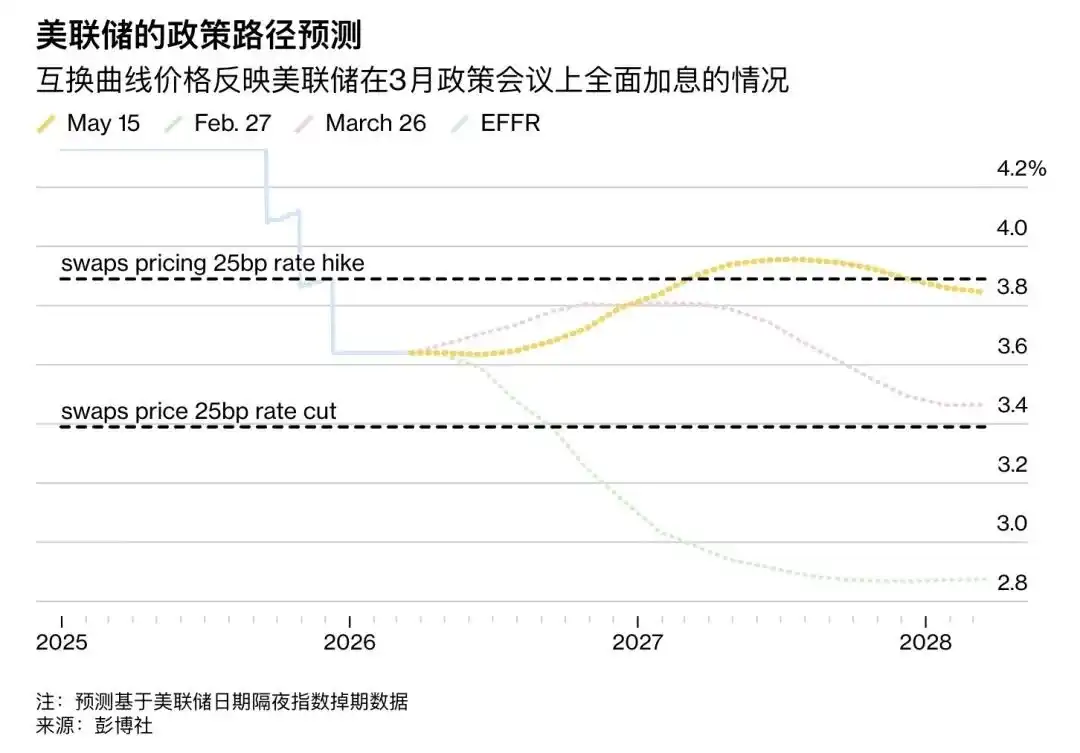
This coincides with the critical juncture of the Federal Reserve chair transition. The first task for the new chair, Kevin Warsh, upon taking office might be to closely monitor the bond market and strictly guard against inflation.

Dongwu Securities believes that the direction of the US-Iran conflict determines the short-term trend of US Treasury rates. Signals of a turning point in the US-Iran conflict and oil prices, as well as late-May PCE data, are worth watching. In the long term, when Fed rate hike expectations strengthen, attention should shift to AI industry drivers and the resilience of US economic growth.

High Rates "Discount" Tech Stocks

So why does significant volatility in the bond market pull down stock markets?

Rising US Treasury market rates mean higher market risk-free rates. Consequently, the discount rate for tech stocks also rises, leading to a collapse in the valuations of US tech stocks.

The "discount rate" refers to the interest rate used to convert future cash flows into present value. It equals the risk-free rate plus a risk premium. For the same amount of money, the higher the discount rate, the lower its present value. For AI tech stocks, most of their value lies far in the future.

Therefore, when US Treasury yields rise, the discount rate increases, applying a harsher discount to future money. This is a heavy blow to tech stocks that rely heavily on future cash flows.

This is why, in the past, whenever the Fed hinted strongly at rate hikes or long-term bond yields jumped, the Nasdaq often led the decline.

Similarly, changes in bond yields also exert valuation pressure on tech stocks in the A-share market.

Calculated using the 10-year Treasury yield: On May 18th, the US 10-year yield was 4.63%, while China's 10-year yield was 1.76%, resulting in a negative spread of 2.87%. When this spread widens, it means the relative attractiveness of risk assets in emerging markets like China declines.

As an investor, when buying US Treasuries can yield 5%, why chase uncertain returns in emerging markets, taking on currency and investment risks?

China Securities Journal cited industry expert views, pointing out that rising government bond yields in multiple countries have put significant pressure on the tech sector, represented by artificial intelligence. Rising bond yields weaken investors' motivation to hold stocks. Additionally, rising international oil prices further reinforce rate hike expectations and suppress market risk appetite for tech stocks.
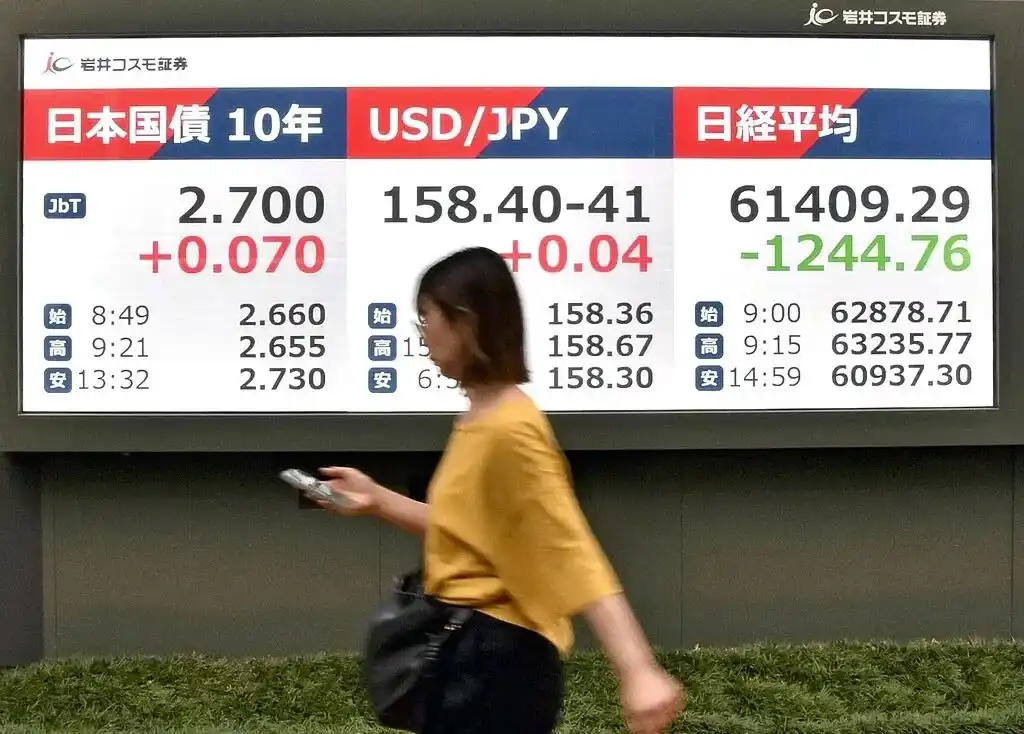
May 16th, Tokyo Stock Exchange, Nikkei Index Close

However, the outcome is not yet determined. Rich Privorozhskiy, a strategist at Goldman Sachs, believes the core market contradiction currently lies in the direct confrontation between the bond market and the AI boom, like an ongoing tug-of-war.

On the AI side, strong industry demand has given related tech stocks performance exceeding expectations, providing sustained and stable support for the foreseeable future. According to a China International Capital Corporation (CICC) research report: S&P 500 first-quarter earnings growth reached 28%, the highest since Q4 2021, with the semiconductor and equipment sector seeing growth as high as 99%. The situation in the A-share market is similar. Data shows that in Q1 2026, the revenue of the semiconductor equipment sector was 25.498 billion yuan, a year-on-year increase of 25.78%, with net profit attributable to shareholders reaching 4.446 billion yuan, a significant year-on-year jump of 60.42%.

Simultaneously, the AI boom itself has also accumulated considerable risks, which is the underlying reason why bond market movements can trigger volatility.

Earlier, UBS had already issued a clear warning that AI-related stocks and large-cap tech stocks were already severely overpriced, with growth expectations far exceeding reality. The bank's research showed that major tech stocks, including the "Magnificent Seven," exhibited excessive bullishness. Legendary investor Jim Rogers and Michael Burry, who predicted the 2008 subprime crisis, have both urged investors to reduce tech holdings and issued warnings about the AI frenzy.

How Should Ordinary Investors Respond to the New Changes?

Ray Dalio, founder of Bridgewater Associates, stated in April that the world is entering a new era dominated by "jungle rules," and investors must re-evaluate their wealth protection strategies.

In the face of these new developments, we have distilled some of the latest institutional opinions for reference:

Xinyuan Fund believes: Regarding the future trend of the A-share market, the liquidity environment has not undergone a trend change. Last week's market movements were more about high-volatility disturbances and emotional shocks, not the starting point of a systemic risk. They advise investors to increase flexibility, retain more liquid positions to cope with the high-volatility environment brought by rising US Treasury yields. In terms of sectors, they suggest continuing to focus on the AI industry chain, including domestic computing power, optical modules, and semiconductor equipment, as well as supporting directions like mechanical equipment and new chemical materials for the AI supply chain.

Huatai Securities believes: The A-share sentiment index has been running in the overheated zone for two weeks, with the valuation differentiation coefficient approaching the highs of 2021. Rebalancing pressure between sectors is rising, and the adjustment is likely to involve trading time for space. For allocation, they suggest continuing to hold core positions in tech themes like communication equipment and memory. Within the tech sector, switches could be considered towards semiconductor (core stocks) equipment, discrete devices, and other directions.

Bewildering geopolitical crises and the massive AI revolution are placing global markets in an awkward position. Whether to cash in or charge ahead, investors may need to do their homework carefully in the coming period.

As "the father of global investing," Sir John Templeton, said: "Bull markets are born on pessimism, grow on skepticism, mature on optimism, and die on euphoria."


Preguntas relacionadas

QAccording to the article, what triggered the global sell-off in equity markets and threatened the AI bull market?

AThe global sell-off in bond markets, where yields on major government bonds (like U.S. and Japanese 30-year bonds) surged to multi-year or multi-decade highs, triggered equity market declines and threatened the AI bull market. This bond sell-off was partly driven by resurgent inflation fears due to rising oil prices from renewed Middle East tensions.

QWhat specific threshold levels for bond yields did Bank of America's chief strategist identify as a 'danger signal' for risk assets?

ABank of America's chief strategist, Michael Hartnett, identified the 5% level for the U.S. 30-year Treasury yield and the 4.5% level for the 10-year U.S. Treasury yield as critical 'danger signals' or 'Maginot Line' thresholds. Historically, breaching these levels has often led to corrections in risk assets.

QHow does an increase in bond yields (like U.S. Treasury yields) negatively impact the valuation of technology/AI stocks?

AHigher bond yields increase the discount rate used to value future cash flows. Since technology/AI stocks derive much of their value from expected profits far in the future, a higher discount rate significantly reduces their present valuation, making them less attractive compared to safer assets offering higher yields.

QWhat are the two main opposing forces, according to Goldman Sachs, that are creating a 'tug of war' in the current market?

AGoldman Sachs strategist Rich Privorotsky described the current market as a 'tug of war' between two opposing forces: 1) The strong fundamentals and earnings growth driven by the AI boom, and 2) The pressure from rising bond yields and market volatility.

QWhat investment strategy suggestions does the article mention for ordinary investors facing the current market volatility?

AThe article mentions suggestions from institutions like鑫元基金 and华泰证券: increase portfolio flexibility and maintain机动仓位 (maneuverable positions) to handle volatility; focus on AI industry chain sectors (e.g., domestic computing power, optical modules, semiconductor equipment) and supporting industries; within tech, consider rotating to segments like core semiconductor equipment and分立器件 (discrete devices).

Lecturas Relacionadas

Musk Posted a Recruitment Ad for SpaceX, and After Reading the Comments Section, I Understood

On May 20th, SpaceX filed for a landmark IPO with a $1.75 trillion valuation. Shortly after, Elon Musk posted a recruitment call on X, seeking "world-class engineers and physicists" for SpaceX. The application process was starkly simple: email with three bullet points proving "exceptional ability," with real, complex projects as a plus. Musk promised to review qualifying emails himself. The post garnered millions of views and thousands of replies, revealing a spectrum of responses. Most comments, including a highly-upvoted humorous one listing absurd "skills," merely listed credentials or experiences in a conventional, non-differentiating way. This highlighted a key insight: a traditional resume listing degrees and skills often fails to demonstrate true exceptionalism. Effective self-presentation requires "performance efficiency." A standout reply came from an OpenAI engineering lead, who simply stated "codex." This demonstrated that for those who have built significant, recognized products, the product itself becomes the ultimate resume. The article argues that in the AI era, any tangible, shareable output—a tool, research, or online project—serves as a living, self-evident credential more powerful than a list of attributes. However, a twist emerged when applicants found the provided email address non-functional, leading to speculation that the post might also serve as an IPO publicity stunt, projecting an image of aggressive talent acquisition to investors. Ultimately, the episode served as a microcosm: some participate through performance, others through proof of work, while some question the reality of the stage itself. It underscores the enduring challenge of defining and demonstrating value in an age of abundant, yet often superficial, content.

marsbitHace 7 min(s)

Musk Posted a Recruitment Ad for SpaceX, and After Reading the Comments Section, I Understood

marsbitHace 7 min(s)

Cutting Off OpenAI, Anthropic Acquires the Tool Provider Used by a Quarter of Global Developers

Anthropic has acquired Stainless, a developer tool company that automatically generated official SDKs (Software Development Kits) for AI giants including OpenAI, Anthropic, Meta, and Cloudflare. The deal, reportedly valued at around $300 million, marks a strategic shift for Anthropic as it builds its "AI agent" infrastructure. Stainless acted as a "translator," converting complex API specifications into ready-to-use code libraries for developers. Its tools indirectly reached about a quarter of professional software developers globally. Following the acquisition, Stainless will shut down its public products and its team will join Anthropic to focus on internal platform development, notably for the Claude Platform. Existing SDKs remain with their respective client companies but will no longer receive updates from Stainless. This move is part of Anthropic's broader 18-month strategy to assemble a complete "agent stack." The stack consists of the Claude model at its core, the newly acquired Stainless for standardized API interfaces, and the Model Context Protocol (MCP), an open standard for connecting agents to external tools and data. This contrasts with OpenAI's focus on model generations and consumer-scale compute. Anthropic believes an agent's ultimate utility depends on its ability to connect to external systems. By internalizing the SDK layer and promoting MCP as a connection standard, Anthropic aims to lock in long-term ecosystem advantages and create path dependency, moving beyond the transient lead provided by any single model generation.

marsbitHace 9 min(s)

Cutting Off OpenAI, Anthropic Acquires the Tool Provider Used by a Quarter of Global Developers

marsbitHace 9 min(s)

Bankless Founder Sells Off ETH, Collective Collapse of Ethereum Faith

Ethereum faces a "crisis of faith" as David Hoffman, co-founder of the prominent pro-Ethereum media outlet Bankless, announces he has sold all his ETH. This move, coupled with reports of major layoffs at Bankless, signals a potential retreat of Ethereum's staunchest supporters. Hoffman and co-founder Ryan Sean Adams confirm Bankless is entering a "second era," with Adams stepping back and Hoffman exploring new frontiers. Hoffman sharply criticizes the Ethereum Foundation, stating that ETH's poor price performance cannot be separated from its leadership. He has a history of public dissatisfaction, citing the Foundation's failure to drive market growth and its "endless manifestos." His frustration coincides with ETH/BTC hitting multi-month lows and a significant exodus of senior researchers and executives from the Ethereum Foundation, partly attributed to controversial "loyalty oaths." The article contrasts Ethereum's current predicament—with its Layer-2 narrative discredited and ecosystem stagnant—against what should have been a highlight year in 2026 amid tokenization trends. While a previous surge to near $5,000 was driven by corporate buybacks (DAT热潮), ETH has since fallen over 50%. The core question remains: with fading faith and intense competition, what is Ethereum's next solution? Hoffman's divestment symbolizes a growing disconnect between the community and the ecosystem's direction.

Odaily星球日报Hace 32 min(s)

Bankless Founder Sells Off ETH, Collective Collapse of Ethereum Faith

Odaily星球日报Hace 32 min(s)

a16z Invests Heavily with $356 Million in HYPE, Surpassing Paradigm to Become the Largest External Holder

On May 21st, HYPE surged past $59, reaching a new high since September 2025, with a market cap nearing $150 billion. Analysts attribute the rally to a short squeeze and significant ETF inflows. The launch of two U.S. spot ETFs for Hyperliquid has driven substantial capital, with their inflows at times surpassing those of Bitcoin and Ethereum ETFs. Major institutions are actively accumulating HYPE. Venture firm a16z has become the largest external holder with a $356 million position, surpassing Paradigm. Other firms like Goldman Sachs, Grayscale, and Galaxy Digital have also made large purchases, with Goldman reportedly selling portions of its XRP, ETH, and BTC holdings to buy HYPE. Bitwise CIO Matt Hougan calls HYPE one of the most "mispriced" assets, arguing its valuation should reflect Hyperliquid's broader platform beyond just a perpetual DEX token. The protocol generates substantial real revenue, using 97% of fees to buy back and burn HYPE. Its expansion into RWA commodities and prediction markets has driven user growth and transaction volume, now commanding about 70% of the on-chain perpetual DEX market. However, this rapid growth faces challenges. Traditional exchanges CME and ICE are pressuring the CFTC to regulate Hyperliquid, citing concerns over its impact on global commodity benchmarks. Concurrently, some major market makers have withdrawn significant liquidity from the platform. With HYPE up over 125% year-to-date, operational risks are rising. Large holders are reportedly hedging with sizable short positions. The regulatory outlook from the CFTC remains a key uncertainty, adding another layer to the ongoing battle over the future of on-chain finance.

链捕手Hace 33 min(s)

a16z Invests Heavily with $356 Million in HYPE, Surpassing Paradigm to Become the Largest External Holder

链捕手Hace 33 min(s)

Trading

Spot
Futuros
活动图片




