Artículos Relacionados con ValueInvesting

El Centro de Noticias de HTX ofrece los artículos más recientes y un análisis profundo sobre "ValueInvesting", cubriendo tendencias del mercado, actualizaciones de proyectos, desarrollos tecnológicos y políticas regulatorias en la industria de cripto.

The 'Big Short' Burry: Now is an Excellent Time to Bottom-Fish in Hong Kong Stocks

The article discusses growing optimism towards Hong Kong stocks, led by prominent investor Michael Burry of "The Big Short" fame. Burry recently stated it is an "excellent time" to find cheap stocks in the Hong Kong market. His bullish view is based on the prediction that as the global AI chip stock frenzy cools, capital will flow out of markets like South Korea and Japan and seek undervalued opportunities, positioning Hong Kong as a potential beneficiary. Supporting this view, Goldman Sachs' Asia equity capital markets head, Wang Yajun, argues the Hong Kong market has already entered the AI era, but major indices have not yet reflected this reality. He points to active AI-related IPOs and transactions as evidence of underlying market vitality, contrasting with the weak performance of key indices like the Hang Seng. Data highlights Hong Kong's underperformance: the Hang Seng Index is down about 7% year-to-date, while markets in South Korea and Japan and semiconductor ETFs have seen significant gains. This disparity is seen by Burry and others as creating a valuation gap and a potential buying opportunity. The article notes Burry has acted on his view by increasing holdings in Chinese e-commerce firm JD.com. Morgan Stanley has also recently advocated buying Hong Kong stocks, citing positive corporate earnings expectations. However, challenges remain, including persistent concerns over Chinese consumer spending and e-commerce profitability, which continue to weigh on the market. The divergence between weak index performance and strong activity in specific sectors like AI presents both opportunity and complexity for investors looking to capitalize on Hong Kong's potential turnaround.

marsbit07/17 09:02

The 'Big Short' Burry: Now is an Excellent Time to Bottom-Fish in Hong Kong Stocks

marsbit07/17 09:02

STRC Falls Below $80, Can Conservative Investors Still Buy the Dip?

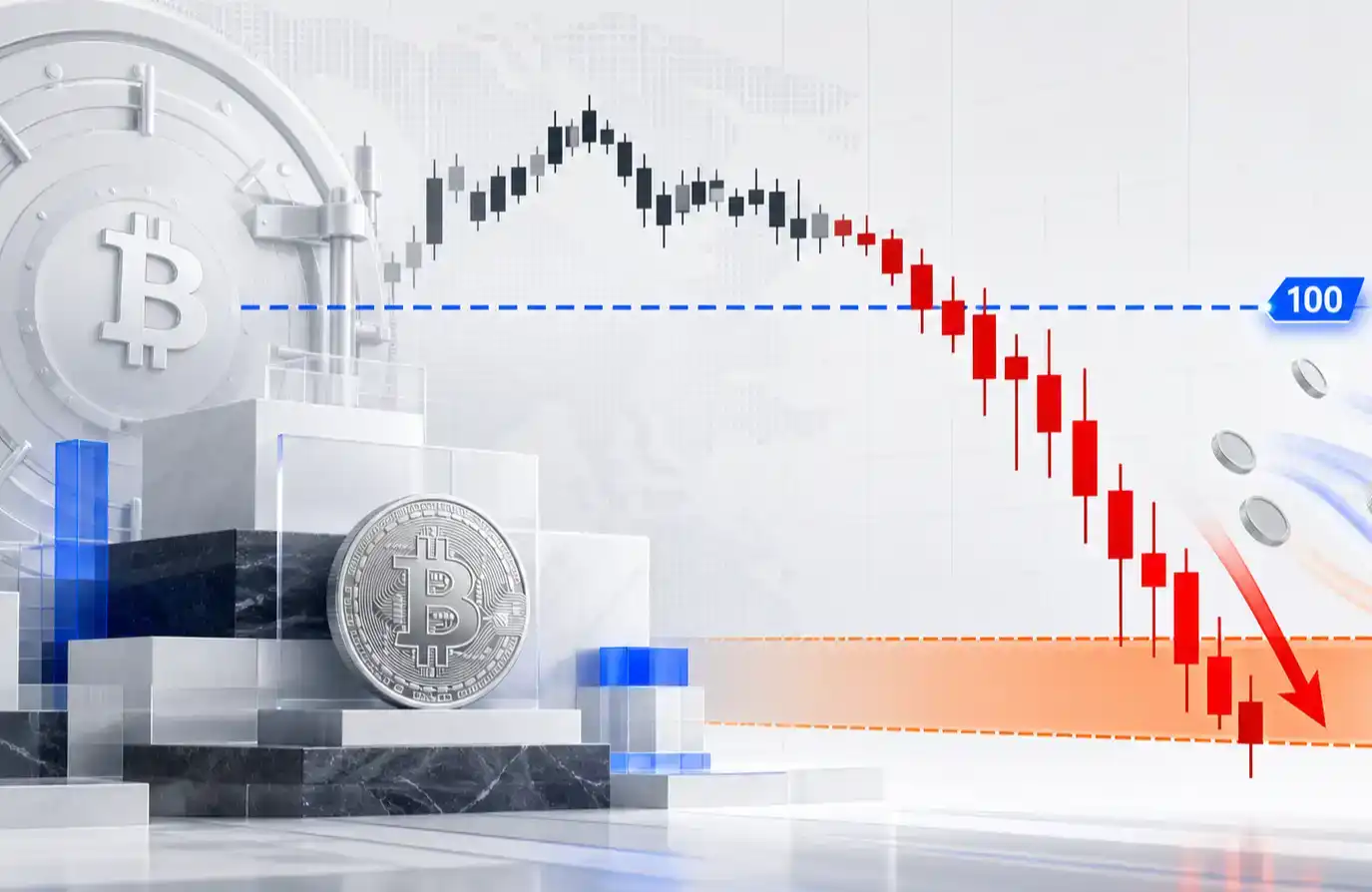
The article analyzes whether the STRC (a perpetual preferred stock issued by MicroStrategy) presents a buying opportunity after its price fell below its $100 par value to around $80, offering a seemingly high yield of 13-15%. The core argument is that STRC's discount reflects market skepticism about the sustainability of MicroStrategy's capital structure model, not just temporary panic. This model relies on issuing securities (like STRC) to raise funds to buy more Bitcoin, a "flywheel" that works in a bull market. The recent small sale of BTC to fund dividends, while minor, broke the psychological "never sell" anchor and signaled potential strain. Key risks identified are not a traditional Ponzi collapse but a potential breakdown in the financing narrative: 1) If Bitcoin enters a deep bear market, crushing MicroStrategy's stock premium (mNAV), its ability to raise cheap capital weakens. 2) If STRC remains deeply discounted, it signifies permanently higher funding costs. 3) The high cash dividend yield represents a significant ongoing expense. 4) If selling BTC to pay dividends becomes routine, the bullish narrative reverses. The conclusion is that STRC is not a risk-free high-yield asset. It is a high-coupon bet on whether MicroStrategy's BTC treasury financing model can withstand a bear market. Buying it is a wager that the market will continue to believe in and fund this structure at acceptable costs. The current price asks if this cycle's "casualty" might be a BTC treasury company's融资 model itself.

marsbit06/26 02:56

STRC Falls Below $80, Can Conservative Investors Still Buy the Dip?

marsbit06/26 02:56

Duan Yongping Makes First Investment in Crypto Company: Why Circle?

Duan Yongping, a renowned Chinese investor known as the "Chinese Buffett," has made his first investment in the cryptocurrency space through his family office, H&H International Investment LLC. According to a recent 13F filing, the firm acquired a position in stablecoin issuer Circle (CRCL), valued at approximately $19.08 million. While this amount represents only 0.2% of Duan's total portfolio, the move is symbolically significant. Historically cautious towards Web3 and crypto assets, Duan's investment philosophy aligns with traditional value investing principles—emphasizing understandable business models, strong moats, and stable cash flows. Most crypto projects have not met these criteria. Circle, however, stands apart. Its core business revolves around issuing the USDC stablecoin and generating interest income from its reserve assets, primarily U.S. Treasuries. This model resembles a money market fund or digital dollar bank, providing predictable revenue. Circle's Q1 2026 financials showed strong growth: revenue reached $694 million (up 20% year-on-year), with 94% from reserve interest, and adjusted EBITDA was $151 million (up 24%). USDC circulation grew 28% to $77 billion. Duan's investment signals a shift: stablecoin infrastructure like Circle's is becoming legible to traditional value investors. It represents a bridge between crypto and mainstream finance, underscored by Circle's recent $222 million pre-sale for its Arc layer-1 blockchain, backed by major firms like a16z and BlackRock. This move suggests that as regulatory clarity improves and business models mature, more crypto-native companies may gain acceptance from traditional capital.

链捕手05/20 03:59

Duan Yongping Makes First Investment in Crypto Company: Why Circle?

链捕手05/20 03:59

The Key Value of Munger and Buffett's Long-Term Thinking Model for Web3

The article explores how Charlie Munger and Warren Buffett's long-term investment philosophy can provide critical insights for the Web3 industry. Despite their historical skepticism toward cryptocurrencies, their principles—focusing on intrinsic value, durable business models, and rational risk assessment—are highly relevant to blockchain’s development. The author identifies three key criteria for evaluating Web3 projects: 1. **Real Demand**: Projects should demonstrate genuine utility and organic usage—like Ethereum’s gas fees or user-paid transactions—rather than rely on short-term incentives or artificial metrics. 2. **Sustainable Business Models**: Successful projects exhibit network effects, scalability, and economic moats that allow them to thrive across market conditions, aligning with the concept of compounding value. 3. **Sound Tokenomics**: Tokens should have clear value-accrual mechanisms, such as fee distribution or buybacks, and avoid structural dilution or over-centralization. Additionally, Munger’s emphasis on multidisciplinary thinking and operating within one’s “circle of competence” is crucial for navigating Web3’s complexities. Understanding protocol risks—like governance failures, death spirals, or technical flaws—can prevent significant losses. Ultimately, the piece argues that long-term value creation in Web3 depends on applying time-tested investment principles to filter out speculative noise and identify projects with enduring worth.

marsbit01/14 07:26

The Key Value of Munger and Buffett's Long-Term Thinking Model for Web3

marsbit01/14 07:26

活动图片