Artículos Relacionados con Traffic

El Centro de Noticias de HTX ofrece los artículos más recientes y un análisis profundo sobre "Traffic", cubriendo tendencias del mercado, actualizaciones de proyectos, desarrollos tecnológicos y políticas regulatorias en la industria de cripto.


Give Freedom to Money: The Flow of Information from Binance to Twitter

"Freeing Money: The Flow of Information from Binance to Twitter" by Zuo Ye Web3 argues that in the crypto era, information has become a commodified asset, while financial flows and information streams are increasingly disconnected. The author observes that platforms like Binance, despite dominating the exchange ecosystem, are struggling with "separation anxiety" as they lose control over information dissemination and face stagnating user growth. The piece critiques the crypto industry’s shift from idealistic goals like decentralization to speculative meme-driven trading, where information quality declines even as quantity explodes. Binance’s aggressive meme marketing and attempts to capture链上 (on-chain) users reflect a broader industry anxiety: the breakdown between information flow and capital movement. The author proposes a "Quantity Theory of Crypto Information" — analogous to Irving Fisher’s monetary equation — where information supply multiplied by the velocity of viewpoints equals exposure per project multiplied by the total number of projects. Yet, effective information remains hard to quantify, and the relationship between influencer content and actual trading activity is often unclear. Despite the freedom of capital movement enabled by CEXs and crypto banks, information channels are becoming more closed, fragmented by language, region, and algorithms. The author concludes that the crypto industry, if it loses its ability to set agendas and relies solely on internal capital games, risks becoming an isolated island in the broader financial world — unless it evolves to embrace mainstream, large-scale productization, as perhaps envisioned by Elon Musk’s X.

marsbit01/15 06:39

Give Freedom to Money: The Flow of Information from Binance to Twitter

marsbit01/15 06:39

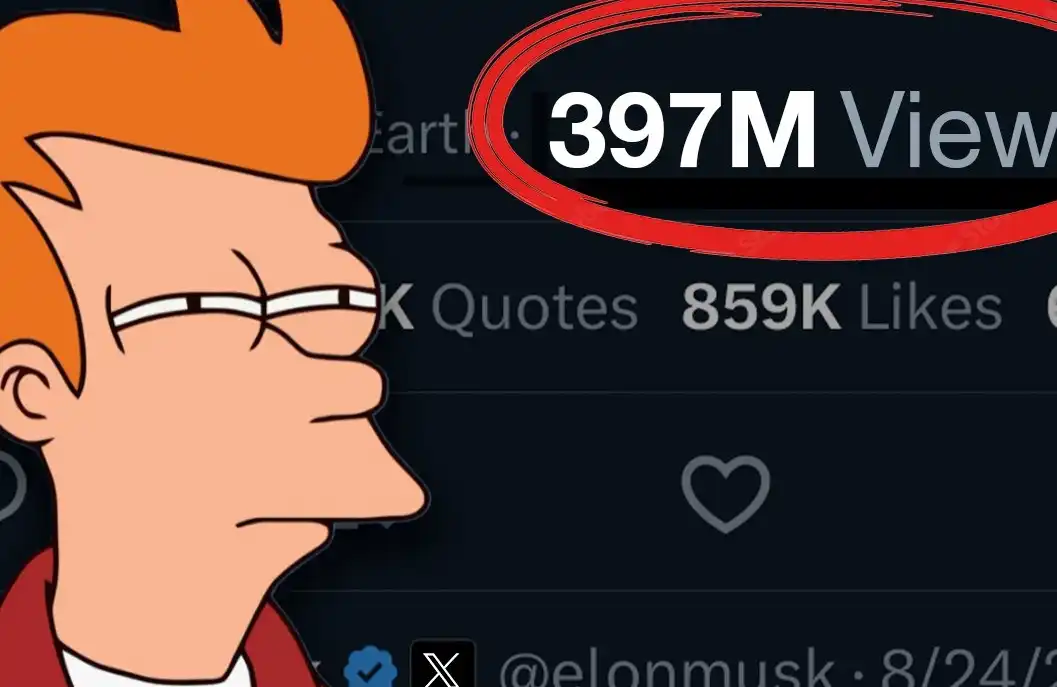
How Twitter Creates 'Fake Traffic'

This article investigates the perceived "fake traffic" on X (formerly Twitter) by comparing engagement metrics. It notes a significant discrepancy: a Binance YouTube video with 1.22 million subscribers received only 160k views, while a tweet from an account with 250k followers garnered 517k views. The core explanation is X's method of counting "impressions." A view is counted each time a tweet appears on a user's screen, even if they scroll past it without engaging. This applies to the timeline, search results, and profile views, with multiple appearances from the same user also counted. This system prioritizes measuring exposure over genuine interaction (likes, replies), a practice also used by Threads and TikTok, unlike YouTube's stricter 30-second watch time requirement. The article suggests this approach, implemented by Elon Musk to publicly display view counts, aims for maximum visibility rather than deep engagement. However, to counter potential low-quality content, X uses its "Creator Ads Revenue Sharing" program as a truer measure of influence. Payouts are based on verified user interactions (likes, replies from Premium subscribers) and content type, not just raw view counts. Additional features like "Bangers," which highlights high-engagement tweets, further help identify genuinely valuable content. The conclusion frames high view counts as a starting point for creators, emphasizing that bravery in self-expression is the first step, but real success and monetization come from fostering authentic engagement.

marsbit12/23 01:16

How Twitter Creates 'Fake Traffic'

marsbit12/23 01:16

活动图片