Artículos Relacionados con Supply Demand

El Centro de Noticias de HTX ofrece los artículos más recientes y un análisis profundo sobre "Supply Demand", cubriendo tendencias del mercado, actualizaciones de proyectos, desarrollos tecnológicos y políticas regulatorias en la industria de cripto.

AI Reshapes the Semiconductor "Smile Curve": The Rising Logic Behind the Global Distributed Bull Market

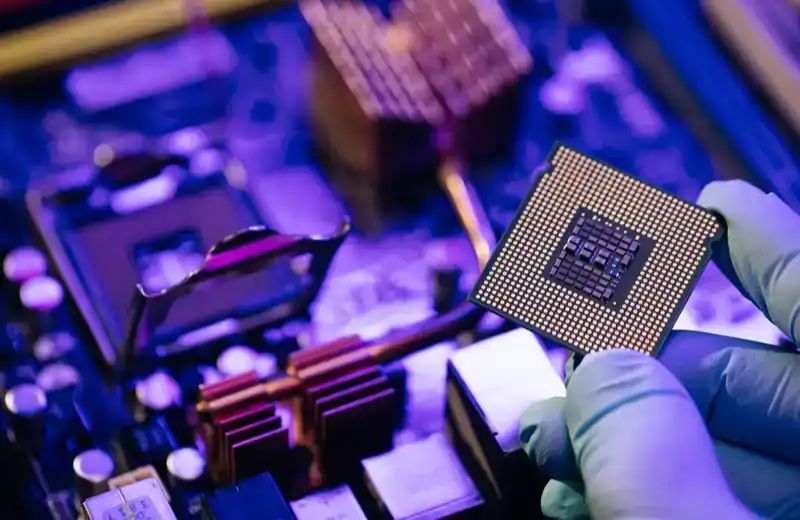
The Philadelphia Semiconductor Index (SOX) has hit a historic high above 14,000 points, driven by a concentrated AI-fueled semiconductor rally. Key drivers are extreme scarcity and pricing power in critical bottlenecks of the AI data center supply chain. Unlike traditional models where manufacturing held lower profits, AI has reshaped the "Smile Curve." Highly complex manufacturing and advanced packaging nodes—like TSMC's CoWoS, SK Hynix's HBM, and ASML's EUV lithography—have become exceptionally scarce and high-margin, rivaling design-side profitability. The market rewards those controlling irreplaceable segments: U.S. firms lead in AI chip design and cloud services; Taiwan and Korea dominate advanced foundry/logic and memory/HBM respectively; Japan and the Netherlands supply vital materials and equipment. Storage, particularly HBM, is the tightest bottleneck, with severe shortages predicted through 2027. While bullish analysts project sustained AI infrastructure spending growth, notable bears like Michael Burry warn of bubble-like exuberance reminiscent of the dot-com era, citing overleveraged private financing for data centers. Key near-term catalysts include earnings guidance from Micron and Nvidia, while longer-term risks hinge on the 2027-2028 capacity expansion wave and persistent geopolitical tensions in concentrated supply chains.

marsbit06/17 04:30

AI Reshapes the Semiconductor "Smile Curve": The Rising Logic Behind the Global Distributed Bull Market

marsbit06/17 04:30

How Will the Price Move Before SpaceX's Next Share Unlock?

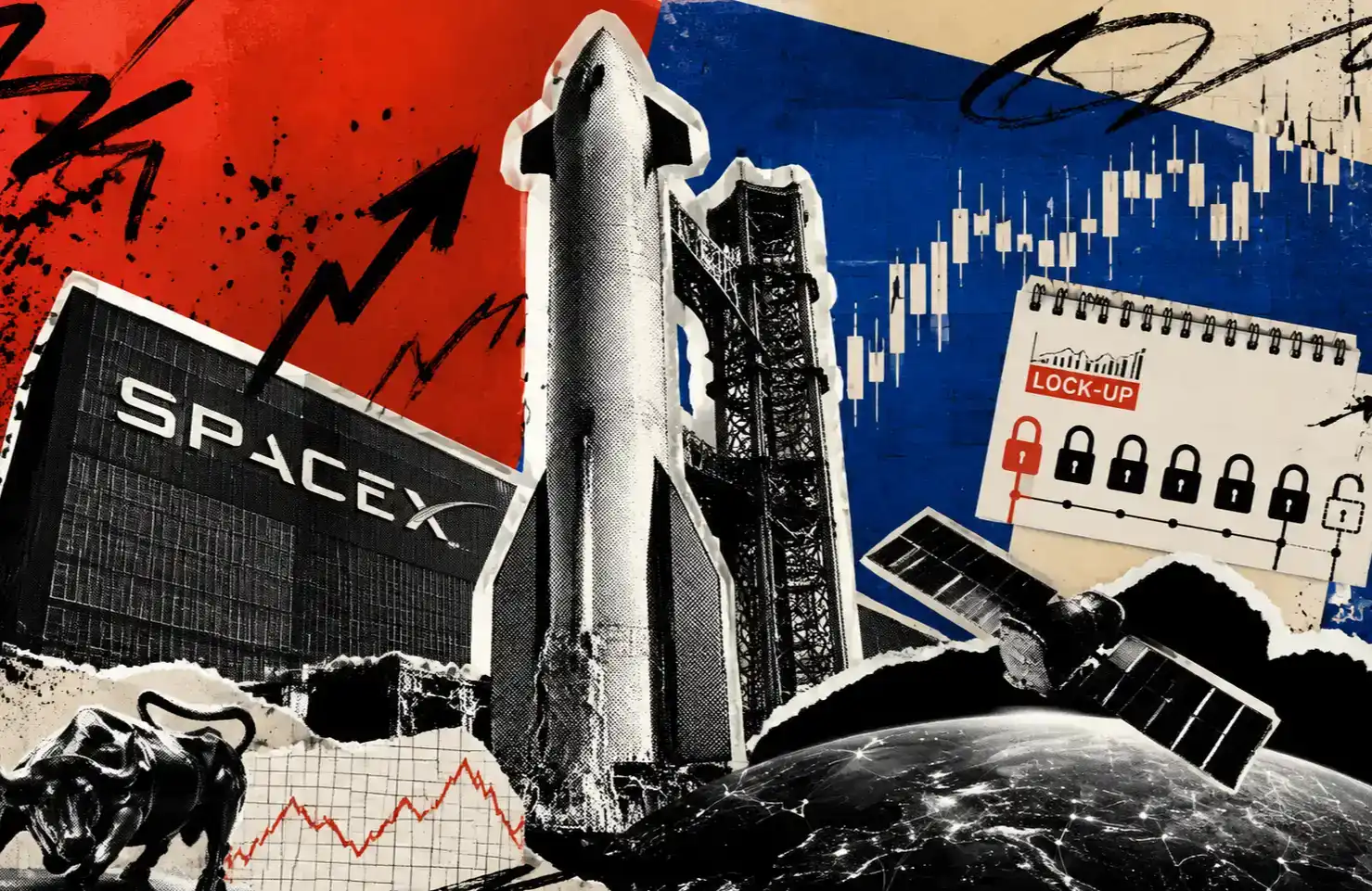
TL;DR Investors buying SPCX after SpaceX's IPO are not simply investing in a typical tech stock. It’s a high-valuation asset driven by Musk's narrative, Starlink, and space transport potential, but with a key twist: a very small initial float of ~4% has led to significant post-listing price appreciation. The current price action reflects a timing gap. Before the first lock-up expiration (estimated around August, subject to official confirmation), scarcity and high demand could continue to push prices up. Short-term bulls focus on low float, FOMO, and potential index inclusion. However, bears point to the supply dynamics that will change post-lockup. Existing shareholders still hold over 95% of shares, which will be released in stages starting from the first unlock window. This introduces future selling pressure from low-cost holders. The upcoming Q2 earnings report is a critical catalyst before the unlock. It will test whether the company's fundamentals can justify the current ~$2.1T valuation. Strong results could support the pre-unlock momentum, while weak figures could amplify concerns about future supply. The trading thesis is shifting from immediate scarcity ("can't buy enough") to evaluating future absorption capacity ("who will buy when more supply hits"). The path ahead hinges on the specifics of the unlock schedule, Q2 earnings performance, and whether anticipated passive index buying materializes.

marsbit06/15 06:31

How Will the Price Move Before SpaceX's Next Share Unlock?

marsbit06/15 06:31

Second Only to GPUs and Memory: MLCCs Are Becoming the Next Billion-Dollar Windfall for AI Computing Power

After GPU and memory, MLCC (Multi-Layer Ceramic Capacitors) is emerging as the next critical component in AI compute, potentially a multi-billion-dollar market. The article highlights a significant, industry-wide price increase for MLCCs, driven not by inventory cycles but by a fundamental, structural demand surge from AI and automotive sectors. AI servers require exponentially more MLCCs than traditional servers—from 2,000 to over 350,000 units per high-end AI rack—primarily to stabilize power for increasingly powerful, low-voltage GPUs. A key AI server's MLCC cost can reach thousands of dollars, making it the third-largest cost component after GPUs and memory. This demand is compounded by the automotive shift to EVs and advanced ADAS. Supply, however, struggles to keep up. Manufacturing high-end MLCCs involves extreme precision and faces six major barriers: proprietary technology, long customer certification cycles (12-18 months for AI), high capital intensity, patent thickets, specialized talent, and massive scale. Industry capacity grows at only ~10% annually, creating a persistent supply-demand gap projected to last until 2030. Three companies dominate this high-end market. **Murata** (40% global share) is the stable leader. **Samsung Electro-Mechanics** offers the highest growth elasticity with aggressive expansion. **Taiyo Yuden** is the purest MLCC play. While their current P/E ratios appear high, they are expected to compress rapidly as earnings surge, powered by significant pricing power and operational leverage. Key risks include a potential slowdown in AI capex, high valuations, competition from Chinese manufacturers in lower tiers, yen appreciation, and consumer electronics weakness. The article concludes that MLCCs are transforming from a commoditized component into a strategic, capacity-constrained asset essential for the AI-powered future.

marsbit06/10 01:07

Second Only to GPUs and Memory: MLCCs Are Becoming the Next Billion-Dollar Windfall for AI Computing Power

marsbit06/10 01:07

Saylor Softens Stance, STRC Weakens, Is BTC Facing a Do-or-Die Battle?

**Summary: Bitcoin (BTC) at a Critical Juncture? Saylor's Hint and STRC Softness Spark Concerns** This article examines two recent developments that could pressure Bitcoin's price: Saylor's hinted willingness to sell some of MicroStrategy's (MSTR) BTC holdings and a significant slowdown in the issuance of its Structured Token Receipt Capital (STRC) product. Previously, STR C was viewed as a powerful new source of ongoing demand for Bitcoin, as the funds raised were used to buy more BTC with leverage. However, MicroStrategy CEO Michael Saylor's recent acknowledgment that the company *might* sell BTC to pay dividends undermines the "never sell" narrative that underpins MSTR's valuation premium and the entire STRC-driven demand thesis. While mathematically sustainable if BTC appreciates, forced selling during a market downturn would severely damage the company's balance sheet and reverse much of its recent buying. Simultaneously, the STRC "flywheel" appears to be stalling. Unlike in previous cycles, the STRC price has failed to return to its $100 par value ahead of the May dividend date, indicating zero new BTC purchases via this channel for the current period. The author attributes this "softness" to a saturated market of arbitrage traders after huge inflows in March and April, whose selling pressure kept prices down, as well as higher opportunity costs in a surging stock market. The combination risks starting a "reverse flywheel": No STRC issuance means no new BTC buying, putting downward pressure on BTC's price. This weakens STRC's collateral backing, potentially raising its required yield and making it even less attractive, which further starves BTC of demand. Saylor's comments may be preemptively pricing in this scenario. The article concludes that the near-term direction of BTC hinges on whether STRC can regain its par value and resume meaningful issuance in the coming week. A small, recent STRC issuance and a brief return of positive Coinbase premiums are noted as faintly optimistic signals. However, failure of the STRC model could lead to a sharp BTC correction by removing a key perceived source of support.

marsbit05/09 01:03

Saylor Softens Stance, STRC Weakens, Is BTC Facing a Do-or-Die Battle?

marsbit05/09 01:03

Tokens Not Selling? 90% of Crypto Projects Overlook Investor Relations

The article argues that effective Investor Relations (IR) is a critical yet often neglected function for crypto projects, with 90% failing at it and struggling to sell their tokens. Good IR acts as a bridge between a project and the market, broadening the buyer base and improving holder quality. The core of a successful IR strategy is distribution: maximizing the number of target investors who know about the token and converting them into buyers. The two primary buyer types are active crypto funds (requiring clear narratives and data for value reassessment) and large strategic institutions (requiring a long B2B sales cycle). The author emphasizes the necessity of proactively controlling the project's narrative with honesty and context, rather than remaining silent. A major tactical error is poor planning for token unlocks; teams should start 30-50 weeks in advance to manage supply and demand. Data is presented as the best ally for building a compelling story, providing context and comparisons for investors. The author contends that crypto IR should not be a dry, compliance-driven task but an engaging, interactive process similar to modern marketing. To lower the barrier to entry, projects must provide ample public data and research, making it easier for funds to conduct due diligence. Furthermore, the article highlights the power of on-chain data for deep investor analysis and argues that greater transparency, not less, actually expands the market by reducing uncertainty. Success should be measured by improvements in investor base quality and breadth—such as growth in target investors and holder diversification—rather than just token price. The future of IR is envisioned as dynamic, multimedia-rich, and proactive, leveraging the inherent transparency of crypto to build a larger, more engaged investor community.

marsbit03/17 13:39

Tokens Not Selling? 90% of Crypto Projects Overlook Investor Relations

marsbit03/17 13:39

活动图片