Artículos Relacionados con Streaming

El Centro de Noticias de HTX ofrece los artículos más recientes y un análisis profundo sobre "Streaming", cubriendo tendencias del mercado, actualizaciones de proyectos, desarrollos tecnológicos y políticas regulatorias en la industria de cripto.
Turing Award Laureate Sutton's New Work: Using a Formula from 1967 to Solve a Major Flaw in Streaming Reinforcement Learning

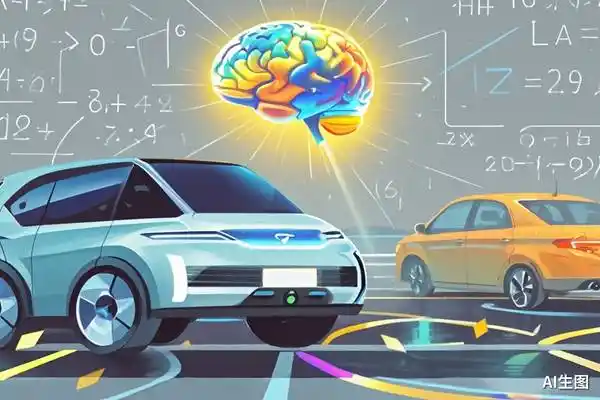
New research titled "Intentional Updates for Streaming Reinforcement Learning" (arXiv:2604.19033v1), involving Turing Award laureate Richard Sutton, addresses a core challenge in deep reinforcement learning (RL): the "stream barrier." Current deep RL methods typically rely on replay buffers and batch training for stability, failing catastrophically when learning online from single data points (streaming). The authors propose a fundamental shift: instead of prescribing how far to move parameters (a fixed step size), their "Intentional Updates" method specifies the desired change in the function's output (e.g., a 5% reduction in value prediction error). It then calculates the step size needed to achieve that intent. This idea is inspired by the Normalized Least Mean Squares (NLMS) algorithm from 1967. Applied to value and policy learning, this yields algorithms like Intentional TD(λ) and Intentional AC. The method inherently stabilizes learning by adapting the step size based on the local gradient landscape, preventing overshooting/undershooting. In experiments on MuJoCo continuous control and Atari discrete tasks, Intentional AC achieved performance rivaling batch-based algorithms like SAC in a streaming setting (batch size=1, no replay buffer), while being ~140x more computationally efficient per update. The work demonstrates significant robustness, reducing reliance on numerous stabilization tricks. A remaining challenge is bias in policy updates due to action-dependent step sizes. Overall, this approach advances efficient, online, "learn-as-you-go" RL, enabling adaptive systems without massive data buffers or compute clusters.

marsbit05/10 06:28

Turing Award Laureate Sutton's New Work: Using a Formula from 1967 to Solve a Major Flaw in Streaming Reinforcement Learning

marsbit05/10 06:28

After Losing 97% of Its Market Value, iQiyi Attempts to Use AI to Forcefully Extend Its Lifespan

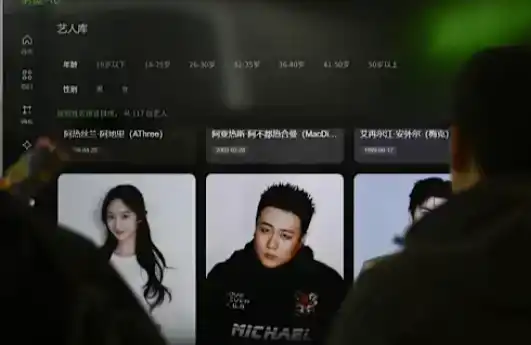
After losing 97% of its market value since its 2018 peak, iQiyi is aggressively pivoting to AI in a desperate attempt to survive. At its 2026 World Conference, CEO Gong Yu announced an "AI Artist Library" with over 100 virtual performers and a new AIGC platform, "NaDou Pro," promising faster production and lower costs. This shift comes as the company faces severe financial distress: its market cap sits near delisting thresholds at $1.36 billion, with significant losses, declining membership revenue, and depleted cash flow. The AI strategy has sparked controversy. Top actors have issued legal threats against unauthorized digital replicas, while in Hengdian, over 134,000 background actors are seeing their already scarce job opportunities vanish as AI replaces them for background roles. iQiyi's move represents a fundamental shift from being a high-cost content buyer to a landlord" to becoming a "platform capitalist" that transfers production risk to creators. This contrasts with competitors like Douyin (TikTok's Chinese counterpart), which is investing heavily in *real* actor-led short dramas, betting that authentic human connection retains users better than AI-generated content. The article draws a parallel to the 1920s transition to "talkies," which made cinema musicians obsolete but ultimately enriched the art form. In contrast, iQiyi's AI drive is framed not as an artistic evolution but as a cost-cutting measure that could degrade storytelling, replacing genuine human emotion with algorithmically calculated stimulation and potentially numbing audiences' capacity for empathy. The core question remains: can a company focused solely on financial survival preserve the art of storytelling?

marsbit04/23 09:49

After Losing 97% of Its Market Value, iQiyi Attempts to Use AI to Forcefully Extend Its Lifespan

marsbit04/23 09:49

iQiyi Is Too Impatient

The article "iQiyi Is Too Impatient" discusses the controversy surrounding the Chinese streaming platform IQiyi's recent announcement of an "AI Actor Library" during its 2026 World Conference. IQiyi claimed over 100 actors, including well-known names like Zhang Ruoyun and Yu Hewei, had joined the initiative. CEO Gong Yu suggested AI could enable actors to "star in 14 dramas a year instead of 4" and that "live-action filming might become a world cultural heritage." The announcement quickly sparked backlash. Multiple actors named in the list issued urgent statements denying they had signed any AI-related authorization agreements. This forced IQiyi to clarify that inclusion in the library only indicated a willingness to *consider* AI projects, with separate negotiations required for any specific role. The incident, which trended on social media with hashtags like "IQiyi is crazy," is presented as a sign of the company's growing desperation. Facing intense competition from short-video platforms like Douyin and Kuaishou, as well as Bilibili and Xiaohongshu, IQiyi's financial performance has weakened, with revenues declining for two consecutive years. The author argues that IQiyi is "too impatient" to tell a compelling AI story to reassure the market, especially as it pursues a listing on the Hong Kong stock exchange. The piece concludes by outlining three key "AI questions" IQiyi must answer: defining its role as a tool provider versus a content creator, balancing the "coldness" of AI with the human element audiences desire, and properly managing the interests of platforms, actors, and viewers. The core dilemma is that while AI can reduce costs and increase efficiency, it risks creating homogenized, formulaic content and devaluing human performers.

marsbit04/21 07:05

iQiyi Is Too Impatient

marsbit04/21 07:05

Can Pump.fun Crack the Creator Token Conundrum by 2026?

Based on Delphi's upcoming 2026 applications report, this analysis examines Pump.fun, a leading meme coin launchpad, and its challenges in realizing its vision for creator tokens. While Pump.fun dominates the launchpad space, its core challenge remains unresolved: creating a sustainable economic model for creator tokens. Most creator tokens fail to retain value, as the token itself becomes part of the product with unclear utility for holders. The notable exception was the viral @onlybagwork phenomenon, which demonstrated the potential of the model by generating over 2300 SOL in fees for its creators without them selling their holdings. However, such success has proven fleeting, and no subsequent creator token has achieved similar organic momentum or valuation. The platform's shift to using 100% of net revenue for $PUMP token buybacks has fueled a significant price increase, giving it a lower market-cap-to-revenue ratio than major competitors like Hyperliquid. Despite a sharp decline in daily launchpad revenue from its peak, Pump.fun maintains a structural advantage and dominant market share. Looking ahead to 2026, key questions remain: Can Pump.fun design a sustainable incentive structure for creator tokens? How will it manage upcoming token unlocks? The report suggests the team may need to focus its strategy, which currently spans streaming, Initial Community Offerings (ICM), and mobile. Potential strategic directions include expanding into iGaming—a natural fit for its user base—or further developing its mobile application to reach a broader, more mainstream audience. Success in any of these key areas could significantly shift market sentiment and help the platform attract non-crypto-native users.

比推12/17 13:58

Can Pump.fun Crack the Creator Token Conundrum by 2026?

比推12/17 13:58

活动图片