Artículos Relacionados con Starship

El Centro de Noticias de HTX ofrece los artículos más recientes y un análisis profundo sobre "Starship", cubriendo tendencias del mercado, actualizaciones de proyectos, desarrollos tecnológicos y políticas regulatorias en la industria de cripto.

From Four Failures to a Trillion-Dollar Valuation: Musk and SpaceX's Epic Comeback

From Four Failures to Trillion-Dollar Valuation: Musk and SpaceX's Ultimate Comeback In 2002, Elon Musk invested $100 million from his exit of PayPal to found SpaceX, aiming to revolutionize space travel. The journey began with humiliation when Russian engineers dismissed his ambitions during a failed rocket purchase attempt. Undeterred, Musk decided to build rockets himself. SpaceX faced near-catastrophic failures with its first three Falcon 1 launches (2006-2008), coinciding with the 2008 financial crisis, Tesla’s near-bankruptcy, and personal struggles. After the third explosion, funds were nearly exhausted, and critics, including Musk’s idol Neil Armstrong, openly doubted him. The fourth launch in September 2008 succeeded, saving SpaceX from collapse and securing a $1.6 billion NASA contract for ISS resupply missions. Driven by first principles, Musk pursued reusable rockets despite industry skepticism. In 2015, Falcon 9’s first stage successfully landed vertically, slashing costs and disrupting the aerospace industry. For Starship, Musk opted for stainless steel over carbon fiber, reducing material costs by 40x while maintaining performance. SpaceX’s valuation soared from $13 billion (2012) to $800 billion (2025), largely fueled by Starlink. With 7.65 million subscribers and revenue projected to reach $22-24 billion in 2026, Starlink dominates as a global telecom provider. Preparing for a 2026 IPO targeting $30 billion raised at a $1.5 trillion valuation, SpaceX aims to surpass Saudi Aramco’s record. For Musk, this funds his ultimate goal: making humanity a multi-planetary species by colonizing Mars. The IPO represents not an exit but a critical step toward interplanetary civilization.

比推12/19 13:26

From Four Failures to a Trillion-Dollar Valuation: Musk and SpaceX's Epic Comeback

比推12/19 13:26

Before Soaring to a $1.5 Trillion IPO, Musk Almost Lost Everything

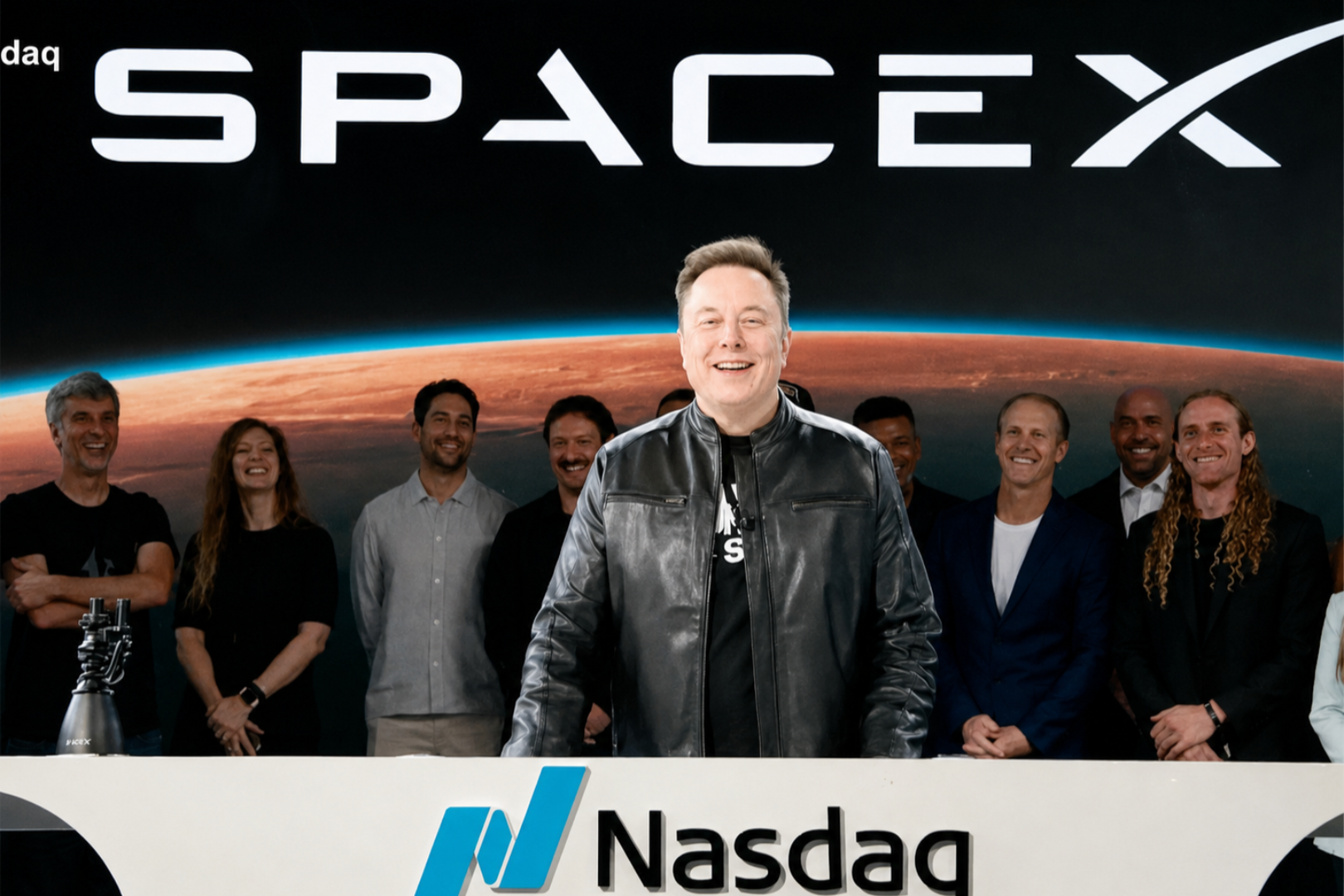
Elon Musk's SpaceX is on the verge of a historic $150 billion IPO, targeting a $1.5 trillion valuation, which could make Musk the world's first trillionaire. This marks a dramatic turnaround from the company's near-collapse in 2008. Founded in 2002, SpaceX faced immense skepticism and technical failures. Its first three Falcon 1 rocket launches ended in explosions, nearly bankrupting the company and coinciding with Musk's personal crises during the 2008 financial meltdown. The fourth launch succeeded, saving the company and securing a crucial $1.6 billion NASA contract for space station resupply. SpaceX's breakthrough came from applying first-principles thinking. Musk challenged industry norms by insisting on reusable rockets, achieved in 2015 when the Falcon 9 first stage successfully landed. This drastically reduced costs. The same logic led to building Starship from stainless steel instead of expensive carbon fiber, slashing material costs by 40x. The key driver of its $800 billion pre-IPO valuation is Starlink. With over 7.65 million subscribers and covering 24.5 million users, it provides over 80% of SpaceX's revenue, transforming the company into a global telecom giant. Musk, who long resisted going public to avoid distractions, now sees the IPO as essential to fund his ultimate goal: making humanity a multi-planet species. The raised capital will fuel the development of Starship and the ambitious mission to establish a city on Mars.

marsbit12/19 10:01

Before Soaring to a $1.5 Trillion IPO, Musk Almost Lost Everything

marsbit12/19 10:01

Before Soaring to a $1.5 Trillion IPO, Musk Almost Lost Everything

Elon Musk's SpaceX is on the verge of a historic $150 billion IPO in 2026, targeting a $1.5 trillion valuation, which would make it one of the largest public offerings ever. This marks a dramatic turnaround from its near-collapse in 2008. Founded in 2002, SpaceX faced immense skepticism and multiple failures. Its first three Falcon 1 rockets exploded, nearly bankrupting the company and coinciding with Musk's personal crises during the financial crash. The fourth launch in September 2008 succeeded, saving the company and securing a crucial $1.6 billion NASA contract. SpaceX’s breakthrough came from challenging aerospace norms. It pioneered reusable rockets, first landing a Falcon 9 booster in 2015, drastically cutting costs. For its Mars-bound Starship, Musk applied first principles, opting for cheap stainless steel over expensive carbon fiber, simplifying manufacturing and reducing expenses. The key to its $800 billion pre-IPO valuation is Starlink. With over 7.65 million subscribers and projected 2026 revenues of $22-24 billion, it provides stable cash flow, transforming SpaceX from a launch provider into a global telecom giant. Musk, initially opposed to IPO distractions, now seeks capital for Mars colonization. The IPO’s $30 billion raise will fund ambitious plans, including uncrewed Mars landings by 2027 and a self-sustaining city on Mars within 20 years. For Musk, wealth is a means to make humanity a multi-planetary species.

深潮12/19 06:12

Before Soaring to a $1.5 Trillion IPO, Musk Almost Lost Everything

深潮12/19 06:12

World's Richest Man, 'Silicon Valley Iron Man' Musk, to Take SpaceX Public in 2026!

Elon Musk, the world's richest person and CEO of SpaceX, plans to take the company public in 2026 with a target valuation of approximately $1.5 trillion. The IPO is expected to raise "significantly more than $30 billion," potentially making it the largest in history, surpassing Saudi Aramco's 2019 offering. A key driver of this ambitious valuation is a new narrative: **space-based AI computing**. Musk introduced the concept of "space AI compute" at a recent investor conference, arguing that within five years, running AI training and inference in space could become the lowest-cost solution. The core advantages include near-uninterrupted solar power and the vacuum of space acting as an ultimate heat sink. Additionally, with its reusable Starship rockets, SpaceX aims to drastically reduce launch costs to as low as $200–300 per kilogram. This vision, however, faces significant technical hurdles. Challenges include managing extreme heat radiation in direct sunlight, protecting hardware from cosmic radiation, and the economic risks associated with potential launch failures. Competitors are also entering the arena, including Jeff Bezos’ Blue Origin, which is developing its own orbital data centers, and Sam Altman’s OpenAI, which is reportedly considering acquiring a rocket company. Despite the challenges, Wall Street has responded positively. Firms like Ark Invest are now valuing SpaceX as a high-growth AI infrastructure company rather than a traditional aerospace firm, projecting that its space-based compute business could generate $80–120 billion in high-margin revenue by 2030. The success of this new "space dream" hinges on the continued development of Starship, overcoming technical barriers, and navigating future regulatory landscapes.

marsbit12/11 07:08

World's Richest Man, 'Silicon Valley Iron Man' Musk, to Take SpaceX Public in 2026!

marsbit12/11 07:08

活动图片