Artículos Relacionados con Risk Appetite

El Centro de Noticias de HTX ofrece los artículos más recientes y un análisis profundo sobre "Risk Appetite", cubriendo tendencias del mercado, actualizaciones de proyectos, desarrollos tecnológicos y políticas regulatorias en la industria de cripto.

Chip Stocks 'Hit a Wall,' But the Market Has Not

Chip stocks face volatility, driven by the blowup of an AI hedge fund (Situational Awareness), which briefly dragged the Philadelphia Semiconductor Index down 29%. However, the market has defied concerns, treating the sell-off as a buying signal. Investors injected over $11 billion into semiconductor ETFs in two days, fueling strong rallies in leveraged and non-leveraged funds. This dynamic is part of a broader surge in risk appetite: the S&P 500 hit a record high, high-yield bond funds saw their largest weekly inflow in two years, and Bitcoin ETFs attracted significant capital. Bank of America's Bull & Bear Index has risen to its highest level since 2021. Market strategists note the momentum-driven "tsunami" in buying, though concentration remains in mega-cap tech stocks. Despite the optimism, a key risk persists: elevated Treasury yields, with the 30-year yield near two-decade highs, pose a headwind. A weak July jobs report, however, eased near-term Fed hike fears and supported markets. Analysts suggest the economic backdrop remains solid, with AI infrastructure demand underpinning growth, though potential bottlenecks like power supply could emerge. The prevailing investor psychology is that recent pullbacks have been brief, reinforcing confidence to buy dips, as evidenced by a sharp drop in semiconductor volatility. The overarching narrative is one of resilient money flows toward risk assets despite a lengthening list of worries.

marsbit08/10 02:20

Chip Stocks 'Hit a Wall,' But the Market Has Not

marsbit08/10 02:20

Why Hasn't Bitcoin Made the Expected Surge? There Are Both Positive and Negative Data

Analytical firm Glassnode reports Bitcoin retreated to around $62,600 after failing to sustain above $66,000. Weak spot market demand and defensive positions in derivatives are applying downward pressure. However, structural support remains from resilient long-term holders, surging on-chain activity, and renewed inflows into Bitcoin ETFs. The price action reflects weakened spot momentum, with low trading volume and persistent seller pressure keeping Bitcoin in a consolidation phase with limited breakout potential. While open interest in derivatives has fallen, funding rates have risen again, and options investors maintain a cautious stance. Demand for downside protection has increased. Positively, Bitcoin ETFs have seen renewed net inflows and trading volume, indicating institutional repositioning. On-chain metrics show a significant spike in active addresses and adjusted transaction volume, pointing to increased network usage. The historically low ratio of short-term to long-term holders suggests long-term conviction remains firm. However, overall market profitability continues to decline as the proportion of Bitcoin in profit nears cycle lows, indicating a trend of loss realization and de-risking by investors. Glassnode concludes the Bitcoin market is in a transitional phase. Structural support is present, but valuation pressure, insufficient spot demand, and defensive derivatives positioning continue to limit overall risk appetite.

cryptonews.ru08/03 19:11

Why Hasn't Bitcoin Made the Expected Surge? There Are Both Positive and Negative Data

cryptonews.ru08/03 19:11

Oil Prices Fall Below $80, Bitcoin Yet to Rise: Liquidity Becomes Key Market Driver

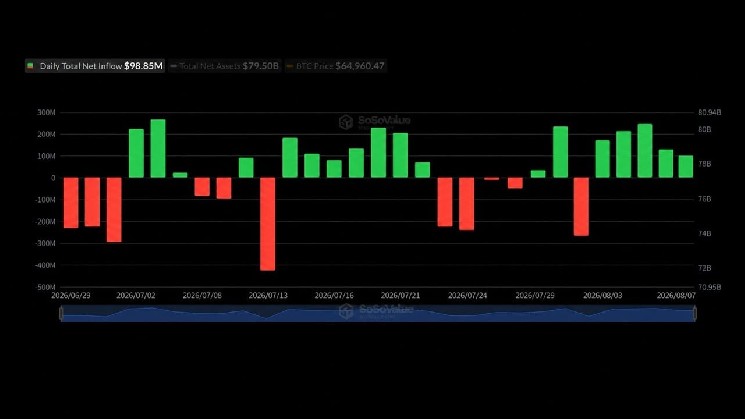
Oil prices fell below $80 as a US-Iran peace framework eased tensions, but Bitcoin failed to rally, remaining around $64,900. The article argues that while lower oil removes a key bearish factor for BTC, the primary market drivers have shifted to liquidity conditions, Federal Reserve policy, ETF fund flows, and overall risk appetite. Historically, high oil prices threatened inflation, delaying Fed rate cuts and hurting risk assets like Bitcoin. Now, with oil prices down, Bitcoin's path hinges on whether this translates into lower inflation expectations, softer Treasury yields, and a more dovish Fed stance. Recent FOMC minutes still show concern over energy-driven inflation, keeping financial conditions restrictive. Bitcoin ETF flows showed a slight positive inflow recently, but sustained demand is needed for a meaningful shift. The market requires consistent signals: stable ETF inflows, declining yields, and improving risk sentiment alongside lower oil prices. Without this combination, lower oil alone may not boost BTC. The outlook presents two paths: a recovery if lower oil eases inflation, the Fed turns less hawkish, and ETF demand stabilizes, allowing BTC to reclaim the $66,900-$70,000 range. Conversely, Bitcoin could remain pressured if the peace deal stalls, the Fed remains restrictive, yields stay high, or ETF flows reverse. In summary, for the remainder of 2026, liquidity factors—Fed policy, ETF activity, and investor risk appetite—have surpassed oil prices as the critical determinants of Bitcoin's price trajectory.

marsbit06/18 02:49

Oil Prices Fall Below $80, Bitcoin Yet to Rise: Liquidity Becomes Key Market Driver

marsbit06/18 02:49

活动图片