When Migration Becomes the Norm: Why 'Your Own EVM Chain' Is Becoming Standard
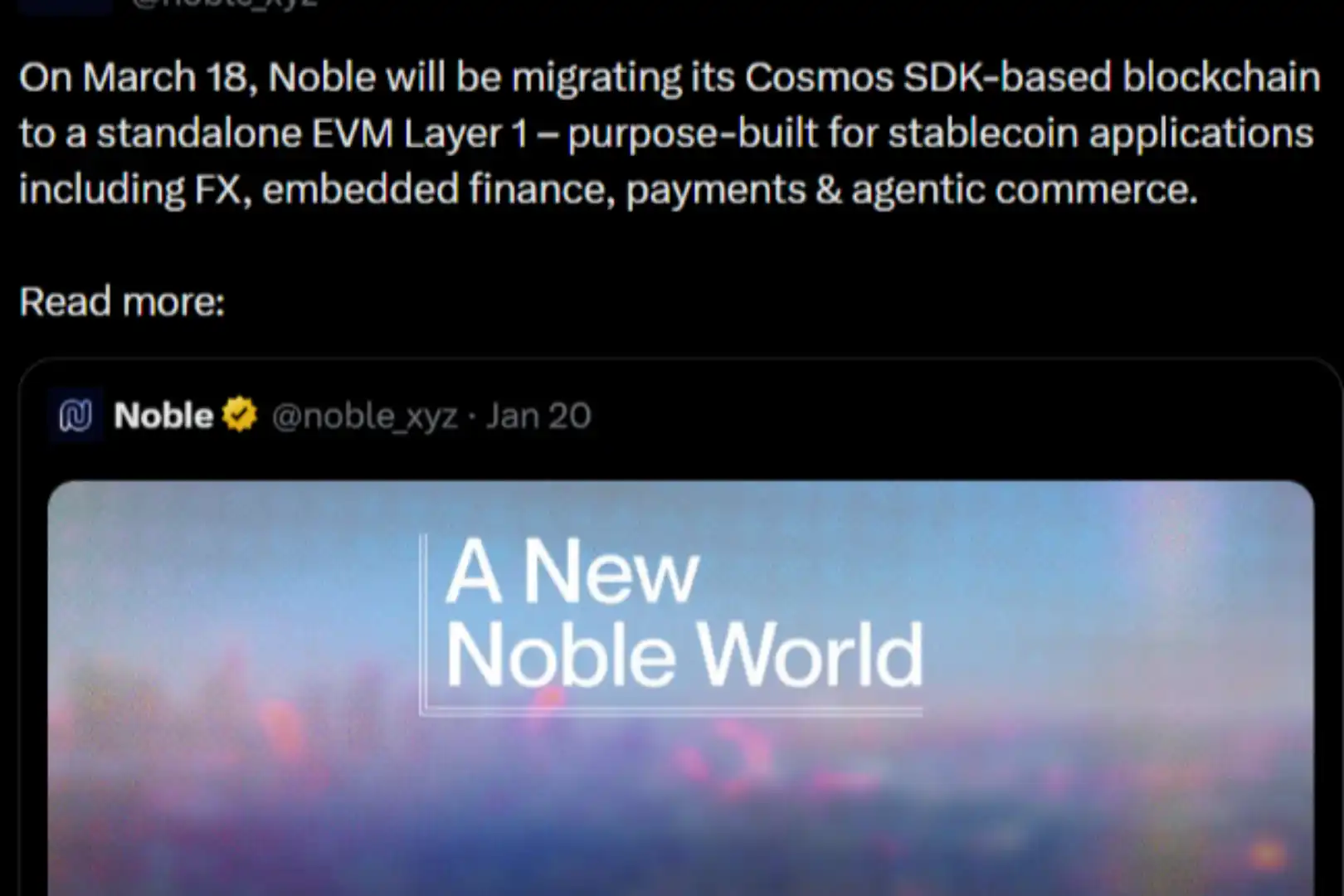
In the past year, the industry's real "voting" has shifted from governance forums to deployment scripts, migration plans, and budgets. Projects are choosing ecosystems through action, not words—migrating mainnets, prioritizing tool stacks, and betting on networks with stronger market effects. A prime example is Noble, a leading stablecoin infrastructure in Cosmos, which moved to its own EVM L1, signaling that the main battleground for stablecoins and app distribution remains in EVM ecosystem due to its mature developer tools, wallet/dApp ecosystem, and concentrated liquidity.
The trend toward "having your own EVM chain" is becoming standard. While EVM offers clear advantages in assets, integrations, and tools, generic chains come with constraints like fee volatility, congestion, and shared sequencing. Application chains/rollups allow teams to internalize these constraints—tailoring block times, execution models, and infrastructure to their business needs, and aligning transaction revenue with growth incentives.
Rollup-as-a-Service (RaaS) platforms like Caldera are reducing the high costs and complexity of building and maintaining chains, turning "chain-as-a-product" into a replicable strategy. They focus not just on deployment but also on solving interoperability challenges—e.g., via Caldera's Metalayer, which standardizes cross-chain bridging and integration to reduce friction for users and developers.
As migration to EVM continues, the focus shifts from "which chain to choose" to "how to control growth." Owned EVM chains/rollups offer more stable fees, better performance, and tighter integration of incentives and revenue. With RaaS lowering build costs and interoperability layers reducing cross-chain friction, having a dedicated execution environment is becoming a scalable, standard solution for projects aiming to master their own growth.
marsbit02/05 08:39