Artículos Relacionados con QR

El Centro de Noticias de HTX ofrece los artículos más recientes y un análisis profundo sobre "QR", cubriendo tendencias del mercado, actualizaciones de proyectos, desarrollos tecnológicos y políticas regulatorias en la industria de cripto.

The Reality of Payments in Latin America Is Not What You Think

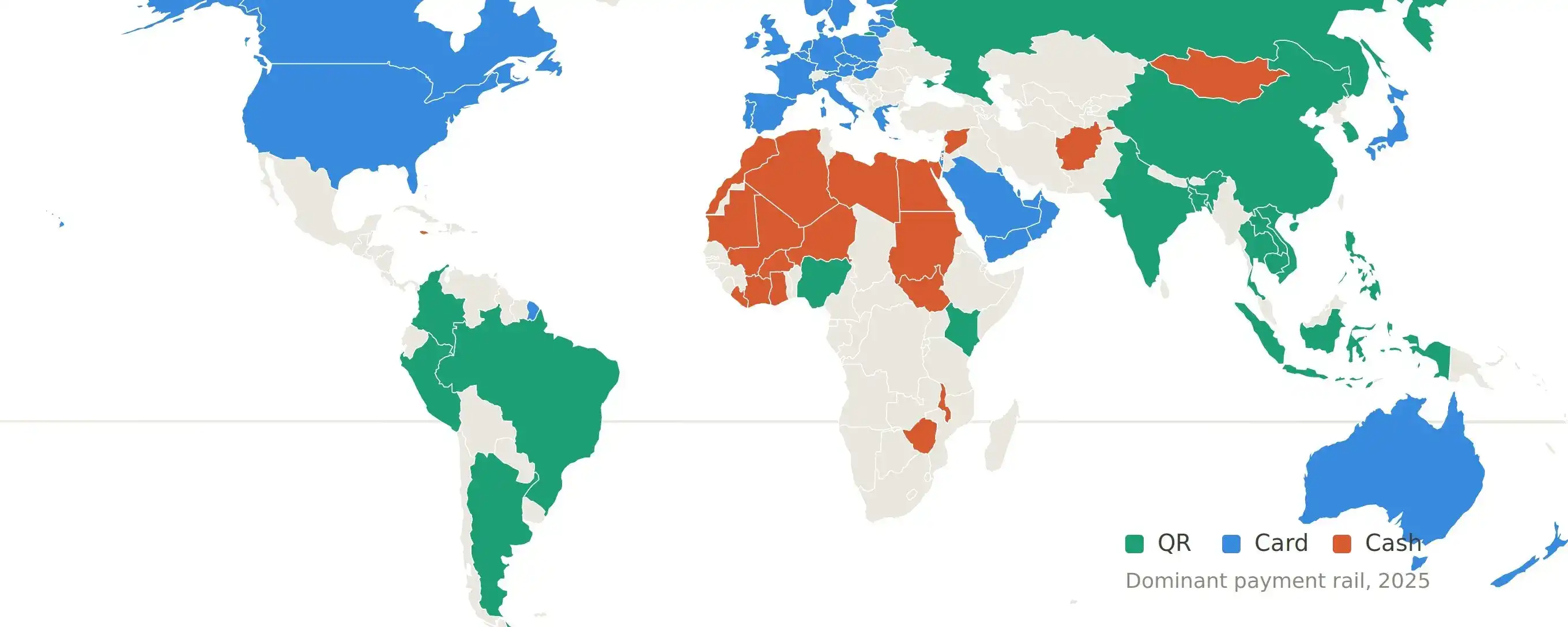
The payment landscape in Latin America is undergoing a fundamental shift, driven by on-the-ground realities that challenge common perceptions. Based on over 500 hours of field research across the region, key insights emerge. Firstly, QR code payments, like Brazil's Pix, are becoming the dominant payment method in most emerging markets, overtaking cards. However, these domestic instant payment systems lack international interoperability, creating a significant gap for cross-border users. Secondly, the narrative around crypto cards is often misunderstood; their primary volume comes from high-net-worth professionals using them for salary conversions (e.g., USDT to local currency via Pix), not retail micro-payments. Competition in payments is shifting from customer acquisition to controlling the settlement layer, leading fintechs to acquire banking licenses for efficiency. Thirdly, treating "Latin America" as a single market is a mistake. Countries like Argentina, Brazil, and Mexico have distinct economic realities, user segments, and regulatory approaches. Brazil alone has at least five distinct user segments with different financial flows. Overlooked markets like Guatemala, Honduras, and El Salvador (the "forgotten five") offer high remittance volumes with lower competitive density. Finally, regulation in Latin America is often ahead of the US, with clearer frameworks for digital assets and a pragmatic approach from regulators focused on safety rather than obstruction. The margin on stablecoin forex is rapidly compressing toward zero, meaning future winners will be those building value-added services on top of the infrastructure, not just the cheapest exchange.

marsbit06/21 09:07

The Reality of Payments in Latin America Is Not What You Think

marsbit06/21 09:07

Buying Seafood with USDT in Vietnam: Has Web3 Truly Achieved Mass Adoption?

In Vietnam, a country consistently ranked among the top in global cryptocurrency adoption, the author explores whether Web3 and crypto payments have achieved mass adoption beyond reports and whitepapers. During a two-week trip, the author avoided formal industry events and instead tested crypto payments in everyday scenarios like spas, street food stalls, and taxi rides. Key observations include: - Many local merchants prefer cash over international cards due to high fees and tax avoidance, creating an opening for stablecoins like USDT. - Using Bitget Wallet, the author successfully paid via VietQR—Vietnam’s ubiquitous payment QR system—at many locations, with transactions feeling nearly as seamless as Alipay. - However, a failed payment at a seafood restaurant revealed compatibility issues between crypto wallets and older, non-standard QR systems, highlighting remaining technical barriers. - Public perception of crypto remains mixed: in northern cities like Hanoi, it is often associated with crime and gambling, while southern hubs like Ho Chi Minh City show more enthusiasm, with young people trading or developing crypto projects in cafes. - Despite low visible crypto infrastructure (e.g., few Bitcoin ATMs), underlying adoption is significant, driven by a young, tech-savvy population eager for financial mobility. The author concludes that Vietnam’s combination of demographic youth, high mobile internet use, and informal financial vitality makes it a fertile ground for Web3 growth, though real-world usability and cultural acceptance vary widely. The journey continues into southern Vietnam for deeper exploration.

深潮12/22 08:50

Buying Seafood with USDT in Vietnam: Has Web3 Truly Achieved Mass Adoption?

深潮12/22 08:50

活动图片