Artículos Relacionados con Physical AI

El Centro de Noticias de HTX ofrece los artículos más recientes y un análisis profundo sobre "Physical AI", cubriendo tendencias del mercado, actualizaciones de proyectos, desarrollos tecnológicos y políticas regulatorias en la industria de cripto.

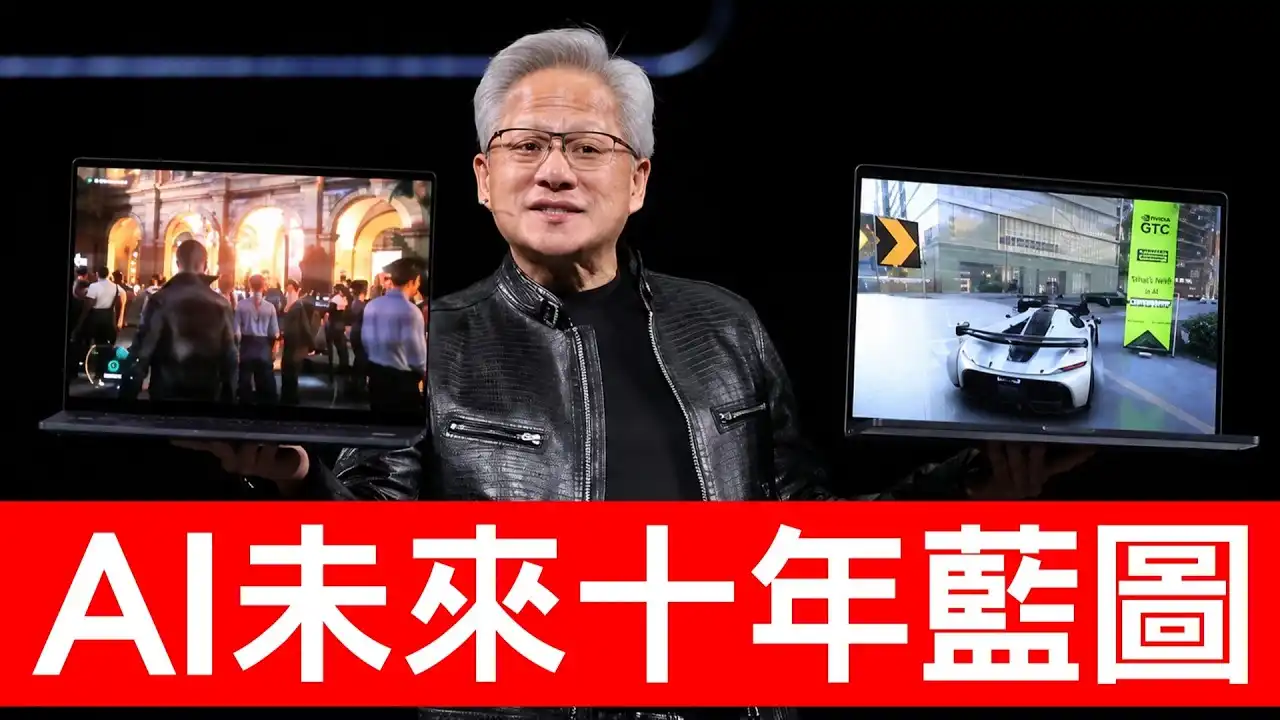
Jensen Huang Turns Japan into NVIDIA's "Physical AI" Pivot Point: A Life-Saving Favor 30 Years Ago, a Full-Stack Bind 30 Years Later

NVIDIA CEO Jensen Huang’s recent visit to Japan signals a strategic push to make the country a core hub for its global “physical AI” ecosystem. During his trip, NVIDIA announced partnerships with Japanese robotics giants Fanuc and Yaskawa Electric, and expanded its collaboration with Toyota across autonomous driving, factory simulation, and smart city applications. Huang emphasized that AI-driven robotics will become intelligent, adaptable, and accessible. The visit also highlighted a historic reunion with former SEGA president Shoichiro Irimajiri, who helped save NVIDIA from bankruptcy in the 1990s with a critical investment. Now, SEGA plans to support NVIDIA’s RTX Spark platform for future game releases. Behind the scenes, Huang hosted a dinner with key Japanese semiconductor and electronics supply chain leaders, including Kioxia, Shin-Etsu Chemical, Tokyo Electron, and Ajinomoto, underscoring Japan’s role in NVIDIA’s hardware roadmap. Beyond robotics and automotive, NVIDIA is deepening ties across Japanese industries. In healthcare, companies like Eisai and Fujifilm are using NVIDIA’s BioNeMo and Blackwell platforms for AI-driven drug discovery and medical imaging. In finance, Mizuho Bank and SMFG are building AI factories powered by NVIDIA systems. In quantum computing, RIKEN’s supercomputers, equipped with Blackwell GPUs, are advancing research. Market speculation also points to a potential partnership with Japan’s state-backed “physical AI” consortium, Noetra. Huang dismissed concerns about an AI bubble, stating demand remains strong and a decade of infrastructure building is needed. He framed Japan’s manufacturing expertise and automation needs as a natural fit for the physical AI era.

marsbit07/16 11:42

Jensen Huang Turns Japan into NVIDIA's "Physical AI" Pivot Point: A Life-Saving Favor 30 Years Ago, a Full-Stack Bind 30 Years Later

marsbit07/16 11:42

World Models, Metaverse, Digital Twins, Physical AI: Are They the Same Thing?

Title: World Models, the Metaverse, Digital Twins, Physical AI: Are They the Same Thing? The article clarifies that concepts like the metaverse, Web3, simulation platforms, digital twins, and Physical AI are not the same thing but are all part of the broader trend of blurring the lines between the digital and physical worlds. It positions "world models" as the foundational "cognitive layer" or "operating system" that enables AI to understand and simulate the world. Key distinctions are made: - The **Metaverse** is a destination for immersive social and economic experiences. World models could act as its "engine," generating interactive 3D content efficiently. - **Web3** focuses on decentralized ownership and economics (rules layer), operating on a different technical level than world models. - **Simulation Data Platforms** (e.g., for autonomous vehicles) are a 1.0 version, relying on manual design. World models represent a 2.0 version, using AI to generate realistic, varied scenarios autonomously. - **Digital Twins** create high-fidelity, real-time mirrors of physical systems (e.g., a factory). World models go a step further by enabling predictive simulation of future states. - **Physical AI** (robots, AVs) refers to AI that acts in the physical world. World models are a core component, providing the understanding and prediction needed for planning. A proposed hierarchy places world models at the cognitive layer, supported by infrastructure (compute, data) and supporting application tools (simulation, digital twins), action systems (Physical AI), user experiences (metaverse), and rules (Web3). In conclusion, while distinct, many of these previously hyped concepts may ultimately rely on advances in world model technology to fulfill their promises, as world models provide the essential cognitive foundation for simulating and interacting with complex environments.

marsbit06/28 10:41

World Models, Metaverse, Digital Twins, Physical AI: Are They the Same Thing?

marsbit06/28 10:41

Jensen Huang's 2026 GTC Taipei Speech: The Era of AI Agents is Here, Computing is Revenue

NVIDIA CEO Jensen Huang's 2026 GTC Taipei speech announces the arrival of the "Agent AI" era, where AI transitions from content generation to performing useful work. Huang positions tokens as units of profit and GDP, driving massive demand for computing power and "AI factories." NVIDIA's strategy revolves around a new computing paradigm centered on AI agents, which combine large language models (LLMs) with agent frameworks for planning, memory, and tool use. Key announcements include: * **Vera Rubin:** A complete, end-to-end system (not just a GPU) designed from the ground up to run AI agents at scale, representing NVIDIA's evolution into an infrastructure company. * **Vera CPU:** A revolutionary CPU architecture built specifically for impatient AI agents, prioritizing low latency, single-thread performance, and massive bandwidth over traditional multi-core throughput. * **Enterprise AI Agent Toolkit:** A suite including open models (like Nemotron 3 Ultra), frameworks, tools, and a secure runtime (Open Shell) to enable every company to build and deploy its own AI agents. * **Next-Gen PCs with Microsoft:** A new line of Windows desktops, laptops, and workstations co-developed with Microsoft, featuring the N1X chip and designed to run local AI agents, redefining the personal computer. * **Physical AI Foundation Models:** Introduction of Cosmos 3 for robotics and physical AI, Alpamayo 2 for autonomous driving, and the Isaac GR00T platform—a fully integrated humanoid robot reference system. Huang emphasizes that the same core agent computing pattern (model + framework + tools + runtime) will extend from the cloud and PCs to robots, factories, and edge devices. He concludes that the industry is fundamentally changed as useful, agentic AI creates a vast new market where "compute is revenue."

marsbit06/03 03:35

Jensen Huang's 2026 GTC Taipei Speech: The Era of AI Agents is Here, Computing is Revenue

marsbit06/03 03:35

Physical AI is Hot, Some New Thoughts from Me

The term "Physical AI" is gaining significant traction, marking a shift from AI that processes information to AI that understands and interacts with the physical world. Unlike traditional AI confined to screens, Physical AI involves integrating intelligence into robotic bodies to perform tasks in environments governed by gravity, friction, and inertia. The concept, formally defined in a 2020 paper, focuses on creating embodied systems that can complete perception-to-action cycles. 2026 is identified as a pivotal "deployment year," where the focus moves from demonstrations to practical utility. Companies like China's Zhiyuan Robotics have transitioned to live, unscripted factory deployments and announced mass production targets. Internationally, Figure AI, after a major funding round, shifted to its own neural system, while NVIDIA partnered with major industrial robot firms to upgrade millions of existing units with AI capabilities. A key trend is the crossover from the automotive supply chain. Companies like Aptiv and Valeo are entering the Physical AI space, leveraging their expertise in sensors, control systems, and mass production from the autonomous vehicle sector. This "technology spillover" is accelerating development, as seen with Tesla's plans to repurpose automotive production lines for its Optimus robot. The technical breakthrough enabling this progress is the engineering maturity of "world models." Previously theoretical, these AI models can now simulate physical interactions and generate vast, realistic synthetic training data for robots. Innovations from NVIDIA's Cosmos, Ant's LingBot-World, and others have made this capability more accessible, drastically reducing the cost and time needed for real-world data collection. This is driving a fundamental architectural shift in robotics: from the traditional "sense-plan-act" model, reliant on pre-programmed rules, to a "sense-reason-act" paradigm where neural networks reason and make decisions. This change represents a new paradigm where machines understand the world's physics. The competition is intense, with the landscape still forming. While the direction is clear, success will depend not just on AI algorithms but on manufacturing scalability, supply chain resilience, and efficient data strategies, with infrastructure providers potentially capturing significant value in this new era.

marsbit05/18 04:43

Physical AI is Hot, Some New Thoughts from Me

marsbit05/18 04:43

Dissolving xAI, Musk Wants to Rebuild an AI Company Using Rocket-Building Methods

Elon Musk is making an unprecedented move by dissolving his AI startup, xAI, and folding it into his aerospace company, SpaceX, ahead of a planned public offering. This aims to package SpaceX's lucrative rocket and Starlink business with the high-cost, high-growth potential of AI. However, xAI's flagship model, Grok, has struggled to gain significant commercial or enterprise traction compared to leaders like OpenAI's ChatGPT or Anthropic's Claude. Internal turmoil led to the departure of much of xAI's founding AI talent. Musk has responded by installing SpaceX engineers as managers to transform xAI from a research lab into a high-efficiency "AI factory," focusing on infrastructure like its Colossus supercomputing cluster. Musk's vision positions the combined "SpaceXAI" as a future AI infrastructure company, addressing bottlenecks in computing power, energy, and data centers. He even proposes futuristic concepts like space-based AI data centers. To validate this story, SpaceXAI has begun sharing compute resources with former rival Anthropic. Financially, the merger appears to be a move to secure funding for xAI's massive losses by leveraging SpaceX's stable cash flow. While the combined entity targets a $1.25 trillion valuation, the market has yet to price in significant synergy. The strategic choice of SpaceX over Tesla, despite Tesla's closer ties to physical AI applications like robots and cars, is seen as Musk securing maximum control. Ultimately, Musk is betting that his proven methodology—centralized control, vertical integration, and aggressive engineering timelines—will succeed in the AI arena. But this time, he faces competitors like OpenAI and Google who are equally fast, well-funded, and determined. The merger is less about a guaranteed victory and more about ensuring Musk remains a key player at the table, regardless of the final outcome.

marsbit05/09 01:40

Dissolving xAI, Musk Wants to Rebuild an AI Company Using Rocket-Building Methods

marsbit05/09 01:40

a16z: The Next Frontier of AI, The Triple Flywheel of Robotics, Autonomous Science, and Brain-Computer Interfaces

a16z presents a comprehensive investment thesis for the next frontier of AI: Physical AI, centered on a synergistic flywheel of robotics, autonomous science, and novel human-computer interfaces (HCIs) like brain-computers. While the current AI paradigm scales on language and code, the most disruptive future capabilities will emerge from three adjacent fields leveraging five core technical primitives: 1) learned representations of physical dynamics (via models like VLA, WAM, and native embodied models), 2) embodied action architectures (e.g., dual-system designs, diffusion-based motion generation, and RL fine-tuning like RECAP), 3) simulation and synthetic data as scaling infrastructure, 4) expanded sensory channels (touch, neural signals, silent speech, olfaction), and 5) closed-loop agent systems for long-horizon tasks. These primitives converge to power three key domains: * **Robotics:** The literal embodiment of AI, requiring all primitives for real-world physical interaction and manipulation. * **Autonomous Science:** Self-driving labs that conduct hypothesis-experiment-analysis loops, generating structured, causally-grounded data to improve physical AI models. * **Novel HCIs:** Devices (AR glasses, EMG wearables, BCIs) that expand human-AI bandwidth and act as massive data-collection networks for real-world human experience. These domains form a mutually reinforcing flywheel: Robotics enable autonomous labs, which in turn generate valuable data for robotics and materials science. New interfaces provide rich human-physical interaction data to train better robots and scientists. Together, they represent a new scaling axis for AI, moving beyond the digital realm to interact with and learn from physical reality, promising significant emergent capabilities and value.

marsbit04/18 07:05

a16z: The Next Frontier of AI, The Triple Flywheel of Robotics, Autonomous Science, and Brain-Computer Interfaces

marsbit04/18 07:05

DeAgentAI Announces Establishment of AIA Ecosystem Fund, Focusing on 'AI Agent + Physical AI' Track

DeAgentAI, a leading decentralized AI infrastructure project on SUI and BNB Chain, has announced the establishment of the AIA Ecosystem Fund. The fund will focus on the integrated track of "AI Agent + Physical AI," aiming to incubate and accelerate the next generation of AI applications with autonomous decision-making capabilities and extend AI technology from on-chain intelligence to the real world. The fund will provide comprehensive support in technology, user traffic, and ecosystem resources. Its core investment directions include AI Agent applications with autonomous on-chain execution and multi-agent collaboration capabilities, and Physical AI projects that extend AI inference into the physical world through hardware and computing efficiency. The fund has already made seed-round investments in two projects: - AliceAI: An AI-driven prediction market decision system that compresses fragmented information into verifiable, tamper-proof decision signals, offering a full-cycle solution from signal generation to automated execution via Telegram Bot. - An ASIC AI chip project: A custom hardware solution designed specifically for Transformer-based inference, aiming to reduce token processing costs to less than one-tenth of current GPU solutions while significantly improving energy efficiency and lowering latency. According to DeAgentAI’s founder, the goal is to bridge the gap between on-chain intelligence and the physical world, supporting key protocols that connect users to the future of Physical AI.

marsbit04/14 10:21

DeAgentAI Announces Establishment of AIA Ecosystem Fund, Focusing on 'AI Agent + Physical AI' Track

marsbit04/14 10:21

Understanding Jensen Huang's Physical AI: Why Is Crypto's Opportunity Also Hidden in the 'Nooks and Crannies'?

Jensen Huang's recent speech at Davos signals a pivotal shift in AI: the transition from the training-focused "brute force" era of AI 1.0 to the new paradigm of "Physical AI" and inference. This marks the next phase after Generative AI, focusing on real-world application and embodiment. Physical AI aims to solve the "last-mile" problem of AI: moving from digital intelligence to physical action. While LLMs have consumed vast digital data, they lack understanding of the physical world—like how to twist open a bottle cap. Physical AI requires three core capabilities: 1. Spatial Intelligence: AI must perceive and interpret 3D environments in real-time, understanding object properties, depth, and interaction dynamics. 2. Virtual Training Grounds: Systems like NVIDIA’s Omniverse enable simulation-to-real (Sim-to-Real) training, allowing robots to learn through vast virtual iterations without costly physical failures. 3. Electronic Skin and Touch Data: Sensors that capture tactile feedback—temperature, pressure, texture—are critical. This data is a new, untapped asset class. This shift opens significant opportunities for Crypto and Web3 ecosystems. DePIN networks can crowdsource hyperlocal spatial data from "every corner" of the world through token incentives. Distributed computing networks can provide edge-based rendering and inference power for low-latency physical responses. Tokenized data ownership and privacy-preserving sharing mechanisms can enable the scalable, ethical collection of sensitive tactile data. In short, Physical AI isn’t just the next chapter for Web2—it’s a catalyst for Web3 domains like DePIN, DeData, and decentralized AI.

marsbit01/23 00:35

Understanding Jensen Huang's Physical AI: Why Is Crypto's Opportunity Also Hidden in the 'Nooks and Crannies'?

marsbit01/23 00:35

活动图片