Artículos Relacionados con PerpDex

El Centro de Noticias de HTX ofrece los artículos más recientes y un análisis profundo sobre "PerpDex", cubriendo tendencias del mercado, actualizaciones de proyectos, desarrollos tecnológicos y políticas regulatorias en la industria de cripto.

Millisecond 'Pay-to-Cut': How Did Hyperliquid's Priority Fee Turn into a Multi-Million Dollar Business?

"Millisecond 'Paid Queue-Jumping': How Hyperliquid's Priority Fee Became a Multi-Million Dollar Annual Business" In traditional finance, high-frequency trading firms spend millions on infrastructure for millisecond advantages. Hyperliquid has translated this race onto the blockchain with its "Priority Fee" system, creating an open economic game for speed. This system auctions two types of priority: **Gossip Priority** for faster data feeds (via a Dutch auction every 3 minutes), and **Order Priority** for front-of-queue trade execution (users bid a fee for lower latency). This converts a hardware race into a transparent, market-priced mechanism. Since launch, this feature has generated over $5M in protocol revenue. Projected annualized buybacks from this income exceed $30M, accounting for ~7% of total protocol revenue. The demand stems from large traders and market makers on Hyperliquid, for whom milliseconds can mean the difference between profit/loss or avoiding liquidation. Market makers pay these fees as "protection" to ensure their orders execute first, which in turn improves liquidity for all users. Crucially, Hyperliquid internalizes Maximum Extractable Value (MEV) that typically leaks to external validators or searchers, creating a new revenue stream beyond trading fees. The mechanism also strengthens HYPE's tokenomics. While 97% of trading fees fund secondary market buybacks (via the Assistance Fund), Priority Fees are **directly burned**, adding a second deflationary engine. Furthermore, fees for order priority are deducted from users' undelegated HYPE balances, encouraging large traders to hold and lock up tokens, reducing circulating supply. However, a key challenge remains: balancing the speed needs of institutional players with fair market access for retail users, as those who cannot pay high fees may suffer worse slippage during volatility. In summary, Hyperliquid's Priority Fee is a novel model that monetizes latency, captures MEV for the protocol, and enhances its native token's value through burning and lock-ups.

marsbitAyer 11:21

Millisecond 'Pay-to-Cut': How Did Hyperliquid's Priority Fee Turn into a Multi-Million Dollar Business?

marsbitAyer 11:21

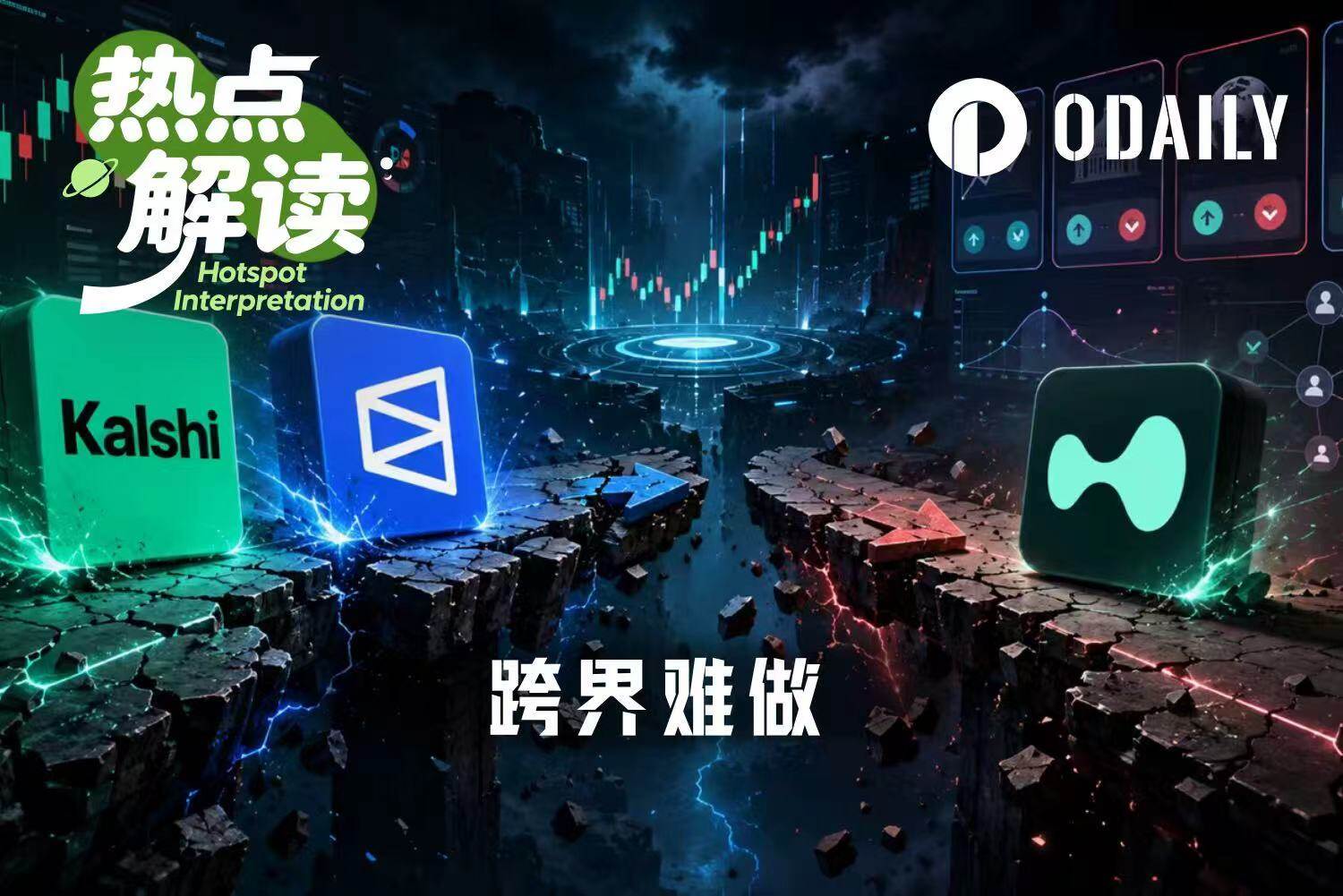
Crossing Boundaries Is Hard: Neither Prediction Market Nor Perp DEX Leader Has Replicated Their Own Success

Over the past six months, two of the hottest trading sectors—prediction markets and Perpetual DEXs (Perp DEXs)—have been attempting to cross into each other's territories. In April, prediction market platform Polymarket announced plans to launch perpetual contracts (Perps) for crypto, stocks, and commodities. In late May, the regulated platform Kalshi launched CFTC-regulated crypto Perps. Meanwhile, leading Perp DEX Hyperliquid moved in the opposite direction, launching its HIP-4 outcome markets for event-based trading in May. Initial results from these crossovers have been mixed, showing that established user habits and liquidity do not easily transfer to new product categories. Hyperliquid's HIP-4 platform saw strong initial demand, with daily volume reaching nearly $30 million during the World Cup, but active markets have since collapsed from over 120 to under 20, with daily volume often falling below $1 million. This highlights the inherent challenge: perpetual contracts maintain liquidity around core assets, while event contracts expire and require constant renewal of interest and liquidity. Similarly, Polymarket's Perps, still in an invite-only phase, saw daily volume drop from an initial ~$48 million to around $18 million by late July, with open interest (OI) at only ~$26.4 million—a fraction of Hyperliquid's ~$7.7 billion OI. Kalshi's Perps had a faster start, accumulating $16.1 billion in volume over six weeks, but recent daily volume has plummeted over 80% to around $80 million, with OI remaining in the millions, far below major Perp DEXs. The article concludes that replicating the deep liquidity and entrenched user behavior of a core market is exceptionally difficult. For these platforms, deepening their dominance in their original "home" sectors—whether Perp DEXs or prediction markets—may be a more viable strategy than pursuing a broad "everything exchange" model through跨界 expansion. Success ultimately depends on sustained accumulation of users, liquidity, and market depth in a core niche.

Odaily星球日报Hace 2 días 12:20

Crossing Boundaries Is Hard: Neither Prediction Market Nor Perp DEX Leader Has Replicated Their Own Success

Odaily星球日报Hace 2 días 12:20

$50 Million Funding Ignites Airdrop Anticipation, Variational Becomes New Focus of Perp DEX

Variational, a perpetual decentralized exchange (Perp DEX) on Arbitrum, has become a focal point in the crypto community after announcing a $50 million Series A funding round led by Dragonfly Capital, with participation from Bain Capital Crypto and Coinbase Ventures. This news caused a significant pre-listing price surge and increased predictions of a high fully diluted valuation (FDV) upon launch. A key feature of Variational is its zero-trading-fee model. It differentiates itself by aggregating multi-source liquidity, including traditional and crypto-native market makers, to address on-chain liquidity challenges. According to DefiLlama, it ranks fourth among Perp DEXs by open interest and is notable as the only top-five platform yet to issue a token. The primary way for users to engage is through its "Trade-to-Earn" Omni Points program. Points are awarded weekly based on trading activity, with bonuses for early users and a tiered reward system that incentivizes higher trading volumes. The program also includes a referral system offering USDC rewards and extra points. The design emphasizes organic trading over mere volume farming. While an exact Token Generation Event (TGE) date for the VAR token is not confirmed, official documentation states the points program will run at least until the end of Q3 2026. Community and prediction market sentiment generally expects the TGE to occur in Q3 or Q4 of this year.

Odaily星球日报05/21 02:01

$50 Million Funding Ignites Airdrop Anticipation, Variational Becomes New Focus of Perp DEX

Odaily星球日报05/21 02:01

The Midfield Battle of Perp DEX: The Declining, The Self-Rescuers, and The Latecomers

The article "Perp DEX Midfield Battle: The Declining, The Self-Rescuers, and The Newcomers" discusses the shifting landscape of decentralized perpetual exchanges (Perp DEX). Hyperliquid saw a weekly trading volume of approximately $15 billion, driven largely by commodity contracts like crude oil, gold, and silver amid geopolitical tensions and market volatility. Meanwhile, GMX Labs is hiring a CEO, moving away from its founder-driven model, and dYdX's market share dropped from 73% in early 2023 to single digits by late 2024. The decline of GMX and dYdX is attributed to several factors: reliance on token incentives that inflated trading volumes artificially, architectural limitations (e.g., GMX's liquidity pool model capping open interest, dYdX's costly migration to Cosmos), and misjudging key competitive factors like performance and market maker density. Hyperliquid, in contrast, grew slowly without VC backing or token incentives. It built its own L1 chain with a fully on-chain order book, focusing on transparency to attract market makers. It strategically expanded into traditional assets only after establishing a robust ecosystem, enabling it to capture demand during events like the Iran crisis. It now leads with ~54% of open interest among top Perp DEXs, ahead of Aster (~15%). The article concludes that the first generation of Perp DEXs is transitioning to professional management, while new opportunities lie in replacing traditional financial infrastructure, as Hyperliquid demonstrates by handling real-world demand.

marsbit03/27 09:31

The Midfield Battle of Perp DEX: The Declining, The Self-Rescuers, and The Latecomers

marsbit03/27 09:31

Prediction Markets Take Center Stage, But Perp DEXs Quietly Profit from the US-Iran War

In late February 2025, escalating tensions in the Middle East led to large-scale airstrikes by the U.S. and Israel against Iran, causing significant volatility in global financial markets. While traditional markets were closed during the weekend, investors turned to on-chain platforms to trade assets like gold, oil, and silver. Prediction markets such as Polymarket and Kalshi saw a surge in activity, with war-related contracts driving record trading volumes. However, perpetual decentralized exchanges (perp DEXs), particularly Hyperliquid, also capitalized on the situation. Hyperliquid’s commodities contracts—including gold, oil, and silver—experienced unprecedented liquidity and trading volume, with silver contracts alone reaching over $3.5 billion in daily volume at their peak. The platform’s HIP-3 market, trade.xyz, saw weekend trading volumes hit all-time highs, attracting large institutional and high-net-worth users due to its transparency, lack of trading restrictions, and non-custodial nature. In contrast, centralized exchanges (CEXs), though also offering real-world asset (RWA) trading, lacked the same level of visibility and trust among sophisticated traders. Hyperliquid’s upcoming HIP-4 feature introduces outcome-based contracts for prediction and options-like products, further expanding its role as a platform for pricing uncertainty. The growth of perp DEXs reflects a broader trend toward 24/7, globally accessible financial markets, though regulatory challenges remain a potential risk.

marsbit03/20 03:16

Prediction Markets Take Center Stage, But Perp DEXs Quietly Profit from the US-Iran War

marsbit03/20 03:16

BlackRock's First Foray into DeFi Trading, Coinbase CEO's Stock Sale Controversy – What's the Overseas Crypto Community Talking About Today?

In the past 24 hours, the crypto market saw significant developments, including institutional entry into DeFi and rising concerns over high-leverage narratives. BlackRock made its first direct DeFi transaction by listing its $1.8B tokenized treasury product BUIDL on Uniswap and acquiring UNI tokens, causing a short-term price surge. The move, executed via UniswapX for accredited investors, is seen as a major step in TradFi-DeFi integration but raised questions about protocol neutrality. MicroStrategy’s Michael Saylor sparked concern by stating the company could withstand a Bitcoin drop to $8K through debt refinancing, leading to comparisons with past failed high-leverage schemes. Meanwhile, Coinbase CEO Brian Armstrong’s continued stock sales drew mixed reactions, with some viewing it as insider caution despite possible personal financial planning reasons. On the ecosystem front, Citi completed a full supply chain finance operation on Solana, boosting its institutional credibility. Perp DEX Lighter launched Korean stock perpetuals (e.g., Samsung, Hyundai) with funding fee rebates, while Nado increased deposit limits. Additional notable updates include a Dune and Visa collaboration on a stablecoin report, Pudgy Penguins’ new crypto Visa card, and AI agents beginning to use Coinbase’s Agent Wallet for on-chain transactions.

marsbit02/12 16:37

BlackRock's First Foray into DeFi Trading, Coinbase CEO's Stock Sale Controversy – What's the Overseas Crypto Community Talking About Today?

marsbit02/12 16:37

Huobi Growth Academy | In-Depth Research Report on the Stock Contract Track: The Next Trillion-Dollar Battlefield for On-Chain Derivatives

Stock Perpetual Contracts, an innovative product bridging traditional finance and crypto derivatives, are rapidly reshaping the on-chain trading landscape. This emerging sector combines the massive market cap of global equities (over $160 trillion) with the mature perpetual contract model, creating a new synthetic derivative that tracks stock price movements without actual equity ownership. Leading Perp DEXs like Hyperliquid, Aster, and Lighter have established comprehensive product matrices, excelling in trading depth, user experience, and asset coverage. The underlying mechanism relies on decentralized oracles (e.g., Pyth, Chainlink) for price feeds, dynamic risk management for cross-market volatility, and controlled leverage (5-25x). Despite its potential, regulatory uncertainty remains the primary constraint, as authorities may classify these products as securities derivatives or CFDs, triggering compliance requirements. Technical risks include oracle failures, liquidity issues, and smart contract vulnerabilities. The future outlook is vast, with potential expansion into commodities, indices, and forex, evolving Perp DEXs into multi-asset derivative platforms. Regulatory clarity is expected in 2-3 years, fostering institutional adoption. Stock perpetual contracts could become a trillion-dollar market, democratizing global asset trading with borderless, 24/7 access.

marsbit01/29 07:18

Huobi Growth Academy | In-Depth Research Report on the Stock Contract Track: The Next Trillion-Dollar Battlefield for On-Chain Derivatives

marsbit01/29 07:18

活动图片