Artículos Relacionados con Papal Encyclical

El Centro de Noticias de HTX ofrece los artículos más recientes y un análisis profundo sobre "Papal Encyclical", cubriendo tendencias del mercado, actualizaciones de proyectos, desarrollos tecnológicos y políticas regulatorias en la industria de cripto.

Pope Issues First AI Encyclical: 40,000 Words, 10 Key Points, Clarifying AI Anxiety

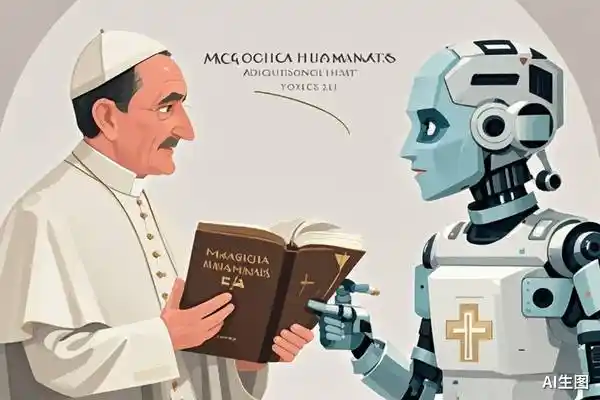
Pope Leo XIV's historic encyclical "Magnifica Humanitas," released in May 2026, marks the Catholic Church's first major document addressing artificial intelligence. The 40,000-word text moves beyond theological abstraction to confront practical AI anxieties affecting society. It argues that AI is no longer a mere tool but an embedded environment influencing daily decisions in areas like employment, healthcare, justice, and information, often without users' awareness. The encyclical presents ten core concerns. It highlights that the central issue isn't just regulation, but who holds the underlying *power*—control over data, compute, and platforms—often concentrated in private entities. It warns that even developers cannot fully explain AI systems, creating accountability gaps. While AI can simulate human interaction and creativity, it cautions against treating it as a moral agent capable of bearing true responsibility or forming genuine relationships. Key risks identified include AI's role in opaque decision-making for jobs or welfare, the amplification of persuasive disinformation, and the potential for education to focus on tool use over critical thinking. The document stresses that work has value beyond efficiency, and AI should enhance human capabilities, not merely replace roles. It firmly states that irreversible decisions, especially involving life and death, must remain under human judgment. Ultimately, the encyclical frames AI's challenge as anthropological, not just technological. As AI simulates uniquely human capacities like judgment and creation, it forces a re-examination of what makes human action meaningful: our capacity for responsibility, vulnerability, and bearing real consequences. The Pope concludes that technology is never neutral; its development and deployment are shaped by human values and choices, making an inclusive, ethically grounded dialogue essential for its future.

marsbit05/28 00:19
Pope Issues First AI Encyclical: 40,000 Words, 10 Key Points, Clarifying AI Anxiety

marsbit05/28 00:19

The First Encyclical of the New Pope in Rome, to Save the Common People in the AI Era

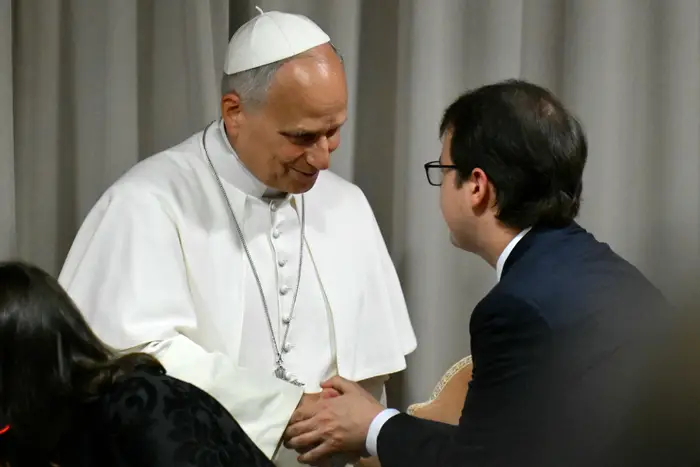
New Pope's First Encyclical Aims to Safeguard Humanity in the AI Era On May 25th, Pope Leo XIV issued his first encyclical, "Magnifica humanitas," a 40,000-word document addressing the profound challenges posed by Artificial Intelligence. Released on the 135th anniversary of Pope Leo XIII's "Rerum novarum," it positions itself as a guide for the Church's social doctrine in the AI age. The encyclical's central concern is preserving deep humanity amid rapid technological advancement. It argues technology is never neutral, carrying the values of its creators and users, and warns against building a "Tower of Babel" of technological tyranny versus a human-centric community. Pope Leo XIV criticizes the concentrated, opaque power of tech giants and the "new forms of slavery" emerging in the digital economy, where humans risk being reduced to mere instruments. A significant focus is the military use of AI. The Pope declares traditional "just war" theory obsolete, arguing that delegating lethal decisions to opaque algorithms severs moral accountability. He calls for "disarming AI" from military and economic arms races. The document also warns that deepfakes and information manipulation erode societal trust and rational discourse. Anthropic co-founder Chris Olah, present at the Vatican, responded by acknowledging the AI industry's limitations due to commercial and competitive pressures, necessitating external ethical oversight. He emphasized that AI's nature and its interaction with the world are ultimately philosophical and religious questions, not solvable by computer science alone. Olah revealed unsettling findings from his team's research into AI internals, including structures mirroring human neuroscience and evidence of internal states resembling emotions and introspection. The dialogue highlights a pivotal shift: AI is not a passive tool but an entity with emerging "quasi-agency." As creators themselves express unease, science is turning to realms like religion to grapple with fundamental questions about human identity and dignity. The core imperative becomes safeguarding irreducible human qualities—compassion, conscience, free will, and the pursuit of truth—in the face of a potentially more efficient intelligence.

Odaily星球日报05/26 06:50

The First Encyclical of the New Pope in Rome, to Save the Common People in the AI Era

Odaily星球日报05/26 06:50

活动图片