Artículos Relacionados con Information Aggregation

El Centro de Noticias de HTX ofrece los artículos más recientes y un análisis profundo sobre "Information Aggregation", cubriendo tendencias del mercado, actualizaciones de proyectos, desarrollos tecnológicos y políticas regulatorias en la industria de cripto.

a16z: The 'Super Bowl Moment' of Prediction Markets

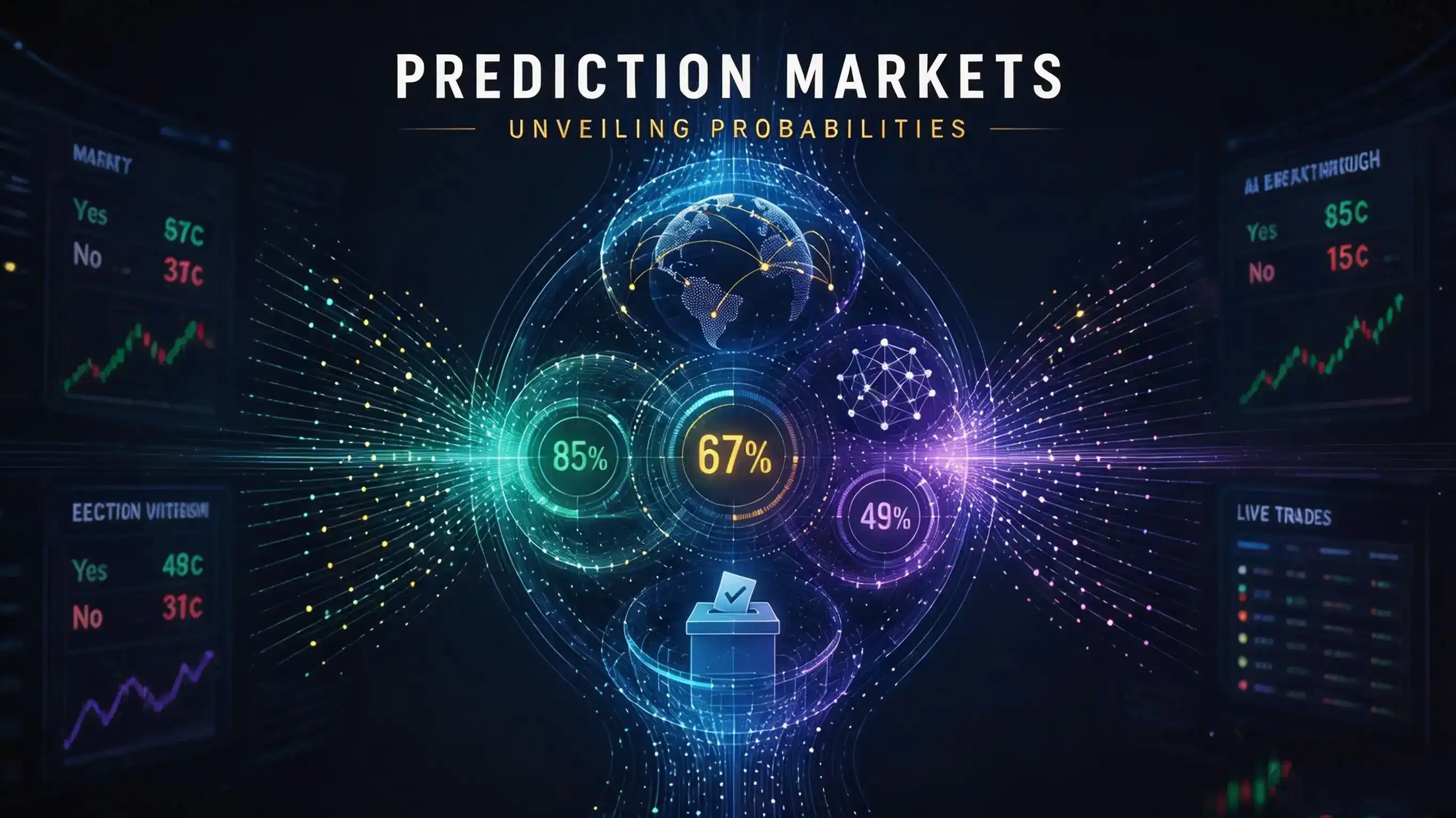
On February 8th, millions of NFL fans watched the Super Bowl while simultaneously tracking prediction markets, which offered bets on everything from the winner and final score to individual player performances. Over the past year, prediction markets in the U.S. have seen at least $27.9 billion in trading volume, covering not only sports but also economic policies, product launches, and more. These markets function by creating assets tied to specific outcomes; if the event occurs, asset holders profit. The core value lies in aggregating dispersed information through trading, making them more reliable than individual pundits or traditional sportsbooks, which aim to balance bets rather than reflect true probabilities. Prediction markets simplify the extraction of clear signals from complex information. For instance, instead of inferring tariff likelihood from soybean futures—which are influenced by multiple factors—one can directly trade on the event. The concept dates back to 16th-century Europe, but modern prediction markets are built on economics, statistics, and computer science, with academic foundations laid in the 1980s. A market might issue a contract paying $1 if a specific event occurs (e.g., a quarterback passing in a certain zone). The contract price reflects the market’s collective probability estimate. If a trader believes the probability is higher, they buy, pushing the price up and signaling confidence. This mechanism updates in real-time with new information, unlike static polls. It also incentivizes informed participation, as traders risk their own capital based on their knowledge. However, challenges remain. Market infrastructure must ensure event resolution, transparency, and auditability. Participation is crucial: if no one has information, the market fails; if insiders trade, fairness is compromised. Markets can also be manipulated, though they often self-correct. To realize their potential, prediction platforms must improve transparency and clearly disclose rules around participation, contract design, and operations. If these issues are addressed, prediction markets could play a significant role in future forecasting.

marsbit02/09 08:40

a16z: The 'Super Bowl Moment' of Prediction Markets

marsbit02/09 08:40

From a "Preemptive Bet" Trade, Understanding the Hottest Web3 Trend of 2025: Prediction Markets

In early January 2025, a significant transaction on the decentralized prediction platform Polymarket drew widespread attention. An account invested approximately $32,537 over four days betting that Venezuelan President Maduro would leave office by January 31. The bet was placed hours before related geopolitical news became public, eventually yielding over $400,000 in profit as the event's perceived likelihood surged. This incident highlights the growing influence of prediction markets—a rapidly expanding Web3 sector in 2025. Prediction markets use financial incentives to aggregate dispersed information, allowing participants to trade on event outcomes. Prices reflect collective intelligence, often outperforming traditional polls, as seen during the 2024 U.S. election. Key platforms like Polymarket and Kalshi have attracted over $3.15 billion in funding, with Polymarket’s valuation reaching $8–9 billion after a strategic investment from ICE. The sector is projected to grow from $900 million in trading volume in 2024 to $40 billion in 2025, with users increasing from 4 million to 15 million. Unlike gambling, prediction markets use transparent, market-driven pricing and serve as data products for decision-making, attracting researchers and institutional players. Their growth is fueled by regulatory clarity from the CFTC, expanded event categories, and improved technology. However, risks remain, including potential insider trading and market manipulation. Participation is prohibited in mainland China. Nonetheless, prediction markets represent a shift in Web3 toward real-world information infrastructure rather than pure asset speculation.

marsbit01/07 06:37

From a "Preemptive Bet" Trade, Understanding the Hottest Web3 Trend of 2025: Prediction Markets

marsbit01/07 06:37

活动图片