Artículos Relacionados con Information

El Centro de Noticias de HTX ofrece los artículos más recientes y un análisis profundo sobre "Information", cubriendo tendencias del mercado, actualizaciones de proyectos, desarrollos tecnológicos y políticas regulatorias en la industria de cripto.

A New Scaling Variable for Text-to-Image Generation, Discovered by ByteDance's Seed Team

ByteDance's SEED team investigated a crucial but often overlooked scaling variable in text-to-image diffusion models: the amount of image-grounded information in training captions. They found that simply increasing caption length with natural language does not improve model performance, as it often adds redundancy without new, usable visual supervision. The core discovery is that the final training loss of a diffusion model can be predicted by the *information content* of its text condition, measured by two complementary metrics: Grounded Perplexity Gain (GPG) and Effective Detailness (ED). This establishes a scaling relationship for text conditioning. To systematically increase information content, the team proposed **Structured Prompt (SP)**, a JSON-based representation that organizes visual variables (global scene, object attributes, spatial relationships) into clear fields, enhancing **Diffusability**—the model's ability to learn from captions. For inference, an LLM **Prompter** is trained to convert user queries into detailed SP instances, defining **Promptability**. The overall generation quality is viewed as a product of Diffusability and Promptability. A three-stage training strategy (SFT, cold-start reasoning distillation, and verifier-guided reinforcement) significantly improves the prompter's capability. The structured format also enables efficient iterative refinement through a *refine-render-judge* loop. In matched-control experiments using the same Qwen-Image backbone, data, and compute, the SP-based system substantially outperformed its natural-language counterpart, demonstrating that gains stem from the structured information interface, not just more training. The work shows that scaling text-to-image models requires scaling the *usable visual information* in conditions, not just model size or data volume.

marsbit08/12 03:17

A New Scaling Variable for Text-to-Image Generation, Discovered by ByteDance's Seed Team

marsbit08/12 03:17

Building the Next-Generation Financial Information Terminal with BlockBeats

BlockBeats is building a next-generation personal financial information portal, integrating real-time global market data, news, professional research, and AI-powered analysis. We are actively hiring for multiple roles across our teams in Beijing, with strictly remote opportunities available. We are seeking passionate individuals to join our Hot News Team as Global Market Information Editors, responsible for real-time tracking and analysis of global tech, financial markets, and industry trends. Our In-Depth Reporting & Research Team is looking for Tech Finance Researchers to conduct deep analysis on AI, capital markets, digital assets, and emerging industries. Our Operations Team needs Social Media Specialists to drive user growth and community engagement on platforms like Twitter and Telegram. The Business Team has openings for Business Executives to manage client partnerships and Overseas Business Development specialists to expand our global footprint. Technical roles include Frontend and Backend Developers to help build our products. We are also forming a Prediction Markets Team, seeking Researchers/Content Writers to analyze market events, on-chain data, and provide actionable insights. Ideal candidates are curious about future tech, sensitive to financial markets, adept at extracting value from information, and eager to build new products. Both full-time positions and internships are available.

marsbit08/07 10:06

Building the Next-Generation Financial Information Terminal with BlockBeats

marsbit08/07 10:06

Only 67 of Top 1000 Crypto Projects Have Wikipedia Pages, ChatGPT's 'Understanding' of Crypto Industry Being Distorted

A study by crypto communications firm Chainstory reveals a significant information gap: only 67 of the top 1,000 cryptocurrencies by market capitalization have a Wikipedia page, representing less than 7% coverage. This includes major projects like the $15 billion Hyperliquid and the $5 billion Sui. The coverage rate declines sharply from 80% for the top 10 assets to near zero for those ranked 1,001 to 10,000. This gap is critical because Wikipedia is the single most cited source for AI models like ChatGPT, accounting for approximately 7.8% of all its citations. Consequently, AI tools have a systemic blind spot and lack authoritative, foundational information for the vast majority of crypto projects, often leading to factual errors when discussing them. The low coverage stems from Wikipedia's strict notability guidelines for cryptocurrencies, which deem crypto-native media outlets like CoinDesk and Cointelegraph as "generally unreliable." Instead, Wikipedia requires coverage from mainstream financial publications like Reuters or Bloomberg, which rarely report on many niche crypto sectors. This creates a catch-22 where the media covering the industry aren't trusted, and the trusted media don't cover it. The cumbersome Wikipedia article creation and review process, where projects have no right to appeal deletions, further exacerbates the problem.

marsbit07/15 05:20

Only 67 of Top 1000 Crypto Projects Have Wikipedia Pages, ChatGPT's 'Understanding' of Crypto Industry Being Distorted

marsbit07/15 05:20

In the Age of AI, What's Left for Bitcoin?

Author: Sevclub, Seven Research Amid Bitcoin's recent drop below $60k, the author reflects on a growing sense that AI and Bitcoin are two sides of the same coin. Today, encountering any content triggers a new default question: "Was this made by AI?" The cost of generating convincing text, images, and video is now negligible. While the internet lowered information *distribution* costs, AI is crashing information *production* costs to near zero. The consequence is a flood of content where truth and falsehood are increasingly indistinguishable. In this environment, what becomes truly valuable is not more information, but the ability to verify what is real—"verifiability." This reframes the common criticism that Bitcoin "wastes electricity." AI consumes power to produce "capability" (e.g., more powerful models). Bitcoin consumes power to produce something else: "verifiability." Bitcoin's core purpose isn't about belief or trust in any institution, developer, or even its creator. It's about enabling independent verification. Every bitcoin's origin, every transaction, and the integrity of the entire ledger are secured by mathematics, cryptography, and a global network of nodes. AI can fabricate convincing media, but it cannot falsify a transaction on the Bitcoin network. The expended energy makes篡改历史 (tampering with history) prohibitively expensive, purchasing a globally verifiable ledger. The author draws a historical parallel to the Renaissance. The printing press drastically reduced the cost of copying knowledge, while double-entry bookkeeping reduced the cost of trust in commerce—one enabled creation, the other verification. Today, AI is the new printing press, driving content production costs toward zero. The question becomes: what is this era's "double-entry bookkeeping"? Blockchain appears to be the leading candidate. It doesn't verify which news is true or which image is real, but it provides a foundational layer for independently verifying asset ownership and historical records in the digital realm without centralized authorities. Therefore, AI and blockchain are not in competition. AI lowers the cost of *generation*. Blockchain (and Bitcoin as a prime example) lowers the cost of *verification*. One creates, the other proves. Whether Bitcoin ultimately succeeds remains uncertain, facing potential challenges from quantum computing, regulation, and technical evolution. However, the author now sees it less as a "machine for making bitcoin" and more as a "machine for making verifiability." In an age where AI can generate anything, true scarcity may no longer be "more content," but "more independently verifiable facts." Whether the market will price this accordingly is a separate question.

链捕手06/30 15:48

In the Age of AI, What's Left for Bitcoin?

链捕手06/30 15:48

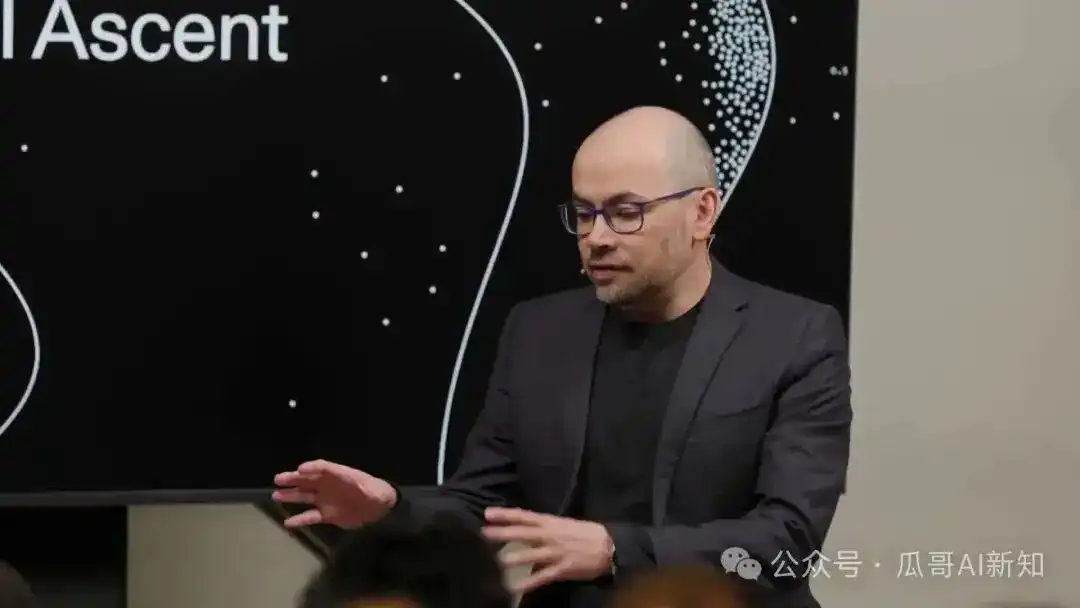
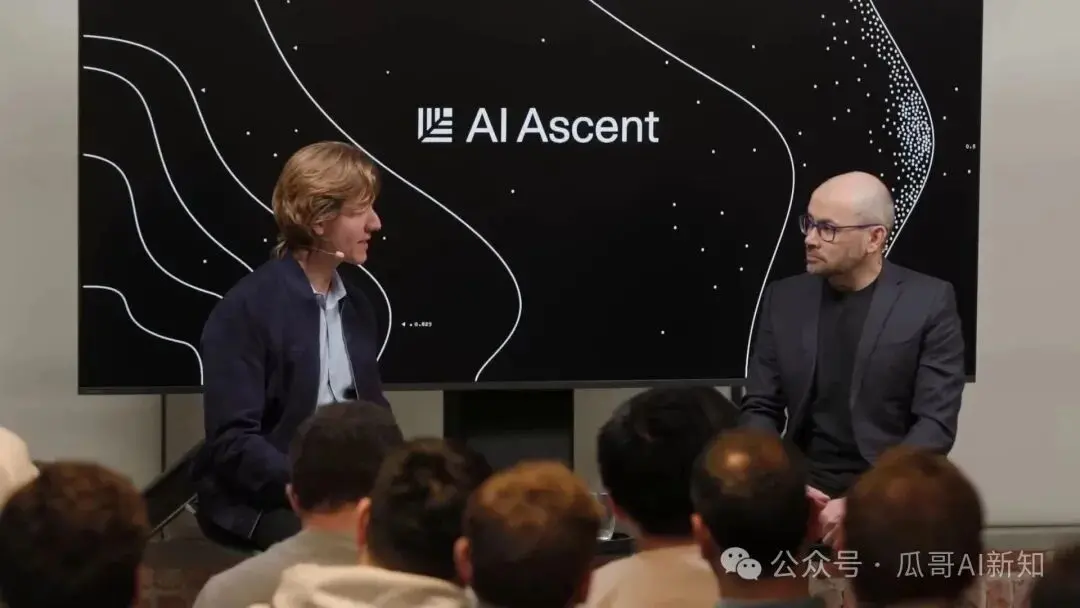
Sequoia Interview with Hassabis: Information is the Essence of the Universe, AI Will Open Up Entirely New Scientific Branches

Demis Hassabis, co-founder and CEO of Google DeepMind and Nobel laureate, discusses the path to AGI and its profound implications in a Sequoia Capital interview. He outlines his lifelong dedication to AI, tracing his journey from game development (e.g., *Theme Park*)—a perfect AI testing ground—to neuroscience and finally founding DeepMind in 2009. He emphasizes the critical lesson of being "5 years, not 50 years, ahead of time" for successful entrepreneurship. Hassabis reiterates DeepMind's two-step mission: first, solve intelligence by building AGI; second, use AGI to tackle other complex problems. He highlights the transformative potential of "AI for Science," particularly in biology where tools like AlphaFold have revolutionized protein folding. He envisions AI-powered simulations drastically shortening drug discovery from years to weeks and enabling personalized medicine. Furthermore, he predicts AI will spawn new scientific disciplines, such as an engineering science for understanding complex AI systems (mechanistic interpretability) and novel fields enabled by high-fidelity simulators for complex systems like economics. He posits a fundamental worldview where information, not just matter or energy, is the essence of the universe, making AI's information-processing core uniquely suited to understanding reality. He defends classical Turing machines as potentially sufficient for modeling complex phenomena, including quantum systems, as demonstrated by AlphaFold. On consciousness, Hassabis suggests first building AGI as a powerful tool, then using it to explore deep philosophical questions. He believes components like self-awareness and temporal continuity are necessary for consciousness but that defining it fully remains an open challenge. He predicts AGI could arrive around 2030 and, once achieved, would be used to probe the deepest questions of science and reality, much as envisioned in David Deutsch's *The Fabric of Reality*.

链捕手05/12 02:15

Sequoia Interview with Hassabis: Information is the Essence of the Universe, AI Will Open Up Entirely New Scientific Branches

链捕手05/12 02:15

Polymarket Is Not an All-Powerful "Truth Machine"

Polymarket, a crypto-based betting platform, is often hailed as a "truth machine" for its ability to aggregate crowd wisdom through financial stakes. While it has demonstrated remarkable accuracy in predicting major events like the 2024 U.S. presidential election—outperforming traditional polls—its overall reliability is highly inconsistent. Analysis using the Brier score reveals that its predictive power excels in high-liquidity domains like politics and economics but falls to near-random or worse in categories like sports, culture, and tech. The platform’s growing influence is concerning as its odds are increasingly cited by major media outlets like The Wall Street Journal and CNN, lending them an air of authority. This visibility creates a feedback loop where the odds themselves can influence the outcomes they are meant to predict—a phenomenon known as endogeneity. Moreover, the market is vulnerable to manipulation by well-resourced "whales" with access to exclusive information, such as private polls or even military intelligence, as seen in cases involving bets on geopolitical events. While useful for short-term, high-stakes events, Polymarket’s predictions are often unreliable for the vast majority of its contracts due to low liquidity and wide bid-ask spreads. The danger lies not in its occasional failures, but in the unchecked trust it receives—risking a future where a handful of traders can shape perceived reality through a platform masquerading as an oracle of truth.

marsbit04/15 11:40

Polymarket Is Not an All-Powerful "Truth Machine"

marsbit04/15 11:40

活动图片