Artículos Relacionados con Global

El Centro de Noticias de HTX ofrece los artículos más recientes y un análisis profundo sobre "Global", cubriendo tendencias del mercado, actualizaciones de proyectos, desarrollos tecnológicos y políticas regulatorias en la industria de cripto.

Futu Hong Kong Lists BNB: A Counterattack in the Crypto Exchange Arena Amid Regulatory Pressures

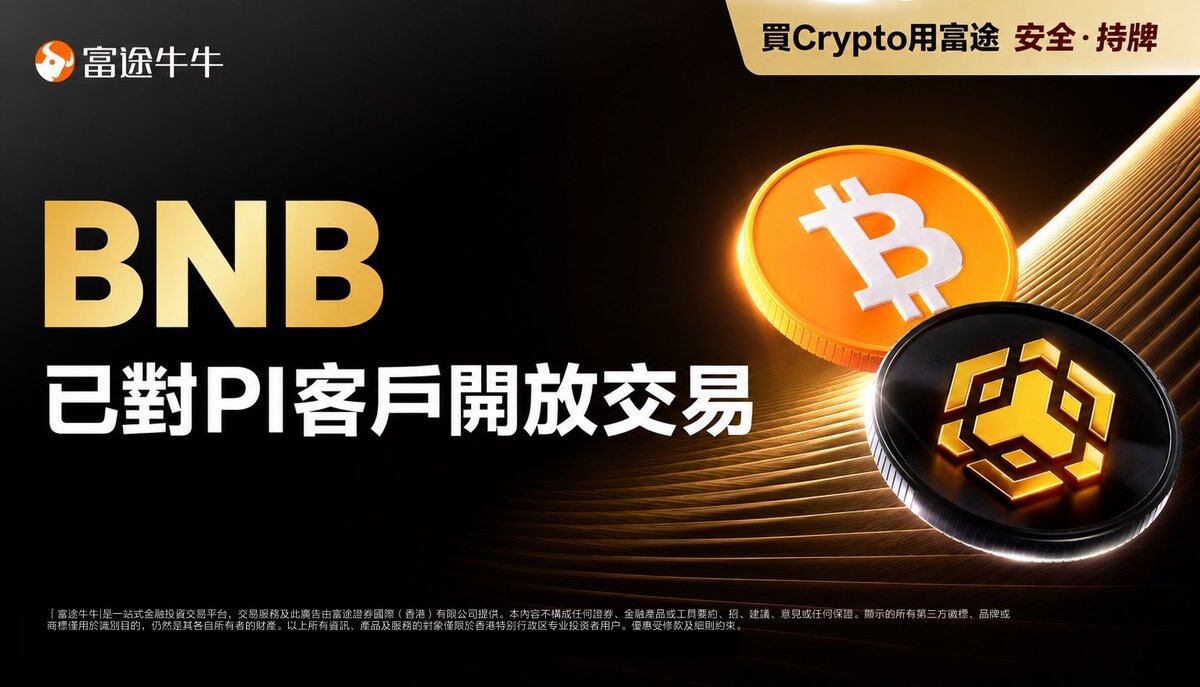
Futu Securities, a long-established brokerage, has launched real-time BNB trading for Hong Kong's compliant professional investors, becoming the first licensed broker in the city to offer an order book trading pair for BNB. This expands its available cryptocurrencies to 21 mainstream coins, including BTC, ETH, and SOL. The move leverages its self-built PantherTrade platform, which complies with Hong Kong Securities and Futures Commission standards. This strategic push into cryptocurrency trading comes as Futu faces significant regulatory pressures globally. In mainland China, authorities imposed a substantial fine and mandated a two-year wind-down period for its cross-border business with mainland investors. Concurrently, it faces lawsuits in the U.S. over alleged insider trading and was ordered by Japanese regulators to suspend new account openings for three months due to compliance failures. Amid these challenges in its traditional brokerage operations, Futu is seeking growth through its virtual asset services. It first received Hong Kong SFC approval for crypto trading in July 2024 and has since expanded these services to markets like Singapore and the U.S. In a further development this June, it gained approval to offer virtual asset margin financing in Hong Kong, allowing clients to use traditional securities as collateral for crypto trades. Futu's Q1 2026 results showed strong performance in its Hong Kong brokerage, with a dominant local market share. With mainland client assets declining, its Hong Kong crypto business is gaining strategic importance. This move marks a significant step in traditional brokerages competing directly with crypto exchanges for global capital flows.

Odaily星球日报Ayer 11:59

Futu Hong Kong Lists BNB: A Counterattack in the Crypto Exchange Arena Amid Regulatory Pressures

Odaily星球日报Ayer 11:59

Goldman Sachs Deep Dive Report: Who Will Become the Long-Term Winners in China's AI Large Model Industry?

Goldman Sachs Report: Who Will Be the Long-Term Winners in China's AI Large Model Industry? China's AI large model sector is at a historic inflection point. Goldman Sachs argues that the intelligence of Chinese open-source/open-weight models is approaching top global proprietary models. Rapid adoption by domestic enterprises and global SMEs is creating a data flywheel effect that will further drive model iteration. The evolution is summarized as moving from "DeepSeek's cost-efficiency moment last year to GLM's model-intelligence moment this year." Chinese models achieve near-state-of-the-art performance at significantly lower cost, primarily due to architectural innovations like Mixture of Experts (MoE) and higher parameter efficiency. Models like DeepSeek V4 Pro (1.6T params), GLM5.2 (0.7T), and MiniMax M3 (0.4T) are much smaller than global leaders. Recent advancements in coding capability are attributed to better data curation and RLHF. Landmarks like Meituan's LongCat 2.0, trained fully on domestic AI chips, demonstrate progress in hardware stack independence. The market is forming a "two-tiered structure." The high-end tier (e.g., GLM5.2, Alibaba's Qwen3.7 Max) prices around $1 per million tokens, about 10-25% of US top models, with estimated inference gross margins of 10-20%. The low-end tier (priced as low as $0.06-$0.2 per million tokens) targets price-sensitive global SMEs and individuals. MiniMax derives 60-70% of revenue overseas. Goldman forecasts China's AI model API/subscription revenue to grow from an estimated RMB 35bn in 2026 to RMB 879bn by 2030. Most Chinese players adopt open-source/open-weight strategies for deployment flexibility and community feedback, though this limits monetization as deployments on third-party platforms (e.g., Alibaba Cloud) may not generate direct revenue. A shift towards "open-weight + community license" models with revenue-sharing agreements (like MiniMax's approach) could improve unit economics. International expansion, particularly in non-US markets, is the key growth driver. The global enterprise AI paradigm is shifting from "token maximization" to "ROI prioritization." Chinese models are already hosted on major global platforms like AWS Bedrock and are under consideration for integration into Microsoft Copilot. Using a competitive framework based on pricing power, cost advantage, and financial strength, Goldman identifies the strongest players: In foundational text models, Zhipu AI (initiated coverage) and DeepSeek lead. In multimodal/video generation, ByteDance's Seed is the frontrunner, with Kuaishou's Kling and MiniMax's Hailuo also well-positioned. Goldman maintains a Buy rating on MiniMax, citing its attractive valuation.

链捕手07/10 14:20

Goldman Sachs Deep Dive Report: Who Will Become the Long-Term Winners in China's AI Large Model Industry?

链捕手07/10 14:20

Lost 10 Billion, Yet Valued at 46.7 Billion? The True Value Revelation of Japan's Crypto Exchange 'Doomsday License'

**Summary: The Priceless "Doomsday License" – Why Japan's SBI Paid $289M for a Losing Exchange** In mid-2026, Japanese financial giant SBI Holdings acquired cryptocurrency exchange Bitbank for ¥46.7 billion (~$289 million). This valuation is puzzling on paper: Bitbank, while a long-established, licensed exchange, reported a ¥970 million loss in 2025 on shrinking revenues. The key lies not in profitability, but in a regulatory "franchise scale." SBI's purchase was for Bitbank's scarce, irreplaceable assets: its Japanese FSA license, 960,000 user accounts, and a fully compliant yen on-ramp. This acquisition came just two weeks after Japan passed a landmark amendment reclassifying crypto assets as "financial instruments" under stricter laws, dramatically raising penalties for unlicensed operations. Analysts predict up to half of Japan's ~30 licensed exchanges may exit, transforming existing licenses into non-renewable strategic resources. The deal's ~8x revenue multiple mirrors a global trend of "compliance arbitrage," where acquiring regulated entities is faster and cheaper than navigating complex, years-long licensing processes. The Japanese narrative is part of a worldwide pattern. In 2026 alone, the crypto sector saw $11.8 billion in M&A, with giants like Mastercard and Bullish acquiring regulated digital asset firms. As jurisdictions like the US, Singapore, and Hong Kong solidify frameworks, regulatory compliance shifts from a cost center to the most durable moat. The core lesson is that in maturing markets, the true value shifts from trading volume to "licensed scale." For early, compliant platforms, stringent regulation becomes a defensive asset, not a constraint. SBI's strategy of consolidating licensed Japanese exchanges illustrates this. The window to acquire such "tickets to the future financial world" at a reasonable cost is rapidly closing as global capital recognizes that in the regulated era, the license itself is the ultimate prize.

marsbit07/03 06:08
Lost 10 Billion, Yet Valued at 46.7 Billion? The True Value Revelation of Japan's Crypto Exchange 'Doomsday License'

marsbit07/03 06:08

The AI Economy I Saw at Stripe Sessions 2026

"At Stripe Sessions 2026, the AI economy's impact is undeniable, echoing the delayed productivity recognition seen with computers in the '90s. Stripe's data shows an AI boom: new business formation has surged vertically since early 2026, with companies generating revenue 5x faster than a year ago. AI firms like Lovable and Cursor scale to billions in months. Two key features define this economy: unprecedented speed and being 'global by default,' with companies reaching 55+ countries in their first year. Stripe's global financial infrastructure is critical for this instant international commerce. The conference's central theme was 'Agentic Commerce'—a future where AI agents become economic participants. Demos showed agents autonomously purchasing data, generating reports, and selling them. This shift introduces micro-payments and continuous 'strategic' spending, as agents lack human cognitive friction. New challenges like fraud targeting AI's real inference costs are met with systems like Stripe's Radar. The transition requires an ecosystem. Stripe is collaborating on protocols like the Machine Payments Protocol (MPP) and joining the Universal Commerce Protocol (UCP) to enable seamless agent-to-agent transactions. Underpinning this vision is Stripe's philosophy: 'money is data,' programmable and operable by agents. Thus, Stripe is not just powering the AI economy but acting as its 'heart-rate monitor,' capturing its rapid pulse through transactions equating to nearly 2% of global GDP."

marsbit05/08 05:58

The AI Economy I Saw at Stripe Sessions 2026

marsbit05/08 05:58

ENI Officially Announces Completion of Strategic Brand Upgrade: Evolving from Underlying Protocol to Global Institutional-Grade Financial Infrastructure

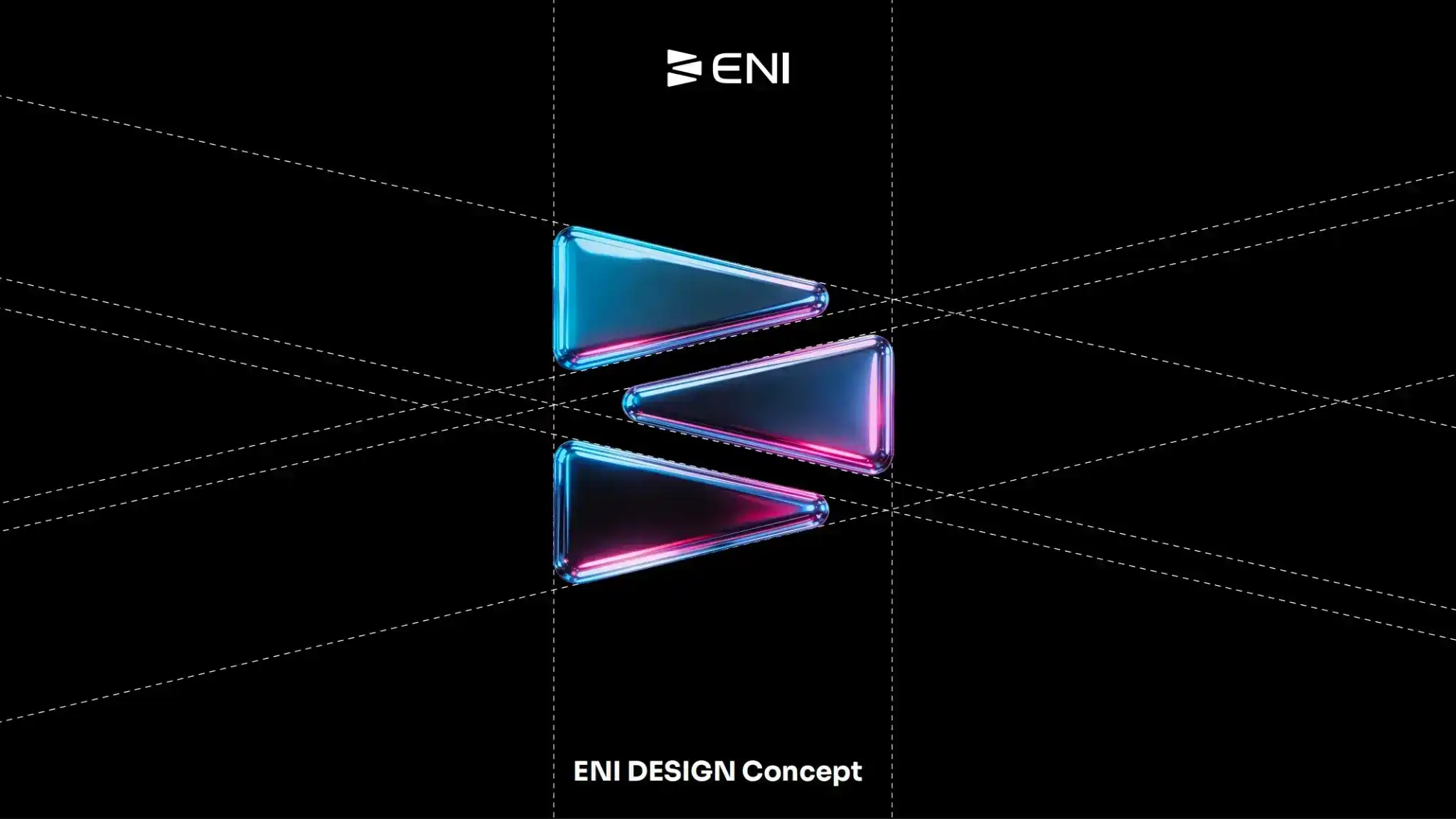
ENI Announces Strategic Brand Upgrade: Evolving from Underlying Protocol to Global Institutional-Grade Financial Infrastructure At the Hong Kong Web3 Festival on April 20, 2026, ENI founder and CEO Arion Ho announced the completion of a comprehensive brand, website, and visual system upgrade. This marks a significant shift from being an "underlying public chain" to an enterprise-grade Blockchain-as-a-Service (BaaS) platform, positioning ENI as a key infrastructure provider bridging traditional finance (TradFi) and Web3. The rebranding emphasizes precision and professionalism, reflected in a refined visual identity featuring a 25-degree tilt and a 1:4 golden ratio in its design elements. This aesthetic upgrade, led by a top-tier design team with experience from Hermès and ByteDance, underscores ENI’s commitment to institutional-grade trust and global sophistication. ENI now functions as a bridge between technological innovation and real-world business applications. It offers tailored architecture solutions for large institutions and standardized, low-friction BaaS tools for SMEs, enabling seamless integration of Web3 capabilities into existing business models. The announcement in Hong Kong, a global financial hub, signals ENI’s matured, global-ready approach to supporting the commercial adoption of Web3. By providing a stable, standardized platform, ENI aims to facilitate the secure migration of real-world assets and operations into the digital economy.

marsbit04/22 10:23

ENI Officially Announces Completion of Strategic Brand Upgrade: Evolving from Underlying Protocol to Global Institutional-Grade Financial Infrastructure

marsbit04/22 10:23

活动图片