Artículos Relacionados con Gambling

El Centro de Noticias de HTX ofrece los artículos más recientes y un análisis profundo sobre "Gambling", cubriendo tendencias del mercado, actualizaciones de proyectos, desarrollos tecnológicos y políticas regulatorias en la industria de cripto.

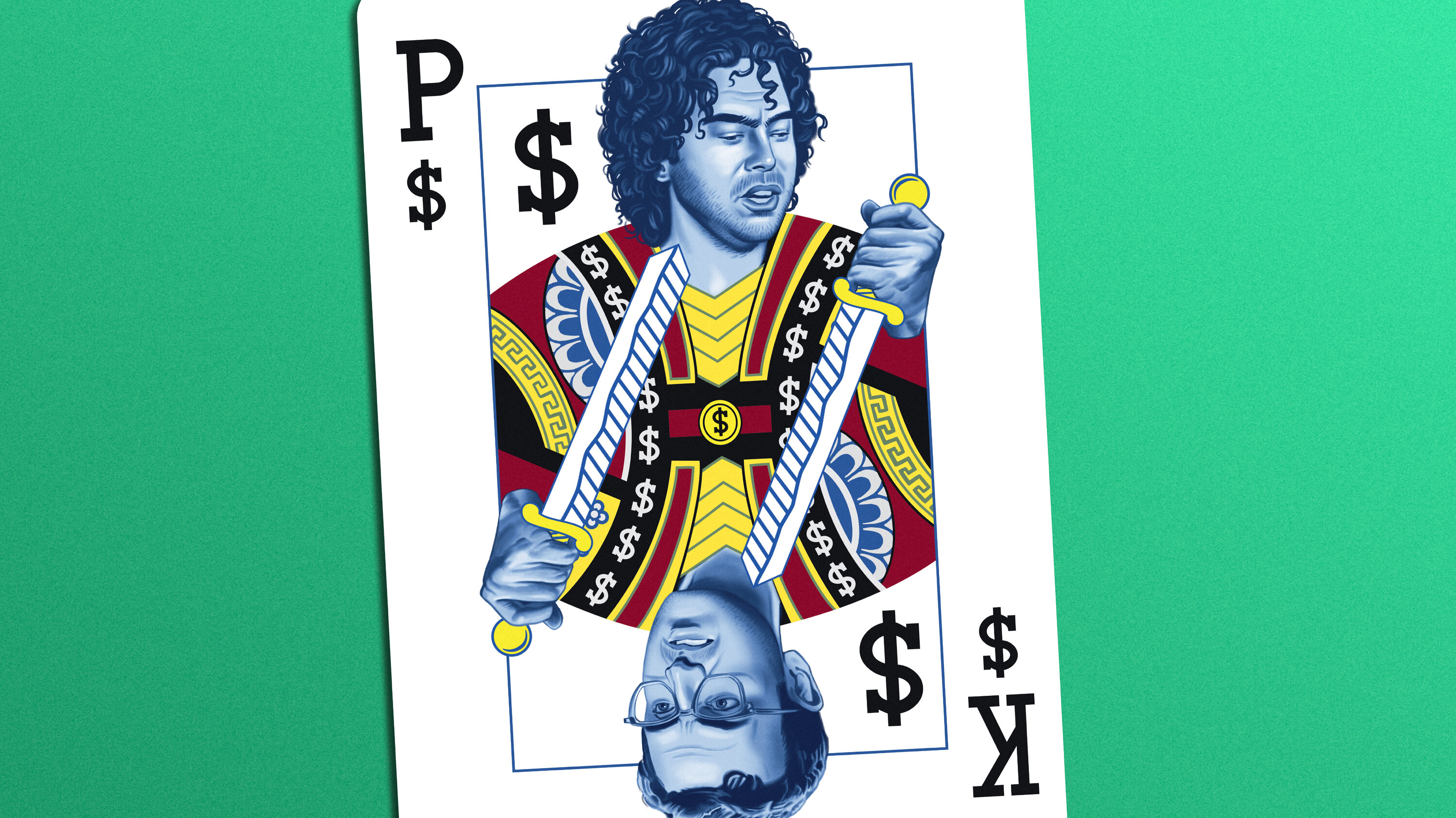
Kalshi and Polymarket Founders at Odds? This Business War Is Far More Brutal Than You Imagine

The New York Times details the fierce, personal rivalry between Kalshi CEO Tarek Mansour and Polymarket founder Shayne Coplan, which has escalated beyond typical business competition into a conflict marked by legal complaints, regulatory battles, and public hostilities. The feud intensified in late 2024 when FBI agents raided Coplan's New York apartment. While Coplan publicly blamed political motives, sources indicate his team privately suspected Mansour, noting that Kalshi's lawyers had previously reported Polymarket's operational model to federal prosecutors, highlighting that U.S. users could still access its offshore platform despite a ban. The animosity extends through their companies' operations. Kalshi positions itself as a compliance-focused, fully licensed U.S. operator, while Polymarket has historically operated its core platform offshore without a U.S. license, offering more anonymity and controversial betting markets. Mansour has publicly called Polymarket's model "illegal and immoral," while Coplan privately dismisses Kalshi as a copycat. Their competition has played out in Washington lobbying, attempts to sabotage each other's major deals (such as Kalshi's efforts to dissuade Intercontinental Exchange from investing in Polymarket), competing sponsorships, and poaching staff. The rivalry continues as both platforms experience massive growth, with Kalshi currently holding a valuation and trading volume edge, but facing ongoing regulatory scrutiny alongside Polymarket.

Foresight News07/21 11:34

Kalshi and Polymarket Founders at Odds? This Business War Is Far More Brutal Than You Imagine

Foresight News07/21 11:34

1.2 Million in Line for Margin Calls: The Collapse of South Korea's National "Gamble" by Retail Investors

In July 2026, the South Korean stock market, fueled by a national "all-in" bet on semiconductor stocks, experienced a catastrophic meltdown. The KOSPI index plummeted from record highs, triggering seven market-wide trading halts in the first half of the year—more than half the total since the mechanism's inception in 2000. The crisis stemmed from the market's extreme concentration on two giants: Samsung Electronics and SK Hynix, which accounted for 60% of the KOSPI index. Amid an AI-driven boom, rampant retail speculation, particularly among young investors seeking to overcome high living costs and social immobility, led to a surge in leveraged trading. In a pivotal move, regulators allowed the launch of 2x leveraged ETFs tied solely to these two stocks in May 2026. This set the stage for disaster. When signs of an HBM chip glut emerged in July, prices for Samsung and SK Hynix fell. The leveraged ETFs' mandatory daily rebalancing mechanism forced them to sell shares aggressively to maintain their leverage ratios. This triggered a vicious cycle: ETF selling drove prices down further, which triggered margin calls and forced liquidations of retail investors' leveraged positions, leading to more selling. The market entered a self-reinforcing "death spiral" of cascading liquidations. The aftermath was devastating. Over 1.2 million retail margin accounts faced liquidation warnings, with an estimated 320,000 to 460,000 accounts completely wiped out, many left owing money to their brokers. Approximately 62% of these affected investors were in their 20s and 30s. Total losses from leveraged positions were estimated at around 2.15 trillion won (~$1.6 billion USD). Regulators later expressed regret for approving the high-risk ETFs, highlighting the dangers of financial innovation outpacing proper risk controls and investor protection. The episode serves as a stark warning: when market frenzy, structural fragility, and complex leverage products converge, the outcome can be a rapid and brutal wealth destruction, disproportionately impacting the most vulnerable participants.

marsbit07/20 11:38

1.2 Million in Line for Margin Calls: The Collapse of South Korea's National "Gamble" by Retail Investors

marsbit07/20 11:38

Tiger Research: Zuckerberg Begins Betting on Prediction Markets, While Asian Nations Still View Them as Gambling

This article examines the rise of prediction markets, contrasting their growing institutional acceptance in the West with their restrictive regulation in Asia. It details how prediction markets, which originated from informal political betting and academic experiments like the Iowa Electronic Market, aggregate crowd wisdom into probabilistic prices through binary contracts. Their growth accelerated around 2020, reaching over $14 billion in monthly volume. A key driver is the "skin in the game" principle, where users risk their own capital, leading to high accuracy in predicting events like Fed rate decisions and elections, as demonstrated by platforms like Polymarket. Meta's entry, with Mark Zuckerberg reportedly leading the development of the Arena app, signals the market's maturation. In the U.S., court rulings have distinguished prediction markets from gambling, facilitating entry by traditional financial institutions. However, most Asian jurisdictions still classify them as gambling, focusing on social control rather than financial innovation. The article argues this stance creates three problems for Asia: 1) regulatory arbitrage pushes users to riskier offshore platforms, 2) loss of sovereign information infrastructure as valuable social sentiment data accumulates abroad, and 3) abandonment of user protection. It concludes that Asia needs a policy shift from prohibition to constructive regulation, integrating these markets into the formal system to harness their data as a national asset, as initiatives like Limitless Research are beginning to do.

marsbit07/11 10:43

Tiger Research: Zuckerberg Begins Betting on Prediction Markets, While Asian Nations Still View Them as Gambling

marsbit07/11 10:43

Goldman Sachs Bans It, Google Bans It Too: The Gray Zone of Prediction Markets Is Shrinking Fast

Goldman Sachs has updated its personal trading policy, prohibiting employees from trading event contracts on prediction markets involving specific companies (including whether Goldman itself might restructure or initiate acquisitions in a quarter), election outcomes, financial market performance (including Bitcoin prices), macroeconomic data, geopolitical events, and regulatory results for pending M&A deals. Sports and entertainment bets remain allowed. Violations can lead to dismissal or account closure, and the firm may reclaim profits over $200 or donate them to charity. This follows a CFTC case against a Google engineer who allegedly used non-public data to profit $1.2 million on Polymarket. Simultaneously, Google's Chrome Web Store updated its policy, banning extensions that facilitate real-money trading on prediction market outcomes, effective August 1, 2026. While not affecting platforms' websites or mobile apps directly, this restricts a key user access channel. These actions occur amid growing regulatory pressure on prediction markets. The CFTC is investigating Polymarket for alleged misconduct, and a consumer group has filed a lawsuit. Over 30 countries, including Argentina, have blocked access. Despite this, trading volume has hit record highs, and major investments continue, such as ICE's $2 billion stake in Polymarket. The core debate remains whether prediction markets are financial instruments or gambling. CFTC argues for federal oversight as derivatives, while some states seek to regulate them under gambling laws. Multiple fronts—federal probes, political pressure, internal corporate bans, and platform restrictions—are narrowing the operational space for these markets.

Foresight News07/10 03:43

Goldman Sachs Bans It, Google Bans It Too: The Gray Zone of Prediction Markets Is Shrinking Fast

Foresight News07/10 03:43

Zuckerberg Begins Betting on Prediction Markets, While Asian Countries Still View Them as Gambling

Mark Zuckerberg is backing prediction markets, with Meta developing its own app "Arena," signaling major tech validation. This industry now sees over $14 billion in monthly volume. These markets function as binary contracts (payout $1 if an event occurs, $0 if not), with trading prices reflecting real-time event probabilities. Results are settled by oracles. Prediction markets originated from informal political betting and academic experiments like the Iowa Electronic Markets. Their core mechanism relies on "skin in the game"—participants risk their own money, making aggregated information more reliable than polls or expert opinions. They have proven accurate in forecasting areas like monetary policy, elections, and market events. While Western markets are integrating them into regulated financial systems, many Asian jurisdictions still classify them as gambling, leading to regulatory divergence. This stance creates three major issues for Asia: regulatory arbitrage and capital outflow, loss of informational sovereignty as valuable social data accumulates offshore, and a lack of user protection within a formal framework. The article argues that Asia's focus should shift from blocking these markets to responsibly harnessing the data they generate within a regulated system. The current avoidance of discussion cedes leadership and advantages to foreign entities.

Foresight News07/09 11:47

Zuckerberg Begins Betting on Prediction Markets, While Asian Countries Still View Them as Gambling

Foresight News07/09 11:47

World Cup Upsets Keep Coming, the 'Dumb Money' in Prediction Markets Got Me Laughing

The 2026 FIFA World Cup has been marked by frequent upsets, turning prediction markets into a high-stakes game of chance. Odaily Planet Daily examines several high-profile cases where "smart money" bets went disastrously wrong, questioning if these losses offer any contrarian insights. A major upset occurred when underdog Cape Verde held football powerhouse Spain to a 0-0 draw. A trader, betting $1 million on a Spanish victory at 0.92 odds to earn $85,000, instead lost their entire principal. This match set a precedent for underdogs stifling favorites. Similarly, Portugal, despite featuring star Cristiano Ronaldo, was held to a 1-1 draw by debutants DR Congo. A trader with a 49% win rate lost over $243,000 predicting a Portuguese win. The article highlights the case of a notorious "anti-indicator" address, @Zzzz87. After initially losing over $620,000 (with a sub-40% win rate) by betting on underdog upsets, the address switched strategy. It began backing favorites in the knockout stages, reportedly turning a $269,000 profit in a week, despite being down $255,000 over the past month. This exemplifies the market's volatility and the difficulty of establishing a consistent strategy. The core conclusion is that football's inherent unpredictability defies simple logic based on player valuations or national rankings. Whether following "smart money" or betting against "dumb money," the only certainty is uncertainty. The article advises enthusiasts to enjoy the games while remaining adaptable in their approach to the prediction markets.

Odaily星球日报07/02 09:41

World Cup Upsets Keep Coming, the 'Dumb Money' in Prediction Markets Got Me Laughing

Odaily星球日报07/02 09:41

活动图片