Artículos Relacionados con Financial Risk

El Centro de Noticias de HTX ofrece los artículos más recientes y un análisis profundo sobre "Financial Risk", cubriendo tendencias del mercado, actualizaciones de proyectos, desarrollos tecnológicos y políticas regulatorias en la industria de cripto.

BIS Report Compliance Watch: The Real Risks of Stablecoins Are Not Just 'De-pegging'

BIS Report Compliance Observations: The real risks of stablecoins go beyond "depegging" The BIS report "Anchoring trust in money: innovation beyond stablecoins" argues that while stablecoins and tokenization offer efficiency gains, their primary risk lies in fitting into an identifiable, monitorable, accountable, and regulatable financial system. Money's trust stems not just from technology but from institutional arrangements: a common unit of account, guaranteed redemption at par, liquidity support, regulatory frameworks, and financial integrity requirements. Stablecoins, operating on permissionless blockchains with pseudo-anonymity and non-custodial wallets, create systemic compliance gaps: unclear customer identity, incomplete fund origins, unexplained transaction purposes, fragmented cross-chain paths, and ambiguous liability. On-chain transparency does not equal compliance transparency. Public addresses don't reveal identity or intent. While blockchain analytics aid law enforcement, they cannot replace routine, large-scale AML/CFT controls. Effective compliance requires a closed-loop process encompassing customer onboarding, transaction monitoring, investigation, reporting, and audit. Stablecoin risks are not confined to the blockchain; they re-enter the traditional financial system via on/off-ramps, exchanges, and payment institutions. This forces banks to monitor client accounts for activity linked to virtual assets. The future direction is not to prohibit innovation but to embed rules into the technology. Tokenized finance should integrate with the existing two-tier monetary system, embedding compliance—like customer identification, pre-transaction screening, and auditable data trails—directly into the transaction flow. For compliance professionals, the key takeaway is that any new financial instrument must answer core questions: Who identifies the customer? Who monitors transactions? Who handles exceptions? Who is liable? Compliance is not the antithesis of innovation but the essential infrastructure for its sustainable growth.

链捕手07/03 16:14
BIS Report Compliance Watch: The Real Risks of Stablecoins Are Not Just 'De-pegging'

链捕手07/03 16:14

Who's Paying for the $64 Billion Paper Feast?

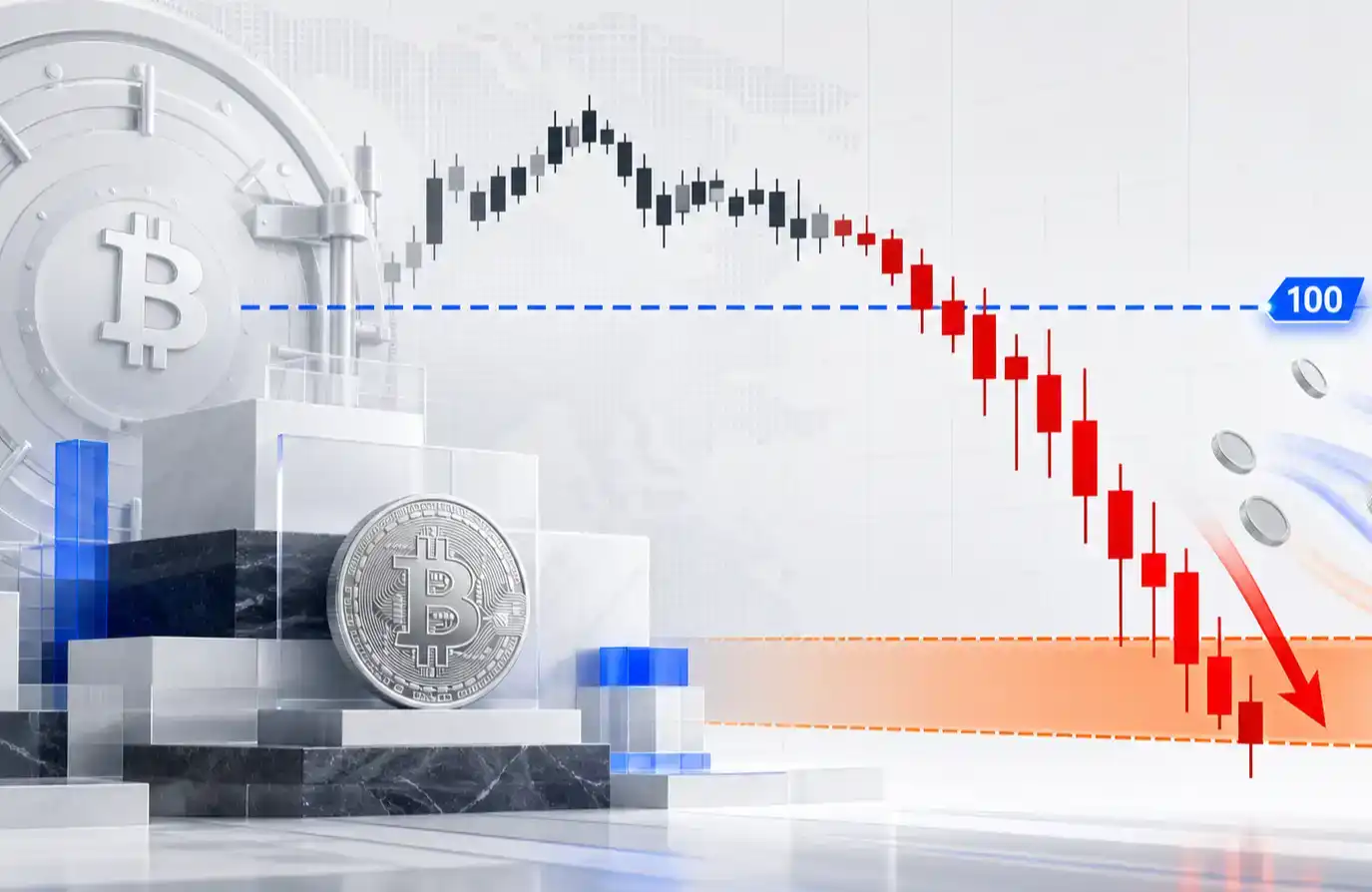
"The Illusion of Wealth: Who Bears the Burden of the $64 Billion Paper Bonanza?" Bitcoin recently broke below the critical $60,000 support level, triggering significant selling by major holders. While the price drop itself is concerning, a deeper issue lies with publicly traded companies that have bet their entire balance sheets on Bitcoin, creating a precarious financial link between their stock prices and crypto valuations. Leading the pack is Strategy (formerly MicroStrategy), holding 847,000 BTC at an average cost of ~$75,600, now facing over 20% unrealized losses. Its stock trades at a deep discount to its Bitcoin holdings. Other companies like Japan's Metaplanet (nearly 40% unrealized loss) and Solmate (which fully pivoted to Solana and saw its stock collapse 98%) illustrate the risks of this model without underlying business operations. A key misconception is that these firms face immediate, forced liquidation. Their debt structures provide a buffer. However, the core "financial flywheel" is stalling. Strategy's CEO has even hinted at potentially selling Bitcoin to cover obligations—a reversal of his long-standing "never sell" doctrine. New accounting rules (ASU 2023-08) exacerbate the problem, requiring quarterly mark-to-market adjustments. Bull markets create paper profits, attracting capital. In bear markets, they generate massive paper losses, potentially triggering index exclusions and forced selling by passive funds. The true crisis point is not the current price, but a looming debt reckoning. If Bitcoin fails to recover above key cost bases within 12-24 months, convertible note redemption windows opening in Fall 2027 could force companies to sell massive Bitcoin holdings for cash, potentially triggering a severe liquidity crisis. The model hasn't eliminated risk; it has merely transformed instant, price-triggered liquidation into a slow-burning, time-triggered debt crisis.

marsbit06/26 07:02

Who's Paying for the $64 Billion Paper Feast?

marsbit06/26 07:02

STRC Falls Below $80, Can Conservative Investors Still Buy the Dip?

The article analyzes whether the STRC (a perpetual preferred stock issued by MicroStrategy) presents a buying opportunity after its price fell below its $100 par value to around $80, offering a seemingly high yield of 13-15%. The core argument is that STRC's discount reflects market skepticism about the sustainability of MicroStrategy's capital structure model, not just temporary panic. This model relies on issuing securities (like STRC) to raise funds to buy more Bitcoin, a "flywheel" that works in a bull market. The recent small sale of BTC to fund dividends, while minor, broke the psychological "never sell" anchor and signaled potential strain. Key risks identified are not a traditional Ponzi collapse but a potential breakdown in the financing narrative: 1) If Bitcoin enters a deep bear market, crushing MicroStrategy's stock premium (mNAV), its ability to raise cheap capital weakens. 2) If STRC remains deeply discounted, it signifies permanently higher funding costs. 3) The high cash dividend yield represents a significant ongoing expense. 4) If selling BTC to pay dividends becomes routine, the bullish narrative reverses. The conclusion is that STRC is not a risk-free high-yield asset. It is a high-coupon bet on whether MicroStrategy's BTC treasury financing model can withstand a bear market. Buying it is a wager that the market will continue to believe in and fund this structure at acceptable costs. The current price asks if this cycle's "casualty" might be a BTC treasury company's融资 model itself.

marsbit06/26 02:56

STRC Falls Below $80, Can Conservative Investors Still Buy the Dip?

marsbit06/26 02:56

An AI Version of the 'Subprime Crisis'? A Hidden Debt of $1.8 Trillion is Accumulating in the Shadows Amid the Frenzy

Amidst the AI infrastructure construction boom, a massive debt expansion is forming, with the most dangerous portion remaining off-balance sheets. Morgan Stanley research reveals approximately $1.8 trillion in off-balance-sheet exposures, including nearly $1 trillion in purchase commitments and over $800 billion in non-active lease contracts. These future cash outflows are not recorded as liabilities. The leverage of hyperscale cloud companies has surged from 0.9x to 1.8x in just two quarters. Private credit firms like Apollo and Blackstone are shifting leverage into the supply chain through complex, opaque SPV (Special Purpose Vehicle) financing structures. Global AI-related bond issuance has skyrocketed, with annual volume projected to exceed $570 billion. However, capital expenditure growth is outpacing revenue and free cash flow. Major cloud providers may see free cash flow approach zero or turn negative in 2026. A significant 'depreciation cliff' looms as vast amounts of current capital spending, recorded as 'construction in progress,' have yet to begin depreciating, artificially inflating current profit margins. Future depreciation could severely pressure earnings. The core risk is identified as a series of timing mismatches, not an immediate solvency crisis. Investment is racing ahead of monetization, leverage is being obscured, and accounting classifications hinder comparability. The entire financing structure faces a fundamental stress test if AI commercialization lags or enterprise clients shift to cheaper alternatives, potentially triggering chain reactions within the highly interconnected funding ecosystem.

marsbit06/15 07:38

An AI Version of the 'Subprime Crisis'? A Hidden Debt of $1.8 Trillion is Accumulating in the Shadows Amid the Frenzy

marsbit06/15 07:38

活动图片