Artículos Relacionados con Failure

El Centro de Noticias de HTX ofrece los artículos más recientes y un análisis profundo sobre "Failure", cubriendo tendencias del mercado, actualizaciones de proyectos, desarrollos tecnológicos y políticas regulatorias en la industria de cripto.

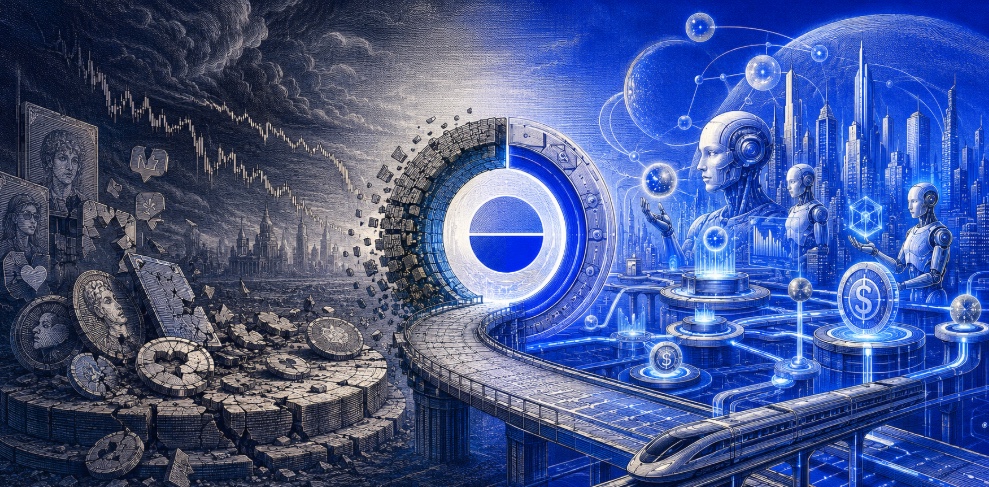
The Self-Destruction of the Startup Bible: The More You Know, the Sooner You Fail

The article "The Self-Defeating Nature of Startup Dogma: The More You Know, The Sooner You Fail" argues that popular startup methodologies—such as Lean Startup, Customer Development, and the Business Model Canvas—have not improved startup survival rates over the past 30 years, based on U.S. government data. The core paradox is that once a methodology becomes widely adopted, it loses its competitive advantage as all founders converge on the same strategies, leading to homogeneity and increased failure rates in competitive markets. The author compares this to the Red Queen effect in evolutionary biology, where continuous adaptation is necessary just to maintain position. Despite the intuitive appeal and scientific claims of these frameworks, empirical data shows no improvement in the survival rates of either general U.S. businesses or venture-backed startups. In fact, the success rate for seed-funded startups securing subsequent funding has declined. The article explores three possible explanations: the theories might be fundamentally flawed; they might be too obvious to require formalization; or they might be self-defeating when universally applied. The author calls for a truly scientific approach to entrepreneurship, one that embraces experimentation, paradigm development, and differentiation rather than dogma. The conclusion is that to succeed, founders must often do the opposite of what popular playbooks advise.

marsbit03/23 08:13

The Self-Destruction of the Startup Bible: The More You Know, the Sooner You Fail

marsbit03/23 08:13

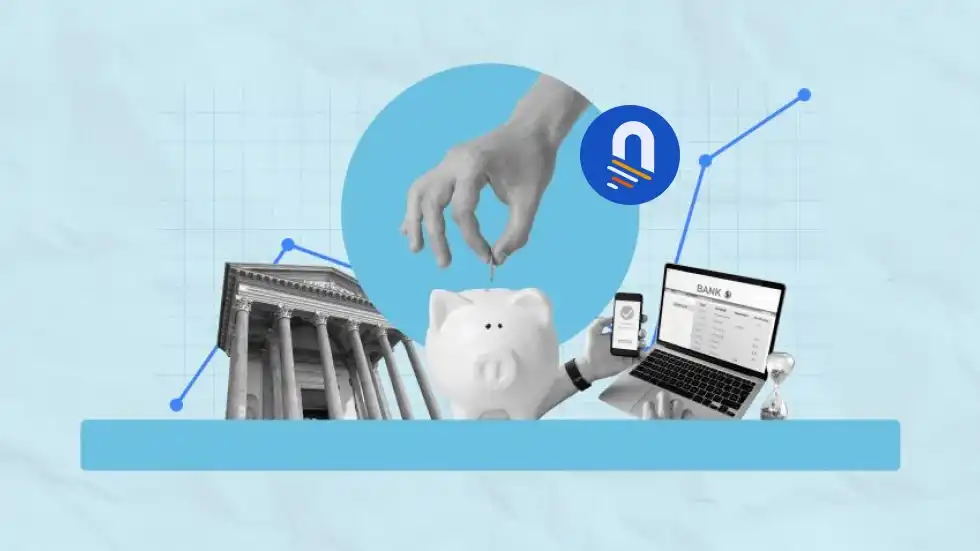
Circle: Why Do 95% of Stablecoins Ultimately Fail?

The article "The Stablecoin Trap: Issuing a Stablecoin Without the Infrastructure to Run One" by Kash Razzaghi of Circle discusses the critical considerations for companies interested in stablecoins. While many executives are drawn to the idea of issuing their own stablecoin due to the market's growth (from $2050B to over $3000B in 2025), the author argues this is a strategic, not just technical, decision. Creating a stablecoin is relatively simple from an engineering perspective, but operating a trusted, regulated one requires a robust, 24/7 financial infrastructure. This includes real-time reserve management, daily bank reconciliations, independent audits, compliance reporting, and risk management systems. These operational burdens are complex, costly, and amplify reputational risk. The market has seen hundreds of stablecoin projects, but approximately 95% fail to achieve lasting, global scale. The key differentiator is not technology but trust, built through transparency, consistent redeemability, and proven performance across market cycles. Incidents like accidental trillion-dollar mints or temporary de-peggings highlight the severe consequences of operational flaws. Instead of building their own, most companies should focus on integrating existing, established stablecoins like USDC or EURC into their businesses. This allows them to benefit from instant settlement, global reach, and interoperability without the immense operational overhead. The industry is converging on the principle that trust, liquidity, and compliance are the true moats, favoring fewer, higher-quality stablecoins with shared liquidity and transparent reserves. The recommended path is to partner with proven providers like Circle rather than attempt to become an issuer.

marsbit02/03 13:17

Circle: Why Do 95% of Stablecoins Ultimately Fail?

marsbit02/03 13:17

From Four Failures to a Trillion-Dollar Valuation: Musk and SpaceX's Epic Comeback

From Four Failures to Trillion-Dollar Valuation: Musk and SpaceX's Ultimate Comeback In 2002, Elon Musk invested $100 million from his exit of PayPal to found SpaceX, aiming to revolutionize space travel. The journey began with humiliation when Russian engineers dismissed his ambitions during a failed rocket purchase attempt. Undeterred, Musk decided to build rockets himself. SpaceX faced near-catastrophic failures with its first three Falcon 1 launches (2006-2008), coinciding with the 2008 financial crisis, Tesla’s near-bankruptcy, and personal struggles. After the third explosion, funds were nearly exhausted, and critics, including Musk’s idol Neil Armstrong, openly doubted him. The fourth launch in September 2008 succeeded, saving SpaceX from collapse and securing a $1.6 billion NASA contract for ISS resupply missions. Driven by first principles, Musk pursued reusable rockets despite industry skepticism. In 2015, Falcon 9’s first stage successfully landed vertically, slashing costs and disrupting the aerospace industry. For Starship, Musk opted for stainless steel over carbon fiber, reducing material costs by 40x while maintaining performance. SpaceX’s valuation soared from $13 billion (2012) to $800 billion (2025), largely fueled by Starlink. With 7.65 million subscribers and revenue projected to reach $22-24 billion in 2026, Starlink dominates as a global telecom provider. Preparing for a 2026 IPO targeting $30 billion raised at a $1.5 trillion valuation, SpaceX aims to surpass Saudi Aramco’s record. For Musk, this funds his ultimate goal: making humanity a multi-planetary species by colonizing Mars. The IPO represents not an exit but a critical step toward interplanetary civilization.

比推12/19 13:26

From Four Failures to a Trillion-Dollar Valuation: Musk and SpaceX's Epic Comeback

比推12/19 13:26

活动图片