Artículos Relacionados con Evolution

El Centro de Noticias de HTX ofrece los artículos más recientes y un análisis profundo sobre "Evolution", cubriendo tendencias del mercado, actualizaciones de proyectos, desarrollos tecnológicos y políticas regulatorias en la industria de cripto.

Tsinghua's Prediction 2 Years Ago Is Becoming Global Consensus: Meta and Two Other Major AI Institutions Have Reached the Same Conclusion

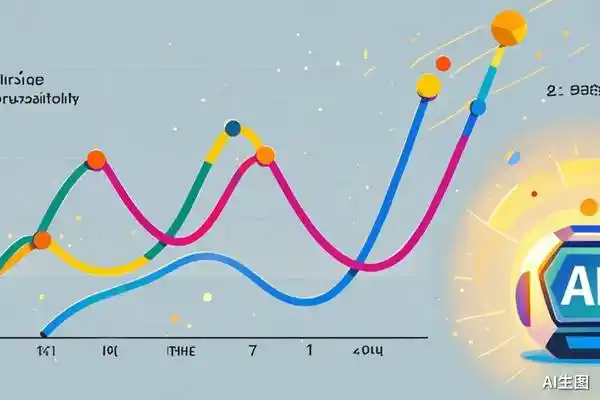
Summary: In a remarkable validation of Chinese AI research, Meta and METR have independently reached conclusions that align perfectly with the "Density Law" proposed by a Tsinghua University and FaceWall Intelligent team two years ago. Published in Nature Machine Intelligence in late 2025, the law states that the computational power required to achieve a specific level of AI performance halves every 3.5 months. This convergence was starkly evident in April 2026. METR reported that AI capabilities are doubling every 88.6 days, while Meta's new model, Muse Spark, demonstrated it could match the performance of a model from the previous year using less than one-tenth of the training compute. When plotted, the growth curves from all three sources—using different metrics (parameters, compute, task length)—show an almost identical exponential slope. The findings have profound implications: AI inference costs are collapsing faster than anticipated, powerful edge-computing AI is becoming rapidly feasible, and the industry's strategy of simply scaling model size is becoming economically inefficient. The Chinese team, which has been building its "MiniCPM" model series based on this law since 2024, is seen as having a significant two-year lead in practical engineering experience, marking a rare instance where Chinese researchers pioneered a fundamental predictive trend in AI.

marsbit04/13 12:14

Tsinghua's Prediction 2 Years Ago Is Becoming Global Consensus: Meta and Two Other Major AI Institutions Have Reached the Same Conclusion

marsbit04/13 12:14

AI, Why Does It Also Need to Sleep?

Anthropic's accidental leak of Claude Code's source code in 2026 revealed an experimental feature called "autoDream," part of the KAIROS system, which gives AI a sleep-like cycle. Unlike the prevailing AI agent paradigm of continuous, uninterrupted operation, autoDream operates offline when users are inactive. It processes and consolidates daily logs—resolving contradictions, converting vague observations into facts, and discarding redundant information—while avoiding the accumulation of noise in the limited context window, a phenomenon known as "context corruption." This mirrors human brain function: the hippocampus temporarily stores daily experiences, and during rest, the brain prioritizes and transfers important memories to the neocortex through processes like active systems consolidation. Both systems must go offline to perform memory maintenance, as simultaneous processing and consolidation compete for resources. autoDream differs in one key aspect: it labels its outputs as "hints" rather than definitive truths, requiring verification upon use—a cautious approach unlike human memory, which often constructs narratives with high confidence. The emergence of this sleep-like mechanism suggests that, beyond mere biological imitation, intelligent systems may inherently require periodic rest to maintain coherence and performance. It challenges the assumption that more power and continuous operation always lead to greater intelligence, pointing instead to the necessity of rhythmic cycles in advanced cognition.

marsbit04/07 08:20

AI, Why Does It Also Need to Sleep?

marsbit04/07 08:20

Zhejiang University Research Team Proposes New Approach: Teaching AI How the Human Brain Understands the World

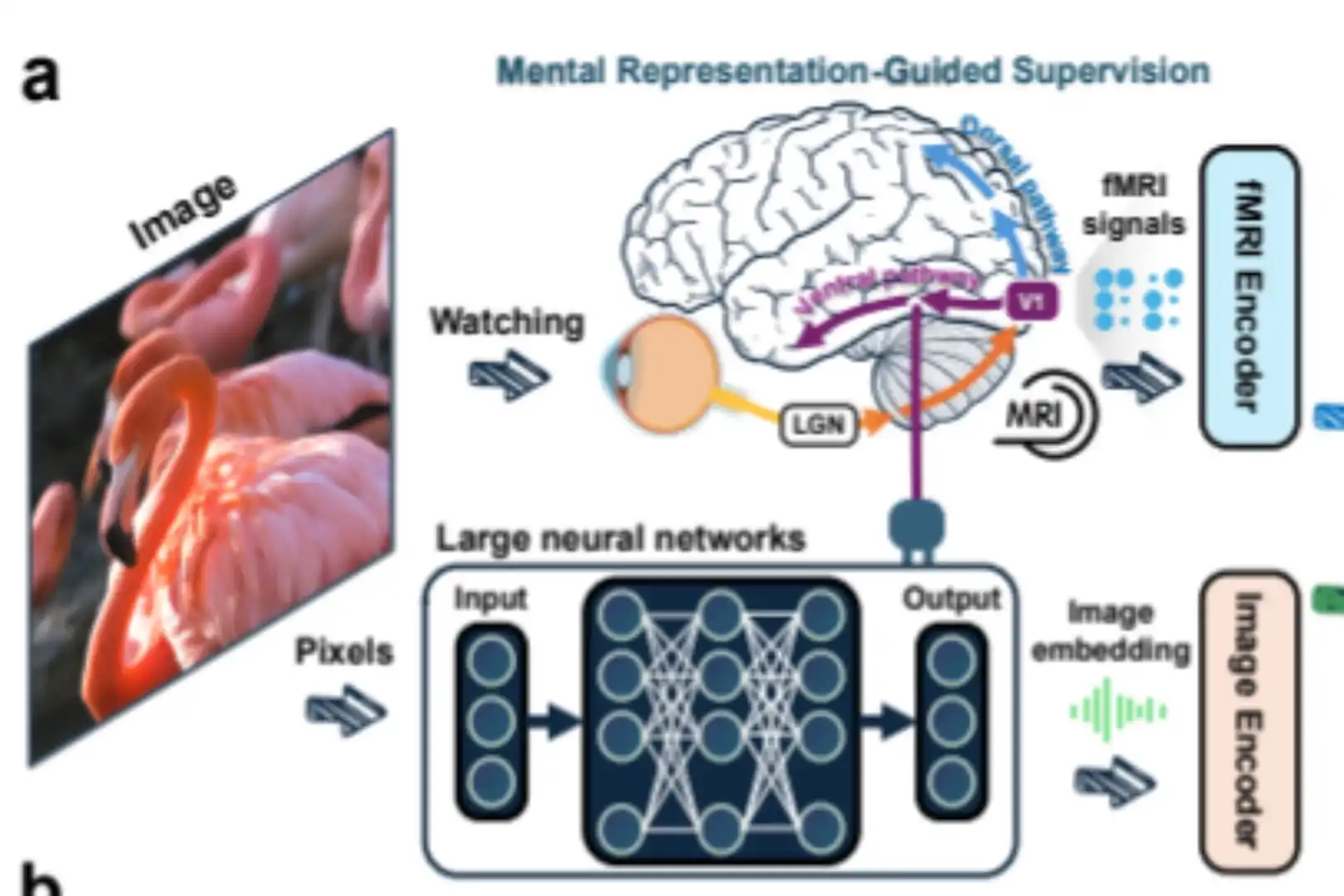
A research team from Zhejiang University published a paper in *Nature Communications* challenging the prevailing notion that larger AI models inherently think more like humans. They found that while model performance on recognizing concrete concepts improved as parameters increased (from 74.94% to 85.87%), performance on abstract concept tasks slightly declined (from 54.37% to 52.82%) in models like SimCLR, CLIP, and DINOv2. The key difference lies in how concepts are organized. Humans naturally form hierarchical categories (e.g., grouping a swan and an owl into "birds"), enabling them to apply past knowledge to new situations. Models, however, rely heavily on statistical patterns in data and struggle to form stable, abstract categories. The team proposed a novel solution: using human brain signals (recorded when viewing images) to supervise and guide the model's internal organization of concepts. This method, termed transferring "human conceptual structures," helped the model learn a brain-like categorical system. In experiments, the model showed improved few-shot learning and generalization, with a 20.5% average improvement on a task requiring abstract categorization like distinguishing living vs. non-living things, even outperforming much larger models. This research shifts the focus from simply scaling model size ("bigger is better") to designing smarter internal structures ("structured is smarter"). It highlights a new pathway for developing AI that possesses more human-like abstract reasoning and adaptive learning capabilities.

marsbit04/05 04:41

Zhejiang University Research Team Proposes New Approach: Teaching AI How the Human Brain Understands the World

marsbit04/05 04:41

The Evolution of Listing Cycles: Yesterday's Wind Won't Fly Today's Kite

The article "The Evolution of Listing Cycle: Yesterday's Wind Can't Fly Today's Kite" uses a dental braces metaphor to describe the structural evolution of cryptocurrency exchange listing processes from 2017 to 2025. It outlines four distinct phases: 1. **Community-Priced Era (2017-2018)**: A chaotic "milk teeth" period where listings were driven by community votes and loud narratives, with exchanges acting as passive platforms seeking user growth. 2. **Exchange-Priced Era (2019-2022)**: The "teeth-growing" phase where exchanges (e.g., via IEOs/Launchpads) became gatekeepers, providing due diligence and using new listings to empower their own ecosystem tokens. 3. **VC-Priced Collapse (2023-2024)**: A "malocclusion" period where high FDV, low float VC deals dominated, causing token prices to peak at launch. Excountered, exchanges intervened with measures like HODLer airdrops to redistribute value to retail users and counter VC dominance. 4. **Market/Derivatives-Priced Era (2025)**: The "orthodontic" phase marked by industrialization. Price discovery shifts to derivatives, with pre-market perpetual合约 trading allowing price formation before spot listing. Mechanisms like Binance Alpha act as a sandbox, requiring projects to prove market resilience. Concurrently, the "listing fee" model evolved: from direct payments to exchanges, to sharing tokens with the exchange's ecosystem, and finally to a current model where projects must allocate a significant portion of their token supply (3-7%) for user airdrops and marketing, effectively making listing a major customer acquisition cost. The core thesis is a transfer of pricing power: from community -> exchange -> VC -> finally to the market itself via sophisticated derivatives. The article concludes that the era of easy gains from simple listings is over, demanding greater professionalism from both projects and traders.

marsbit02/17 02:59

The Evolution of Listing Cycles: Yesterday's Wind Won't Fly Today's Kite

marsbit02/17 02:59

Coinbase: The Evolution from a Fringe Project to Global Financial Infrastructure

Coinbase's journey from a 2012 Y Combinator project to a global crypto financial infrastructure is a story of contrarian strategy, internal turmoil, and aggressive political maneuvering. Its early success stemmed from a focus on compliance and trust in a rebellious industry, securing banking relationships and state licenses to become a safe haven after the Mt. Gox collapse. Internally, the company faced crises, including a 2020 "apolitical" cultural purge where 5% of employees left, and serious racial discrimination allegations. It also navigated the first crypto insider trading case, which became a legal prelude to SEC challenges. Facing regulatory pressure, Coinbase fought back legally and politically. It spent over $119 million in the 2024 election cycle, successfully ousting crypto-skeptic Senator Sherrod Brown, and shifted Washington's stance on crypto. Financially, Coinbase transformed its business model. While 96% of its revenue came from trading fees in 2020, by 2025, nearly half is from stablecoin services (USDC), staking, and ETF custody—where it holds an 85% market share of Bitcoin ETF assets. Looking ahead, Coinbase is expanding into Web3 with its Base blockchain (adopting a no-token strategy) and aims to become an "Everything Exchange," offering stocks and commodities. However, its dominance creates systemic risks, as its concentration of ETF custody assets makes it a potential single point of failure.

marsbit01/19 06:20

Coinbase: The Evolution from a Fringe Project to Global Financial Infrastructure

marsbit01/19 06:20

Underlying Algorithms and Social Robustness: A Christmas Reflection on the Evolution of Principles and Their Game Theory Logic

In this Christmas reflection, Ray Dalio explores the role of principles as foundational algorithms for individual and societal decision-making. He argues that principles shape our utility functions and define what we value most, even in extreme scenarios. Dalio examines the compatibility of modern behavioral norms with religious teachings, emphasizing that while supernatural elements may lack empirical support, the core ethical principles across religions—such as reciprocity, empathy, and social cooperation—are remarkably consistent and serve as public goods that reduce transaction costs and enhance collective welfare. He defines "good" as behavior that maximizes social utility (positive externalities) and "evil" as actions that harm the system (negative externalities). Good character, in this view, is an asset that promotes collective well-being. However, Dalio warns that society is currently on a "downward trajectory," where consensus on shared principles has eroded, replaced by self-interest maximization. This decline manifests in cultural decay, rising inequality, and a lack of moral exemplars. Despite technological progress, he stresses that technology alone cannot resolve conflicts; it merely amplifies existing values. The solution lies in rebuilding a shared rulebook centered on mutual benefit and systemic optimization, leveraging our advanced capabilities to address global challenges.

marsbit12/29 12:21

Underlying Algorithms and Social Robustness: A Christmas Reflection on the Evolution of Principles and Their Game Theory Logic

marsbit12/29 12:21

Underlying Algorithms and Social Robustness: A Christmas Reflection on the Evolution of Principles and Their Game Theory Logic

Bridgewater founder Ray Dalio reflects on the importance of principles as core intangible assets that serve as underlying algorithms for decision-making. He argues that principles shape individual utility functions and define what people are willing to live and die for. Dalio examines the compatibility of modern behavioral norms with religious teachings, emphasizing that while supernatural elements may lack empirical support, the core ethical principles across religions—such as reciprocity, empathy, and social cooperation—are remarkably consistent and serve as public goods that reduce societal transaction costs. He defines “good” as behavior that maximizes total social utility (positive externalities) and “evil” as actions that harm collective well-being. Good character, in economic terms, is an asset that commits to maximizing group welfare. However, Dalio warns that society is on a “downward trajectory,” where consensus on shared principles has eroded. Self-interest maximization has replaced moral frameworks, leading to a loss of social capital and increased systemic risks like inequality, violence, and institutional distrust. He concludes that although technology offers powerful tools for progress, it is a double-edged sword. The key to solving systemic crises lies in rebuilding a shared rulebook grounded in reciprocal altruism and collective optimization—not in technical advancement alone.

深潮12/29 12:14

Underlying Algorithms and Social Robustness: A Christmas Reflection on the Evolution of Principles and Their Game Theory Logic

深潮12/29 12:14

活动图片