Solana Loses 68% of Its Validators in 3 Years — Is the Network in Trouble or Evolving?

ccn.comPublished on 2025-12-09Last updated on 2025-12-09

Abstract

Solana's active validator count has declined by 68% over three years, dropping from 2,500 in 2023 to around 800. This sharp reduction is not a sign of network decay but the result of a deliberate policy called "pruning," introduced in April 2025. Pruning systematically removes underperforming or non-contributing validators—often referred to as "Validators in Name Only" (VINO)—who operated with minimal stake and inconsistent performance. The initiative aims to improve network quality by enforcing higher standards for uptime, hardware reliability, and geographic distribution. While fewer validators may raise decentralization concerns, Solana insiders argue the network is now more robust and sustainable, with a stronger emphasis on quality over quantity. Foundation delegation has also decreased, encouraging validators to become more self-sufficient and economically viable.

Key Takeaways

  • Solana’s active validator count has fallen 68% in three years, from 2,500 to roughly 800.
  • The sharp decline accelerated after Solana introduced “pruning” in April 2025.
  • Pruning removes underperforming or non-contributing validators as part of a formal network-quality overhaul.

Solana (SOL) has spent the last few years building a reputation as one of crypto’s fastest, most capable blockchains.

However, beneath that momentum, a dramatic shift has been unfolding. Solana’s active validator count has collapsed from more than 2,500 in 2023 to around 800 at the time of writing.

On the surface, the numbers look alarming; fewer validators often mean less decentralization, less resilience, and a smaller community helping run the network.

Yet the sharp drop isn’t a sign of decay. Instead, it stems from a deliberate restructuring that has quietly reshaped who gets to run a validator on Solana, and under what conditions.

Try Our Recommended Crypto Exchanges
Sponsored
Disclosure
We sometimes use affiliate links in our content, when clicking on those we might receive a commission at no extra cost to you. By using this website you agree to our terms and conditions and privacy policy.
"}' data-trk="68df7fd8872238d510dfbf06" href="https://clicks.pipaffiliates.com/c?c=1104900&l=en&p=1" rel="nofollow" target="_blank">
XM.com<\/h3>"}' data-trk="68df7fd8872238d510dfbf06" href="https://clicks.pipaffiliates.com/c?c=1104900&l=en&p=1" rel="nofollow" target="_blank">

XM.com

promotions
Get 100% Bonus up to $100 on your first Deposit.<\/strong>"}' data-trk="68df7fd8872238d510dfbf06" href="https://clicks.pipaffiliates.com/c?c=1104900&l=en&p=1" rel="nofollow" target="_blank"> Get 100% Bonus up to $100 on your first Deposit.
Coins
28
Claim Offer
"}' data-trk="6899b9831836d97539c51aa6" href="https://www.bitunix.com/" rel="nofollow" target="_blank">
Bitunix<\/h3>"}' data-trk="6899b9831836d97539c51aa6" href="https://www.bitunix.com/" rel="nofollow" target="_blank">

Bitunix

promotions
Receive up to $100,000 worth of exclusive gifts for newcomers upon registration.<\/strong>"}' data-trk="6899b9831836d97539c51aa6" href="https://www.bitunix.com/" rel="nofollow" target="_blank"> Receive up to $100,000 worth of exclusive gifts for newcomers upon registration.
Coins
151
Claim Offer
"}' data-trk="67adf8d4f12aaec7e4808bf5" href="https://bonus.bitget.com/CCN12" rel="nofollow" target="_blank">
Bitget<\/h3>"}' data-trk="67adf8d4f12aaec7e4808bf5" href="https://bonus.bitget.com/CCN12" rel="nofollow" target="_blank">

Bitget

promotions
Earn rewards worth up to 5,000 USDT on your first deposit<\/strong>"}' data-trk="67adf8d4f12aaec7e4808bf5" href="https://bonus.bitget.com/CCN12" rel="nofollow" target="_blank"> Earn rewards worth up to 5,000 USDT on your first deposit
Coins
88
Claim Offer

A Steep Decline Years in the Making

According to Solana Compass, Solana’s active validator set reached a peak of over 2,500 in March 2023. The number now hovers just below 800 , a nearly 68% drawdown.

Under most circumstances, an exodus of validators would raise red flags.

Validators secure the network, sign blocks, and ensure no single entity gains disproportionate control. Losing them is rarely a positive headline.

Solana’s active validators decreased from 2,500 to 800 over a three-year period. Source: Solanacompass

But Solana’s validator decline is tied directly to a reform effort that Solana insiders say was overdue.

Beginning in April 2025, the Solana Foundation began enforcing a structured validator “pruning” process — a formal offboarding mechanism targeting nodes that were either underperforming or never meaningfully contributing to the network’s decentralization.

Why Solana Introduced Pruning

To understand pruning, you need to understand how Solana’s validator ecosystem originally expanded.

In 2021, the Solana Foundation launched the Solana Foundation Delegation Program (SFDP), offering subsidized stake to new validators.

The goal was to increase decentralization by lowering the cost of entry. But subsidized growth came with unintended consequences.

The early validator boom created a “VINO” problem

Hundreds of operators launched nodes with little intention of staying long-term or investing in reliable hardware.

The community gave these nodes the nickname “Validators in Name Only” (VINO).

They contributed minimal external stake, ran inconsistent infrastructure, failed performance thresholds, and joined the network mostly to earn delegated yield.

By 2023, estimates suggested 20-30% of Solana’s validator set was operating with less than 500 SOL staked, far below the levels needed for sustainable participation.

Pruning changes the incentives

In April 2025, the Foundation implemented the 3-to-1 rule:

For every new validator admitted, three underperformers were removed.

Pruning works like this:

  • Validators receive a 90-day notice of potential removal.
  • They can appeal by improving uptime, vote success, or geographic distribution.
  • If they fail, Foundation delegation is withdrawn — making it economically unviable to remain active.

Since the policy took effect, more than 600 validators have been systematically offboarded, most between April and December 2025.

Solana’s Validator Set Didn’t Shrink — It Evolved

Pruning has fundamentally reshaped what it means to operate a validator on Solana.

Before pruning, the network’s rapid growth was fueled by generous Foundation delegations that covered as much as 80% of a validator’s monthly operating expenses.

Hardware, bandwidth, and energy often totaled $5,000 to $10,000 a month.

The subsidies were meant to encourage decentralization, but they unintentionally created an environment where quantity triumphed over quality.

Many operators ran low-effort nodes simply because it was cheap to do so.

With pruning in place, being a validator now requires far more than just spinning up a server and collecting rewards.

Operators must demonstrate consistently high uptime, strong vote performance, and reliable hardware standards.

They’re also expected to attract external stakeholders and contribute to a healthier geographic distribution of the network.

Foundation delegation has been steadily reduced — now accounting for roughly 13–16% of all staked SOL, down from about 25% in 2023 — forcing validators to stand on their own merit.

The result is a smaller validator set, but one that insiders argue is more robust, entrepreneurial, and better aligned with the network’s long-term needs.

As one Solana community member put it, pruning didn’t weaken the network — “it filtered it.”

Is Solana Less Decentralized? Not Necessarily.

Critics of pruning argue that fewer validators automatically means a less decentralized network.

But decentralization isn’t measured by raw quantity alone. It is measured by performance, distribution, independence, and stakeholder quality matter far more.

On those measures, Solana insiders contend the network is healthier today than when it had thousands of subsidized nodes simply collecting yield.

Still, the optics of a shrinking validator set will continue fueling debate.

What Comes Next for Solana’s Validator Ecosystem

Pruning remains active, meaning the validator count may fall further before stabilizing.

The Foundation has signaled plans to:

  • refine hardware standards,
  • promote jurisdictional diversity,
  • reduce reliance on Foundation stake,
  • onboard more enterprise-grade operators, and
  • encourage consumer-friendly staking solutions.

Solana’s leadership has framed this moment not as a retreat from decentralization, but as a maturing of it — shifting from “more validators” to “better validators.”


Top Picks for Solana
  • Best Exchanges for Solana Get A Great Offer When You Join These Exchanges
  • Buy Solana Fast & Easy How To Buy Solana With a Credit Card Now
  • Best Online Casinos for Solana See Our Picks for the Best Crypto Gambling Sites

Related Reads

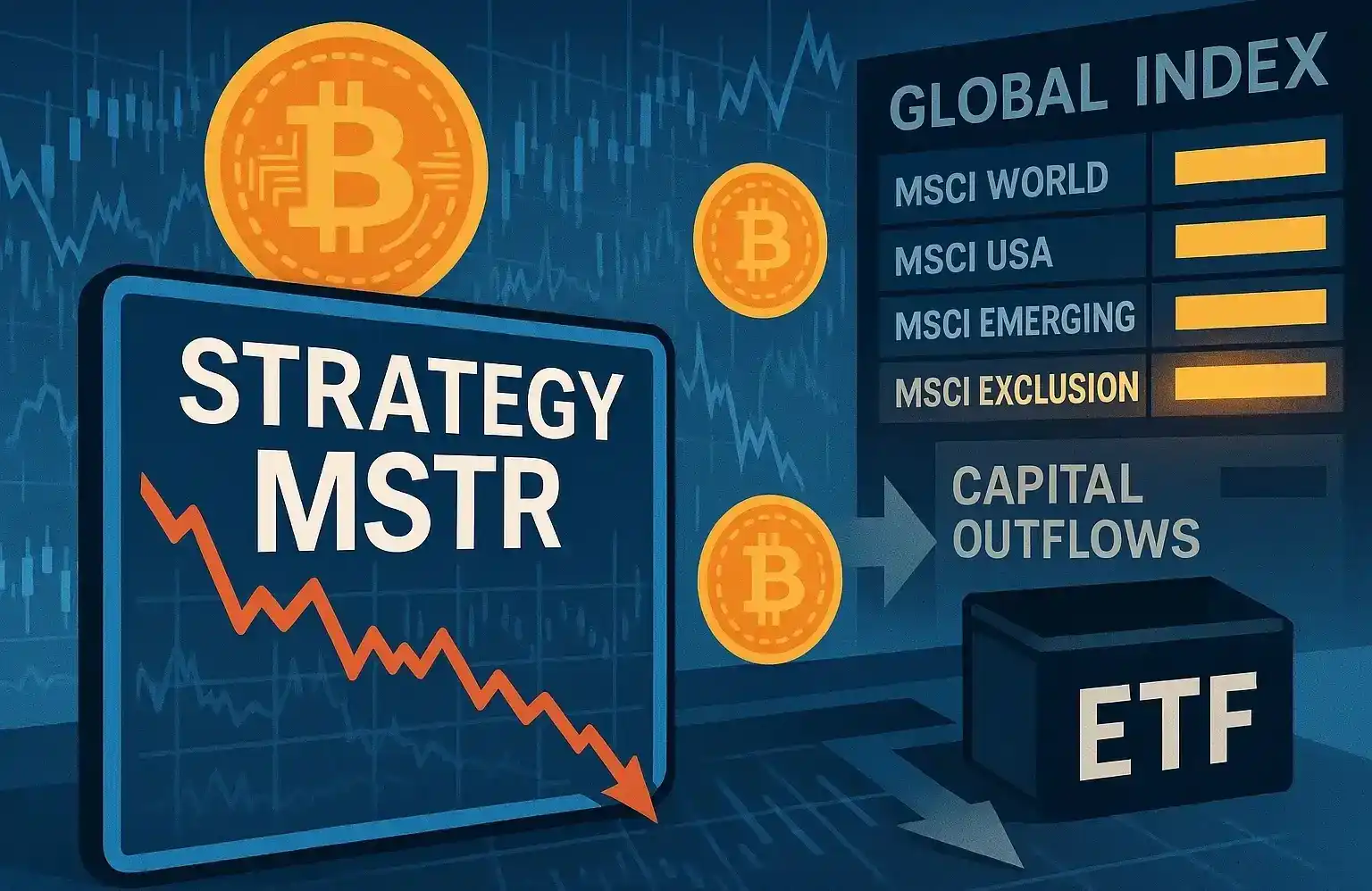
Strategy Takes a Hardline Stance Against MSCI: What's in the 12-Page Open Letter of Defense?

In October 2024, MSCI proposed excluding companies with over 50% of their assets in digital assets from its global investable market indices, directly threatening Digital Asset Treasury (DAT) companies like MicroStrategy. Analysts warned this could trigger up to $8.8 billion in outflows, with MicroStrategy alone facing $2.8 billion in passive selling pressure. In response, MicroStrategy submitted a 12-page public letter to MSCI, strongly opposing the proposal as "misleading and destructive." The company argued that digital assets represent a revolutionary financial technology, comparable to historic infrastructure investments like oil or telecommunications. It emphasized that DATs are operational businesses with active revenue models, not passive funds, and criticized the 50% threshold as arbitrary, discriminatory, and impractical due to Bitcoin's volatility. MicroStrategy also accused MSCI of violating index neutrality and contradicting the U.S. government's pro-digital asset strategy. The company demanded MSCI withdraw the proposal or extend the consultation period. It is not alone—over 300 entities, including Strive and Bitcoin for Corporations, have joined opposition efforts, suggesting alternative indices instead of exclusion. The outcome, expected by January 2026, will significantly impact the integration of digital asset companies into traditional financial markets.

marsbitHace 25 min(s)

Strategy Takes a Hardline Stance Against MSCI: What's in the 12-Page Open Letter of Defense?

marsbitHace 25 min(s)

Dogecoin Price Forecast for 2026: The Path to $1 Amid Meme Rally

Dogecoin (DOGE) is back in the spotlight as retail traders return to the meme segment. Analysts express cautious optimism, suggesting that under favorable conditions, including a continued bull market and increased risk appetite, DOGE could potentially reach the $1 mark in 2026. The price is currently consolidating after volatile swings, with significant trading volumes indicating ongoing speculative interest. Key drivers remain its meme narrative, support from high-profile figures, and its correlation with Bitcoin's cycles. The path to $1 is not linear. DOGE must hold key support levels, sustain derivatives interest without overheating, and receive fresh meme-driven momentum. Technical analysis highlights the importance of watching RSI levels and volume for signs of sustainable growth versus short-term pumps. Alongside DOGE, newer, more aggressive meme tokens like Maxi Doge (MAXI) are gaining attention. Having raised approximately $4.3 million in its presale, MAXI offers high-risk, high-reward speculation with features like staking rewards and trading tournaments. While it could amplify portfolio returns during a rally, it carries significant risks associated with early-stage projects, unlike the more established DOGE. The overall strategy for many investors is to combine a core position in DOGE with a smaller, speculative bet on tokens like MAXI to capitalize on the potential meme rally.

bitcoinistHace 36 min(s)

Dogecoin Price Forecast for 2026: The Path to $1 Amid Meme Rally

bitcoinistHace 36 min(s)

Trading

Spot
Futures
活动图片