Solana Hackathon Grand Prize Projects: The Industry's Handpicked Seeds

Odaily星球日报Publicado a 2025-12-15Actualizado a 2025-12-15

Resumen

The fifth Solana Breakpoint conference in Abu Dhabi featured the Solana Cypherpunk Hackathon, the largest crypto hackathon to date with over 9,000 participants from 150+ countries submitting 1,576 projects. The event showcased innovative projects across multiple tracks. The grand prize winner was Unruggable, a hardware wallet and app suite optimized specifically for Solana, offering deep integration with key ecosystem protocols for secure and fast transactions. In the Consumer Applications track, winners included Capitola (a prediction market aggregator), Superfan (a元宇宙唱片厂牌 leveraging prediction markets), Fora (a social trading and prediction platform), Toaster.trade (a lightweight trading platform), and Nomu (a marketplace where early product purchases earn rewards). The DeFi track was led by Yumi Finance (an on-chain BNPL solution), Kormos (a fractional reserve-based yield protocol), Rekt (a gamified mobile trading app), Archer (an anti-MEV trading protocol), and Hobba (an automated lending optimization service). Infrastructure winners were Seer (a Solana transaction debugger), Corbits (enabling AI agents to pay API fees via x402), Ionic (a high-speed data aggregation layer), Pine Analytics (a blockchain analytics platform), and Hyperstack (a code-first data infrastructure tool). The RWA track featured Autonom (an oracle for dynamic pricing of real-world assets), Bore.fi (tokenizing cash-flowing small businesses), Legasi (on-chain Lombard loans), Pencil Finance (tokeni...

Original | Odaily Planet Daily (@OdailyChina)

Author | Azuma (@azuma_eth)

From December 11th to December 13th, the fifth Breakpoint was successfully held in Abu Dhabi. As Solana's largest and most influential ecosystem conference, Breakpoint often carries the expectations of the entire Solana ecosystem for information exchange on value judgments, future directions, and wealth opportunities.

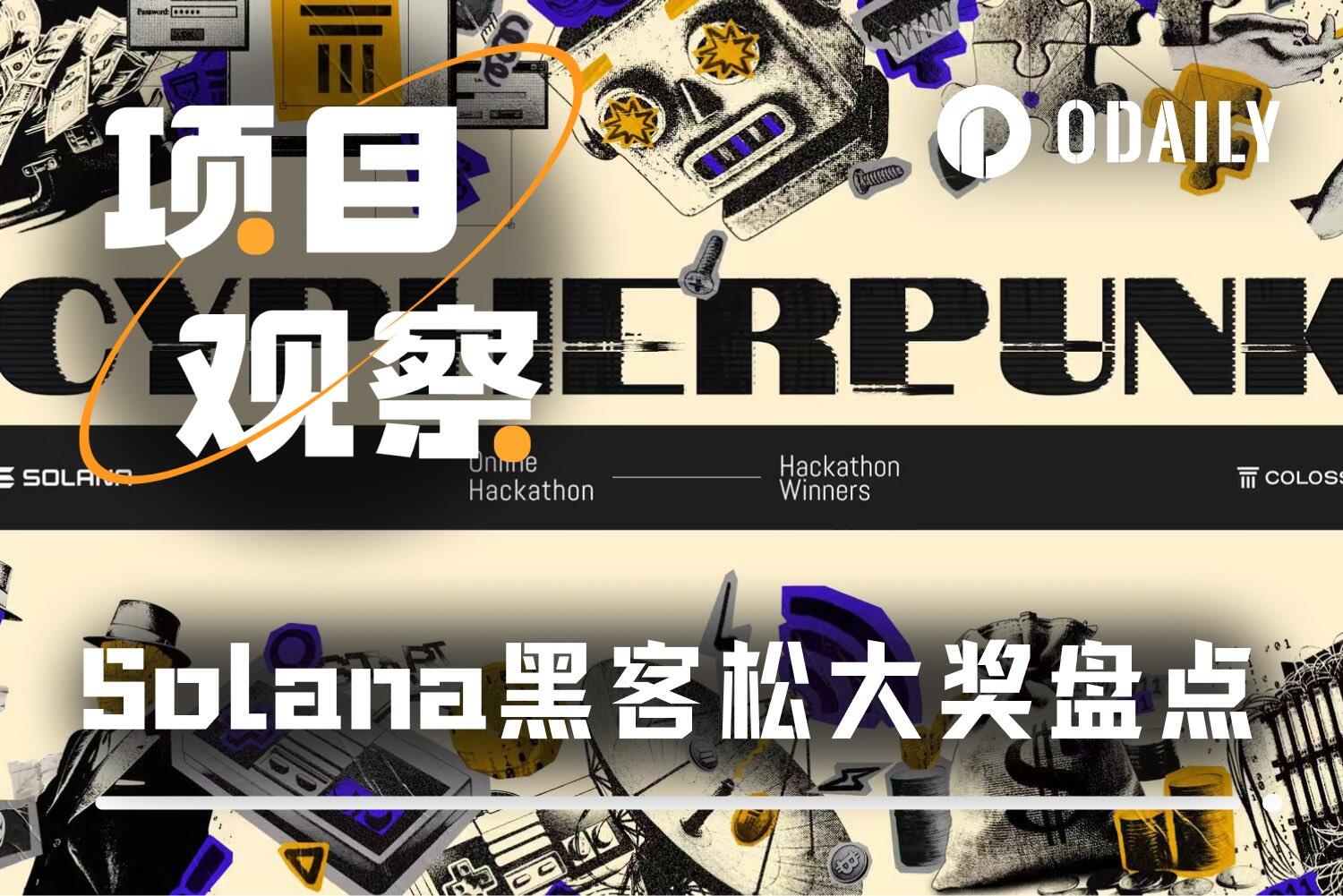
During the Breakpoint period, the Solana Cypherpunk Hackathon, hosted by the Solana Foundation and organized by Colosseum, gained significant exposure and attention. This hackathon brought together entrepreneurs and developers from over 150 countries, with more than 9,000 participants forming teams and submitting 1,576 projects. These projects covered infrastructure, consumer applications, DeFi, stablecoins, RWA, and various innovative products in undefined tracks, making this the largest crypto-themed hackathon to date.

Below is Odaily Planet Daily's detailed overview of the award-winning projects from this hackathon. In the current climate of a sluggish market and exhausted narratives, these new projects not only carry inherent investment opportunities but also have the potential to become the seeds that ignite the next cycle, driving the industry towards a new wave of growth.
Grand Prize: Unruggable

X Link: https://x.com/unruggable_io

Introduction: Unruggable is the first hardware wallet and companion app specifically designed for Solana, aiming to create a simple, fast, easy-to-use, and fully Solana-optimized self-custody solution. Existing hardware wallets are mostly multi-chain designs; while they support various blockchains, they are not deeply optimized for any single chain, and support for Solana is often secondary—for example, Ledger only supported SLP format tokens in 2025.

Through the Unruggable hardware wallet and app, users can directly perform swaps, staking, lending, earning yields, transfers, and asset management. Unruggable deeply integrates with Jito for transaction optimization and includes native functionalities such as S quads multisig, Jupiter lending and swapping, Titan aggregated trading, Anza private transfers, SNS, DeFi Carrot, and Privacy Cash.

Unruggable aims to provide the speed and convenience of a hot wallet for Solana while achieving cold wallet-level security. Users can complete the security setup in less than 30 seconds. The companion app is fully cross-platform compatible, completely open-source, and entirely written in Rust.

Category: Consumer Applications

First Place: Capitola

X Link: https://x.com/ryanchern

Introduction: Capitola is a native prediction market aggregator that allows users to place bets on all events across platforms at the best prices.

Second Place: Superfan

X Link: https://x.com/superfan_one

Introduction: Superfan is a metaverse record label built on Solana and MetaDAO infrastructure, aiming to convert fan belief into artist credit through prediction market mechanisms. Fans can hold label shares via tokens, vote on which artists to fund, and benefit from repayments.

Third Place: Fora

X Link: https://x.com/ForaMarkets

Introduction: Fora is a social trading platform and prediction market protocol that supports group chats.

Fourth Place: Toaster.trade

X Link: https://x.com/ToasterDotTrade

Introduction: Toaster.trade is a lightweight Solana trading platform powered by Hyperliquid.

Fifth Place: Nomu

X Link: https://x.com/EatwithNomu

Introduction: Nomu is a marketplace that allows users to purchase products in advance and receive rewards when the products are sold. Nomu aims to build a two-way feedback business ecosystem rather than a one-way consumption chain. When consumers support a product, their purchase not only provides funding for the product but also injects into a transparent reward pool. As the community buys, trades, and promotes, the reward pool grows. When the product is successfully launched, the participants who drove this process share the profits. Through Nomu, consumption can be converted into liquid capital rather than a sunk cost.

Other Recommended Projects (Non-Winners)

  • Here.: A Seeker phone-exclusive social service. Users can take timestamped photos, optionally adding GPS location proof, and earn rewards from interactions or transactions generated by posts.
  • Pyro: A sponsorship trading platform where sponsors can buy and burn creator tokens to obtain banner ad space during live streams.
  • Dolero: A decentralized 1v1 card game inspired by Blackjack mechanics.
  • TBD: Collects, predicts, and presents human emotions to assist prediction market betting.
  • Feels: An anti-Rug DEX.
  • Ralli: A fantasy-style sports game app where you can compete with friends.
  • Seeker OS: An operating system built for Agents, not mobile apps.

Category: DeFi

First Place: Yumi Finance

X Link: https://x.com/YumiFinance

Introduction: Yumi Finance aims to build a fully on-chain "Buy Now, Pay Later" (BNPL) solution, covering the entire process from credit assessment and fund allocation to loan origination and bad debt handling.

Second Place: Kormos

X Link: https://x.com/Kormos_Finance

Introduction: Kormos aims to create high-yield solutions for Solana without leverage through a fractional reserve mechanism. Kormos Vaults will intelligently allocate user funds within the Solana DeFi ecosystem. Its depositors are divided into two roles:

  • Liquid Depositors — Enjoy higher yields (compared to other liquid DeFi yields) but may need to wait in a first-in-first-out queue for redemption in case of a "bank run" (under normal circumstances, instant redemption is available).
  • Locked Depositors — Enjoy even higher yields (compared to assets with the same lock-up period), can choose their own redemption cycle, with longer cycles yielding higher returns.

Kormos features a deposit protection mechanism where Locked Depositors act as a priority buffer for Liquid Depositors, bearing losses first if the underlying protocols incur losses.

Third Place: Rekt

X Link: https://x.com/GetRektApp

Introduction: Rekt is a mobile trading app designed to make trading accessible to ordinary users through a simple, gamified experience. With Rekt, users don't need large capital or deep financial knowledge; they can start making directional predictions on BTC, ETH, or SOL with just $1.

Fourth Place: Archer

X Link: https://x.com/ArcherExchange_

Introduction: Archer is an anti-MEV trading base protocol that protects market makers from adverse selection and latency competition, providing traders with the most competitive prices.

Archer's innovative matching engine allows market makers to compete purely by offering the best prices and depth for traders, while minimizing multiple MEV attacks against both market makers and takers.

Fifth Place: Hobba

X Link: https://x.com/hobba_io

Introduction: Hobba aims to build safer, more efficient, and worry-free lending services. Hobba automatically allocates liquidity across Solana to obtain the best interest rates, generates yield on idle funds, and uses these yields to continuously repay user loans.

When collateral assets appreciate, Hobba accelerates repayments; when their value decreases, an off-chain risk engine automatically adjusts positions to ensure user safety.

Other Recommended Projects (Non-Winners)

  • Blueprint: An AI automated investment tool.
  • Condor: A mobile liquidity management application.
  • Lomen: An AI trading assistant tool that allows users to perform multi-step position operations across apps, assets, and protocols with one click.
  • RevTec: A liquid staking product that captures priority fees and tip income from transactions in addition to staking revenue.
  • Ktulu: A centralized liquidity management tool supporting automated reinvestment, rebalancing, and taking profits.
  • OPSONCHAIN: An automated trading engine.
  • Lifted: An interest-bearing stablecoin protocol.
  • Alyra: A modular execution layer. Alyra abstracts away fragmented multi-chain infrastructure (bridges, DEXs, aggregators, relays) and provides a single API and SDK for seamless cross-network execution.

Category: Infrastructure

First Place: Seer

X Link: None

Introduction: Seer is a groundbreaking tool for Solana transaction debugging. Similar to Tenderly on EVM, it provides a complete display of function and line-level tracing for transaction execution, including source code mapping, standard Solana logs and error messages, and data snapshots of local variables at specific locations.

Second Place: Corbits

X Link: https://x.com/corbits_dev

Introduction: Corbits enables AI agents to instantly pay API fees via the x402 protocol — no account needed, no keys, pay-per-use. For merchants, adding a payment method takes only hours, endpoint agent configuration takes minutes, and transactions are processed in real-time.

Third Place: Ionic

X Link: None

Introduction: Ionic is building the missing data aggregation layer for Solana. Solana's 0.4-second block time and over 800 transactions per second generate a massive amount of data, making it nearly impossible for traditional tools to handle complex real-time statistics. Ionic's pre-processed analytics service returns results in milliseconds, whereas traditional tools (like Dune, BitQuery) take minutes.

Ionic's target customers include projects migrating to Solana and platforms requiring complex real-time data.

Fourth Place: Pine Analytics

X Link: https://x.com/PineAnalytics

Introduction: Pine Analytics is building a full-stack blockchain analytics platform that captures, aggregates, and interprets on-chain data in real-time, transforming it into clear visual charts and an AI-readable data layer.

Fifth Place: Hyperstack

X Link: https://x.com/hyperonsol

Introduction: Hyperstack is the infrastructure-as-code for Solana. Users simply define the data schema connecting on-chain accounts, and Hyperstack will handle creating the backend infrastructure. Hyperstack's goal is to provide developers with a familiar development experience while eliminating the need to deal with all the complex underlying Solana infrastructure, allowing them to deliver products on Solana at unprecedented speeds.

Other Recommended Projects (Non-Winners)

  • CatScope: An ultra-low latency MEV toolkit built specifically for Solana.
  • Arrow API: A transaction data builder API specifically for SOL/SPL.
  • subZero: Solves the "last mile" for blockchain applications and end-users, ensuring uninterrupted low-latency private connections.
  • Solder: A backend framework for Solana DApps, like Next.js + Vercel for building off-chain infrastructure on Solana.
  • ChainDex: A real-time blockchain indexer built on ReifyDB.
  • Excalead: An automated smart contract auditing service.
  • Solforge: A next-generation Solana development environment combining blazing-fast localnet performance with integrated AI-assisted functionality.
  • Shiroi: A block builder module system and validator client for the Solana blockchain.
  • Fystack: A digital asset custody solution for enterprises.

Category: RWA

First Place: Autonom

X Link: https://x.com/AutonomRWA

Introduction: Autonom is an oracle designed for real-world assets, capable of providing dynamic on-chain pricing based on different corporate actions and conditions, addressing the off-chain asset pricing issues that currently plague on-chain markets.

Currently, real-world assets (especially equities) have not truly entered the perpetual futures domain, at least not widely within the Solana ecosystem. A key reason for this is that stocks undergo various corporate actions (such as stock splits, dividends, or mergers and acquisitions) that affect their price, and existing oracle systems do not account for these factors.

Second Place: Bore.fi

X Link: None

Introduction: Bore.fi wants to bring boring but cash-flow-stable businesses on-chain.

"Builders, laundromats, logistics companies... the world is full of boring, cash-flow-stable, profitable businesses. They don't chase trends but consistently generate cash flow. Bore.fi aims to acquire these boring businesses and bring them on-chain, turning mundane yet cash-flow-steady operations into on-chain profit-generating machines, thereby creating the world's first tokenized private equity protocol for SMEs. Real-world yield doesn't from leverage or meme coins, it comes from — and we're bringing these businesses to Solana."

Third Place: Legasi

X Link: https://x.com/legasi_xyz

Introduction: Legasi brings institutional-grade long-term lending into the digital age through crypto asset-backed Lombard loans. As a compliant on-chain credit layer, Legasi allows anyone to borrow fiat currency instantly using their digital assets as collateral.

Fourth Place: Pencil Finance

X Link: https://x.com/pencilfinance_

Introduction: Pencil Finance is the first DeFi protocol to bring real-world student loans on-chain, creating a new yield-bearing asset class backed by education.

Pencil Finance partners with accredited student loan originators in emerging markets, tokenizes loan portfolios, and structures them into risk-tranched layers. Global investors can participate via fixed-income senior tokens or high-yield junior NFTs, with repayments and defaults handled transparently on-chain.

Fifth Place: Watchtower

X Link: https://x.com/watchtower150

Introduction: Watchtower aims to provide collateralized financing for on-chain assets related to space infrastructure projects.

Other Recommended Projects (Non-Winners)

  • VitalFi: A DeFi protocol based on Solana aiming to tokenize medical receivables in Brazil. Users can deposit USDT into transparent on-chain vaults to provide funding for healthcare providers and generate sustainable yields.
  • Cream: A decentralized energy grid on Solana aiming to turn community rooftops into tokenized assets, converting energy into stable income.

Category: Stablecoins

First Place: MCPay

X Link: https://x.com/mcpaytech

Introduction: MCPay is an open payment infrastructure connecting MCP and x402, enabling the commercialization of MCP tools, data sources, and professional agent capabilities via the x402 protocol.

Second Place: Credible Finance

X Link: https://x.com/crediblefin

Introduction: Credible Finance aims to create the first stablecoin-driven USD-Indian Rupee remittance corridor. Designed for banks, fintech companies, and businesses, it offers better foreign exchange rates — 2% better than platforms like Wise, XE, or Remitly.

Third Place: Cloak

X Link: https://x.com/cloaklabz

Introduction: Cloak aims to enable private payments on Solana. Cloak will build a private fund pool. Miners within the ecosystem can maintain and protect network privacy by submitting valid proof-of-work and generating transaction traffic, ensuring system liveness isn't solely dependent on user traffic. On-chain, the network only sees the path "fund pool → recipient," not "sender → recipient." Each new deposit and withdrawal processed by mining continuously expands the entire anonymity set.

Fourth Place: Mercantill

X Link: https://x.com/0xTemporal

Introduction: Mercantill, built on Squads Grid, is enterprise-grade banking infrastructure for AI Agents. Mercantill will provide the audit trails, team controls, and spending safeguards necessary for enterprises to deploy payment-capable Agents.

Fifth Place: SP3ND

X Link: https://x.com/SP3NDdotshop

Introduction: SP3ND is a platform that supports purchasing products on Amazon using stablecoins.

Other Recommended Projects (Non-Winners)

  • Janus: A Solana-native tokenized credit protocol.
  • Xeno: The first payment network on Solana parallel to Visa and Mastercard.
  • Cashmere: A zero-slippage, one-click full-chain transfer middleware infrastructure.

Category: Undefined Track

First Place: attn.markets

X Link: https://x.com/twentyOne2x

Introduction: attn.markets aims to tokenize the nearly $2 billion in total revenue of the Solana ecosystem to unlock more DeFi possibilities. Currently, the annual revenue of Solana ecosystem applications is estimated at $1.72 billion. For example, Pump.fun's creator rewards generate an annualized revenue of up to $300 million. Such massive cash flows are currently completely outside the DeFi ecosystem.

Second Place: Echo

X Link: https://x.com/endrohq

Introduction: Echo aims to build an automated expert network, precisely matching scientists with funders, significantly reducing the time cost of verifying the impact of scientific achievements.

Third Place: PlaiPin

X Link: https://x.com/plaipinHQ

Introduction: PlaiPin is a wearable plush robot companion and its interaction protocol. By combining with decentralized digital identity (DID), it can catalyze embodied social interactions and supports mutual transactions between Agents based on proximity awareness.

When two PlaiPin robots approach each other, the PlaiPin Companion Interaction Protocol (PICP), upon authorization, enables device discovery, bidirectional authentication, and micro-message passing, facilitating new modes of information discovery and exchange beyond traditional thematic limitations.

Fourth Place: Solana ATM

X Link: https://x.com/solanaATMstable

Introduction: Solana ATM is a physical device that will operate as a peer-to-peer cash/stablecoin liquidity pool.

Fifth Place: Humanship ID

X Link: https://x.com/humanship_id

Introduction: Humanship ID is a privacy-focused human identity verification layer that allows anyone to prove their human identity without providing personal data. No more worrying about data leaks or sharing sensitive information with any party.

Other Recommended Projects (Non-Winners)

  • Lockbox: A password manager that can't be lost; passwords are encrypted and stored on the Solana chain.
  • legends.fun: Uses the LST token LegendsSOL to increase developers' exposure and influence, thereby attracting investment — users can use LST to choose to support products they believe in while amplifying their yields within the Solana ecosystem.
  • Scanna: Market research infrastructure on Solana. Provides real-time, verified behavioral analytics data for AI and prediction markets through convenient tokenized incentive mechanisms.

Other Awards

University Award: Pythia

The University Award recognizes outstanding achievements by the best projects across all fields led by university students. This award was given to Pythia. Pythia is a prediction market built specifically for the International Collegiate Mathematical Modeling Contest (ICM).

Public Good Award: Samui Wallet

The Public Good Award recognizes open-source projects that benefit developers in the Solana ecosystem. This award was given to Samui Wallet. Samui Wallet is an open-source wallet and toolbox for Solana developers. It is not an ordinary consumer wallet but a developer-centric tool.


Preguntas relacionadas

QWhat is the overall champion project of the Solana Cypherpunk Hackathon and what problem does it solve?

AThe overall champion is Unruggable, which is the first hardware wallet and companion app specifically designed for Solana. It aims to provide a simple, fast, easy-to-use, and fully Solana-optimized self-custody solution, addressing the lack of deep optimization for Solana in existing multi-chain hardware wallets.

QWhich project won first place in the Consumer Applications category and what is its function?

ACapitola won first place in the Consumer Applications category. It is a native prediction market aggregator that allows users to place bets on all events across platforms at the best prices.

QName the project that won first place in the DeFi category and describe its primary goal.

AYumi Finance won first place in the DeFi category. Its goal is to build a fully on-chain 'Buy Now, Pay Later' (BNPL) solution that covers the entire process from credit assessment and capital allocation to loan origination and bad debt handling.

QWhat is the main innovation of the project 'Seer', which won first place in the Infrastructure category?

ASeer is a breakthrough tool for Solana transaction debugging. Similar to Tenderly on EVM, it provides a complete display of function and line-level tracing of transaction execution, including source code mapping, standard Solana logs and error messages, and data snapshots of local variables at specific locations.

QWhich project was awarded the University Prize and what specific competition does it target?

AThe University Prize was awarded to Pythia. It is a prediction market specifically built for the International Collegiate Modeling (ICM) competition.

Lecturas Relacionadas

In-Depth Report on the On-Chain Lending Market: When Off-Chain Credit Meets On-Chain Liquidation

The on-chain lending market has evolved from a peripheral DeFi niche into core financial infrastructure. As of early 2026, total value locked (TVL) in on-chain lending protocols has reached $64.3 billion, accounting for 53.54% of total DeFi TVL, making it the largest and most mature vertical within decentralized finance. Aave dominates the sector with approximately $32.9 billion in TVL, commanding nearly half of the market—a leadership position that is unlikely to be challenged in the foreseeable future. However, the path of on-chain lending forward is not without risk. Liquidation cascades, credit defaults, and cross-chain vulnerabilities remain systemic threats hanging over the industry. At the same time, a deeper structural transformation is underway: on-chain lending is shifting from a “leverage tool for crypto-native users” to a “compliant gateway for institutional capital”. The scale of RWA (Real World Asset) lending has surpassed $18.5 billion, with U.S. Treasuries and government securities increasingly serving as core collateral. Institutional capital inflows are reshaping both the user base and risk appetite of the sector. This report systematically analyzes the evolution of on-chain lending definitions, competitive dynamics, core risks, and future trends, providing a comprehensive industry outlook for investors and trade practitioners. Key findings suggest that the “one dominant player with several strong challengers” structure will persist in the short term, while fixed-rate lending, compliant collateral, and institutional credit underwriting will define the next phase of competition. For investors focused on DeFi infrastructure, three key opportunity tracks stand out, namely, the Aave ecosystem (Morpho, Spark), RWA lending protocols (Ondo, Maple) and fixed-rate innovation (Notional, Pendle).

HTX LearnHace 14 min(s)

In-Depth Report on the On-Chain Lending Market: When Off-Chain Credit Meets On-Chain Liquidation

HTX LearnHace 14 min(s)

Fu Peng's First Public Speech in 2026: What Exactly Are Crypto Assets? Why Did I Join the Crypto Asset Industry?

Fu Peng, a renowned macroeconomist and now Chief Economist at New火 Group, delivered his first public speech of 2026 at the Hong Kong Web3 Festival. He explained his perspective on crypto assets and why he joined the industry, framing it within the context of macroeconomic trends and financial evolution. Fu emphasized that crypto assets are transitioning from an early, belief-driven phase to a mature, institutionally integrated asset class. He drew parallels to the 1970s-80s, when technological advances (like computing) revolutionized traditional finance, leading to the rise of FICC (Fixed Income, Currencies, and Commodities). Similarly, current advancements in AI, data, and blockchain are reshaping finance, with crypto assets becoming part of a new "FICC + C" (C for Crypto) framework. He noted that institutional capital, including traditional hedge funds, avoided early crypto due to its speculative nature but are now engaging as regulatory clarity emerges (e.g., stablecoin laws, CFTC classifying crypto as a commodity). Fu predicted that 2025-2026 marks a turning point where crypto becomes a standardized, financially viable asset for diversified portfolios, akin to commodities or derivatives in traditional finance. Fu defined Bitcoin not as "digital gold" in a simplistic sense but as a value-preserving, financially tradable asset. He highlighted that crypto's future lies in regulated, institutional adoption, moving away from retail-dominated trading. His entry into crypto signals this maturation, where traditional finance integrates crypto into mainstream asset management.

marsbitHace 1 hora(s)

Fu Peng's First Public Speech in 2026: What Exactly Are Crypto Assets? Why Did I Join the Crypto Asset Industry?

marsbitHace 1 hora(s)

Justin Sun Sues Trump Family: What $75 Million Bought Was Only a Blacklist

Justin Sun, founder of Tron, has filed a lawsuit in federal court against World Liberty Financial (WLF), alleging he was made the "primary target of a fraudulent scheme" after investing $75 million. Sun claims the investment secured him an advisor title and WLFI tokens, which were later frozen by WLF, causing "hundreds of millions in losses." The dispute began in late 2024 when Sun's investment helped revive WLF's struggling token sale, which ultimately raised $550 million. Shortly after, the SEC dropped its lawsuit against Sun following Donald Trump's inauguration. However, relations soured when Sun refused WLF's demands for additional funding. In August 2025, WLF added a "blacklist" function to its smart contract, allowing it to unilaterally freeze tokens. Sun's holdings, worth approximately $107 million, were frozen, and he was threatened with token destruction. The lawsuit highlights WLF's structure, which directs 75% of token sale profits to the Trump family, who had earned $1 billion by December 2025. WLF's CEO is Zach Witkoff, son of U.S. Middle East envoy Steve Witkoff. The project faces scrutiny for opaque operations, including a controversial loan arrangement on the Dolomite platform, co-founded by a WLF advisor. Despite Sun's history with the SEC, the case underscores centralization risks within DeFi, as WLF controls governance and holds powers to freeze assets arbitrarily. Sun's tokens remain frozen as legal proceedings begin.

marsbitHace 1 hora(s)

Justin Sun Sues Trump Family: What $75 Million Bought Was Only a Blacklist

marsbitHace 1 hora(s)

Trading

Spot
Futuros

Artículos destacados

Qué es $S$

Entendiendo SPERO: Una Visión General Completa Introducción a SPERO A medida que el panorama de la innovación continúa evolucionando, la aparición de tecnologías web3 y proyectos de criptomonedas juega un papel fundamental en la configuración del futuro digital. Un proyecto que ha atraído la atención en este campo dinámico es SPERO, denotado como SPERO,$$s$. Este artículo tiene como objetivo reunir y presentar información detallada sobre SPERO, para ayudar a entusiastas e inversores a comprender sus fundamentos, objetivos e innovaciones dentro de los dominios web3 y cripto. ¿Qué es SPERO,$$s$? SPERO,$$s$ es un proyecto único dentro del espacio cripto que busca aprovechar los principios de descentralización y tecnología blockchain para crear un ecosistema que promueva la participación, la utilidad y la inclusión financiera. El proyecto está diseñado para facilitar interacciones de igual a igual de nuevas maneras, proporcionando a los usuarios soluciones y servicios financieros innovadores. En su esencia, SPERO,$$s$ tiene como objetivo empoderar a los individuos al proporcionar herramientas y plataformas que mejoren la experiencia del usuario en el espacio de las criptomonedas. Esto incluye habilitar métodos de transacción más flexibles, fomentar iniciativas impulsadas por la comunidad y crear caminos para oportunidades financieras a través de aplicaciones descentralizadas (dApps). La visión subyacente de SPERO,$$s$ gira en torno a la inclusividad, buscando cerrar brechas dentro de las finanzas tradicionales mientras aprovecha los beneficios de la tecnología blockchain. ¿Quién es el Creador de SPERO,$$s$? La identidad del creador de SPERO,$$s$ sigue siendo algo oscura, ya que hay recursos públicos limitados que proporcionan información de fondo detallada sobre su(s) fundador(es). Esta falta de transparencia puede derivarse del compromiso del proyecto con la descentralización, una ética que muchos proyectos web3 comparten, priorizando las contribuciones colectivas sobre el reconocimiento individual. Al centrar las discusiones en torno a la comunidad y sus objetivos colectivos, SPERO,$$s$ encarna la esencia del empoderamiento sin señalar a individuos específicos. Como tal, comprender la ética y la misión de SPERO sigue siendo más importante que identificar a un creador singular. ¿Quiénes son los Inversores de SPERO,$$s$? SPERO,$$s$ cuenta con el apoyo de una diversa gama de inversores que van desde capitalistas de riesgo hasta inversores ángeles dedicados a fomentar la innovación en el sector cripto. El enfoque de estos inversores generalmente se alinea con la misión de SPERO, priorizando proyectos que prometen avances tecnológicos sociales, inclusión financiera y gobernanza descentralizada. Estas fundaciones de inversores suelen estar interesadas en proyectos que no solo ofrecen productos innovadores, sino que también contribuyen positivamente a la comunidad blockchain y sus ecosistemas. El respaldo de estos inversores refuerza a SPERO,$$s$ como un contendiente notable en el dominio de proyectos cripto que evoluciona rápidamente. ¿Cómo Funciona SPERO,$$s$? SPERO,$$s$ emplea un marco multifacético que lo distingue de los proyectos de criptomonedas convencionales. Aquí hay algunas de las características clave que subrayan su singularidad e innovación: Gobernanza Descentralizada: SPERO,$$s$ integra modelos de gobernanza descentralizada, empoderando a los usuarios para participar activamente en los procesos de toma de decisiones sobre el futuro del proyecto. Este enfoque fomenta un sentido de propiedad y responsabilidad entre los miembros de la comunidad. Utilidad del Token: SPERO,$$s$ utiliza su propio token de criptomoneda, diseñado para servir diversas funciones dentro del ecosistema. Estos tokens permiten transacciones, recompensas y la facilitación de servicios ofrecidos en la plataforma, mejorando la participación y la utilidad general. Arquitectura en Capas: La arquitectura técnica de SPERO,$$s$ apoya la modularidad y escalabilidad, permitiendo la integración fluida de características y aplicaciones adicionales a medida que el proyecto evoluciona. Esta adaptabilidad es fundamental para mantener la relevancia en el cambiante paisaje cripto. Participación de la Comunidad: El proyecto enfatiza iniciativas impulsadas por la comunidad, empleando mecanismos que incentivan la colaboración y la retroalimentación. Al nutrir una comunidad sólida, SPERO,$$s$ puede abordar mejor las necesidades de los usuarios y adaptarse a las tendencias del mercado. Enfoque en la Inclusión: Al ofrecer tarifas de transacción bajas e interfaces amigables para el usuario, SPERO,$$s$ busca atraer a una base de usuarios diversa, incluyendo a individuos que anteriormente pueden no haber participado en el espacio cripto. Este compromiso con la inclusión se alinea con su misión general de empoderamiento a través de la accesibilidad. Cronología de SPERO,$$s$ Entender la historia de un proyecto proporciona información crucial sobre su trayectoria de desarrollo y hitos. A continuación se presenta una cronología sugerida que mapea eventos significativos en la evolución de SPERO,$$s$: Fase de Conceptualización e Ideación: Las ideas iniciales que forman la base de SPERO,$$s$ fueron concebidas, alineándose estrechamente con los principios de descentralización y enfoque comunitario dentro de la industria blockchain. Lanzamiento del Whitepaper del Proyecto: Tras la fase conceptual, se lanzó un whitepaper completo que detalla la visión, los objetivos y la infraestructura tecnológica de SPERO,$$s$ para generar interés y retroalimentación de la comunidad. Construcción de Comunidad y Primeras Interacciones: Se realizaron esfuerzos de divulgación activa para construir una comunidad de primeros adoptantes y posibles inversores, facilitando discusiones en torno a los objetivos del proyecto y obteniendo apoyo. Evento de Generación de Tokens: SPERO,$$s$ llevó a cabo un evento de generación de tokens (TGE) para distribuir sus tokens nativos a los primeros seguidores y establecer liquidez inicial dentro del ecosistema. Lanzamiento de la dApp Inicial: La primera aplicación descentralizada (dApp) asociada con SPERO,$$s$ se puso en marcha, permitiendo a los usuarios interactuar con las funcionalidades centrales de la plataforma. Desarrollo Continuo y Alianzas: Actualizaciones y mejoras continuas a las ofertas del proyecto, incluyendo alianzas estratégicas con otros actores en el espacio blockchain, han moldeado a SPERO,$$s$ en un jugador competitivo y en evolución en el mercado cripto. Conclusión SPERO,$$s$ se erige como un testimonio del potencial de web3 y las criptomonedas para revolucionar los sistemas financieros y empoderar a los individuos. Con un compromiso con la gobernanza descentralizada, la participación comunitaria y funcionalidades diseñadas de manera innovadora, allana el camino hacia un paisaje financiero más inclusivo. Como con cualquier inversión en el espacio cripto que evoluciona rápidamente, se anima a los posibles inversores y usuarios a investigar a fondo y participar de manera reflexiva con los desarrollos en curso dentro de SPERO,$$s$. El proyecto muestra el espíritu innovador de la industria cripto, invitando a una mayor exploración de sus innumerables posibilidades. Mientras el viaje de SPERO,$$s$ aún se desarrolla, sus principios fundamentales pueden, de hecho, influir en el futuro de cómo interactuamos con la tecnología, las finanzas y entre nosotros en ecosistemas digitales interconectados.

72 Vistas totalesPublicado en 2024.12.17Actualizado en 2024.12.17

Qué es $S$

Qué es AGENT S

Agent S: El Futuro de la Interacción Autónoma en Web3 Introducción En el paisaje en constante evolución de Web3 y las criptomonedas, las innovaciones están redefiniendo constantemente cómo los individuos interactúan con las plataformas digitales. Uno de estos proyectos pioneros, Agent S, promete revolucionar la interacción humano-computadora a través de su marco agente abierto. Al allanar el camino para interacciones autónomas, Agent S busca simplificar tareas complejas, ofreciendo aplicaciones transformadoras en inteligencia artificial (IA). Esta exploración detallada profundizará en las complejidades del proyecto, sus características únicas y las implicaciones para el dominio de las criptomonedas. ¿Qué es Agent S? Agent S se presenta como un marco agente abierto innovador, diseñado específicamente para abordar tres desafíos fundamentales en la automatización de tareas informáticas: Adquisición de Conocimiento Específico del Dominio: El marco aprende inteligentemente de diversas fuentes de conocimiento externas y experiencias internas. Este enfoque dual le permite construir un rico repositorio de conocimiento específico del dominio, mejorando su rendimiento en la ejecución de tareas. Planificación a Largo Plazo de Tareas: Agent S emplea planificación jerárquica aumentada por la experiencia, un enfoque estratégico que facilita la descomposición y ejecución eficiente de tareas complejas. Esta característica mejora significativamente su capacidad para gestionar múltiples subtareas de manera eficiente y efectiva. Manejo de Interfaces Dinámicas y No Uniformes: El proyecto introduce la Interfaz Agente-Computadora (ACI), una solución innovadora que mejora la interacción entre agentes y usuarios. Utilizando Modelos de Lenguaje Multimodal de Gran Escala (MLLMs), Agent S puede navegar y manipular diversas interfaces gráficas de usuario sin problemas. A través de estas características pioneras, Agent S proporciona un marco robusto que aborda las complejidades involucradas en la automatización de la interacción humana con las máquinas, preparando el terreno para una multitud de aplicaciones en IA y más allá. ¿Quién es el Creador de Agent S? Si bien el concepto de Agent S es fundamentalmente innovador, la información específica sobre su creador sigue siendo elusiva. El creador es actualmente desconocido, lo que resalta ya sea la etapa incipiente del proyecto o la elección estratégica de mantener a los miembros fundadores en el anonimato. Independientemente de la anonimidad, el enfoque sigue siendo en las capacidades y el potencial del marco. ¿Quiénes son los Inversores de Agent S? Dado que Agent S es relativamente nuevo en el ecosistema criptográfico, la información detallada sobre sus inversores y patrocinadores financieros no está documentada explícitamente. La falta de información disponible públicamente sobre las bases de inversión u organizaciones que apoyan el proyecto plantea preguntas sobre su estructura de financiamiento y hoja de ruta de desarrollo. Comprender el respaldo es crucial para evaluar la sostenibilidad del proyecto y su posible impacto en el mercado. ¿Cómo Funciona Agent S? En el núcleo de Agent S se encuentra una tecnología de vanguardia que le permite funcionar de manera efectiva en diversos entornos. Su modelo operativo se basa en varias características clave: Interacción Humano-Computadora Similar a la Humana: El marco ofrece planificación avanzada de IA, esforzándose por hacer que las interacciones con las computadoras sean más intuitivas. Al imitar el comportamiento humano en la ejecución de tareas, promete elevar las experiencias de los usuarios. Memoria Narrativa: Empleada para aprovechar experiencias de alto nivel, Agent S utiliza memoria narrativa para hacer un seguimiento de las historias de tareas, mejorando así sus procesos de toma de decisiones. Memoria Episódica: Esta característica proporciona a los usuarios una guía paso a paso, permitiendo que el marco ofrezca apoyo contextual a medida que se desarrollan las tareas. Soporte para OpenACI: Con la capacidad de ejecutarse localmente, Agent S permite a los usuarios mantener el control sobre sus interacciones y flujos de trabajo, alineándose con la ética descentralizada de Web3. Fácil Integración con APIs Externas: Su versatilidad y compatibilidad con varias plataformas de IA aseguran que Agent S pueda encajar sin problemas en ecosistemas tecnológicos existentes, convirtiéndolo en una opción atractiva para desarrolladores y organizaciones. Estas funcionalidades contribuyen colectivamente a la posición única de Agent S dentro del espacio cripto, ya que automatiza tareas complejas y de múltiples pasos con una intervención humana mínima. A medida que el proyecto evoluciona, sus posibles aplicaciones en Web3 podrían redefinir cómo se desarrollan las interacciones digitales. Cronología de Agent S El desarrollo y los hitos de Agent S pueden encapsularse en una cronología que resalta sus eventos significativos: 27 de septiembre de 2024: El concepto de Agent S fue lanzado en un documento de investigación integral titulado “Un Marco Agente Abierto que Usa Computadoras Como un Humano”, mostrando las bases del proyecto. 10 de octubre de 2024: El documento de investigación fue puesto a disposición del público en arXiv, ofreciendo una exploración profunda del marco y su evaluación de rendimiento basada en el benchmark OSWorld. 12 de octubre de 2024: Se lanzó una presentación en video, proporcionando una visión visual de las capacidades y características de Agent S, involucrando aún más a posibles usuarios e inversores. Estos marcadores en la cronología no solo ilustran el progreso de Agent S, sino que también indican su compromiso con la transparencia y la participación comunitaria. Puntos Clave Sobre Agent S A medida que el marco Agent S continúa evolucionando, varios atributos clave destacan, subrayando su naturaleza innovadora y potencial: Marco Innovador: Diseñado para proporcionar un uso intuitivo de las computadoras similar a la interacción humana, Agent S aporta un enfoque novedoso a la automatización de tareas. Interacción Autónoma: La capacidad de interactuar de manera autónoma con las computadoras a través de GUI significa un salto hacia soluciones informáticas más inteligentes y eficientes. Automatización de Tareas Complejas: Con su metodología robusta, puede automatizar tareas complejas y de múltiples pasos, haciendo que los procesos sean más rápidos y menos propensos a errores. Mejora Continua: Los mecanismos de aprendizaje permiten a Agent S mejorar a partir de experiencias pasadas, mejorando continuamente su rendimiento y eficacia. Versatilidad: Su adaptabilidad en diferentes entornos operativos como OSWorld y WindowsAgentArena asegura que pueda servir a una amplia gama de aplicaciones. A medida que Agent S se posiciona en el paisaje de Web3 y criptomonedas, su potencial para mejorar las capacidades de interacción y automatizar procesos significa un avance significativo en las tecnologías de IA. A través de su marco innovador, Agent S ejemplifica el futuro de las interacciones digitales, prometiendo una experiencia más fluida y eficiente para los usuarios en diversas industrias. Conclusión Agent S representa un audaz avance en la unión de la IA y Web3, con la capacidad de redefinir cómo interactuamos con la tecnología. Aunque aún se encuentra en sus primeras etapas, las posibilidades para su aplicación son vastas y atractivas. A través de su marco integral que aborda desafíos críticos, Agent S busca llevar las interacciones autónomas al primer plano de la experiencia digital. A medida que nos adentramos más en los reinos de las criptomonedas y la descentralización, proyectos como Agent S sin duda desempeñarán un papel crucial en la configuración del futuro de la tecnología y la colaboración humano-computadora.

337 Vistas totalesPublicado en 2025.01.14Actualizado en 2025.01.14

Qué es AGENT S

Cómo comprar S

¡Bienvenido a HTX.com! Hemos hecho que comprar Sonic (S) sea simple y conveniente. Sigue nuestra guía paso a paso para iniciar tu viaje de criptos.Paso 1: crea tu cuenta HTXUtiliza tu correo electrónico o número de teléfono para registrarte y obtener una cuenta gratuita en HTX. Experimenta un proceso de registro sin complicaciones y desbloquea todas las funciones.Obtener mi cuentaPaso 2: ve a Comprar cripto y elige tu método de pagoTarjeta de crédito/débito: usa tu Visa o Mastercard para comprar Sonic (S) al instante.Saldo: utiliza fondos del saldo de tu cuenta HTX para tradear sin problemas.Terceros: hemos agregado métodos de pago populares como Google Pay y Apple Pay para mejorar la comodidad.P2P: tradear directamente con otros usuarios en HTX.Over-the-Counter (OTC): ofrecemos servicios personalizados y tipos de cambio competitivos para los traders.Paso 3: guarda tu Sonic (S)Después de comprar tu Sonic (S), guárdalo en tu cuenta HTX. Alternativamente, puedes enviarlo a otro lugar mediante transferencia blockchain o utilizarlo para tradear otras criptomonedas.Paso 4: tradear Sonic (S)Tradear fácilmente con Sonic (S) en HTX's mercado spot. Simplemente accede a tu cuenta, selecciona tu par de trading, ejecuta tus trades y monitorea en tiempo real. Ofrecemos una experiencia fácil de usar tanto para principiantes como para traders experimentados.

712 Vistas totalesPublicado en 2025.01.15Actualizado en 2025.03.21

Cómo comprar S

Discusiones

Bienvenido a la comunidad de HTX. Aquí puedes mantenerte informado sobre los últimos desarrollos de la plataforma y acceder a análisis profesionales del mercado. A continuación se presentan las opiniones de los usuarios sobre el precio de S (S).

活动图片