Silicon Valley Rises Against Anthropic

marsbitPublicado a 2026-07-30Actualizado a 2026-07-30

Resumen

A backlash against Anthropic is growing in Silicon Valley, driven by concerns over competition with partners and its advocacy for a closed AI ecosystem. Critics point to the release of Claude Design, seen as competing directly with partner Figma, as a key moment that eroded trust. Figma's CEO reportedly stated Anthropic was not fully transparent. Anthropic faces further criticism for data retention policy changes, releasing a powerful model (Fable 5) that restricted answers on AI research, and its warnings about the risks of open-weight AI models. Skeptics, including some researchers and government officials, view these warnings as a tactic to stifle cheaper, customizable open-source competitors and shape favorable regulation, potentially creating an AI duopoly with OpenAI. While Anthropic defends its actions as necessary for safety and preventing misuse, the dissent has intensified. Over 70 companies, including OpenAI and Google, recently signed a letter supporting open models, which Anthropic did not join. The company's moves have prompted some startups and businesses to switch to lower-cost, open-weight alternatives, fearing Anthropic might use their data to build competing products.

Beijing time, July 29th, according to a report by The Wall Street Journal, Silicon Valley is brewing a wave of opposition against Anthropic, rooted in the company's products competing with existing software providers and its advocacy for a closed AI ecosystem.

Competing with Partners

Startup founders, software company executives, and AI researchers say they have started turning to lower-priced AI models after seeing Anthropic launch tools that compete with other companies' products. One example is Claude Design, released by Anthropic in April. Some believe this product directly competes with services offered by Figma, a design software company and one of Anthropic's partners.

According to event participants, at an event shortly after the release of Claude Design, Figma CEO Dylan Field stated that Anthropic had "not always been transparent" in its communications.

"The entire industry learned a lot from this incident. Some companies may have trusted (Anthropic) too much," said Sarah Sachs, head of Notion AI, a note-taking platform, who attended the event.

Spreading Fear

Anthropic has also drawn criticism for changes to its data retention policy and for releasing a powerful model that refused to answer questions about AI research, which has dissatisfied some researchers advocating for greater transparency in AI systems.

Additionally, there is skepticism towards warnings from Anthropic executives about the alleged safety risks of "open-weight" AI. Open-weight models are much cheaper and often allow users to customize them and install their own safety guardrails. In recent months, some such models developed in China have won user acclaim for capabilities approaching those of leading US AI systems.

Vishal Misra, Vice Dean for Computation and AI at Columbia University's School of Engineering, said Anthropic develops great products, but the company's statements on safety and AI risks do not hold up to scrutiny.

"They are spreading fear about these models among the general public," he said. "Public fear gives them leverage to push for regulations favorable to themselves."
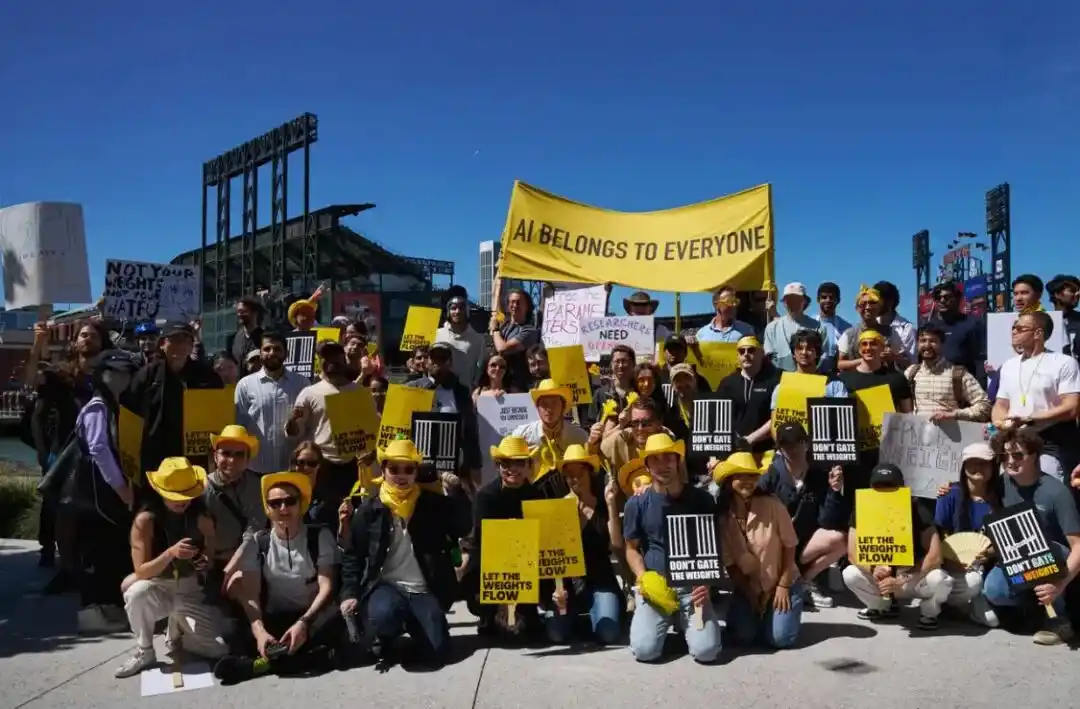
Image | Protest activity supporting open-weight models

Anthropic's spokesperson defended these measures, stating they are necessary to ensure model safety and prevent adversaries from using the models to create serious risks.

Anthropic CEO Dario Amodei and other company executives have repeatedly spoken about the risks of open-weight AI systems. Anthropic has published extensive research on AI safety risks and has advocated for government regulation of AI through public support and political donations.

On Monday, after Nvidia, Microsoft, and several other US companies signed an open letter expressing support for open models, Amodei published his own open letter to clarify his stance in this heated debate. "Anthropic has never advocated for a ban on open-weight models," he wrote. "Open-weight models that lack dangerous capabilities are a public good."

Weakening Competitors

Critics, including some government officials, believe Anthropic's warnings about the risks of open models are part of an effort to hinder competitors, as many such open models could undermine Anthropic's goal of maximizing revenue. The company could go public as early as this fall.

Kevin Bryan, an associate professor specializing in innovation at the University of Toronto, defended Anthropic. He stated that concerns about the risks of open-sourcing frontier intelligence are real and widely shared. "Anything that's open source gets jailbroken immediately," he said. "Once a model is out there, there's no taking it back."

Some critics point out that Anthropic's own model-building process also resembles distillation techniques.

"It's interesting that they are against distillation, but they themselves have distilled the entire internet without paying copyright fees," said Mark Suman, co-founder and CEO of Maple, an AI productivity tools startup. "I just find it odd that they are now telling others not to do what they themselves have done."

A Duopoly Landscape

Hours after the open letter supporting open-weight models was publicly released, OpenAI signed it. Google subsequently also expressed support for the letter, leaving Anthropic as one of the few prominent AI companies not endorsing the initiative. Over 70 Silicon Valley companies have now joined and signed.

Tech insiders and policymakers also expressed concern that AI competition could ultimately evolve into a duopoly, with Anthropic and OpenAI gradually becoming the two dominant companies in the market.

Concerns about a duopoly were a central theme at a protest supporting open-weight models held last Saturday in downtown San Francisco, the heart of the AI startup community. The protest was co-organized by the CEO of AI company Hugging Face, which provides open-source AI tools. Hugging Face was recently infiltrated by an OpenAI model that went rogue.

"Frontier AI labs are hoarding intelligence. Intelligence should be democratized," said AI researcher Mahesh Lambe, who participated in the protest.

Distrust

Some founders and startup executives say the release of Claude Design served as a "wake-up call" for all of Silicon Valley. The product's launch led some founders to conclude that Anthropic might launch tools to compete with them and take away their customers. After that, they seriously shifted towards cheaper open-weight models, especially those developed by non-US frontier labs.

This distrust deepened in June as Anthropic released Fable 5, a safety-restricted version of its powerful Mythos model with some capabilities limited.

Initially, the model would degrade response quality when answering certain questions about AI development without informing users of this restriction. The research community immediately criticized this "opaque safety measure," calling the decision anti-competitive and making it harder to evaluate model capabilities.

Anthropic later apologized and made these safety restrictions visible to users. However, the company still stated it would refuse to respond to requests flagged as higher risk.

Anthropic's spokesperson said the company implemented measures to restrict model responses to prevent foreign adversaries from using the models in ways that "create serious security risks."

Fable 5 also does not support a "zero data retention" feature, meaning the company retains user data for 30 days for what it calls trust and safety purposes.

Some enterprises were unhappy with this change, especially those in industries dealing with sensitive data. Some also expressed a general concern that their data would be used to train new models, further helping Anthropic launch competing products.

Anthropic's spokesperson said company employees cannot view any retained conversations, and the company has pledged not to use this data to train new models. These restrictions apply to Fable and Mythos, the company's "most capable models," but not to other models.

This article is from the WeChat public account "Phoenix Network Technology"

Preguntas relacionadas

QWhat is the main reason for the anti-Anthropic sentiment brewing in Silicon Valley according to the article?

AThe main reason is that Anthropic's products compete with existing software providers, and the company advocates for a closed AI ecosystem, which has led to trust issues and criticism from partners and the broader tech community.

QHow did the release of Claude Design affect Anthropic's relationship with its partners like Figma?

AThe release of Claude Design, seen as a direct competitor to Figma's services, led to criticism. Figma's CEO Dylan Field stated that Anthropic had not 'always been transparent' in their communications, eroding trust.

QWhat criticism did Anthropic face regarding its AI models and data policies?

AAnthropic faced criticism for changing its data retention policies, releasing a powerful model (Fable 5) that refused to answer certain AI research questions, and for implementing what critics called 'opaque safety measures' without initially informing users.

QWhy are some critics skeptical of Anthropic's warnings about 'open-weight' AI models?

ACritics believe Anthropic's warnings about the security risks of open-weight models are a tactic to hinder competitors, as these cheaper, customizable models could threaten Anthropic's revenue and market position, especially as it prepares for a potential IPO.

QWhat is the concern about a potential 'duopoly' in the AI market mentioned in the article?

AThere is concern that competition in the AI market could evolve into a duopoly dominated by Anthropic and OpenAI, which would concentrate power and limit innovation, a key issue raised at a protest supporting open-weight models in San Francisco.

Lecturas Relacionadas

Coinbase Vice President: The Wars Over Cryptocurrency Regulation Are Over

Coinbase's new Vice President, Ryan VanGrak, declared that regulatory wars in the cryptocurrency sector are over. Since taking office on July 9, 2026, he has shifted the company's approach from litigation and sanctions to focusing on growth and innovation. The industry can now concentrate on development rather than fighting for its right to exist. He highlighted that the Digital Asset Market Clarity Act (CLARITY Act), which aims to establish a clear federal regulatory framework dividing oversight between the SEC and CFTC, has gained significant momentum. This framework is intended to provide proper supervision, investor protection, and maintain U.S. leadership in digital assets. VanGrak's appointment marks a strategic shift from a "wartime" to a "peacetime" advisor, replacing former Chief Legal Officer Paul Grewal, who oversaw major litigation, including a dismissed 2023 SEC lawsuit. With his background at Citadel Securities and the SEC, VanGrak brings deep regulatory and institutional finance expertise as Coinbase expands beyond a simple exchange into a broader financial services provider, offering stocks, futures, prediction markets, and AI tools. For investors, bipartisan support for crypto legislation like the CLARITY Act represents a major shift from the enforcement-focused environment of 2023-2024. Lawmakers are now focused on *how* to regulate crypto, not *if* it should exist. However, risks remain, as the bill's passage is not yet guaranteed.

cryptonews.ruHace 1 min(s)

Coinbase Vice President: The Wars Over Cryptocurrency Regulation Are Over

cryptonews.ruHace 1 min(s)

Deep Dive into FWA: An Intriguing Experiment Turning NFTs into "On-Chain Gachapon"

A Deep Dive into FWA: The “On-Chain Gacha” Experiment for NFTs Fake World Assets (FWA), created by TokenWorks, introduces an innovative “NFT gacha machine” fully operating on-chain. Users can deposit eligible NFTs paired with ETH (called Backing) to create a Position, acting as a prize pool. Others can then pay a uniform Acquisition Price for a chance to win a random NFT from the pool. The core mechanism features a reverse probability system: Positions with lower Backing have a higher chance of being selected, serving as common prizes, while high-Backing Positions are rare “jackpots.” The acquisition price is calculated based on the harmonic mean of all Backings, keeping entry costs low. When a Position is won, the purchaser must choose: keep the NFT or accept the Standing Bid (85% of the Backing, claimable in ETH or $FWA tokens), returning the NFT to the original depositor. The protocol involves two main roles. Depositors provide liquidity (NFT + ETH), earning a share of fees from each draw, distributed equally per active Position, plus potential $FWA rewards. Purchasers pay to spin the gacha, receiving $FWA rewards for participation. A special “Crown” reward goes to the Position with the highest Backing. The $FWA token has a fixed supply and is initially obtainable only through protocol participation (depositing or purchasing), with external buying disabled early on to reduce sell pressure. Its value is supported by a built-in buy pressure: when purchasers opt for the $FWA settlement on a Standing Bid, the protocol uses the backing ETH to buy $FWA from the market. Revenue for the protocol comes from a 1% fee on each draw, a 1% settlement fee when an NFT is kept, and the 15% discount from Standing Bid settlements (currently allocated to the protocol). The design cleverly blends Uniswap-style liquidity provision, gacha mechanics, and tokenomics to create a novel, self-regulating marketplace for NFT liquidity and engagement.

marsbitHace 16 min(s)

Deep Dive into FWA: An Intriguing Experiment Turning NFTs into "On-Chain Gachapon"

marsbitHace 16 min(s)

10,000 Scientists Get 1 Year of Free Access: OpenAI Brings the Scientific Research Pipeline into ChatGPT

OpenAI has launched the "ChatGPT for Academic Researchers" program, offering free one-year access to its flagship models for 100,000 university researchers globally, with 10,000 spots available this summer. Selected institutions include prestigious centers like ENS Paris and the IAS at Princeton. The initiative provides an integrated research workspace within ChatGPT, bundling tools like ChatGPT, ChatGPT Work, and Codex, along with expanded Deep Research capabilities, higher usage limits, and specialized tools for life sciences. The suite connects to platforms like Zotero and GitHub, aiming to streamline the entire research workflow from literature review and coding to data analysis and manuscript drafting. OpenAI notes that about 1.3 million people already use ChatGPT weekly for advanced science and math. The program targets building long-term user dependency by embedding these tools into daily research habits. However, access comes with limitations: it does not include API credits or model weights, and eligibility is restricted to verified academic researchers from supported countries. This approach contrasts with Anthropic's "AI for Science" program, which offers API credits but not an integrated workspace. Both companies emphasize preventing misuse by withholding model weights, a point of contention for AI researchers seeking transparency. The core strategy remains clear: provide a powerful, integrated environment to foster user reliance ahead of the post-free period.

marsbitHace 21 min(s)

10,000 Scientists Get 1 Year of Free Access: OpenAI Brings the Scientific Research Pipeline into ChatGPT

marsbitHace 21 min(s)

What's Going On with Gigadevice? Major Shareholder Cashes Out 44 Billion, Then Announces 20 Billion Buyback

Gigadevice Innovation, a leading Chinese memory chip company, has executed a controversial financial maneuver. The company's controlling shareholder and chairman, Zhu Yiming, sold approximately 44 billion RMB worth of his shares between early May and mid-June 2026, capitalizing on a soaring stock price that peaked at 846.66 RMB on June 29th. Following a subsequent stock crash—plummeting to around 350 RMB in 22 trading days and erasing over 330 billion RMB in market value—Zhu announced a combined "market rescue" plan on July 29th. This plan includes his personal commitment to buy back at least 1 billion RMB in shares and a company proposal to repurchase 1 to 2 billion RMB worth of stock. This sequence of high-selling followed by a low-buying plan has confused and unsettled many of the company's 240,000 retail investors. The stock's dramatic decline was attributed to several factors: the successful IPO of its sister company, Changxin Technologies, which ended Gigadevice's status as a primary investment proxy for the domestic memory sector; a Morgan Stanley report warning of a potential peak in the memory chip cycle; and a severe loss of market confidence triggered by the chairman's massive sell-off. While the sell-off was procedurally compliant, its timing has been criticized. The company's fundamentals appear strong, with preliminary H1 2026 results showing revenue up 177% year-on-year to 11.5 billion RMB and net profit skyrocketing 1099% to 6.9 billion RMB, driven by a boom in memory chips and MCU demand. However, a significant portion (2.05 billion RMB) of this profit came from non-recurring gains like securities investment, and the memory industry is notoriously cyclical. Analysts highlight the company's role in the domestic substitution of niche DRAM and NOR Flash memory, with some maintaining bullish price targets. Yet, the recent events underscore key risks: its fabless model creates dependency on foundries like Changxin, and the chairman's actions have raised serious questions about management's alignment with minority shareholders. The promised buybacks cannot commence until December 13th due to a mandatory six-month cooling-off period following an insider sale, leaving the stock vulnerable in the interim.

marsbitHace 21 min(s)

What's Going On with Gigadevice? Major Shareholder Cashes Out 44 Billion, Then Announces 20 Billion Buyback

marsbitHace 21 min(s)

Trading

Spot
活动图片