Securities or Commodities? A Decade-Long Tug-of-War Ends as the 'Crypto Market Structure Act' Races to the Senate

Odaily星球日报Publicado a 2025-12-10Actualizado a 2025-12-10

Resumen

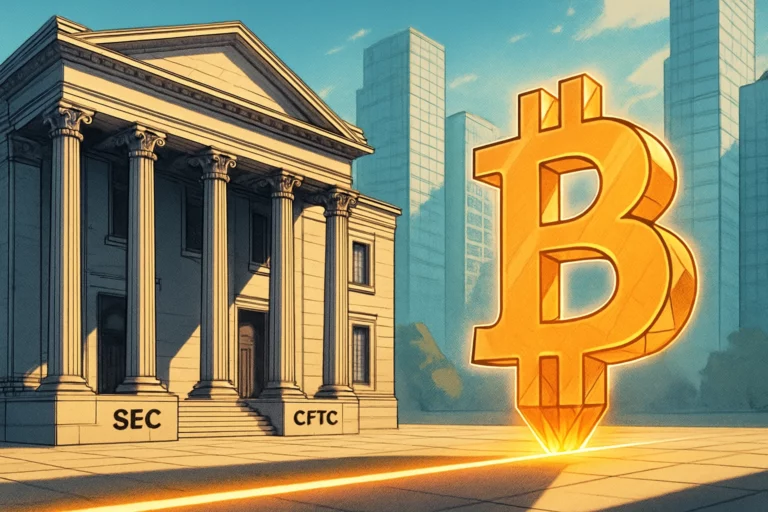
The "Cryptocurrency Market Structure Act" (CLARITY Act) is advancing to the U.S. Senate for final review after passing the House with strong support. The bill aims to resolve the long-standing regulatory debate over whether cryptocurrencies are classified as securities or commodities. It introduces a clear framework: tokens on decentralized blockchains are defined as "digital commodities" under CFTC oversight, while those meeting the Howey test remain securities regulated by the SEC. Key provisions include a "mature blockchain" exemption for highly decentralized networks like Bitcoin and Ethereum, a 360-day temporary registration pathway for trading platforms, and a fundraising exemption of up to $75 million for certain token offerings with enhanced disclosure. The bill also establishes a joint advisory committee to improve coordination between the CFTC and SEC and explicitly exempts non-custodial DeFi actors from broker-dealer regulations. This legislative effort aligns with the Trump administration's pro-crypto stance, including the appointment of industry-friendly leaders at key agencies like the SEC and CFTC, and recent moves to allow regulated spot crypto trading on CFTC-approved exchanges. If enacted, the law would provide regulatory clarity, encourage institutional adoption, and position the U.S. as a leader in the digital asset space.

Original / Odaily Planet Daily (@OdailyChina)

Author / DingDang (@XiaMiPP)
On December 10, U.S. Senators Gillibrand and Lummis stated at the Blockchain Association Policy Summit that the draft of the Crypto-Asset Market Structure Act (CLARITY Act) is expected to be released this weekend and enter the revision and hearing vote stage next week. This means this long-brewing legislative project has officially entered a decisive window.

The bill was first introduced in the U.S. House of Representatives on May 29, 2025, co-sponsored by House Financial Services Committee Chairman Patrick McHenry and Digital Assets and Innovation Subcommittee Chairman French Hill. It passed the House vote by an overwhelming majority (294 votes in favor) on July 17 and is now awaiting final review by the Senate.

Core Design of the Bill: Classification Over a One-Size-Fits-All Approach

The core of the Crypto-Asset Market Structure Act lies in its attempt to end the decade-long tug-of-war between U.S. regulators and the industry over "whether it's a security or a commodity." It is the first legislation to draw a clear boundary for digital assets, avoiding a "one-size-fits-all" regulatory model in favor of a classified regulatory framework. Specifically:

Legal Distinction Between "Digital Commodities" and "Digital Securities"

The bill explicitly defines the vast majority of tokens natively issued on decentralized blockchains as "digital commodities," placing them under the regulatory purview of the Commodity Futures Trading Commission (CFTC). Only those tokens that meet the Howey Test and possess typical "investment contract" characteristics will continue to be regulated by the SEC under securities laws.

"Mature Blockchain" Exemption Path

To prevent all tokens from being forcibly classified as securities, the bill establishes a "mature blockchain system" standard: a blockchain must simultaneously satisfy conditions of "high decentralization" (no single entity controls more than 20% of the token supply or validation power) and derive its value primarily from the actual use of the network to be exempt from SEC securities registration requirements. This provides a clear path for mainstream assets like Bitcoin and Ethereum, ensuring regulation does not stifle technological progress.

Comprehensive Shift of Secondary Market Regulation to the CFTC

The bill requires all platforms engaged in spot or derivative trading of digital commodities to register with the CFTC as a "Digital Commodity Exchange" (DCE), digital commodity broker, or dealer. Acknowledging industry realities, the bill also includes a 360-day "provisional registration" channel to ensure existing compliant platforms are not forced to shut down due to technical violations during the transition period, enabling a smooth handover.

Limited Fundraising Exemption

Even for initial token offerings on mature blockchains that are still deemed "investment contracts," issuers can apply for an exemption from the registration requirements of the 1933 Securities Act. However, the total annual fundraising amount must not exceed $75 million, and stricter information disclosure obligations must be fulfilled. This design seeks to balance encouraging innovation with protecting investors.

Division of Labor Between CFTC and SEC: From Confrontation to Collaboration

The prolonged jurisdictional tug-of-war between the SEC and CFTC over digital assets has long been described as the "Achilles' heel" of the crypto industry. Regulatory uncertainty has even been considered a significant hidden cost suppressing innovation vitality in the U.S. If the Crypto-Asset Market Structure Act officially takes effect, it will彻底 (completely) end this situation through legislation, establishing a clear division of responsibilities: the CFTC becomes the core regulator of the digital commodity secondary market, while the SEC focuses on token issuance and private placement activities in the primary market that still possess security attributes.

To ensure coordination between the two agencies in overlapping areas, the bill requires the establishment of a permanent "Joint Advisory Committee". Either agency must formally respond to non-binding recommendations put forward by the committee when formulating rules that might affect the other's jurisdictional scope. This mechanism aims to prevent future regulatory gaps or overlapping regulations.

Simultaneously, the bill provides clear protection for the decentralized finance (DeFi) ecosystem: protocol front-end developers, node validators, miners, and other non-custodial, non-profit roles will be explicitly excluded from the definitions of "broker" or "dealer," significantly reducing the compliance burden at the protocol level and preserving reasonable space for technological innovation.

Supporting Actions Progressing Simultaneously: CFTC is "Implementing First"

As the Senate review of the Crypto-Asset Market Structure Act enters a critical stage, on December 5, Acting Chairman of the U.S. Commodity Futures Trading Commission (CFTC), Caroline D. Pham, announced that spot cryptocurrency products will, for the first time, be permitted to trade on CFTC-registered regulated futures exchanges.

Pham stated that this move is part of the Trump administration's commitment to making the U.S. the "crypto capital of the world," aiming to address the lack of safeguards on offshore exchanges by providing a regulated domestic market.

Furthermore, as part of the "Crypto Sprint" plan, the CFTC will also promote the use of tokenized collateral (including stablecoins) in derivatives markets and revise rules to support the application of blockchain technology in infrastructure such as clearing and settlement. This will strengthen the CFTC's leadership role in the digital asset space, highly aligning with the spirit of the bill.

Trump's Nominations Accelerate: Crypto-Friendly Leadership in Place

Since Trump's second term, the personnel layout of major U.S. financial regulatory agencies has continued to tilt towards supporting digital assets. This shift has become a key catalyst for the accelerated development of the crypto industry.

U.S. Securities and Exchange Commission (SEC) Chairman Paul Atkins stated in an interview with CNBC that the U.S. "resistance" to cryptocurrency has lasted "too long." Paul Atkins was appointed by Trump and took office in 2025. He views the Crypto-Asset Market Structure Act as part of "Project Crypto," an initiative aimed at bringing order and fairness to digital asset classification through legislation and rules.

Simultaneously, on October 25, 2025, Trump nominated Brian Quintenz to serve as CFTC Chairman and Commissioner. A former crypto lawyer, Quintenz represented numerous crypto companies (such as venture capital funds and blockchain projects) at the law firm Willkie Farr & Gallagher and has served as Chief Legal Counsel for the SEC's Crypto Task Force since March 2025, reporting directly to Atkins.

Trump also nominated Travis Hill to serve as Chairman of the Federal Deposit Insurance Corporation (FDIC); he has been serving as Acting Chairman since 2025. Hill is also crypto-friendly, having publicly supported banks' involvement in crypto custody and stablecoin issuance, believing it can enhance financial inclusion. The FDIC regulates the interface between banks and crypto (e.g., stablecoin issuers), and his appointment may facilitate banks' entry into the crypto space.

After the government resumed operations, the SEC has successively introduced optimized systems to accelerate the ETF approval pace. The overall signal is very clear: regulatory logic is transitioning from defensive management to structural acceptance.

Conclusion: The U.S. is Completing the "Crypto Rule of Law Puzzle"

More importantly, the progress of the Crypto-Asset Market Structure Act may consolidate the effectiveness of the U.S. Stablecoin Innovation Act signed by Trump earlier this year, which already provides a safety framework for stablecoin issuance. This bill further completes the legislative puzzle for the crypto industry, filling the market structure gap and propelling the U.S. from a "follower" to a "leader" in global crypto regulation.

Overall, these policy and personnel changes预示 (foreshadow) structural opportunities for the U.S. crypto ecosystem. Regulatory clarity could attract more institutional capital inflows. However, challenges have not disappeared, such as coordinating DeFi regulatory details and aligning with international standards. But for global crypto practitioners, this is not just an American story; it is a crucial window period for the entire industry.


Criptos en tendencia

Preguntas relacionadas

QWhat is the core design principle of the 'Cryptocurrency Market Structure Act' (CLARITY Act)?

AThe core design principle of the CLARITY Act is to end the decade-long debate over whether cryptocurrencies are securities or commodities by establishing a clear, categorical regulatory framework instead of a one-size-fits-all approach. It legally distinguishes between 'digital commodities' and 'digital securities'.

QWhich U.S. regulatory agency is given primary oversight of the secondary market for digital commodities under the proposed bill?

AThe Commodity Futures Trading Commission (CFTC) is given primary regulatory authority over the secondary market for digital commodities, including platforms trading digital commodity spots or derivatives.

QWhat is the 'mature blockchain system' exemption path outlined in the bill?

AThe 'mature blockchain system' exemption path allows a blockchain to be exempt from SEC securities registration if it is 'highly decentralized' (no single entity controls more than 20% of the token supply or validation power) and its value is primarily derived from the network's actual use.

QWho are the key political figures mentioned as driving the pro-crypto regulatory changes in the U.S.?

AKey political figures driving the pro-crypto regulatory changes include Senators Gillibrand and Lummis, who introduced the bill, and former President Trump, who appointed crypto-friendly leaders like SEC Chairman Paul Atkins and CFTC Chairman nominee Brian Quintenz.

QWhat is the significance of the CFTC's recent announcement regarding spot cryptocurrency products?

AThe significance of the CFTC's announcement is that it will, for the first time, allow spot cryptocurrency products to be traded on CFTC-regulated futures exchanges. This is part of a broader effort to provide a regulated onshore market and address the lack of safeguards on offshore exchanges.

Lecturas Relacionadas

Must-Watch Events Next Week|CLARITY Act Could Face Senate Vote; SpaceX, Circle to Report Earnings (8.3-8.9)

**Summary: Key Events and Developments to Watch (August 3-9)** The upcoming week is marked by significant financial disclosures, key legislative deadlines, and notable product updates. **Major Financial Events:** Several companies are scheduled to release their Q2 2026 earnings. American Bitcoin (ABTC) will report on August 3, followed by SpaceX and Hut 8 Mining Corp. on August 4, and Circle on August 5. Notably, a significant portion of SpaceX shares (up to 12% of total shares) will be unlocked on August 6 following their earnings release. **Key Legislative Deadline:** The U.S. Senate faces an August 7 deadline to secure 60 votes for the CLARITY Act, a bipartisan bill aiming to establish a federal regulatory framework for cryptocurrencies. The Senate may hold a full vote on the bill during the week. **Economic Data:** The U.S. July Non-Farm Payrolls report will be released on August 7, providing crucial labor market data. **Technology & Product Updates:** * **Shutdowns:** DeFi portfolio tracker Zapper and wallet app Ctrl Wallet will cease operations on August 3. * **Upgrades:** LayerZero will deprecate its v1 relayers on August 3. XRP Ledger's new version 3.3.0, featuring five new functions, is expected next week. * **AI:** Elon Musk announced that the advanced Grok 4.6 AI model is set for release around August 7. * **Bitcoin:** The BIP-110 forced signaling for a potential Bitcoin network change is scheduled to begin around August 8. **Other Notable Events:** Chinese robotics firm Unitree Tech has set its preliminary price inquiry for its IPO for August 5. South Korean exchange Upbit will delist AQT and AERGO tokens on August 3.

marsbitHace 1 hora(s)

Must-Watch Events Next Week|CLARITY Act Could Face Senate Vote; SpaceX, Circle to Report Earnings (8.3-8.9)

marsbitHace 1 hora(s)

Stocks Are Plummeting More Sharply Than Cryptocurrencies. Where Has the Money Gone?

Stock Markets Plunge Deeper Than Cryptocurrencies: Where Did the Money Go? In late July, Seoul's Kospi index triggered circuit breakers for two consecutive days, plummeting over 40% from its June high. The collapse was led by heavyweight stocks like SK Hynix, whose record profits still disappointed investors, and devastating leveraged ETFs, with one major product losing over 83% of its value. This signaled a global, forced deleveraging targeting the most crowded trades. Interestingly, while stocks exhibited extreme volatility akin to crypto markets, Bitcoin rose nearly 15% in July after a prior steep drop. Analysis shows the money fleeing equities did not flow into Bitcoin. Instead, Bitcoin had already absorbed its sell-off in May-June, when U.S. spot Bitcoin ETFs saw historic outflows. The true safe-haven beneficiary was gold, whose price rose over 20% year-on-year, highlighting a decoupling between Bitcoin and gold as "digital gold." The sell-off was a targeted unwinding of leveraged positions in tech and semiconductors, accelerated by broker-dealer risk management and shifts in the AI narrative, including new competition from Chinese memory chipmakers. The retreat path was clear: from high-valuation tech stocks to cash and U.S. Treasuries, then to gold. For Bitcoin to attract sustained institutional inflows, conditions like eased global liquidity pressure, a "soft-landing" Fed rate cut, and U.S. regulatory clarity via legislation like the stalled CLARITY Act are needed. Currently, Bitcoin is not a safe haven but an already-cleared asset. Its low correlation with tech stocks, however, makes it a potential diversification play for institutional portfolios once the storm passes. The money isn't here yet, but the positioning is underway.

marsbitHace 1 hora(s)

Stocks Are Plummeting More Sharply Than Cryptocurrencies. Where Has the Money Gone?

marsbitHace 1 hora(s)

In Conversation with Ray Dalio: We Are Currently in an AI Bubble, with 1% of My Portfolio in Bitcoin

Ray Dalio, founder of Bridgewater Associates, warns in an interview that the current AI boom shows classic bubble characteristics, which could lead to significant economic downturns as seen in past cycles like 1929 or 2000. He explains that speculative enthusiasm, fueled by debt and overvaluation, often precedes a crash when rising rates or taxation force asset sales, causing widespread losses and recession. Dalio also outlines his "Big Cycle" theory, describing an approximate 80-year pattern where widening wealth gaps, massive government deficits, and shifting geopolitical power (like China's rise) create internal conflict and global instability. He emphasizes that we are in a late-cycle, transitional phase where traditional powers like the US and UK face decline. For personal wealth protection, Dalio advises diversification beyond cash into assets like stocks, bonds, real estate, and particularly gold, which he prefers over Bitcoin. While he holds about 1% of his portfolio in Bitcoin as a non-printable hard asset, he views gold as more secure from technological or governmental threats. Regarding AI's impact, Dalio believes it will disproportionately benefit capital owners, worsening inequality by replacing both physical and cognitive labor. He suggests that human intuition and emotional intelligence, combined with AI, will be key for future workers. On taxation, Dalio argues that wealth taxes are impractical and risk triggering asset sell-offs, reducing productive investment. He points to the UK as a cautionary example of debt, low productivity, and political strife. Geopolitically, Dalio foresees a more regionalized world, with the US showing weakness in prolonged conflicts like with Iran, akin to past imperial declines. The ideal outcome, he suggests, is coexisting powerful blocs (e.g., Americas, China-Asia Pacific) without major war.

marsbitHace 5 hora(s)

In Conversation with Ray Dalio: We Are Currently in an AI Bubble, with 1% of My Portfolio in Bitcoin

marsbitHace 5 hora(s)

Trading

Spot

Artículos destacados

Cómo comprar O

¡Bienvenido a HTX.com! Hemos hecho que comprar O1 exchange (O) sea simple y conveniente. Sigue nuestra guía paso a paso para iniciar tu viaje de criptos.Paso 1: crea tu cuenta HTXUtiliza tu correo electrónico o número de teléfono para registrarte y obtener una cuenta gratuita en HTX. Experimenta un proceso de registro sin complicaciones y desbloquea todas las funciones.Obtener mi cuentaPaso 2: ve a Comprar cripto y elige tu método de pagoTarjeta de crédito/débito: usa tu Visa o Mastercard para comprar O1 exchange (O) al instante.Saldo: utiliza fondos del saldo de tu cuenta HTX para tradear sin problemas.Terceros: hemos agregado métodos de pago populares como Google Pay y Apple Pay para mejorar la comodidad.P2P: tradear directamente con otros usuarios en HTX.Over-the-Counter (OTC): ofrecemos servicios personalizados y tipos de cambio competitivos para los traders.Paso 3: guarda tu O1 exchange (O)Después de comprar tu O1 exchange (O), guárdalo en tu cuenta HTX. Alternativamente, puedes enviarlo a otro lugar mediante transferencia blockchain o utilizarlo para tradear otras criptomonedas.Paso 4: tradear O1 exchange (O)Tradear fácilmente con O1 exchange (O) en HTX's mercado spot. Simplemente accede a tu cuenta, selecciona tu par de trading, ejecuta tus trades y monitorea en tiempo real. Ofrecemos una experiencia fácil de usar tanto para principiantes como para traders experimentados.

458 Vistas totalesPublicado en 2026.06.19Actualizado en 2026.06.29

Cómo comprar O

Cómo comprar PROS

¡Bienvenido a HTX.com! Hemos hecho que comprar Pharos (PROS) sea simple y conveniente. Sigue nuestra guía paso a paso para iniciar tu viaje de criptos.Paso 1: crea tu cuenta HTXUtiliza tu correo electrónico o número de teléfono para registrarte y obtener una cuenta gratuita en HTX. Experimenta un proceso de registro sin complicaciones y desbloquea todas las funciones.Obtener mi cuentaPaso 2: ve a Comprar cripto y elige tu método de pagoTarjeta de crédito/débito: usa tu Visa o Mastercard para comprar Pharos (PROS) al instante.Saldo: utiliza fondos del saldo de tu cuenta HTX para tradear sin problemas.Terceros: hemos agregado métodos de pago populares como Google Pay y Apple Pay para mejorar la comodidad.P2P: tradear directamente con otros usuarios en HTX.Over-the-Counter (OTC): ofrecemos servicios personalizados y tipos de cambio competitivos para los traders.Paso 3: guarda tu Pharos (PROS)Después de comprar tu Pharos (PROS), guárdalo en tu cuenta HTX. Alternativamente, puedes enviarlo a otro lugar mediante transferencia blockchain o utilizarlo para tradear otras criptomonedas.Paso 4: tradear Pharos (PROS)Tradear fácilmente con Pharos (PROS) en HTX's mercado spot. Simplemente accede a tu cuenta, selecciona tu par de trading, ejecuta tus trades y monitorea en tiempo real. Ofrecemos una experiencia fácil de usar tanto para principiantes como para traders experimentados.

472 Vistas totalesPublicado en 2026.06.22Actualizado en 2026.06.29

Cómo comprar PROS

Qué es VERONA

I. Introducción al Proyecto VERONA es una blockchain construida para todos, en todas partes a través de la abstracción de cadenas. Utilizando su capa de Abstracción Generalizada, VERONA se distingue por integrar funcionalidades complejas de blockchain, como cuentas, firmas e interoperabilidad, directamente a nivel de protocolo. Este enfoque permite interactuar con aplicaciones de blockchain sin necesidad de entender las tecnologías subyacentes.1) Información Básica Nombre: VERONA (VERONA)III. Enlaces Relacionados Enlace al sitio web oficial: https://xion.burnt.com/ Libro Blanco: https://xion.burnt.com/whitepaper.pdf Exploradores: https://explorer.burnt.com/ Redes Sociales: https://x.com/burnt_xion Nota: La introducción del proyecto proviene de los materiales publicados o proporcionados por el equipo oficial del proyecto, que es solo para referencia y no constituye asesoramiento de inversión. HTX no se hace responsable de ninguna pérdida directa o indirecta resultante.

554 Vistas totalesPublicado en 2026.06.22Actualizado en 2026.06.22

Qué es VERONA

Discusiones

Bienvenido a la comunidad de HTX. Aquí puedes mantenerte informado sobre los últimos desarrollos de la plataforma y acceder a análisis profesionales del mercado. A continuación se presentan las opiniones de los usuarios sobre el precio de A (A).

活动图片













