Author: Conflux
On August 19, Beijing time, Paul Atkins, Chairman of the U.S. Securities and Exchange Commission (SEC), released a draft of the Regulation Crypto Assets. The draft allows startup projects to raise up to $5 million within four years, while larger-scale projects can raise $20 million or $75 million every 12 months, without undergoing the full securities registration process.
Simultaneously, the White House is also backing this policy direction. In the early hours of August 20, Trump met at the White House with the chairs of the SEC and CFTC, as well as executives from both crypto and traditional finance such as Coinbase and Nasdaq, again urging Congress to advance the CLARITY Act. With legislative progress in Congress lagging, the U.S. government is preparing to use administrative regulation to establish rules for crypto asset issuance and financing. Market sentiment has subsequently warmed.
The true weight of this draft does not lie in how much the fundraising limits have been relaxed, but in how it reforms a set of judgment logic: In past practice, whether a token could shed its securities attributes often required a comprehensive assessment combining the Howey Test (a classic U.S. legal standard for determining whether an asset constitutes an "investment contract"), public commitments from the project team, and whether the network had achieved sufficient functionality and decentralization. Now, the SEC is further codifying this judgment process—what you promised when you sold the tokens, whether those promises have been fulfilled or permanently ceased, is something you must declare and prove yourself; the SEC reserves the power to challenge this afterward.
Who Decides When to "Graduate"
The new draft establishes an Investment Contract Safe Harbor mechanism. The specific process is: The project team completes or permanently ceases the previously promised "essential managerial efforts" (referring to development, operation, promotion work undertaken by the team to increase the token's value), makes no new related commitments, and then submits a Form TR (a self-certification declaration document). In this form, they self-certify that the conditions have been met, attaching an analytical statement supporting this judgment.
A crucial point is that submitting Form TR does not equal prior SEC approval. The SEC will not review and approve each application individually when submitted. Instead, it reserves the right to re-examine and challenge whether the project's certification is valid in the future.
This means the initiative has not simply shifted from "market consensus" to the SEC's hands. Rather, it moves from the past fuzzy judgments surrounding decentralization, functionality, and project team management efforts towards an institutionalized framework of "issuer self-certification, SEC post-hoc supervision." The SEC is not handing out "graduation certificates" to projects; it's defining how projects must prove they have graduated themselves, and who is responsible if that proof is wrong.
This distinction may seem technical, but it actually determines the nature of the entire set of rules: The power concentrated in the hands of the regulator is not pre-approval authority, but post-hoc challenge and enforcement authority.
Who Can "Graduate" Faster
The most obvious beneficiaries are mature teams capable of "telling fewer stories and quickly handing over the baton." Corporate securities lawyer Gabriel Shapiro points out that whether a token can escape investment contract status is directly tied to the public promises made by the project—the fewer the promises, the less work needs to be proven completed or ceased, and the faster the exit from the safe harbor.
Rule 103 of the draft requires projects to disclose what they promised to do, what the "essential managerial efforts" specifically are, to what extent they have been achieved, and the development plan and progress. In the future, these disclosures will become important basis for judging whether an investment contract has concluded. The fuller the management promises made by the team during the fundraising stage—promising to complete a certain key function, establish a certain network mechanism, drive the ecosystem to a certain level of maturity—the more they will need to prove these promises have been fulfilled or permanently ceased in the future.
If these rules are ultimately implemented, for projects seeking to legally raise funds from U.S. investors, the value of U.S.-based issuance, compliance, and trading infrastructure will rise. The draft's fundraising exemption mechanism explicitly requires the issuing entity to be registered in the U.S., with a majority of executives being U.S. citizens or residents, more than half of its assets located within the U.S., and its business primarily conducted in the U.S. What these rules truly aim to reclaim may be the issuance and financing activities that flowed outside the U.S. in recent years.
Conversely, the situation becomes more complex for those issuers who rely on "decentralization narratives" to package their projects while actual control remains in the team's hands—if it previously framed promoting network decentralization as a key management promise investors could rely on, then even if the mainnet is live and the product is usable, it may still need to prove this part of the promise has been completed or permanently ceased to enter the safe harbor.
Free Airdrops Also Have a Price
There's another easily overlooked detail in the draft: The startup exemption mechanism's definition of "covered transaction" explicitly includes non-cash distribution methods such as airdrops and network rewards in the calculation. This means that even if tokens are distributed "for free," their value may be counted towards the $5 million exemption cap—an airdrop does not automatically exclude it from the fundraising limit.
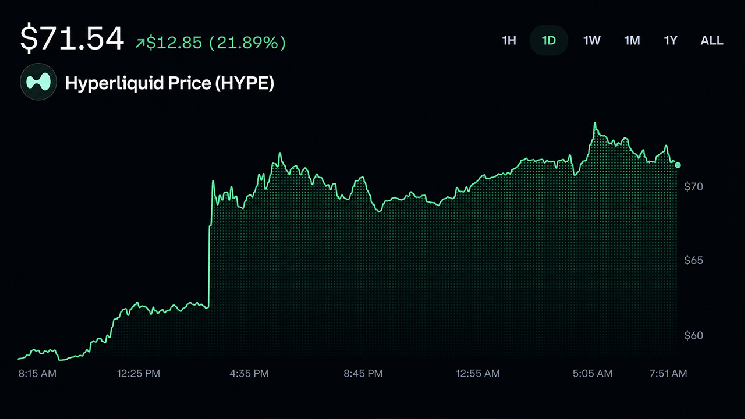
For point-based activities that exchange future token distributions through trading or providing liquidity, whether and how they count towards this cap depends on the specific distribution structure and rule applicability; it cannot simply be equated to "such distributions necessarily constitute investment contracts." This has also led some market participants to link the new regulations to Hyperliquid's yet-to-be-announced Season 3 airdrop—though there is currently no public evidence of a direct connection between the two; this is more suitable as market speculation than a statement of fact.
From "Arrest First" to "Establish Rules First"
The SEC's proactive move to establish new rules comes from a not-so-easy history. During the tenure of former Chairman Gary Gensler, the industry widely criticized his approach as "regulation by enforcement"—not providing clear rules in advance, but defining boundaries through post-hoc lawsuits. A direct consequence of this approach was that many projects chose to restrict U.S. purchasers and move issuance and financing activities outside the U.S.
The Regulation Crypto Assets is, to some extent, making up for the lack of specialized rules in those years, which relied mainly on enforcement and case-by-case interpretation. The SEC also acknowledges in the proposal that the nature of investment contracts related to crypto assets may change as projects develop and issuers complete or cease their essential managerial efforts, and that traditional securities regulatory frameworks are difficult to directly adapt to this dynamic process.
Congress Delays, SEC Races Ahead
There is a more direct impetus behind the emergence of this draft—the CLARITY Act, seen as the "ultimate solution" in Congress, continues to face obstacles in the Senate. Market expectations on the prediction market platform Polymarket regarding whether the Act can be enacted within 2026 have also noticeably weakened. White House crypto policy advisor Patrick Witt previously stated at the SALT Conference that the administration is leaving a window for Congress and the Senate to pass the bill but won't wait indefinitely—if the vote in September fails, regulatory agencies will proceed with rulemaking on their own.
The SEC's rule proposal and the White House's subsequent continued pressure on the CLARITY Act appeared almost back-to-back, forming an echo in the same policy direction: Rather than waiting for a bill that could die at any time, it's better to use the rulemaking authority already in the hands of administrative agencies to keep issuance and financing activities within the U.S.
Tokens Also Have a "Graduation Season"
The draft is currently still in the public comment stage. All three incumbent SEC commissioners voted in favor, but many details—such as how to specifically value non-cash distributions like airdrops and network rewards, which projects can truly meet safe harbor conditions, and how these rules will be enforced in actual cases—are left for public comment and subsequent regulatory practice to fill in.
But more noteworthy than whether the limits are $5 million, $20 million, or $75 million is that the SEC is attempting for the first time to write "when a token ceases to be an investment contract" into a clear institutional process: The project team first completes or ceases essential managerial efforts, then self-certifies, with the SEC retaining post-hoc challenge rights.
This means the U.S. regulatory approach to crypto assets may be shifting from "judging whether it is a security" to "managing how it transitions from a security to an independent asset."
In the past, token "graduation" was more a question requiring repeated explanation among courts, regulators, and the market; if this set of rules is ultimately implemented, "graduation" will for the first time have a relatively clear procedure and path of proof.
But the change in rules will also, in turn, change project team behavior. Since management promises made during the issuance stage will become the basis for judging "whether to graduate" in the future, project teams might recalculate: which things are worth publicly promising, which roadmaps must be written into documents, which long-term goals are better kept in internal planning.
What the SEC truly wants to redefine may not be how tokens are issued, but when a token is truly considered "graduated."
And when "graduation" begins to have clear rules, the next competition will no longer just be "who can issue tokens," but who can faster complete the step from project-led financing to the true separation of the token from the investment contract.
*The content of this article is for reference only and does not constitute any investment advice. The market has risks, and investment requires caution.