Analysts: MiCA Has Not Caused Significant Global Outflow from USDT

cryptonews.ruPublicado a 2026-08-20Actualizado a 2026-08-20

Resumen

Analysts from Artemis Analytics and independent research from LUISS University and the University of Surrey indicate that the European Union's Markets in Crypto-Assets (MiCA) regulation has not caused a significant global outflow from Tether (USDT), despite its restriction on regulated European platforms. Data shows no notable change in the overall supply or demand for USDT directly linked to MiCA's implementation, nor a large-scale migration of liquidity between exchanges or blockchains. Within Europe, the regulation has shifted trading patterns, with platforms moving toward USD Coin (USDC) instead of USDT. However, this change is localized. On a global scale, the aggregate market shares and trading volumes of major stablecoins have remained largely stable. USDT has retained its position as the leading stablecoin by market capitalization, which stood at approximately $183.27 billion in late July. Activity involving USDT continues to grow primarily outside the EU, particularly in global and emerging markets, as seen in increased user numbers on networks like BNB Chain and Tron. The resilience of dollar-pegged tokens is attributed to their expanding use beyond trading, such as for payments and remittances in regions like Argentina. While MiCA has reshaped the European market structure, it has not yet triggered a comparable shift in the global stablecoin landscape.

The restriction of access to $USDT on regulated European platforms has not yet led to a significant global outflow from the largest "stablecoin." This is indicated by data from Artemis Analytics, as reported by Cointelegraph, as well as independent research by economists from LUISS University and the University of Surrey.

According to Artemis representative Alex Wesley, changes in European regulation have not caused a noticeable reduction in the supply of $USDT or a large-scale migration of liquidity between blockchains and trading platforms.

"The data does not indicate a significant change in the supply or demand for $USDT that could be directly linked to MiCA coming into force in Europe. [The regulation] has not caused a major migration between platforms or networks," he stated.

The conclusion of Artemis is supported by research from Nicola Borri of LUISS University and Kirill Shakhnov of the University of Surrey. The authors analyzed the consequences of $USDT restrictions on European crypto exchanges and concluded that MiCA has noticeably changed the trading structure on individual regulated platforms but has had almost no impact on the aggregate market shares and trading volumes of the largest stablecoins.

European Platforms Have Switched to $USDC

The effect has been noticeable on exchanges focused on the regulated European market. Following the $USDT restrictions, the share of $USDC relative to the pre-change period increased by 0.82 standard deviations, and the ratio of trading volumes for Circle's stablecoin to its competitor increased by 0.54 standard deviations.

The authors attributed this result primarily to the reduction in $USDT trading on platforms where the token was removed or restricted for European clients. However, they did not find comparable redistribution on a global level.

"Aggregate market shares and trading volumes remain almost unchanged," the study states.

This allows for distinguishing two effects of MiCA: the regulation has influenced asset choice within European-regulated services but has not yet led to a comparable change in the global market structure.

$USDT Retains Its Lead

Additional market data also does not show a sharp decline in the role of $USDT after the end of the MiCA transition period. As of July 31, approximately 183.46 billion $USDT were in circulation, with a market capitalization of about $183.27 billion, according to historical data from CoinMarketCap.

The independent Stablecoin Beat estimated Tether's share of the total stablecoin supply at the end of July at 61.2%. At the same time, the entire market contracted by approximately 1.2% over the month, so the slight decrease in $USDT supply did not occur in isolation.

These metrics themselves do not allow for measuring user "demand" in all its forms but do not indicate a global outflow from $USDT following the tightening of European rules. Even before the end of the transition period, data from Dune showed that $USDT and $USDC together accounted for about 83% of the global stablecoin market. $USDT remained the largest asset in the segment.

Activity is Growing Outside Europe

Artemis noted that the primary on-chain activity with $USDT continues to expand in regions outside the EU. According to the company's data, the number of daily users on BNB Chain increased from approximately 318,000 in June 2024 to 1.56 million in July 2026.

On Tron, the metric for the same period increased by 44%—to about 908,000 users per day. Wesley believes this trend more likely reflects the expansion of digital dollar usage in global and emerging markets rather than direct user migration from Europe.

"There is no clear inflection point in on-chain data coinciding with MiCA's timing," he noted.

Maintaining $USDT's lead in market capitalization does not mean dominance across all metrics. In June, the adjusted transfer volume of stablecoins reached a record $1.79 trillion. Approximately $1.21 trillion, or 67%, came from $USDC.

$USDT accounted for about $576 billion, or 32%.

Journalists explained the resilience of dollar token usage outside the EU, in part, by the expansion of use cases not directly related to crypto trading. They cited Argentina as an example: the local platform Lemon processed transactions worth $9.3 billion in 2025—60% more than the previous year.

The number of users conducting transactions increased by 70% to nearly 1.8 million, and the volume of operations with stablecoins grew by 45%. Lemon representative Ignacio Jiménez noted that digital dollars are increasingly used not only as a store of value.

"We are observing a shift from stablecoins as a savings tool to stablecoins as financial infrastructure," he stated.

According to him, demand is increasingly driven by payments, cross-border transfers, and receiving funds from abroad.

Within Europe, however, the regulatory effect remains significant. The transition period for crypto platforms under MiCA ended on July 1. Tether did not obtain European authorization for $USDT, after which a number of regulated services restricted access to the asset.

The Total Chaos of MiCA Licensing

Recall, for what awaits the market after transitioning to MiCA, read in a separate article.

end-content

Preguntas relacionadas

QAccording to the article, did the implementation of MiCA regulation in Europe cause a significant global outflow from USDT?

ANo, the implementation of MiCA did not cause a significant global outflow from USDT. Data from Artemis Analytics and an independent study by economists from LUISS University and University of Surrey indicate no noticeable change in USDT's supply or demand directly linked to MiCA, nor a large-scale migration of liquidity between blockchains or trading platforms.

QWhat impact did MiCA have on the trading structure of stablecoins on European-regulated platforms?

AOn European-regulated platforms, MiCA notably changed the trading structure. Following restrictions on USDT, the market share of USDC increased by 0.82 standard deviations compared to the pre-change period, and the ratio of trading volumes for Circle's stablecoin to its competitor increased by 0.54 standard deviations.

QWhat was Tether's (USDT) market share in the total stablecoin supply at the end of July, according to the article?

AAccording to independent data from Stablecoin Beat cited in the article, Tether's (USDT) share of the total stablecoin supply at the end of July was 61.2%.

QHow has the use of USDT changed in regions outside the European Union, based on the data presented?

AOn-chain activity with USDT continues to expand outside the EU. For example, the number of daily active users on BNB Chain grew from approximately 318,000 in June 2024 to 1.56 million in July 2026, and on Tron, it increased by 44% to about 908,000 daily users over the same period. This reflects an expansion of digital dollar usage in global and emerging markets.

QWhat new roles for stablecoins are emerging, as illustrated by the example of Argentina's platform Lemon?

AStablecoins are increasingly being used beyond just a store of value. In Argentina, platform Lemon saw transaction volumes grow by 60% to $9.3 billion in 2025. The demand is now more actively driven by payments, cross-border transfers, and receiving funds from abroad, signaling a transition from stablecoins as a savings tool to stablecoins as financial infrastructure.

Lecturas Relacionadas

Trump Constantly Mentions HYPE in His Remarks, Driving HYPE's Price to Soar Toward Record Highs

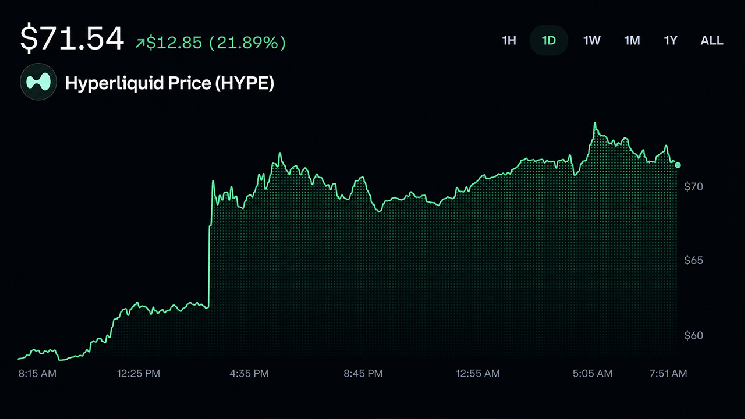
Former US President Donald Trump, during a White House meeting with leaders from crypto, tech, and financial firms on August 19, specifically mentioned CFTC Chairman Michael Selig's work on the Hyperliquid project. Trump's remarks focused on efforts to bring Hyperliquid to the US market compliantly. Attendees included executives from Coinbase, Ripple, Robinhood, SEC, Kraken, Gemini, Cboe, and ICE. Following Trump's comments, Hyperliquid's native token, $HYPE, surged roughly 20-25% within 24 hours, trading between $70-$73, nearing its June 2026 all-time high of over $76. Its market cap approached $18 billion, with daily trading volume exceeding $1.3 billion, ranking it 9th among tokens. However, Trump's statement did not announce any regulatory approval, CFTC registration, or specific US launch timeline. Hyperliquid's main interface still blocks US users, meaning traders were betting on a potential regulatory breakthrough, not a finalized deal. Hyperliquid is a blockchain built for trading, specializing in perpetual futures. It matches orders directly on-chain, aiming for centralized exchange speed while maintaining DeFi transparency and self-custody. At times, it has handled 40-70% of decentralized perpetual futures trading volume. The $HYPE token, launched via an airdrop in November 2024, is central to the network's economics. A significant portion of protocol fees goes to a buyback fund, creating sustained demand for the token. Trump's endorsement is seen as a catalyst for potential US market access, which could open the platform to institutional traders. Shares of Nasdaq-listed Hyperliquid Strategies, centered around $HYPE holdings, also jumped 30-31%, while shares of traditional derivatives operators like Cboe and CME fell. The path to a US launch remains a regulatory "minefield," involving unresolved issues on asset custody, leverage, market oversight, and customer protection. Traders now await concrete proposals from the CFTC, making $HYPE's recent gains dependent on follow-through actions after Trump's supportive signal.

cryptonews.ruHace 1 hora(s)

Trump Constantly Mentions HYPE in His Remarks, Driving HYPE's Price to Soar Toward Record Highs

cryptonews.ruHace 1 hora(s)

Trading

Spot
活动图片