Robinhood and Its Peers, Once Anti-Wall Street, Now Cater to the Wealthy

marsbitPublicado a 2026-04-14Actualizado a 2026-04-14

Resumen

A new trend is emerging among commission-free trading platforms like Robinhood, eToro, Revolut, and Public.com. Once known for democratizing finance and appealing to young retail investors, these firms are now aggressively targeting wealthy clients with premium services. They are introducing high-end credit cards, exclusive concierge services, wealth management, trust accounts, and luxury perks such as airport lounge access, VIP event invitations, and fine dining experiences. This strategic shift aims to retain users as they grow older and accumulate wealth, preventing them from moving to traditional Wall Street institutions. For instance, Robinhood’s user median age has risen from 31 to 36 over the past five years, with over 300,000 users now holding more than $100,000 in assets. The company offers a premium platinum credit card with a $695 annual fee and concierge support for users with over $1 million in assets. However, this move toward elitism contrasts with their original anti-Wall Street branding, making the transition challenging. Critics also point out that their premium offerings often don’t match established competitors like American Express or Chase Sapphire. Despite these hurdles, platforms continue to expand high-value services, betting that enhanced user experience and investment-focused rewards will foster loyalty among affluent customers.

Written by: Charlie Wells, Paulina Cachero

Compiled by: Chopper, Foresight News

Those trading apps that became famous for commission-free trades, fractional shares, and meme stocks, touting 'financial democratization,' are now going elite.

Robinhood, eToro, Revolut, and Public.com, once labeled as platforms for 'young people trading from their parents' basements,' are now offering investors airport lounge access, dinners, and F1 viewing perks. They are launching premium credit cards with annual fees of $695, providing exclusive concierge services for clients with million-dollar account balances, and venturing into complex tax planning, wealth management, and even trust accounts to compete with traditional legacy institutions.

A few months ago, when 29-year-old David Easterwood used his hefty 17-gram Robinhood Gold Card to buy a cowboy hat, the store clerk told him, 'You must be rich.'

And he is. The Phoenix-based retail trader registered for Robinhood as soon as he came of age in 2019, making his first trade in a few shares of Ford, followed by stocks like McDonald's. He said his account 'exploded' in 2023. According to an account screenshot he provided to Bloomberg News, he had made over $885,000 in profits since September of that year.

Beyond owning the Robinhood credit card, Easterwood also has access to Robinhood's concierge service, available only to users with assets exceeding $1 million or those with high platform activity.

'Whether I have a hundred bucks or a hundred million in my account,' he said, 'I'm staying with Robinhood.'

David Easterwood used his Robinhood Gold Card to buy this cowboy hat

As their user base ages and accumulates wealth, this is precisely the atmosphere these trading platforms are trying to create. During the pandemic, platforms like Robinhood built a young, anti-establishment, anti-Wall Street image with their low costs, 'financial democratization,' and appeal to retail investors.

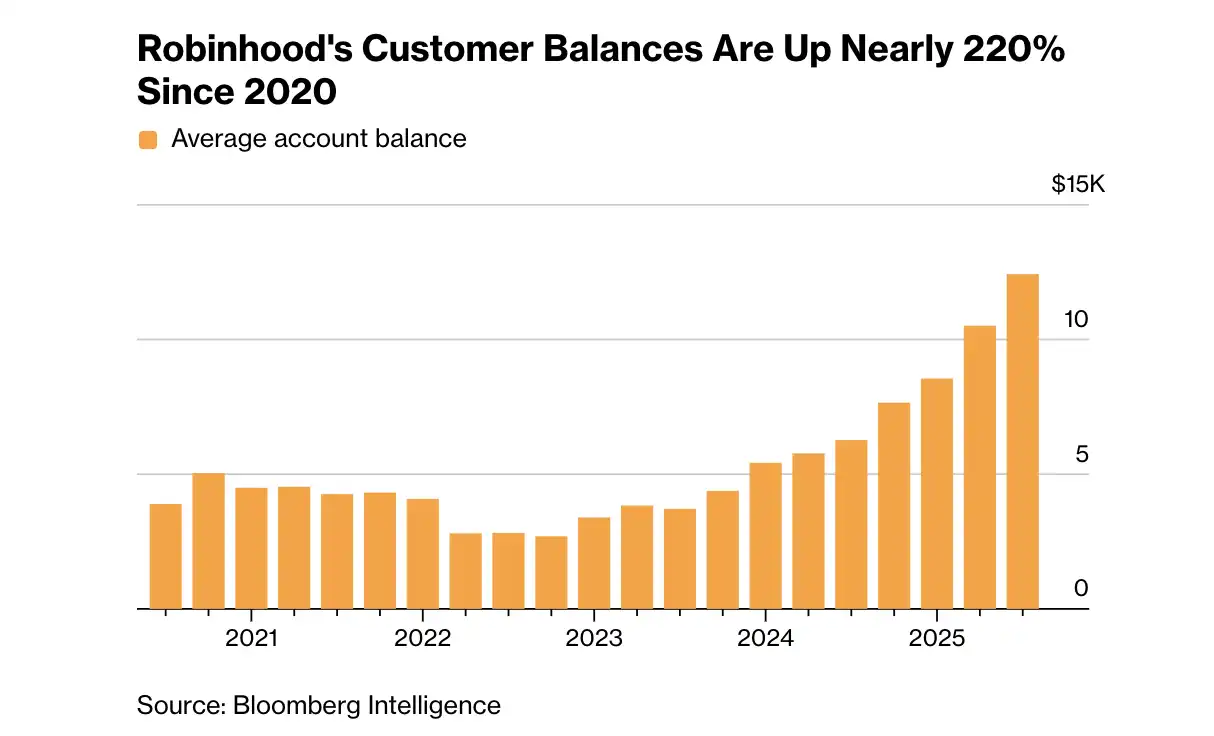
The median age of Robinhood users has risen from 31 five years ago to 36 today. The company now has over 300,000 clients with assets exceeding $100,000, an increase of more than 250% since 2022.
Public stated that its invite-only concierge service for users with assets over $500,000 or high trading activity continues to grow. eToro's membership club program offers similar high-end perks, with membership surpassing 720,000 by the end of last year, up from 579,000 a year earlier.

The evolution of these brokerage apps' products reflects both how former startups are catching up with their maturing users and the K-shaped divergence forming in many developed economies: those with limited funds get basic services, while those holding substantial assets, even if their wealth started with meme stocks, are fiercely competed for by financial institutions and enjoy various preferential treatments.

Public.com hosted a small dinner in New York in 2025, inviting members and content creators to discuss product updates and upcoming launches

'The core of our strategy is to ensure that users who build wealth on the platform don't leave,' said Deepak Rao, Vice President and General Manager of Robinhood Money. These companies don't want the clients they've painstakingly nurtured to流失 to large Wall Street wealth management institutions like Goldman Sachs, JPMorgan Chase, or Citigroup.

Abigail Sussman, a professor of marketing at the University of Chicago Booth School of Business, said this transformation is difficult, especially as brokerage apps pivot to a premium positioning that contradicts their initial brand image of 'democratizing finance.'

'It's much easier for a brand to go from high-end to mass market,' Sussman said. While a high-end fashion brand moving downmarket might dilute the brand, it already has established prestige; it's much harder for a fast-fashion retailer to move upmarket. 'Going the other way, building that high-end image and status is much more difficult.'

Nevertheless, these platforms are pushing forward with full force.

The invitation to Robinhood's launch event for its platinum card and other premium services read: 'Experience our new offerings from a first-class perspective, empowering every generation to achieve their financial goals.' The event was held at the TWA Hotel at New York's JFK Airport, unveiling a credit card with a $695 annual fee made of 99.9% pure platinum, as well as custodial and trust accounts for children.

Robinhood CEO Vlad Tenev launched the Robinhood Platinum Credit Card in New York in March

London-based fintech Revolut is aggressively moving into private banking and plans to launch more products targeting high-balance users. The company is also hiring multilingual private bankers to serve high-net-worth individuals, cross-sell products, and provide financial advice.

Public's COO, Stephen Sikes, said better data, content, and AI tools are making people more comfortable managing tens of millions of dollars on their own. The company has hired concierge specialists to communicate with high-value clients, build relationships, and optimize their experience.

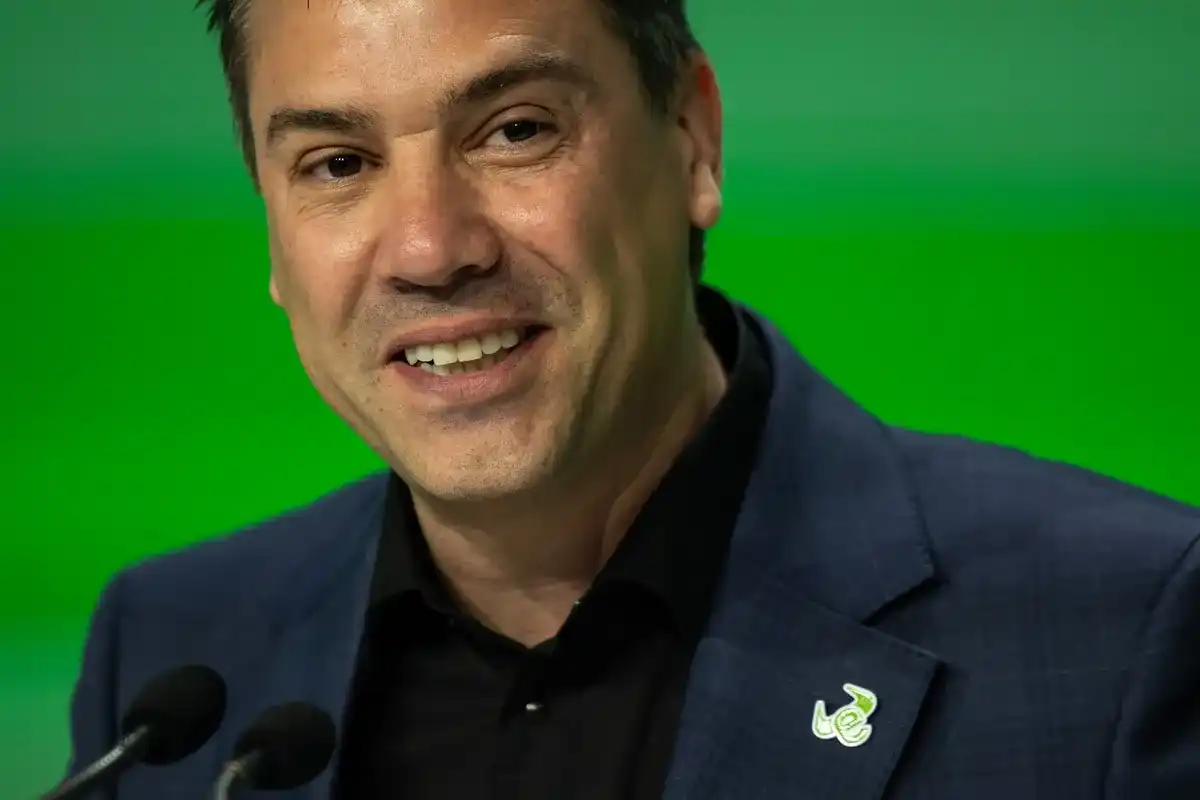
Meanwhile, eToro CEO Yoni Assia said the platform's premium membership program is due for an upgrade. Currently, Diamond members, the highest tier for those with assets over $250,000, receive access to select sporting event tickets, airport lounge access, and a Visa card that offers stock rebates on spending.

'Ultimately, I want eToro to be your family office,' Assia said.
eToro CEO Yoni Assia

These emerging platforms face fierce competition from legacy Wall Street institutions that have served the wealthy for centuries. They retain generational clients through one-on-one dedicated services, access to private investments, and estate planning. At the same time, traditional banks, sitting on trillions in client assets, are also optimizing their own apps, eroding the core advantage of digital-only platforms. In this industry, great experience and marketing are far less important than trust.

And trust has been a long-standing issue for these digital brokerages. Robinhood faced major setbacks after its user base exploded during the pandemic. In 2021, the Financial Industry Regulatory Authority fined it $70 million for reasons including misleading customers and lack of internal controls, among others. Robinhood neither admitted nor denied the allegations but said it had made numerous improvements. In 2024, eToro agreed to pay $1.5 million to settle charges from the U.S. Securities and Exchange Commission that it operated as an unregistered broker-dealer and clearing agency.

The benefits of Robinhood's new platinum card are very similar to popular products from American Express and JPMorgan Chase: 5% cash back on dining, $250 in DoorDash credits annually, 10% back on hotels and rental cars, free Robinhood Gold membership, and a $250 annual credit for autonomous ride-hailing.

Ted Rossman, a senior industry analyst at Bankrate who focuses on credit cards, said this premium card doesn't surpass its competitors.

'To be honest, this card isn't as good as the Amex Platinum or the Chase Sapphire,' Rossman said. For example, the DoorDash credits have many restrictions and are far less valuable than they appear.

But Nick Ewen, Senior Editorial Director at The Points Guy, pointed out that the Robinhood card offers a different kind of value: 'Other points don't appreciate, but Robinhood's design is for you to invest long-term for growth.'

This is also why 32-year-old Polish investor John Ostrowski sticks with his eToro card. He opts for a 4% rebate in Mercedes-Benz stock, values its dividends, and says the card brings a new sense of identity.

'It's a social talking point,' he said. 'My dad uses an Amex, I use an eToro card.'

An eToro members-only event held in Dubai

However, even with the high-end光环, novelty isn't enough for some users. Some services intended to increase loyalty have backfired.

'They assigned me a CPA to help with taxes,' said 42-year-old Jason Sabshon from New York, who qualifies for Robinhood's concierge service. The platform's logic is that proper tax planning can enhance investment returns, and handling taxes within the investment process can reduce the burden at tax time. But Sabshon wasn't convinced: 'They said the person was from a company I'd never heard of. I wasn't very comfortable with that.'

Kai Schukowski, a 39-year-old man from Dubai, has accounts with multiple brokerages but says none treat their top clients as well as eToro. A few months ago, he was invited to a high-end event hosted by the platform at the Belcanto restaurant atop the Dubai Opera House, gathering top traders and executives, with an露天 reception offering views of the world's tallest building, the Burj Khalifa.

What impressed him was that the event was upscale and stylish, and there were genuinely wealthy people present. He said, 'They weren't just influencers or people trying to get famous; they were real, wealthy people.'


Preguntas relacionadas

QWhat is the original brand image of trading apps like Robinhood, eToro, Revolut, and Public.com, and how is it changing?

ATheir original brand image was built on being anti-Wall Street, offering commission-free trading, fractional shares, and meme stocks to democratize finance for retail investors, often associated with young people trading from their parents' basements. This image is now shifting towards elitism as they introduce premium services like airport lounges, exclusive events, high-end credit cards, and wealth management tools to cater to wealthier clients.

QWhat specific premium services are these trading platforms offering to their high-value users?

AThey offer services such as airport lounge access, exclusive dinners, F1 racing event tickets, high-end credit cards (e.g., Robinhood's $695 annual fee platinum card), elite concierge services for users with over $1 million in assets, tax planning, wealth management, and trust accounts.

QHow has the user demographic of Robinhood changed over the past five years, and what does this indicate?

ARobinhood's median user age has increased from 31 to 36 over the past five years, and the platform now has over 300,000 clients with assets exceeding $100,000, a growth of more than 250% since 2022. This indicates that their user base is aging and accumulating more wealth, driving the platform's shift towards serving affluent customers.

QWhat challenges do these platforms face in transitioning from a 'democratizing finance' image to a premium service model?

AThe transition is challenging because building a high-end brand image and status is much harder than moving from premium to mass market. Their original anti-elitist, democratic brand identity conflicts with their new elite-focused services, making it difficult to establish trust and credibility as a premium provider compared to traditional Wall Street institutions.

QHow do traditional Wall Street institutions compete with these emerging trading platforms, and what advantages do they hold?

ATraditional institutions like Goldman Sachs, JPMorgan, and Citigroup compete by offering personalized one-on-one services, access to private investments, estate planning, and multi-generational client relationships. They hold advantages in long-established trust, extensive experience serving wealthy clients, and improving their own digital apps to rival the core strengths of digital-only platforms.

Lecturas Relacionadas

The Foundation of SpaceX's Trillion-Dollar Valuation: Who is Dividing Up Musk's Annual Tens of Billions in Capital Expenditure?

SpaceX's trillion-dollar valuation is built on its three core businesses: Starlink (profitable, 60% of revenue), rockets (driving down launch costs), and AI (a major investment area). This creates a financial cycle: Starlink funds rocket development, which enables low-cost launches for AI hardware, generating future revenue. This cycle fuels annual capital expenditures of tens of billions, flowing to a vast supply chain. Suppliers are categorized by their replaceability. The first group includes irreplaceable players like NVIDIA (GPU/CUDA ecosystem), Eutelsat (critical radio spectrum), Filtronic (specialized amplifiers), Materion (strategic beryllium), and STMicroelectronics (antenna chips). The second group consists of hard-to-replace suppliers due to high switching costs, such as Honeywell (flight control), Carpenter Technology (specialty alloys), Hexcel (carbon fiber), Broadcom (data exchange), and Linde (industrial gases). The third group comprises high-volume, cost-critical suppliers for mass-produced items like Starlink terminals. Key names include Wistron NeWeb (primary manufacturer) and several A-share companies like Shenzhen Sunway (connectors), Pies New Materials (forgings), Western Superconducting (alloys), and Yingliu (castings). Other niche players include Trimble (timing), Astronics (power distribution), and CTS (thermal management). The article argues that investing in these suppliers, rather than SpaceX stock directly, offers an alternative opportunity. The rationale is threefold: procurement is just beginning to scale, SpaceX's IPO brings new transparency to its supply chain, and the situation mirrors early stages of past "super terminal" ecosystems like Apple or Tesla. While risks exist (commodity cycles, geopolitical factors, technology shifts), the core thesis is that SpaceX's massive, ongoing procurement will translate into reliable revenue for its key suppliers, regardless of its own stock price volatility.

marsbitHace 46 min(s)

The Foundation of SpaceX's Trillion-Dollar Valuation: Who is Dividing Up Musk's Annual Tens of Billions in Capital Expenditure?

marsbitHace 46 min(s)

SpaceX's Trillion-Dollar Valuation Base: Who's Sharing in Musk's Annual Tens of Billions in Capital Expenditure?

**Title: The Foundation of SpaceX's Trillion-Dollar Valuation: Who Benefits from Musk's Annual $100 Billion Capital Expenditure?** This article argues that investors seeking to benefit from SpaceX's growth might find greater opportunities in its supply chain rather than directly investing in the company itself, drawing parallels to historical successes with Apple, Tesla, and NVIDIA suppliers. **SpaceX's Business Model & Cash Flow:** SpaceX generates revenue from three main areas: 1. **Starlink:** Its profitable core, earning $11.3B in 2023 (60% of revenue), funding other ventures. 2. **Rockets (Falcon/Starship):** Requires $3B+ in annual R&D but achieves the world's lowest launch costs. 3. **AI:** Currently unprofitable (-$6B+ in 2023), investing heavily in ground-based supercomputers (220,000 GPUs) and future orbital data centers. The cycle is: Starlink profits → fund cheaper rockets → low-cost launches deploy AI hardware → AI compute rentals generate future revenue. This cycle drives annual procurement spending of tens of billions of dollars. **The Supply Chain Beneficiaries:** Suppliers are categorized by their replaceability: **1. Nearly Irreplaceable (High Barriers to Entry):** * **NVIDIA:** Powers the Colossus supercomputer; its CUDA ecosystem creates immense switching costs. * **Eutelsat (SATS):** Controls critical radio spectrum for satellite communications; holds a ~3% stake in SpaceX. * **Filtronic (FTC):** Supplies millimeter-wave signal amplifiers for Starlink satellites; SpaceX constitutes 83% of its revenue. * **Materion (MTRN):** Global leader in beryllium production, a strategic material used in Starship structures. * **STMicroelectronics (STM):** Supplies phased-array antenna chips for Starlink satellites. **2. Replaceable, but Switching Cost is Prohibitively High:** * **Honeywell (HON):** Provides flight control and inertial navigation systems with decades of certification. * **Carpenter Technology (CRS):** Manufactures ultra-pure specialty steel alloys for Raptor engines. * **Hexcel (HXL):** Supplies custom carbon fiber composites developed over a decade with SpaceX. * **Broadcom (AVGO):** Manages high-speed data switching. * **Linde Group:** Supplies industrial gases (liquid oxygen/nitrogen) from facilities built near SpaceX launch sites. **3. High-Volume, Cost-Critical Manufacturing:** Focuses on mass-producing components like Starlink user terminals (target: 30 million units). * **Key Players:** Wistron NeWeb (6285, primary terminal manufacturer), several Chinese A-share companies (e.g., Sunway Communication, PAX New Materials, Western Metal Materials, Yingliu Co.), and smaller US firms like Trimble (TRMB, timing systems). **Why Now?** Three factors make the supply chain opportunity timely: 1. **Volume Ramp-Up:** SpaceX plans 100 launches in 2026, aims for 30 million Starlink terminals, and will deploy AI data centers, meaning procurement will accelerate. 2. **Increased Transparency:** The IPO provides public financial data, allowing investors to track supplier order growth. 3. **Historical Precedent:** The current phase is likened to Tesla's early mass-production stage (circa 2018), suggesting a long growth runway for suppliers. **Conclusion:** The article posits that while investing in SpaceX stock is betting on Elon Musk's ambitious vision at a high valuation, investing in its established suppliers is a bet on the tangible, recurring revenue from its massive procurement budget, which is largely decoupled from day-to-day stock price volatility.

链捕手Hace 50 min(s)

SpaceX's Trillion-Dollar Valuation Base: Who's Sharing in Musk's Annual Tens of Billions in Capital Expenditure?

链捕手Hace 50 min(s)

The U.S. Government Blocked the Anthropic Model. It Wasn't About 'Jailbreaking' at All.

Last Friday, the U.S. Commerce Department issued an enforcement letter that forced Anthropic to take its two most advanced AI models, Fable 5 and Mythos 5, offline. The stated reason was unspecified national security concerns, initially linked to potential "jailbreaks" of the models' safeguards. However, new details suggest the action stemmed more from a deteriorating relationship between the Trump administration and Anthropic, rather than a genuine technical threat. According to reports, the government cited a little-known export control regulation, compelling Anthropic to block access for all non-U.S. persons, including its own international employees. The company complied, shutting down the models without a court order or specific technical details from the government. Cybersecurity expert Katie Moussouris revealed she was privately shown a research paper detailing a potential safeguard bypass in Fable 5. She argued the described method was minor and did not warrant an export ban, stating that attempts to "fix" it would only weaken the model's defensive capabilities. Moussouris and other experts have since called for the order to be revoked, warning it dangerously removes advanced cybersecurity tools from U.S. defenders. Analysts like Justin Hendrix suggest the move appears retaliatory and sets a dangerous precedent, signaling that the U.S. government can unilaterally shut down a tech company's products. The incident has raised concerns about the reliability of American AI and the potential for political interference in the tech industry, serving as a warning to the broader sector.

marsbitHace 53 min(s)

The U.S. Government Blocked the Anthropic Model. It Wasn't About 'Jailbreaking' at All.

marsbitHace 53 min(s)

Ray Dalio: AI Bull Market Continues to Soar, Should Investors Go All In or Cash Out and Leave the Field?

In his latest notes, Ray Dalio addresses a critical question for investors amid the AI-driven stock market surge: how should one allocate assets during a transformative technological revolution? Dalio emphasizes that technological advancement does not automatically make related stocks attractive. Historical tech cycles—marked by excitement, crowding, volatility, and eventual shakeouts—show that even long-term winners like Microsoft and Apple experienced severe drawdowns. Today's AI sector faces similar uncertainties: overinvestment, intensifying competition, geopolitical tensions (e.g., Taiwan's chip supply), tax policy shifts, anti-AI sentiment, and potential disruption from future technologies like quantum computing. Dalio's core argument focuses on the highly concentrated market structure, where a few tech giants dominate major indices. He warns investors against unknowingly holding concentrated, correlated exposures. Instead of chasing a handful of AI leaders, he advocates for a robust, diversified portfolio of 15 or more high-quality, uncorrelated investments, risk-balanced to match an investor's volatility tolerance. Mathematically, such diversification significantly improves the risk-return ratio—for example, holding 15 uncorrelated assets can boost the ratio by over four times compared to a single concentrated bet. Dalio cautions that future equity returns appear low, with his bubble indicator suggesting real returns could be negative over the next 5-10 years. He stresses that knowing what you don't know is as important as knowing what you do. In an environment of high uncertainty and concentration, avoiding large, concentrated bets on AI stocks is prudent. The optimal strategy is disciplined diversification—the "holy grail" of investing—to navigate this technologically driven cycle with lower risk and comparable or better returns.

marsbitHace 57 min(s)

Ray Dalio: AI Bull Market Continues to Soar, Should Investors Go All In or Cash Out and Leave the Field?

marsbitHace 57 min(s)

Trading

Spot
Futuros
活动图片




