Reviewing Past Bitcoin Bull Markets: Why the Four-Year Cycle Occurs and Is It Over?

marsbitPublicado a 2025-12-16Actualizado a 2025-12-16

Resumen

The article examines Bitcoin's four-year market cycles, traditionally aligned with its halving events, and questions whether this pattern still holds. It outlines the typical cycle phases: accumulation (low volatility, long-term buying), pre-halving bullish anticipation, a parabolic bull run with retail FOMO and leverage, and a sharp correction leading to a bear market. Bitcoin halvings, which reduce mining rewards by half every four years, are highlighted as a core mechanism for creating scarcity, similar to precious metals. Past cycles (2013, 2017, 2021) are reviewed, each driven by distinct catalysts (e.g., Mt. Gox collapse, ICO boom, COVID-19 stimulus) and ending with crashes exceeding 80%. Reasons for the cycle include the stock-to-flow model (measuring scarcity), market psychology/self-fulfilling prophecies, and global liquidity conditions. The current 2025 cycle is noted for unprecedented institutional involvement via ETFs and corporate treasuries, causing Bitcoin to hit new highs before the 2024 halving with less retail participation. Arguments for the cycle's end cite increased adoption by disciplined institutions (reducing volatility), Bitcoin's growing correlation with macro factors like Fed policy, and the diminishing impact of each halving. Key indicators to watch for cycle validation include post-halving price surges, large leverage unwinds, and retail altcoin speculation. The conclusion states that while historical patterns are evident, Bitcoin's evolution ...

Author: Arkham

Compiled by: Felix, PANews

Many market observers have described multi-year "cycles" in Bitcoin's price that coincide with Bitcoin's halving events. These patterns, collectively known as the "four-year cycle," have become significant psychological events influencing the mindset of crypto observers and traders. This article will explore the various stages of the four-year cycle and the circumstances of past Bitcoin cycles. Furthermore, it will discuss whether the Bitcoin cycle still exists.

The Typical Four-Year Cycle

Market observers believe the standard Bitcoin cycle begins with what is often called the "accumulation" phase. They speculate that this phase starts with the crash following the peak of the previous cycle. During this period, price volatility and on-chain activity are relatively low, and market sentiment tends to be neutral or negative. It's called the accumulation phase because long-term Bitcoin holders begin buying in significant quantities. Consequently, the price characteristic of this period is a gradual recovery.
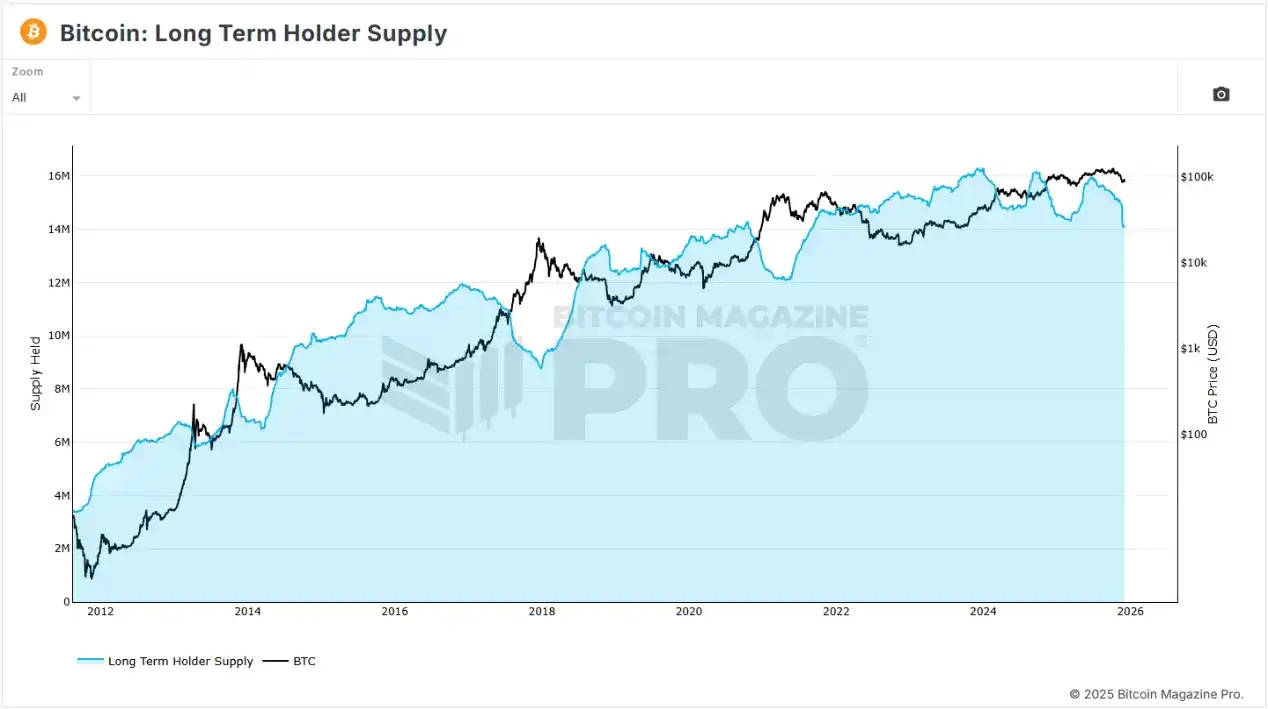
Bitcoin Price vs. Long-Term Holder Supply

On-chain analysis shows that some investors are steadily accumulating, but the majority of retail investors, still wary from the previous crash, remain uninterested in buying Bitcoin.

The accumulation phase typically lasts 12 to 15 months, after which the market cycle usually enters a new bull market. This often occurs before the halving, as the prices of Bitcoin and other crypto assets begin to rise in anticipation of the event. The market starts pricing in the positive impact of reduced future supply, and market sentiment also shifts from neutral to optimistic. Liquidity begins to recover, and media attention increases accordingly.
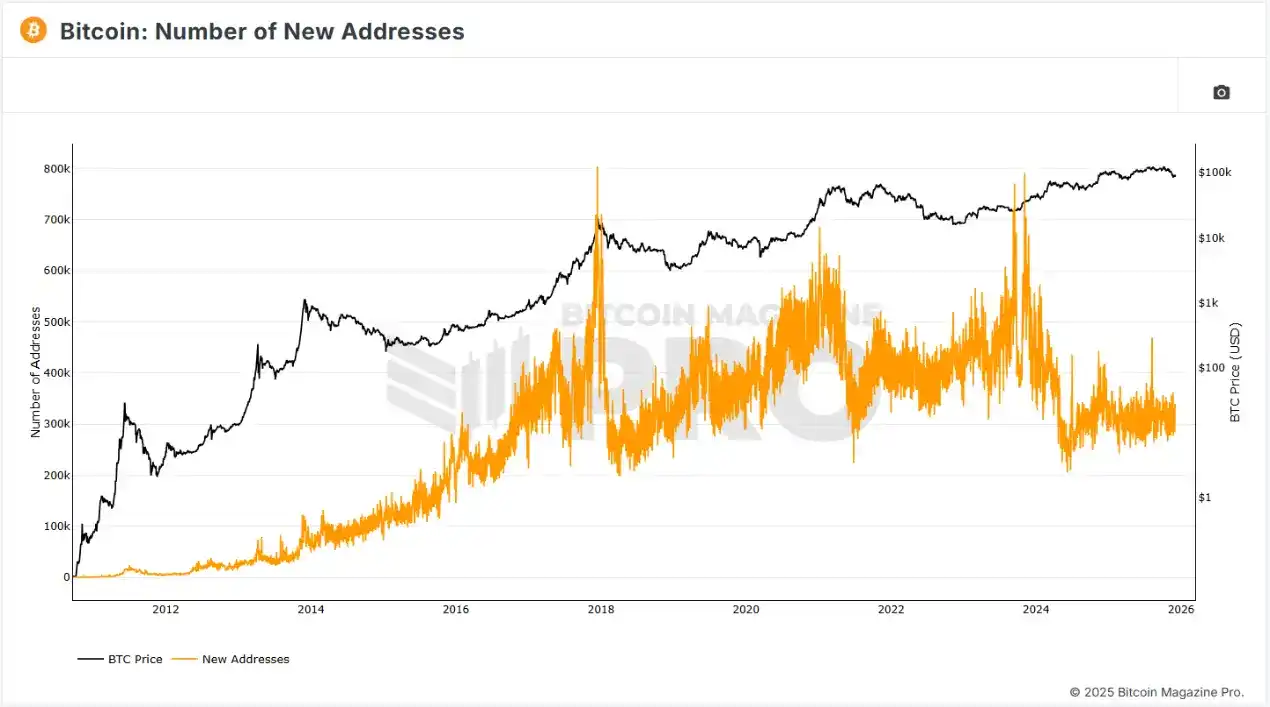
Bitcoin Price vs. New Addresses

Once the halving occurs, the bull market often experiences parabolic growth, with prices beginning to climb, sometimes slowly, sometimes explosively. Retail investors flood into the market, and traders start deploying large amounts of capital. Historically, this is when new all-time highs are often set, as a new wave of investors enters the market. Some investors increase leverage to chase the highs, leading to even more violent price fluctuations.

Past bull markets have lasted approximately 12-18 months, usually ending with a sharp price decline. Leveraged traders get liquidated, altcoins fall even more sharply, sentiment turns negative, and a bear market begins. In this phase of the cycle, many participants sell at a loss and cash out with their remaining funds. Eventually, the dust settles, and a market bottom slowly forms. Overall market activity and excitement have significantly decreased since the peak, but determined builders continue forward, quietly developing new products and innovations.

The Halving

To fully understand the theory of the four-year Bitcoin cycle, one must first thoroughly understand the concept of the halving and its impact on Bitcoin's price.

The Bitcoin halving is a significant event that halves the mining reward (paid in BTC) for adding new blocks to the Bitcoin blockchain. This occurs every 210,000 blocks, approximately every four years. In 2009, the reward for adding a new block was 50 Bitcoin per block. It has since been halved four times. The 2024 halving set the current new block mining reward at 3.125 Bitcoin. Assuming the four-year rhythm continues, halvings will persist until the total supply reaches its cap of 21 million coins, around the year 2140.

The halving is Satoshi Nakamoto's way of ensuring Bitcoin's scarcity. Bitcoin was born during the 2008 financial crisis, partly in response to central bank bailouts and the inflation caused by fiat money printing. Most governments and their associated fiat currencies constantly adjust monetary policy, making it difficult for holders to build long-term confidence in the value of their currency.

Bitcoin's halving mechanism mimics gold, making it scarcer. As gold deposits are depleted, mining gold becomes progressively harder, and Bitcoin achieves this mathematically. As the new supply of Bitcoin decreases, its scarcity increases. Historically, Bitcoin's price has typically risen following each halving, thanks to supply and demand dynamics. Therefore, some proponents argue that the transparency and consistency of the halving make Bitcoin an asset with strong store-of-value capabilities.

Review of Past Cycles

2013

Bitcoin was born in 2008, and 2013 marked its first cycle. It was primarily driven by the tech community of the time, such as internet forums and cryptography meetups. This cycle also garnered some early media attention, with reports on topics like the first real-world transaction using Bitcoin (buying two pizzas for 10,000 BTC) and "Is Bitcoin digital gold?".

In this cycle, Mt. Gox was the largest Bitcoin exchange. In 2014, Mt. Gox handled over 70% of global Bitcoin transactions. However, in 2014, Mt. Gox suspended trading and shut down its website, later revealing that 850,000 Bitcoin were missing. Since Mt. Gox was the primary source of Bitcoin liquidity, this event led to a significant drop in market trust in Bitcoin, causing an 85% price decline and initiating a bear market.

2017
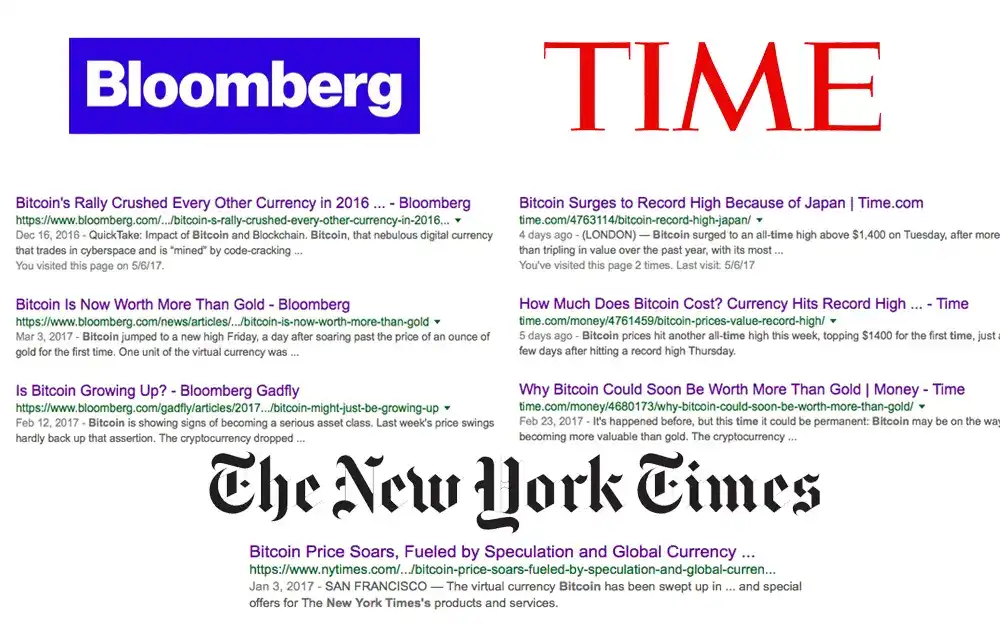
2017 was the cycle where Bitcoin gained popularity among retail investors. With the launch of Ethereum in 2015, smart contracts and their revolutionary potential entered the public consciousness. Ethereum's price skyrocketed from $10 to $1400 during this cycle. This period was also notorious for the ICO frenzy, with thousands of ERC-20 tokens launched, and investors pouring money into projects based solely on whitepapers. Bitcoin's price also exploded due to the influx of new investors, surging from $200 to $20,000 in two and a half years. The industry was frequently covered by mainstream media (see image above).

Ultimately, the ICO boom that drove Bitcoin's price up dramatically also became the catalyst for the crash. In ICOs, investors exchanged their Ethereum or Bitcoin for a new project's cryptocurrency. After accumulating large amounts of Ethereum, many projects began selling these tokens for cash, creating selling pressure. The U.S. SEC also began cracking down heavily on ICOs, labeling them "unregistered securities offerings" and filing lawsuits against numerous projects, many of which were Ponzi schemes and scams. In this environment, over-leveraged investors either panic-sold or were forced to sell as prices began to plummet, causing Bitcoin's price to crash by 84% to $3,200.

2021

The 2021 Bitcoin cycle coincided with the money printing during the COVID-19 pandemic. Governments worldwide sought to restart economies stalled by the pandemic, and fiscal stimulus was their solution. The surge in global liquidity pushed Bitcoin to new all-time highs in 2021. Another characteristic of this cycle was Bitcoin's transformation from an "internet currency" to a more significant "macro asset." Companies like Strategy and Tesla purchased billions of dollars worth of Bitcoin, while payment apps like PayPal and CashApp began supporting Bitcoin transactions. The 2020 DeFi summer and the 2021 NFT craze attracted massive retail participation in this cycle. Both retail and institutional investors jointly drove up cryptocurrency prices, with Bitcoin reaching a high of $69,000.

The end of this Bitcoin cycle stemmed from the collapse of several prominent protocols and companies within the industry. First, the depegging of the Luna stablecoin UST wiped out $60 billion in a short period. Companies and institutions like Voyager, Celsius, BlockFi, and Three Arrows Capital, with direct or indirect exposure to Luna, bets on market direction, and interconnections, ultimately declared bankruptcy. BlockFi subsequently restructured and received a line of credit from FTX. Finally, with the collapse of FTX, BlockFi also declared bankruptcy.

FTX and its affiliated trading firm Alameda were found to have engaged in massive fraud, forcing asset liquidation to repay users. The U.S. federal government also ended its stimulative monetary policy and began raising interest rates significantly, draining market liquidity. All these events contributed to a sharp drop in Bitcoin's price, which fell to $15,500 at the bear market bottom.

2025

The current 2025 cycle has witnessed increased institutional adoption, with major traditional financial institutions entering the space. The approval of spot Bitcoin ETFs in January 2024 allowed companies like BlackRock, Fidelity, and VanEck to offer Bitcoin as a standard investment product. Many companies have also adopted Strategy's Digital Asset Treasury (DAT) model, incorporating cryptocurrencies into their balance sheets. This cycle is unique in that Bitcoin reached a new high of $73,000 before the halving in April 2024. Additionally, institutions have become the primary drivers of price, with retail participation not yet reaching the levels of previous cycles.

Why Do Cycles Occur?

Stock-to-Flow Ratio

There are several potential reasons for the occurrence of the four-year Bitcoin cycle. A common explanation relates to the Stock-to-Flow ratio (S2F), a model often used to measure the scarcity of commodities like gold and silver.
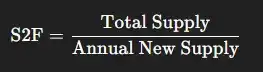
This model compares stock (existing supply) and flow (new annual supply). The higher the ratio, the scarcer the commodity. The S2F is applied to Bitcoin because of its fixed total supply and the fixed schedule of mining rewards. With each halving, Bitcoin's stock-to-flow ratio doubles, as the new supply is halved. Currently, Bitcoin's stock-to-flow ratio is approximately 110, while gold's is about 60, making Bitcoin the scarcer asset under the stock-to-flow model.

Psychological Factors

Another simple explanation involves psychology and self-fulfilling prophecies. Bitcoin's price is heavily influenced by narratives, herd behavior, and expectations about the future. Because Bitcoin lacks intrinsic value like traditional financial assets, its value depends primarily on people's expectations of its future worth. Consequently, Bitcoin's price is highly reflexive and more sensitive to halving expectations, rumors, and narratives. Because the four-year Bitcoin cycle has played out consecutively several times, investors are more inclined to trade Bitcoin based on the movements of past cycles, creating a self-fulfilling prophecy.

Liquidity

Others argue that Bitcoin's cycles are primarily determined by global liquidity. BitMEX founder Arthur Hayes, in his article "Long Live The King," pointed out that Bitcoin's four-year cycle is directly related to global liquidity and highlighted the influence of the US dollar and the Chinese yuan. Hayes explained that the 2013 peak was caused by money printing following the 2008 financial crisis, the 2017 peak was caused by the depreciation of the Japanese yen against the US dollar, and the 2021 peak was caused by post-COVID money printing.

Recently, surrounding topics like the end of Quantitative Tightening (QT, where the Fed reduces the number of assets on its balance sheet, thus reducing liquidity), the restart of Quantitative Easing policies, and falling interest rates, some claim that the 2025 Bitcoin cycle will not follow the previous pattern.

Retail vs. Institutions

The holdings of retail and institutional investors also play a significant role in driving Bitcoin cycles. Institutional investors are typically more disciplined, have longer investment horizons, and therefore buy during periods of fear, forming market bottoms. Retail investors, on the other hand, are more emotional and prone to buying due to FOMO (Fear Of Missing Out). Therefore, retail investors are more likely to chase price momentum and use leverage. Retail investors often create greater volatility within the cycle, especially in the later stages.

Why Some Say the Cycle is Over

There are several reasons why people claim the Bitcoin cycle is obsolete. A major reason is increased institutional participation through ETFs, corporate treasuries, hedge funds, etc. These financial entities behave differently from retail investors, buying on fixed schedules, using reasonable leverage, and managing risk prudently. This behavior dampens volatility, thereby smoothing out cyclical fluctuations.

Another potential reason is that the cryptocurrency market has grown significantly compared to earlier cycles. Bitcoin is increasingly correlated with macroeconomic factors like interest rates and Fed policy, weakening the impact of the halving on Bitcoin's price. The halving occurs every four years, whereas Fed policy has no similar fixed schedule. Furthermore, the importance of the halving itself is diminishing as its effect on the block reward decreases. The first halving reduced the reward from 50 BTC to 25 BTC, while the most recent halving only reduced it from 6.25 BTC to 3.125 BTC.

How to Tell if the Cycle is Over

Paying close attention to the development of the current cycle can help better determine whether the four-year cycle has become a thing of the past. Some key signs that might indicate this:

  • Past cycles typically experienced a price surge after the halving, generally within 12-18 months post-halving.
  • Past cycles ultimately ended with massive leverage wipeouts and cascading liquidations, leading to drops exceeding 70%.
  • If Bitcoin's price begins to perfectly align with changes in global liquidity, then Bitcoin has become a macro asset, not one based on a halving cycle.
  • Past cycles saw a surge in retail participation in the later stages, with altcoins experiencing parabolic rises. A lack of retail participation suggests the cycle is primarily driven by institutional buying, which could lead to reduced volatility and a flattened cycle.

Conclusion

Bitcoin has long followed the pattern of a four-year cycle. It slowly recovers from a bear market, enters the halving phase, followed by a sustained price surge, which then rapidly declines as leveraged traders suffer losses. Historically, various factors have contributed to this phenomenon, ultimately forming the familiar four-year cycle we know today. Nonetheless, Bitcoin has steadily evolved, finally becoming the behemoth it is today with a market capitalization of $1.8 trillion. The emergence of institutional investors, ETFs, and sovereign wealth funds means market participants have changed significantly since the first cycle. Bitcoin appears to be increasingly sensitive to macroeconomic factors, but its price movements are still influenced by some traditional factors, such as psychology and mining economics.

It is still unclear whether Bitcoin's cycle has completely ended, but each cycle is unique, and future cycles could very well be drastically different from the past. Understanding the historical evolution of this asset and its participants is key to understanding future cycles, but ultimately, only time will tell whether this pattern continues to exist or becomes a relic of history.

Related reading: Has the Bitcoin Four-Year Cycle Failed?

Preguntas relacionadas

QWhat are the typical stages of the Bitcoin four-year cycle as described in the article?

AThe typical Bitcoin four-year cycle consists of an accumulation phase (lasting 12-15 months with low volatility and gradual recovery), a pre-halving bull run (driven by anticipation of reduced supply), a parabolic bull market post-halving (with high leverage and volatility), and a sharp decline ending in a bear market.

QHow does the Bitcoin halving event contribute to its scarcity and potential price impact?

AThe Bitcoin halving reduces the mining reward for new blocks by half approximately every four years, decreasing the rate of new Bitcoin issuance. This mimics scarcity similar to precious metals like gold, and historically, reduced supply coupled with demand has led to price increases.

QWhat were the key catalysts for the end of the 2017 and 2021 Bitcoin cycles?

AThe 2017 cycle ended due to ICO projects selling accumulated Ethereum and Bitcoin for cash, causing sell pressure, combined with regulatory crackdowns by the SEC. The 2021 cycle ended due to the collapse of Luna (UST), bankruptcies of major firms like Celsius and FTX, and tightening monetary policy by the U.S. Federal Reserve.

QWhy do some analysts believe the Bitcoin four-year cycle might be ending?

AIncreased institutional participation (e.g., ETFs, corporate treasuries) may reduce volatility and dampen cyclical patterns. Bitcoin's growing correlation with macroeconomic factors like global liquidity and Fed policy, rather than halving events, could also diminish the cycle's significance.

QWhat indicators could suggest that the four-year cycle is no longer relevant?

AKey indicators include the absence of a post-halving price surge within 12-18 months, lack of massive leverage-driven drawdowns (over 70% declines), perfect alignment with global liquidity changes instead of halving events, and insufficient retail participation (e.g., no parabolic altcoin rallies) in later cycle stages.

Lecturas Relacionadas

Aave Is Surrendering the Throne of DeFi Lending Due to Its Own Stupidity

Aave, a leading DeFi lending protocol, is facing a severe crisis and losing its dominant market position due to its poor handling of a recent security incident. The crisis began when Kelp DAO suffered a hack resulting in a loss of $292 million in rsETH. In the aftermath, approximately $17.2 billion in funds flowed out of Aave as user panic escalated. The article criticizes Aave's crisis management as "extremely foolish." Instead of promptly offering reassurance or committing to cover the potential bad debt—estimated between $123.7 million and $230.1 million, which Aave could have afforded—the protocol initially deflected blame, emphasizing that its code was not at fault. This delay and lack of a clear guarantee led to widespread user anxiety, triggering a bank run-like scenario where users withdrew funds or borrowed aggressively from other pools, causing liquidity shortages. Meanwhile, Aave’s competitor Spark—a fork of Aave’s own code—has benefited significantly. Having removed support for rsETH months earlier, Spark avoided any losses from the incident and has since seen its TVL grow by nearly $2 billion, attracting major deposits such as over $1.24 billion from Justin Sun. Spark has actively capitalized on the situation, publicly criticizing Aave’s security reputation. Although Aave’s founder Stani eventually announced a relief plan named "DeFi United" with several partners and a personal donation, the damage to user trust and capital outflows may be irreversible. The article concludes that Aave is losing its throne in DeFi lending to aggressive competitors like Spark, Morpho, and Jupiter Lend.

Odaily星球日报Hace 1 hora(s)

Aave Is Surrendering the Throne of DeFi Lending Due to Its Own Stupidity

Odaily星球日报Hace 1 hora(s)

Trading

Spot
Futuros

Artículos destacados

Qué es BITCOIN

Entendiendo HarryPotterObamaSonic10Inu (ERC-20) y Su Posición en el Espacio Cripto En los últimos años, el mercado de criptomonedas ha sido testigo de un aumento en la popularidad de las monedas meme, capturando el interés no solo de los comerciantes, sino también de aquellos que buscan compromiso comunitario y valor de entretenimiento. Entre estos tokens únicos se encuentra HarryPotterObamaSonic10Inu (ERC-20), un proyecto intrigante que mezcla referencias culturales en el tejido de las criptomonedas. Este artículo profundiza en los aspectos clave de HarryPotterObamaSonic10Inu, explorando sus mecanismos, ethos impulsado por la comunidad y su relación con el paisaje cripto más amplio. ¿Qué es HarryPotterObamaSonic10Inu (ERC-20)? Como su nombre sugiere, HarryPotterObamaSonic10Inu es una moneda meme construida sobre la blockchain de Ethereum, clasificada bajo el estándar ERC-20. A diferencia de las criptomonedas tradicionales que pueden enfatizar la utilidad práctica o el potencial de inversión, este token prospera en el valor de entretenimiento y la fuerza de su comunidad. El proyecto tiene como objetivo fomentar un entorno donde los usuarios comprometidos puedan reunirse, compartir ideas y participar en actividades inspiradas por diversos fenómenos culturales. Una característica notable de HarryPotterObamaSonic10Inu es su cero impuestos en las transacciones. Este atractivo elemento tiene como objetivo incentivar el comercio y la participación comunitaria, sin cargos adicionales que puedan disuadir a los comerciantes de pequeña escala. El suministro total de la moneda está establecido en mil millones de tokens, una cifra que marca su intención de mantener una circulación sustancial dentro de la comunidad. Creador de HarryPotterObamaSonic10Inu (ERC-20) Los orígenes de HarryPotterObamaSonic10Inu están algo envueltos en misterio; los detalles sobre el creador siguen siendo desconocidos. El desarrollo de este token carece de un equipo identificable o de un plan explícito, lo cual no es inusual dentro del sector de monedas meme. En cambio, el proyecto ha surgido de manera orgánica, con su progreso muy dependiente del entusiasmo y la participación de su comunidad. Inversores de HarryPotterObamaSonic10Inu (ERC-20) En cuanto a inversiones externas y respaldo, HarryPotterObamaSonic10Inu también sigue siendo ambiguo. El token no lista ninguna fundación de inversión conocida o apoyo organizacional significativo. En cambio, la savia del proyecto es su comunidad de base, que informa su crecimiento y sostenibilidad a través de la acción colectiva y el compromiso en el espacio cripto. ¿Cómo Funciona HarryPotterObamaSonic10Inu (ERC-20)? Como una moneda meme, HarryPotterObamaSonic10Inu opera principalmente fuera de los marcos tradicionales que a menudo rigen el valor de los activos. Hay varios aspectos distintivos que definen cómo funciona el proyecto: Transacciones Sin Impuestos: Sin tarifas impositivas en las transacciones, los usuarios pueden comprar y vender el token libremente sin preocuparse por costos ocultos. Compromiso Comunitario: El proyecto prospera en la interacción comunitaria, aprovechando plataformas de redes sociales para crear entusiasmo y facilitar la participación. Las discusiones, el intercambio de contenido y el compromiso son elementos cruciales que ayudan a expandir su alcance y fomentar la lealtad entre los seguidores. Sin Utilidad Práctica: Cabe señalar que HarryPotterObamaSonic10Inu no ofrece utilidad concreta dentro del ecosistema financiero. Más bien, se clasifica como un token principalmente para actividades de entretenimiento y comunitarias. Referencia Cultural: El token incorpora astutamente elementos de la cultura popular para atraer interés, conectando con entusiastas de los memes y seguidores de las criptomonedas por igual. HarryPotterObamaSonic10Inu ejemplifica cómo las monedas meme operan de manera diferente a los proyectos de criptomonedas más tradicionales, ingresando al mercado como construcciones sociales innovadoras en lugar de activos utilitarios. Cronología de HarryPotterObamaSonic10Inu (ERC-20) La historia de HarryPotterObamaSonic10Inu está marcada por varios hitos notables: Creación: El token surgió de un meme viral, capturando la imaginación de muchos entusiastas de las criptomonedas. Las fechas específicas de creación no están disponibles, subrayando su ascenso orgánico. Listado en Exchanges: HarryPotterObamaSonic10Inu ha llegado a varios exchanges, permitiendo un acceso y comercio más fácil por parte de la comunidad. Iniciativas de Compromiso Comunitario: Actividades continuas destinadas a mejorar la interacción comunitaria, incluyendo concursos, campañas en redes sociales y generación de contenido por parte de fanáticos y defensores. Planes de Expansión Futuros: La hoja de ruta del proyecto incluye el lanzamiento de una colección de NFT, mercancía y un sitio de comercio electrónico relacionado con sus temas culturales, involucrando aún más a la comunidad e intentando añadir más dimensiones a su ecosistema. Puntos Clave Sobre HarryPotterObamaSonic10Inu (ERC-20) Naturaleza Impulsada por la Comunidad: El proyecto prioriza la participación colectiva y la creatividad, asegurando que la involucración de los usuarios esté a la vanguardia de su desarrollo. Clasificación como Moneda Meme: Representa la epítome de las criptomonedas basadas en el entretenimiento, diferenciándose de los vehículos de inversión tradicionales. Sin Afiliación Directa con Bitcoin: A pesar de la similitud en el nombre del ticker, HarryPotterObamaSonic10Inu es distinto y no tiene relación con Bitcoin u otras criptomonedas establecidas. Enfoque en la Colaboración: HarryPotterObamaSonic10Inu está diseñado para crear un espacio para la colaboración y el intercambio de historias entre sus poseedores, proporcionando una vía para la creatividad y el vínculo comunitario. Perspectivas Futuras: La ambición de expandirse más allá de su premisa inicial hacia NFTs y mercancías describe un camino para que el proyecto potencialmente ingrese a avenidas más tradicionales dentro de la cultura digital. A medida que las monedas meme continúan capturando la imaginación de la comunidad de criptomonedas, HarryPotterObamaSonic10Inu (ERC-20) se destaca debido a sus lazos culturales y su enfoque centrado en la comunidad. Si bien puede no encajar en el molde típico de un token impulsado por la utilidad, su esencia radica en la alegría y la camaradería fomentadas entre sus seguidores, destacando la naturaleza en evolución de las criptomonedas en una era cada vez más digital. A medida que el proyecto continúa desarrollándose, será importante observar cómo las dinámicas comunitarias influyen en su trayectoria en el cambiante paisaje de la tecnología blockchain.

1.3k Vistas totalesPublicado en 2024.04.01Actualizado en 2024.12.03

Qué es BITCOIN

Cómo comprar BTC

¡Bienvenido a HTX.com! Hemos hecho que comprar Bitcoin (BTC) sea simple y conveniente. Sigue nuestra guía paso a paso para iniciar tu viaje de criptos.Paso 1: crea tu cuenta HTXUtiliza tu correo electrónico o número de teléfono para registrarte y obtener una cuenta gratuita en HTX. Experimenta un proceso de registro sin complicaciones y desbloquea todas las funciones.Obtener mi cuentaPaso 2: ve a Comprar cripto y elige tu método de pagoTarjeta de crédito/débito: usa tu Visa o Mastercard para comprar Bitcoin (BTC) al instante.Saldo: utiliza fondos del saldo de tu cuenta HTX para tradear sin problemas.Terceros: hemos agregado métodos de pago populares como Google Pay y Apple Pay para mejorar la comodidad.P2P: tradear directamente con otros usuarios en HTX.Over-the-Counter (OTC): ofrecemos servicios personalizados y tipos de cambio competitivos para los traders.Paso 3: guarda tu Bitcoin (BTC)Después de comprar tu Bitcoin (BTC), guárdalo en tu cuenta HTX. Alternativamente, puedes enviarlo a otro lugar mediante transferencia blockchain o utilizarlo para tradear otras criptomonedas.Paso 4: tradear Bitcoin (BTC)Tradear fácilmente con Bitcoin (BTC) en HTX's mercado spot. Simplemente accede a tu cuenta, selecciona tu par de trading, ejecuta tus trades y monitorea en tiempo real. Ofrecemos una experiencia fácil de usar tanto para principiantes como para traders experimentados.

4.7k Vistas totalesPublicado en 2024.12.12Actualizado en 2025.03.21

Cómo comprar BTC

Qué es $BITCOIN

ORO DIGITAL ($BITCOIN): Un Análisis Integral Introducción al ORO DIGITAL ($BITCOIN) ORO DIGITAL ($BITCOIN) es un proyecto basado en blockchain que opera en la red Solana, cuyo objetivo es combinar las características de los metales preciosos tradicionales con la innovación de las tecnologías descentralizadas. Aunque comparte un nombre con Bitcoin, a menudo referido como “oro digital” debido a su percepción como un refugio de valor, ORO DIGITAL es un token separado diseñado para crear un ecosistema único dentro del paisaje Web3. Su meta es posicionarse como un activo digital alternativo viable, aunque los detalles sobre sus aplicaciones y funcionalidades aún están en desarrollo. ¿Qué es ORO DIGITAL ($BITCOIN)? ORO DIGITAL ($BITCOIN) es un token de criptomoneda diseñado explícitamente para su uso en la blockchain de Solana. A diferencia de Bitcoin, que proporciona un papel de almacenamiento de valor ampliamente reconocido, este token parece centrarse en aplicaciones y características más amplias. Aspectos notables incluyen: Infraestructura Blockchain: El token está construido sobre la blockchain de Solana, conocida por su capacidad para manejar transacciones de alta velocidad y bajo costo. Dinámicas de Suministro: ORO DIGITAL tiene un suministro máximo limitado a 100 cuatrillones de tokens (100P $BITCOIN), aunque los detalles sobre su suministro circulante no se han divulgado actualmente. Utilidad: Si bien las funcionalidades precisas no están delineadas explícitamente, hay indicios de que el token podría ser utilizado para diversas aplicaciones, potencialmente involucrando aplicaciones descentralizadas (dApps) o estrategias de tokenización de activos. ¿Quién es el Creador de ORO DIGITAL ($BITCOIN)? En la actualidad, la identidad de los creadores y el equipo de desarrollo detrás de ORO DIGITAL ($BITCOIN) sigue siendo desconocida. Esta situación es típica entre muchos proyectos innovadores dentro del espacio blockchain, particularmente aquellos alineados con las finanzas descentralizadas y fenómenos de monedas meme. Si bien tal anonimato puede fomentar una cultura impulsada por la comunidad, intensifica las preocupaciones sobre la gobernanza y la responsabilidad. ¿Quiénes son los Inversores de ORO DIGITAL ($BITCOIN)? La información disponible indica que ORO DIGITAL ($BITCOIN) no tiene patrocinadores institucionales conocidos ni inversiones destacadas de capital de riesgo. El proyecto parece operar en un modelo de peer-to-peer centrado en el apoyo y la adopción de la comunidad en lugar de rutas de financiamiento tradicionales. Su actividad y liquidez se sitúan principalmente en intercambios descentralizados (DEX), como PumpSwap, en lugar de plataformas de trading centralizadas establecidas, lo que resalta aún más su enfoque de base. Cómo Funciona ORO DIGITAL ($BITCOIN) Los mecanismos operativos de ORO DIGITAL ($BITCOIN) pueden elaborarse en función de su diseño blockchain y atributos de red: Mecanismo de Consenso: Al aprovechar el único proof-of-history (PoH) de Solana combinado con un modelo de proof-of-stake (PoS), el proyecto asegura una validación de transacciones eficiente que contribuye al alto rendimiento de la red. Tokenómica: Si bien los mecanismos deflacionarios específicos no se han detallado extensamente, el vasto suministro máximo de tokens implica que podría atender microtransacciones o casos de uso nicho que aún están por definirse. Interoperabilidad: Existe el potencial de integración con el ecosistema más amplio de Solana, incluyendo varias plataformas de finanzas descentralizadas (DeFi). Sin embargo, los detalles sobre integraciones específicas permanecen no especificados. Cronología de Eventos Clave Aquí hay una cronología que destaca hitos significativos relacionados con ORO DIGITAL ($BITCOIN): 2023: El despliegue inicial del token ocurre en la blockchain de Solana, marcado por su dirección de contrato. 2024: ORO DIGITAL gana visibilidad al estar disponible para trading en intercambios descentralizados como PumpSwap, permitiendo a los usuarios comerciar contra SOL. 2025: El proyecto presencia actividad de trading esporádica y potencial interés en compromisos liderados por la comunidad, aunque no se han documentado asociaciones notables o avances técnicos hasta el momento. Análisis Crítico Fortalezas Escalabilidad: La infraestructura subyacente de Solana soporta altos volúmenes de transacciones, lo que podría mejorar la utilidad de $BITCOIN en varios escenarios de transacción. Accesibilidad: El potencial bajo precio de trading por token podría atraer a inversores minoristas, facilitando una participación más amplia debido a oportunidades de propiedad fraccionada. Riesgos Falta de Transparencia: La ausencia de patrocinadores, desarrolladores o un proceso de auditoría conocidos públicamente puede generar escepticismo sobre la sostenibilidad y confiabilidad del proyecto. Volatilidad del Mercado: La actividad de trading depende en gran medida del comportamiento especulativo, lo que puede resultar en una volatilidad de precios significativa y en incertidumbre para los inversores. Conclusión ORO DIGITAL ($BITCOIN) surge como un proyecto intrigante pero ambiguo dentro del ecosistema de Solana en rápida evolución. Si bien intenta aprovechar la narrativa del “oro digital”, su alejamiento del papel establecido de Bitcoin como refugio de valor subraya la necesidad de una diferenciación más clara de su utilidad y estructura de gobernanza previstas. La aceptación y adopción futura dependerán probablemente de abordar la actual opacidad y de definir sus estrategias operativas y económicas de manera más explícita. Nota: Este informe abarca información sintetizada disponible hasta octubre de 2023, y pueden haber ocurrido desarrollos más allá del período de investigación.

83 Vistas totalesPublicado en 2025.05.13Actualizado en 2025.05.13

Qué es $BITCOIN

Discusiones

Bienvenido a la comunidad de HTX. Aquí puedes mantenerte informado sobre los últimos desarrollos de la plataforma y acceder a análisis profesionales del mercado. A continuación se presentan las opiniones de los usuarios sobre el precio de BTC (BTC).

活动图片














