Public Wi-Fi and a Phone Call: How They Became the Perfect Trap to Steal $5000 in Crypto Assets?

比推Publicado a 2026-01-09Actualizado a 2026-01-09

Resumen

An individual lost approximately $5,000 in cryptocurrency assets after connecting to a public hotel Wi-Fi network during a vacation. The attack began when the victim was overheard discussing crypto and using a Phantom wallet in a public area, making them a target. While browsing on the unsecured Wi-Fi, the attacker executed a man-in-the-middle attack, injecting malicious code into a seemingly legitimate webpage. The victim was using Jupiter Exchange to swap tokens when a fraudulent transaction approval request was triggered, disguised as a normal operation. Instead of a direct fund transfer, the request asked for “authorization” or “session approval,” granting the attacker permission to act on the wallet. The victim approved, believing it was part of the Jupiter transaction. The attacker waited until the victim left the hotel to drain the wallet of SOL, tokens, and NFTs. Key mistakes included: using public Wi-Fi instead of a mobile hotspot, discussing crypto in public, and approving a transaction without thorough verification. The wallet was a secondary hot wallet, not the main storage, preventing greater losses. The incident highlights the risks of public networks and the importance of transaction scrutiny.

Author: The Smart Ape

Compiled by: Deep Tide TechFlow

Original title: After Three Days on Hotel Wi-Fi, My Crypto Wallet Was Drained of $5000


A few days ago, I went with my family to a very nice hotel for a year-end holiday. One day after leaving the hotel, my wallet was completely emptied. I was puzzled, as I had neither clicked on any phishing links nor signed any malicious transactions.

After hours of investigation and seeking help from experts, I finally figured out the truth. It turned out to be due to the hotel's Wi-Fi network, a brief phone call, and a series of foolish mistakes.
Like most cryptocurrency enthusiasts, I brought my laptop with me, thinking I could squeeze in some work while on vacation with my family. My wife repeatedly insisted that I not work during these three days—I really should have listened to her.

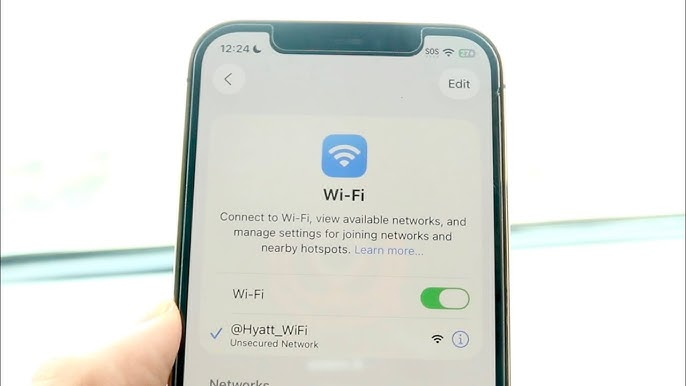
Like other guests, I connected to the hotel's Wi-Fi network. This network didn't require a password; it only needed to be logged in through a captive portal.
I worked as usual in the hotel without doing anything risky: I didn't create new wallets, click on strange links, or access suspicious decentralized applications (dApps). I just checked X (Twitter), my balances, Discord, Telegram, etc.

At one point, I received a call from a crypto friend, and we chatted about market trends, Bitcoin, and other cryptocurrency-related matters. But what I didn't know was that someone nearby was eavesdropping on our conversation and realized I was involved in cryptocurrency. This was my first mistake. The eavesdropper learned from our conversation that I was using a Phantom wallet and that I was a user with a significant holding.

This made me his target.

In a public Wi-Fi network, all devices share the same network, and the visibility between devices is actually higher than you might think. There is almost no real protection between users, which creates an opportunity for a "Man-in-the-Middle Attack." The attacker acts like a middleman, quietly inserting themselves between you and the internet, much like someone secretly reading and tampering with your mail before it reaches you.
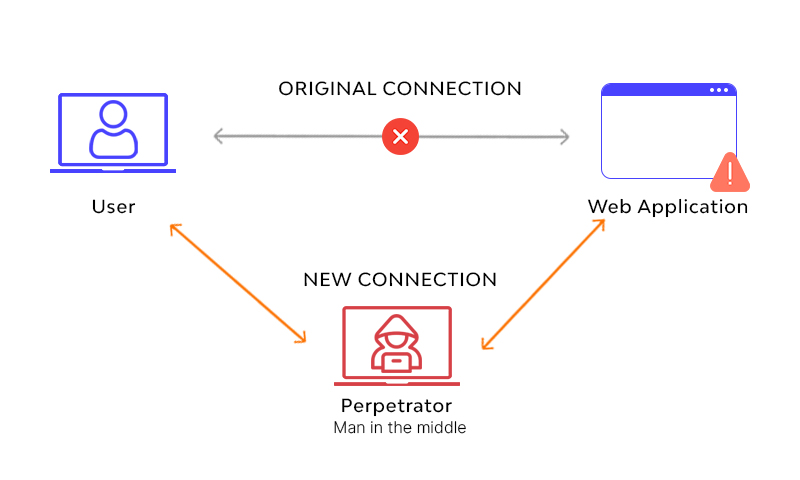
While I was browsing the web on the hotel Wi-Fi, one website appeared to load normally, but in reality, malicious code had been injected behind the page. I didn't notice anything unusual at the time. If I had installed some security tools, I might have detected these issues, but unfortunately, I hadn't.

Normally, a website might request your wallet to sign certain operations. The Phantom wallet would pop up a window where you could choose to approve or reject. Generally, you would trust the website and browser and sign without worry. However, that day, I shouldn't have.

Just as I was performing a token swap on @JupiterExchange, the malicious code triggered a wallet request that replaced my normal swap operation. I could have detected it as a malicious request by carefully checking the transaction details, but because I was already performing a swap on Jupiter, I didn't suspect a thing.
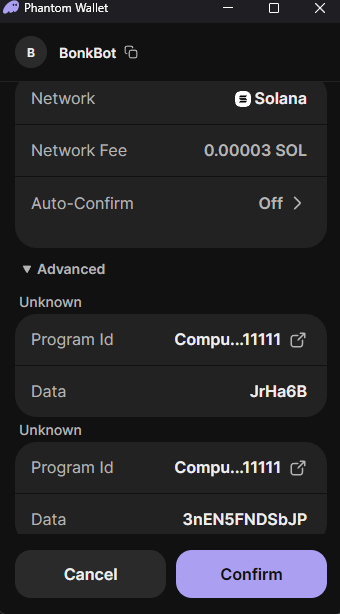
That day, I didn't sign any transaction to transfer funds; instead, I signed an authorization. This was exactly why my assets were stolen days later.

The malicious code didn't directly ask me to send SOL (Solana), as that would have been too obvious. Instead, it requested me to "authorize access," "approve account," or "confirm session." In simple terms, I was actually giving another address permission to operate on my behalf.

I approved it because I mistakenly thought it was related to my operation on Jupiter. At the time, the message popped up by the Phantom wallet looked technical, didn't show any amount, and didn't prompt for an immediate transfer.

And that was all the attacker needed. He patiently waited until I left the hotel before taking action. He transferred my SOL, withdrew my tokens, and moved my NFTs to another address.
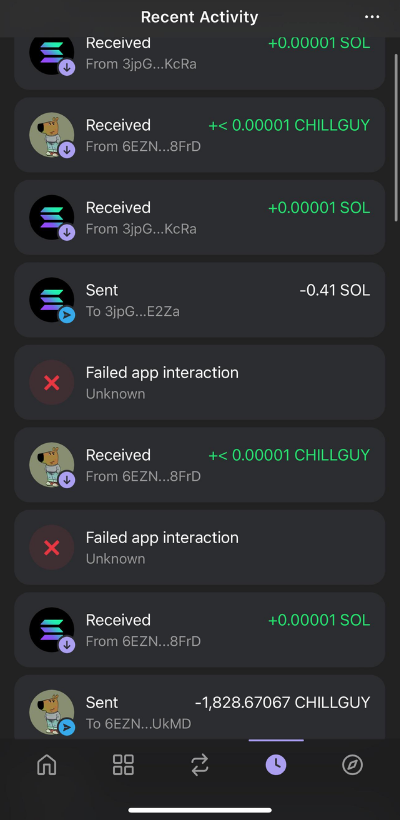
I never thought something like this would happen to me. Fortunately, this wasn't my main wallet but a hot wallet used for specific operations, not for long-term asset holding. Even so, I made many mistakes, and I believe I am primarily responsible.

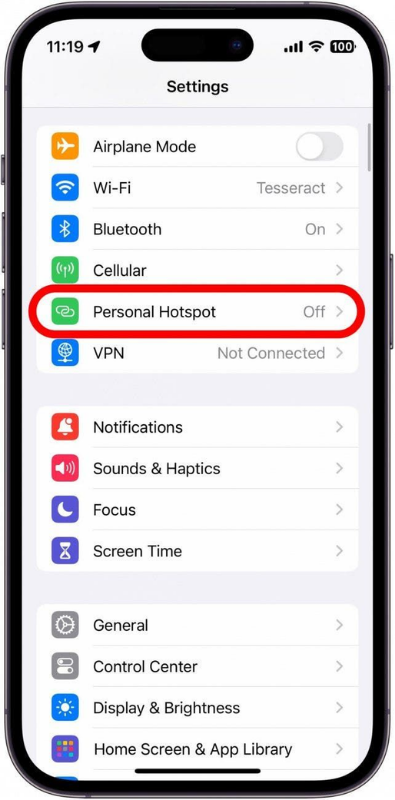
First, I should never have connected to the hotel's public Wi-Fi. I should have used my phone's hotspot instead.
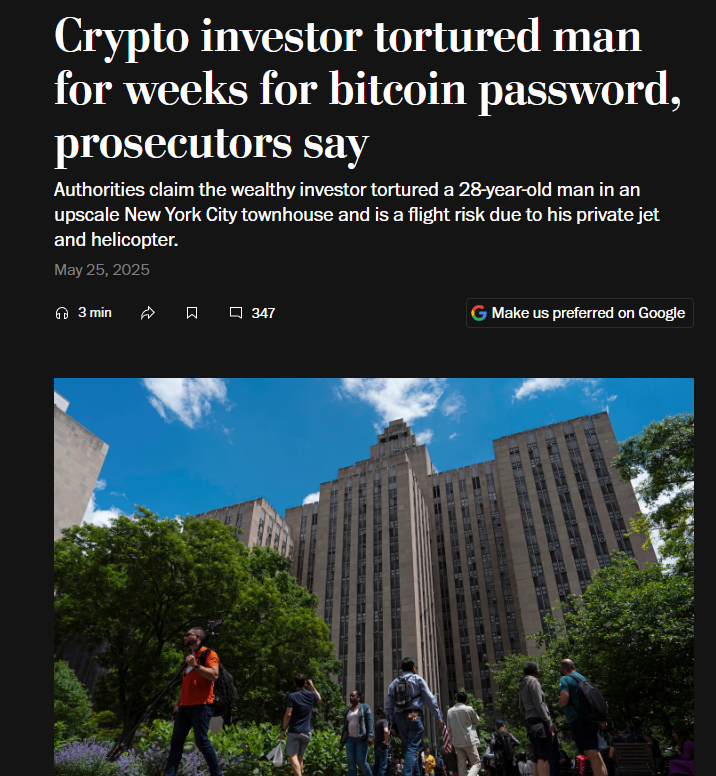
My second mistake was talking about cryptocurrency in the hotel's public area, where many people could have overheard our conversation. My father once warned me never to let others know you're involved in cryptocurrency. This time, I was lucky; some people have even faced kidnapping or worse because of their crypto assets.
Another mistake was approving the wallet request without paying full attention. Because I was sure the request came from Jupiter, I didn't analyze it carefully. In fact, every wallet request should be carefully reviewed, even on trusted applications. Requests can be intercepted and may not actually come from the app you think.

In the end, I lost about $5000 from a secondary wallet. While it's not the worst-case scenario, it's still very frustrating.


Twitter:https://twitter.com/BitpushNewsCN

BitPush TG Discussion Group:https://t.me/BitPushCommunity

BitPush TG Subscription: https://t.me/bitpush

Original article link:https://www.bitpush.news/articles/7601380

Preguntas relacionadas

QWhat was the primary method the attacker used to compromise the victim's crypto wallet?

AThe attacker used a Man-in-the-Middle (MitM) attack by exploiting the insecure public hotel Wi-Fi network. They intercepted the victim's web traffic and injected malicious code into a webpage, which triggered a deceptive wallet authorization request.

QWhat specific mistake did the victim make that allowed the attacker to identify him as a target?

AThe victim discussed cryptocurrency, his use of the Phantom wallet, and his substantial holdings during a phone call in a public area of the hotel, which was overheard by the attacker.

QWhat type of transaction did the victim accidentally sign, instead of a direct fund transfer?

AThe victim signed an authorization or approval request, which granted permission for another address to operate on their behalf. This did not immediately transfer funds but gave the attacker the ability to do so later.

QWhy didn't the victim suspect the malicious transaction request when it appeared?

AThe request appeared while he was performing a legitimate token swap on the Jupiter Exchange platform. He assumed the request was part of that normal operation and did not carefully inspect the technical details of the transaction, which showed no immediate transfer of funds.

QWhat were the two security precautions the victim identified that could have prevented this attack?

AFirst, he should not have used the hotel's public Wi-Fi and instead used his phone's mobile hotspot. Second, he should never have discussed his cryptocurrency activities in a public space where he could be overheard.

Lecturas Relacionadas

What Happens to Ethereum Developer Tools After the Grants Run Out?

On February 27th, the Ethereum Foundation (EF) announced Project Odin, a structured sustainability support program designed for a select group of strategic, previously grant-funded teams. Unlike a standard grant, Odin offers a long-term advisory mechanism focused on helping these teams establish credible, sustainable paths within a two-year framework, thereby reducing long-term dependence on single funding sources. The program addresses a critical post-grant challenge: how essential public goods, especially major developer tools, can achieve financial sustainability beyond initial funding. While grants from EF and programs like Gitcoin or RetroPGF remain vital for startups and research, they often fall short for mature, widely-used infrastructure. Tools like compilers, languages, and network stacks are deeply embedded but struggle with monetization, trapped between being too foundational to lose and too public to generate natural revenue. Project Odin provides teams with a dedicated Strategic Advisor to guide them through a three-phase process: 1) analyzing current funding and realistic options, 2) validating potential paths with stakeholders, and 3) executing plans, which may include crafting support contracts, service agreements, or other recurring revenue models. The first pilot participant is Vyper, a critical smart contract language for the EVM, highlighting the need for sustainable models for core infrastructure. The initiative reframes the public goods conversation from "who should be funded" to "how do already-proven teams avoid perpetual funding crises?" It encourages ecosystem participants—protocols and projects that depend on these tools—to view sustainable support not just as charity, but as essential risk management for their own operational supply chains.

marsbitHace 18 min(s)

What Happens to Ethereum Developer Tools After the Grants Run Out?

marsbitHace 18 min(s)

MARA Reports Q1 Revenue Below Expectations, Net Loss of $1.3 Billion, Stock Plunges After Hours

Bitcoin mining firm MARA Holdings reported disappointing Q1 2024 results, causing its stock to erase all daily gains and fall 3.44% in after-hours trading. Revenue dropped 18% year-over-year to $174.6 million, missing Wall Street estimates of $192.7 million. The company posted a net loss of $1.3 billion, a significant increase from a $533.4 million loss a year ago, primarily driven by unrealized losses on its holdings of 38,689 Bitcoin, which depreciated in value during the quarter. MARA also sold over 15,100 BTC in late March to repurchase debt at a discount. The broader mining environment remains challenging due to a 35% decline in Bitcoin's price from its all-time high and a nearly 30% increase in mining difficulty over the past year. MARA's market cap ranking among U.S. miners has slipped to seventh. Critically, the company announced a strategic pivot away from Bitcoin mining expansion. It stated it has no plans to purchase new mining equipment and is fully transitioning toward AI data centers. Its strategy involves retrofitting existing mining sites for AI and high-performance computing (HPC) and leveraging its recent $1.5 billion acquisition of Long Ridge Energy & Power, a gas-fired power plant and data center. This infrastructure could eventually support 600 MW of AI compute capacity, allowing MARA to redeploy up to 90% of its non-custodial mining power for AI and IT workloads.

marsbitHace 19 min(s)

MARA Reports Q1 Revenue Below Expectations, Net Loss of $1.3 Billion, Stock Plunges After Hours

marsbitHace 19 min(s)

The AI Investment Landscape Is Being Reshaped: Beyond the 'Magnificent Seven', What Opportunities Lie in the Semiconductor Supply Chain?

AI Investment Map is Reshaping: Opportunities Beyond the 'Magnificent Seven' Since ChatGPT ignited the AI wave, investment initially focused on the "Magnificent Seven" tech giants dominating cloud infrastructure. However, the rise of DeepSeek and debates on AI capital expenditure effectiveness are shifting this dynamic. Investors now recognize opportunities deeper in the supply chain—the companies providing the essential "picks and shovels." Early concerns about an AI investment "arms race" and potential low returns were partly alleviated by strong Q1 earnings from cloud providers, validating robust compute demand. This has highlighted a more certain investment thesis: regardless of which AI applications ultimately win, massive capital expenditure will first fuel demand for semiconductors and related components. This "pick-and-shovel" logic has driven semiconductor ETFs to record highs. Key beneficiaries include: * **Memory Chipmakers (e.g., SK Hynix, Samsung, Micron)**: High Bandwidth Memory (HBM) is a critical bottleneck for AI training. * **Photonics Companies**: Crucial for high-speed data transfer within AI data centers. * **The Broader "AI-11" Semiconductor Ecosystem**: This encompasses foundries & lithography (TSMC, ASML), logic & custom chips (AMD, Broadcom, Intel, Marvell), and enterprise storage (SanDisk, Western Digital). Every dollar of AI infrastructure spending flows through this chain. While the "Magnificent Seven" remain dominant in market size, their earnings growth premium over the rest of the S&P 500 ("S&P 493") is narrowing. Market attention and marginal investment are shifting towards the expanding semiconductor supply chain. The investment narrative is evolving from "betting on the ultimate AI winner" to "investing in the certainty of the infrastructure build-out." Understanding this shift from the demand side to the supply side is key to identifying future AI investment opportunities.

marsbitHace 47 min(s)

The AI Investment Landscape Is Being Reshaped: Beyond the 'Magnificent Seven', What Opportunities Lie in the Semiconductor Supply Chain?

marsbitHace 47 min(s)

Trading

Spot
Futuros

Artículos destacados

Qué es APECOIN

Entendiendo Asia Pacific Electronic Coin ($APECoin) En una era donde la intersección de la tecnología y el ambientalismo se vuelve cada vez más crítica, las criptomonedas están dejando su huella como posibles catalizadores de cambio. Entre estas innovaciones, Asia Pacific Electronic Coin ($APECoin) se destaca como un proyecto distintivo diseñado para apoyar iniciativas ambientales en toda la región de Asia Pacífico. Este artículo profundiza en la fundación, características únicas e impacto de $APECoin dentro del panorama más amplio de blockchain. ¿Qué es Asia Pacific Electronic Coin ($APECoin)? Asia Pacific Electronic Coin ($APECoin) es un token ERC20 y TRC20, realizado en abril de 2020 después de su conceptualización en diciembre de 2019. Esta innovación nació del deseo de fomentar prácticas ecológicas y apoyar un conjunto de proyectos ambientales orientados a la sostenibilidad y las iniciativas verdes. Objetivos y Metas $APECoin no es simplemente una moneda digital; se concibe como un medio de intercambio que permite a los usuarios participar en transacciones que benefician directamente causas ambientales. Su ecosistema está diseñado para facilitar diversas actividades financieras mientras promueve la adopción de prácticas ecológicas. La moneda tiene como objetivo principal: Apoyar Iniciativas Ambientales: A través de cada transacción, se destina una parte a financiar proyectos sostenibles enfocados en la conservación y la energía renovable. Promover Innovaciones Ecológicas: Fomentando startups y proyectos que se alinean con la sostenibilidad ambiental mediante el uso de su token como medio de valor. Crear un Mercado Sostenible: La plataforma incluye un e-mercado donde pueden realizarse transacciones financieras dentro de un marco dedicado a promover prácticas verdes. Creador de Asia Pacific Electronic Coin ($APECoin) Si bien los detalles sobre el creador individual de $APECoin no se han divulgado públicamente, el proyecto cuenta con el respaldo significativo del Grupo APEC, un consorcio enfocado en abogar por iniciativas ambientales. Este respaldo agrega credibilidad y relevancia al proyecto, conectándolo a una red más amplia comprometida con la sostenibilidad y las prácticas ecológicas. Inversores de Asia Pacific Electronic Coin ($APECoin) El panorama de inversión en torno a $APECoin permanece en gran medida no revelado. Los nombres específicos de fundaciones u organizaciones de inversión que apoyan esta criptomoneda aún no se han hecho públicos. Sin embargo, lo que es evidente es un interés creciente entre los inversores interesados en apoyar proyectos sostenibles que demuestren potencial de impacto en el ámbito cripto. ¿Cómo funciona Asia Pacific Electronic Coin ($APECoin)? $APECoin se destaca por su innovador modelo operativo, que aprovecha la tecnología blockchain y los contratos inteligentes. Esta combinación no solo garantiza eficiencia en las transacciones, sino que también refuerza el cumplimiento de los marcos regulatorios, mejorando la seguridad y transparencia de las transacciones. Características Únicas de $APECoin Operaciones Basadas en Blockchain: Al establecer sus operaciones en una plataforma de blockchain, $APECoin asegura que todas las transacciones sean inmutables y estén protegidas mediante técnicas criptográficas avanzadas. Esta descentralización subraya la integridad del token dentro de su ecosistema. Contratos Inteligentes: $APECoin emplea contratos inteligentes que facilitan transacciones sin problemas mientras garantizan el cumplimiento de las regulaciones aplicables. Estos acuerdos automatizados minimizan la posibilidad de disputas, agilizan los procesos y contribuyen a un marco de transacciones confiable. E-Mercado: Una de las características distintivas de $APECoin es su e-mercado dedicado. Este entorno digital sirve como un centro para servicios que apoyan prácticas ecológicas, proporcionando una plataforma para intercambios que promueven la visión verde del proyecto. A través de estos atributos, $APECoin se establece en un nicho dentro de la vasta extensión del mercado de criptomonedas, casando efectivamente los principios de blockchain con la responsabilidad ambiental. Cronología de Asia Pacific Electronic Coin ($APECoin) Entender la trayectoria de $APECoin proporciona una visión sobre sus hitos de desarrollo y aspiraciones futuras. Aquí hay una cronología que resalta eventos significativos en la historia del proyecto: Diciembre 2019: Conceptualización de Asia Pacific Electronic Coin, iniciada con la ambición de impulsar la sostenibilidad a través de la criptomoneda. Abril 2020: Lanzamiento oficial de $APECoin, marcando su entrada en el mercado como un token dedicado a proyectos ambientales. 2020-2021: Realización de la Oferta Inicial de Intercambio (IEO), permitiendo a los usuarios comprar $APECoin, junto con el registro en varias plataformas de intercambio electrónico para mejorar la accesibilidad. En su relativamente corta trayectoria, $APECoin ha avanzado significativamente en sentar las bases para una criptomoneda segura y con impacto impulsada por objetivos ambientales. Conclusión Asia Pacific Electronic Coin ($APECoin) encarna la unión de la tecnología y la responsabilidad ambiental, fomentando el crecimiento en el ecosistema cripto mientras defiende la sostenibilidad. Con su estructura única, el respaldo de entidades reputadas y una visión hacia un futuro más verde, $APECoin es más que una criptomoneda; es un proyecto pionero destinado a nutrir la innovación responsable en la región de Asia Pacífico. A través de su compromiso con la inclusión financiera y su apoyo a iniciativas ambientales, se erige como un formidable ejemplo de cómo las monedas digitales pueden aprovecharse para generar un impacto social positivo. A medida que el proyecto sigue evolucionando, los interesados dentro de la comunidad cripto y más allá estarán atentos a cómo $APECoin da forma a la conversación en torno a las prácticas sostenibles en el creciente mundo de las criptomonedas.

34 Vistas totalesPublicado en 2024.12.03Actualizado en 2024.12.03

Qué es APECOIN

Cómo comprar APE

¡Bienvenido a HTX.com! Hemos hecho que comprar ApeCoin (APE) sea simple y conveniente. Sigue nuestra guía paso a paso para iniciar tu viaje de criptos.Paso 1: crea tu cuenta HTXUtiliza tu correo electrónico o número de teléfono para registrarte y obtener una cuenta gratuita en HTX. Experimenta un proceso de registro sin complicaciones y desbloquea todas las funciones.Obtener mi cuentaPaso 2: ve a Comprar cripto y elige tu método de pagoTarjeta de crédito/débito: usa tu Visa o Mastercard para comprar ApeCoin (APE) al instante.Saldo: utiliza fondos del saldo de tu cuenta HTX para tradear sin problemas.Terceros: hemos agregado métodos de pago populares como Google Pay y Apple Pay para mejorar la comodidad.P2P: tradear directamente con otros usuarios en HTX.Over-the-Counter (OTC): ofrecemos servicios personalizados y tipos de cambio competitivos para los traders.Paso 3: guarda tu ApeCoin (APE)Después de comprar tu ApeCoin (APE), guárdalo en tu cuenta HTX. Alternativamente, puedes enviarlo a otro lugar mediante transferencia blockchain o utilizarlo para tradear otras criptomonedas.Paso 4: tradear ApeCoin (APE)Tradear fácilmente con ApeCoin (APE) en HTX's mercado spot. Simplemente accede a tu cuenta, selecciona tu par de trading, ejecuta tus trades y monitorea en tiempo real. Ofrecemos una experiencia fácil de usar tanto para principiantes como para traders experimentados.

73 Vistas totalesPublicado en 2025.02.24Actualizado en 2025.03.21

Cómo comprar APE

Discusiones

Bienvenido a la comunidad de HTX. Aquí puedes mantenerte informado sobre los últimos desarrollos de la plataforma y acceder a análisis profesionales del mercado. A continuación se presentan las opiniones de los usuarios sobre el precio de APE (APE).

活动图片














