Price predictions 12/22: SPX, DXY, BTC, ETH, BNB, XRP, SOL, DOGE, ADA, BCH

cointelegraphPublicado a 2025-12-22Actualizado a 2025-12-22

Resumen

Bitcoin is attempting a recovery above $90,000, though analysts remain divided on its near-term direction, with some predicting a drop to $74,000. The S&P 500 Index is range-bound, while the US Dollar Index faces resistance. Major altcoins show weak bounces, indicating continued bearish pressure. Ethereum is forming a symmetrical triangle, suggesting uncertainty. BNB, XRP, Solana, Dogecoin, Cardano, and Bitcoin Cash all face key resistance levels, with breakdown risks if support is lost. Overall, the market remains cautious, with potential for further declines if buyers fail to overcome immediate hurdles.

Key points:

  • Bitcoin is attempting to start a recovery, but higher levels are likely to attract sellers.

  • The weak bounce in several altcoins shows that the bears continue to exert pressure.

Bitcoin (BTC) rallied above $90,000 at the start of the new week, indicating that the bulls are attempting a comeback. Analysts are divided in their opinion about BTC’s next major move. While some anticipate a rally to a new all-time high, others expect a drop to as low as $70,000.

Santiment founder Maksim Balashevich is also not convinced that a bottom is in. Balashevich said in a YouTube video that BTC could fall to $74,000 as there is still a lot of optimism online. He added that a drop toward the said level could provide “a very good setup” for traders.
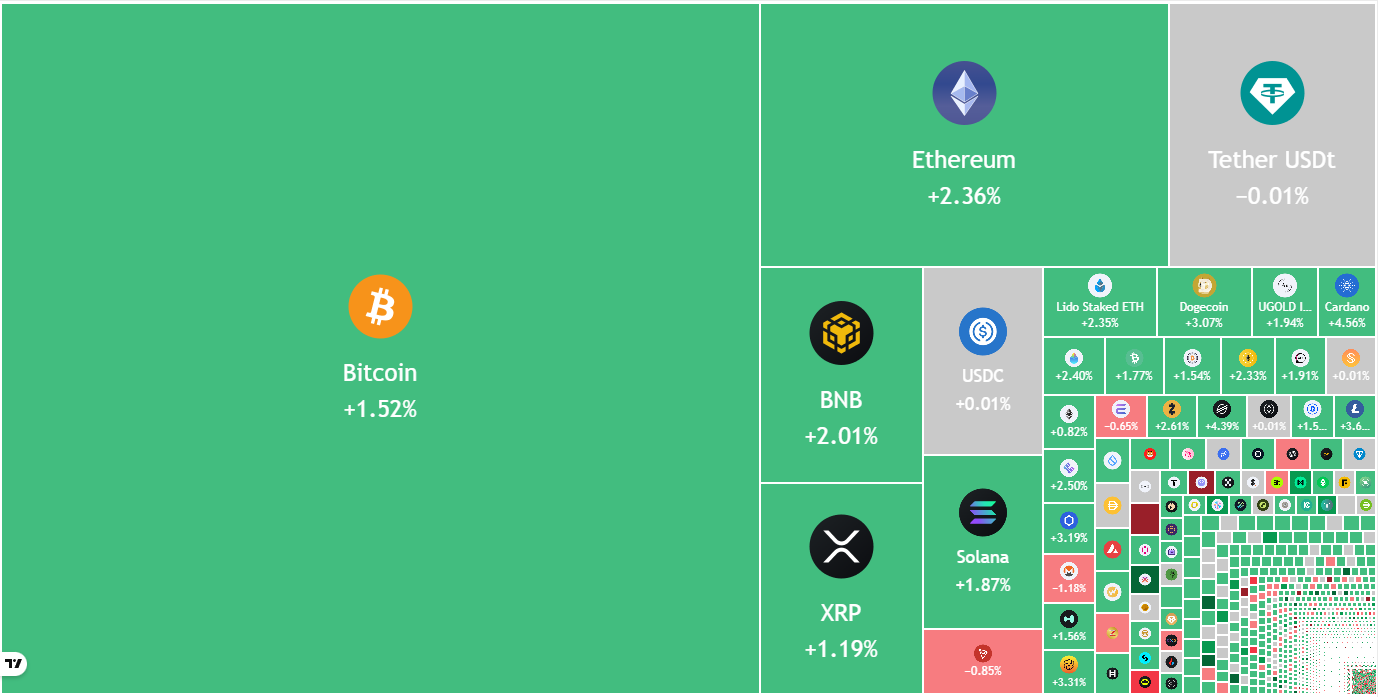
Crypto market data daily view. Source: CoinMarketCap

Although the near-term looks uncertain, BlackRock’s spot Bitcoin exchange-traded fund, iShares Bitcoin Trust (IBIT), $25 billion in year-to-date inflows show potential for the long term.

Bloomberg ETF analyst Eric Balchunas said in a post on X that IBIT, at sixth place, was the only fund in the top cohort with negative returns for the year. If a negative year could attract $25 billion, “imagine the flow potential in a good year,” Balchunas added.

Could BTC and the major altcoins start a relief rally, or will the bears pull the price lower? Let’s analyze the charts of the top 10 cryptocurrencies to find out.

S&P 500 Index price prediction

The S&P 500 Index (SPX) has been range-bound between 6,550 and 6,920 for several days.
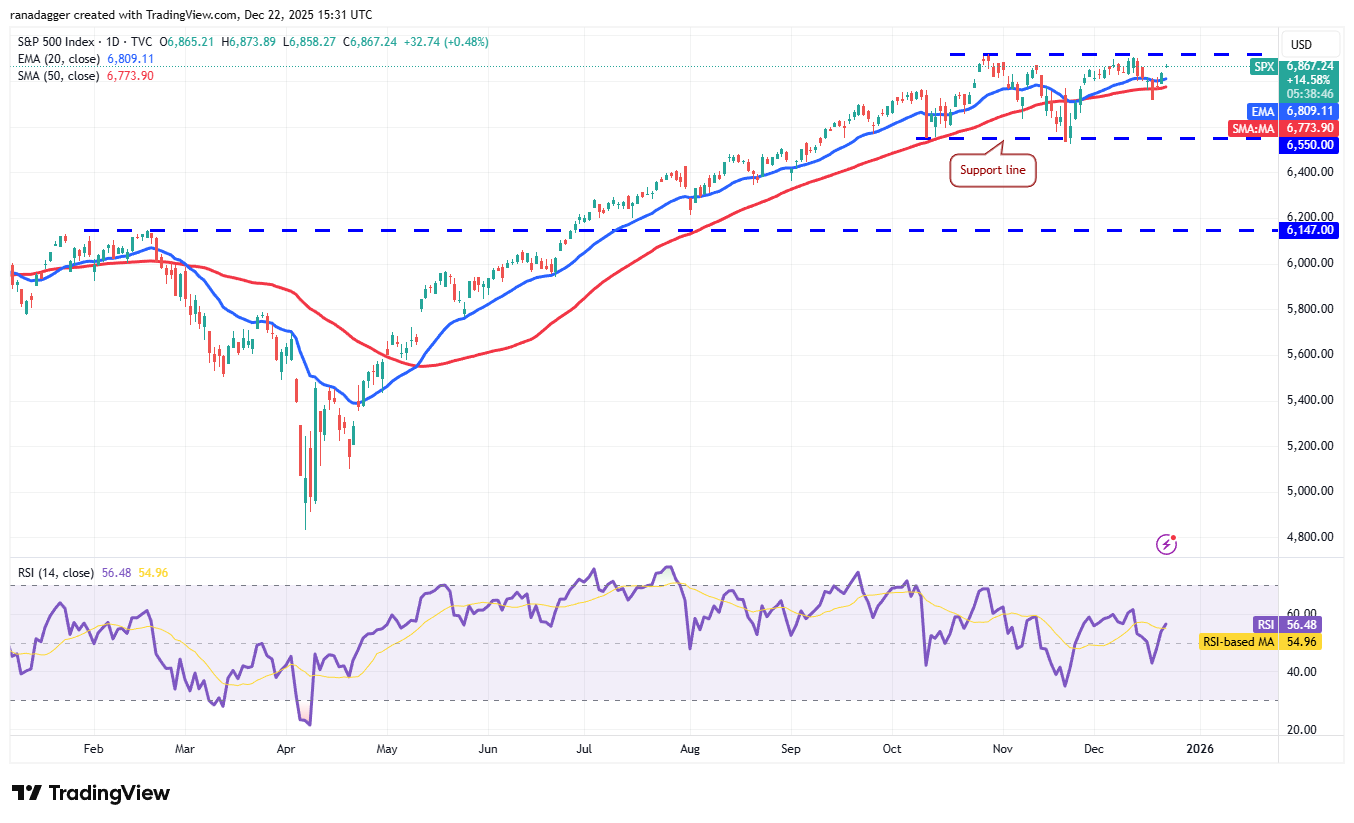
SPX daily chart. Source: Cointelegraph/TradingView

A positive sign is that the bulls are attempting to maintain the price above the moving averages. That improves the possibility of a break above the 6,920 resistance. If that happens, the index could rally toward the 7,290 level.

Sellers are likely to have other plans. They will attempt to defend the overhead resistance and pull the price below the moving averages. If they do that, the index could extend its stay inside the range for some more time. The bears will be back in the driver’s seat on a close below 6,550.

US Dollar Index price prediction

The US Dollar Index (DXY) dipped below the 98.03 support on Tuesday, but the bears could not sustain the lower levels.
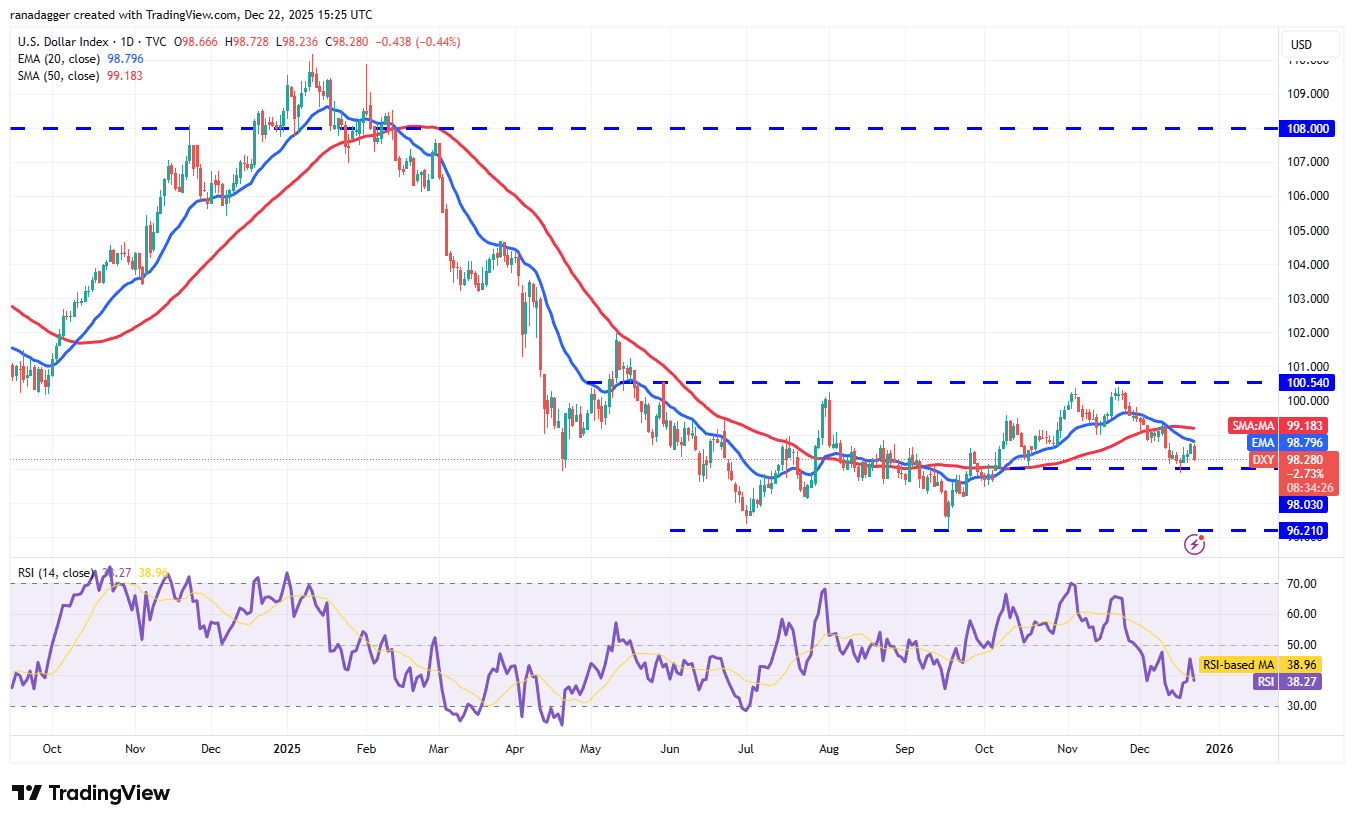
DXY daily chart. Source: Cointelegraph/TradingView

The relief rally reached the 20-day exponential moving average (98.79) on Friday, where the bears are posing a strong challenge. Sellers will attempt to sink the price below the 98.03 support. If they manage to do that, the index may descend to 97.20.

Instead, if the price turns up from 98.03 and breaks above the moving averages, it suggests buying at lower levels. The index may then climb to the stiff overhead resistance at 100.54. Sellers are expected to vigorously defend the 100.54 level, as a break above it may start a new uptrend.

Bitcoin price prediction

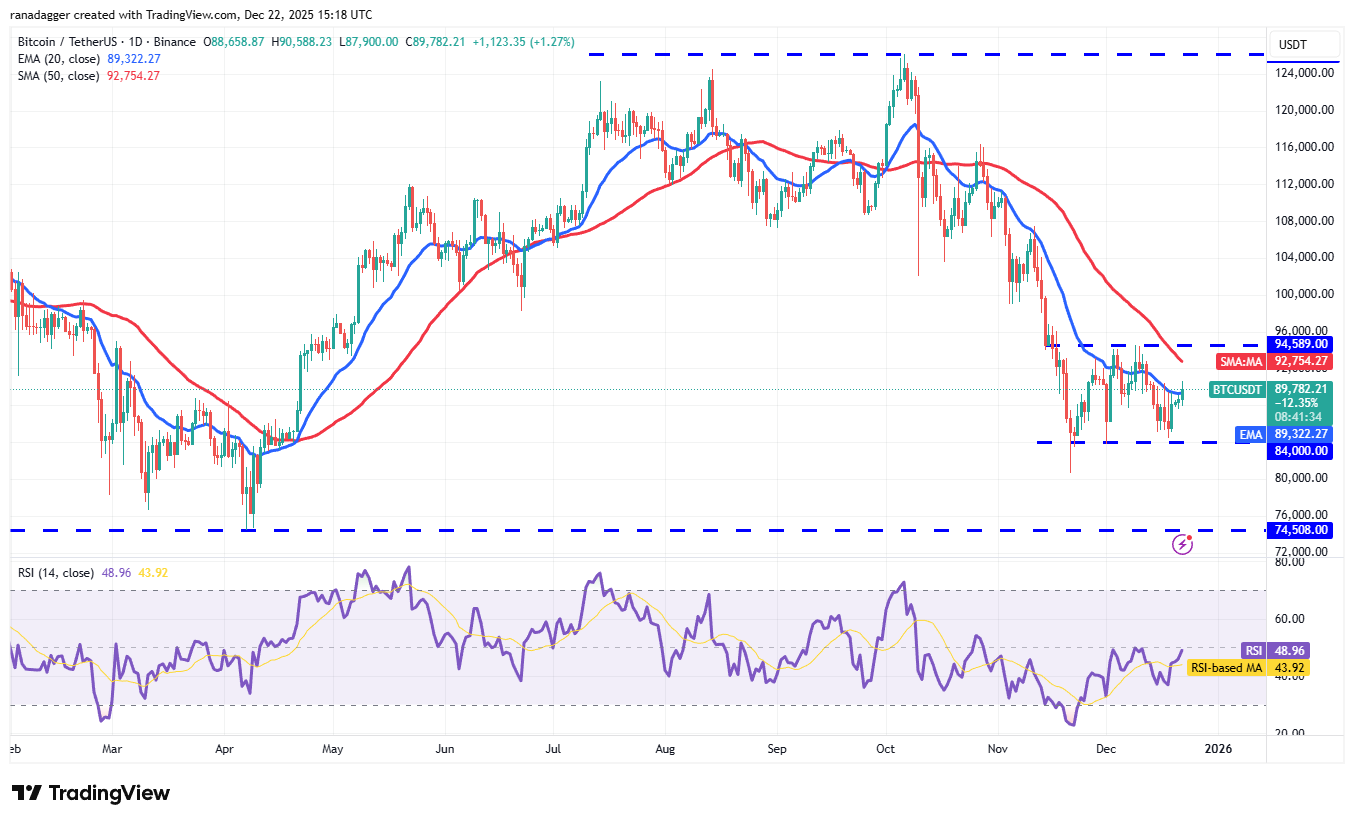
BTC’s bounce off the $84,000 level is facing resistance at the 20-day EMA ($89,322), but a positive sign is that the bulls have kept up the pressure.
BTC/USDT daily chart. Source: Cointelegraph/TradingView

A close above the 20-day EMA opens the doors for a rise to the 50-day simple moving average ($92,754) and then to the overhead resistance at $94,589. Sellers are expected to defend the $94,589 level with all their might, as a close above it suggests that the corrective phase may be over.

If the Bitcoin price closes above $94,589, the BTC/USDT pair could surge to $100,000 and later to $107,500. On the downside, bears will regain control on a close below the $84,000 support.

Ether price prediction

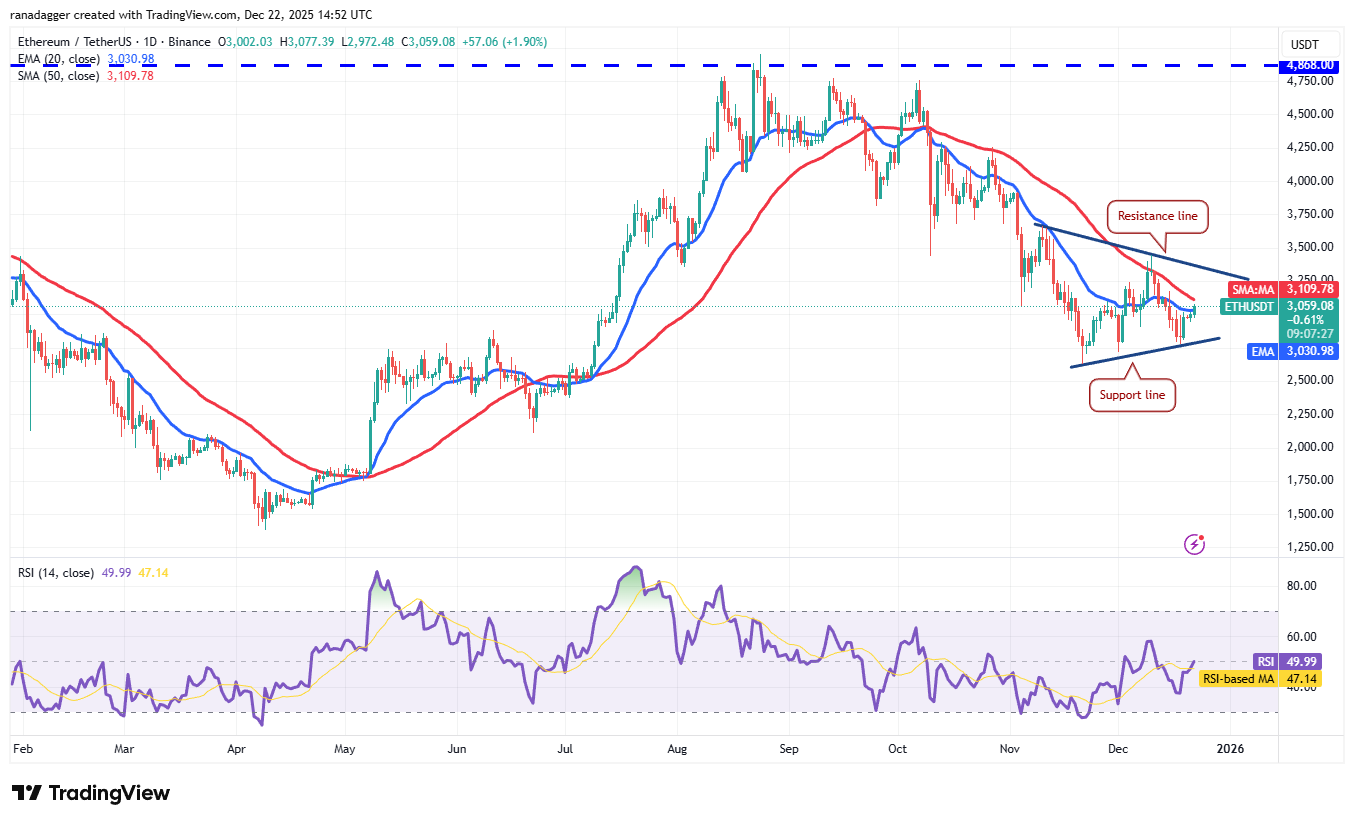
Ether (ETH) has formed a symmetrical triangle pattern, indicating uncertainty about the next directional move.
ETH/USDT daily chart. Source: Cointelegraph/TradingView

If buyers drive the price above the moving averages, the ETH/USDT pair could rally to the resistance line. Sellers will attempt to defend the resistance line and keep the Ether price inside the triangle, but if the bulls prevail, the pair could surge to $4,000 and then to the pattern target of $4,386.

Contrarily, if the price turns down from the moving averages and breaks below the support line, it signals an advantage to the bears. The pair may then plummet to $2,111.

BNB price prediction

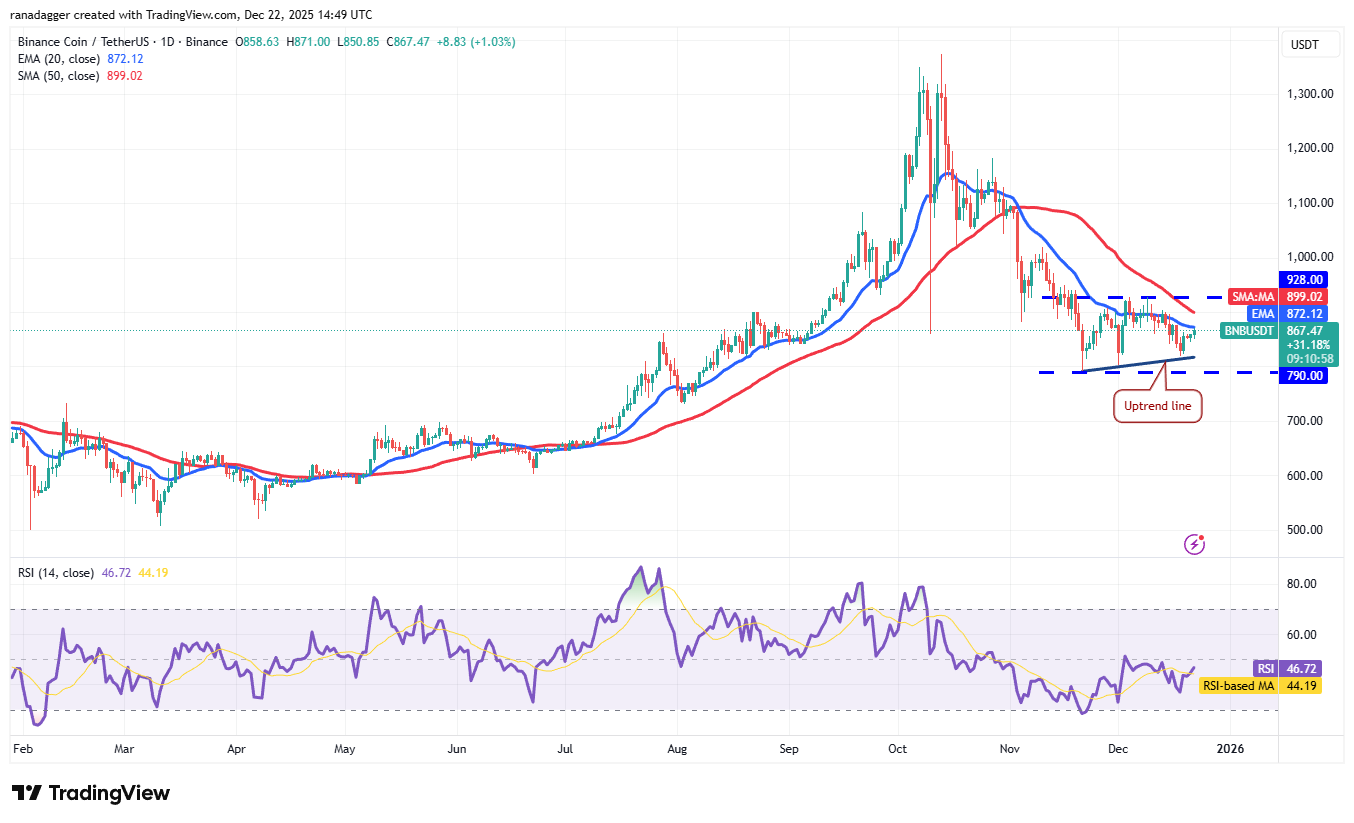
BNB’s (BNB) rebound off the uptrend line has reached the 20-day EMA ($872), where the bears are expected to step in.
BNB/USDT daily chart. Source: Cointelegraph/TradingView

If the price turns down sharply from the moving averages and breaks below the uptrend line, it increases the risk of a break below $790. If that happens, the BNB/USDT pair could tumble to $730.

Contrary to this assumption, if the BNB price continues higher and breaks above $928, it suggests that the correction is over. The pair may then ascend to $1,019 and, after that, to $1,100.

XRP price prediction

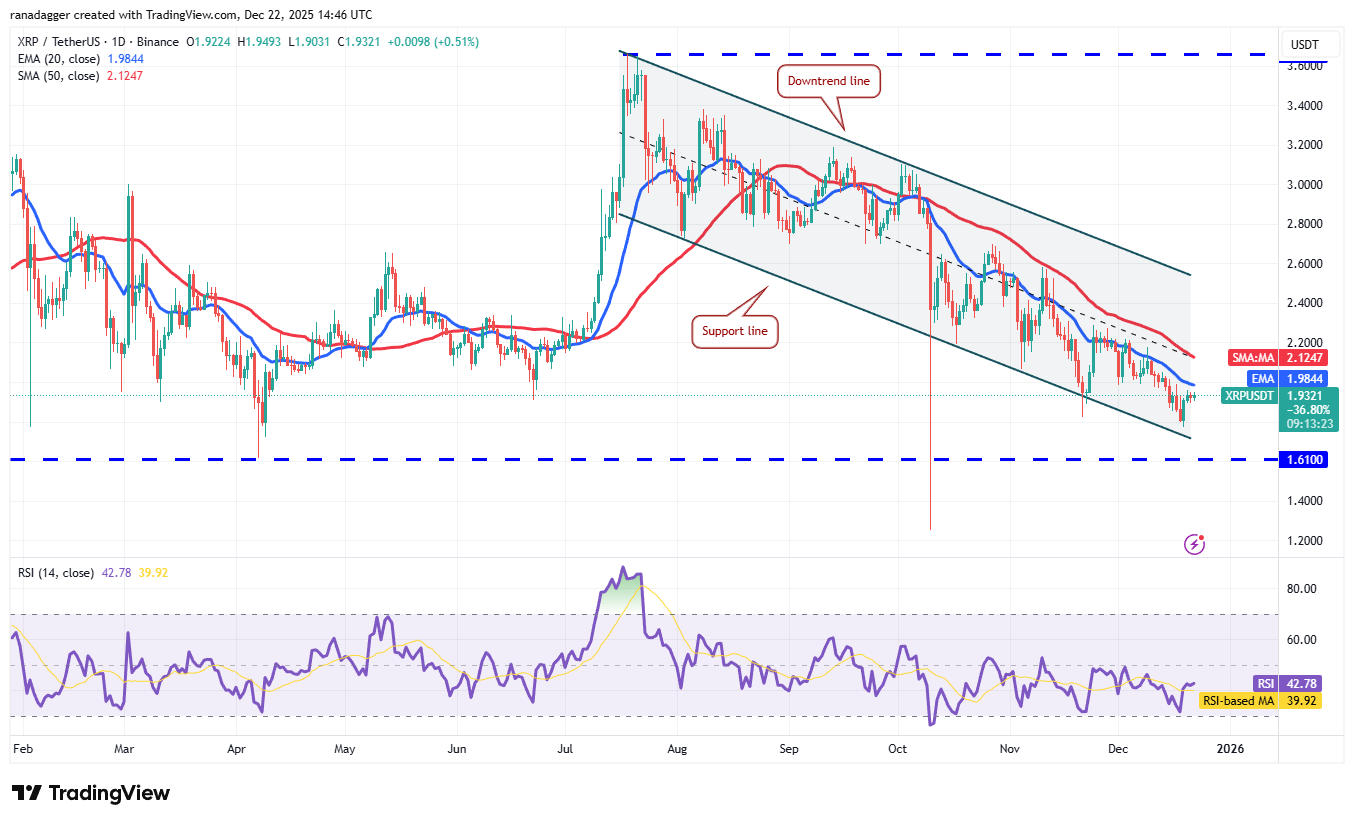
XRP’s (XRP) bounce off the support line of the descending channel pattern is facing resistance at the 20-day EMA ($1.98).
XRP/USDT daily chart. Source: Cointelegraph/TradingView

If the price turns down sharply from the 20-day EMA, the bears will attempt to pull the XRP/USDT pair to the $1.61 support. This is a critical level to watch out for in the near term, as a break below it may accelerate selling. The XRP price may then collapse to the Oct. 10 low of $1.25.

This negative view will be invalidated in the near term if the price continues higher and breaks above the moving averages. The pair may then climb to the downtrend line. A close above the downtrend line signals a potential trend change.

Solana price prediction

Solana (SOL) remains below the moving averages, but the positive divergence on the RSI suggests that the selling pressure is reducing.
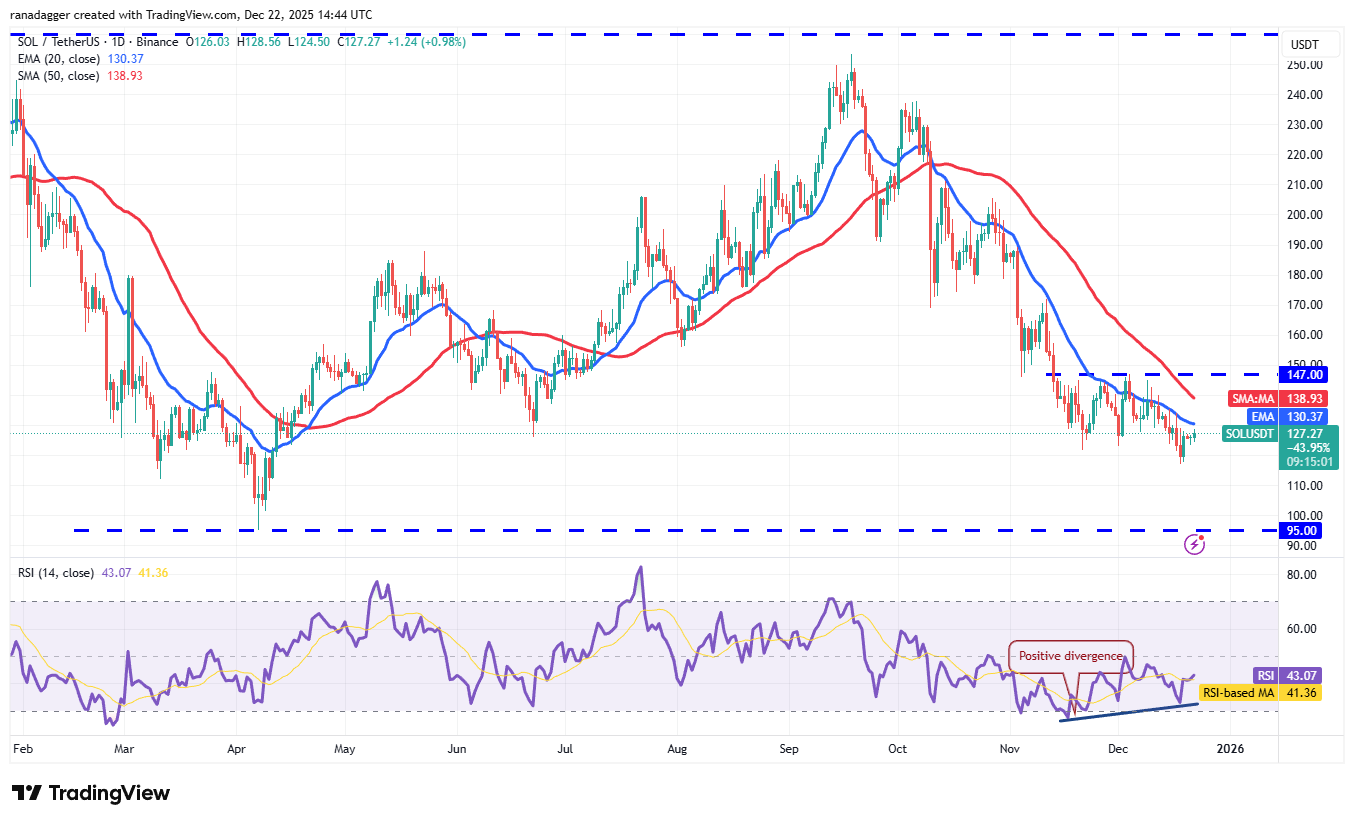
SOL/USDT daily chart. Source: Cointelegraph/TradingView

If the price breaks above the 20-day EMA ($130), the SOL/USDT pair could rise to the overhead resistance at $147. A close above $147 signals that the bulls are back in the game. The pair may then rally to $172.

Related: Bitcoin ‘Santa rally’ targets $120K as key BTC metric flips bullish

On the other hand, if the Solana price turns down sharply from the 20-day EMA, it indicates a negative sentiment. The pair could then continue its slide to $110 and eventually to the solid support at $95.

Dogecoin price prediction

Dogecoin (DOGE) climbed back above the breakdown level of $0.13 on Friday, indicating buying at lower levels.
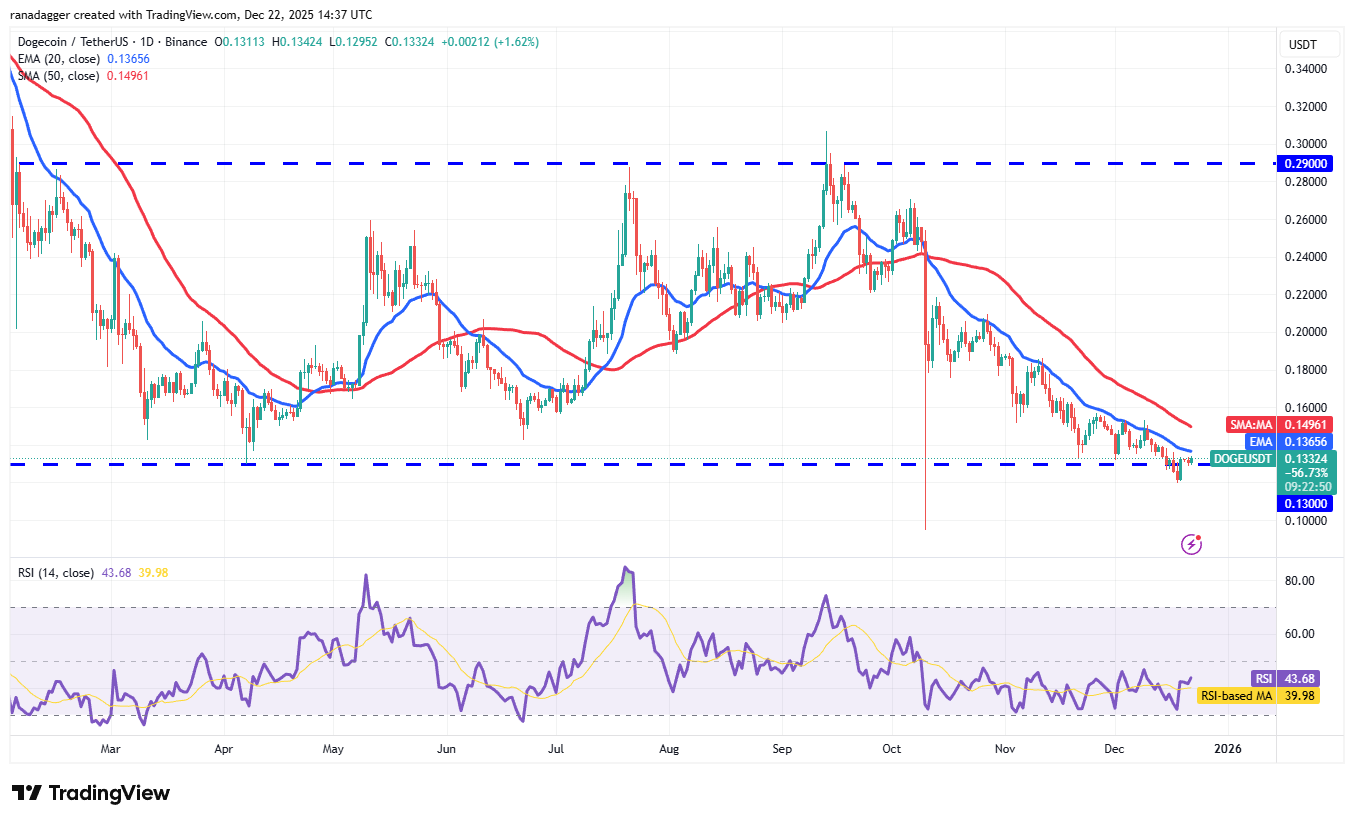
DOGE/USDT daily chart. Source: Cointelegraph/TradingView

Sellers are unlikely to give up easily and will attempt to halt the recovery at the moving averages. If the Dogecoin price turns down from the moving averages and breaks below $0.12, it suggests that the bears remain in control. The DOGE/USDT pair may then plunge to the Oct. 10 low of $0.10.

Buyers will have to propel the price above the 50-day SMA ($0.15) to suggest that the markets have rejected the break below $0.13. The large range of $0.13 to $0.27 will come into play after the price maintains above $0.16.

Cardano price prediction

Cardano’s (ADA) recovery is facing resistance at the breakdown level of $0.37, indicating that the bears continue to exert pressure.
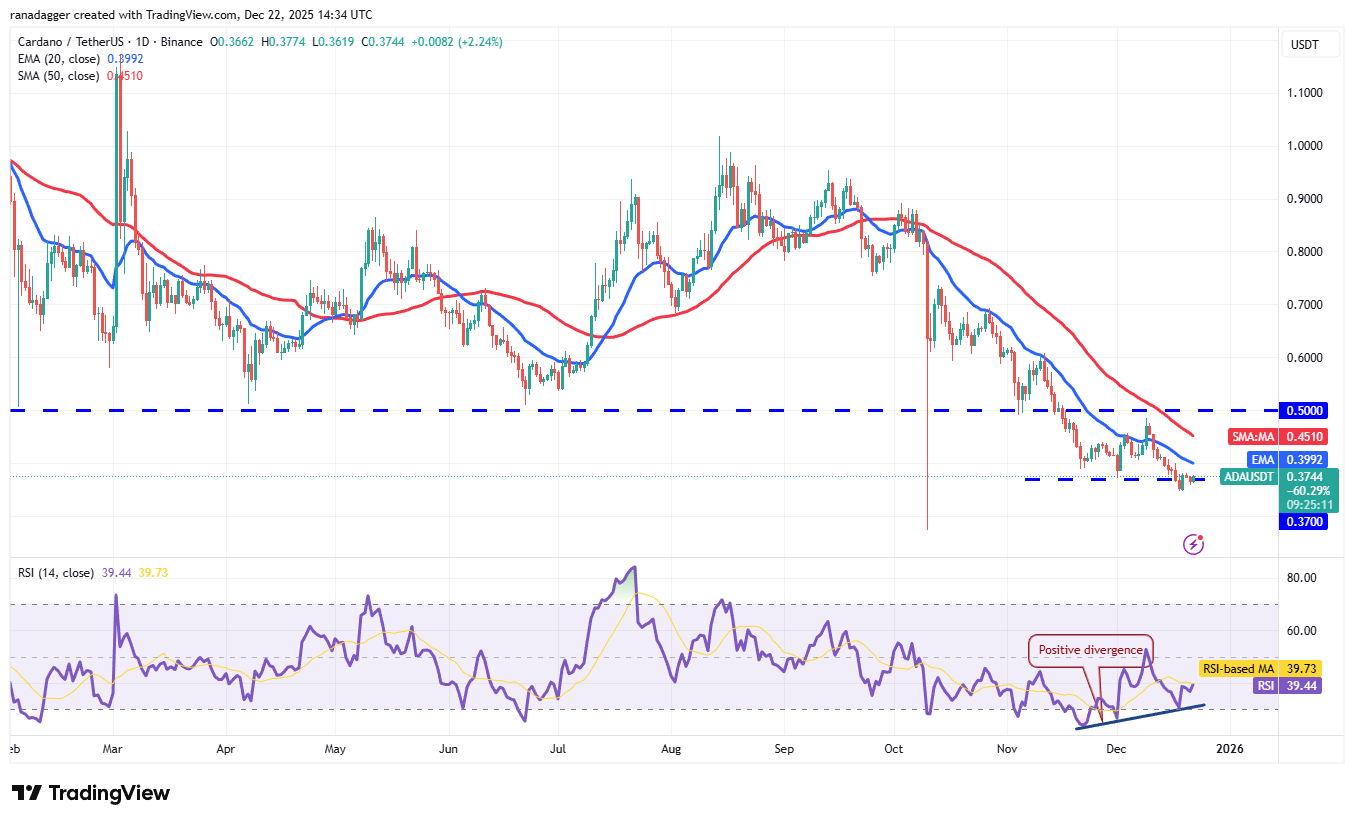
ADA/USDT daily chart. Source: Cointelegraph/TradingView

If the Cardano price turns down and breaks below $0.34, it signals that the bears have flipped the $0.37 level into resistance. The ADA/USDT pair may then extend the decline to the Oct. 10 low of $0.27.

A minor positive in favor of the bulls is that the RSI has formed a positive divergence. If buyers drive the price above the 20-day EMA ($0.40), the pair could rally toward the stiff overhead resistance at $0.50.

Bitcoin Cash price prediction

Bitcoin Cash (BCH) pierced the $615 resistance on Friday, but the bulls could not build upon the breakout.
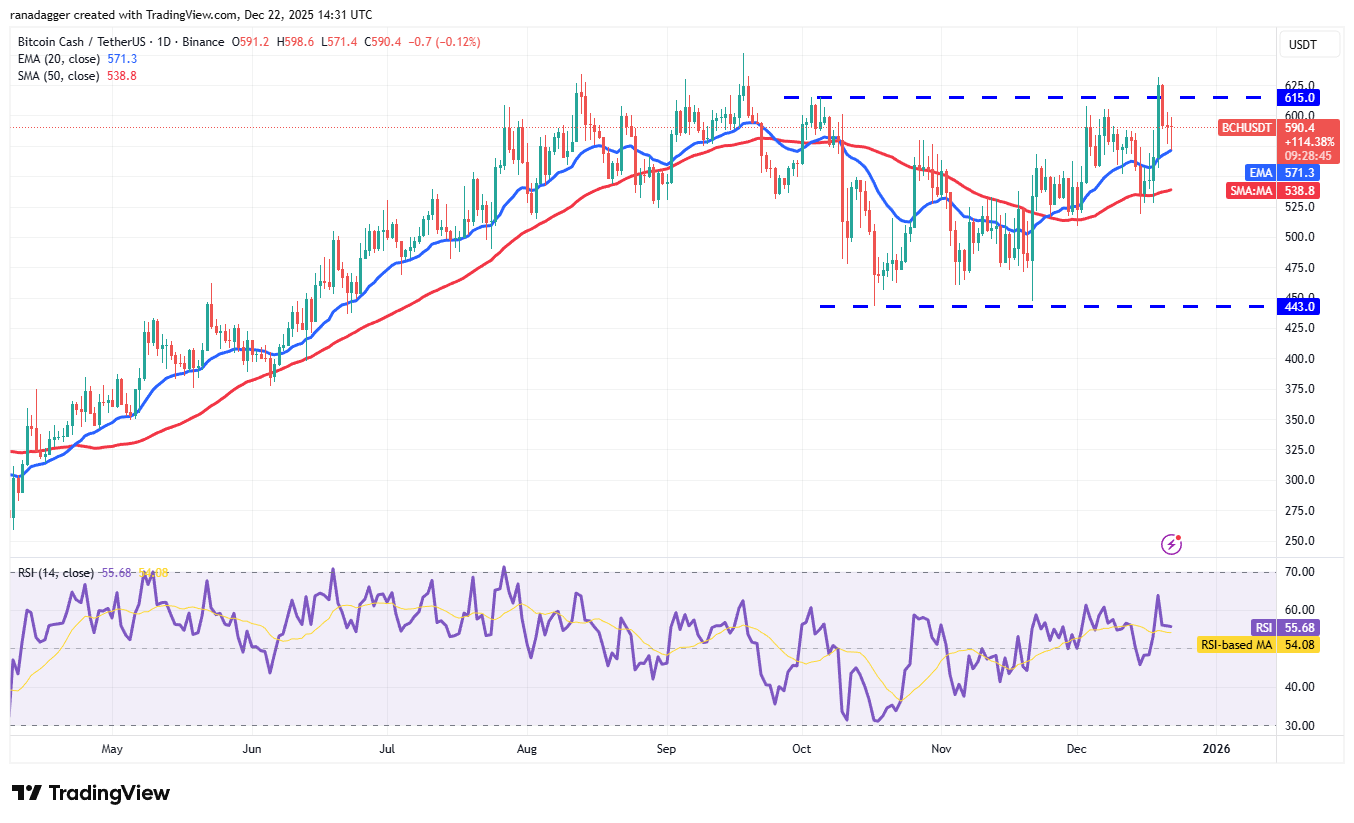
BCH/USDT daily chart. Source: Cointelegraph/TradingView

The bears pulled the Bitcoin Cash price to the 20-day EMA ($571), which is attracting buyers as seen from the long tail on the candlestick. If the rebound sustains, the bulls will again attempt to drive the BCH/USDT pair to $651 and then to $720.

Alternatively, if the price turns down from the overhead resistance and breaks below the 20-day EMA, it suggests that the traders are booking profits. The pair may then slump to the 50-day SMA ($538).

This article does not contain investment advice or recommendations. Every investment and trading move involves risk, and readers should conduct their own research when making a decision. While we strive to provide accurate and timely information, Cointelegraph does not guarantee the accuracy, completeness, or reliability of any information in this article. This article may contain forward-looking statements that are subject to risks and uncertainties. Cointelegraph will not be liable for any loss or damage arising from your reliance on this information.



Criptos en tendencia

Preguntas relacionadas

QWhat is the current resistance level for Bitcoin (BTC) according to the article, and what could happen if it breaks above it?

AThe current resistance level for Bitcoin is $94,589. If it closes above this level, it suggests the corrective phase may be over, and the BTC/USDT pair could surge to $100,000 and later to $107,500.

QWhat pattern has Ether (ETH) formed, and what are the potential price targets if the pattern breaks to the upside?

AEther has formed a symmetrical triangle pattern. If the price breaks above the resistance line, it could surge to $4,000 and then to the pattern target of $4,386.

QAccording to Santiment founder Maksim Balashevich, what is a potential downside target for Bitcoin and why?

AMaksim Balashevich suggested Bitcoin could fall to $74,000 because there is still a lot of optimism online, and a drop to that level could provide 'a very good setup' for traders.

QWhat key level must Dogecoin (DOGE) break above to indicate that the markets have rejected the break below $0.13?

ADogecoin must break above the 50-day Simple Moving Average ($0.15) to suggest that the markets have rejected the break below $0.13.

QWhat is the significance of the $25 billion in year-to-date inflows into BlackRock's iShares Bitcoin Trust (IBIT) as mentioned by Bloomberg analyst Eric Balchunas?

AEric Balchunas highlighted that even with negative returns for the year, IBIT attracted $25 billion, suggesting significant long-term flow potential, especially in a good year.

Lecturas Relacionadas

Former CFTC Chairman, Circle President Tarbert: Preaching Long-Termism While Cashing Out $30 Million Himself

Former CFTC Chairman and Circle President Heath Tarbert has consistently advocated for a long-term vision in public, urging patience from investors as Circle’s stock price has fallen significantly from its peak. However, it has been revealed that since Circle’s IPO, Tarbert has continuously sold his CRCL shares through pre-arranged trading plans, cashing out approximately $30 million, without making any public market purchases. This contrast between his public messaging and personal actions has drawn criticism. Tarbert joined Circle in July 2023 as Chief Legal Officer, leveraging his regulatory experience to help guide the company through its IPO and expansion. Despite promoting stablecoins as long-term infrastructure, he established a 10b5-1 trading plan just before Circle went public, leading to substantial stock sales over the following year. In March 2026, he initiated another plan to sell more shares. His career trajectory highlights a pattern of moving between high-level regulatory roles and influential positions in the financial sector. After resigning as CFTC Chairman in early 2021, he joined Citadel Securities as Chief Legal Officer just 27 days later, during a period of intense regulatory scrutiny for the firm. He later joined Circle, aiding its efforts to navigate regulatory challenges for its public listing. While Tarbert's expertise in policy and compliance is valuable to companies like Circle, his actions—advocating long-term confidence while personally divesting—raise questions about the alignment between his public statements and his private financial decisions, leaving investors who followed his advice to bear the market risks.

marsbitHace 3 min(s)

Former CFTC Chairman, Circle President Tarbert: Preaching Long-Termism While Cashing Out $30 Million Himself

marsbitHace 3 min(s)

Gate Research Institute: The 'Wall Street-ization' Wave of Crypto Financial Products – Competition or Integration?

The article titled "Gate Research Institute: Are Crypto Financial Products Sparking a 'Wall Street' Wave—Competition or Convergence?" explores the evolving relationship between the crypto ecosystem and traditional finance (TradFi). The piece begins by reflecting on Bitcoin's original 2009 vision of decentralization, disintermediation, and moving away from banks. It then contrasts this with the 2024 landscape, where key crypto assets like Bitcoin are increasingly held through Wall Street products like ETFs issued by giants like BlackRock. The article questions whether this signifies that TradFi is systematically taking over the rights to issue, price, custody, and distribute crypto financial assets. The core argument is that this is not a zero-sum takeover but rather a bidirectional convergence where each side addresses the other's weaknesses. Crypto offers 24/7 global markets, programmable settlement, and open access but lacks compliant channels, institutional-grade custody, deep fiat liquidity, and mainstream distribution. TradFi possesses these but is constrained by legacy systems, limited operating hours, and slow settlement. Two primary convergence paths are highlighted: * **Path A (CEX to TradFi):** Exemplified by Gate, which has progressed from offering tokenized stocks and CFDs to providing direct, real stock trading (US, Hong Kong, South Korea) within its platform, using USDT. * **Path B (TradFi to Crypto):** Exemplified by Robinhood, which has integrated crypto trading, acquired exchanges like Bitstamp, and is moving traditional assets like stocks onto the blockchain via tokenization and its own Layer 2. Both paths are ultimately competing to become the next-generation, unified financial account—a "super account" where users can seamlessly trade cryptocurrencies, stocks, ETFs, RWA (Real World Assets), and tokenized treasury products in one interface. The growth of RWA and tokenized treasuries (e.g., BlackRock's BUIDL) is presented as the asset-layer fusion, providing stable, yield-bearing assets on-chain and acting as a bridge between the two worlds. In conclusion, the "Wall Street-ization" of crypto is framed as a mutual transformation. Decentralized ideals persist in the protocol layer, while at the application layer, a more efficient, global, and accessible unified capital market is emerging from this convergence. The future competition lies not between crypto exchanges and stockbrokers, but between platforms vying to offer the most comprehensive asset coverage, liquidity, and user experience within a single account.

marsbitHace 8 min(s)

Gate Research Institute: The 'Wall Street-ization' Wave of Crypto Financial Products – Competition or Integration?

marsbitHace 8 min(s)

Claude's Major New Feature: Screen Recording + Voice, Distilling Your Skills into AI Tasks in One Click

Claude has introduced a major new feature called "Record a Skill," available for Pro, Max, and Team users. This function, found in the Claude desktop app's CoWork menu, allows users to create reusable AI skills simply by recording their screen and providing voice narration while performing a task. Claude then automatically analyzes the recording and generates a functional Skill. A hands-on test confirmed the feature works seamlessly. Users start recording via the Skills manager, perform their workflow while verbally explaining the steps and logic, and avoid including sensitive information. After recording, Claude processes the content and creates the Skill, which can be saved and later invoked with a slash command (/). This eliminates the need for manual adjustments or writing complex instruction files. The innovation goes beyond mere efficiency. Previously, creating a Skill required writing a detailed SKILL.md file in Markdown—a significant barrier for non-technical users. "Record a Skill" bypasses this by directly capturing both actions and the implicit reasoning shared in the narration. This lowers the barrier to knowledge transfer and automation, addressing a core challenge in corporate knowledge management: the difficulty of getting experts to write and maintain documentation. However, the feature also highlights a shift in the nature of work. A case study from March 2026 showed a freelancer whose five-year client relationship was effectively replaced by a hand-coded Claude Skill automating their content workflow. With the even lower barrier of screen recording, the ability to distill personal expertise into automatable skills accelerates this trend. The "moat" for work is moving from simply knowing how to do a task to mastering tasks that are difficult or impossible to automate.

marsbitHace 12 min(s)

Claude's Major New Feature: Screen Recording + Voice, Distilling Your Skills into AI Tasks in One Click

marsbitHace 12 min(s)

Feeding AI "Noise" Can Also Boost Scores, This Work Enables Positive Transfer with Noise

Feeding "Noise" to AI Can Improve Performance: A Method Enables Positive Transfer from Noise This work, Semi-Supervised Noise Adaptation (SSNA), introduces a Noise Adaptation Framework (NAF) that challenges traditional transfer learning. Instead of requiring a labeled source domain of real data (e.g., images, text), NAF uses randomly generated Gaussian noise as the source. For a target task with C classes, it constructs C noise clusters by sampling from Gaussian distributions. Although this synthetic noise contains no semantic meaning, NAF trains it to form a discriminative class structure in a shared representation space—clustering same-class noise and separating different classes. The key is aligning this learned structure from the noise domain to the real, sparsely labeled target domain. A small number of target labels are still essential to establish the correspondence between noise clusters and actual classes. The training objective combines: 1) supervised loss on the few labeled target samples, 2) classification loss for the noise to build its structure, and 3) a distribution alignment loss (using Negative Domain Similarity) to minimize the gap between the noise and target domains in the shared space. Experiments show significant gains in few-label settings. With just 4 labels per class, NAF with a ResNet-18 backbone improves accuracy over a standard supervised baseline (ERM) by +12.35% on CIFAR-10, +7.61% on CIFAR-100, +4.38% on DTD-47, and +2.74% on Caltech-101. It also benefits fine-grained datasets and scales to ImageNet-1K (with 100 labels/class) and text classification (AG News). NAF can be integrated into existing semi-supervised methods like FixMatch for further gains. Ablation studies confirm the transferred benefit comes from the discriminative structure of the noise, not randomness itself. Collapsing all noise into a single point causes negative transfer, while increasing separation between noise cluster centers improves performance. The amount of noise per class is less critical once a basic structure forms. In conclusion, this work demonstrates that for positive transfer, the semantic content of source data may not be necessary. What can be effectively transferred is the *organizational structure* of categories within a representation space. This offers a promising alternative for scenarios where real source data is unavailable due to privacy, copyright, or procurement constraints.

marsbitHace 13 min(s)

Feeding AI "Noise" Can Also Boost Scores, This Work Enables Positive Transfer with Noise

marsbitHace 13 min(s)

Trading

Spot

Artículos destacados

Qué es POO DOGE

Poo Doge: Un Jugador Innovador en el Espacio Cripto Introducción En el paisaje en rápida evolución de las criptomonedas y la tecnología blockchain, nuevos proyectos emergen continuamente para captar la atención tanto de inversionistas como de entusiastas tecnológicos. Uno de estos proyectos es Poo Doge ($POO DOGE), lanzado en 2022 como una oferta única dentro del ecosistema Web3. Operando en la plataforma Dogechain, Poo Doge ha encontrado un nicho como una herramienta descentralizada que busca mejorar la forma en que los usuarios gestionan sus activos digitales. Este artículo aborda los aspectos centrales de Poo Doge, explorando sus objetivos, funcionalidad, creadores y las características únicas que lo distinguen en un mercado abarrotado. ¿Qué es Poo Doge? Poo Doge es una criptomoneda descentralizada diseñada específicamente para el ecosistema Dogechain. Utilizando la Máquina Virtual de Ethereum (EVM), funciona como un rastreador de portafolios versátil y fácil de usar. El objetivo principal de este proyecto es proporcionar a los usuarios la capacidad de monitorear y gestionar múltiples tokens de manera efectiva dentro del marco de Dogechain. Como una moneda descentralizada, Poo Doge se distingue por su enfoque en la seguridad y la simplicidad en la gestión de activos. Los usuarios pueden rastrear sus inversiones y gestionar portafolios de tokens sin las complejidades que a menudo se asocian con las plataformas cripto tradicionales. Este enfoque centrado en el usuario para la gestión de activos es inigualable, particularmente dentro del contexto único de Dogechain, que proporciona un entorno ligero y dirigido por la comunidad. ¿Quién es el Creador de Poo Doge? La información relacionada con los individuos específicos o el equipo responsable de la creación de Poo Doge no se ha divulgado. En una industria donde la transparencia a menudo se considera un valor fundamental, la falta de detalles públicos sobre el creador puede generar preguntas entre usuarios y posibles inversionistas. Sin embargo, esta anonimidad no resta valor a los objetivos del proyecto y su impacto previsto dentro del espacio Web3. ¿Quiénes son los Inversionistas de Poo Doge? Actualmente, no hay información públicamente disponible sobre inversionistas específicos u organizaciones de inversión que respalden el proyecto Poo Doge. Esta ausencia puede sugerir que el proyecto es autfinanciado o que aún no ha captado la atención de entidades de inversión más grandes que típicamente se asocian con iniciativas cripto más amplias. Aunque la falta de respaldo identificable podría ser vista con escepticismo, no es raro que los proyectos emergentes, especialmente aquellos enfocados en la tecnología descentralizada, operen inicialmente sin un notable apoyo institucional. A medida que Poo Doge continúa desarrollándose y ampliando su base de usuarios, podría ocurrir una mayor integración con posibles inversionistas. ¿Cómo Funciona Poo Doge? Poo Doge opera sobre los principios de descentralización, aprovechando Dogechain (EVM) para ofrecer una solución definitiva de rastreo de portafolios. Aquí están los aspectos clave de cómo funciona el proyecto: Plataforma Descentralizada Estar construido sobre un marco descentralizado significa que Poo Doge está diseñado para eliminar puntos centrales de falla, que a menudo son un riesgo en los sistemas bancarios y financieros tradicionales. Esta descentralización no solo mejora la seguridad, sino que también promueve la transparencia, ya que todas las transacciones son verificables en la blockchain. Rastreo de Portafolio La característica destacada de Poo Doge es su papel como rastreador de portafolios, el primero de su tipo en la blockchain original de moneda meme de Dogechain. Este enfoque innovador permite a los usuarios gestionar eficientemente sus inversiones a través de varios tokens. Los usuarios pueden obtener información sobre sus tenencias, volatilidad y rendimiento histórico, lo que les permite tomar decisiones de inversión más informadas. Compatibilidad con EVM Poo Doge aprovecha la Máquina Virtual de Ethereum, lo que permite una integración fluida y la interoperabilidad con otras blockchains compatibles con EVM. Esta capacidad técnica es crucial en el ecosistema cripto interconectado, lo que permite a Poo Doge proporcionar funcionalidades mejoradas, facilitar transacciones entre cadenas y atraer una base de usuarios más amplia. Línea de Tiempo de Poo Doge Para entender mejor la evolución de Poo Doge dentro del paisaje de criptomonedas, aquí hay una breve línea de tiempo que destaca hitos significativos en su historia: 2022: Poo Doge ($POO DOGE) fue lanzado oficialmente, haciendo su entrada en el mercado de criptomonedas. Desarrollo en 2022: El proyecto se concentró en construir y optimizar sus operaciones dentro del entorno de Dogechain, enfocándose en su función principal como rastreador de portafolios. Oferta de Tokens: Se estableció un suministro total de 1,000,000,000,000 tokens, aunque se señala que no hay tokens en circulación en este momento, lo que sugiere que el proyecto aún puede estar en su fase inicial de desarrollo. Características Únicas Poo Doge se distingue de otros proyectos de varias maneras importantes: Ventaja del Primer Movimiento: Como el primer rastreador de portafolios en Dogechain, Poo Doge ocupa un espacio único que podría atraer a los primeros adoptantes y mejorar su posición en el mercado. Centrado en el Usuario: El proyecto enfatiza la simplicidad y facilidad de uso, asegurando que incluso aquellos que pueden carecer de un extenso conocimiento sobre blockchain puedan gestionar efectivamente sus activos digitales. Descentralizado y Seguro: Al trabajar dentro de un marco descentralizado, los usuarios pueden disfrutar de una mayor seguridad y confianza en que sus portafolios están protegidos de posibles hackeos que pueden afectar a plataformas centralizadas. Enfoque Impulsado por la Comunidad: La dependencia de Poo Doge en la participación y retroalimentación de la comunidad es fundamental para su desarrollo, lo que puede resultar en un producto que se alinee más estrechamente con las necesidades de los usuarios. Conclusión Poo Doge ($POO DOGE) representa un desarrollo fascinante en el paisaje Web3 y de criptomonedas. Si bien existen notables lagunas en la información públicamente disponible sobre sus creadores e inversionistas, el enfoque innovador del proyecto hacia las finanzas descentralizadas y la gestión de activos tiene un considerable potencial. Con su enfoque en la experiencia del usuario y el concepto pionero de un rastreador de portafolios en Dogechain, Poo Doge está preparado para atraer atención a medida que continúa evolucionando. A medida que el paisaje de las criptomonedas crece y madura, iniciativas como Poo Doge subrayan el cambio continuo hacia la descentralización y el empoderamiento del usuario en las finanzas, allanando el camino para una nueva era de gestión de activos digitales.

402 Vistas totalesPublicado en 2024.04.05Actualizado en 2024.12.03

Qué es POO DOGE

Cómo comprar DOGE

¡Bienvenido a HTX.com! Hemos hecho que comprar Dogecoin (DOGE) sea simple y conveniente. Sigue nuestra guía paso a paso para iniciar tu viaje de criptos.Paso 1: crea tu cuenta HTXUtiliza tu correo electrónico o número de teléfono para registrarte y obtener una cuenta gratuita en HTX. Experimenta un proceso de registro sin complicaciones y desbloquea todas las funciones.Obtener mi cuentaPaso 2: ve a Comprar cripto y elige tu método de pagoTarjeta de crédito/débito: usa tu Visa o Mastercard para comprar Dogecoin (DOGE) al instante.Saldo: utiliza fondos del saldo de tu cuenta HTX para tradear sin problemas.Terceros: hemos agregado métodos de pago populares como Google Pay y Apple Pay para mejorar la comodidad.P2P: tradear directamente con otros usuarios en HTX.Over-the-Counter (OTC): ofrecemos servicios personalizados y tipos de cambio competitivos para los traders.Paso 3: guarda tu Dogecoin (DOGE)Después de comprar tu Dogecoin (DOGE), guárdalo en tu cuenta HTX. Alternativamente, puedes enviarlo a otro lugar mediante transferencia blockchain o utilizarlo para tradear otras criptomonedas.Paso 4: tradear Dogecoin (DOGE)Tradear fácilmente con Dogecoin (DOGE) en HTX's mercado spot. Simplemente accede a tu cuenta, selecciona tu par de trading, ejecuta tus trades y monitorea en tiempo real. Ofrecemos una experiencia fácil de usar tanto para principiantes como para traders experimentados.

2.1k Vistas totalesPublicado en 2024.12.11Actualizado en 2026.06.02

Cómo comprar DOGE

Qué es DOGE M

Doge Matrix ($doge m): La Nueva Raza de Criptomonedas Impulsadas por la Comunidad Introducción En el paisaje en constante evolución de las criptomonedas, nuevos proyectos emergen constantemente, cada uno con el objetivo de captar el interés de inversores y entusiastas por igual. Uno de los últimos en entrar en este dominio es Doge Matrix, representado por el símbolo de ticker $doge m. Este proyecto ha atraído atención gracias a sus raíces en la popular cultura de memes que rodea a Dogecoin, estableciendo su lugar dentro del espacio web3. Este artículo tiene como objetivo proporcionar un análisis integral de Doge Matrix, cubriendo su visión general, creador, inversores, funcionalidad, cronología y aspectos notables. ¿Qué es Doge Matrix ($doge m)? Doge Matrix es un proyecto de criptomoneda impulsado por la comunidad que aparentemente se basa en el atractivo generalizado de Dogecoin, una moneda digital conocida por su mascota Shiba Inu y sus orígenes en memes. Si bien los objetivos generales de Doge Matrix no están ampliamente definidos, se caracteriza por un compromiso con la participación y el apoyo de la comunidad. A diferencia de las criptomonedas tradicionales que a menudo enfatizan la utilidad o el valor intrínseco a través de tecnologías subyacentes, Doge Matrix se posiciona dentro de un espacio que abraza el fenómeno cultural de las criptomonedas, apelando particularmente a aquellos que resuenan con la ética de los activos basados en memes. Aprovechando las fortalezas de la comunidad de Dogecoin, Doge Matrix opera como parte de un ecosistema más amplio, invitando a la participación y el compromiso de usuarios que comparten un interés en la criptomoneda y el paisaje digital. ¿Quién es el Creador de Doge Matrix ($doge m)? La identidad del creador de Doge Matrix sigue siendo desconocida. Esta falta de transparencia no es un acontecimiento poco común en el espacio de las criptomonedas, donde algunos proyectos se lanzan sin revelar las identidades de sus fundadores. La ausencia de información sobre el equipo fundador puede generar preguntas entre los posibles inversores sobre la responsabilidad y dirección del proyecto. ¿Quiénes son los Inversores de Doge Matrix ($doge m)? Hasta el momento, no hay información disponible públicamente que detalle los inversores o fundaciones de inversión que respaldan a Doge Matrix. El proyecto parece depender principalmente del apoyo de la comunidad en lugar de inversiones institucionales. Este modelo se alinea con la naturaleza impulsada por la comunidad de la iniciativa, fomentando un entorno donde la dirección del proyecto es moldeada por sus participantes en lugar de ser dictada por unos pocos patrocinadores financieros seleccionados. ¿Cómo Funciona Doge Matrix ($doge m)? Los detalles sobre los mecanismos operativos de Doge Matrix son algo vagos, reflejando una tendencia más amplia de proyectos en el espacio de las monedas meme donde las funcionalidades innovadoras no siempre están claramente articuladas. No obstante, Doge Matrix parece estar diseñado para aprovechar el ecosistema existente de criptomonedas alentar la participación de los usuarios mientras se conecta con las referencias culturales familiares asociadas a Dogecoin. Sus características potencialmente únicas derivan de las interacciones comunitarias en lugar de avances tecnológicos, enfatizando experiencias compartidas y colaboración entre los poseedores de tokens. Si bien las innovaciones exactas no se han delineado explícitamente, el proyecto parece crear un espacio donde los miembros de la comunidad pueden interactuar, compartir ideas y propulsar el potencial del proyecto hacia adelante. Cronología de Doge Matrix ($doge m) Reflexionar sobre la cronología del proyecto revela eventos notables que han definido su trayectoria hasta ahora: 25 de noviembre de 2024: Doge Matrix alcanzó su valor máximo histórico, marcando un hito significativo en su historia temprana. 1 de enero de 2025: Por el contrario, Doge Matrix alcanzó su valor mínimo histórico, ilustrando la volatilidad a menudo asociada con las criptomonedas, especialmente en las primeras etapas del ciclo de vida de un proyecto. En curso: El proyecto continúa siendo activamente negociado y respaldado por su comunidad, aunque aún no se han divulgado hitos u objetivos futuros específicos. Puntos Clave Sobre Doge Matrix ($doge m) Enfoque Comunitario En el corazón de Doge Matrix hay un compromiso con la participación de la comunidad. El proyecto prospera sobre la premisa de colaboración y objetivos compartidos entre sus miembros, enfatizando la importancia del esfuerzo colectivo. A diferencia de los proyectos centralizados que a menudo tienen una estructura de liderazgo definida, Doge Matrix actualmente muestra un enfoque más fluido hacia la gobernanza, donde la voz de cada miembro de la comunidad importa. Volatilidad El mercado de criptomonedas es notorio por su volatilidad, y Doge Matrix no es una excepción. Su historial de precios refleja fluctuaciones significativas entre valores altos y bajos, lo cual es típico de muchas nuevas criptomonedas, pero subraya los riesgos asociados con la inversión en tokens emergentes. Falta de Información Detallada Una de las características más llamativas de Doge Matrix es la escasez de información detallada sobre sus fundamentos tecnológicos y mecanismos operativos. Esta ambigüedad requiere que los posibles inversores realicen una diligencia debida exhaustiva antes de involucrarse con el proyecto. Conclusión En resumen, Doge Matrix ($doge m) ilustra una nueva ola de proyectos de criptomonedas que se apoyan en gran medida en la participación de la comunidad y la relevancia cultural. Si bien carece de ciertos detalles, como liderazgo claro, objetivos definidos y funcionalidad detallada, el proyecto ha logrado generar interés dentro de la comunidad cripto, aprovechando el atractivo establecido de la cultura de memes. Al igual que con cualquier inversión en el espacio de las criptomonedas, comprender los riesgos inherentes y realizar una investigación exhaustiva es esencial para los participantes potenciales. Doge Matrix se erige como un recordatorio de la naturaleza dinámica y, a veces, impredecible de la industria cripto, marcada por una evolución constante y entusiasmo por iniciativas impulsadas por la comunidad.

446 Vistas totalesPublicado en 2025.02.03Actualizado en 2025.02.03

Qué es DOGE M

Discusiones

Bienvenido a la comunidad de HTX. Aquí puedes mantenerte informado sobre los últimos desarrollos de la plataforma y acceder a análisis profesionales del mercado. A continuación se presentan las opiniones de los usuarios sobre el precio de DOGE (DOGE).

活动图片