Power Protocol: Rethinking How Consumer Apps Grow With Web3

TheNewsCryptoPublicado a 2025-12-18Actualizado a 2025-12-18

Resumen

Power Protocol addresses the core challenges of Web3 consumer applications by prioritizing strong user engagement and proven monetization over mere technological solutions. Its foundation is validated by the success of its flagship mobile game, Fableborne, which has attracted over 380,000 players and generated $1.1 million in revenue. The protocol acts as a high-intent distribution layer that turns user engagement into rewards, reputation, and social competition, creating growth loops that improve installs, retention, and conversion of non-spenders. The ecosystem is structured in three layers: applications (like Fableborne), distribution (the protocol itself), and expansion (via Power Labs incubator). The $POWER token is the value-capture engine for the entire system, accumulating demand from multiple sources. Its tokenomics are designed for long-term sustainability, with a total supply of 1 billion tokens allocated to community rewards, ecosystem growth, and team incentives. By focusing on shaping user behavior and converting engagement into lasting value, Power Protocol aims to become a foundational infrastructure layer for the next generation of consumer apps in Web3.

Consumer applications in Web3 do not fail because of missing technology alone. They fail because too many combine weak products with inefficient growth, poor retention, and monetization systems that struggle to convert non-spenders. No incentive layer or protocol can compensate for a product users do not genuinely enjoy.

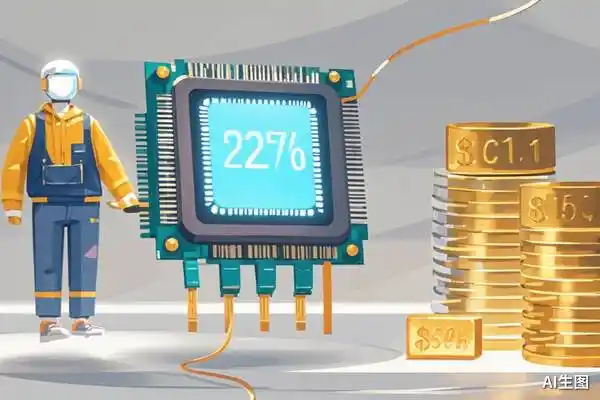
Power Protocol is built on the belief that strong consumer products come first. Its flagship mobile game, Fableborne, demonstrates this through meticulous execution, deep engagement, and proven monetization. Currently in its fourth season of public beta, Fableborne has attracted over 380,000 players, reached 108,000 peak daily active users, and generated $1.1 million in revenue. The current season has shown exceptional virality, attracting over 38 participating guilds and building a Guilds Prize Pool totaling 614,394 $POWER.

Built on this foundation, Power Protocol rethinks how consumer apps grow with Web3. It acts as a high-intent distribution layer that allows applications to turn engagement into rewards, reputation, and social competition, creating compounding loops that increase installs and strengthens retention. Critically, it grows user wealth, converting non-spenders into spenders at scale.

Power Protocol: A High-Intent Distribution Layer for Consumer Apps

Power Protocol is a consumer-focused distribution and engagement layer designed to help applications grow through user behaviour rather than surface-level engagement. It enables teams to focus on growth by plugging into systems around rewards, social dynamics, and reputation that drive participation, spending, and organic growth, while abstracting blockchain complexity away from end users.

The Power ecosystem is designed so that activity at the application level ultimately converges on $POWER. Applications generate engagement, engagement drives participation and spending, and value flows back into the token through usage, incentives, and ecosystem mechanics.

This system is supported by Power Labs, which provides technical and strategic support to select builders. From flagship games to emerging studios, global IP, and AI-native consumer products, each new application reinforces user demand, engagement, and value creation across the network.

Three-Layer Ecosystem: Applications, Distribution, and Expansion

Power Protocol operates as a vertically integrated consumer ecosystem built around applications, incentives, and expansion.

First, as a gaming token, $POWER provides immediate D1 utility in Fableborne and will expand to other first- and third-party games. Fableborne, a mobile action-strategy game developed by Pixion Games, serves as the ecosystem’s first application and provides real-world validation for the protocol layer.

Second, as an infrastructure token, $POWER powers the entire Power Protocol. The protocol addresses core challenges for developers and IP holders: from managing live economies and creating sticky live operations to integrating fiat users and capturing on-chain value. Through Fableborne’s real-world testing, Power Protocol delivers a verified infrastructure for games, studios, and brands in Web2 and Web3.

Third, as an incubation token, $POWER becomes the unit of value for Power Labs, a selective incubator providing funding, guidance, and acceleration support to world-class teams in gaming, AI, and blockchain. Each project either denominates in $POWER or recycles value back to the ecosystem through buybacks or token swaps, creating continuous new sources of demand independent of any single game’s performance.

$POWER Token: A Cross-Ecosystem Value Capture Engine

$POWER is designed as a systemic value-capture token across the entire Power ecosystem. Unlike tokens tied to a single game or product, $POWER accumulates demand from multiple sources: players, studios, brands, intellectual properties, and partners. Every transaction, integration, and launch compounds value back into the token economy through buybacks, burns, staking, and treasury growth.

This value accumulation operates through an expansion loop: Fableborne validates the technology and monetization, the protocol SDK/API extends the system to external studios, and Power Labs continuously incubates new products. In each cycle, fiat and token flows are converted back into $POWER through buybacks and burns; the more integrations there are, the greater the demand for $POWER.

Holders can stake $POWER tokens for seasonal rewards. The first staking integration is via the Fableborne Kingdoms NFT collection, which allows users to merge, stake, and earn $POWER, bringing a gamified experience to traditional staking. 4% of the total supply is allocated for Kingdom staking rewards.

Tokenomics: Balancing Growth, Liquidity, and Long-Term Sustainability

$POWER’s tokenomics are designed to ensure the ecosystem’s health and long-term value. The total supply is 1,000,000,000 $POWER, deployed across Ethereum, BSC, and Ronin chains. The token allocation strategy reflects emphasis on community, ecosystem growth, and long-term builders:

  • Community Rewards & Emissions: 37.2%
  • Ecosystem Fund: 28%
  • Investors: 16.15%
  • Team: 9.23%
  • Liquidity: 5%
  • Advisors: 4.42%

The release schedule is carefully designed to ensure long-term consistency: 13.2% of community rewards unlock at TGE and are distributed over 48 months; advisors, team, and investors have 0% unlock at TGE, followed by 4–12 month cliffs and 6–36 month vesting periods; liquidity is available at TGE at 5%; the ecosystem fund unlocks 2.8% at TGE and gradually over 36 months. This structure ensures sufficient liquidity while protecting token value through long-term locks, incentivizing builders and community members to focus on the ecosystem’s sustained success.

Currently, $Power is successfully listed on Binance Alpha, LBank, providing convenient access for users worldwide. Backed by leading investors with deep expertise in gaming and blockchain, $POWER is accelerating the development of a unified consumer ecosystem powered by Web3.

In the next phase of consumer applications, sustainability will not be defined by issuing tokens or deploying platforms, but by shaping user behaviour at scale. Power Protocol focuses on what matters most: turning attention into engagement, engagement into spending, and spending into long-term value.

With real user validation, scalable technology, a unified economic model, multi-chain deployment, and listings across multiple leading exchanges, Power Protocol has the potential to become a foundational infrastructure layer. Its ecosystem continues to accelerate, and the $POWER value-capture mechanism compounds with every growth cycle.

  • Website: https://powerprotocol.xyz/en
  • X: https://x.com/PowerPrtcl

Disclaimer: TheNewsCrypto does not endorse any content on this page. The content depicted in this Press Release does not represent any investment advice. TheNewsCrypto recommends our readers to make decisions based on their own research. TheNewsCrypto is not accountable for any damage or loss related to content, products, or services stated in this Press Release.

TagsPower ProtocolPress Release

Criptos en tendencia

Lecturas Relacionadas

The Biggest AI Black Hole: After Anthropic's Annual Revenue Hits $1 Trillion, Compute Power Prices Soar 10x

The article explores the potential for a dramatic surge in compute prices driven by the AI industry's explosive growth. It highlights a provocative prediction by tech podcaster Dwarkesh Patel: if AI labs like Anthropic continue their rapid revenue growth (projected to reach $1 trillion annually) while compute supply only expands at about 3x per year, the price of computing power could skyrocket by 10x or more. The core argument is a paradigm shift: GPUs are transitioning from mere hardware tools to carriers of "digital labor." If a single H100 GPU can host an AI agent capable of replacing a top-tier software engineer (with a Silicon Valley salary of $250k), its economic value should be recalibrated accordingly. Currently, the annual rental cost of an H100 is around $16k, creating a massive 15x valuation gap—a "labor arbitrage black hole." This imbalance stems from a critical mismatch: AI capabilities and commercial revenue are growing faster than the physical infrastructure (chips, data centers) can be built. With compute supply constrained by physical limits like chip manufacturing capacity, and demand soaring, prices are pressured upward. The piece further argues that expensive compute incentivizes using the most capable (and expensive) AI models, as cheaper, less efficient models waste more costly compute time—a phenomenon linked to the Alchian-Allen effect. Counterarguments are noted, suggesting AI's value may be capped in physical-world applications and that history often disproves predictions of resource scarcity. However, the response is that compute supply lacks the elasticity of traditional commodities. The conclusion is that before compute potentially becomes cheap and abundant, the industry may face an intense period of compute inflation and an arms race for this strategic resource.

marsbitHace 26 min(s)

The Biggest AI Black Hole: After Anthropic's Annual Revenue Hits $1 Trillion, Compute Power Prices Soar 10x

marsbitHace 26 min(s)

China's 'Bio DeepSeek' Emerges: 4 Oxford Prodigies Let AI Take Over Life Science

China's 'Biology DeepSeek' Emerges: Four Oxford Alumni Aim to Let AI Take Over Life Sciences Following DeepSeek-V4-Flash's global impact, a Chinese counterpart for life sciences has arrived. Jindu Bio, founded by four Oxford University alumni, has developed GeneLLM, a multi-omics large language model. Published in top journals *Nature Communications* and *Advanced Science*, GeneLLM is the first model pre-trained directly on raw omics data, aiming to understand the "language" and "system" of life. GeneLLM treats the four RNA bases (A, U, G, C) as fundamental tokens, learning from raw sequencing data without relying on pre-defined annotations. It uses a Transformer architecture to predict the next base, processing trillions of RNA reads. With versions ranging from 1.5 billion to 30 billion parameters, it achieves high accuracy in disease prediction with significantly lower-cost, shallow-depth sequencing, making precision medicine more accessible. Beyond the model, Jindu Bio is building BioFord Harness, an infrastructure to connect AI with physical labs. This system translates scientific intent into executable commands for various lab equipment, manages scheduling, and creates a data feedback loop. Its platform features five collaborative AI agents for literature review, experimental design, scientific reasoning, lab scheduling, and data analysis, drastically speeding up research cycles. Crucially, it turns all experimental data—including failures—into valuable learning material. The founding team combines expertise in bioengineering, AI, computational biology, and business. After initial challenges in securing funding, the company completed four financing rounds in 2023 following China's national push for "AI+" initiatives, supported by prominent investors like Sequoia Capital China and Gaotegaj Investment. In the broader AI for BioScience landscape, Jindu carves a unique niche. Unlike digital-only AI scientists or capital-intensive fully automated labs, it focuses on the "last mile" of infrastructure—orchestrating the entire research workflow by bridging AI models with existing laboratory hardware. Its long-term vision is to build an intelligent operating system for life sciences, defining a new, scalable paradigm for scientific discovery.

marsbitHace 26 min(s)

China's 'Bio DeepSeek' Emerges: 4 Oxford Prodigies Let AI Take Over Life Science

marsbitHace 26 min(s)

NVIDIA Has Moved the Mountain

**Title: NVIDIA Moves the Mountain** This article analyzes a dramatic two-day reversal in the AI and semiconductor stock markets, driven by a key announcement from NVIDIA. On Monday, August 3rd, Asian markets fell sharply, led by a crash in South Korean leveraged ETFs and panic selling in semiconductors. This spilled over to China's A-share market, where major indices dropped and semiconductor stocks like GigaDevice were hammered despite buyback announcements. The outlook for optical modules (a key AI infrastructure component) appeared bleak, weighed down by rumors of delays in CPO (Co-Packaged Optics) technology adoption. The turnaround came from the U.S. market later that same day. NVIDIA announced its Vera Rubin platform and, crucially, its senior VP declared that CPO technology had entered mass production and would be widely deployed in AI factories in the second half of the year. This directly countered the "CPO delay" narrative. Positive capex data from U.S. cloud giants added to the bullish sentiment. On Tuesday, August 4th, A-shares surged, particularly the ChiNext and STAR boards. The market saw heavy volume with over 2.2 trillion yuan in turnover. Optical module and CPO concept stocks skyrocketed, with leaders like Zhongji Innolight soaring over 13%. The rally was concentrated in growth sectors like tech and communications, while traditional "old economy" stocks like Kweichow Moutai declined. The article also notes other key developments: * A strong earnings report and raised guidance from WuXi AppTec sparked a rally in the CXO (pharma outsourcing) sector. * Mixed signals from the Middle East regarding the Strait of Hormuz. * New Chinese policies supporting the semiconductor industry and Hong Kong-China market cooperation. * Significant inflows into equity ETFs in July, suggesting institutional buying. The piece concludes by highlighting upcoming catalysts: AMD and SpaceX earnings, the potential reopening of the Strait of Hormuz, and NVIDIA's upcoming financial report later in August, which will be the next major test for the AI investment theme.

marsbitHace 31 min(s)

NVIDIA Has Moved the Mountain

marsbitHace 31 min(s)

Trading

Spot

Artículos destacados

Cómo comprar T

¡Bienvenido a HTX.com! Hemos hecho que comprar Threshold Network Token (T) sea simple y conveniente. Sigue nuestra guía paso a paso para iniciar tu viaje de criptos.Paso 1: crea tu cuenta HTXUtiliza tu correo electrónico o número de teléfono para registrarte y obtener una cuenta gratuita en HTX. Experimenta un proceso de registro sin complicaciones y desbloquea todas las funciones.Obtener mi cuentaPaso 2: ve a Comprar cripto y elige tu método de pagoTarjeta de crédito/débito: usa tu Visa o Mastercard para comprar Threshold Network Token (T) al instante.Saldo: utiliza fondos del saldo de tu cuenta HTX para tradear sin problemas.Terceros: hemos agregado métodos de pago populares como Google Pay y Apple Pay para mejorar la comodidad.P2P: tradear directamente con otros usuarios en HTX.Over-the-Counter (OTC): ofrecemos servicios personalizados y tipos de cambio competitivos para los traders.Paso 3: guarda tu Threshold Network Token (T)Después de comprar tu Threshold Network Token (T), guárdalo en tu cuenta HTX. Alternativamente, puedes enviarlo a otro lugar mediante transferencia blockchain o utilizarlo para tradear otras criptomonedas.Paso 4: tradear Threshold Network Token (T)Tradear fácilmente con Threshold Network Token (T) en HTX's mercado spot. Simplemente accede a tu cuenta, selecciona tu par de trading, ejecuta tus trades y monitorea en tiempo real. Ofrecemos una experiencia fácil de usar tanto para principiantes como para traders experimentados.

756 Vistas totalesPublicado en 2024.12.10Actualizado en 2026.06.02

Cómo comprar T

Discusiones

Bienvenido a la comunidad de HTX. Aquí puedes mantenerte informado sobre los últimos desarrollos de la plataforma y acceder a análisis profesionales del mercado. A continuación se presentan las opiniones de los usuarios sobre el precio de T (T).

活动图片