Podcast: Bits and Bips
Release Date: February 11
Hosts/Guests:
-
Ram Ahluwalia: Lumida CEO & Founder, CFA
-
Austin Campbell: NYU Stern Professor, Zero Knowledge Consulting Founder
-
Christopher Perkins: CoinFund President & Managing Partner
-
Nic Carter: Castle Island Ventures Founding Partner
Podcast Summary: BitpushNews

Foreword: In early February, Bitcoin plunged sharply, falling in sync with high-beta assets like gold, silver, and US stocks. This podcast starts from this cross-asset pullback, delving into market structure, institutionalization, and the governance challenges posed by quantum risks. It also confronts the credibility drain following the "2025 junk token wave": crypto might be shifting from a narrative-driven betting field to something more like real-world financial infrastructure.
Nic Carter pointed out in the program that many of Bitcoin's foundational narratives have gradually weakened over time, and institutional concerns, even if premature, have already slowed Bitcoin's adoption rate. Beyond Bitcoin, he also believes the era of venture capital-driven, flashy tokens is largely over, predicting that the future of cryptocurrency lies in more durable, cash-flow-generating businesses rather than speculative token offerings.
Below is a summary of the podcast content:
Market Plunge: Global De-risking or Crypto-Specific Pressure?
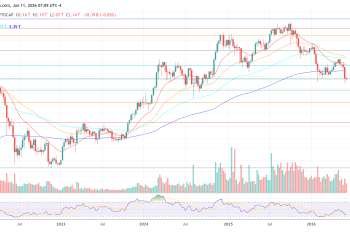
During the sell-off on February 5th, Bitcoin briefly fell towards $60,000, one of the worst cross-asset pullbacks in recent years. Gold, silver, and some stocks also fell. Was it global de-risking, or an internal crypto problem? Market rumors suggest the issue might be related to IBIT (Bitcoin ETF) – for instance, a large IBIT holder blowing up in the options market. Some say a Hong Kong fund blew up; others refute this, saying they haven't seen abnormal IBIT redemptions or signs of the "opaque, uncollateralized lending" leverage seen in past cycles. What's your take?
Rahm: This is more like a unified deleveraging of "high-beta assets," liquidations will surface gradually
Ram Ahluwalia: I tend to think it's over-leveraged funds being forced to liquidate during the decline. Twitter also mentioned Trend Research's Ethereum being liquidated. We discussed months ago: bottoms often coincide with "bodies floating to the surface." You're starting to see signs of that now, and more names might be exposed later.
Also, this wasn't an isolated crypto crash; high-beta assets fell together. That day also saw a pullback in US "Mag 7" stocks, like Microsoft's post-earnings plunge – this looks more like a cross-market risk-off event.
Chris: There might not be a "single perfect culprit," derivatives and margin mechanisms amplify volatility
Christopher Perkins: We might not fully understand the "10/11" crash yet, let alone "2/5." Many things take time to become clear. But what I know is: the market is very nervous now, some market makers liquidate more quickly and decisively when margin is insufficient, this "fast liquidation" atmosphere fuels a downward spiral.
Also, institutional money watches basis trades (arbitrage when futures price is higher than spot, allowing for directionally neutral arbitrage). The entry and exit of basis trades also cause price fluctuations, especially when everyone unwinds arbitrage positions simultaneously, creating downward pressure.
Overall, I think: the market will continue to experience some "violent volatility," but it also seems to be gradually "finding a bottom," slowly rebuilding.
Nic: This wasn't a single catalyst
Nic Carter: I'm not sure there will be a "satisfying single catalyst" to explain this sell-off. We were "spoiled" in 2022 – there were many clear blow-up points to point to and say: that caused it.
But often, market structure becomes inherently unstable at some point, a very small trigger can ignite a chain reaction, so it might not require "some big fund blowing up" to explain a decline.
Will BlackRock Step In to 'Save' Bitcoin from the Quantum Threat?
What are your thoughts on the "quantum skeptics" within the Bitcoin community? How does this affect the willingness of capital to enter?
Nic: The key分歧 (disagreement) is on the "timeline," the worst-case outcome is "centralization"
I think the controversy isn't about whether quantum 'exists', but about the timeline. I worry many people mistakenly assume: when quantum becomes truly dangerous, we'll have a long warning period. I don't see it that way.
The key is: completing a quantum-resistant migration for Bitcoin could take nearly a decade. This isn't a question of 'whether the threat arrives tomorrow', but if you don't start preparing now, by the time you confirm it's 'close enough', it might be too late.
I understand the developers' caution: they don't want to make major changes to Bitcoin for a risk they aren't fully convinced of, because the changes themselves introduce new risks. But I don't think this issue is being taken as seriously as it should be. And I don't think betting the future on 'technology progress slowing down' is reasonable. AI is accelerating engineering and discovery, quantum computing is a physics and engineering problem, AI will push it. Capital is also pouring into quantum – this isn't something to be downplayed.
Even if you personally think quantum is far off, institutions will treat it as a real problem. It will enter every investment committee: 'What about quantum?' This will directly slow institutional adoption.
There are two ways to respond: either actually solve it – e.g., introduce post-quantum signatures (could be gradual, optional); or at least address the 'perception problem' – provide a clear roadmap, milestones, and triggers, let the outside world know you're managing it.
But what we see too much of now is: people raising the risk are called FUD. This doesn't reassure institutions.
If developers continue to do basically nothing, I fear one thing will eventually happen: institutions like BlackRock, which carry huge client assets through the ETF, will be forced to act. You are a fiduciary, the problem is left unaddressed long-term, you have no choice.
So I believe, if not resolved voluntarily, it might ultimately lead to a kind of corporate takeover: institutions will 'fire' the current developers and bring in new development forces to push the upgrade. Then Bitcoin would become more like a more centralized chain – that's the governance outcome I fear most.
Chris: Institutional investment committees do ask about quantum risk, it acts like a "throttle/brake" on adoption speed
I'm more optimistic: because the issue is being raised by people like Nic, at least "the risk is identified."
It won't stop adoption immediately now, but it will slow it down. For example, this conversation will appear in every institutional investment committee: "We want to invest in Bitcoin – wait, what about quantum?" This will slow down the process.
I also think quantum shouldn't be viewed in isolation: three major technologies are accelerating together now – crypto, AI, quantum. AI will accelerate quantum R&D, and also accelerate our defensive capabilities. So our ability to respond is also improving.
Nic: Pinning hopes on technology slowing down is wrong, quantum breakthrough might be only 2~3 orders of magnitude away
I agree AI will accelerate quantum, because quantum is essentially physics and engineering, and AI is very good at those.
I oppose the idea of "betting the future on technology not progressing that fast." Look at AI, it crossed multiple orders of magnitude in less than a decade. The gap from "state-of-the-art" quantum to "sufficient to threaten Bitcoin's elliptic curve" might only require 2 to 3 orders of magnitude, not 6 or 7.
And capital is pouring into quantum. 2025 seems to be the biggest year for quantum funding, with private placements injecting roughly ten-billion-level funds, plus national-level inputs from China etc. If the Bitcoin circle continues to deny it, it worries me.
Rahm: Direction is not timing, many hard techs are "right early, but early is wrong"
I'm skeptical from a "time" perspective: being right on direction doesn't mean it happens short-term. The human genome project, nuclear fusion, etc., all prove: breakthroughs can take a very long time. The "real impact" of quantum on markets might not happen that quickly.
But I also agree with a trading reality: your opinion doesn't matter, the investment committee's opinion does. If institutions slow down due to quantum concerns, then Bitcoin must address those concerns to expand adoption.
Institutionalization Narrative, Reflection on the "Junk Issuance Wave"
Speaking of the "institutionalization" narrative. I see in the 13F filings that the largest IBIT holdings are mostly from hedge funds (like Millennium, Jane Street, etc.), and many are underwater. Traditional institutions typically don't like "averaging down on losing positions." This suggests the so-called "institutional demand" is actually limited. It's more like wealth management channels (RIA) selling the product to end clients, rather than large-scale proprietary allocation by institutions. This also makes the price more fragile – this cycle is different from previous ones.
Chris: This also leads to a point: currently many people view "the entire crypto asset class" as a monolith: Bitcoin = crypto. Quantum risk will also be understood holistically, dragging down other projects. Hopefully, the market will mature in the future, differentiating chains and applications based on "fundamentals/cash flow/governance capability."
Nic: Precisely because of this, if Bitcoin's upgrade coordination is difficult, it might be forced into a more "corporate" path: large institutions have custodial responsibilities and governance preferences, if they deem the problem must be solved, they might ultimately push for a "de facto governance takeover."
Q: You all mentioned "the mood is gloomy." What's the reason? Is it because the 2025 token offerings were too poor quality?
Nic: Yes. Many 2025 token offerings "plummeted badly, and were very crappy." People should be angry about the misalignment of crypto VCs and entrepreneurs, just wanting to quickly issue tokens and cash out.
The real civilization-level innovations are:
-
Decentralized Exchanges (DEX)
-
DeFi Lending: Conducting 'banking business' without banks, without counterparties
But many policy discussions (he mentioned certain bills) don't focus on these core achievements, yet market attention is hijacked by "flipping tokens for arbitrage."
Austin: This is like the "extraction-securitization-re-extraction" cycle in many industries: when the incentive structure encourages short-term extraction, market sentiment sours. Relatively speaking, stablecoins/payments/on-chain financial infrastructure are more exciting because real business is happening there.
Chris: There are indeed "high-achieving students making money" and "idling underachievers." If you look at projects using "fundamentals," you can still see very strong innovation in stablecoins, RWA, on-chain equity, etc.
HYPE / Hyperliquid, Why are Derivatives Key?
Community argument: Kyle Samani criticized Hyperliquid (and HYPE) as "everything wrong with crypto," but his former institution bought a lot of HYPE. What's your view?
Chris: If Solana wants to be the "decentralized NASDAQ," it must solve derivatives
I respect Kyle greatly. The Solana ecosystem is also excellent, its vision is like a "decentralized NASDAQ," designed for high-frequency trading, low latency. But if you want to be "NASDAQ," you must solve derivatives. In traditional markets, "derivatives eat spot," profits and liquidity are stronger.
Hyperliquid's sudden rise and dominance in derivatives is a strategic dilemma for Solana. Solana can make progress in directions like DePIN, on-chain capital markets, but it must catch up on the derivatives piece, otherwise the ecosystem narrative will be challenged.
Regarding Hyperliquid: It's not perfect, mechanisms like ADL (Auto-Deleveraging) need improvement, but it innovates and executes quickly.
Nic: Kyle's "exit posture" is very symbolic – "that old style of token VC play" is ending
Kyle is my friend, I don't want to be too harsh. But his public actions (redeeming/leaving/then publicly talking down related positions) are very "dated." From an industry history perspective, this event is very emblematic. Kyle is important because he is typical: highly focused on liquidity, strong convictions, pays little heed to criticism, deeply involved in the "token game." But now – this "way of working" might no longer exist.
I think: The VC-driven, flashy, launch-an-L1-token model, in its current form, is basically over. There will be tokens in the future, but "that era" is past. What remains is the more boring, more traditional financial infrastructure-like part, and that part can actually create cash flow and long-term value.
Austin: I agree many tokens will die. Those that survive will often either have real cash flow or can be professionally traded and valued like mature markets – this will make "crypto" increasingly resemble "the market itself," rather than a unique narrative bubble.
Japanese Election & Global Risk Assets, AI Bubble
One last macro topic: Japanese election, Japanese market rising, 10-year JGB yield near historical highs. What spillover effects does it have on global risk assets?
Rahm: I'm generally bullish on Japan. The Japanese market performed very well last year, Japanese financial stocks are also strong. The bigger theme is: crowded US tech/high-beta assets are being "knocked," capital is spilling over into international markets and value assets. You should watch regions like Japan, Korea, South Africa, South America that are "relatively outperforming."
Rahm: I want to bring the topic to AI: Do you trust Sam Altman? Is OpenAI's valuation real? What about CoreWeave?
Nic: AI is a mega-trend, but model companies are "capital incinerators," private valuations are disconnected from public markets
My trust in Sam is limited, but I'm very optimistic about the AI trend.
The key is: AI capability growth exhibits "super-exponential" characteristics. An important metric is: how much human-equivalent labor (at 50% success rate) can a top model stably complete. This number is jumping rapidly, enough to justify the huge Capex investments. But I still think: OpenAI-type model companies are scary. Competition between models is like a "hot potato," you're strong today, he's strong tomorrow, easily destroying value. Private valuations look like "kind of funny money."
Austin: Could "accounts receivable" from data center companies create bad debt risk?
Model companies have signed massive compute contracts (RPO/performance obligations), but can revenue and cash flow cover them? These contracts might appear as assets/receivables on data center companies' books; if model companies have problems, could they become bad debt? How to view CoreWeave?
Nic: I prefer holding companies in the "AI infrastructure layer": above hardware (NVIDIA) are data centers/compute supply. Model companies are too easily replaced, defeated by user preference changes. Data center companies are relatively more "hedged": even if OpenAI has problems, Anthropic, Google, Grok, etc., might take over capacity. They are closer to an "indexed bet on AI" position than model companies.
Twitter:https://twitter.com/BitpushNewsCN
Bitpush TG Discussion Group:https://t.me/BitPushCommunity
Bitpush TG Subscription: https://t.me/bitpush