OpenClaw Endorses Venice.ai, VVV Token Surges Over 500% in One Month

Odaily星球日报Publicado a 2026-03-04Actualizado a 2026-03-04

Resumen

OpenClaw, an open-source self-hosted AI agent platform, has listed Venice.ai—a privacy-focused, uncensored generative AI platform—as a recommended model provider. This endorsement comes shortly after OpenClaw’s founder publicly discouraged young people from engaging with cryptocurrency, creating a notable contrast. Venice.ai, founded by crypto OG Erik Voorhees, positions itself as a decentralized alternative to ChatGPT. It emphasizes user privacy by not storing any data on its servers; all content remains encrypted on the user’s local device. The platform offers two privacy modes: Private (using open-source models on decentralized GPUs) and Anonymized (removing user metadata from prompts). The project features a dual-token economy: - VVV: A capital asset used for staking (currently ~19% APY) and minting DIEM. - DIEM: Represents perpetual AI compute credit. 1 DIEM = $1 daily API credit, usable across Venice’s models. This structure allows high-frequency users to access AI services at a lower marginal cost over time. VVV’s price surged over 500% in a month, rising from ~$1.5 to ~$8.4. This growth is attributed to both supply constraints—including a permanent burn of unclaimed airdropped tokens and reduced annual emissions—and rising demand, especially after OpenClaw’s integration. With over 25,000 API users and a staking rate of 38.8% for VVV, Venice is positioning itself as a privacy-backend solution for the expanding AI agent ecosystem, blending crypto-economic incentives...

Original | Odaily Planet Daily (@OdailyChina)

Author | DingDang (@XiaMiPP)
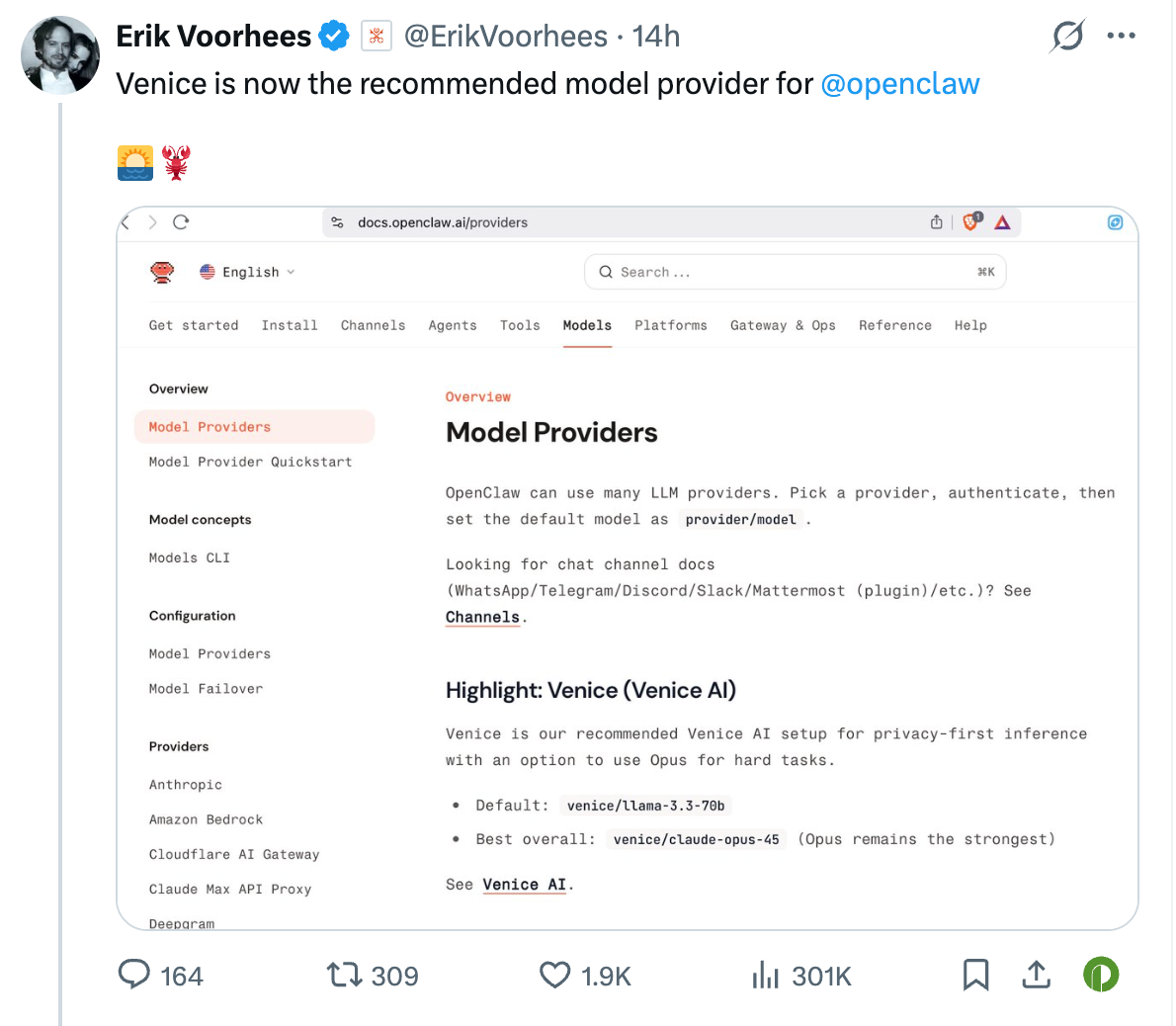
Last week, the statement from the founder of OpenClaw advising young people "not to waste time on cryptocurrency" stung the crypto industry. This week, however, the situation took a subtle turn. In the official OpenClaw documentation, an encrypted project with a native token, Venice.ai, was quietly listed as a recommended model provider. Over the past month, the price of Venice's native token VVV has also risen from a low of around $1.5 to a high of around $8.4, with a maximum increase of over 500%.

On one hand, there's discouragement; on the other, integration. Why did OpenClaw specifically push a project with an encrypted token economic structure to the forefront?
Venice's Origins: What Happens When a Crypto OG Does AI?

To understand Venice, one must first understand OpenClaw's positioning. It is an open-source, self-hosted AI agent platform that can integrate into chat software, becoming a user's 24/7 personal assistant, helping with tasks like sending and receiving emails and managing calendars. However, OpenClaw itself does not provide AI large language model (LLM) capabilities; it is merely an "execution and routing layer." The actual intelligence (thinking, planning, generating responses) must come from external model providers.

Venice is a generative AI platform focused on privacy and censorship resistance, positioning itself as a decentralized version of ChatGPT. The project launched in May 2024 but has not undergone any financing rounds, no VC funding, and was entirely personally funded and started by its founder, Erik Voorhees.

Erik Voorhees himself is a crypto old guard (OG), entering the crypto space in 2011. After the collapse of Mt. Gox in 2014, he founded ShapeShift, one of the first trading platforms to emphasize non-custodial and privacy-first principles. In 2021, he chose to transition ShapeShift to DAO governance, completing its decentralization. His career trajectory seems to revolve around "reducing reliance on trust in centralized structures."

Another core team member is Teana Baker-Taylor, with an impressive resume having held executive roles in operations and compliance at HSBC, Circle, Binance, and Crypto.com. Most other members are either anonymous or keep a low profile. According to current public data, the Venice team has approximately 20 members.

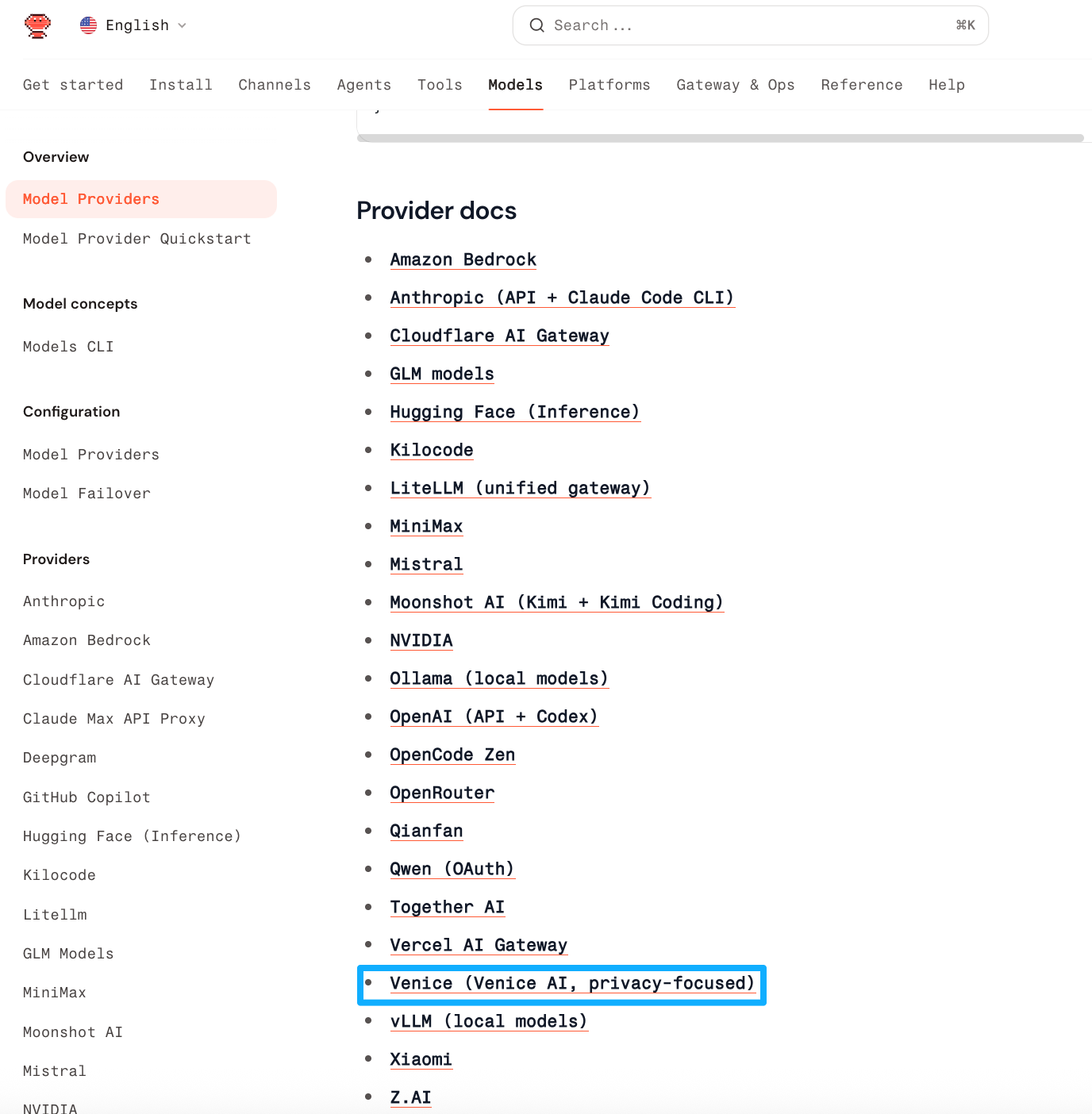
OpenClaw currently lists 22 model providers, including large tech companies like Amazon, Anthropic, and Cloudflare. In terms of size and brand, Venice is clearly not the most prominent one, and could even be considered the most inconspicuous. Yet, it was highlighted and recommended in the official documentation as a model provider with a native token economy. However, this might have been a merge operation error in the docs; the highlight has now been removed, but it had been on OpenClaw's list of model providers for some time.

Even so, why would OpenClaw choose a small, obscure company? The answer is simple: Privacy.

After all, alongside AI's great success, controversies surrounding data leaks and model training disputes continue to accumulate. Users are beginning to realize that the real risk is not whether the model is "smart," but whether data or information "will be leaked."
So, how exactly does Venice achieve its privacy? Its core philosophy is "You don’t have to protect what you do not have." Simply put, Venice does not store any user content—prompts, replies, generated images, uploaded documents—on any Venice servers at all. This data is only encrypted and saved locally in the user's own browser (or device). Once you clear your browser data or manually delete chat history, this content is permanently gone.

Venice also explicitly states that it does not use user data for model training, does not log, and does not analyze behavior. This stands in stark contrast to mainstream platforms (like OpenAI, Anthropic), which often store conversations long-term to improve models or for compliance reviews.

Furthermore, Venice distinguishes between two different levels of privacy modes: Private and Anonymized. The former is the highest privacy level, using open-source models that run on decentralized GPUs. During processing, no identity-related information is attached. The underlying compute nodes might briefly see the plaintext prompt, but Venice itself cannot see or access the user's history. The latter mode means the underlying provider can see the prompt content, but Venice strips all metadata (IP, account fingerprints, historical associations), making it impossible to trace back to the user.

So, although Venice isn't the most prominent name in the provider list, its privacy architecture made it the "privacy-first choice" specially highlighted in OpenClaw's documentation. Currently, OpenClaw's default model is Llama 3.3, but Erik himself suggested in a reply that users switch to the smarter GLM 4.6.

What does this mean for Venice itself?

OpenClaw is currently experiencing viral growth, with its call volume entering an exponential growth phase. With OpenClaw's official endorsement, it might pull Venice's inference capacity requirements to a new level. This means Venice is undergoing a qualitative change. It is no longer just "an AI project with a crypto background," but is attempting to become the default privacy backend for the mainstream open-source Agent ecosystem.

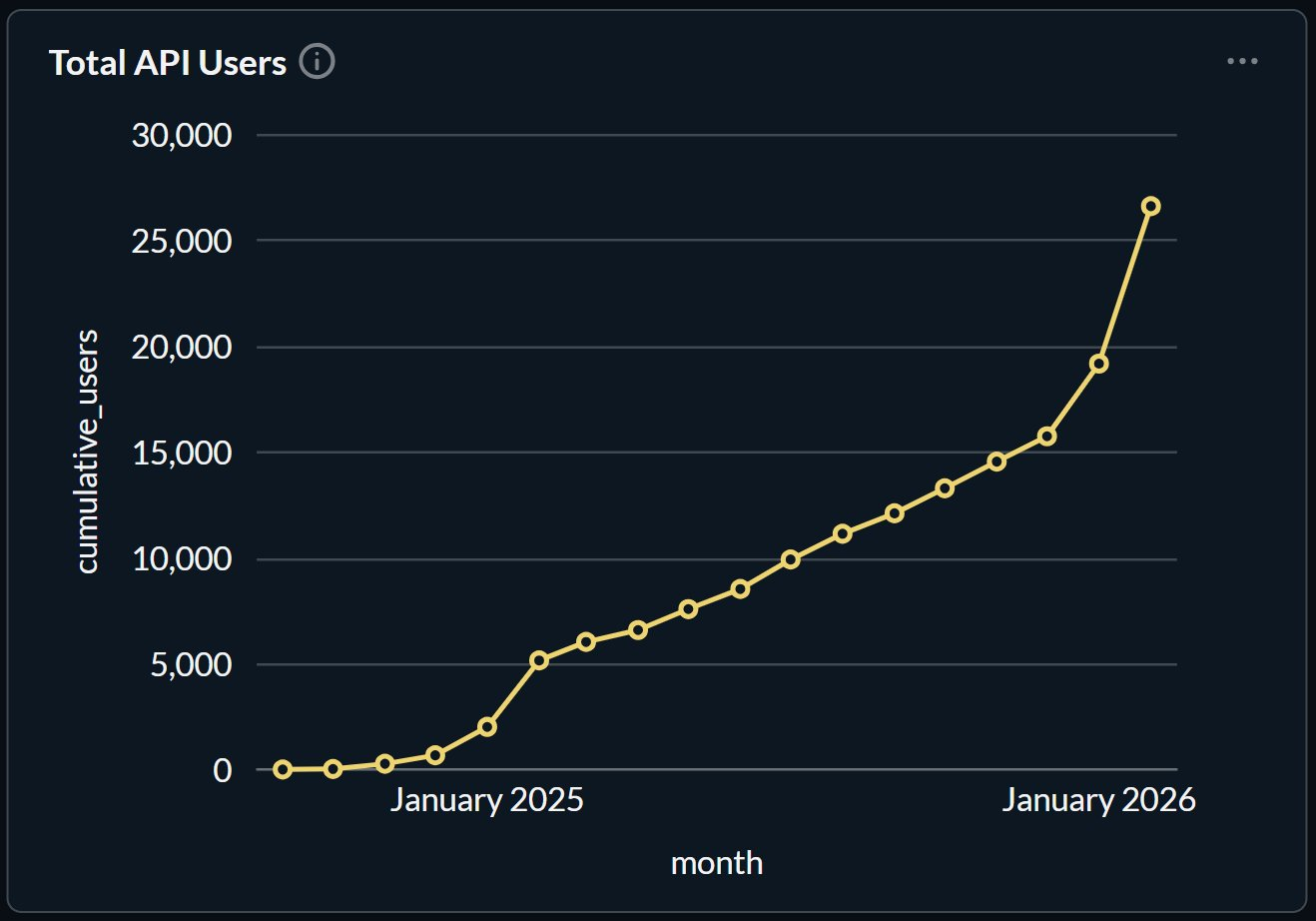
According to the latest data Erik released on March 1st, since the beginning of 2026, the number of API users on Venice has begun to grow rapidly, currently exceeding 25,000 users.
Token Model: One-Time Investment, Lifetime Compute Power

As a crypto project, can its token economy handle this level of traffic growth?

Within the Venice ecosystem, there are two core tokens: VVV and DIEM. They are tightly bound through a "one-way minting + reversible redemption" mechanism, forming a two-tier economic structure.

VVV is the capital asset of the entire ecosystem, which can be held directly or staked. Staking VVV yields continuous staking rewards, currently around 19% APY. Another key function of VVV is to mint DIEM, and it is the only way DIEM is generated.

After minting, DIEM can be traded on secondary markets, such as on DEXs like Aerodrome or Uniswap. Or it can be staked to activate spending credit. DIEM represents an ownable, perpetual AI computing asset. 1 DIEM = $1 per day of Venice API credit, used to call all of Venice's models (text generation, image/video generation, code, etc.), including the highest privacy, uncensored models in Private mode. This credit is permanently valid and automatically renewed daily during your staking period, effectively acting as a permanent AI subscription voucher.

The concept of $1 credit is abstract. Within the Venice ecosystem, it's not a fixed "number of tokens" but the ability to consume $1 worth of inference resources. The more expensive the model, the less content you generate; the cheaper the model, the more content you generate. This abstracted pricing makes DIEM a kind of "compute power share voucher." I asked Venice's AI to quantify what 1 DIEM credit can get me:
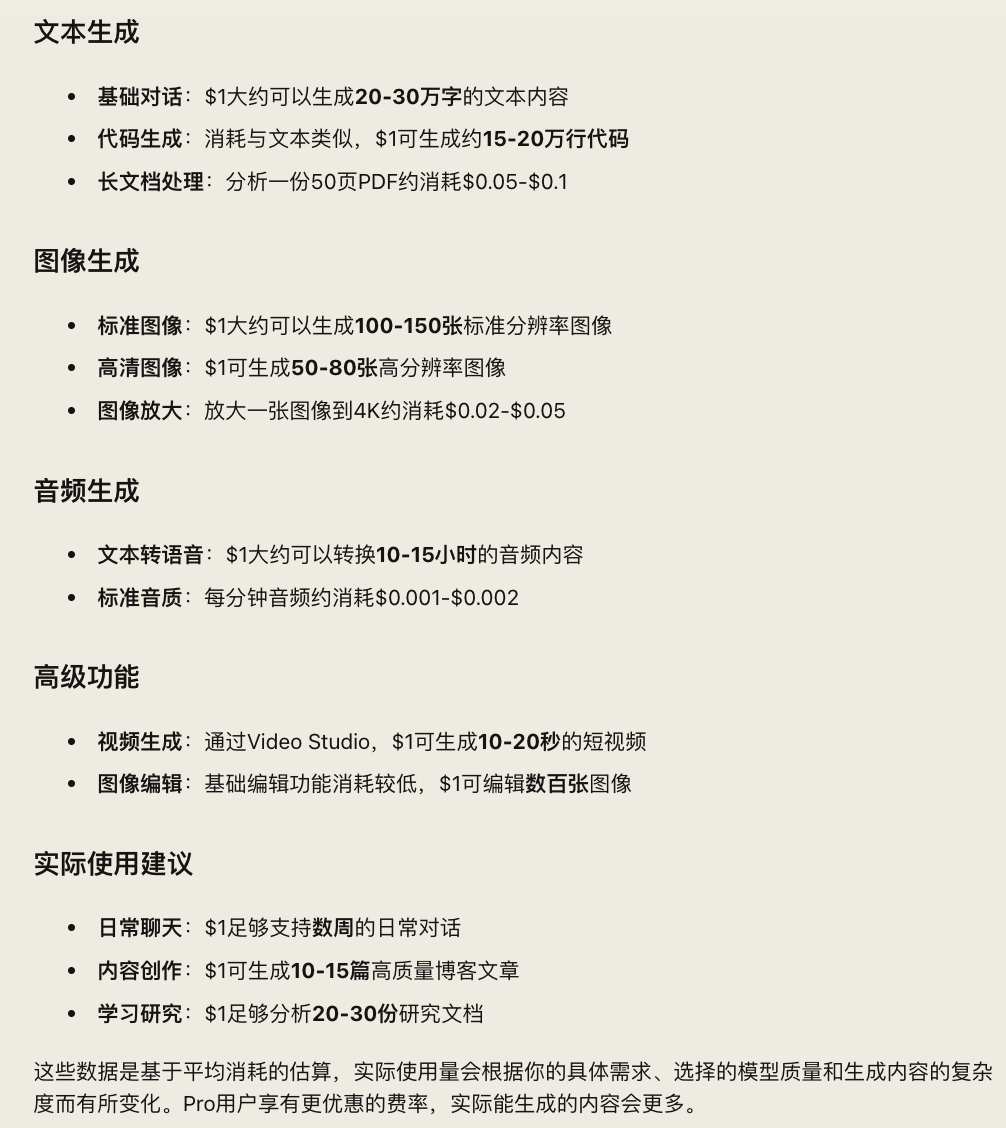
Because traditional AI APIs are pay-per-use, costs can explode exponentially for high-frequency, long-term, automated tasks (like an AI Agent making hundreds or thousands of calls per day). However, Venice, through DIEM, completely颠覆s this into a one-time investment for long-term fixed quotas. Currently, 1 DIEM is worth approximately $670. Once staked, it automatically grants $1 worth of API credit per day. To easily compare whether buying DIEM is more cost-effective than traditional pay-per-use, I used Grok to generate a rough table:
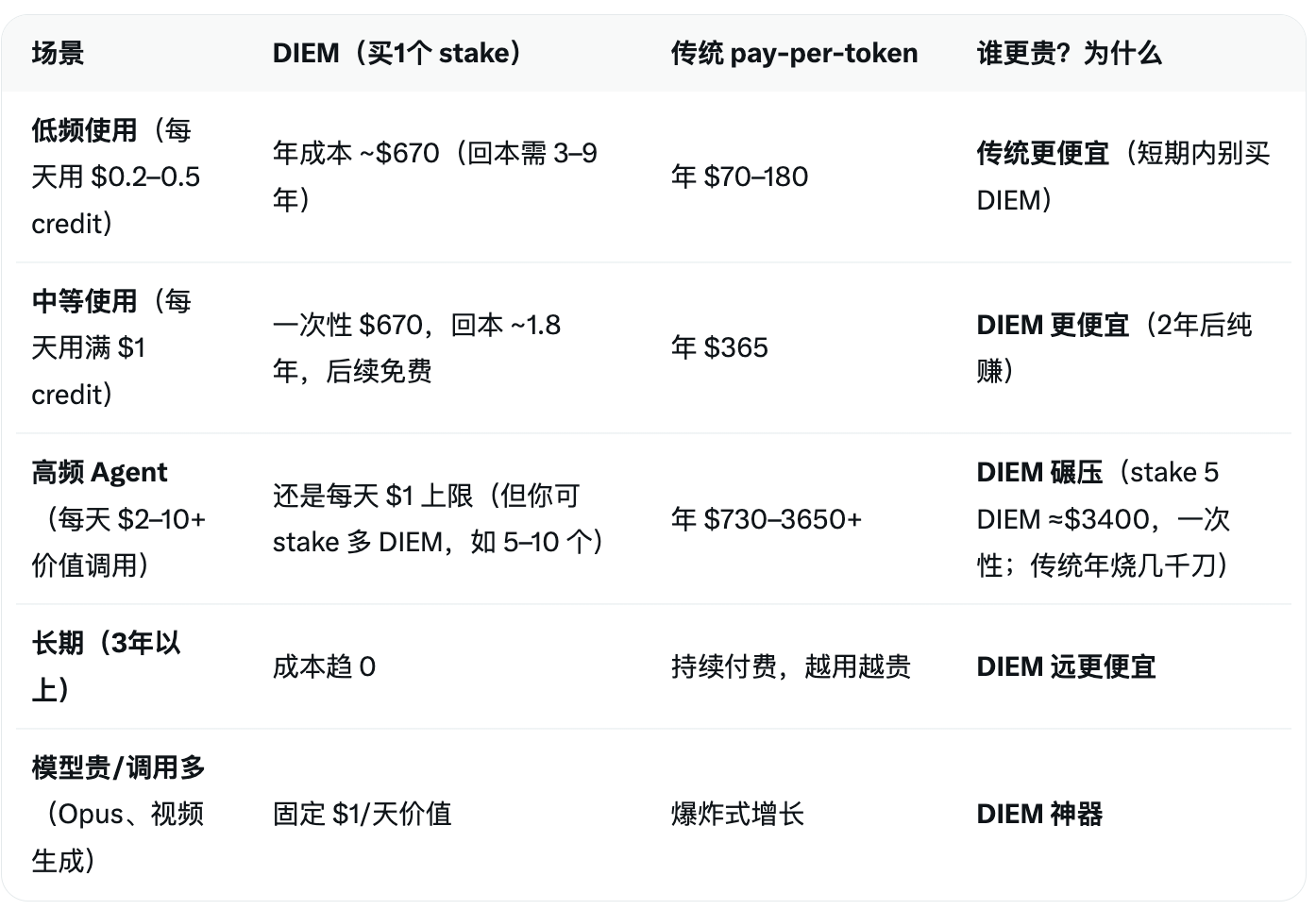
Based on the data above, for low-frequency users, there is no need to purchase DIEM at all. For medium to high-frequency users who need to run Agents daily and generate large amounts of content, the marginal cost decreases continuously with long-term use, giving DIEM a clear advantage.

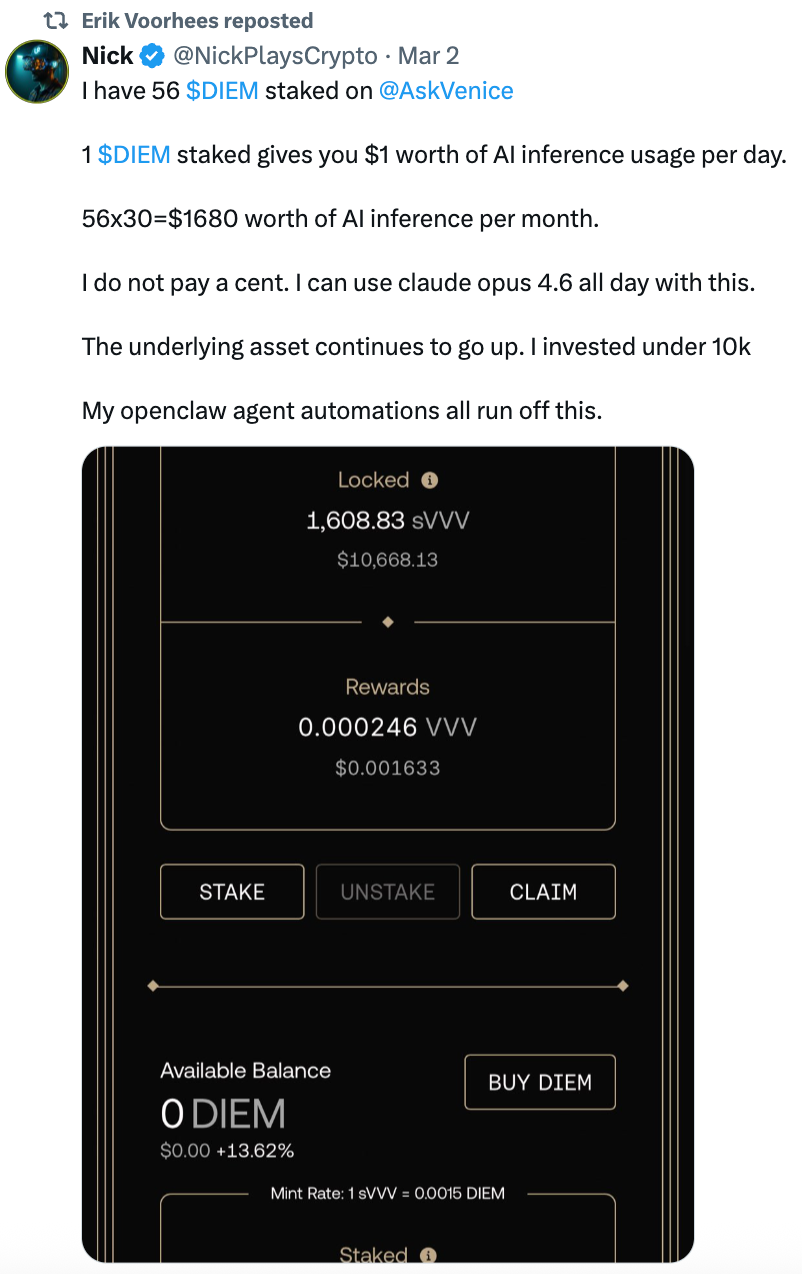
Some users have already come forward to share their experiences. One user stated that staking 56 DIEM allows them to use the Claude Opus 4.6 model all day, with the principal cost being less than $10,000.
Moreover, community users have already developed a credit rental market (cheaptokens.ai) where unused credit can be sold. An ecosystem market around Venice's compute power is萌芽ing.

Overall, the core of Venice's economic model lies in separating the "growth logic" from the "usage logic". VVV, as a pure growth asset, carries the platform's overall valuation narrative, directly benefiting from user growth, network effects, and ecosystem expansion—positive flywheel effects. DIEM, as a permanent subscription-based utility asset, truly serves product usage and value consumption, handling the consumption logic for daily interactions and task execution.

Based on current data performance, DIEM shows clear advantages in long-term, high-frequency, continuous task scenarios, highly aligned with the current Agent-driven intensive usage模式. This strong genuine demand can, in turn, effectively stimulate users' willingness to stake VVV, forming a positive closed loop from the usage end to the growth end.

Supply and Deflation: The Real Background of the Price Surge

According to data provided on the Venice website, the current total token supply is 78.84 million tokens. Of these, 7.89 million are locked, and the staked amount is 30.60 million, resulting in a staking rate of 38.8%. The circulating supply is only 44.34 million tokens. In the initial economic model, the total VVV token supply was 100 million, with 50% allocated for community airdrops, targeting early Venice users, AI project parties, etc. The airdrop claim window lasted about 45 days. Ultimately, over 40,000 people claimed 17.40 million VVV, accounting for about 35% of the community allocation. The remaining unclaimed portion was approximately 32.68 million tokens, worth about $100 million at the time. The team decided to permanently burn these to reduce circulating supply and enhance scarcity.
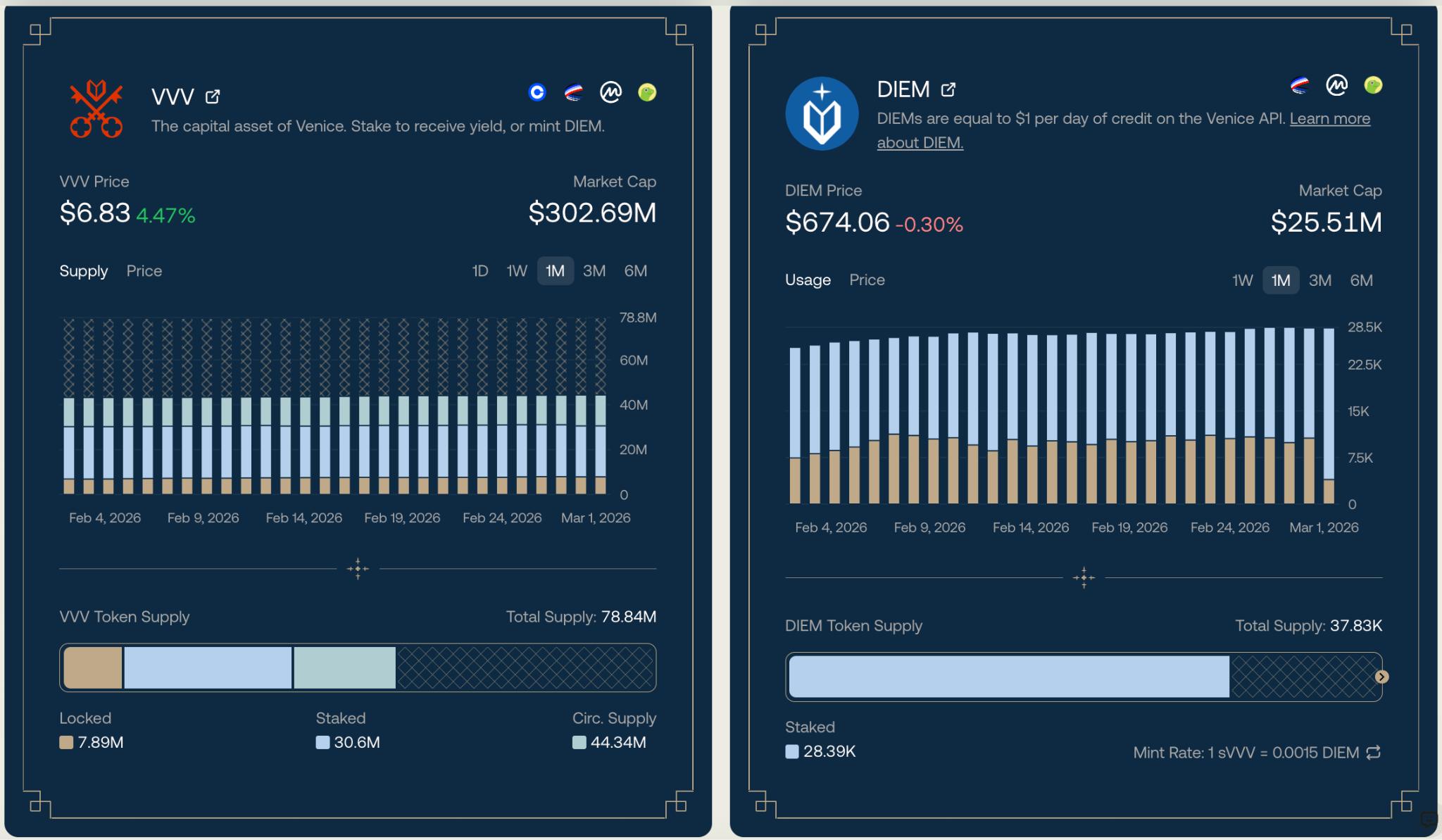
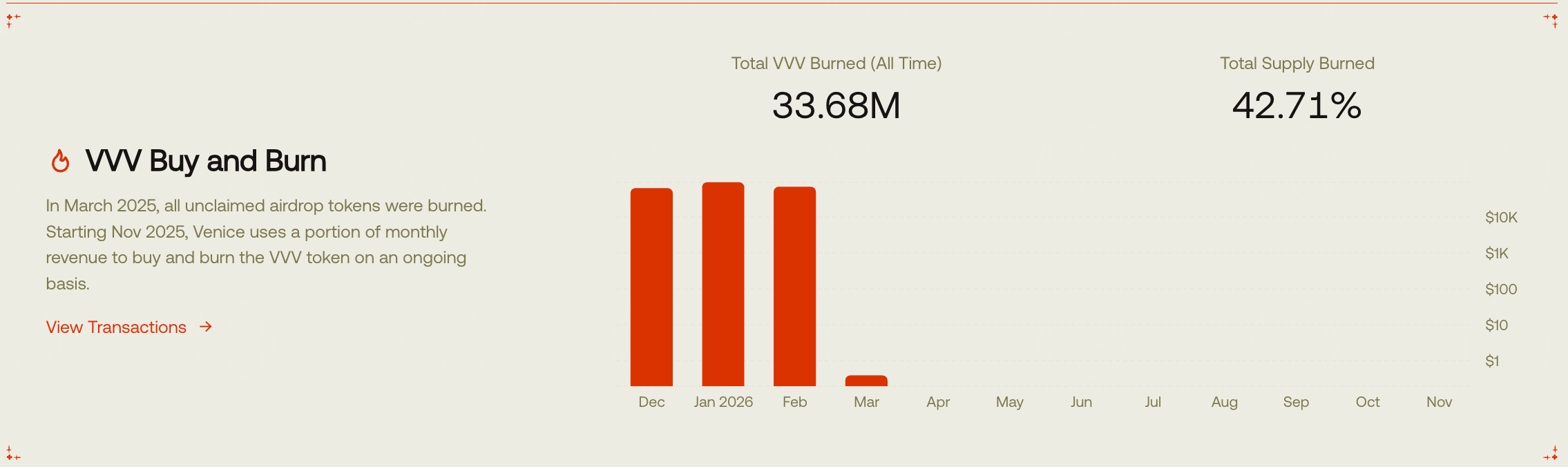
Starting in October 2025, Venice announced a reduction of the original emission plan from 10 million VVV/year to 8 million VVV/year. Simultaneously, it launched a monthly revenue buyback + burn mechanism. The current monthly burn capacity is 30,000 to 50,000 tokens, worth approximately $60,000 to $90,000. Currently, 42.71% of the token supply has been burned. Then, in early February 2026, the official announced another emission reduction plan, cutting from 8 million VVV/year to 6 million VVV/year. This series of adjustments directly changed the supply expectations. Looking at the token price performance, this was also the starting point for VVV's rise.

Therefore, the rise of VVV is not solely driven by narrative, but rather a combination of changed supply structure and growing demand.

Conclusion

As AI becomes the central narrative of the era, is Crypto really bowing out? Venice is trying to provide its own answer. If future intelligent agent systems require a privacy backend, if Agents need long-term stable compute structures, then perhaps the crypto logic hasn't disappeared after all.


Preguntas relacionadas

QWhat is the main reason OpenClaw highlighted Venice.ai in its official docs, despite Venice being a smaller provider?

AThe main reason is Venice.ai's strong focus on privacy. Its architecture ensures user data is not stored on its servers, aligning with OpenClaw's need for a privacy-first model provider.

QWho is the key founder of Venice.ai and what is his background?

AThe key founder is Erik Voorhees, a crypto OG who entered the industry in 2011. He is known for founding the non-custodial, privacy-focused exchange ShapeShift and later transitioning it to a DAO.

QHow does Venice.ai's token economy work with its two core tokens, VVV and DIEM?

AVVV is the capital asset that can be staked for yield (~19% APY) or used to mint DIEM. DIEM acts as a permanent AI computing asset; 1 DIEM staked provides $1 worth of daily API credits for life, functioning like a perpetual subscription.

QWhat recent change in VVV's tokenomics contributed to its price surge?

AThe price surge was driven by a combination of supply reduction, including a permanent burn of unclaimed airdropped tokens and a cut in annual emissions from 10M to 8M and then to 6M VVV, alongside growing demand from OpenClaw's integration.

QWhat is the key advantage of using DIEM tokens for AI API consumption compared to traditional pay-per-use models?

ADIEM offers a significant cost advantage for high-frequency, long-term users. A one-time purchase of DIEM provides perpetual daily credits, drastically reducing the marginal cost for heavy, continuous usage like AI agent tasks, unlike traditional models where costs scale with usage.

Lecturas Relacionadas

AI Agent Completely Transforms Web3 Gaming: From the Rugpull Bakery Bot Controversy to the New 2026 Agent Paradigm

This article explores how the AI Agent paradigm is fundamentally transforming Web3 gaming, moving from a disruptive force to a core, legitimized element. It begins with the controversy in the competitive baking game Rugpull Bakery, where automated scripts caused fairness issues. Instead of banning them, the developers integrated AI Agents into the official gameplay by providing technical documentation (skill.md, agent.json), marking a shift towards "Agentic Gaming." The piece outlines three primary implementation models for AI Agents in Web3 games by 2026: 1. **Autonomous Competitors & Economic Entities:** AI Agents act as independent players with unique strategies. Examples include TEN Protocol's poker agents, AI Arena's trainable NFT fighters, and Satoshi Strike Force's "Digital Athletes" trained on player data. The Somnia blockchain is highlighted as a dedicated "Agentic L1" infrastructure supporting this model at scale. 2. **Modular Infrastructure & Programmable Environments:** This model, exemplified by EVE Frontier, allows AI Agents to program game world logic itself. Using "Smart Assemblies" (e.g., Smart Turrets, Smart Gates), Agents can modify shared economic and physical rules on-chain, creating dynamic, player/AI-built worlds. The ERC-8183 standard further enables these automated entities to hire other AI services for complex tasks. 3. **Hybrid Companions & Dynamic Adaptation:** Here, AI serves as a collaborative partner. In Parallel Colony, highly autonomous AI Avatars work alongside human players who provide high-level guidance. Illuvium plans to use AI to make NPCs dynamic and responsive, creating personalized, emergent narratives for each player. The conclusion posits that Web3 gaming has reached a "post-human" inflection point. Blockchains' transparency and programmability, combined with new standards and infrastructure like Somnia, make integrating and governing AI Agents not just viable but essential. The future lies in a symbiotic digital order where players transition from manual laborers to commanders and partners of algorithmic intelligence.

marsbitHace 18 min(s)

AI Agent Completely Transforms Web3 Gaming: From the Rugpull Bakery Bot Controversy to the New 2026 Agent Paradigm

marsbitHace 18 min(s)

Saylor's Purchase of 1550 Bitcoin Is a Bad Trade

**Title: Saylor's Purchase of 1,550 Bitcoins Was a Bad Trade** The article critically analyzes Strategy's recent move of selling 32 bitcoins followed by a much larger purchase of 1,550 bitcoins. While appearing bullish, the author argues this trade is detrimental to MSTR shareholders. The core argument revolves around the concept of "breakeven modified Net Asset Value (mNAV)," a key metric for Strategy. To increase Bitcoin per share (BPS) for MSTR holders, Strategy must issue new shares at a premium high enough that the funds raised can buy more bitcoin than the bitcoin backing each existing share. Currently, this breakeven mNAV is estimated at 1.30. The recent trade failed on two counts: 1. The shares for the $181 million raise were issued at an mNAV *below* the 1.30 breakeven point. Selling "cheap" shares to buy bitcoin actually *reduces* BPS. 2. Only $101.3 million of the raised funds were used to buy bitcoin; the rest went to boost the company's dollar reserves. The breakeven mNAV calculation assumes *100%* of proceeds are used for bitcoin purchases. Diverting funds, even if mNAV were high, dilutes BPS. The result is an estimated 0.19% decrease in Bitcoin per share for MSTR holders. In exchange, Strategy merely extended its operational runway for its dollar reserves from ~6.3 months to 7 months. The author interprets this as Strategy prioritizing the survival and development of its STRC business over its stated core goal of increasing MSTR's BPS. This constitutes a gamble: if sacrificing MSTR value leads to improved market sentiment and a recovery in STRC's price (and thus mNAV), the whole system could work. If not, Strategy may be forced into a cycle of further diluting MSTR to stay afloat, potentially leading to deferred STRC dividends or corporate decline. The article concludes with a hope for price recovery for Bitcoin, MSTR, and STRC.

Foresight NewsHace 29 min(s)

Saylor's Purchase of 1550 Bitcoin Is a Bad Trade

Foresight NewsHace 29 min(s)

The AI Bear Market Lasting Two Days Is Over; Why Did Funds Buy Back Storage Stocks First?

After a severe two-day selloff in early June that erased over $1 trillion from U.S. chip stock market value, capital is flowing back first to the memory sector. The correction was not driven by a collapse in AI demand but rather a market reassessment of high expectations. Stocks like Broadcom faced selling pressure despite strong AI revenue guidance, signaling a shift in focus from who has an "AI story" to who can most rapidly translate AI demand into verifiable profits and earnings per share (EPS). Memory companies, such as Micron and SK Hynix, are leading the recovery because their EPS growth is more immediately verifiable. The AI server boom directly increases demand for high-bandwidth memory (HBM) and high-capacity server DRAM, tightening supply and driving up contract prices for conventional DRAM and NAND Flash. This price increase, coupled with a shift to higher-margin products, flows directly into near-term revenue and profitability, as evidenced in recent earnings reports. In contrast, other AI semiconductor segments like GPUs, ASICs, and optical modules, while central to the long-term AI infrastructure story, face longer and less certain paths to EPS validation. Their growth depends more on future product cycles, customer adoption timelines, and capital expenditure plans. The rebound in memory stocks highlights a market preference for assets with shorter, more transparent EPS conversion cycles following the recent de-risking phase. However, this does not negate the potential of other AI hardware segments should they provide clearer near-term order visibility. The episode has raised the validation bar for all AI-related investments.

marsbitHace 29 min(s)

The AI Bear Market Lasting Two Days Is Over; Why Did Funds Buy Back Storage Stocks First?

marsbitHace 29 min(s)

Trading

Spot
Futuros

Artículos destacados

Cómo comprar ONE

¡Bienvenido a HTX.com! Hemos hecho que comprar Harmony (ONE) sea simple y conveniente. Sigue nuestra guía paso a paso para iniciar tu viaje de criptos.Paso 1: crea tu cuenta HTXUtiliza tu correo electrónico o número de teléfono para registrarte y obtener una cuenta gratuita en HTX. Experimenta un proceso de registro sin complicaciones y desbloquea todas las funciones.Obtener mi cuentaPaso 2: ve a Comprar cripto y elige tu método de pagoTarjeta de crédito/débito: usa tu Visa o Mastercard para comprar Harmony (ONE) al instante.Saldo: utiliza fondos del saldo de tu cuenta HTX para tradear sin problemas.Terceros: hemos agregado métodos de pago populares como Google Pay y Apple Pay para mejorar la comodidad.P2P: tradear directamente con otros usuarios en HTX.Over-the-Counter (OTC): ofrecemos servicios personalizados y tipos de cambio competitivos para los traders.Paso 3: guarda tu Harmony (ONE)Después de comprar tu Harmony (ONE), guárdalo en tu cuenta HTX. Alternativamente, puedes enviarlo a otro lugar mediante transferencia blockchain o utilizarlo para tradear otras criptomonedas.Paso 4: tradear Harmony (ONE)Tradear fácilmente con Harmony (ONE) en HTX's mercado spot. Simplemente accede a tu cuenta, selecciona tu par de trading, ejecuta tus trades y monitorea en tiempo real. Ofrecemos una experiencia fácil de usar tanto para principiantes como para traders experimentados.

282 Vistas totalesPublicado en 2024.12.12Actualizado en 2026.06.02

Cómo comprar ONE

Discusiones

Bienvenido a la comunidad de HTX. Aquí puedes mantenerte informado sobre los últimos desarrollos de la plataforma y acceder a análisis profesionales del mercado. A continuación se presentan las opiniones de los usuarios sobre el precio de ONE (ONE).

活动图片